Opening Rite of the Subashiri Trailhead
The opening rite of the Subashiri trail on Mt. Fuji is held every year on 10 July.
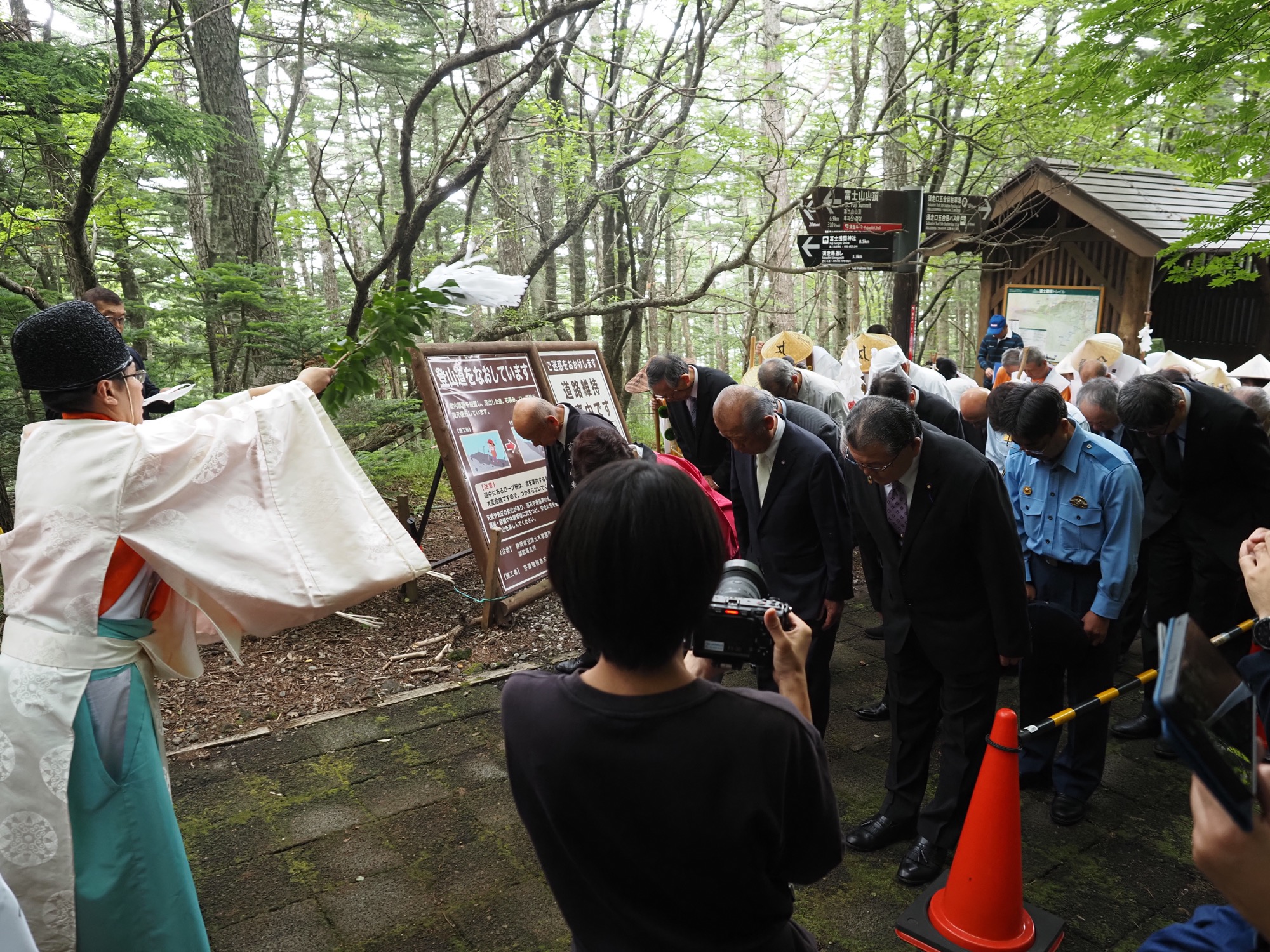
At the start of the summer climbing season, under rites led by the chief priest of Higashiguchi Hongū Fuji Sengen Shrine (Subashiri Sengen Shrine), prayers for safety on the way to the summit are offered at the entrance of the trail.
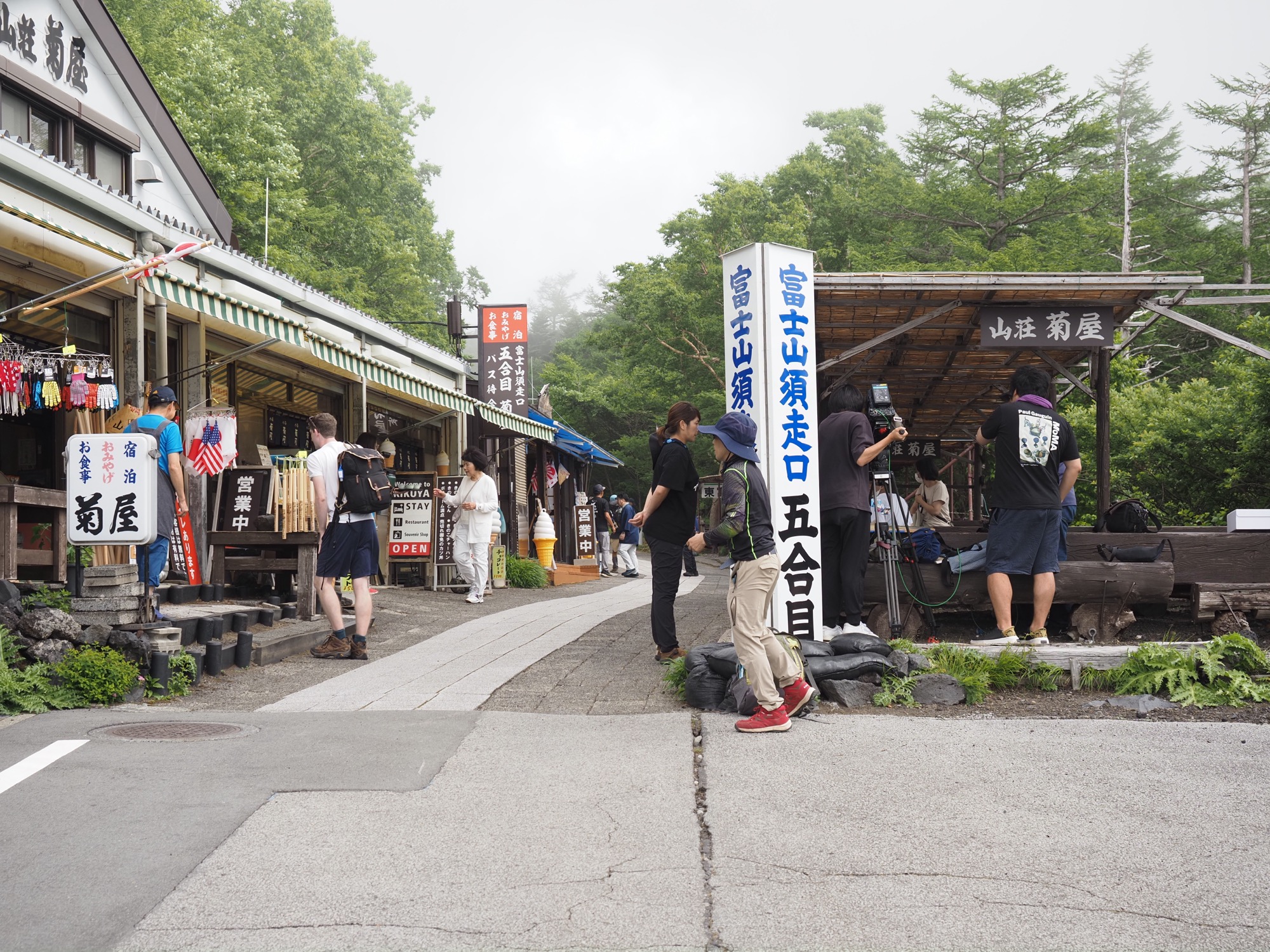
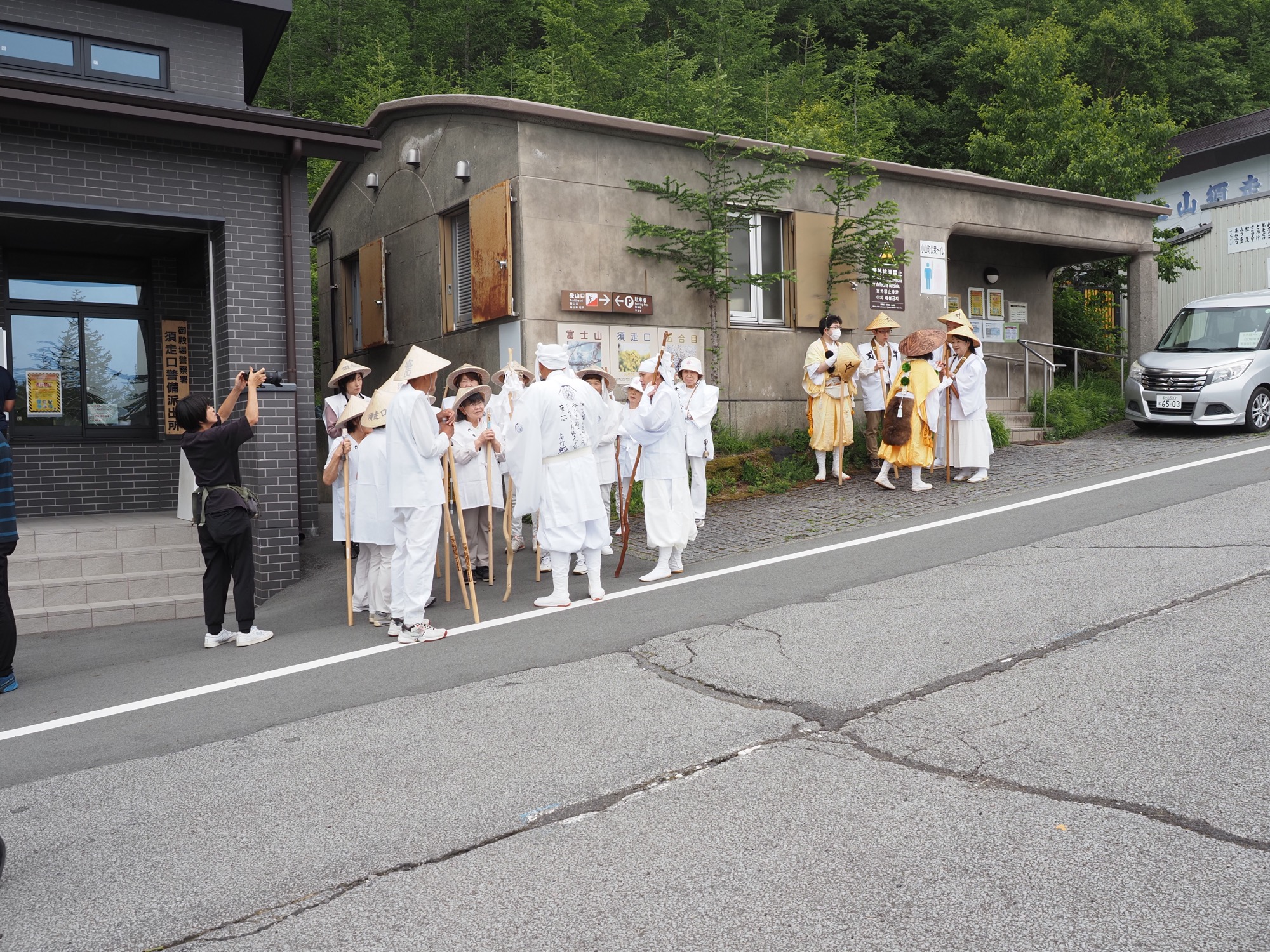
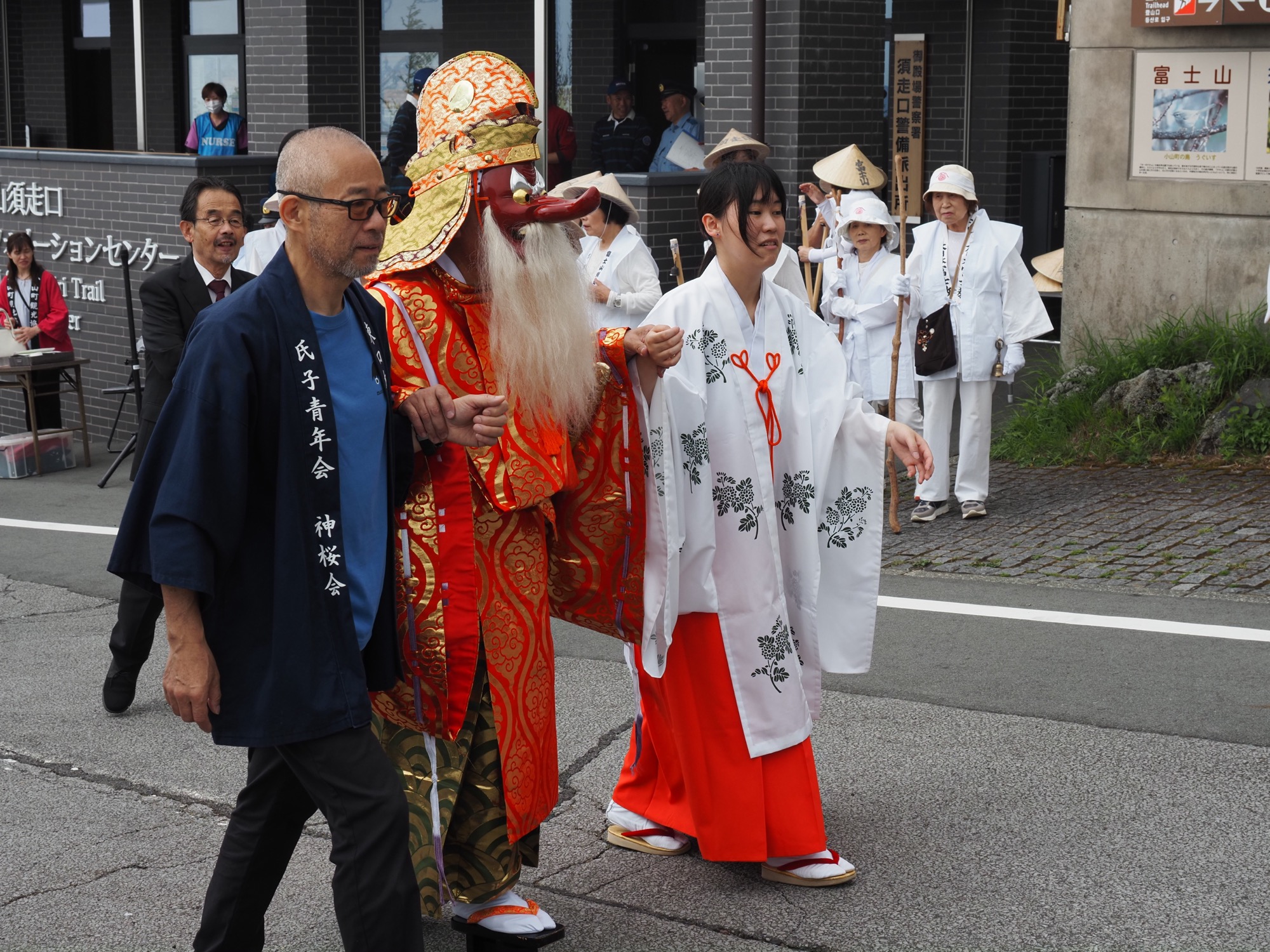
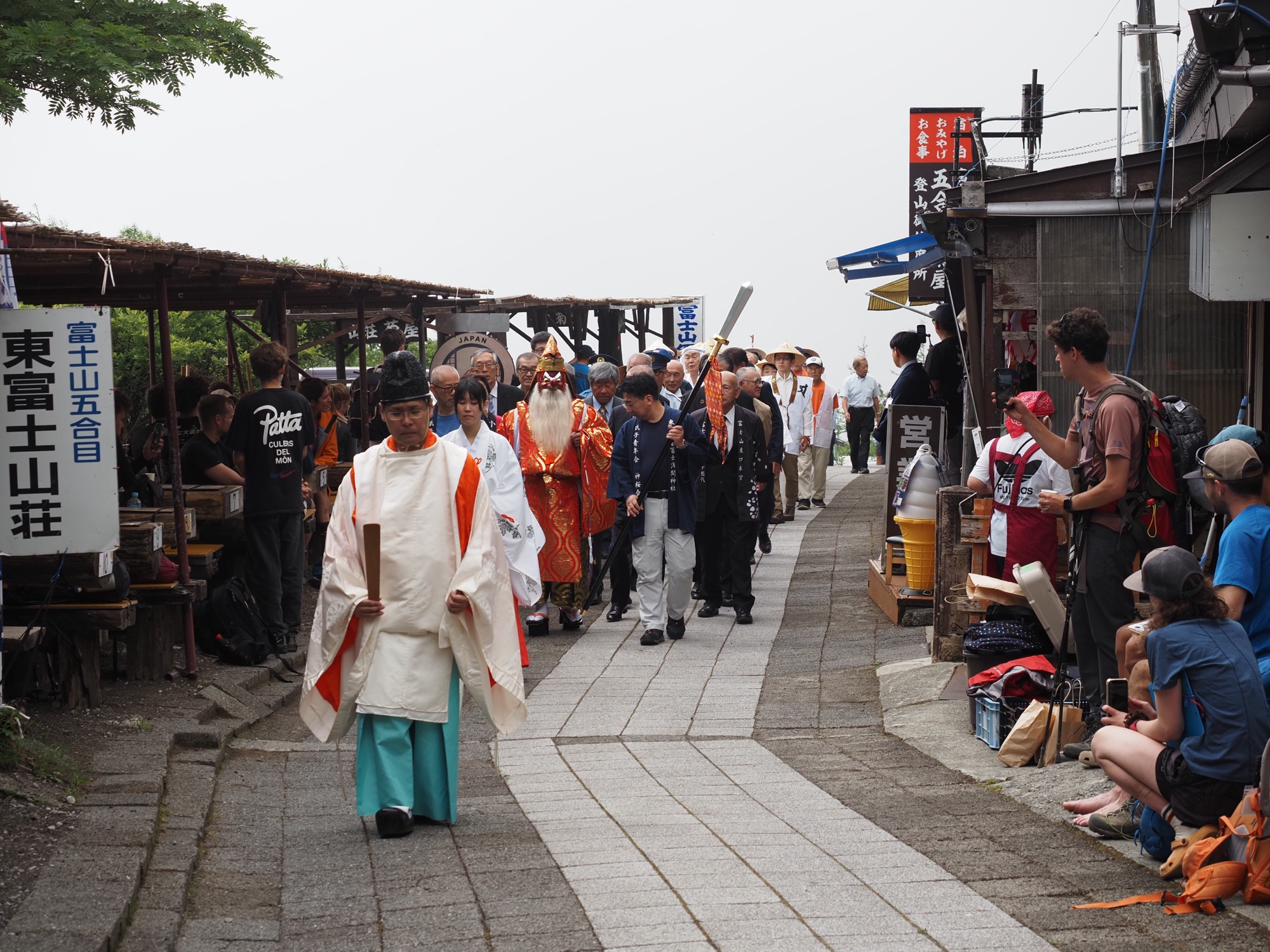
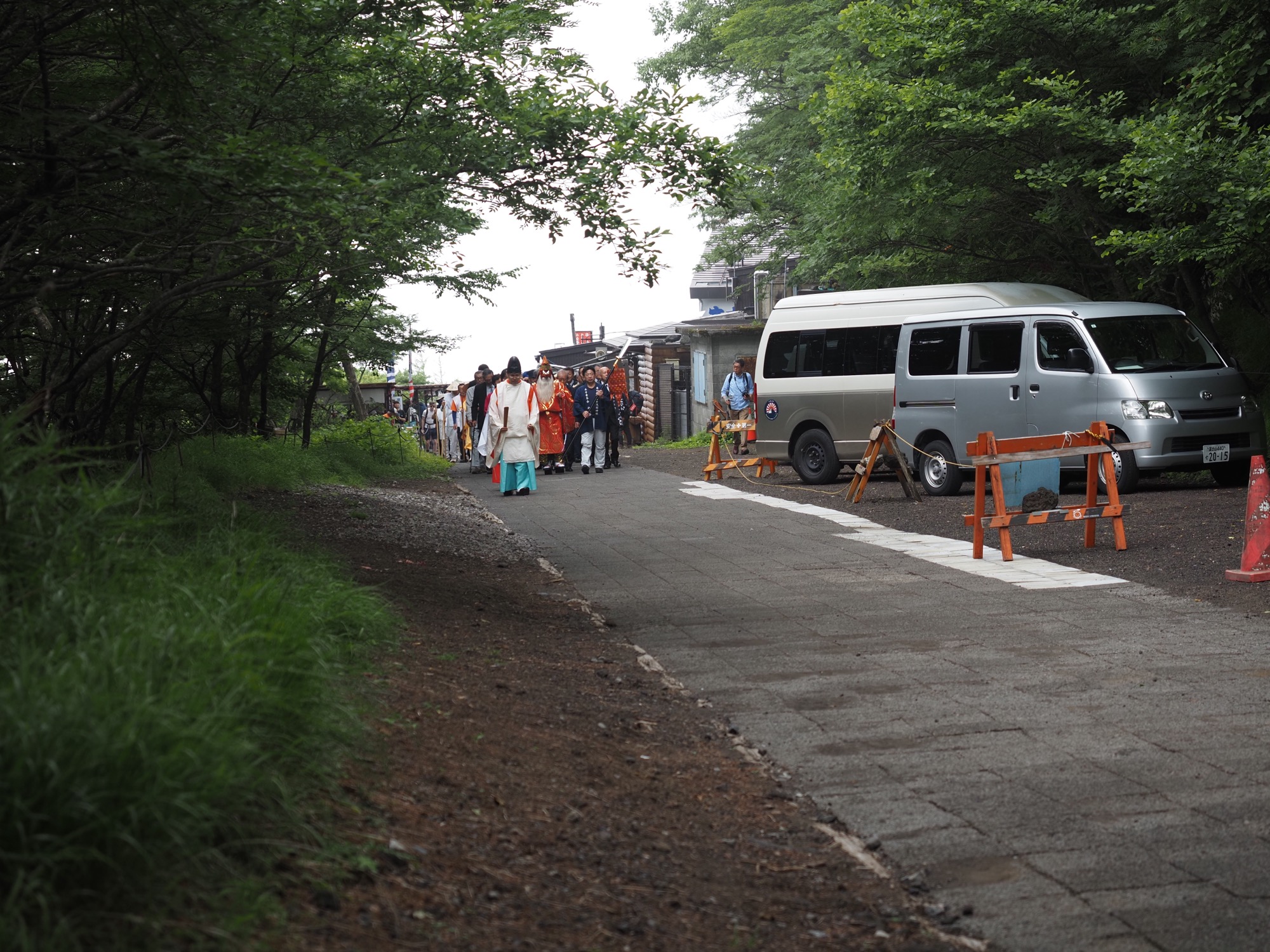
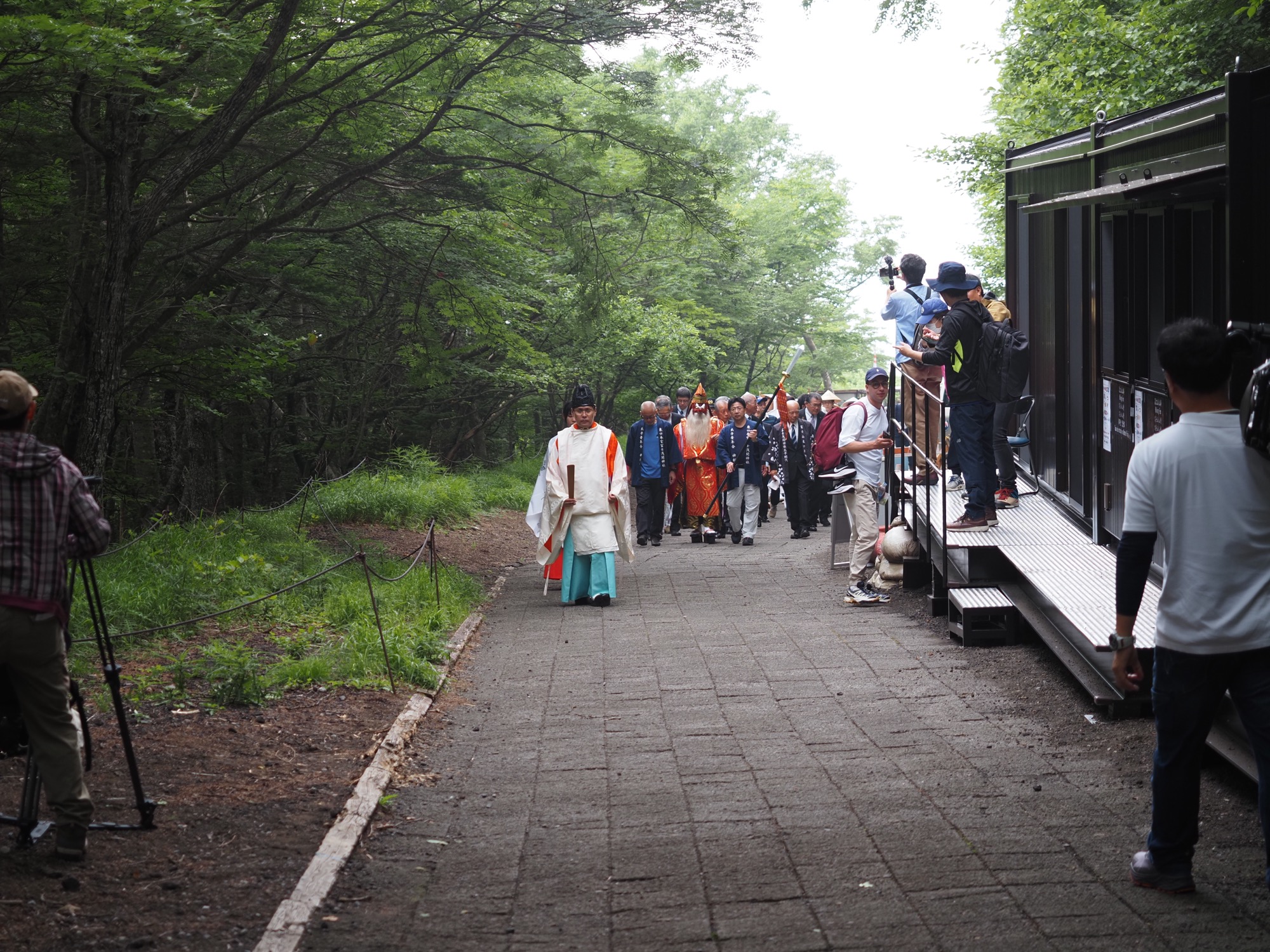
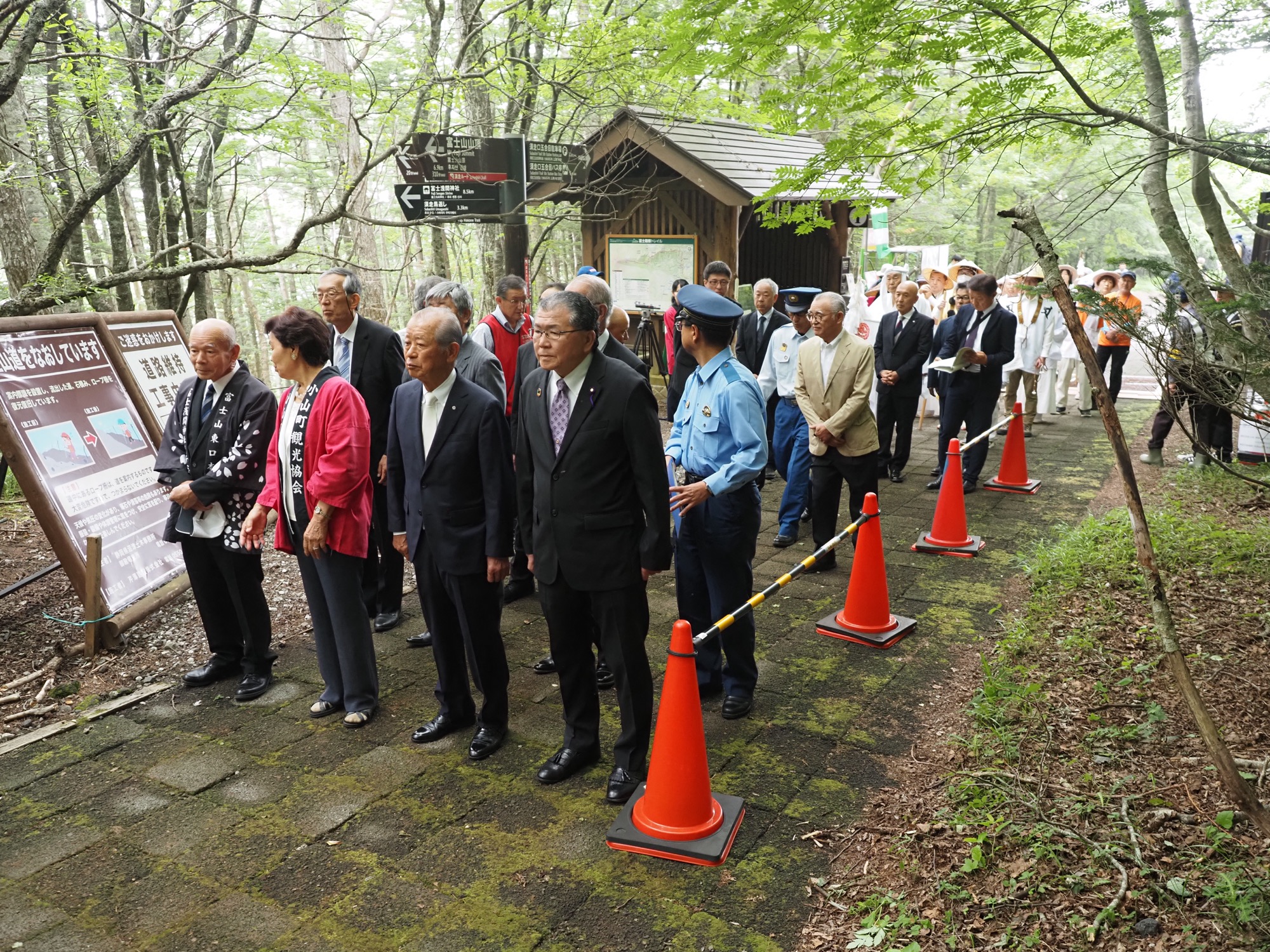
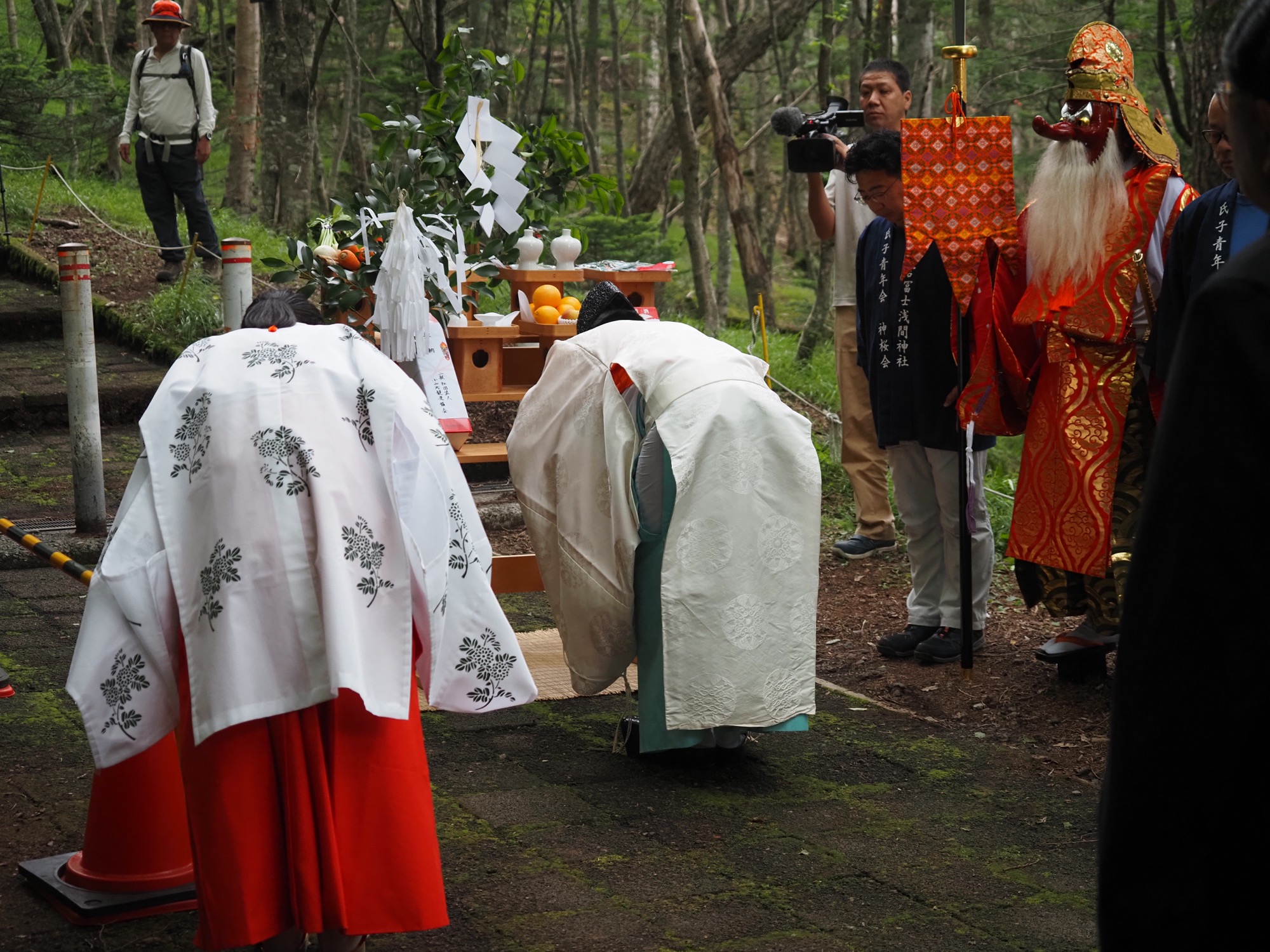
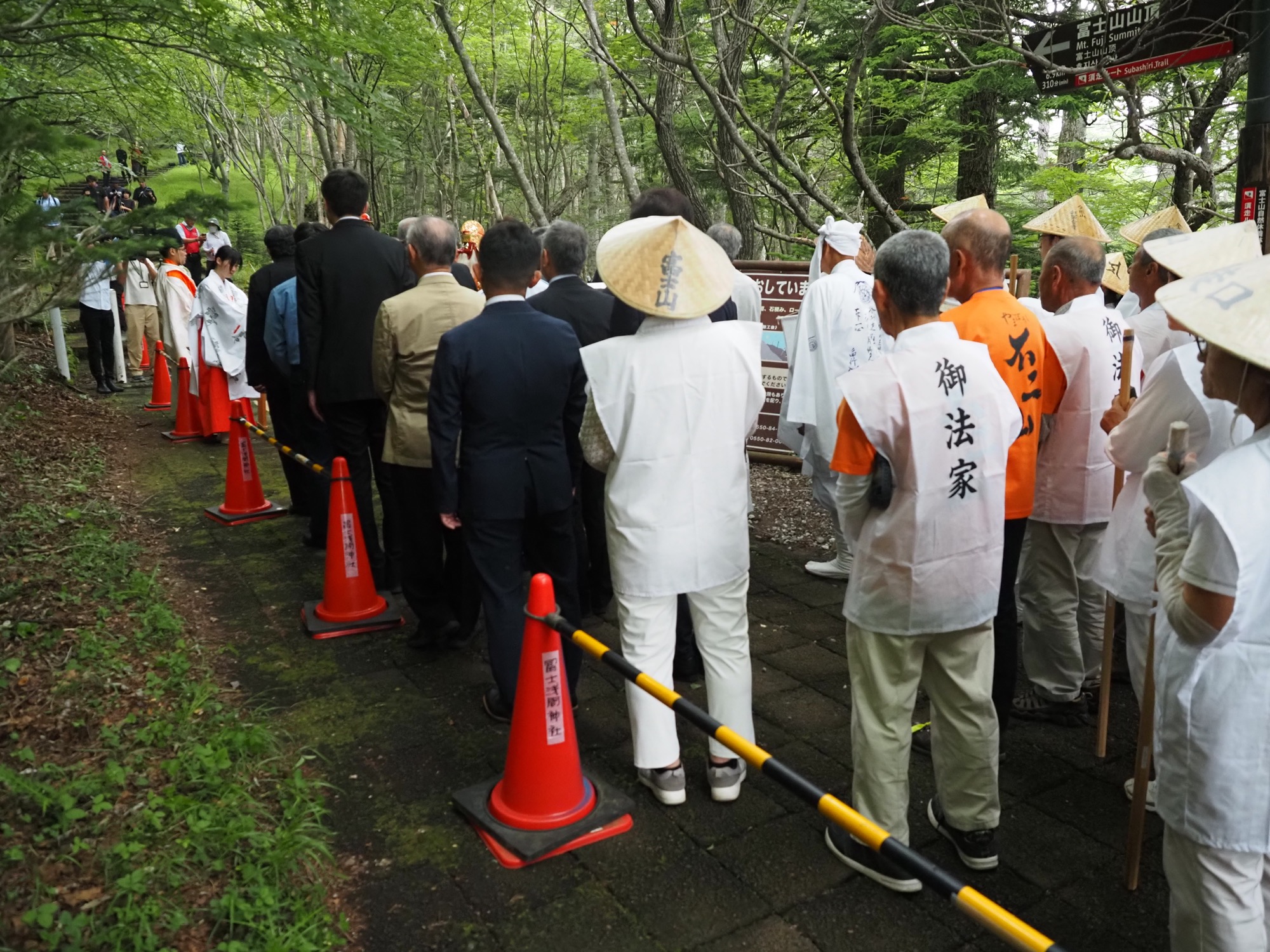
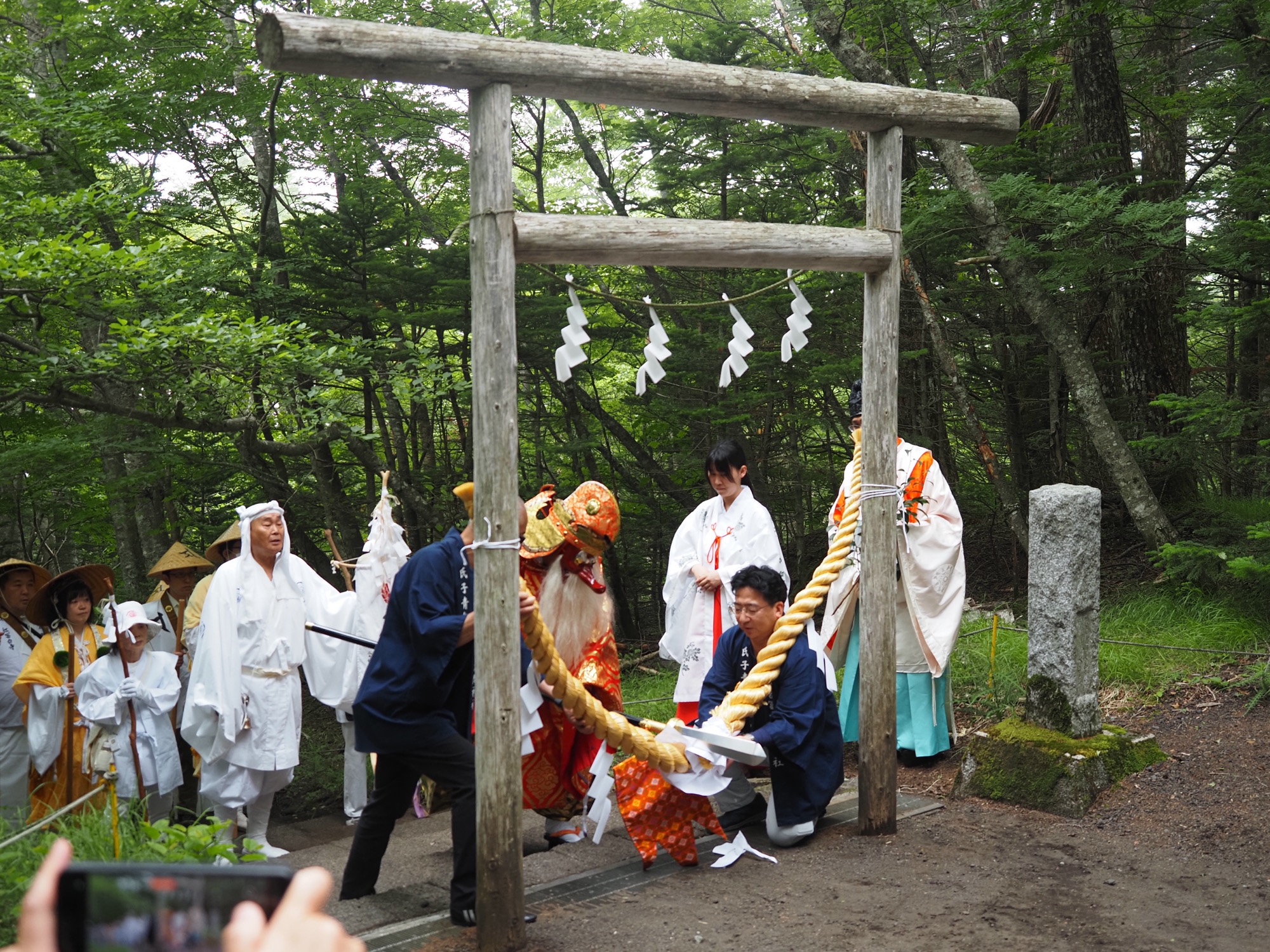
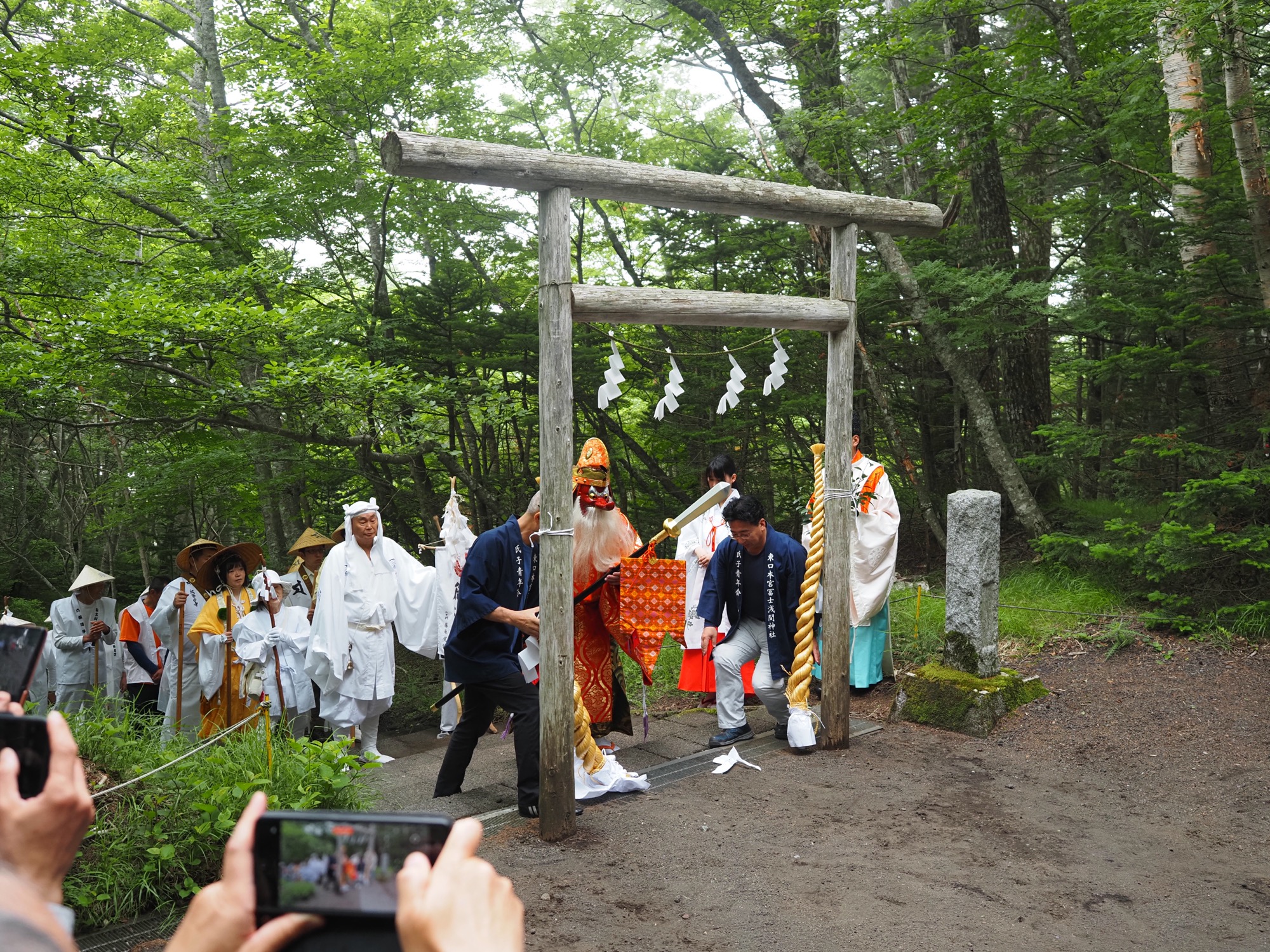
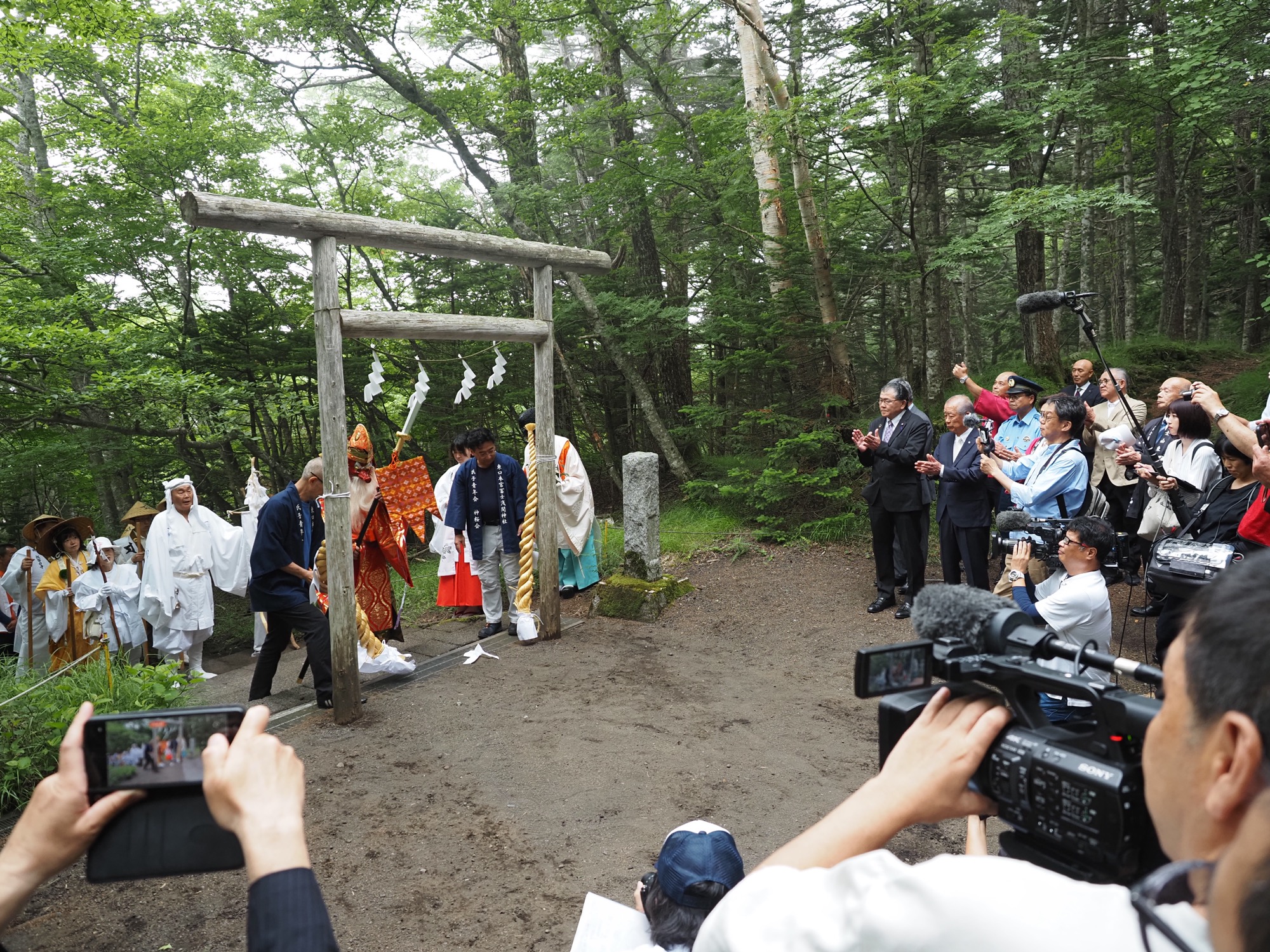
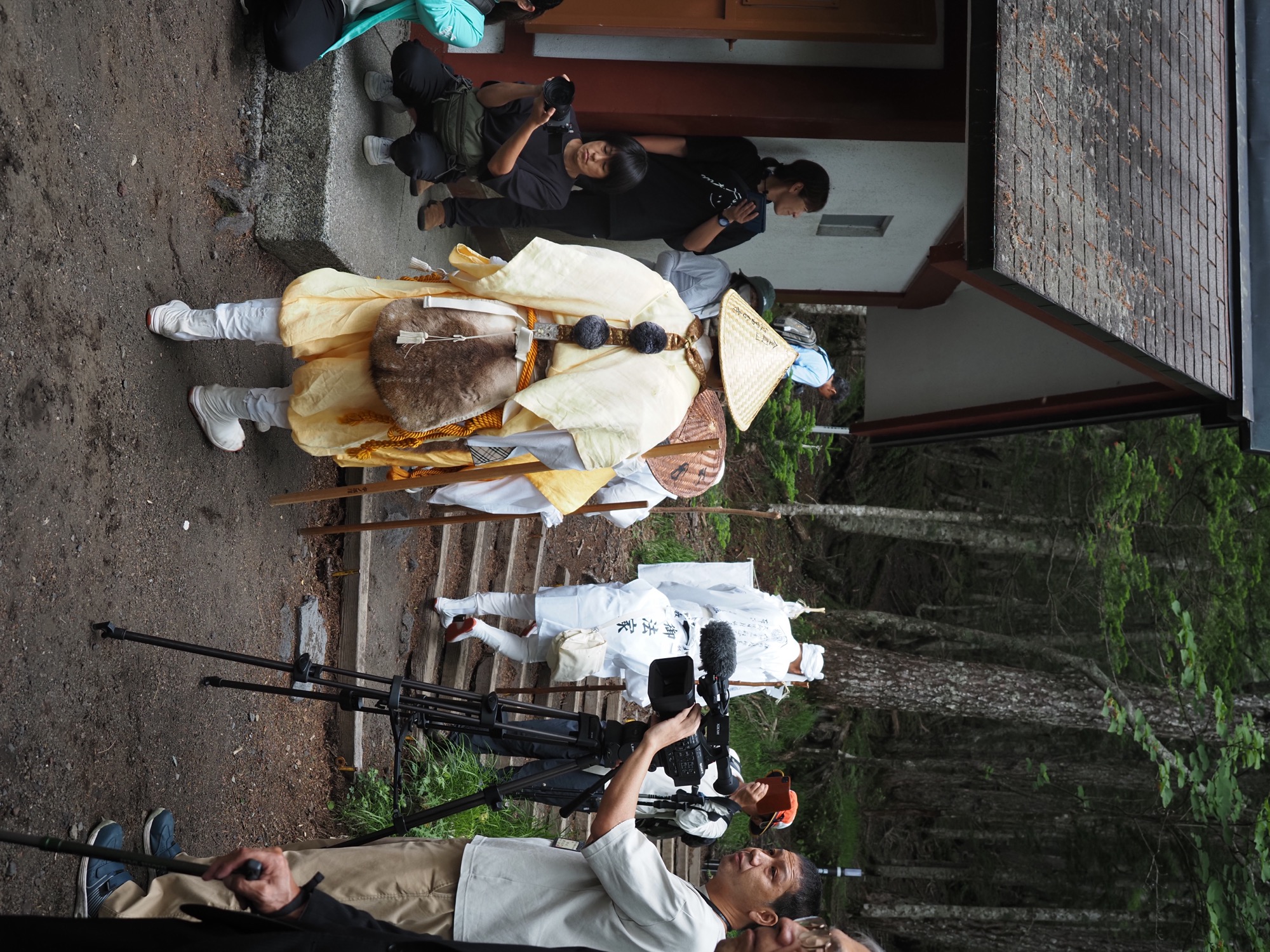
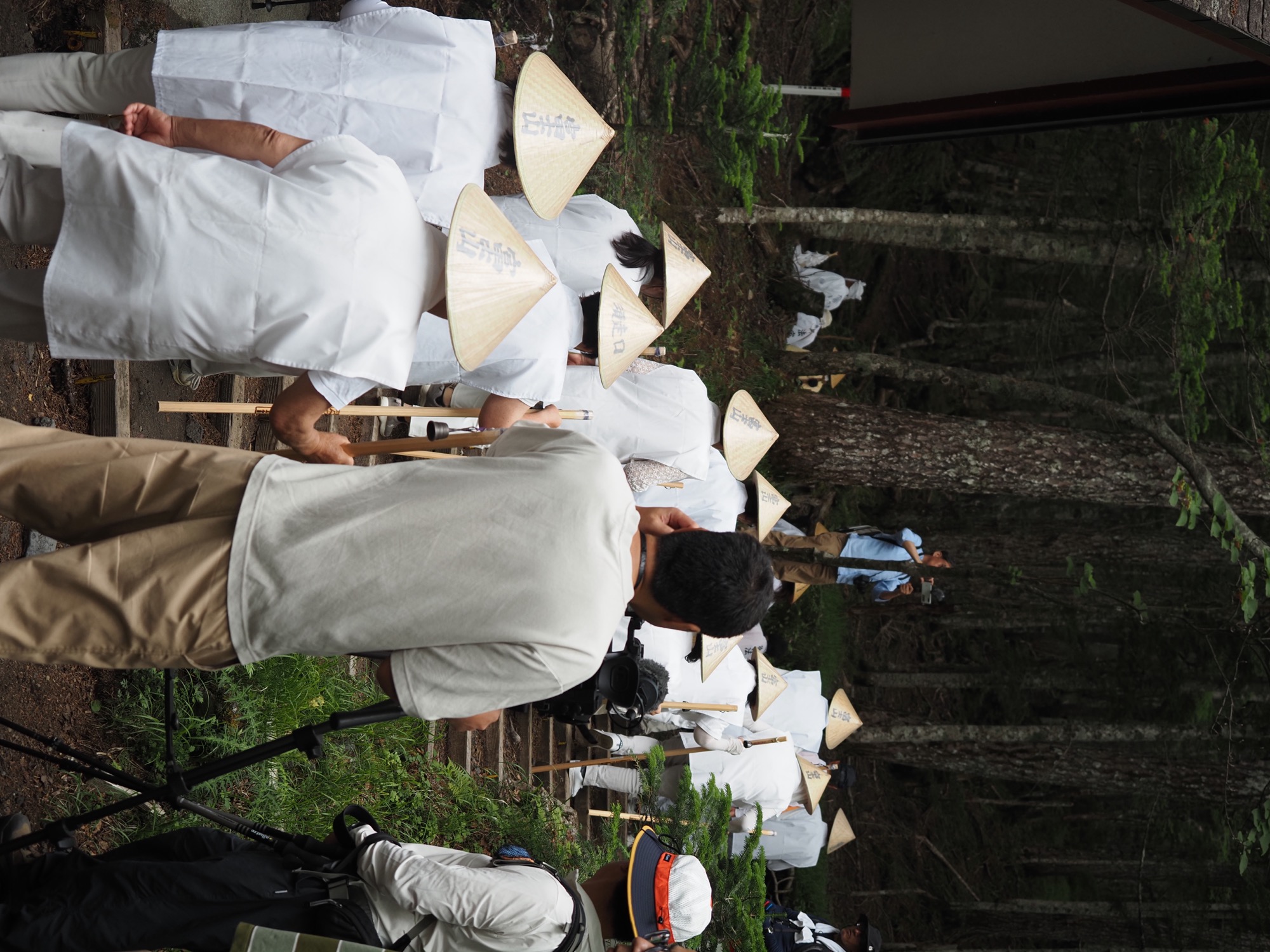
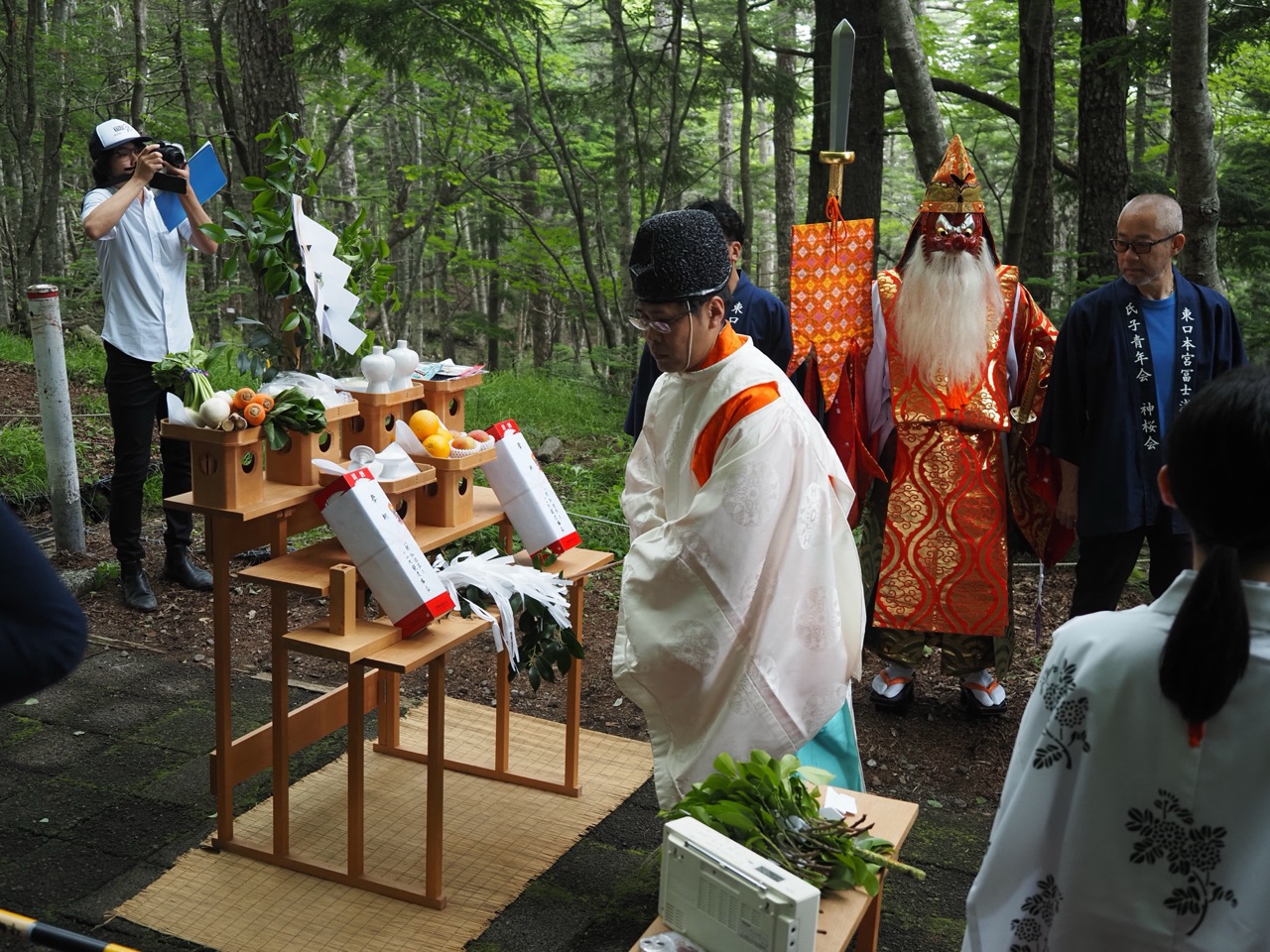
In the morning, spectators and people taking part gather in the open space by the shops of the fifth station, where a post reads “Fujisan Subashiri-guchi Gogōme”. Then, led by priests and shrine maidens, a long procession moves toward the trail entrance: a tengu in the mask and costume of Sarutahiko, the deity said to guide the way; practitioners in white with sedge hats and kongō staffs; local people carrying the banners of groups such as the parishioners’ youth association; and guests and reporters.
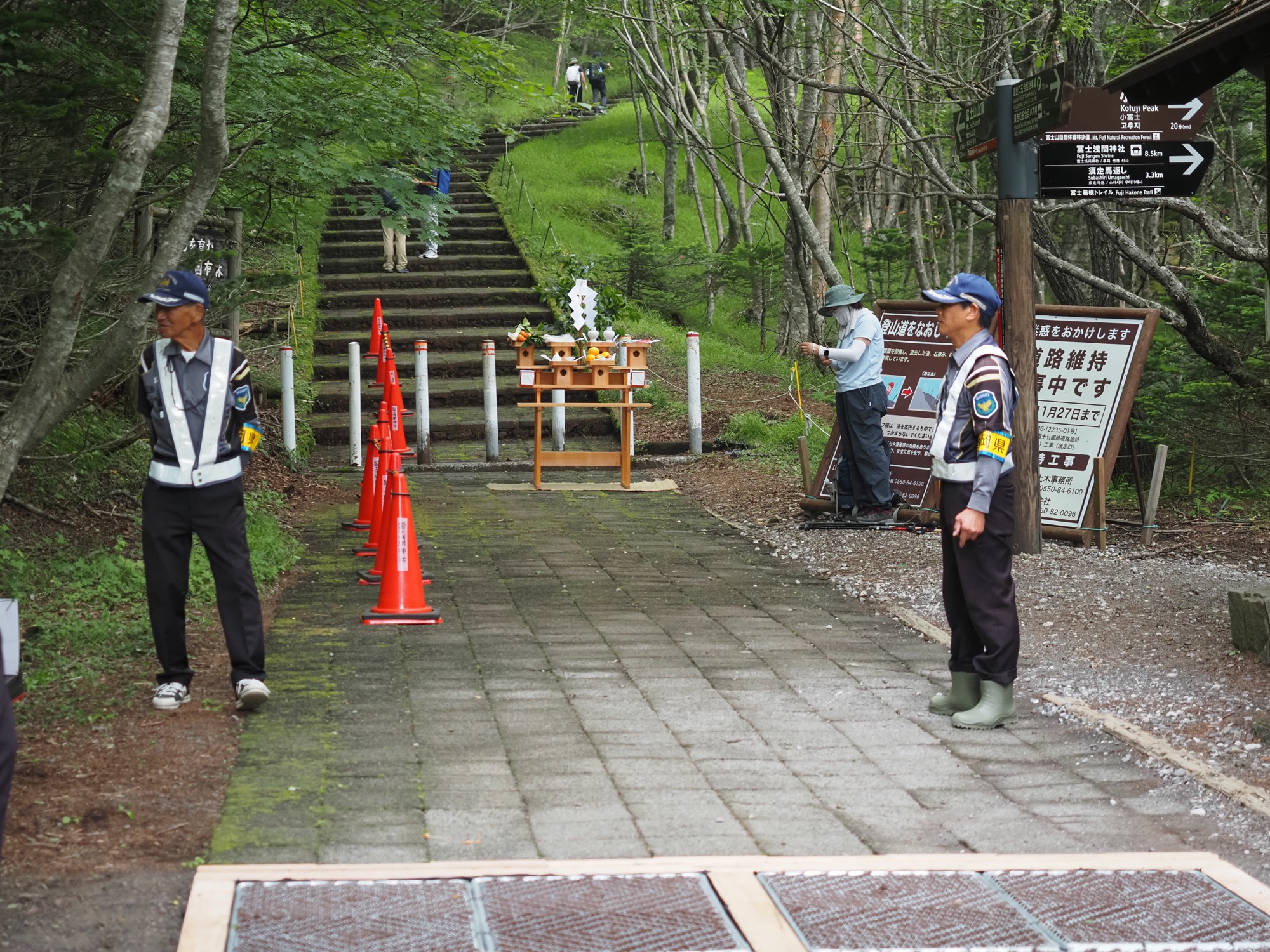
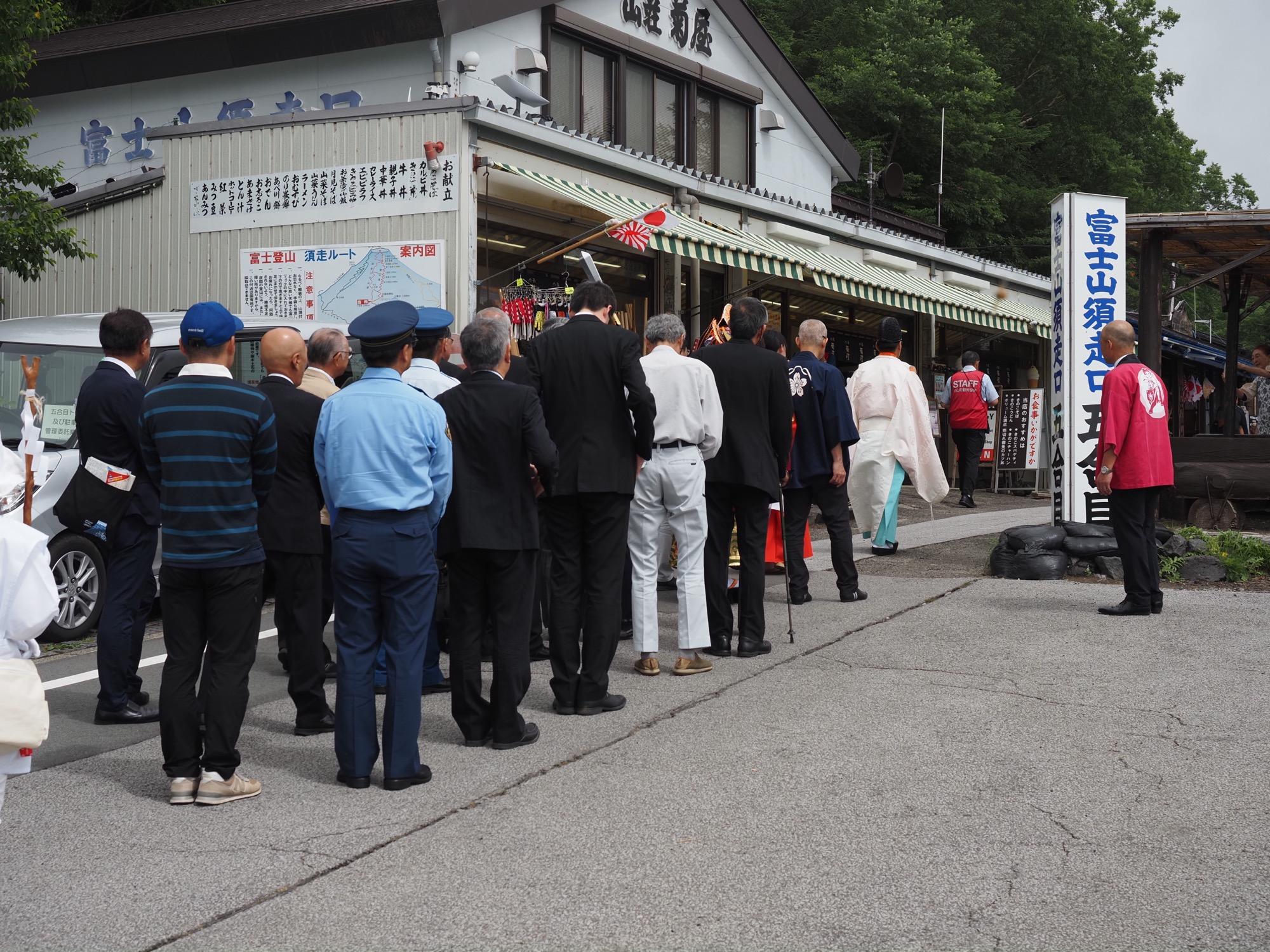
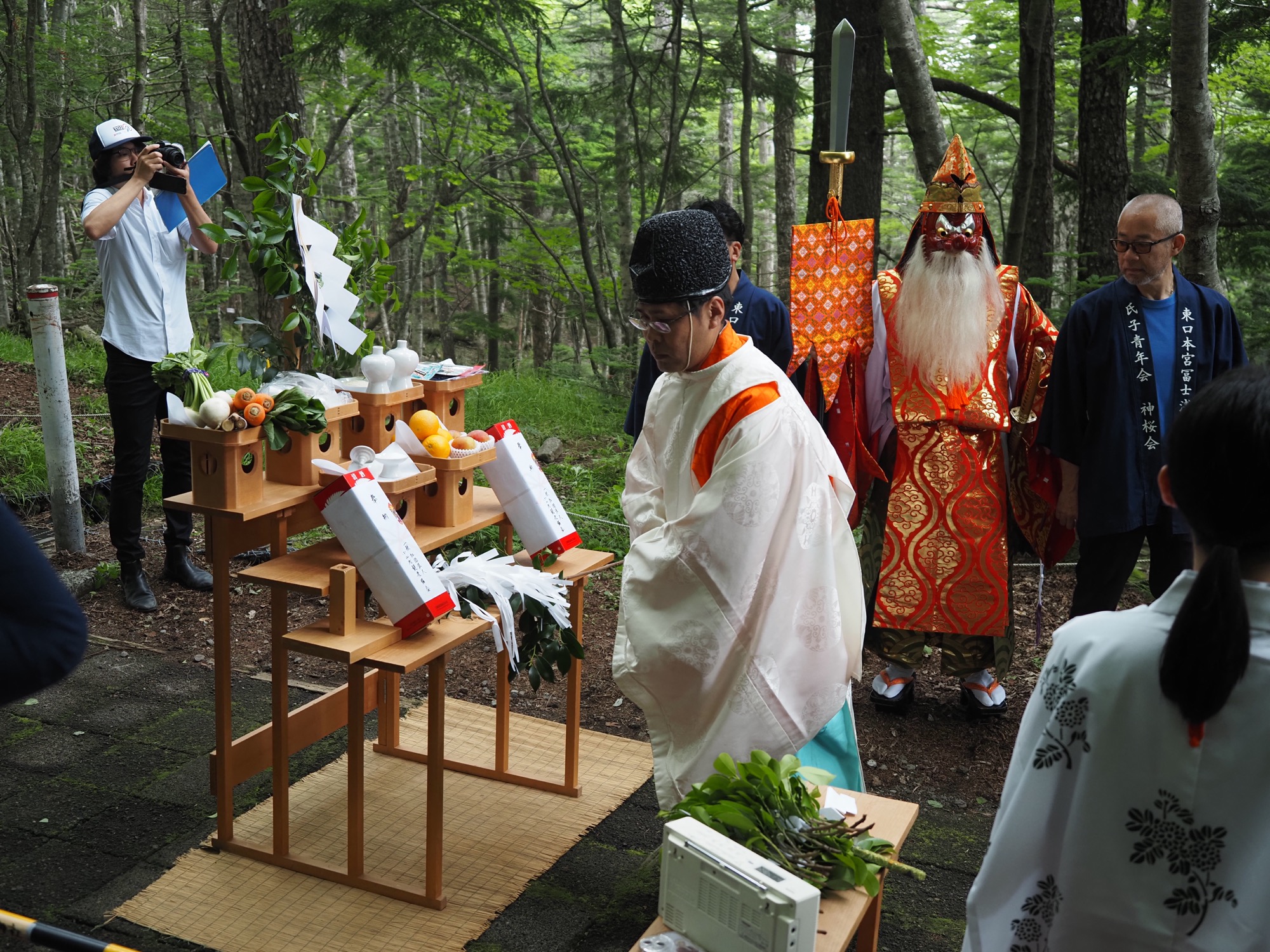
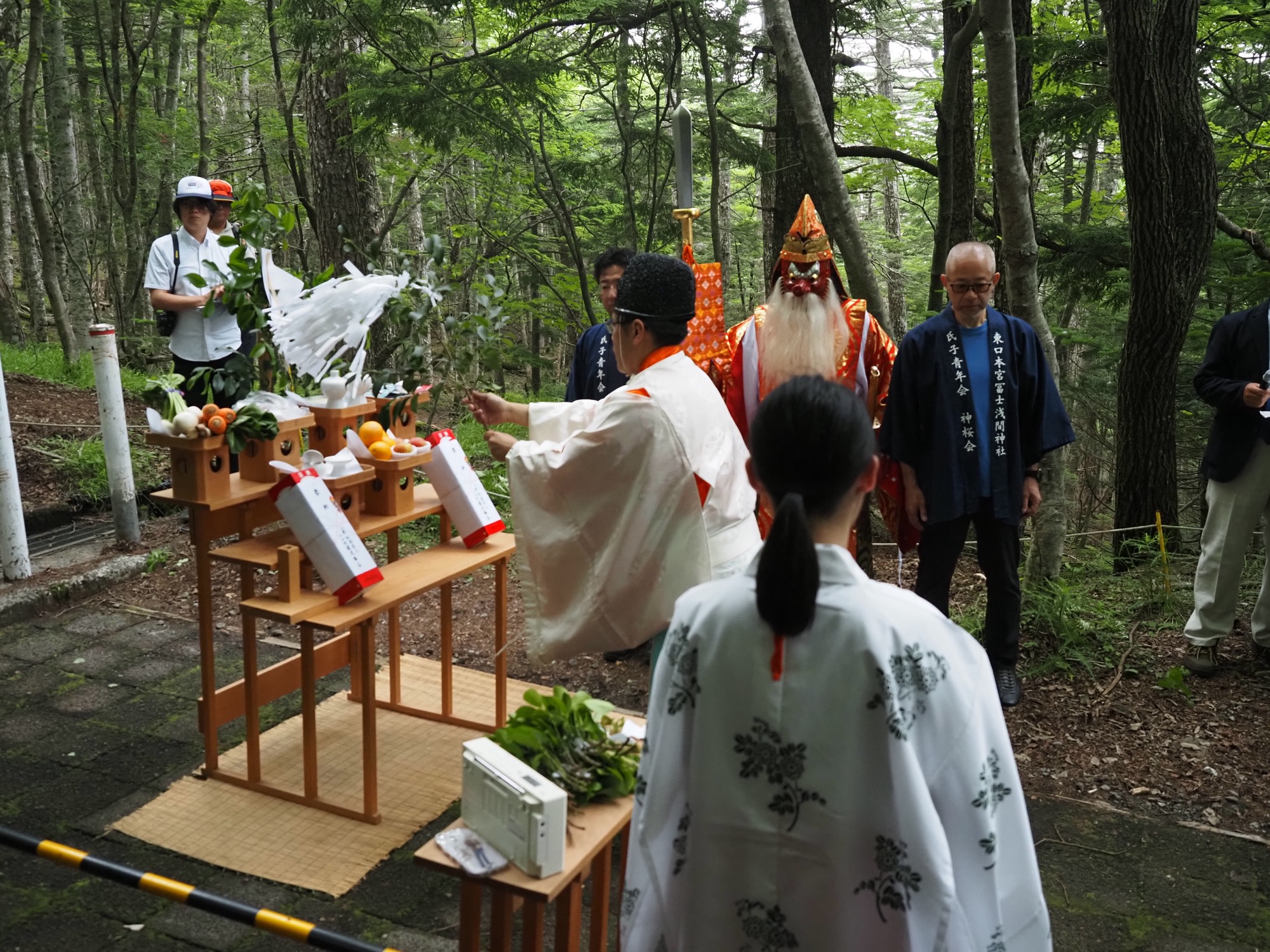
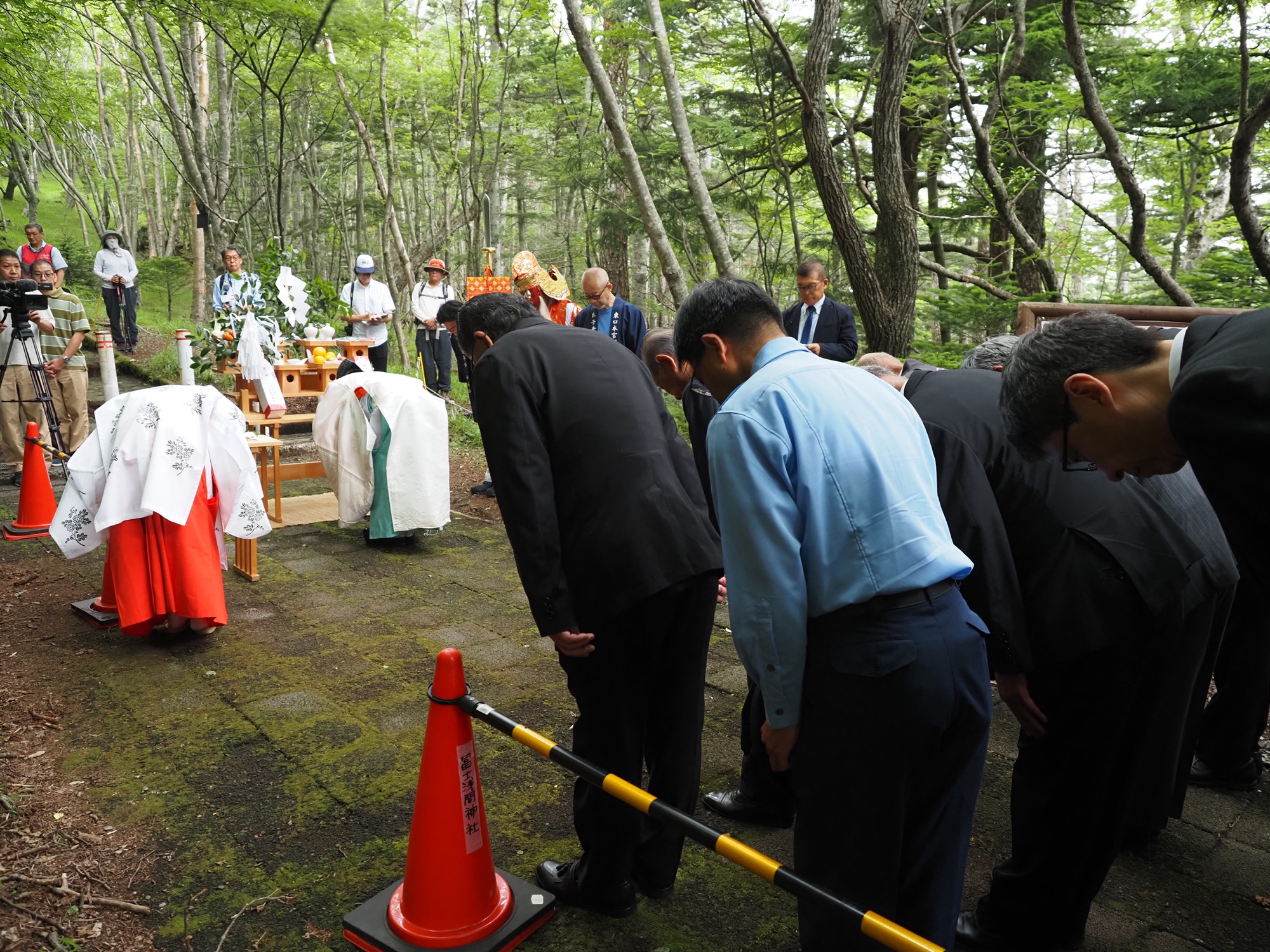
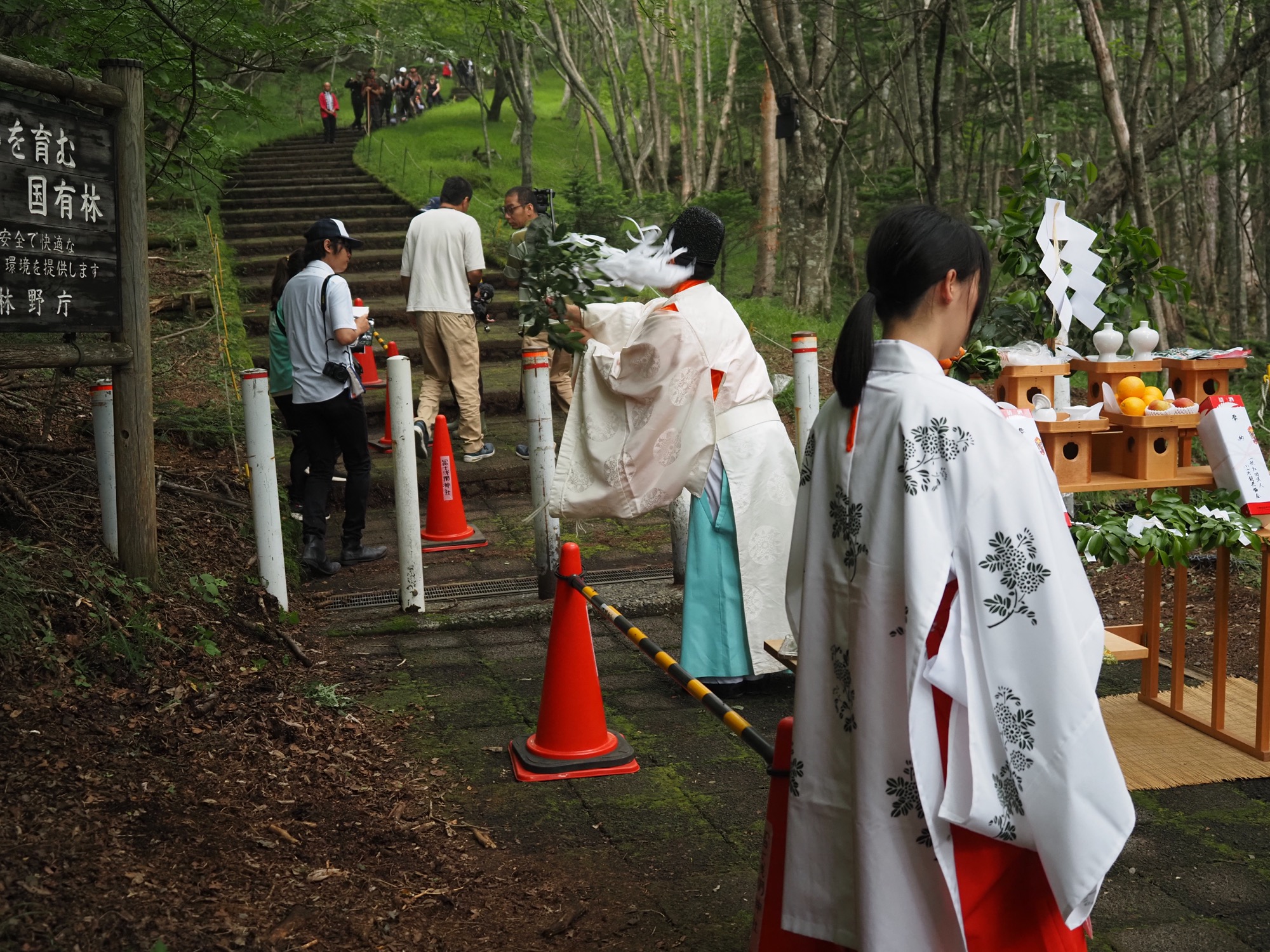
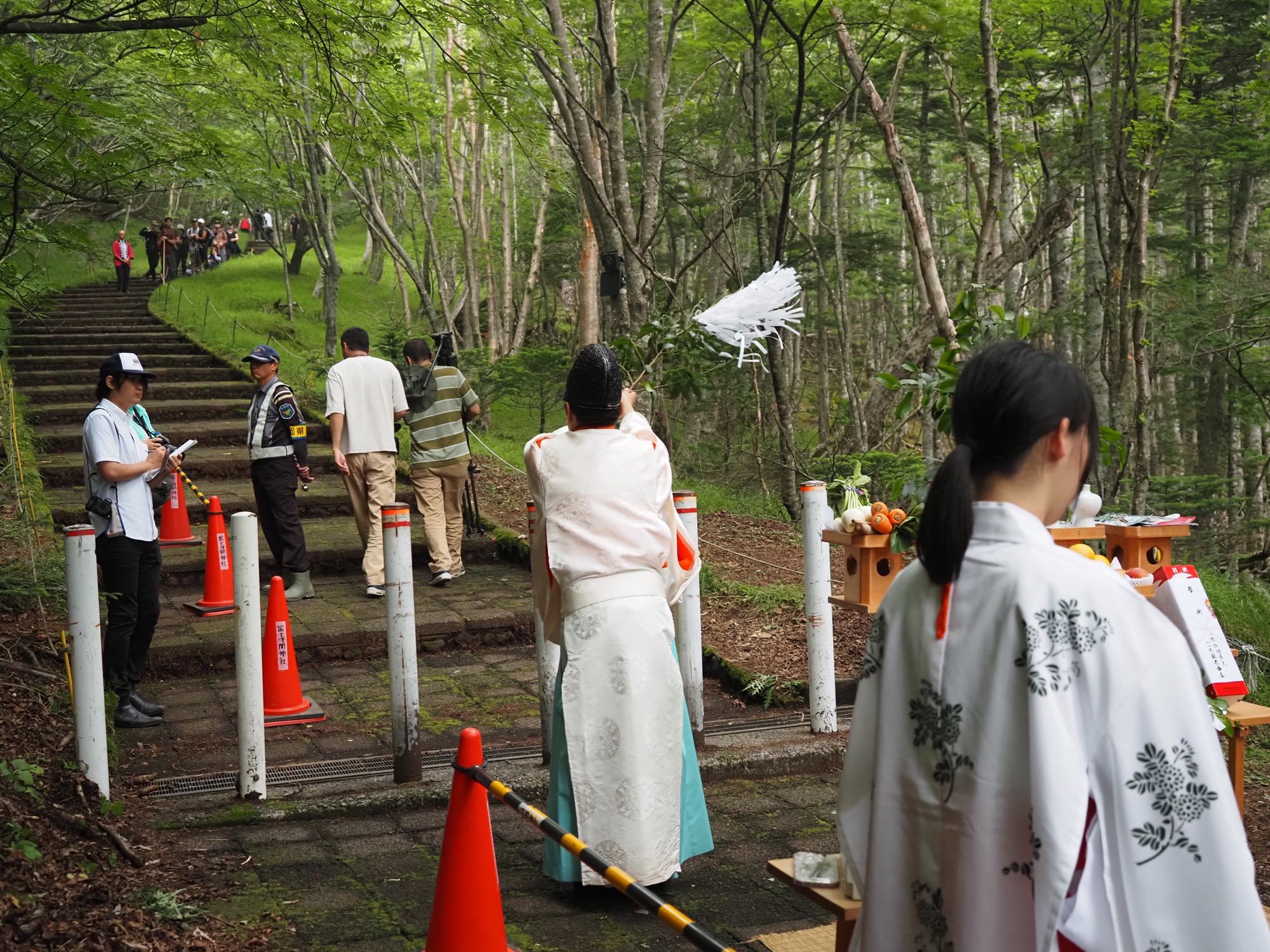
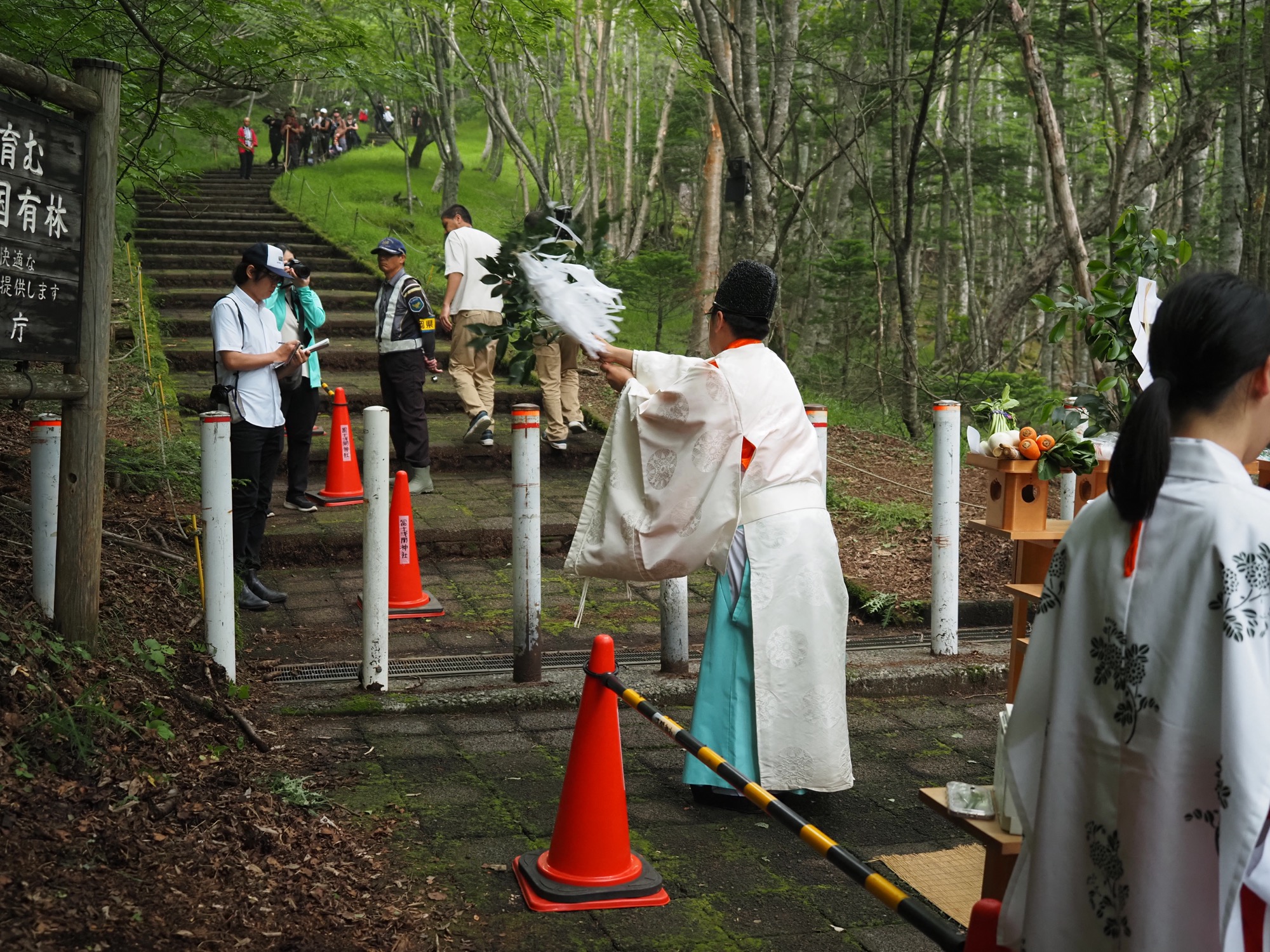
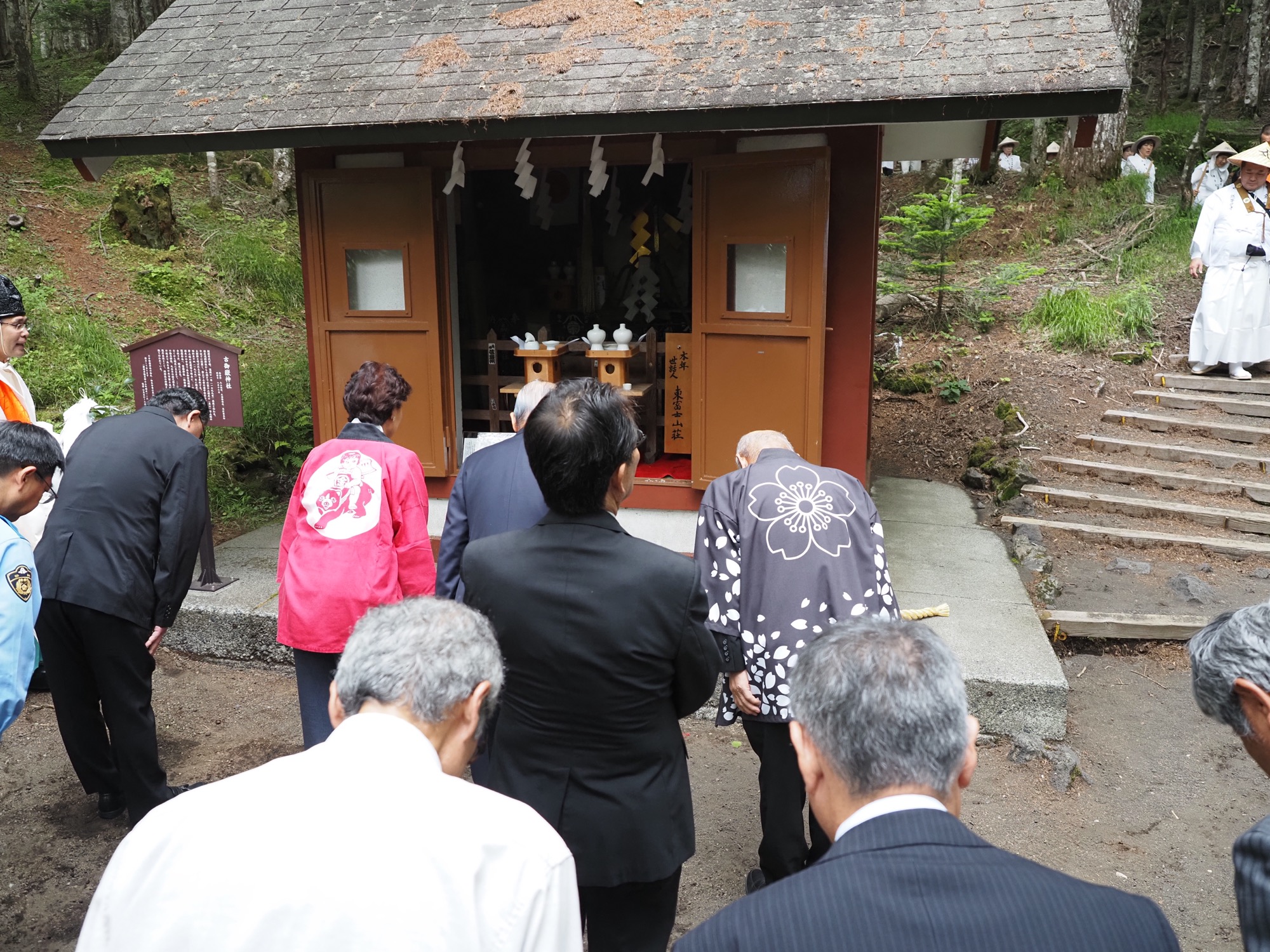
At the ritual site set up at the trail entrance, a stand with food offerings and paper offerings is prepared, a priest recites a prayer, and everyone bows in worship. Subashiri is also the place where the village burned in the Hōei eruption of 1707 (Hōei 4) and more than one jō three shaku (about four metres) of sand fell in five days.
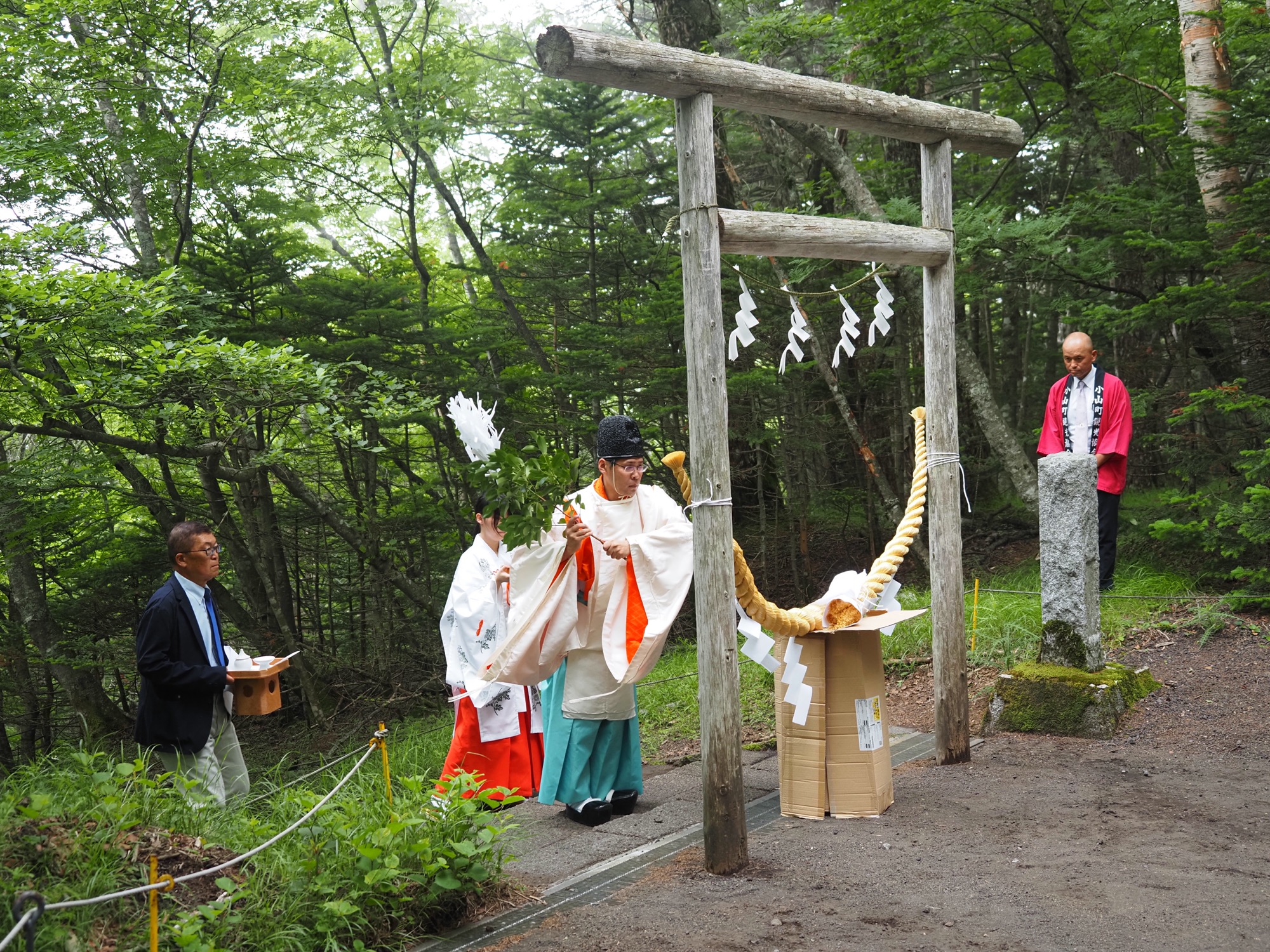
Next, a new sacred rope (shimenawa) is hung on the wooden torii at the trail entrance. The tengu, the priests and young parishioners tie the rope to the pillars of the torii, and the way to the summit is opened.
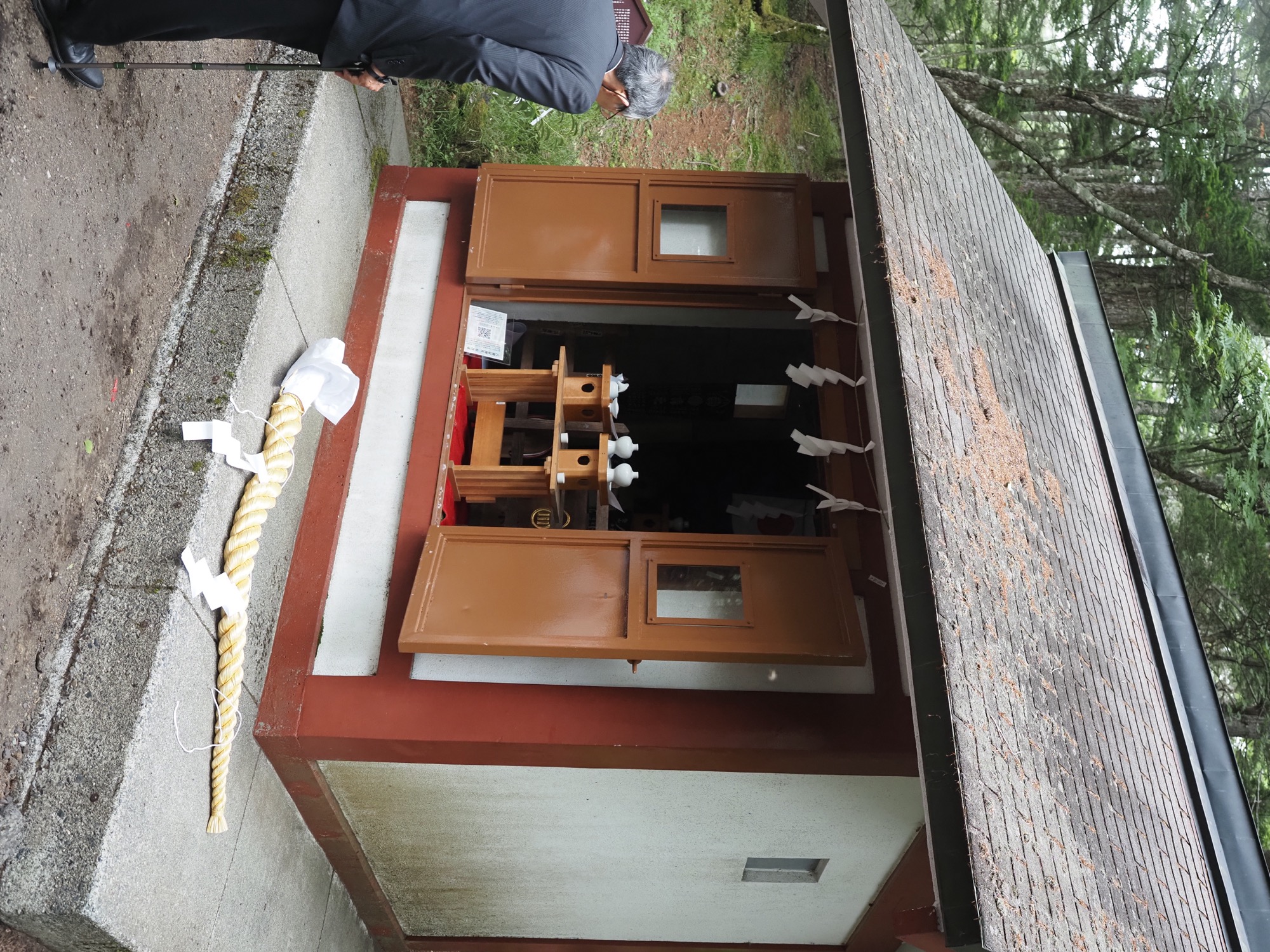
The procession then moves on to a small shrine farther in, everyone bows in worship, and the rite ends. From here the practitioners in white start the actual climb to the summit. The Subashiri trail has the sunabashiri, a slope of sand and gravel that climbers run straight down on the descent, known since the Edo period.
When Mt. Fuji was inscribed on the World Heritage list in 2013 as Fujisan: Sacred Place and Source of Artistic Inspiration, the Subashiri trail became part of its components.