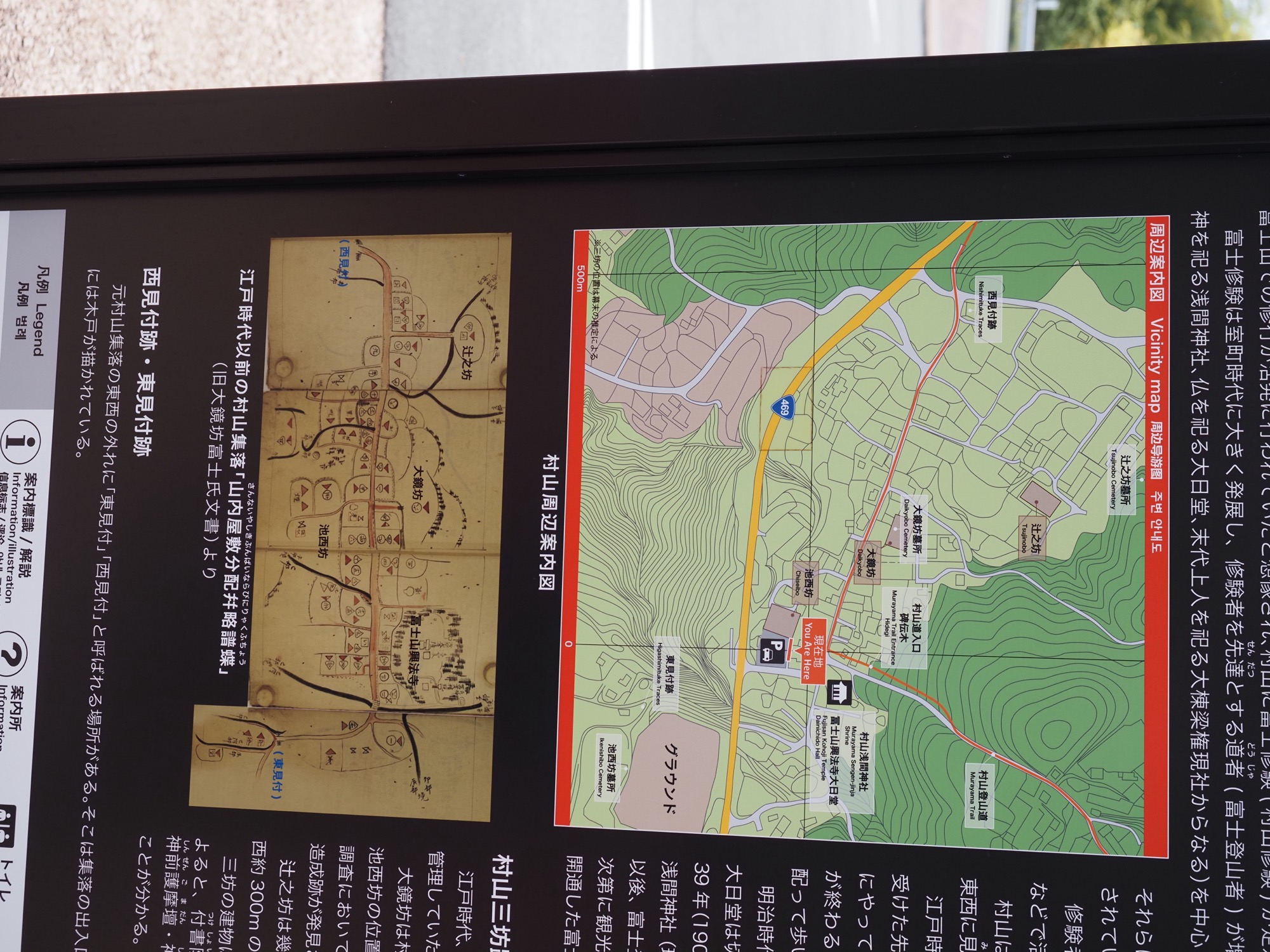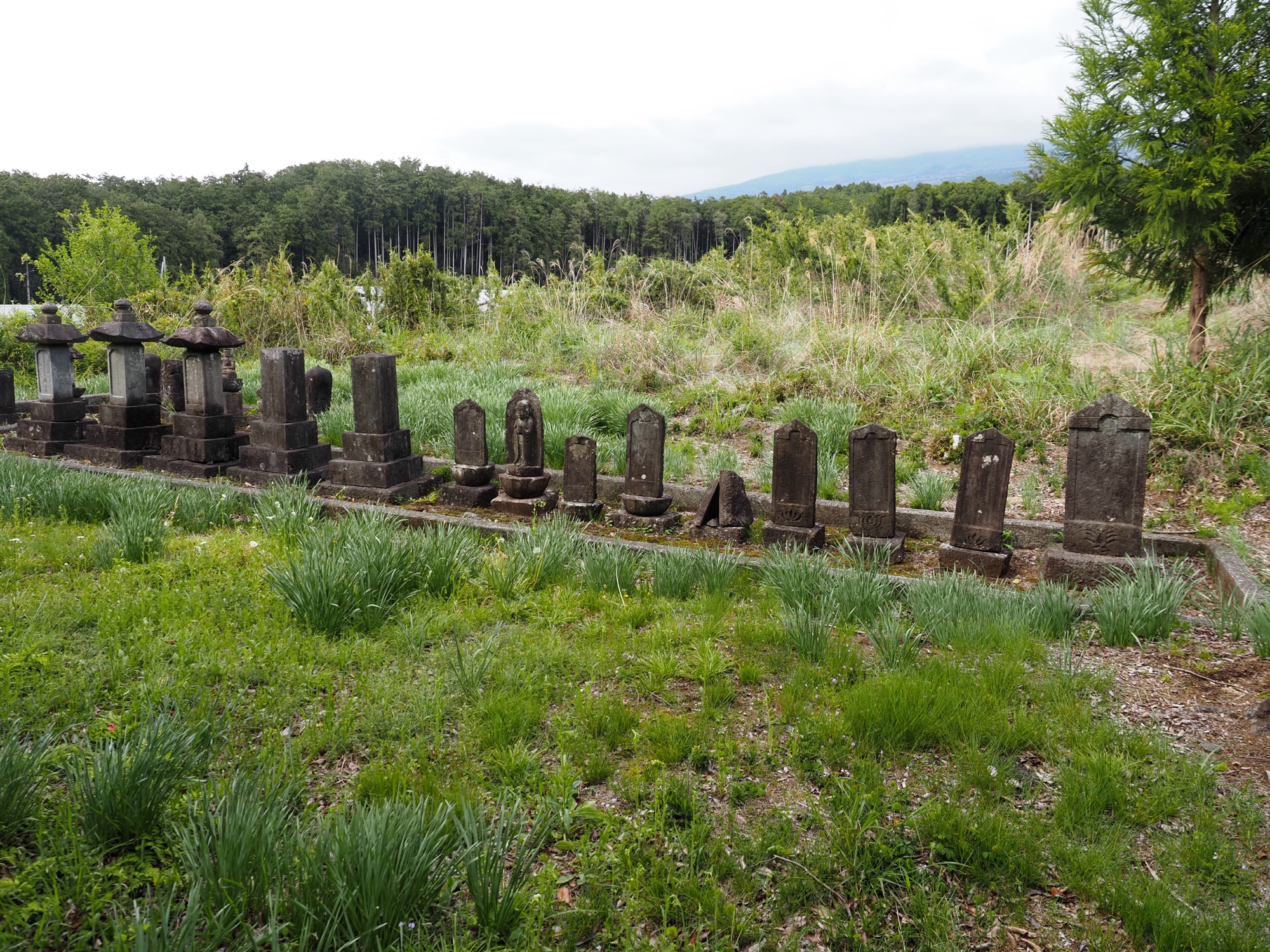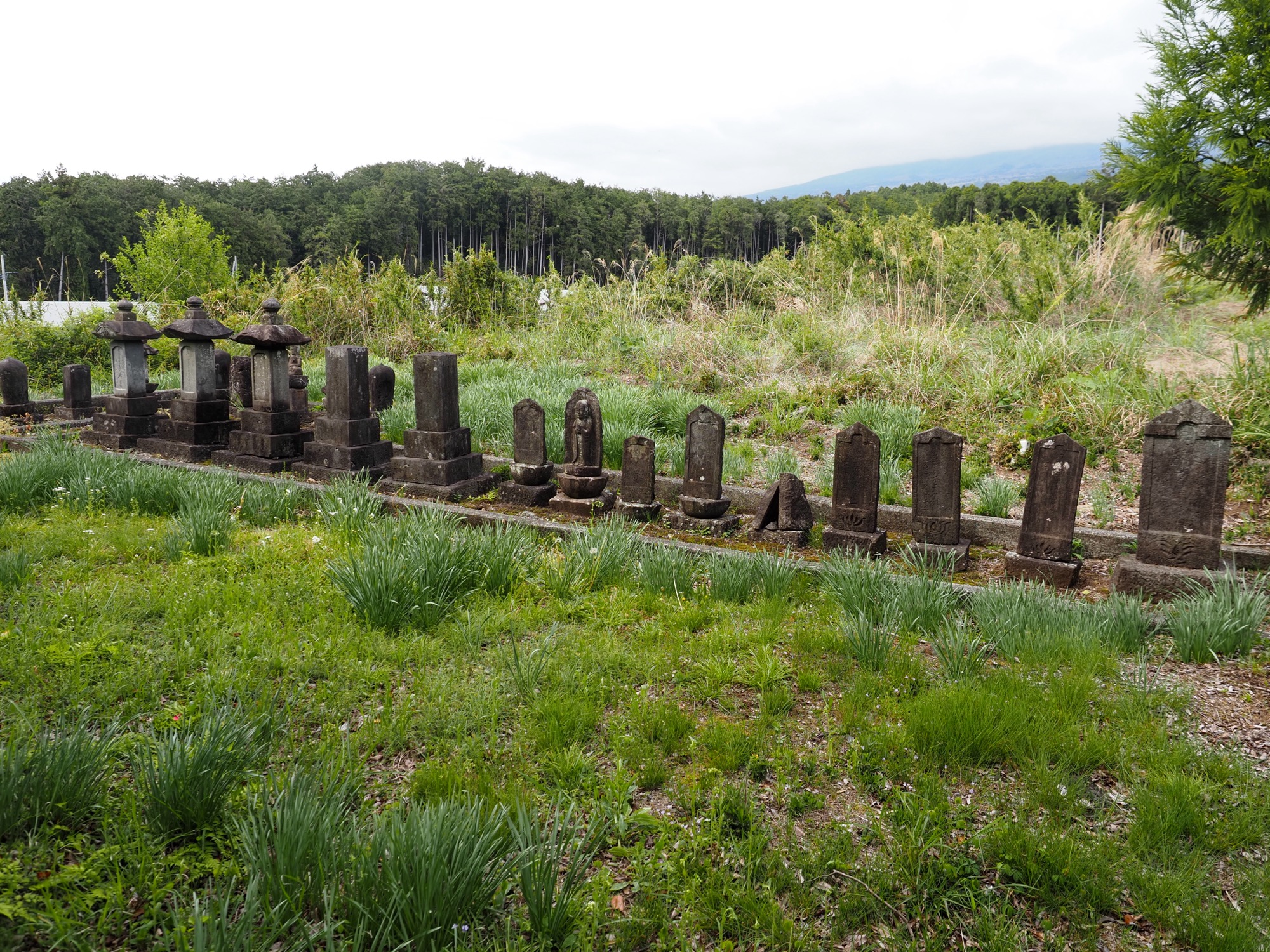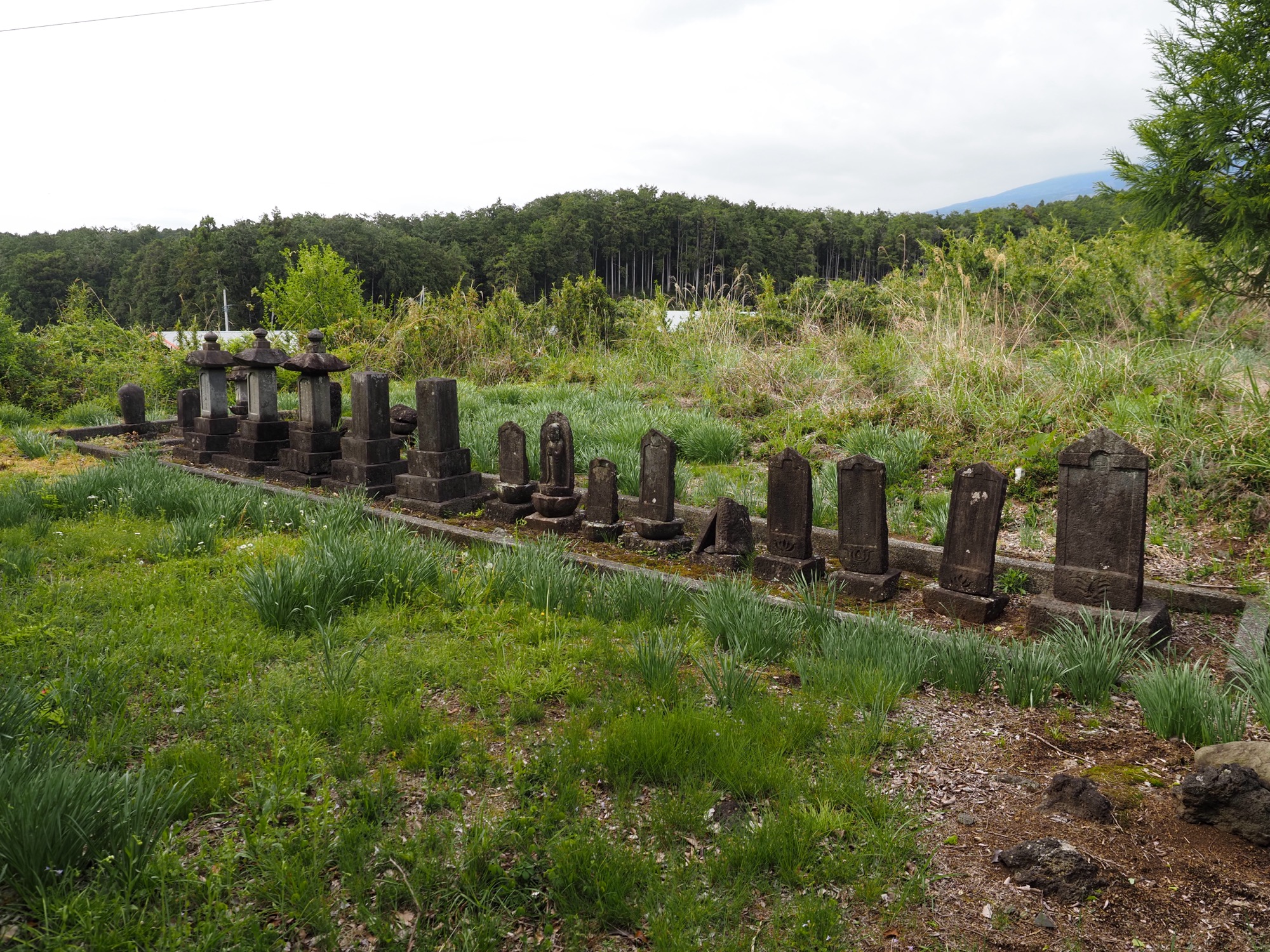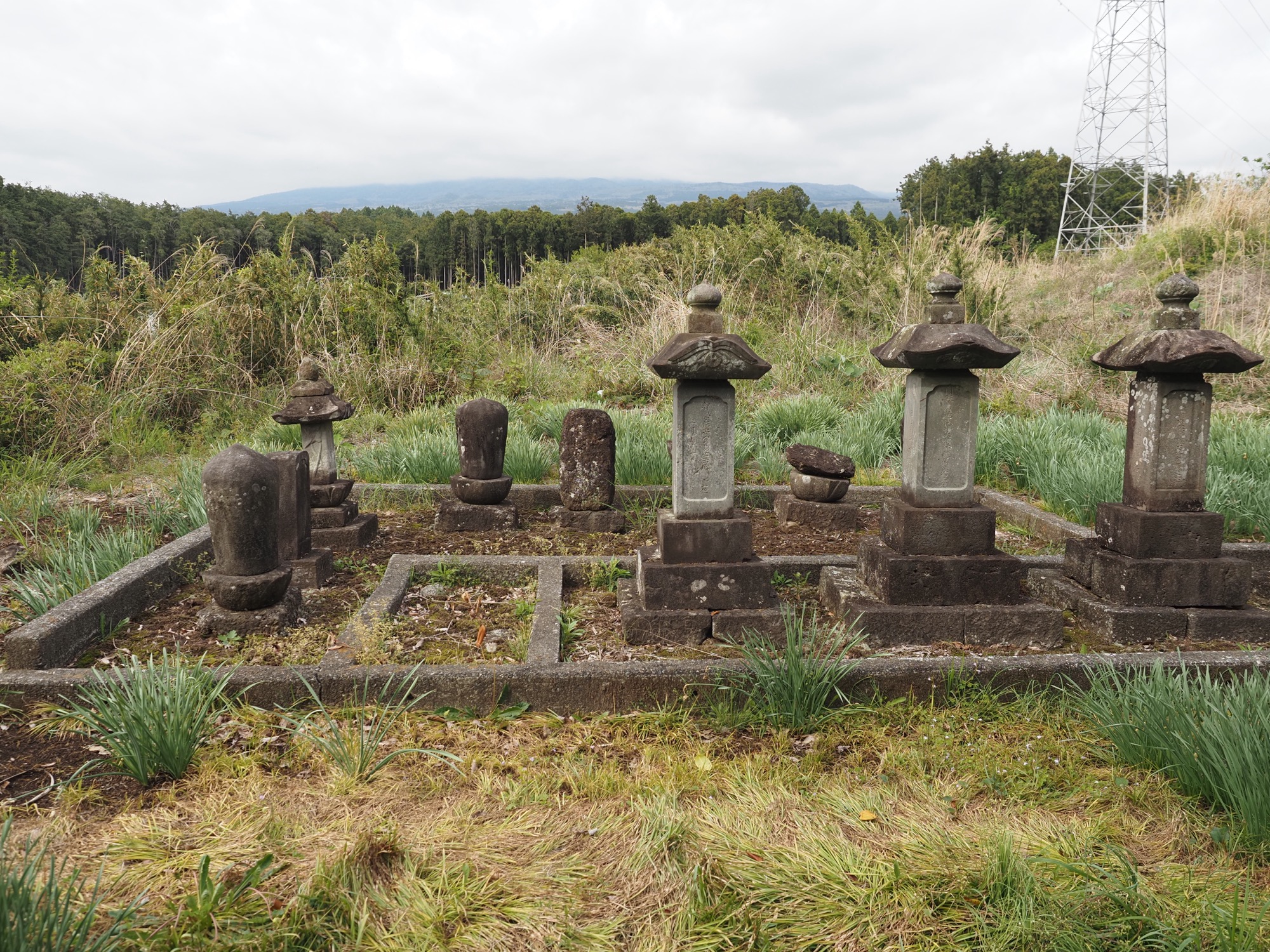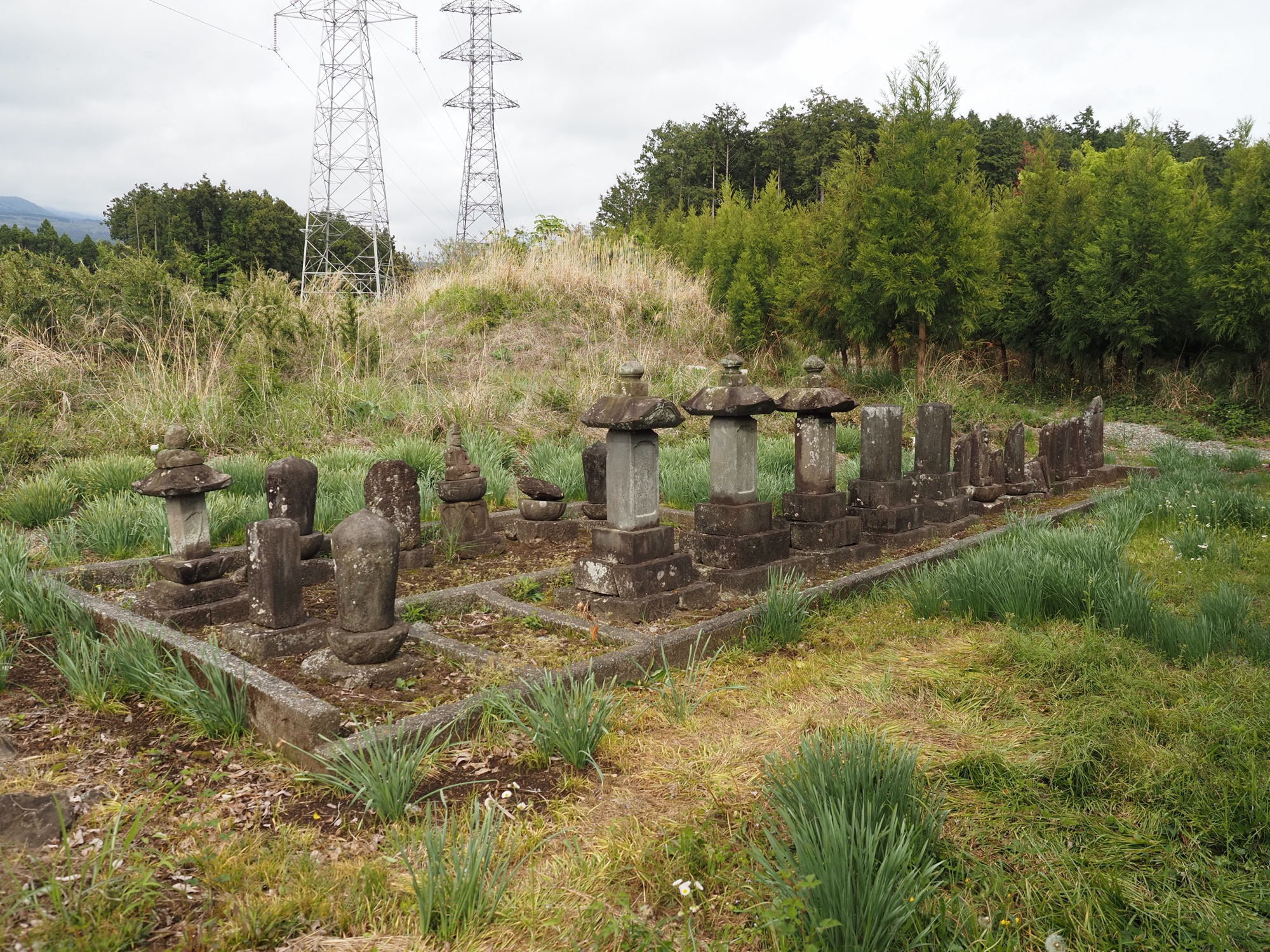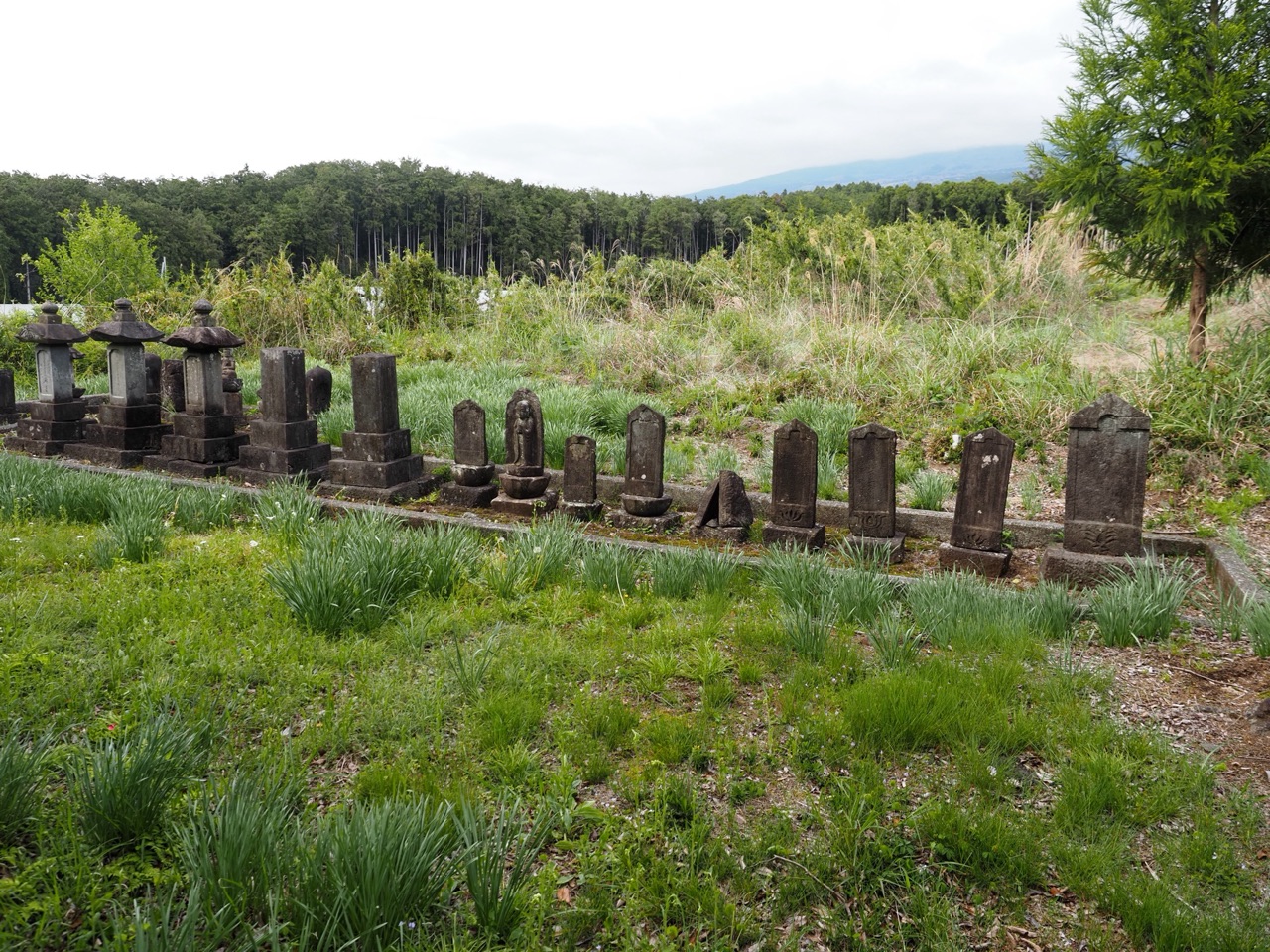
Tsujinobō Cemetery
The cemetery of Tsujinobō, one of the three Murayama bō. Tsujinobō appears in a document of 1533 (Tenbun 2) under the title of jimudai — deputy head of the Murayama shugen organisation — its rights as representative of Murayama Shugendō confirmed by the Sengoku warlords of the Imagawa clan. The temple was later carried on by a branch of the Katsurayama clan, magnates of eastern Suruga. Serving as custodian of the Shichisha Sengen shrines of Murayama Sengen Shrine, and overseeing the yamabushi and the offertory monies collected on the mountain, Tsujinobō stood at the administrative heart of Murayama Shugendō from the medieval into the early modern age.
Its dannaba — the territories of its faithful — extended across the eastern provinces of Echigo, Shinano, Izu, and Kōzuke, through which its guides circulated, distributing amulets and urging the pilgrimage to Fuji. In the climbing season pilgrims were received at the lodging, given purification and prayers, and led up the Murayama trail to the summit. The management of the mountain tolls — the yamayakusen and rokudōsen — was among Tsujinobō’s principal offices, and these revenues underpinned the economy of both Murayama Shugendō and Sengen Taisha.
In the late Edo period Tsujinobō fell vacant, its affairs administered for a time by Daishōin, its supervisory temple in Edo, and its history drew to a close even before the Meiji separation of Shinto and Buddhism.
What remains now is the cemetery alone. In the stillness of its moss-covered stone monuments are folded the centuries of a temple that negotiated with warlords and guided the pilgrims of the eastern provinces to the summit of Fuji. As witness to the age when the three bō stood together at Murayama and sustained the height of the Fuji pilgrimage, this burial ground keeps its place at the edge of the hamlet still.