Nenba, Lake Sai
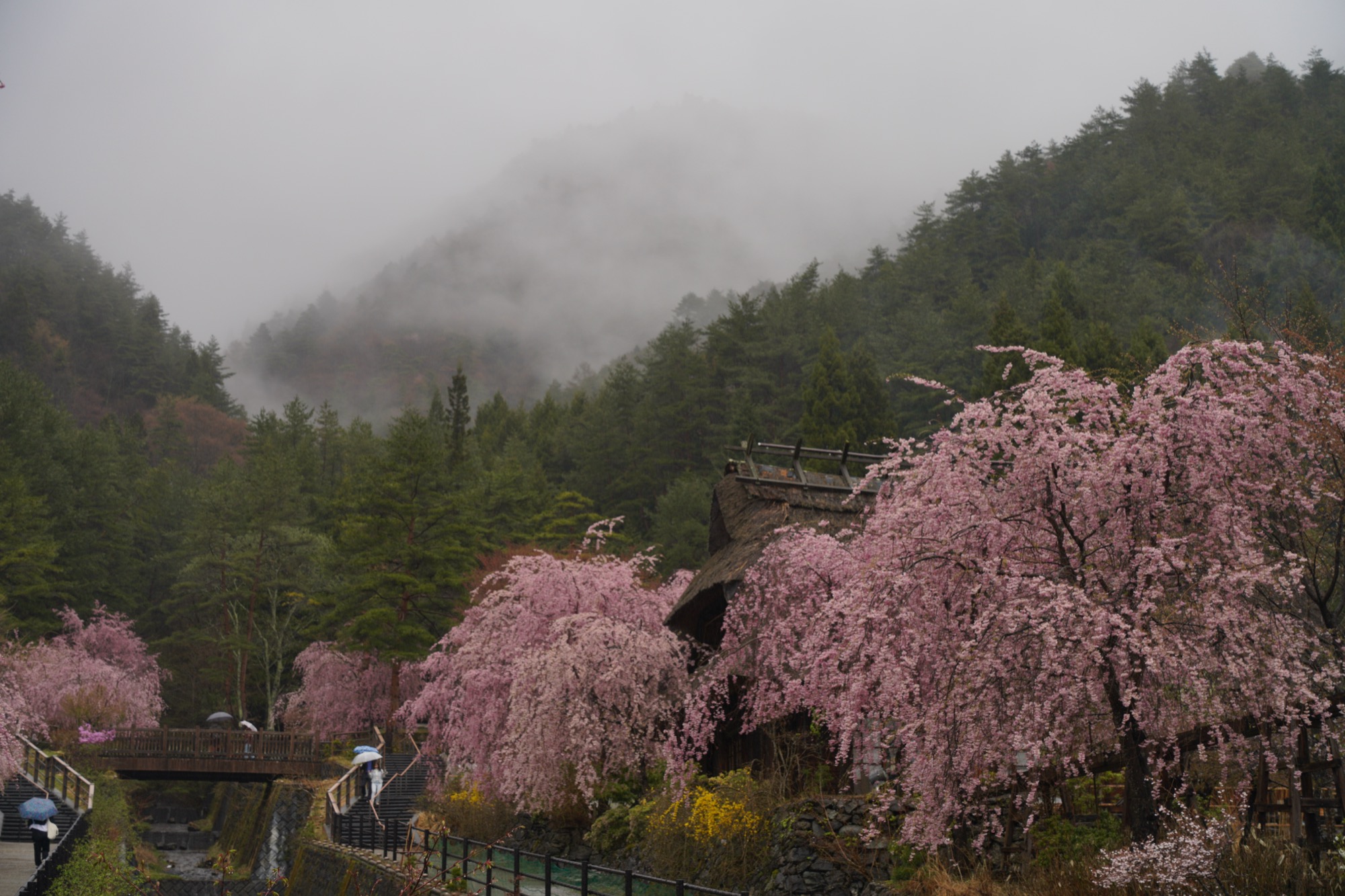
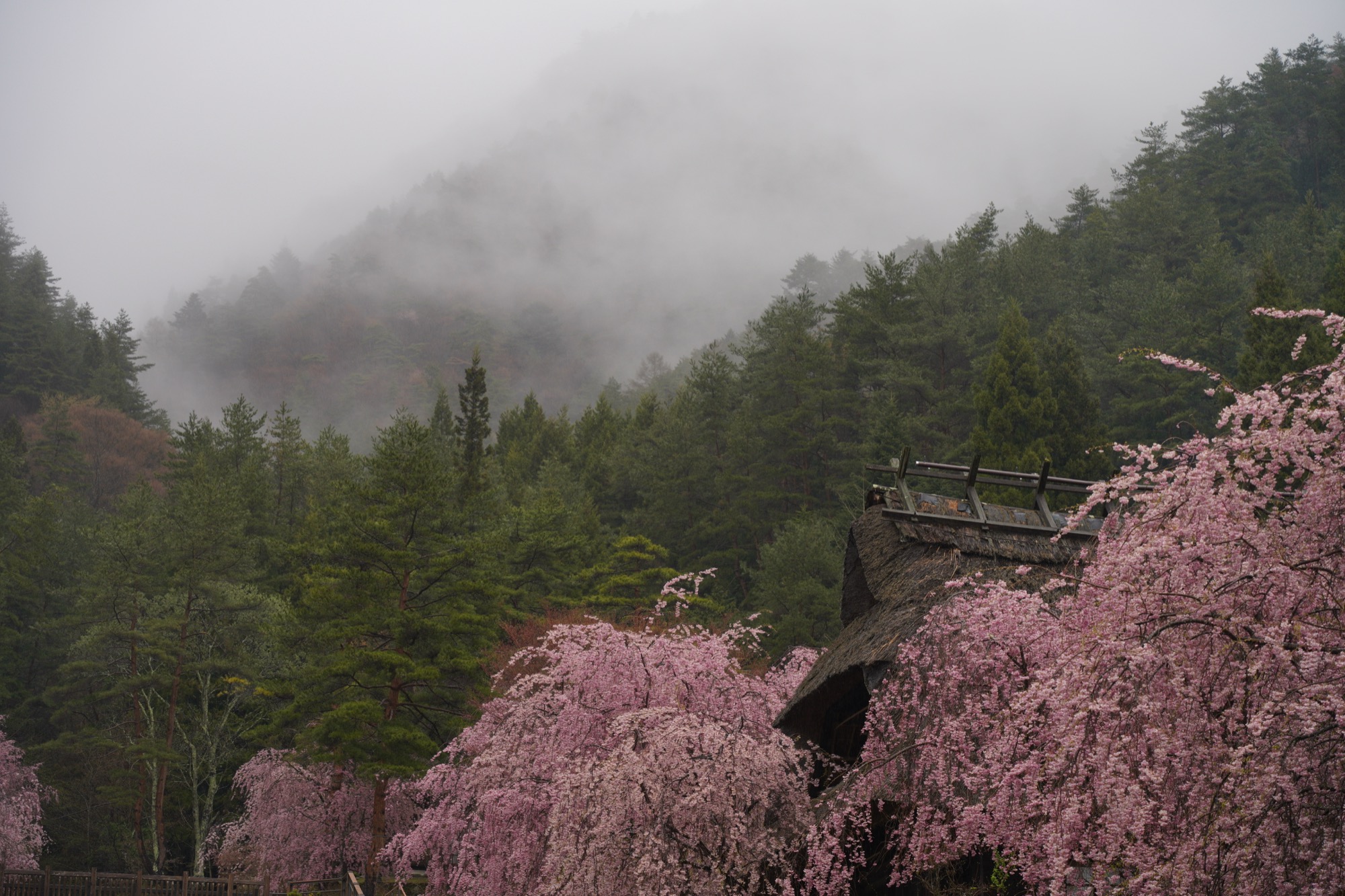
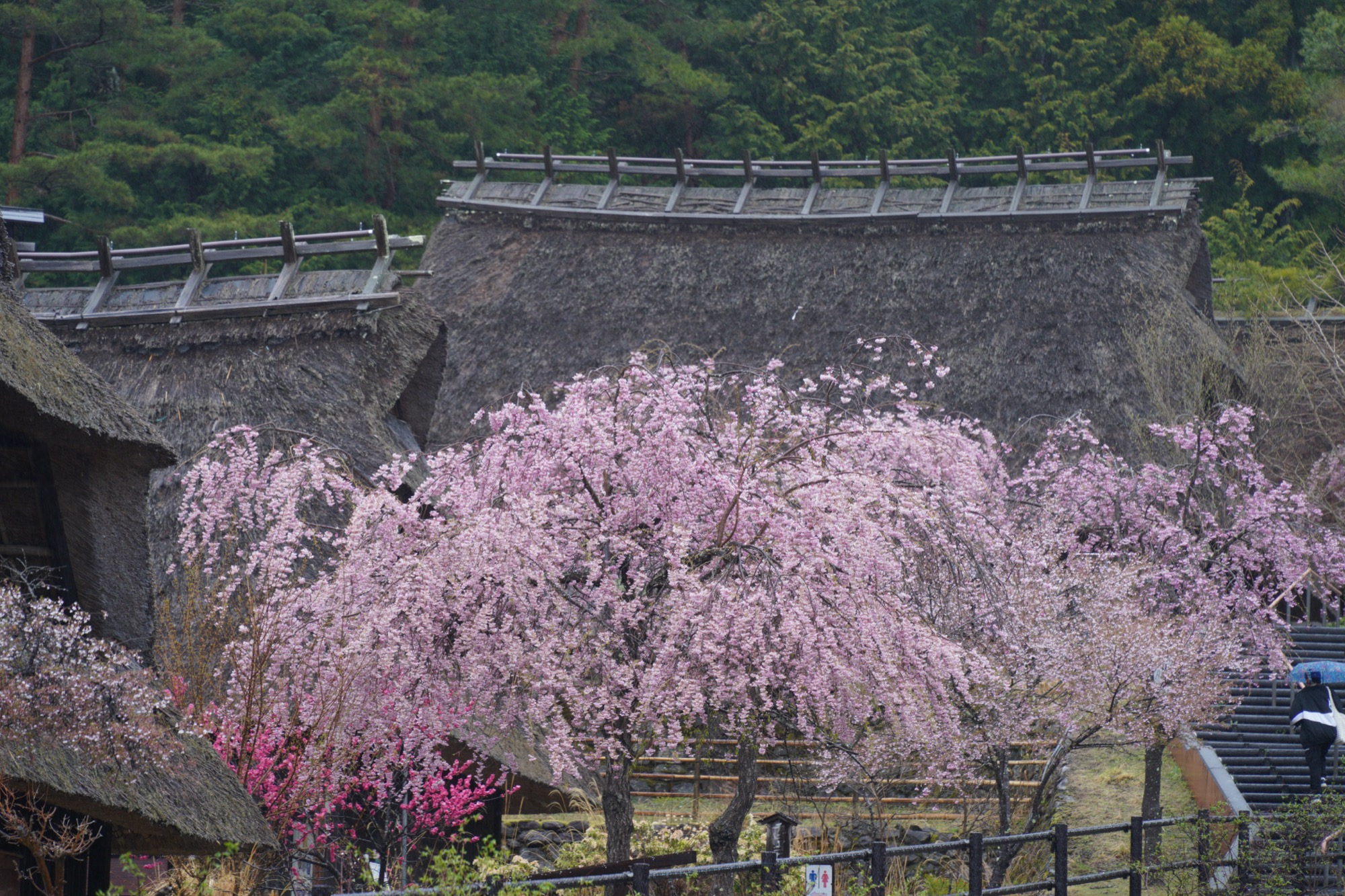
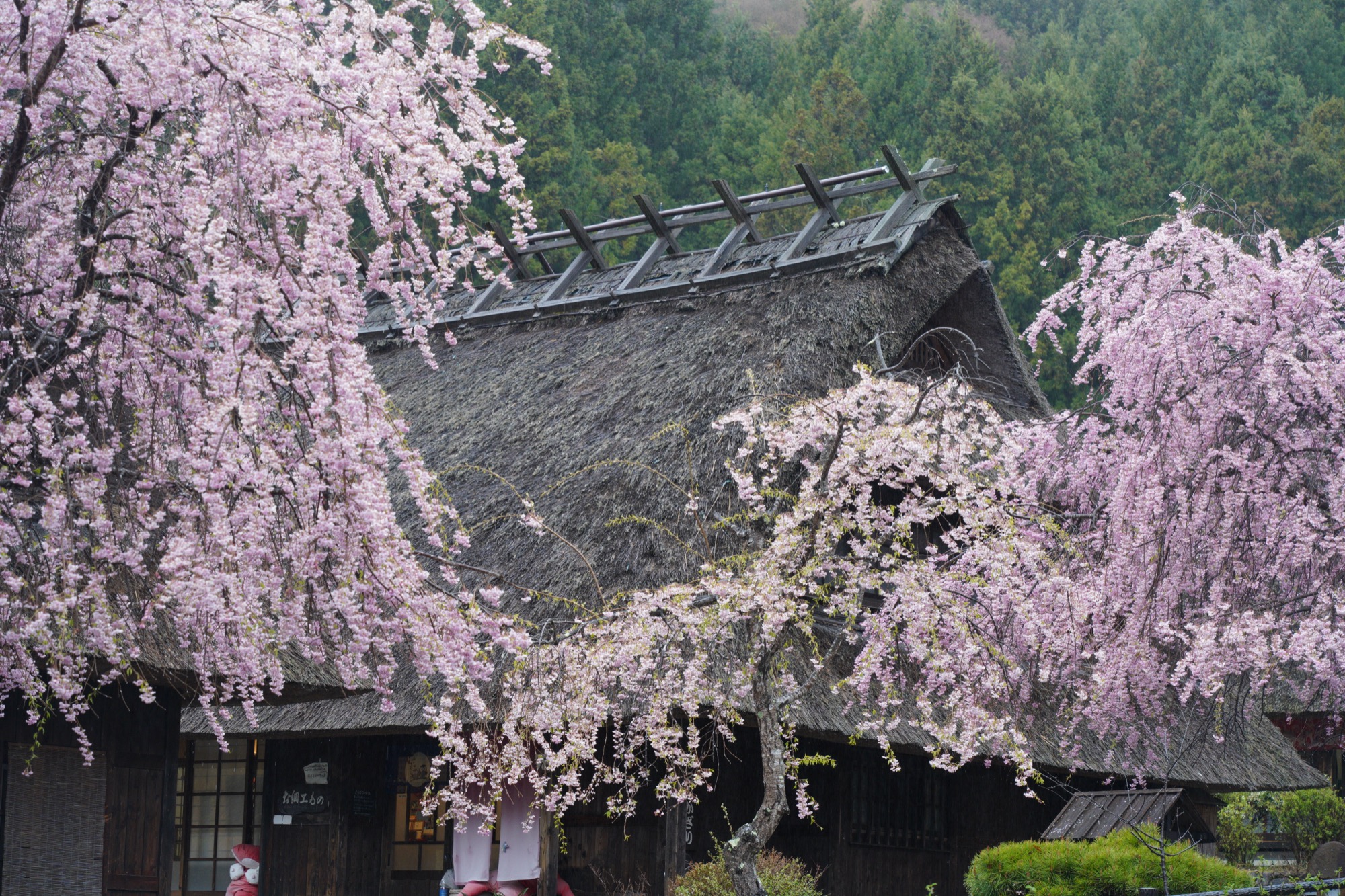
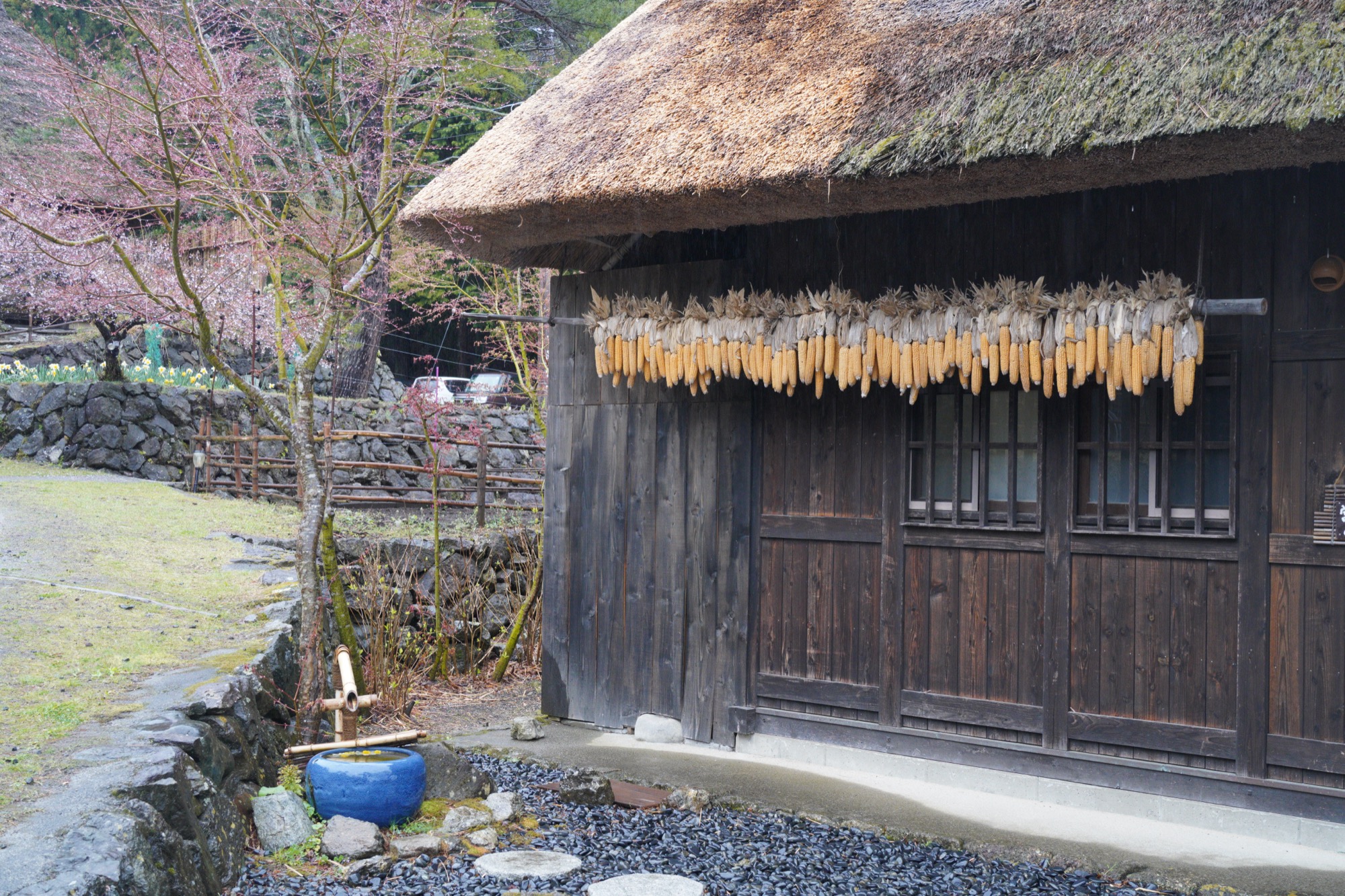
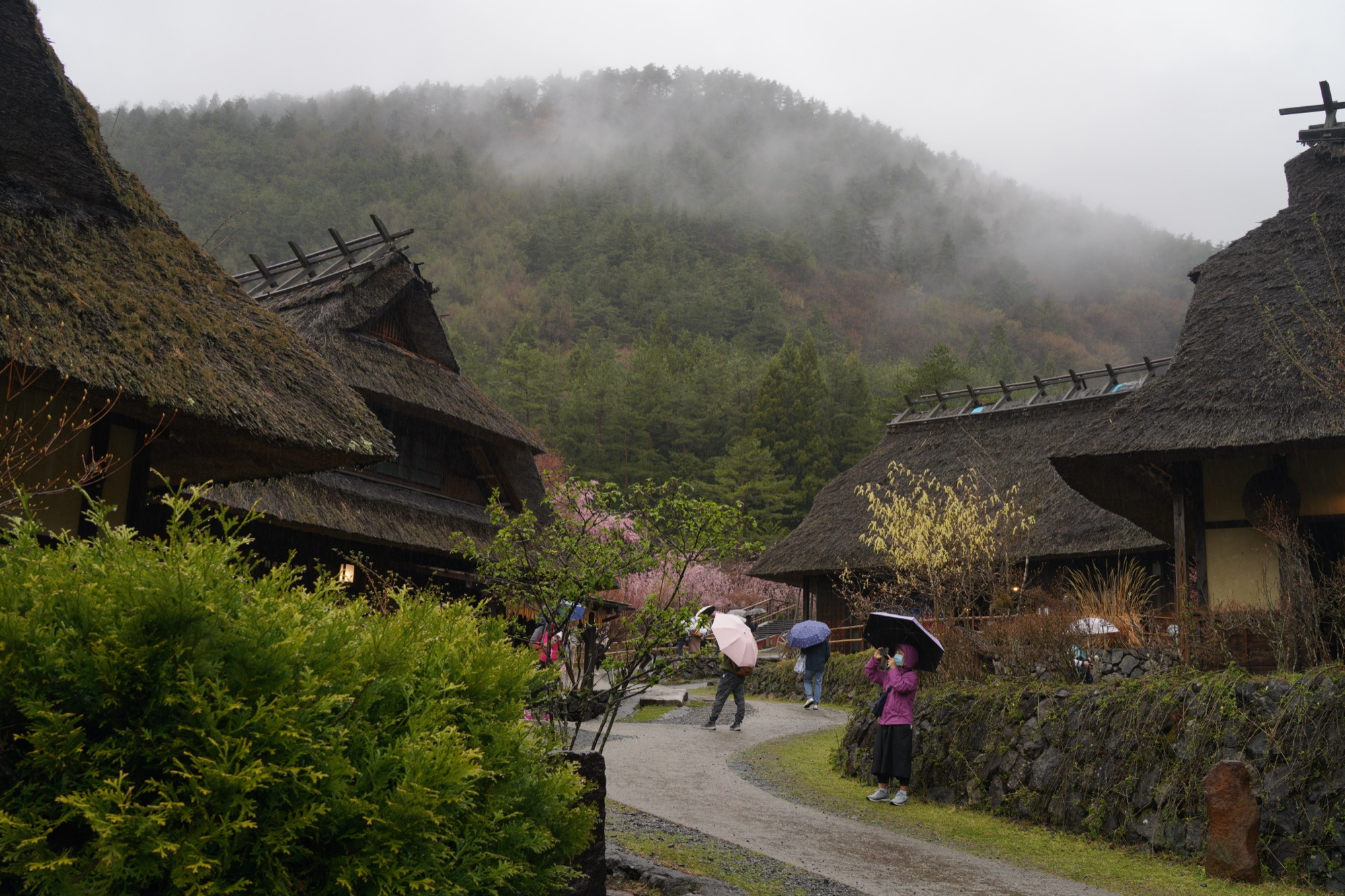
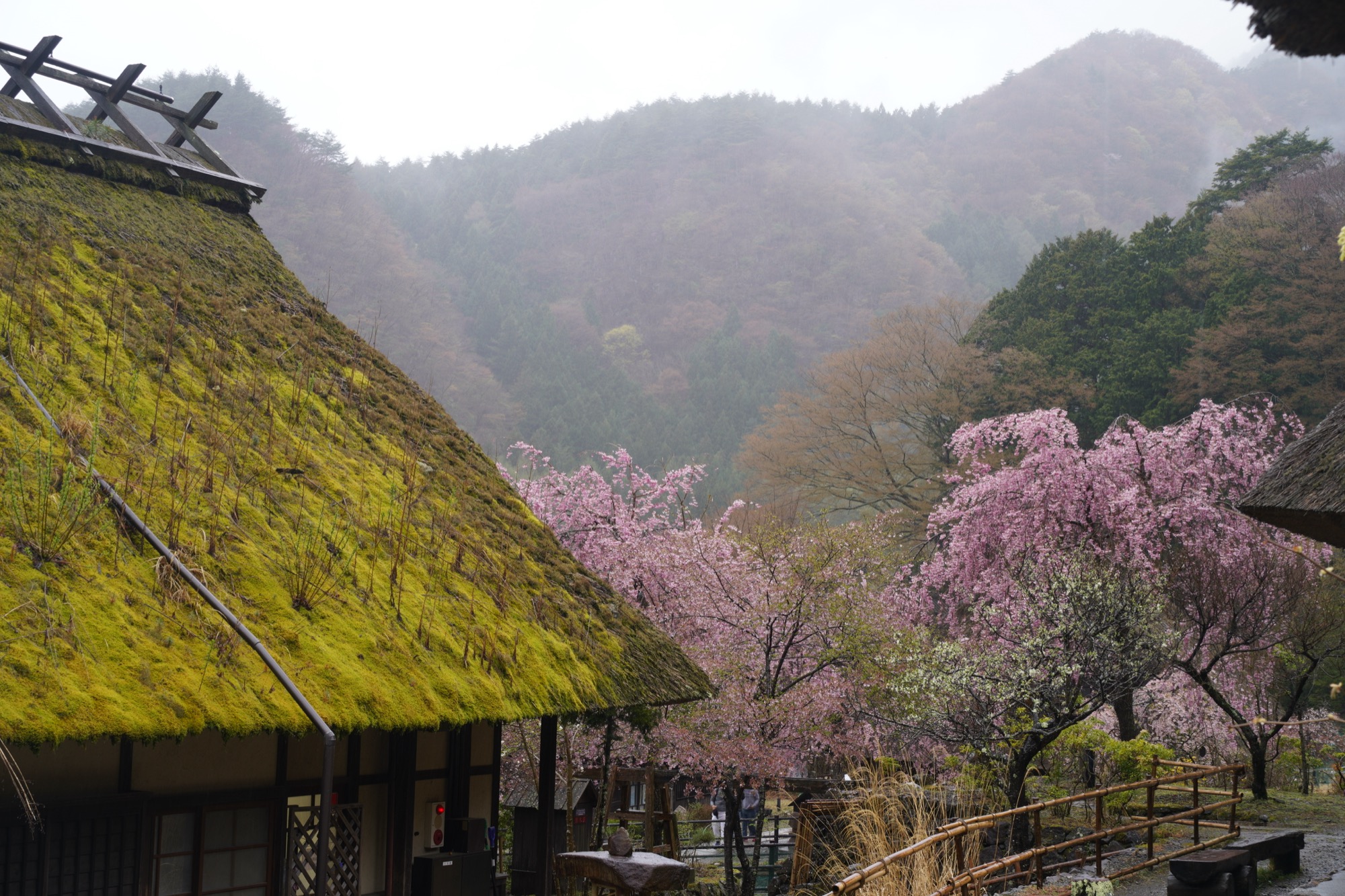
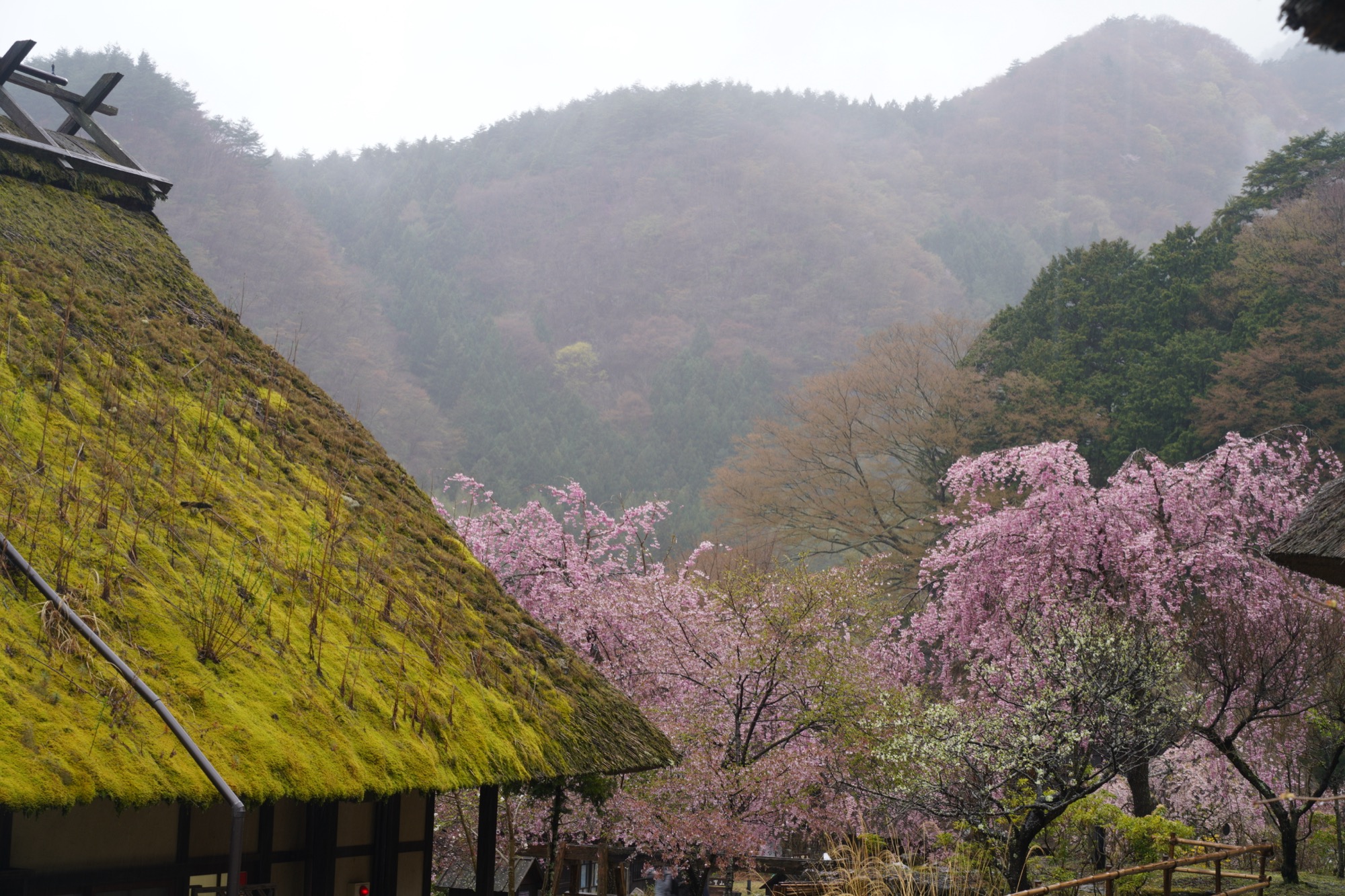
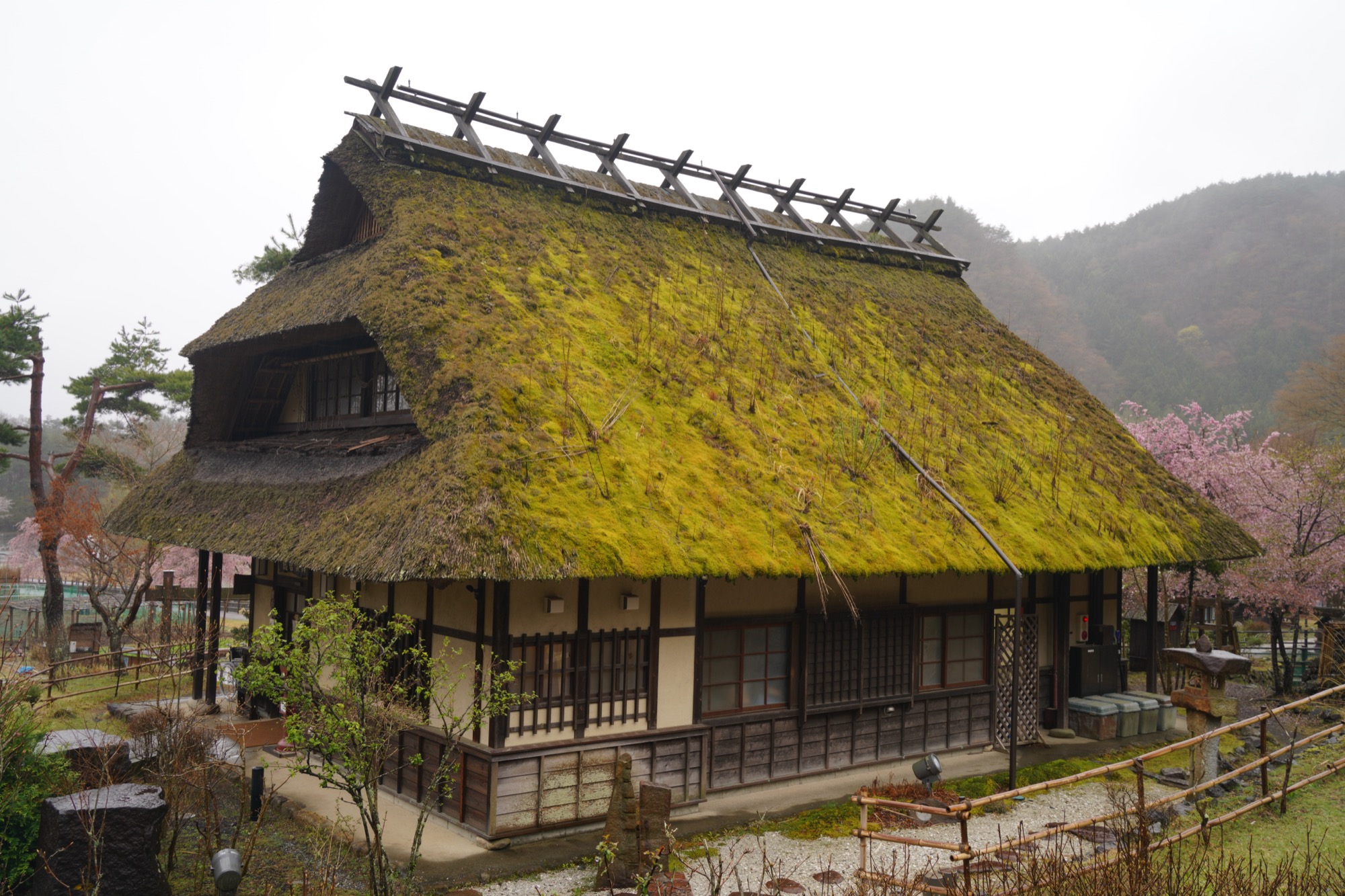
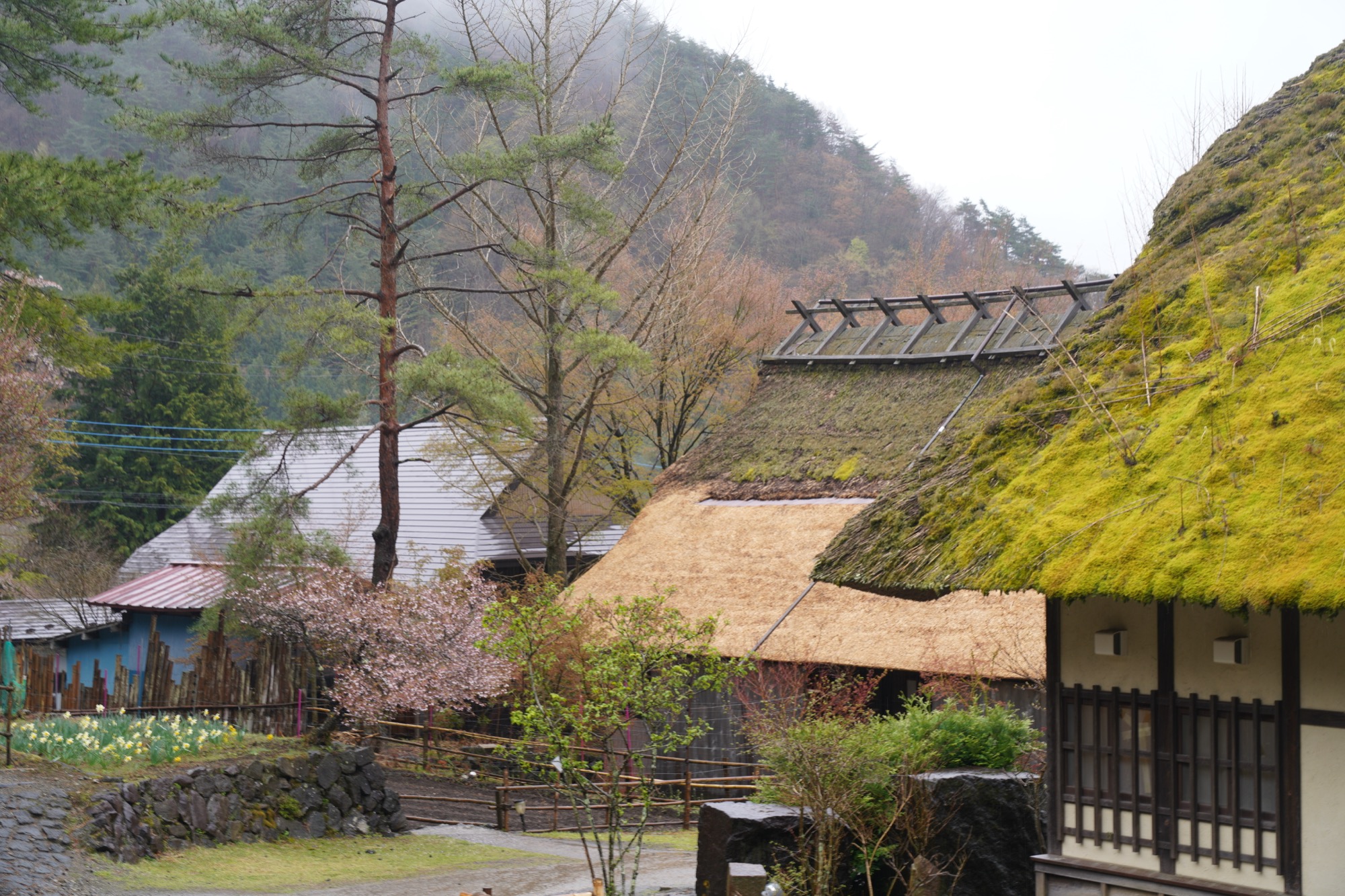
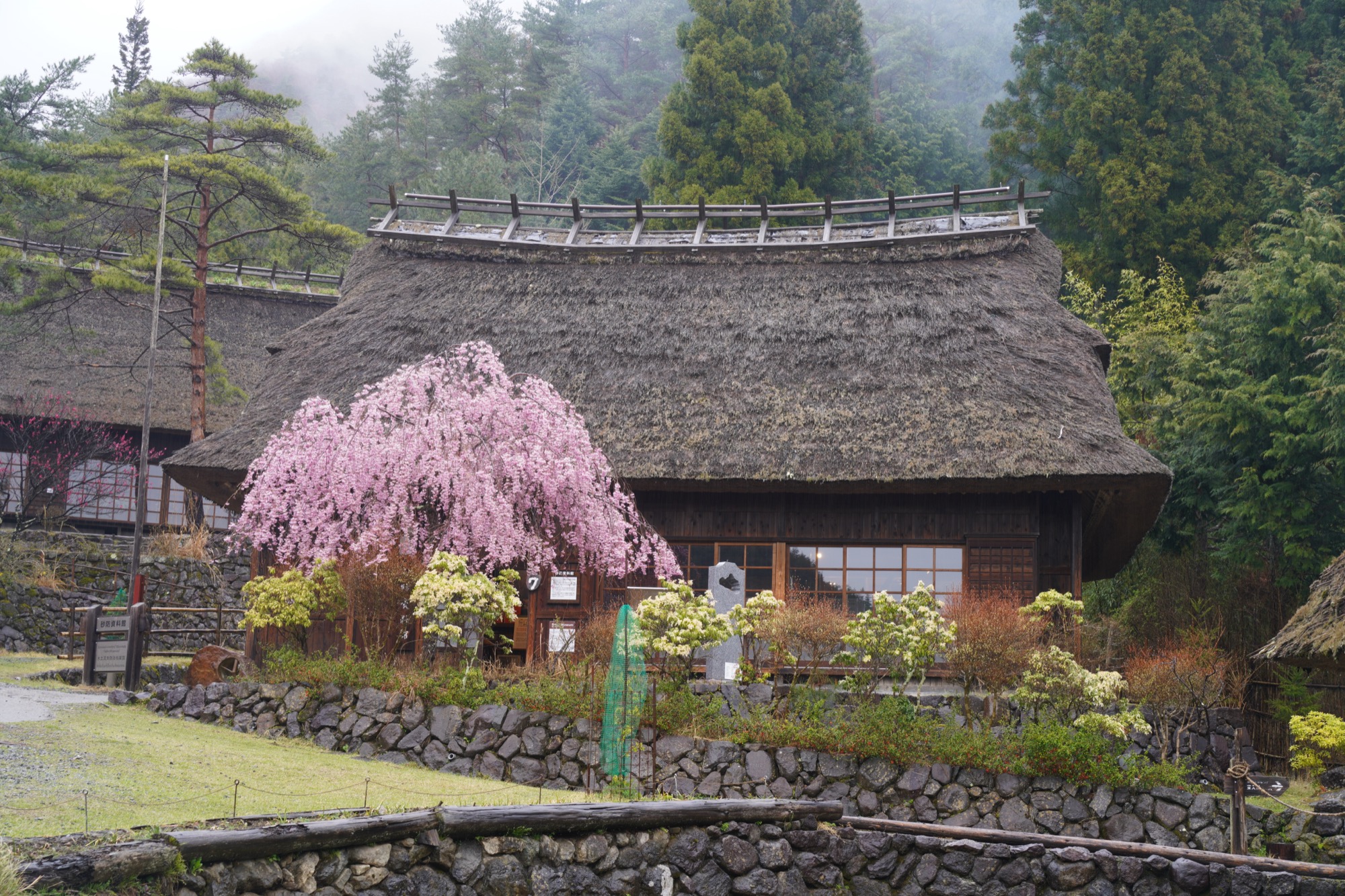
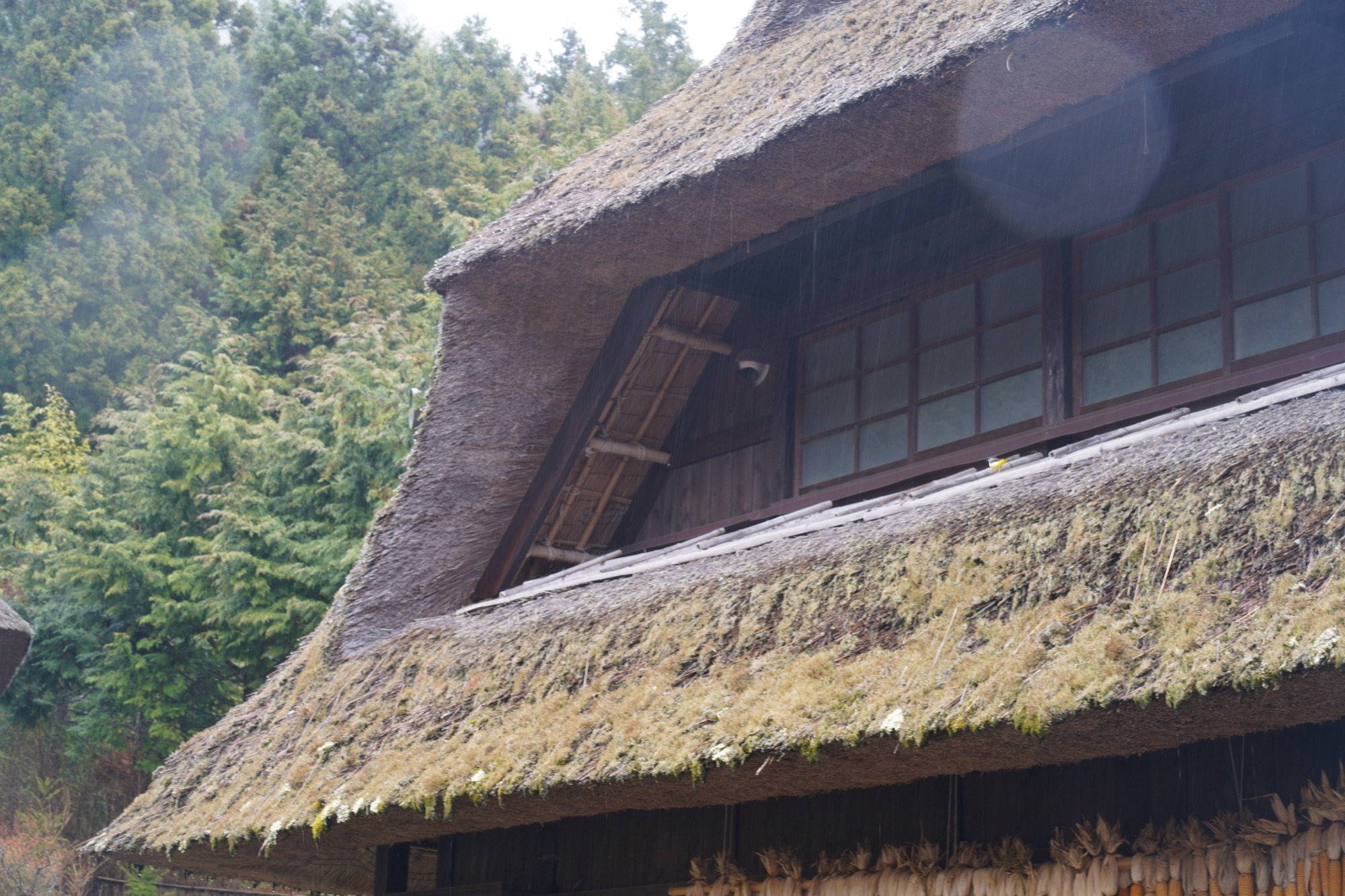
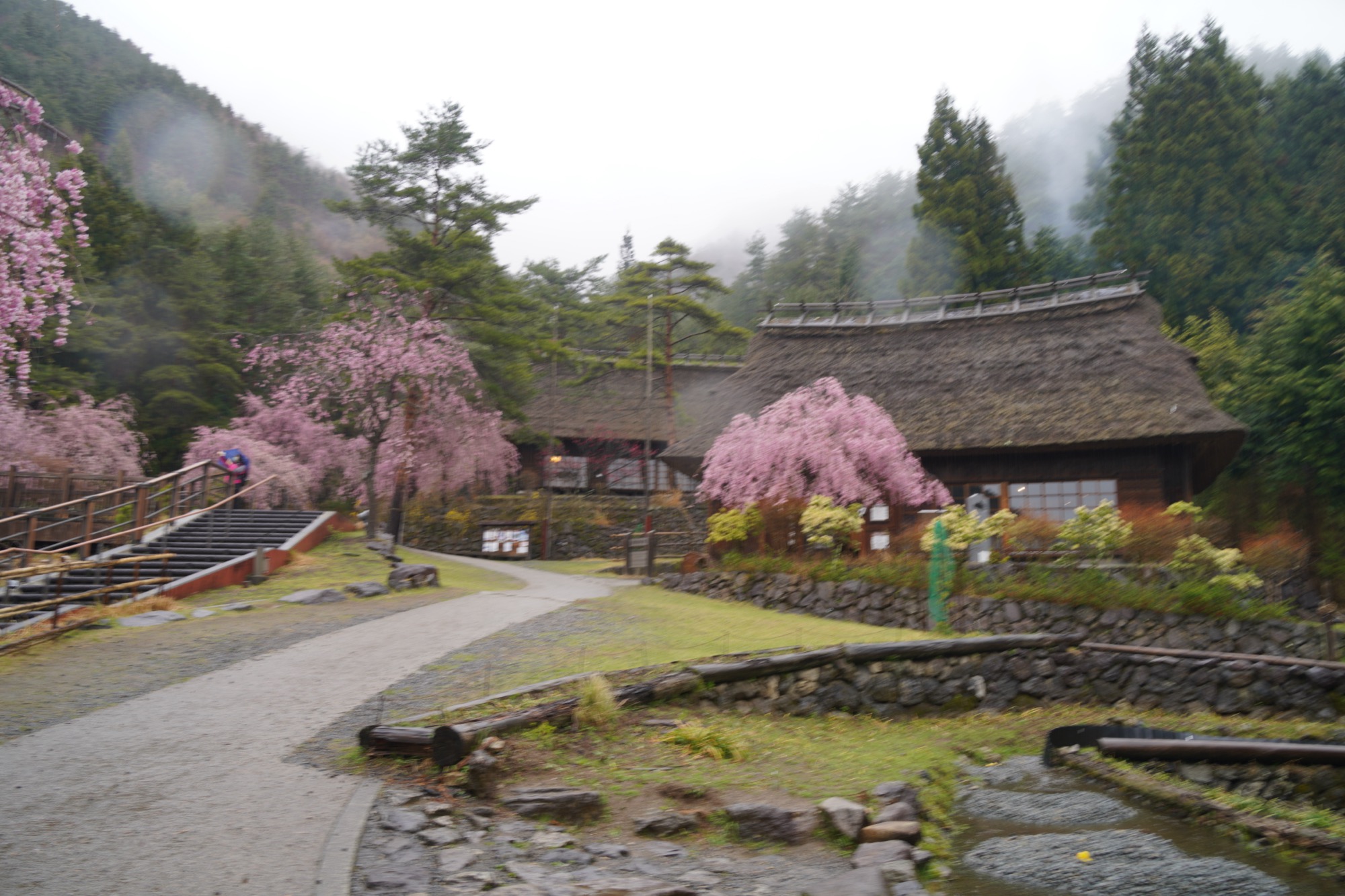
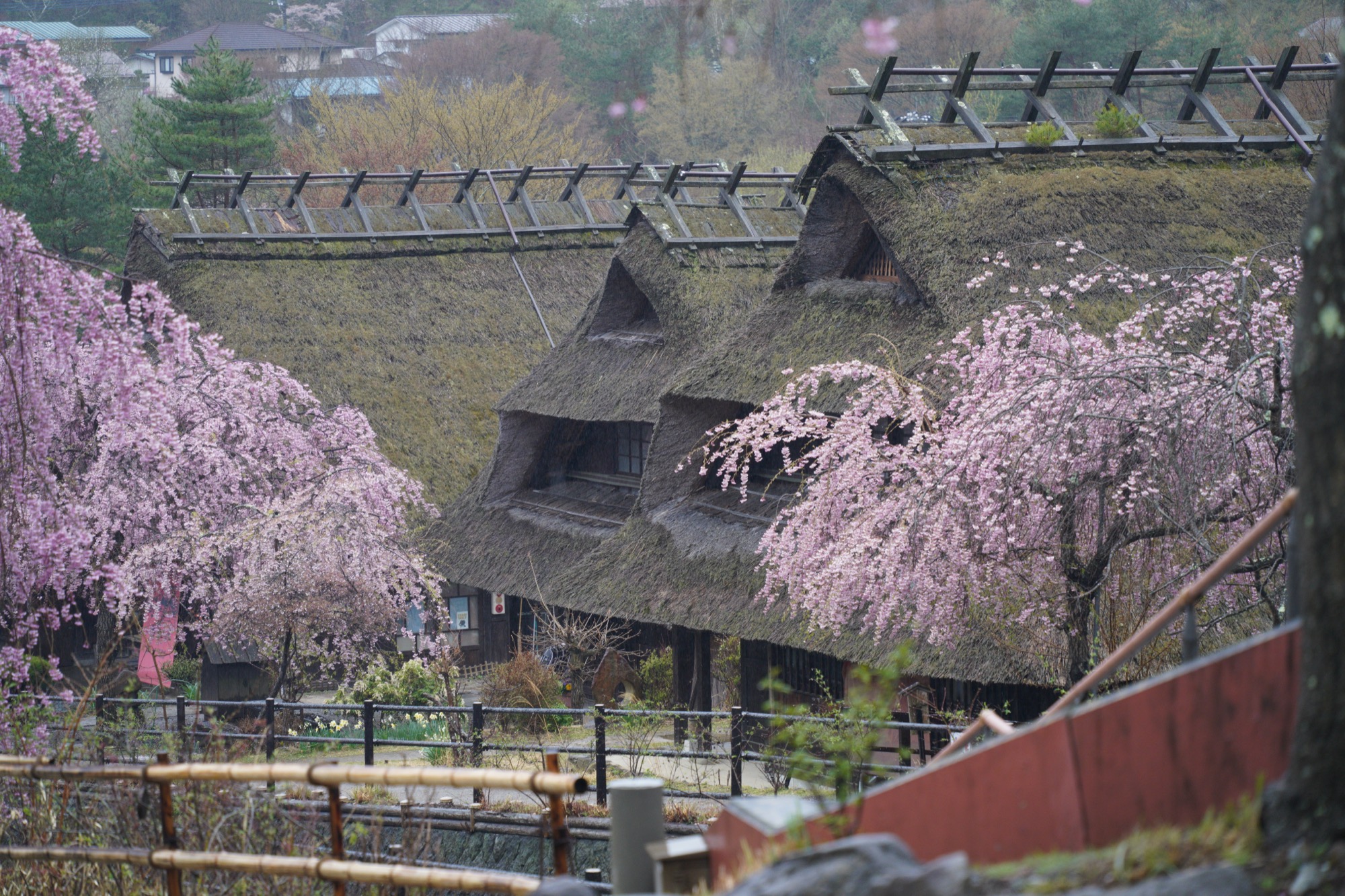
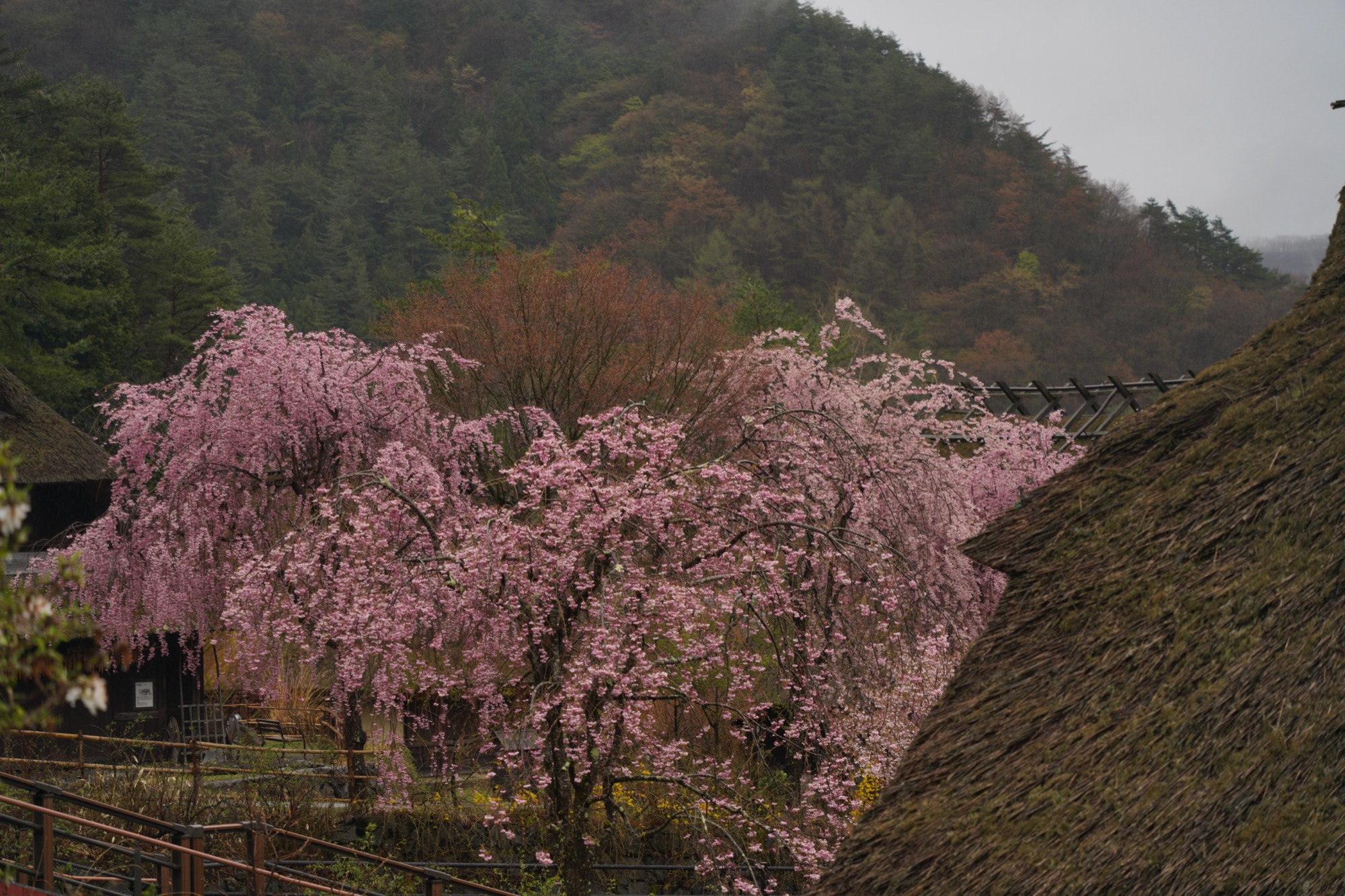
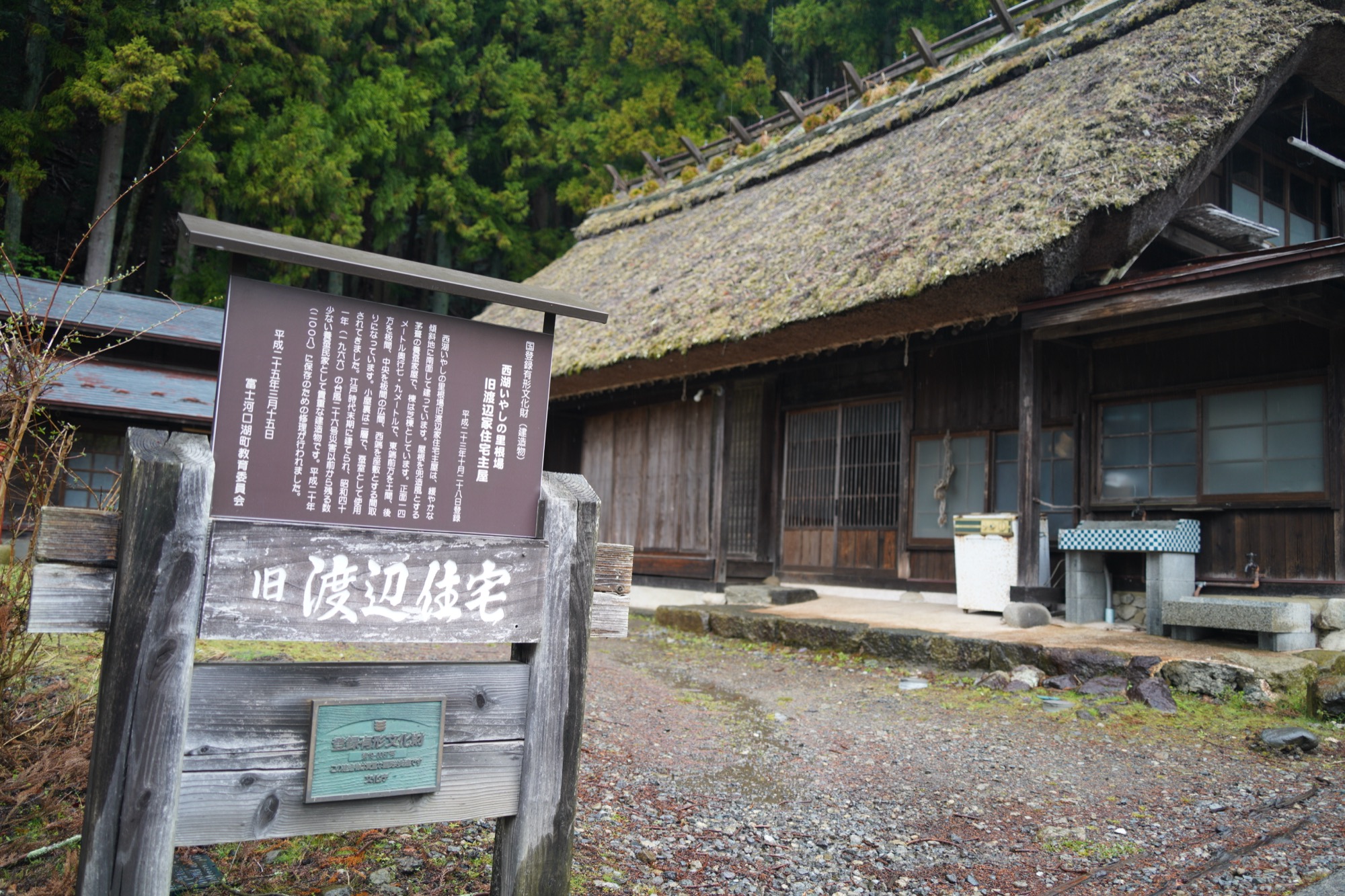
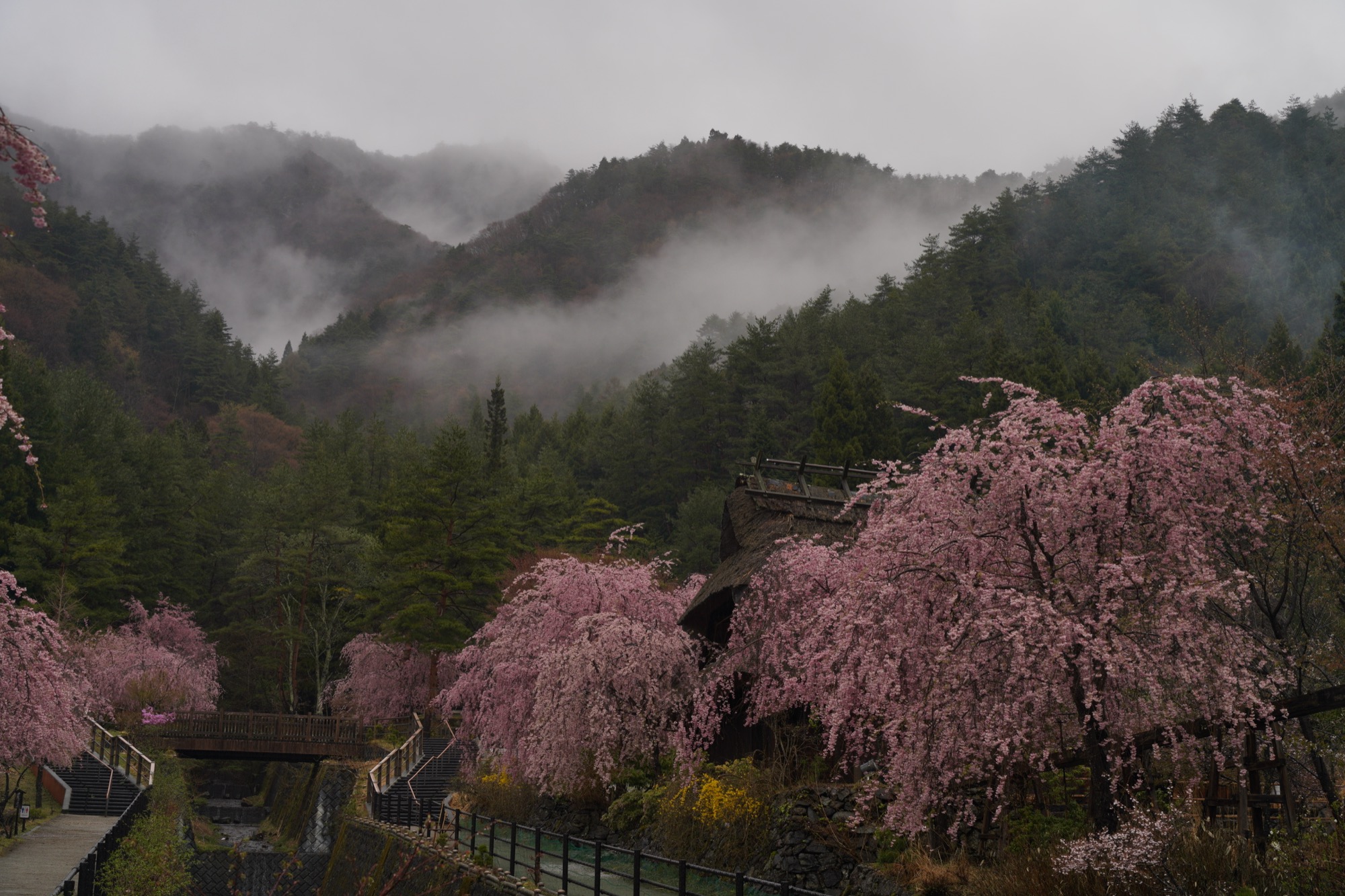
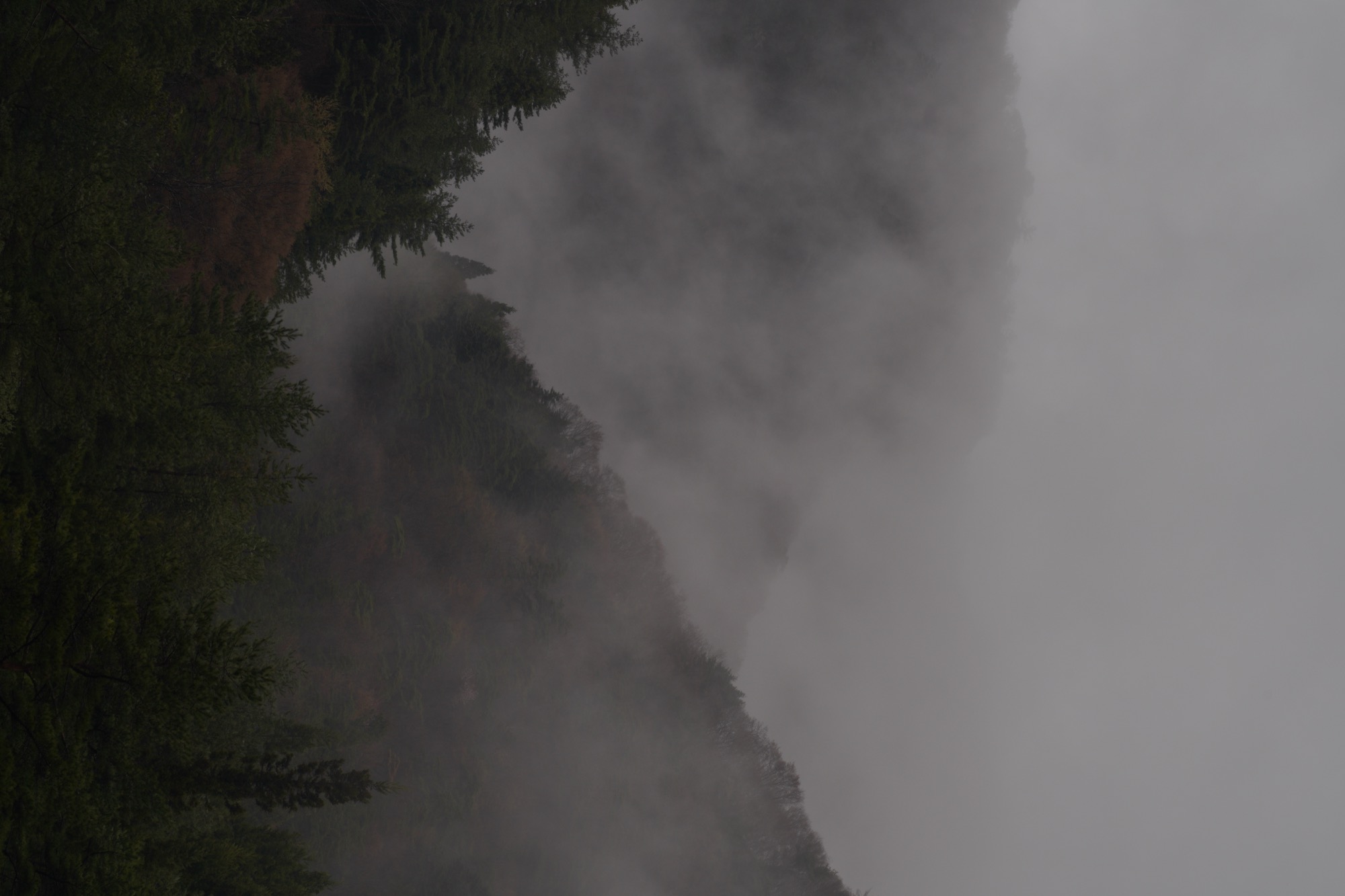
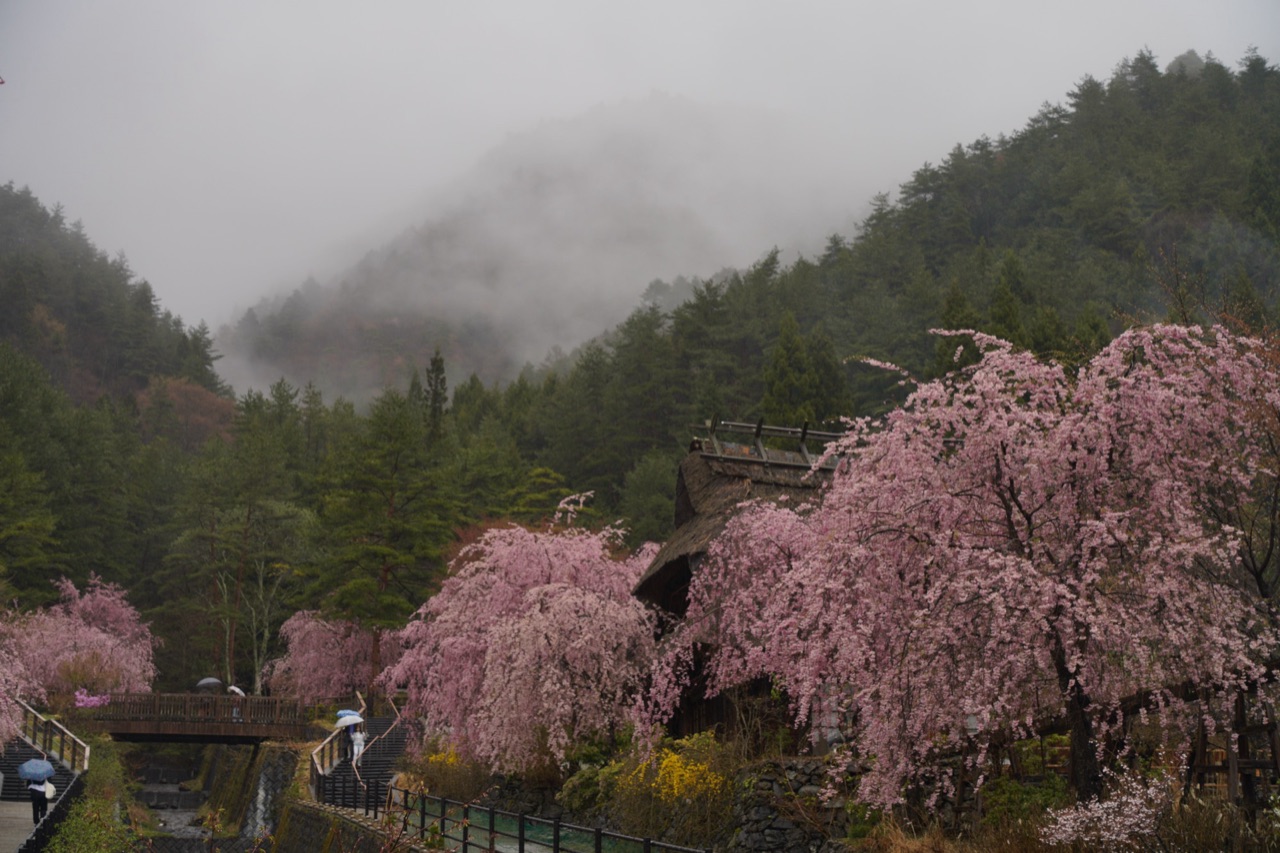
The Nenba district lies at the western end of Lake Sai, one of the Fuji Five Lakes. Saiko Iyashi no Sato Nenba has been built here, with thatched farmhouses in the kabuto-zukuri style restored, and in spring, when the weeping cherries bloom, the blossoms, the thatched roofs and the lake make a single scene.
Lake Sai keeps the memory of one of Mt. Fuji’s largest eruptions. There was once a huge lake here, the Senoumi, connected with Lake Motosu and Lake Shōji. The lava that flowed down in the great eruption of 864 (Jōgan 6), in the Heian period, filled most of the Senoumi and split it into Lake Sai and Lake Shōji. The forest that grew on the lava plateau is the Aokigahara forest. Lake Sai was also called Nishi-no-umi and was an important stop on the Uchi-hakkai meguri, in which Fuji-kō practitioners went round the lakes and ponds at the foot of the mountain to perform water austerities. The Ryūgū cave near the lakeshore was thought to be the home of a dragon god, and in years of drought, it is said, nearby villages received water from the cave and prayed for rain.
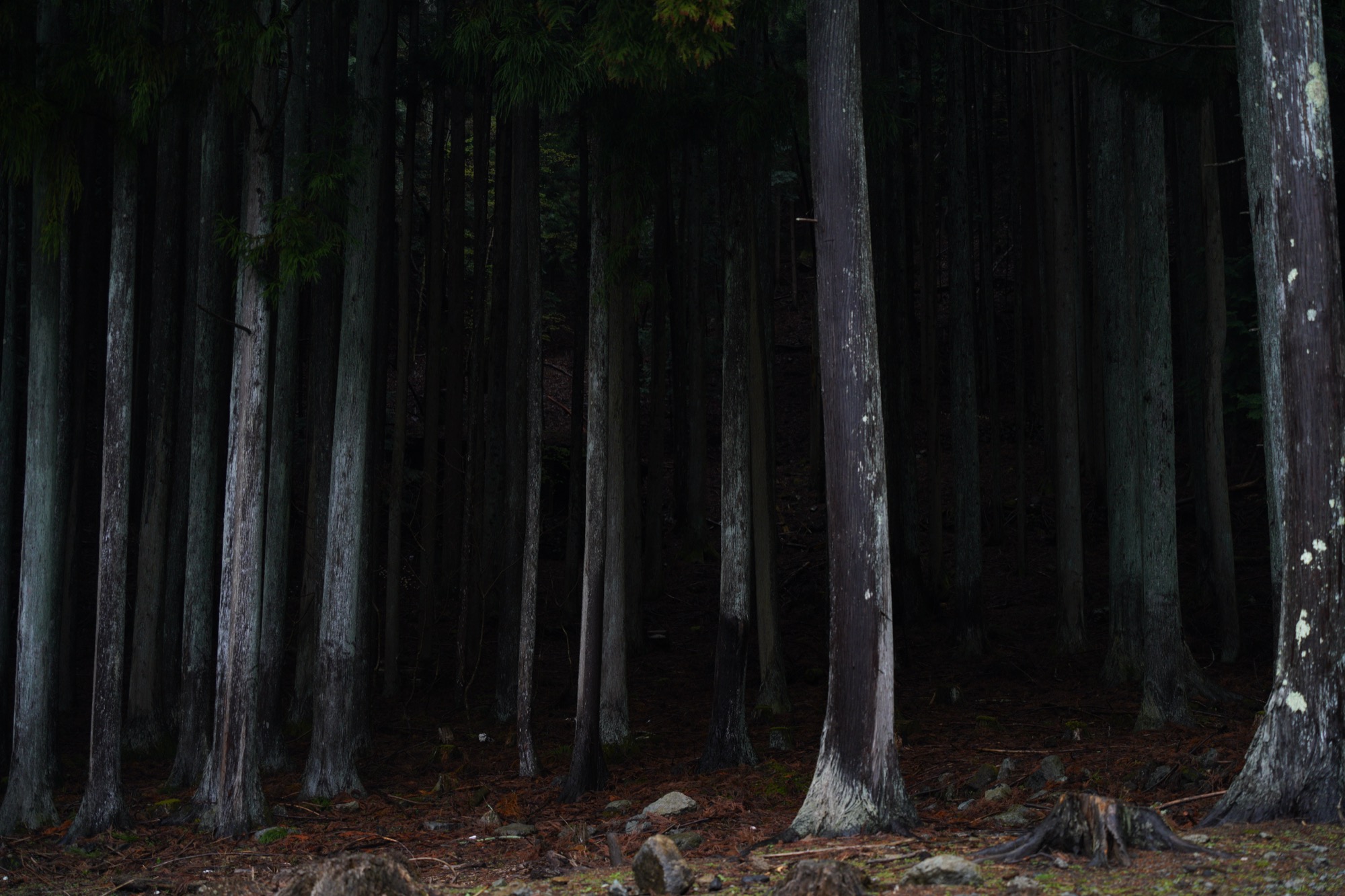
Nenba was a mountain village of thatched houses on the slope between the lake and the mountains. A travel account of 1903 (Meiji 36), Fujisan, records a Nenba farmer saying that the village now had only thirty-six households, and that the hills, once thickly wooded, had been cut for charcoal and planted with mulberry and were now bare. When the Fuji Sanroku Electric Railway reached Yoshida in 1929 (Shōwa 4), the route suggested for touring the five lakes from Tokyo and Yokohama ran by boat from Funatsu to Nagahama, on foot to Lake Sai, by boat to Nenba, by car from Nenba to Akaike, and by boat again to Shōji. In 1959 (Shōwa 34) the prefecture also opened the Saiko Youth Hostel at Nenba.
In September 1966 (Shōwa 41) debris flows caused by a typhoon destroyed the village, and many people died. The residents moved to the opposite shore of the lake, and the village site was long left empty. Later it was developed as Iyashi no Sato, with kabuto-zukuri farmhouses of the old days restored, and the landscape of the lost mountain village was brought back.
Lake Sai is a component of the World Heritage property Fujisan: Sacred Place and Source of Artistic Inspiration.