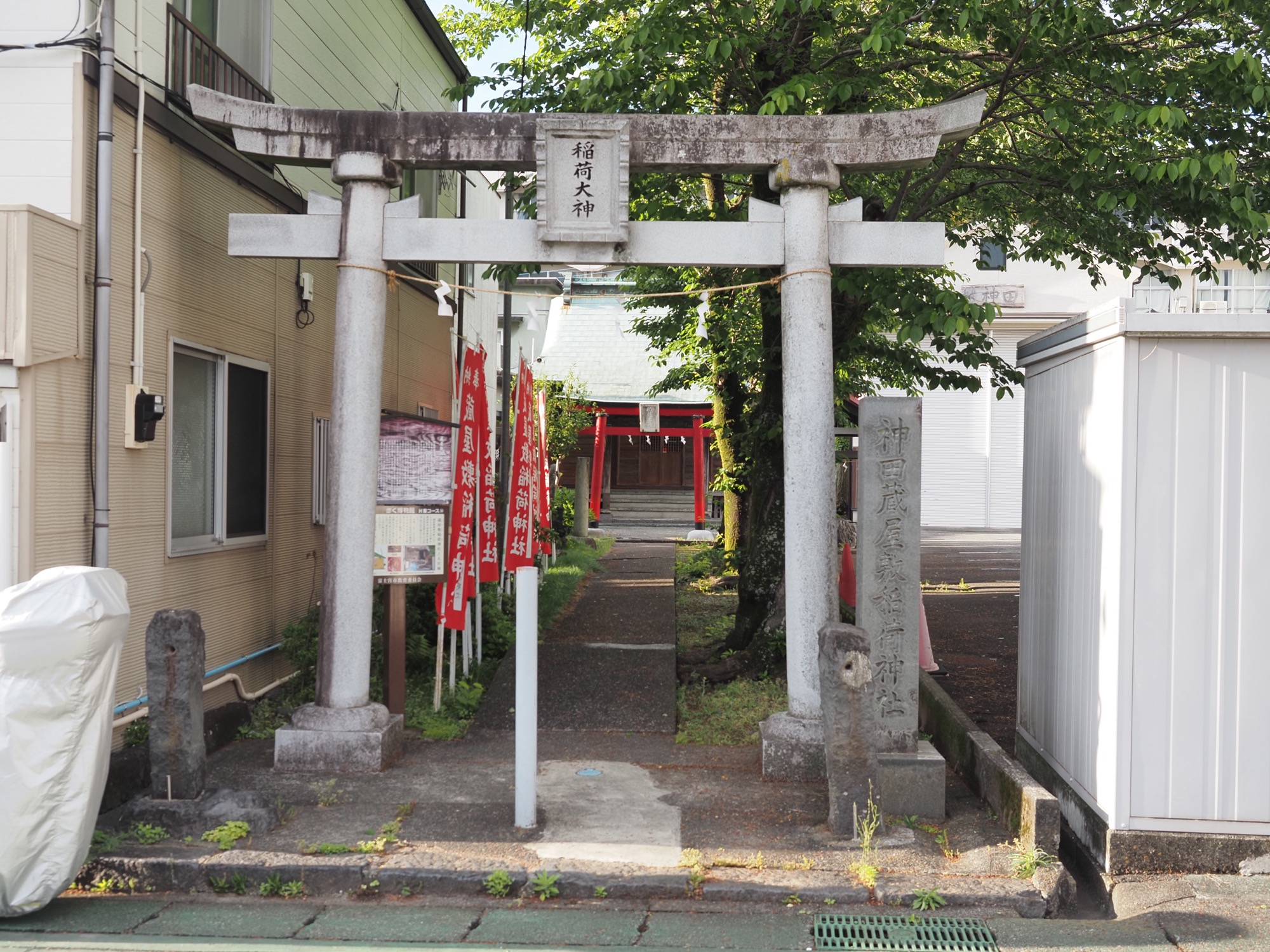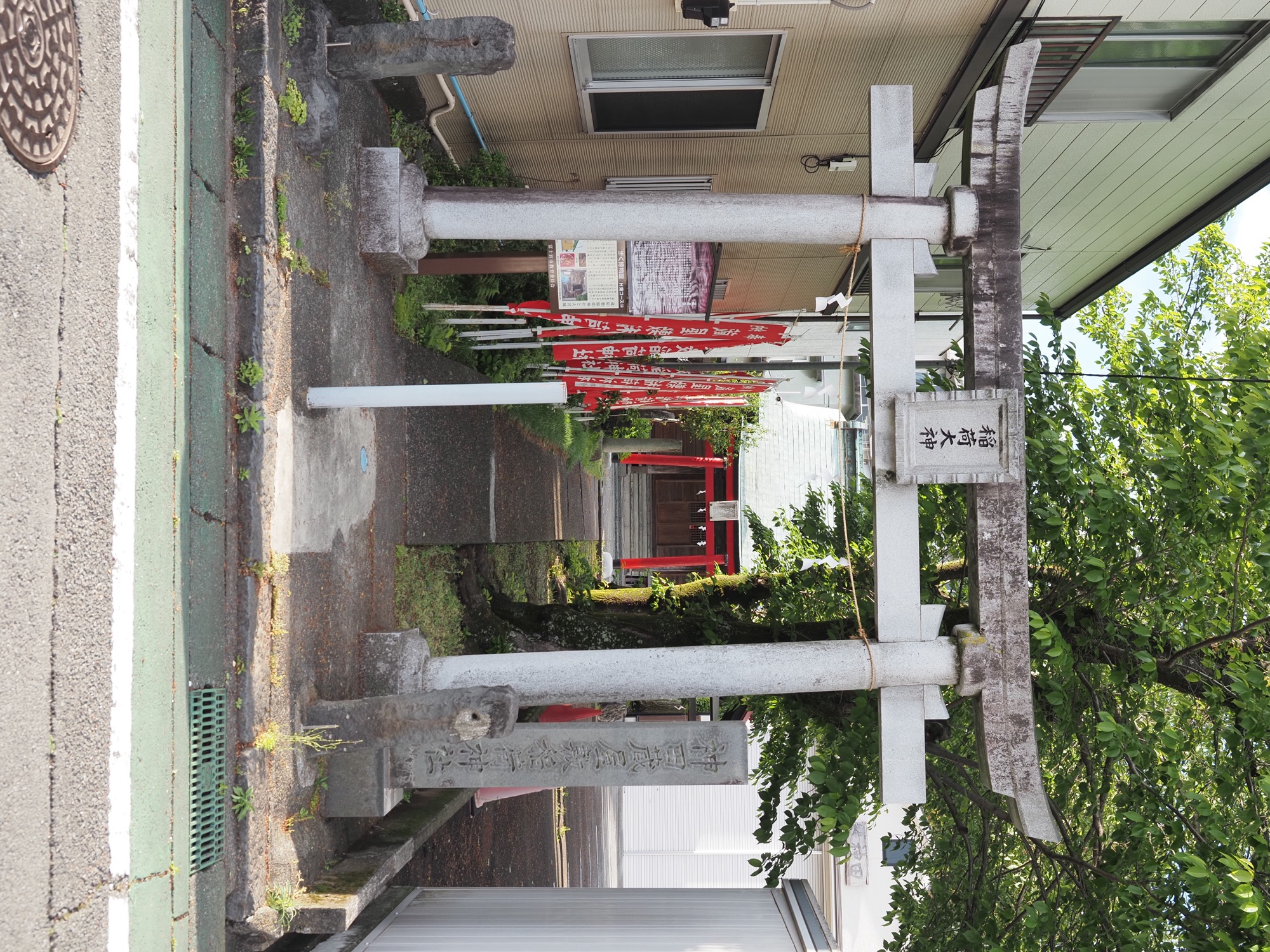
Kurayashiki Inari Shrine
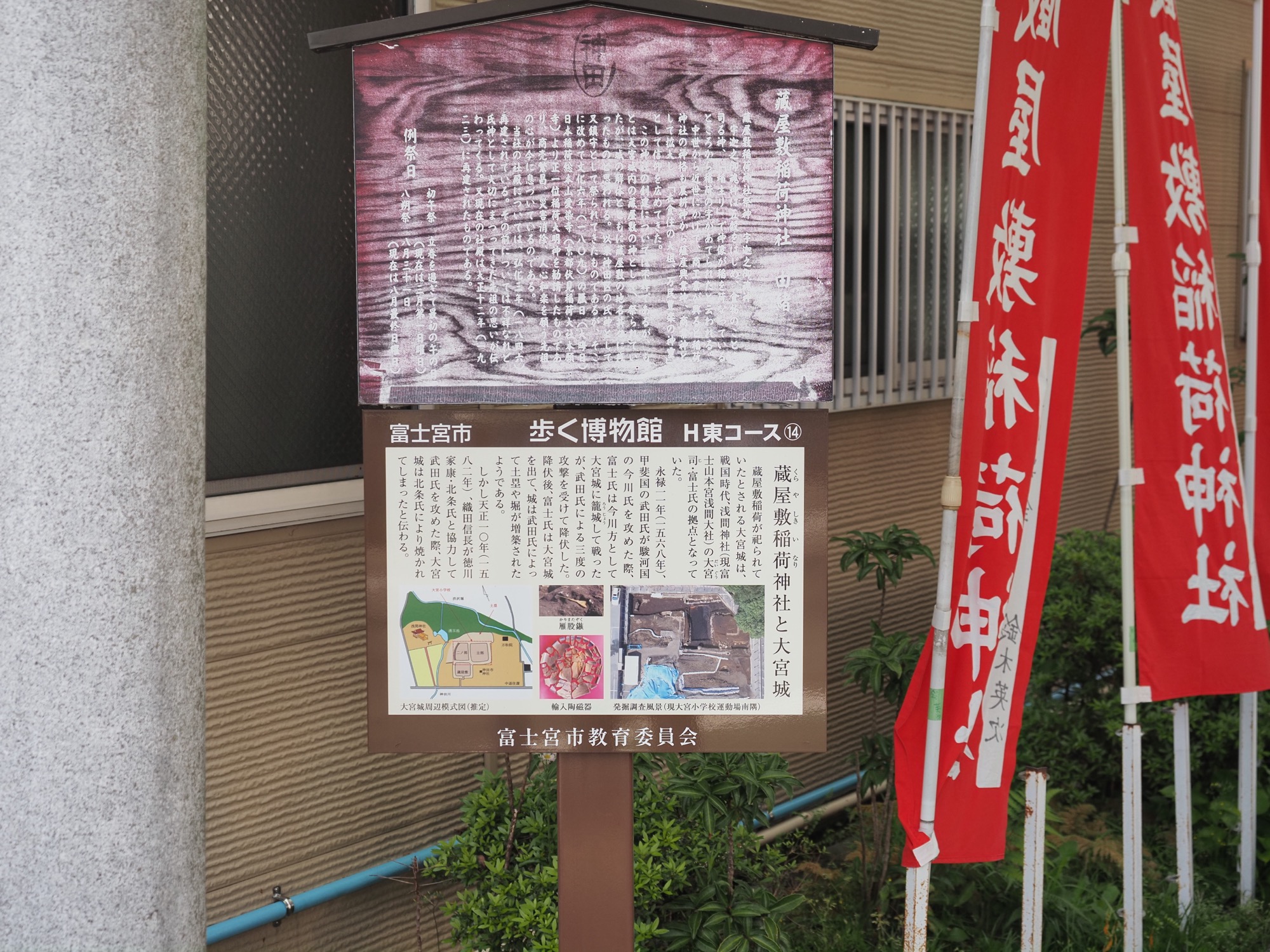
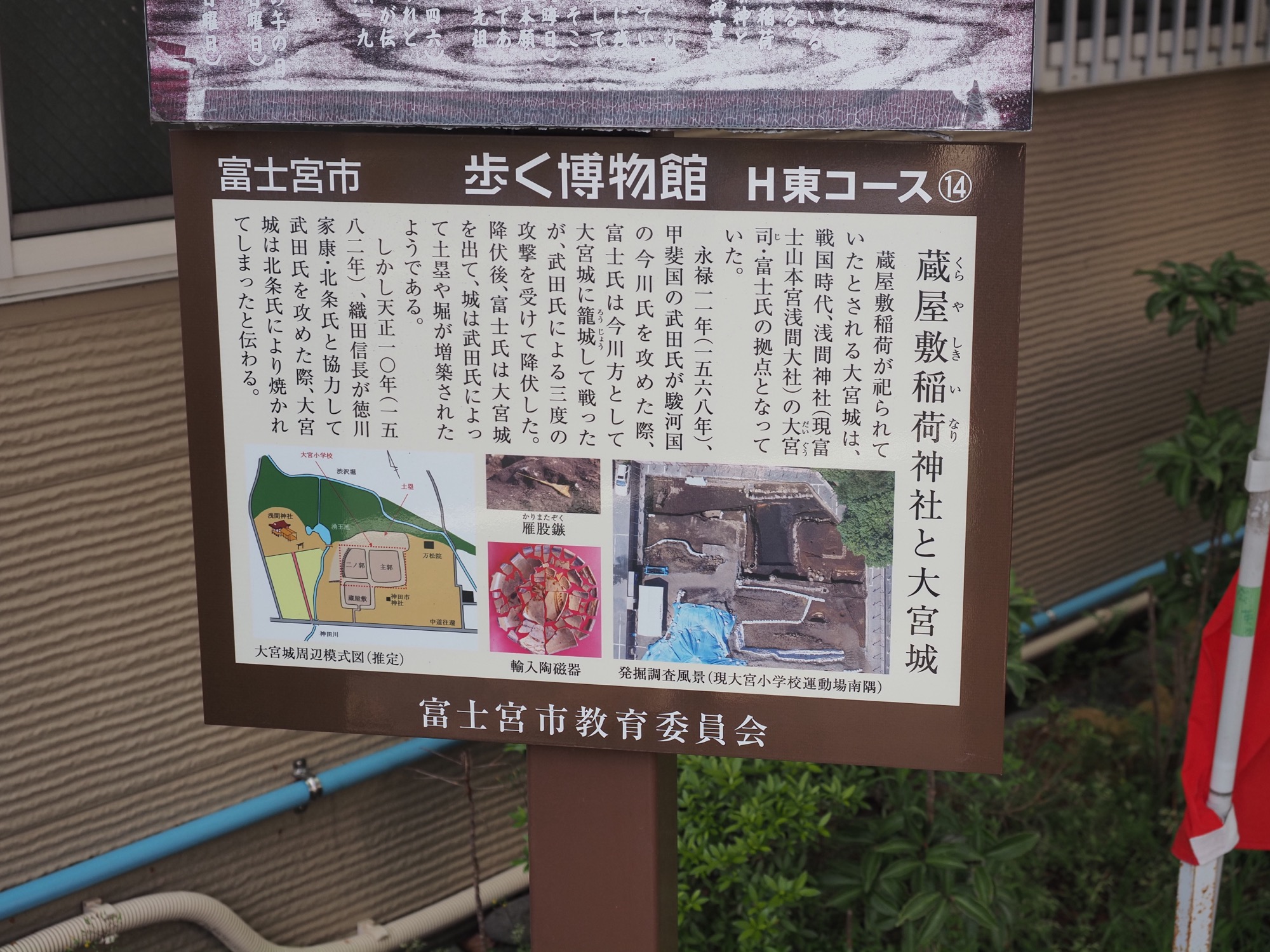
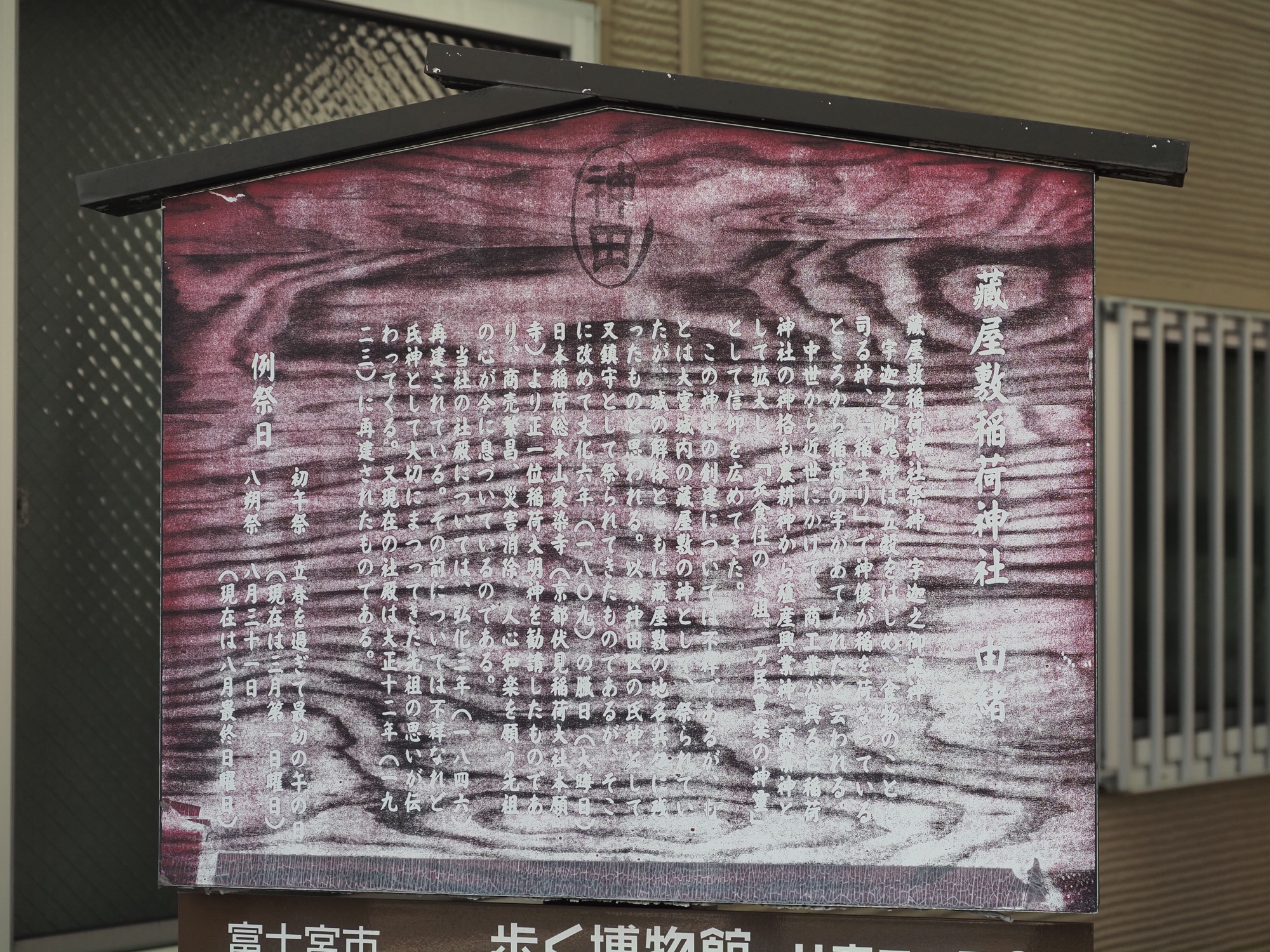
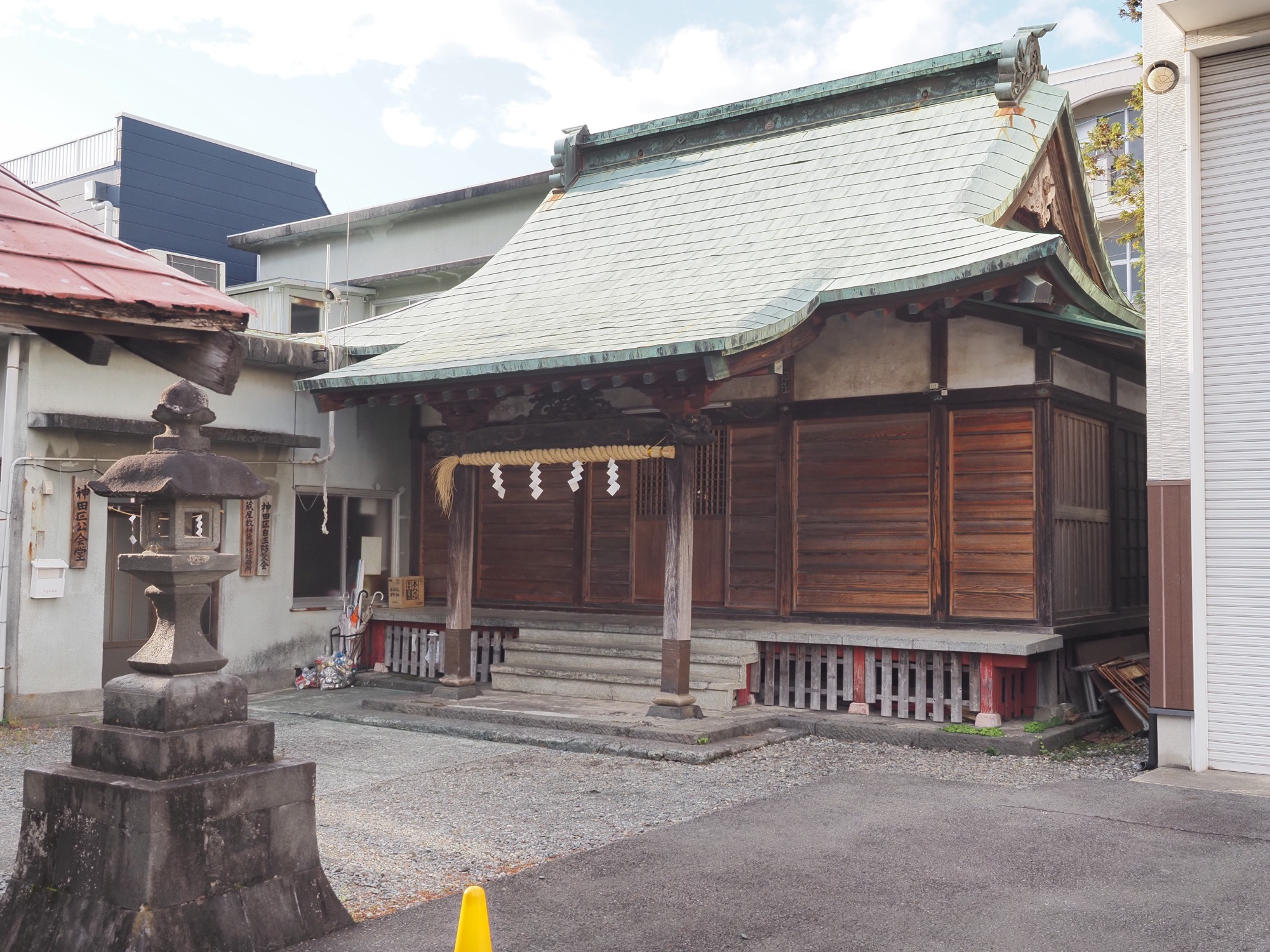
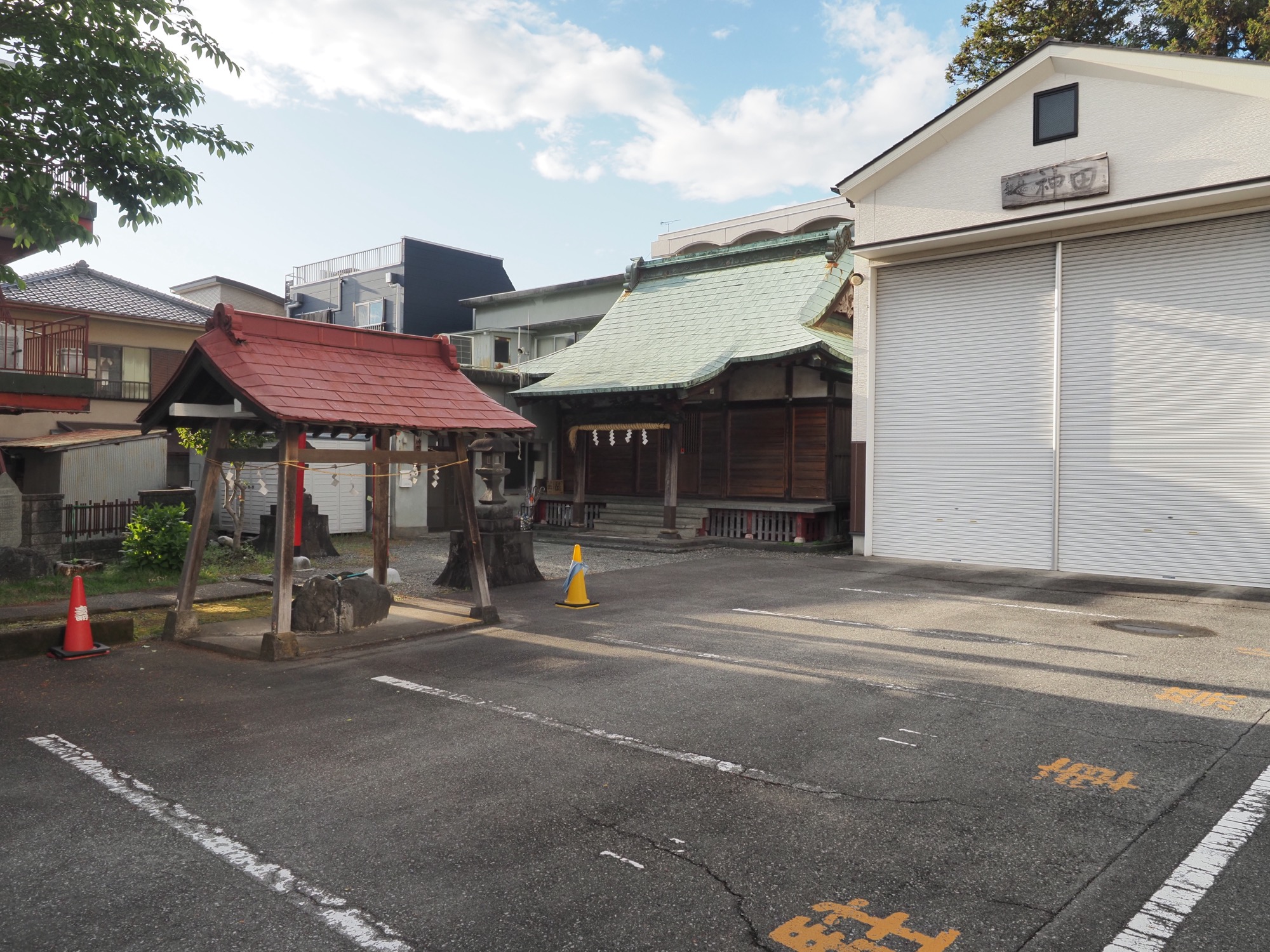
An Inari shrine standing in a residential quarter of the old Ōmiya district of Fujinomiya. The place name Kurayashiki — “storehouse compound” — derives from the structure of Ōmiya Castle, seat of the Fuji Ōmiyaji family.
Excavation has shown that Ōmiya Castle was a flatland fortress of linked baileys — main enceinte, second bailey, and the Kurayashiki — ranged east to west, its back set against a sheer lava bluff twenty metres high facing the Kanda River, which rises from the Wakutama Pond. The site was occupied continuously from the early twelfth to the late sixteenth century; dry moats up to nine metres wide and three deep, and the foundations of thick rammed-earth ramparts, have been uncovered. Quantities of fine Chinese ceramics — celadon and white porcelain of the Longquan kilns — attest an economic power and cultural standing to rival the great warrior residences of the age. Archaeology thus confirms the strength of the Fuji family, priests and warriors at once.
When the Fuji yielded to the Takeda upon Shingen’s invasion of Suruga, the castle was extensively rebuilt — a reconstruction called kakiage — by the Takeda retainer Hara Masatane and others, transformed into the heavily defended “Ōmiya Kanda Yashiki” with barbicans and flanking lines of fire.
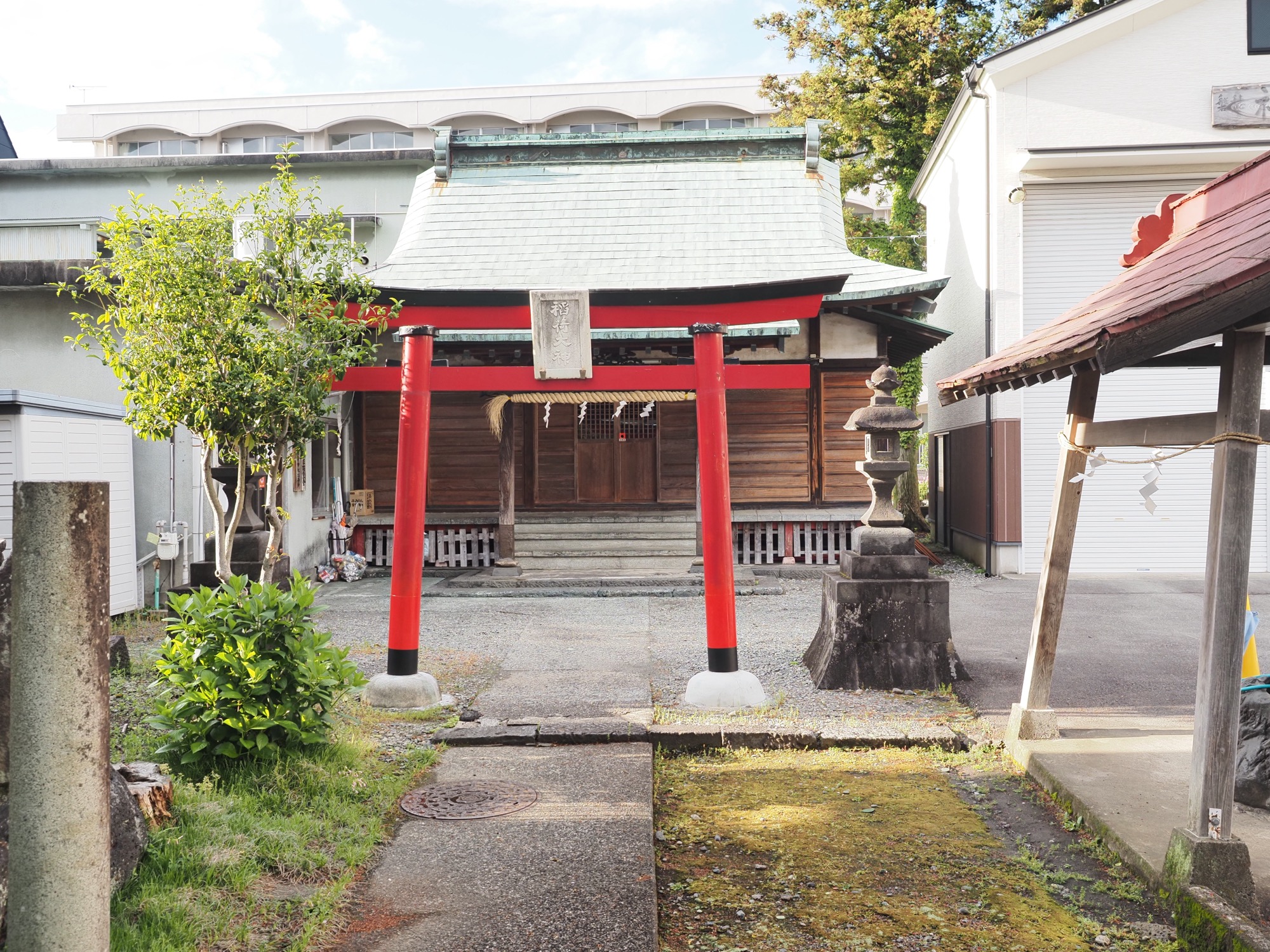
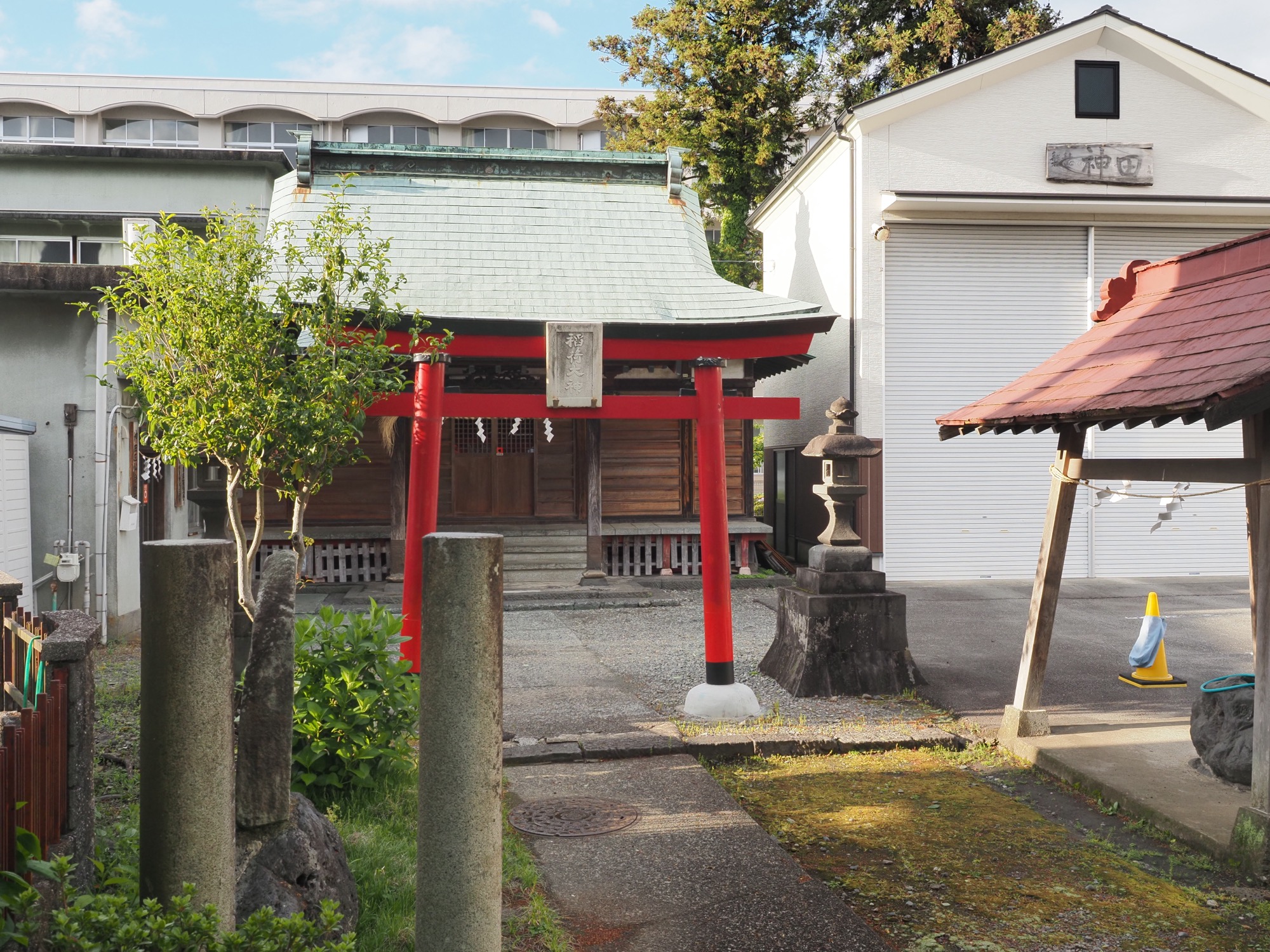
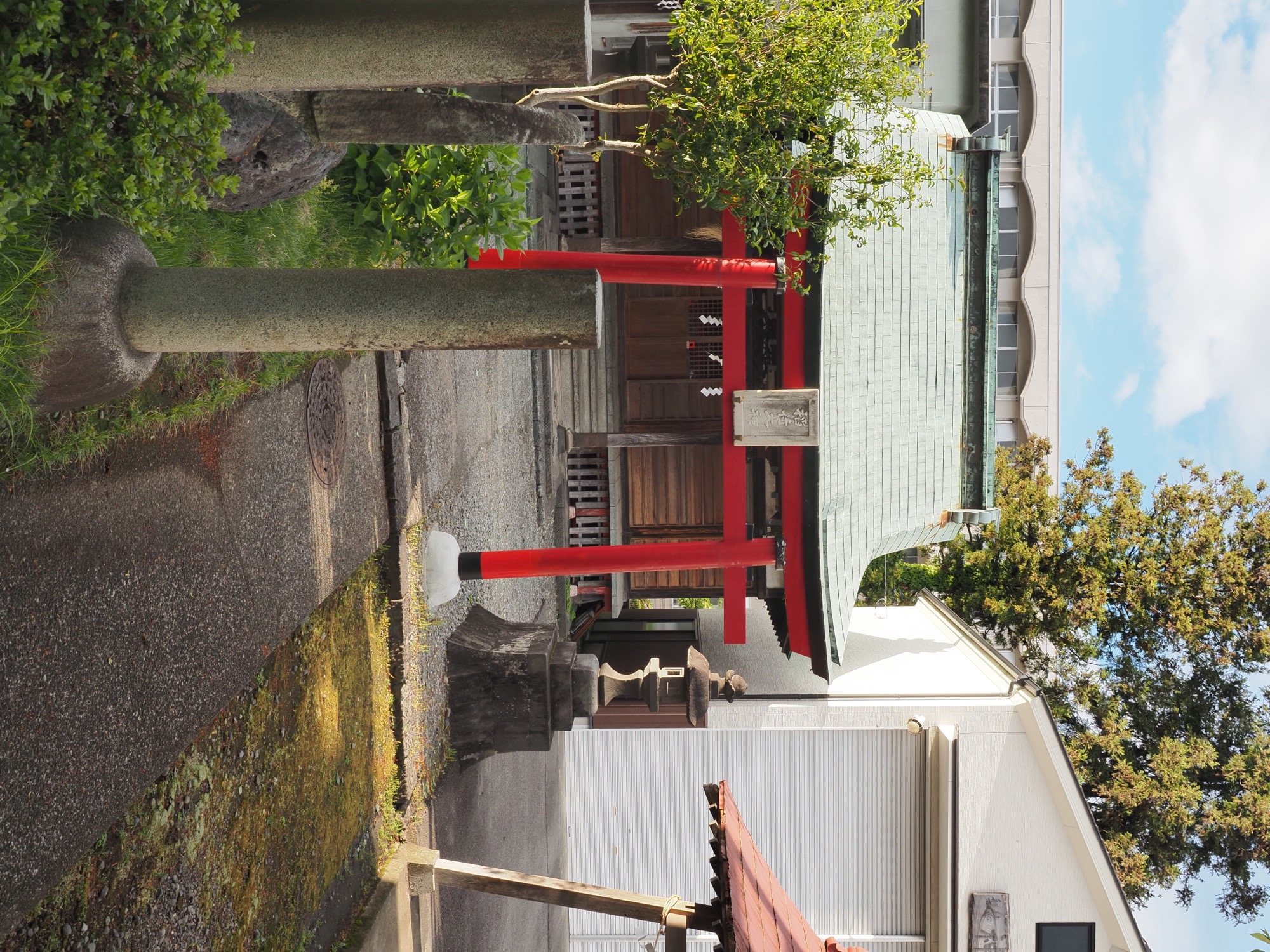
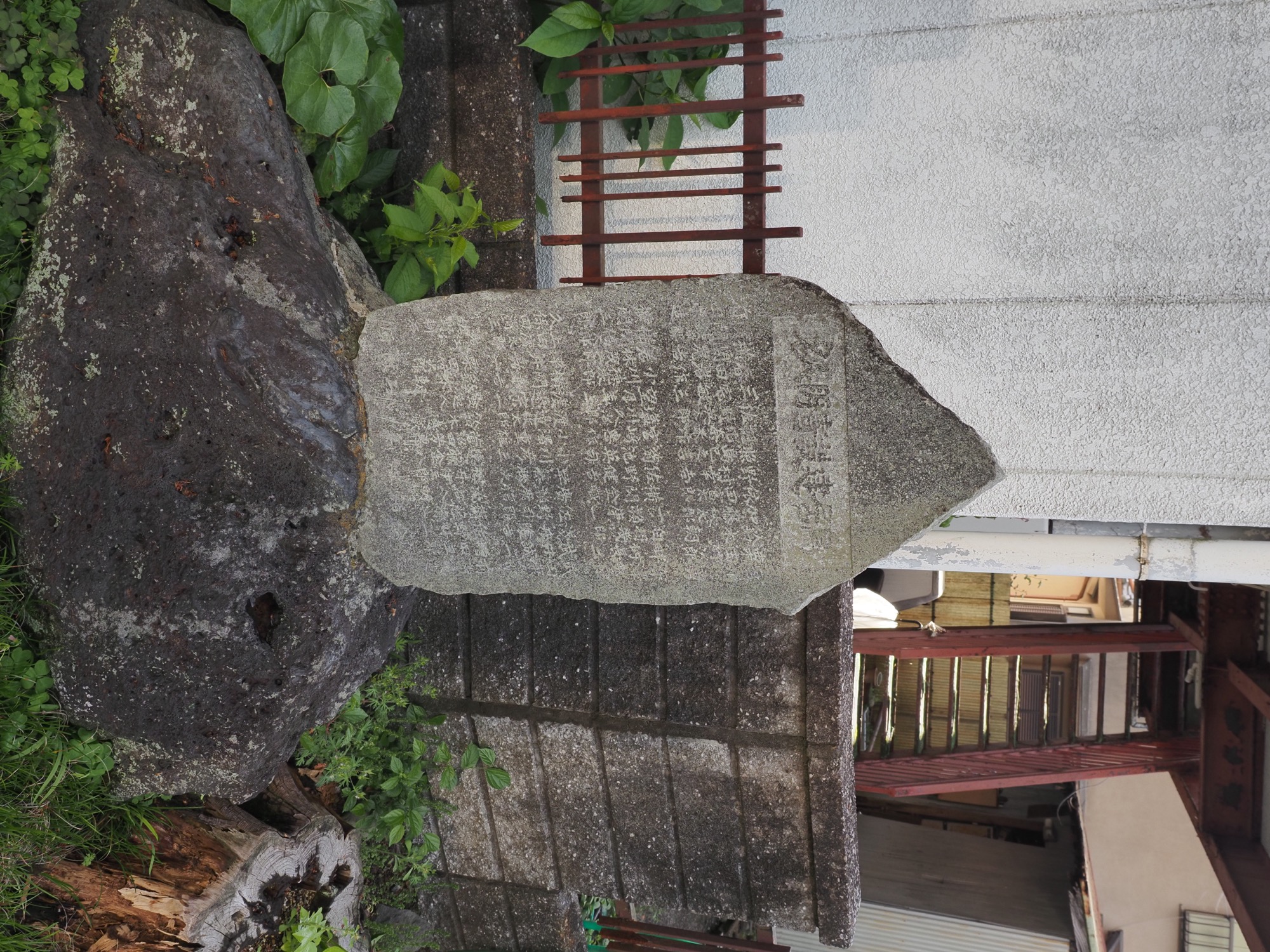
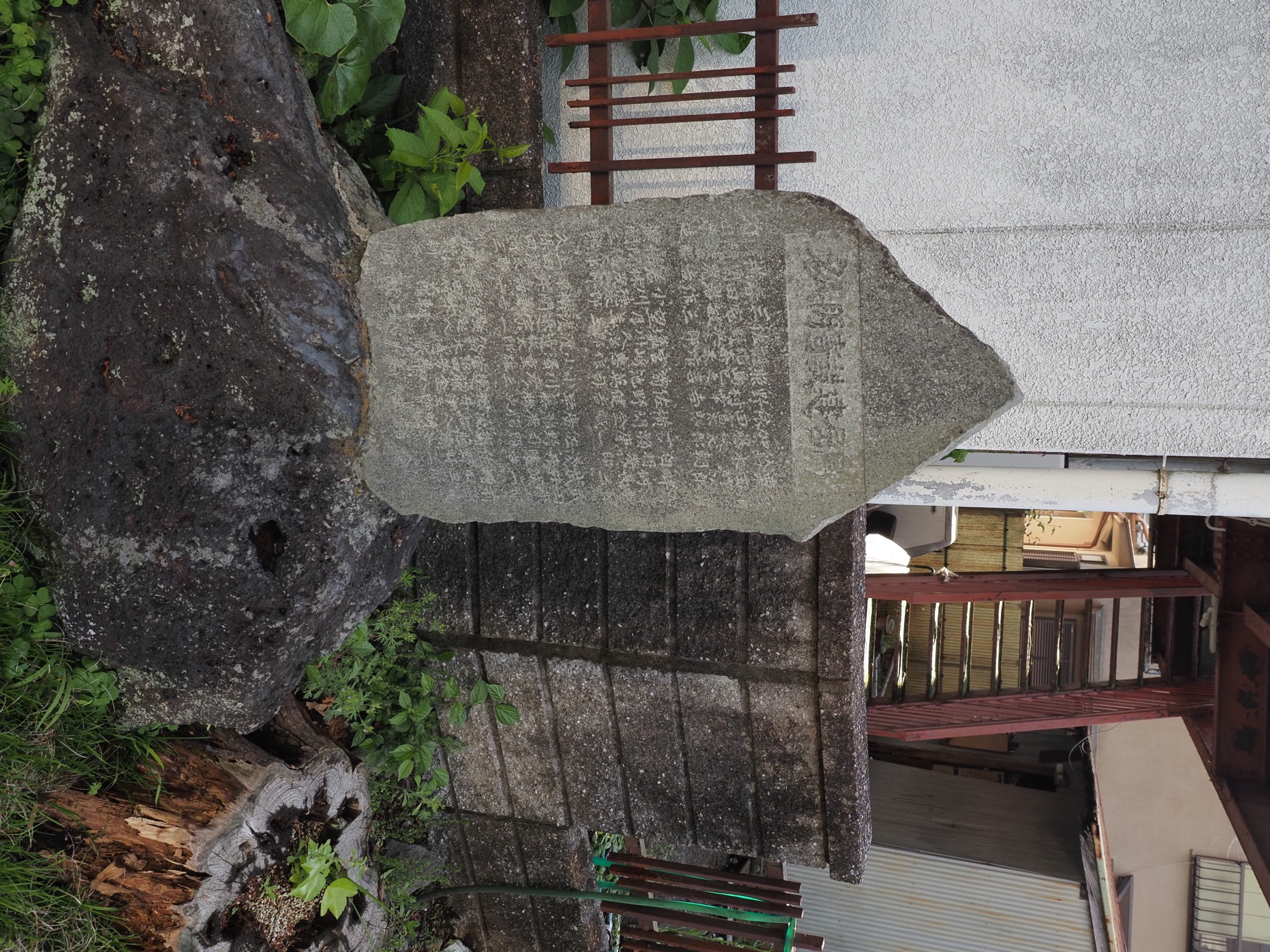
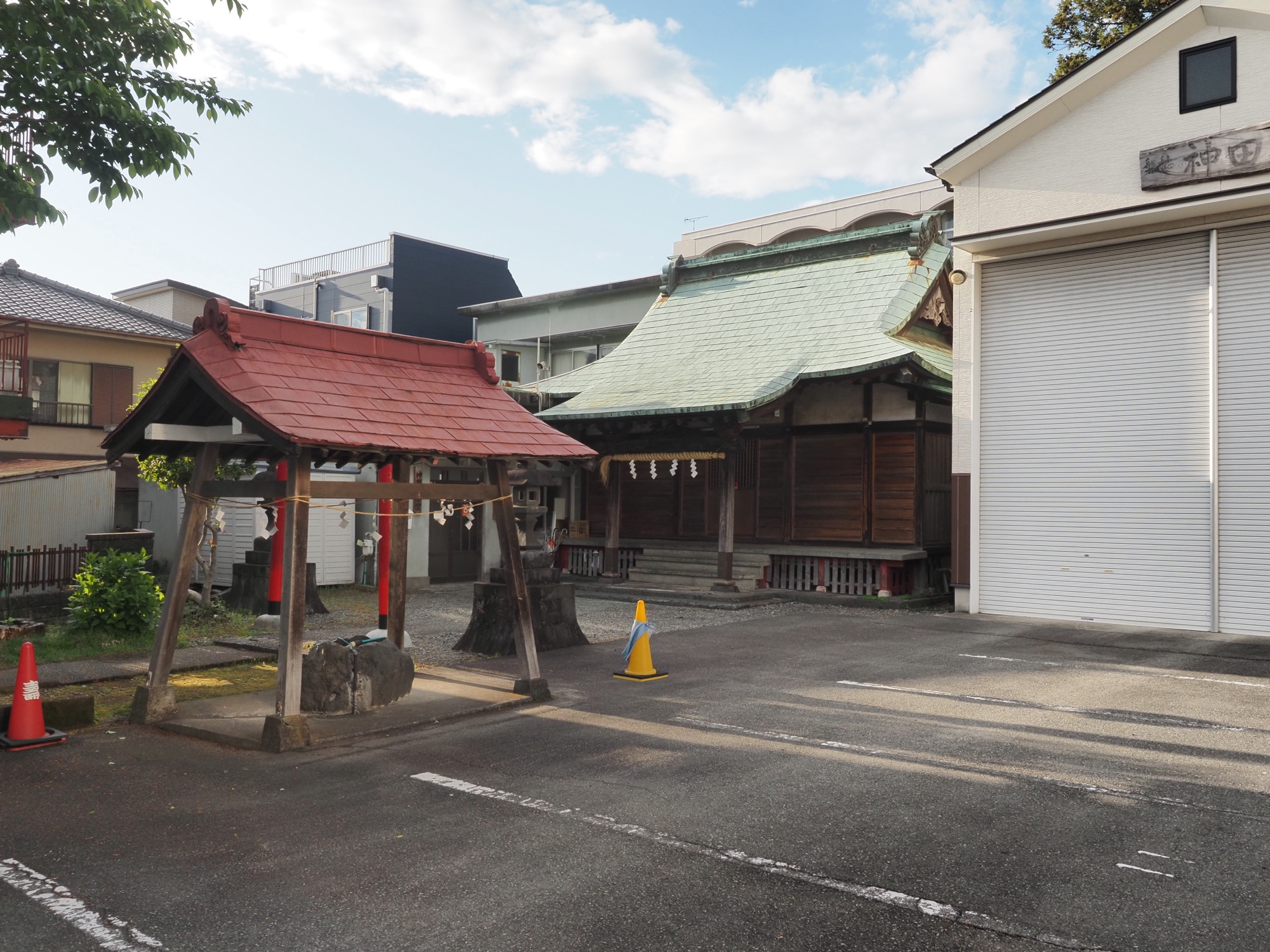
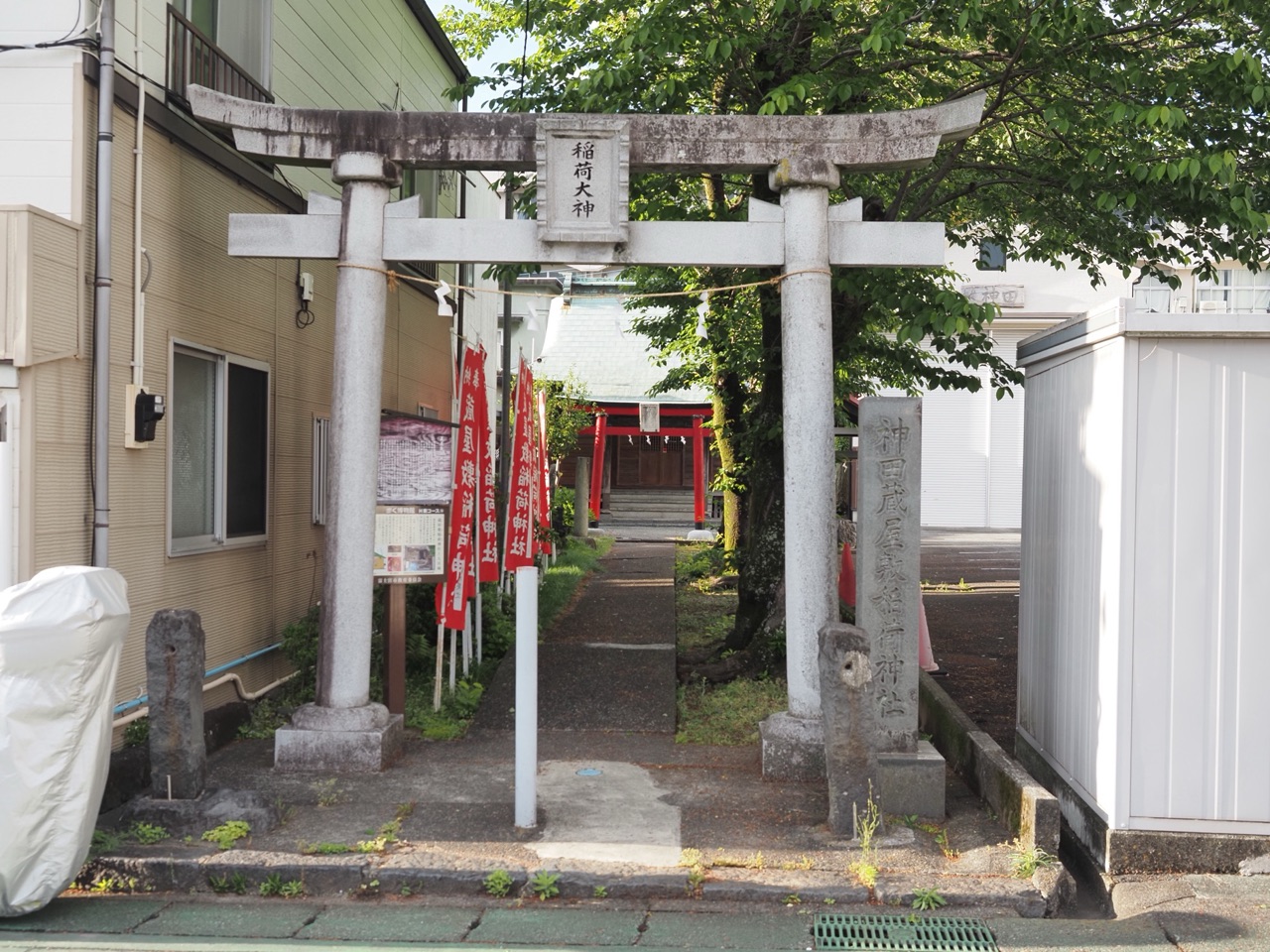
The shrine stands in the western sector known as aza-Kurayashiki, where tradition places the Ōtemon, the castle’s main gate. After the castle lost its military function, the Inari faith of Ōmiya’s flourishing merchant townsfolk gathered upon its ruins from the Edo period onward, and the shrine has remained the district’s guardian to this day. The stone torii bears a tablet inscribed “Inari Ōkami,” and beyond it vermilion gates lead to the sanctuary. A modest shrine amid the houses — yet beneath it sleeps the political and military heart of medieval Ōmiya.