Fuji-kō Festival of Shintō Fusō-kyō
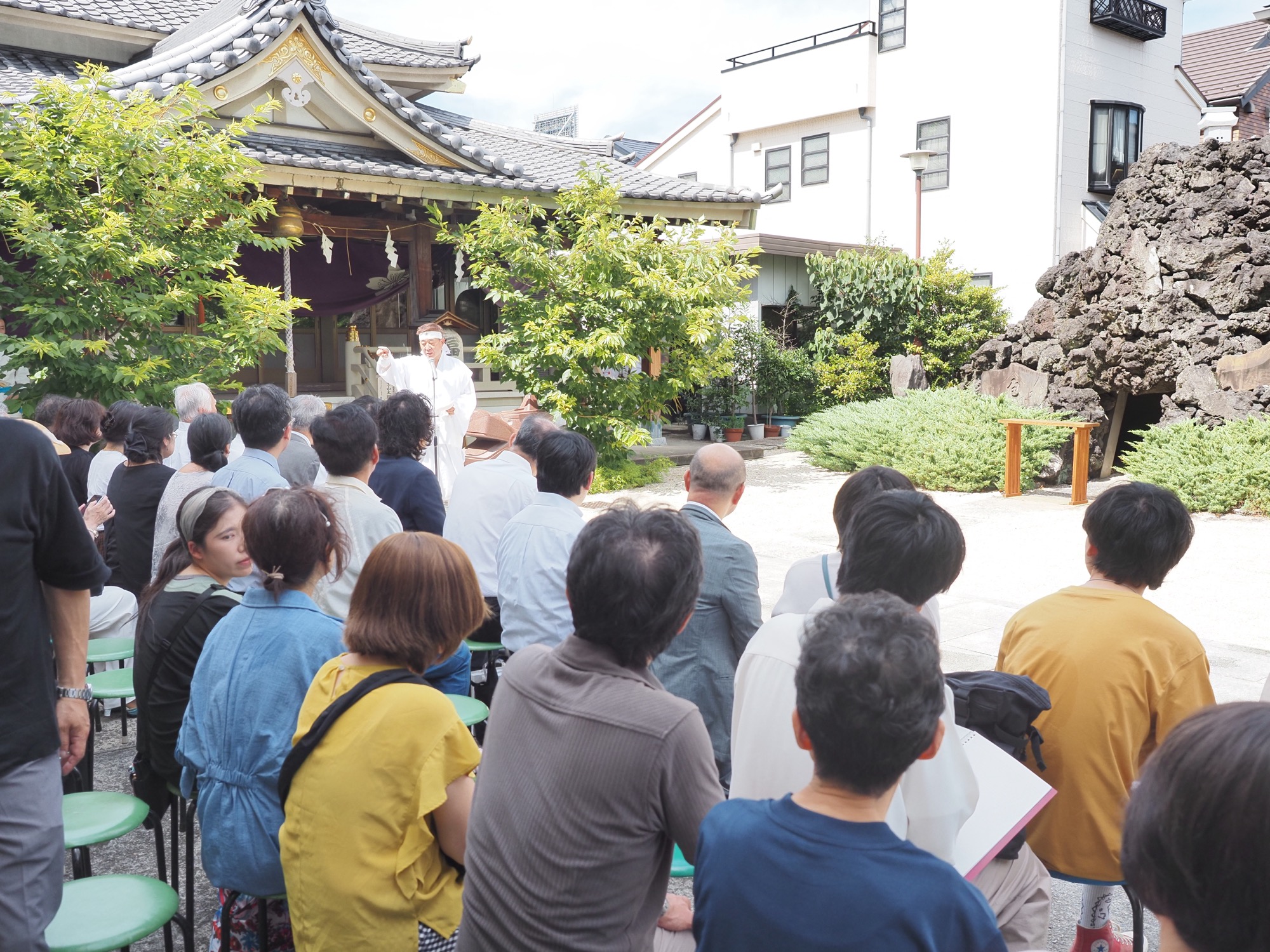
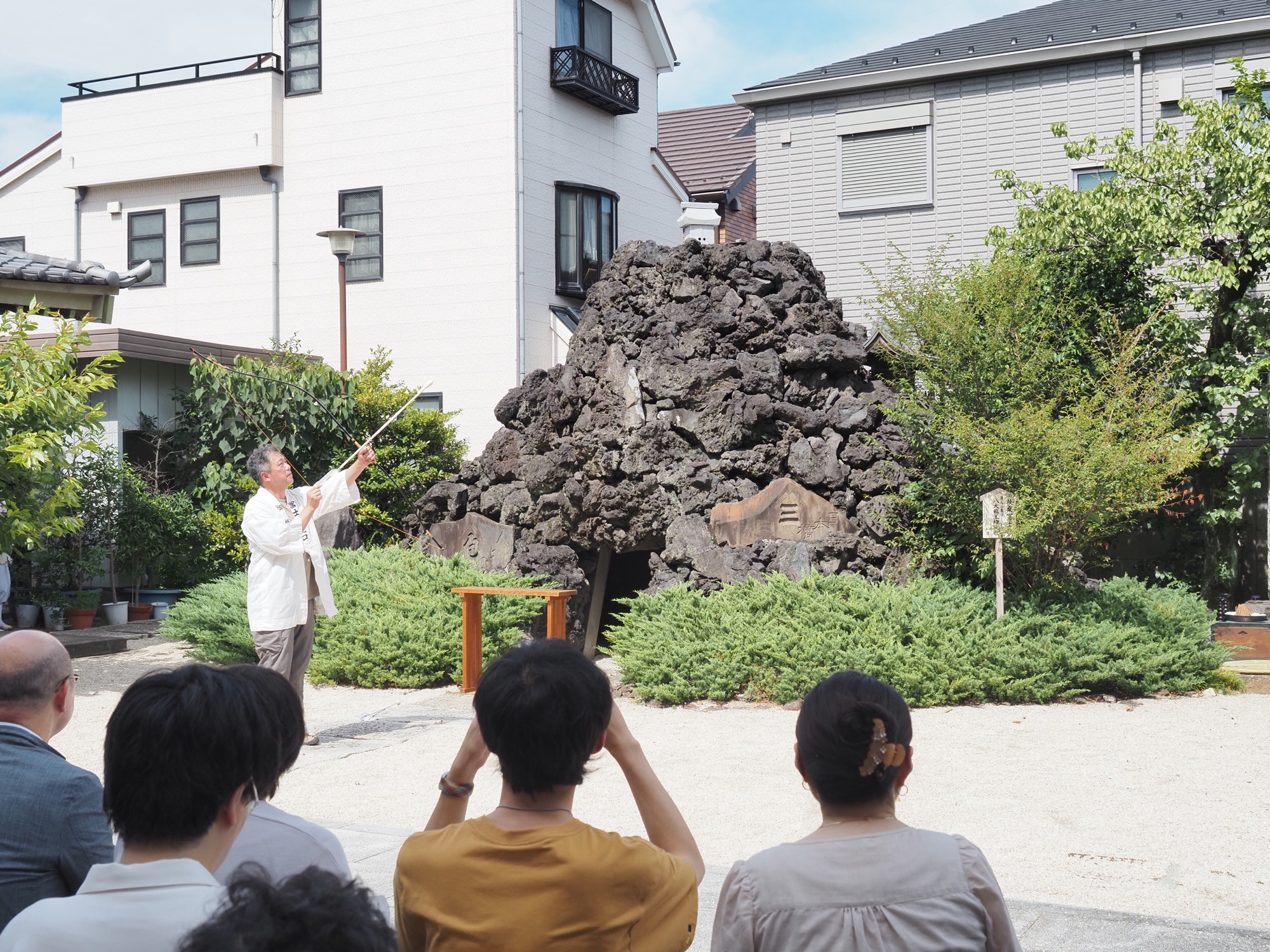
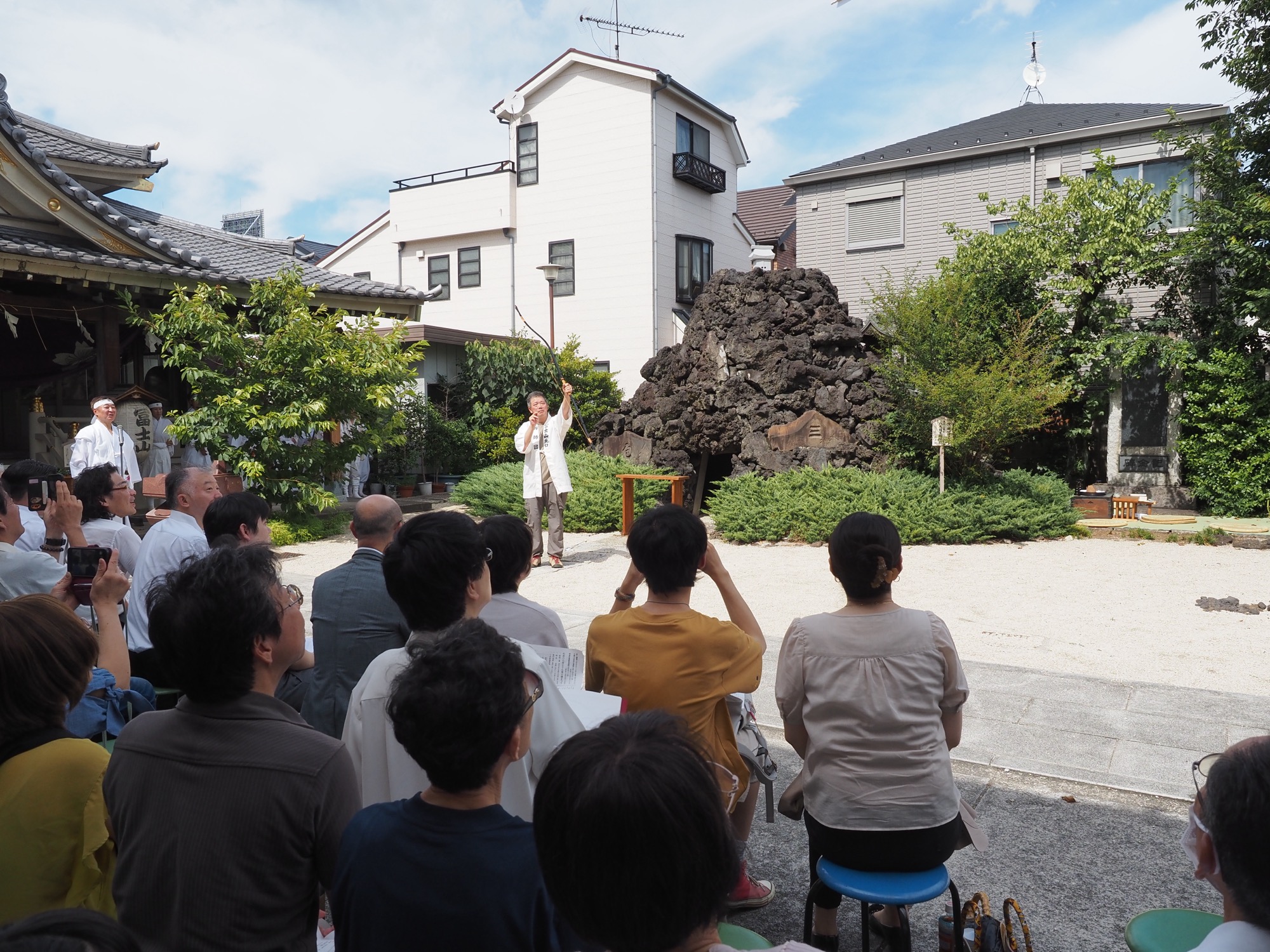
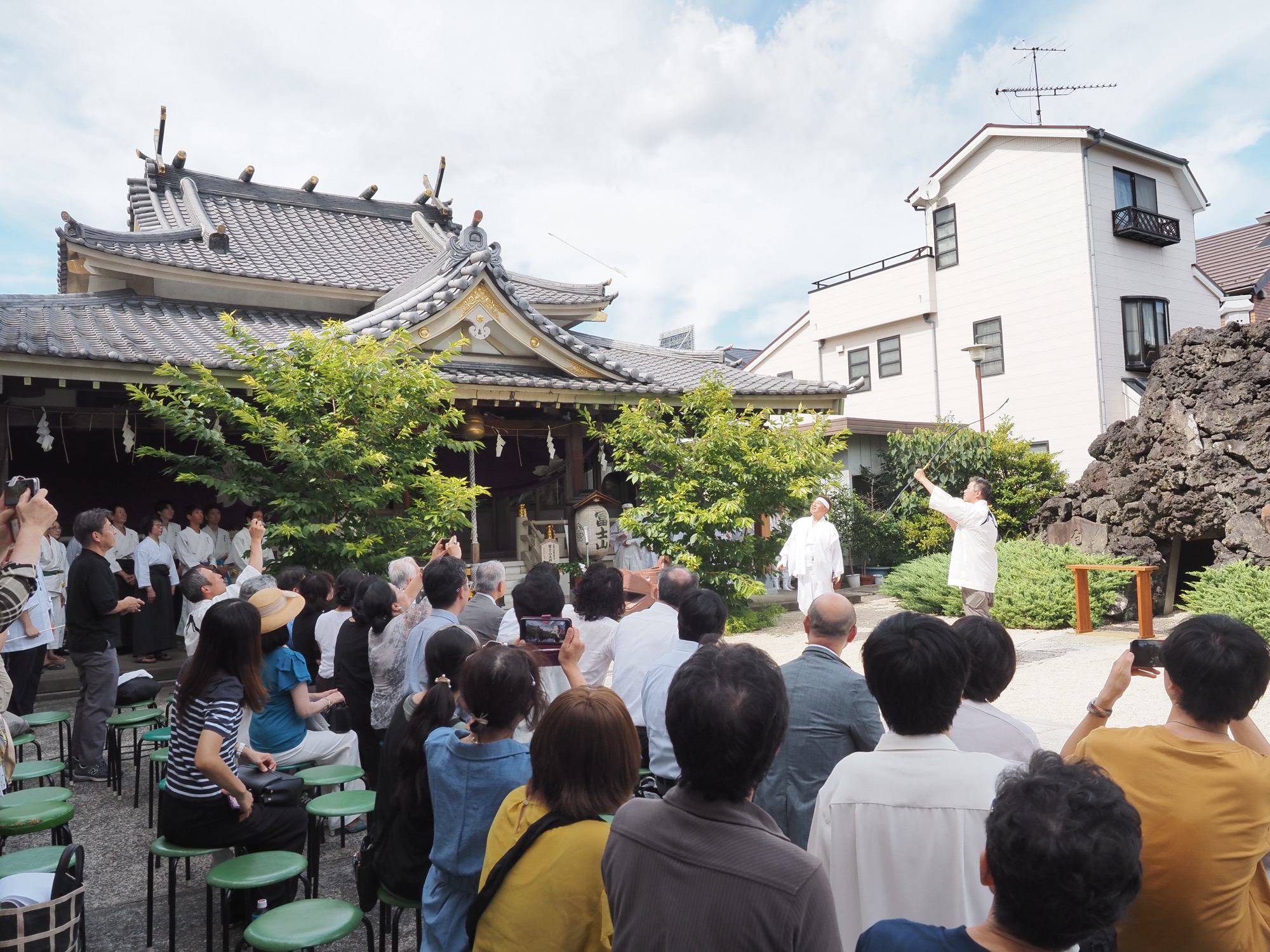
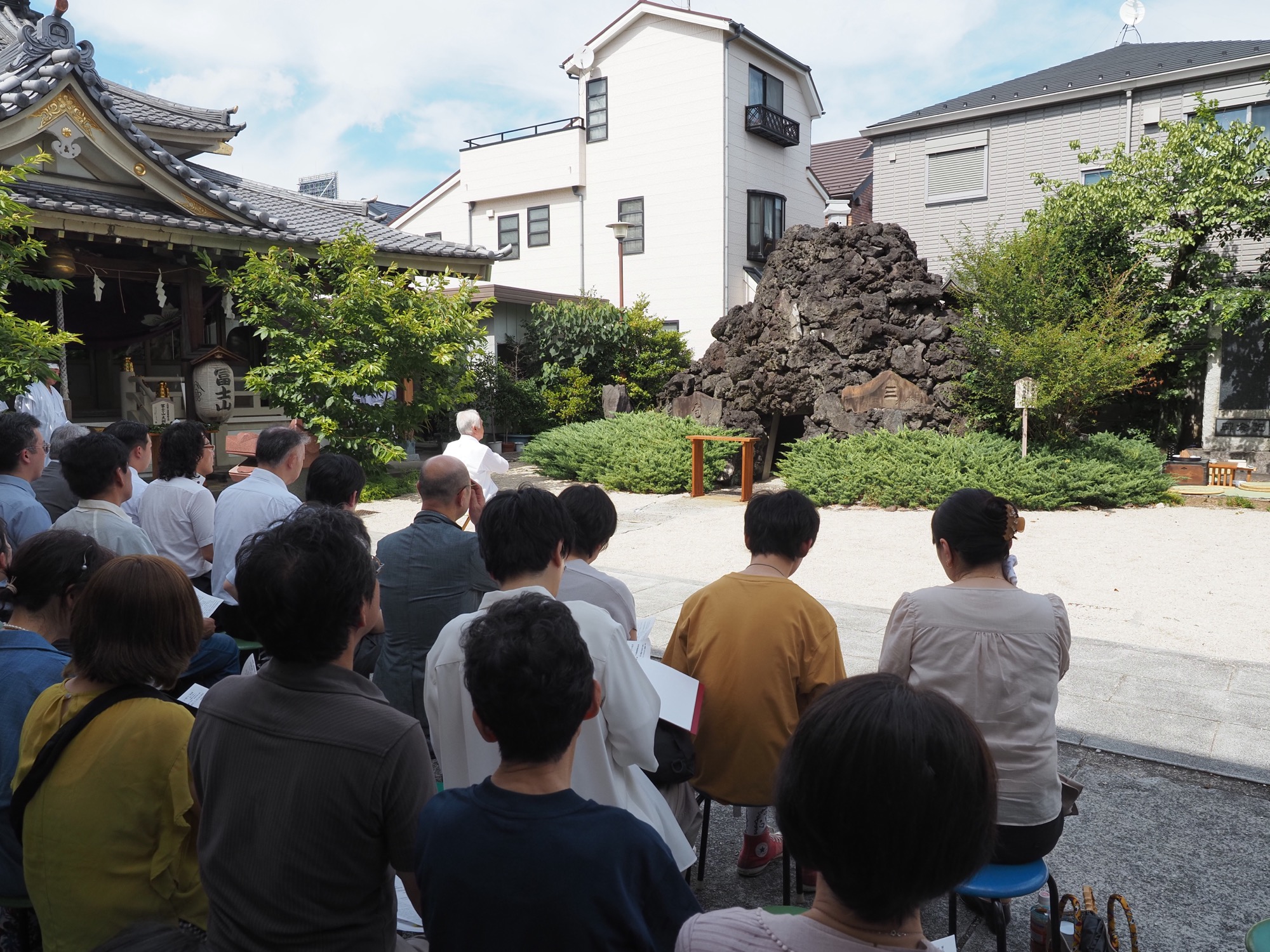
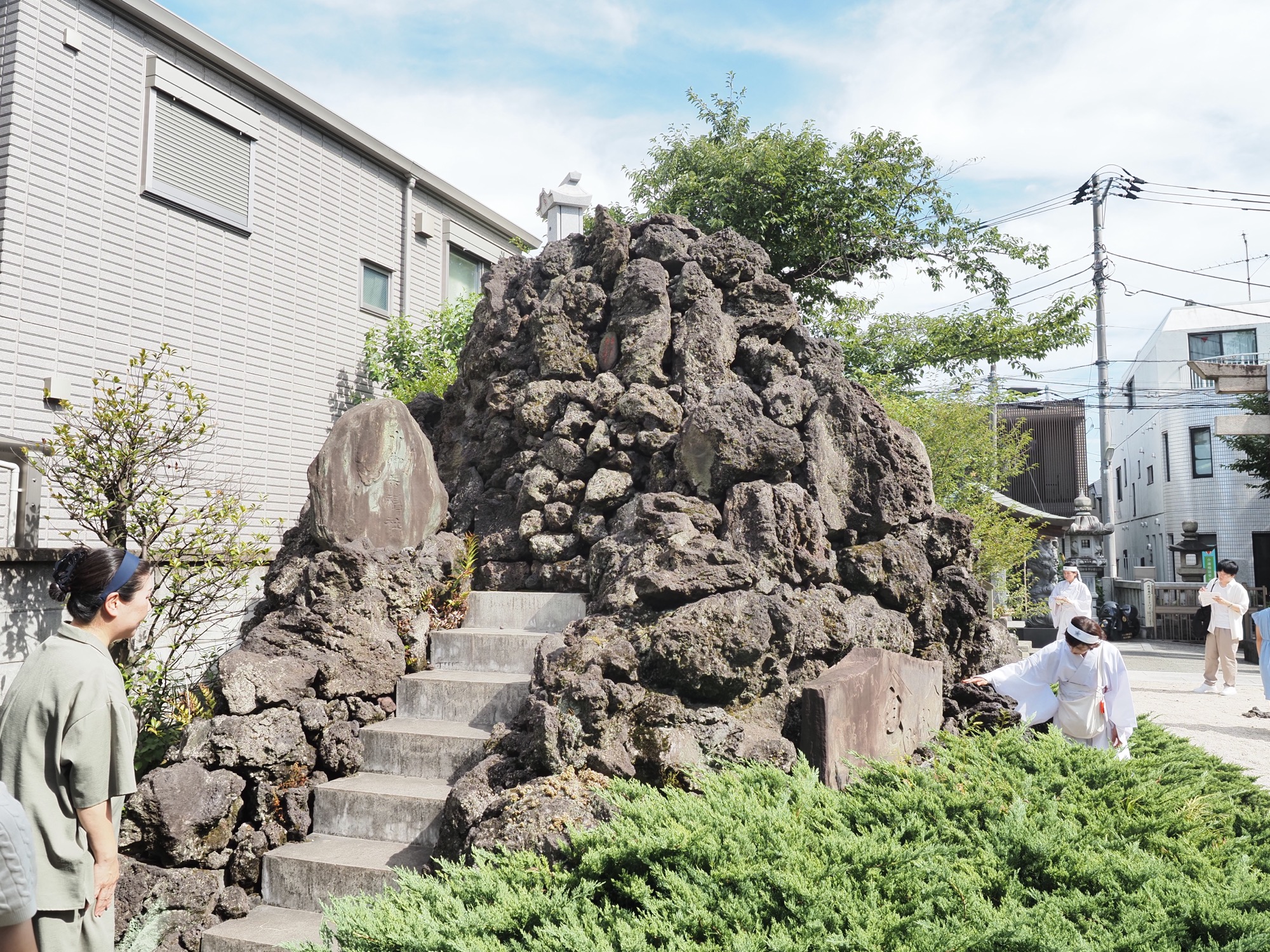
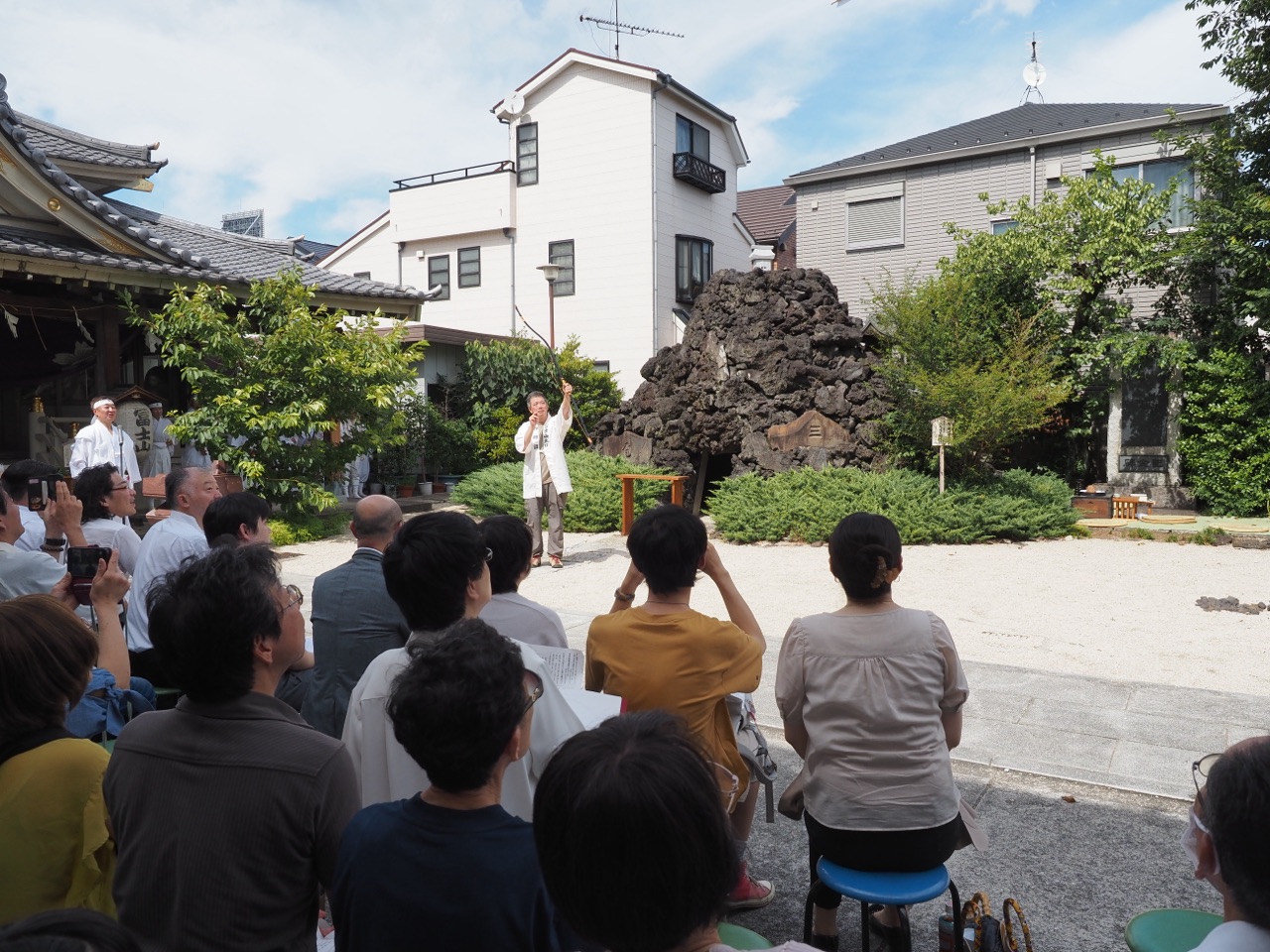
This is the summer Fuji-kō festival of the Shintō Fusō-kyō sect, the mountain-opening festival held in July in step with the opening of Mt. Fuji’s climbing season. In the centre of the precinct stands a Fuji mound (Fujizuka), a small Mt. Fuji built of piled lava, and teachers and members dressed in white carry out the rites here.
Fusō-kyō is a Shinto sect that began with the Fuji Issan Kōsha, founded by Shishino Nakaba in 1873 (Meiji 6), and in 1882 (Meiji 15) it became independent as Shintō Fusō-kyō, one of the thirteen Shinto sects. Shishino served as chief priest of Fujisan Hongu Sengen Taisha and also held priestly posts at Kitaguchi Hongu Fuji Sengen Shrine and other shrines. In 1876 (Meiji 9) he set up the Tenpaisho, a place to worship the deities of creation, beside the Kinmeisui spring on the summit of Mt. Fuji.
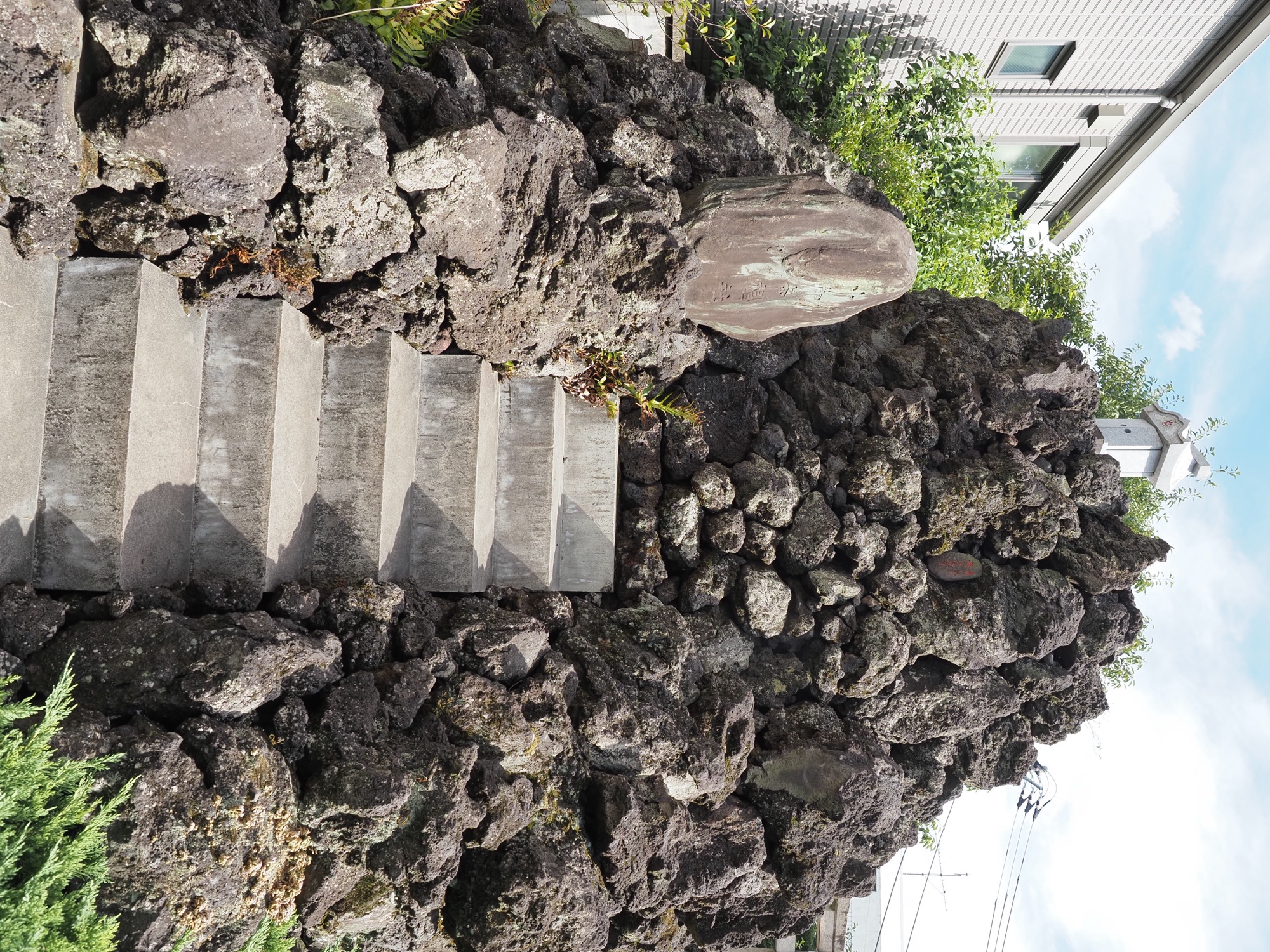
Fuji mounds were built so that people who could not actually climb Mt. Fuji could still receive the blessings of the pilgrimage. At the Takata Fuji in Edo, lava was set on the mound, the Sekison Daigongen of Komitake was enshrined halfway up, and even the Eboshi-iwa rock of the 7.5th station and the Tainai cave of the northern foot were recreated. Climbing the mound and worshipping was believed to bring the same blessings as climbing Mt. Fuji itself.
The sacred name chanted at the festival is Sanmei-tō-Kaizan. It expresses an idea handed down from the Fuji-kō: that Mt. Fuji and the root of life are one, and that by revering Mt. Fuji, the body of the sun, moon and stars, one gains peace for the nation, good harvests and safety for the household. Fusō-kyō places the three deities of creation (Ame-no-Minakanushi, Takamimusuhi and Kamimusuhi) at the centre of its faith. Jikigyō Miroku, regarded as the reviver of the Fuji-kō, taught that one should take to heart four deep principles: honesty, compassion, kindness and fusoku.
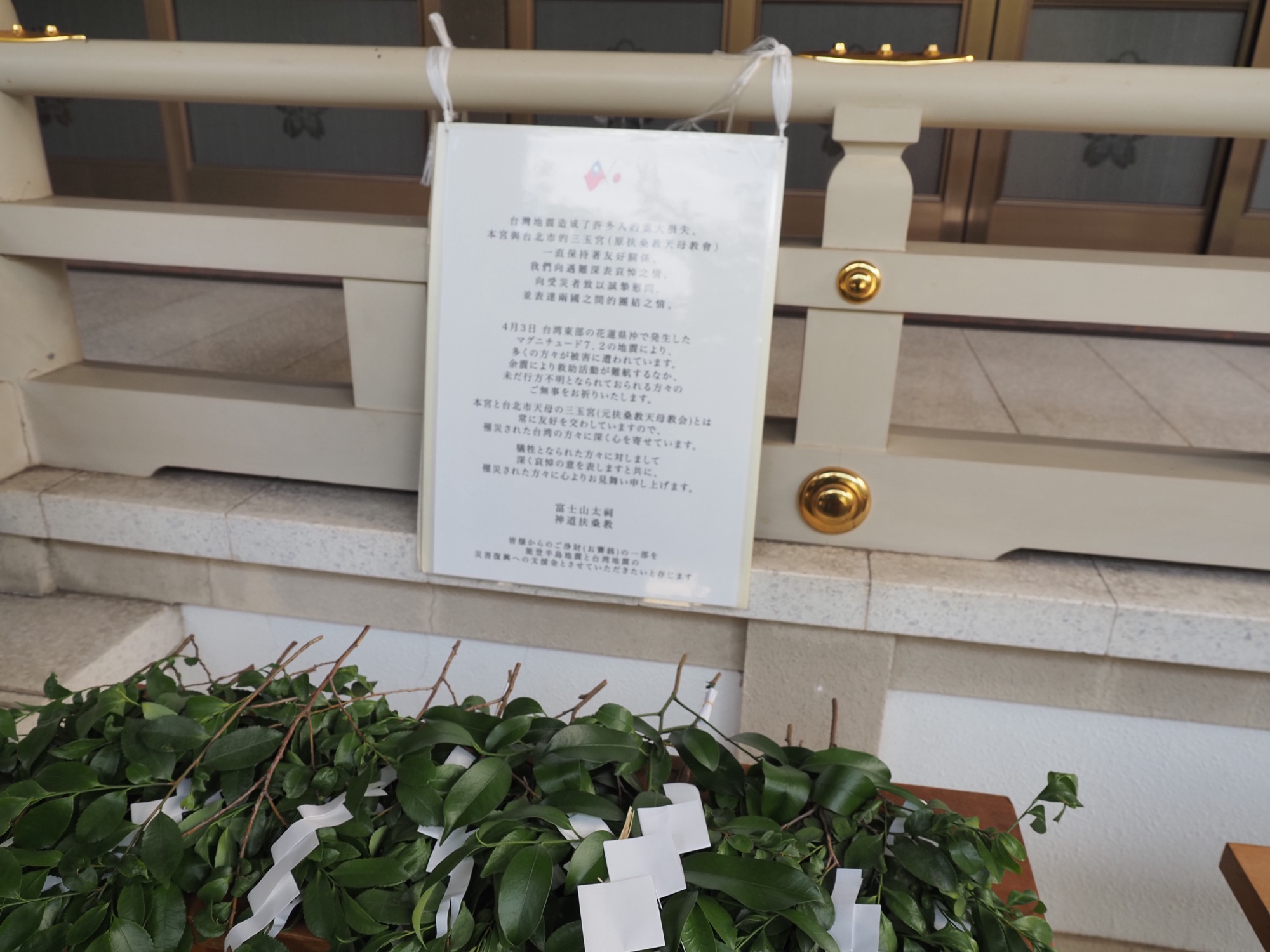
The photos show the festival of 27 July 2025: a talk and prayers by a teacher, members looking up at the Fuji mound in worship, bamboo grass, offerings and notices arranged in front of the worship hall, and a full view of the Fuji mound after the people had left.