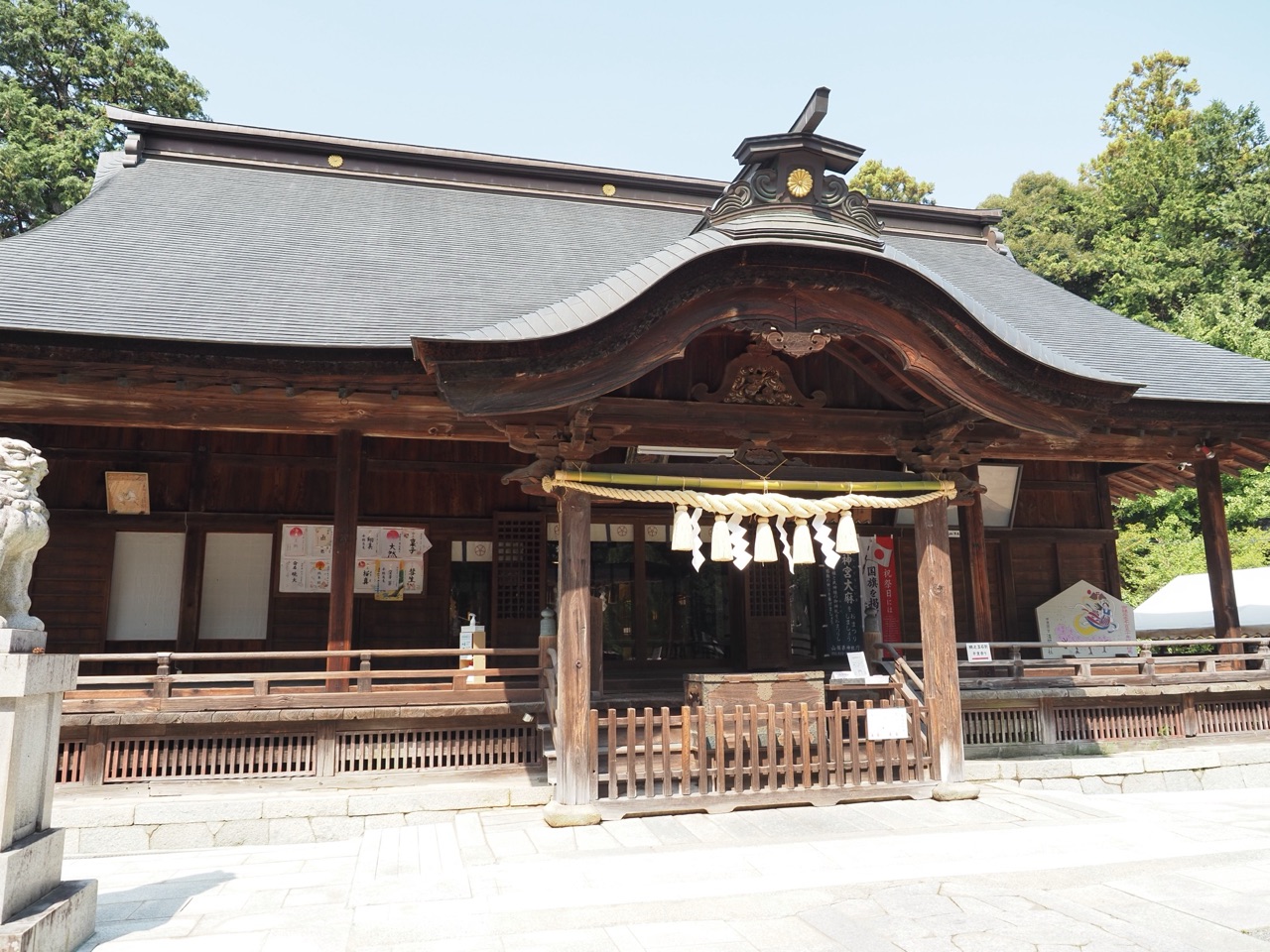
Asama Shrine, Ichinomiya of Kai Province
This Asama shrine stands in Ichinomiya, Ichinomiya-chō, Fuefuki, Yamanashi. It is an old shrine long revered as the ichinomiya, the first shrine, of Kai Province. Its deity is Konohanasakuya-hime, the main deity of Mt. Fuji, with Ninigi and Ōyamatsumi enshrined alongside her. Sengen Jinja no Rekishi considers it the oldest and largest of the Asama shrines of Kai.
According to shrine tradition, in the first month of the eighth year of Emperor Suinin (22 BC) the deity was first worshipped at the foot of Mt. Kamiyama, about twenty chō east of the present site, and on the ninth day of the twelfth month of 865 (Jōgan 7) it was moved to the present site. The subsidiary Yamamiya Shrine stands at the original site. The shrine tradition matches this move with the entry for that day in the Nihon Sandai Jitsuroku, which says that a shrine to the Asama deity was set up in Yatsushiro District, Kai, and listed as an official shrine.
Which shrine is the Asama Jinja of Yatsushiro District in Kai, listed as a major shrine in the Engishiki register of shrines, has long been debated. The Kai Kokushi records that three shrines, the Asama Myōjin of Ichinomiya village, the Ichinomiya Myōjin of Takada village and the Fuji Asama Myōjin of Kawaguchi village, each had a tradition of having been founded in 865 and of being the shrine in the register. Together with Fuji Omuro Sengen Shrine and Kawaguchi Asama Shrine, it carries the ancient Asama faith of Kai.
In the Sengoku period the Takeda, who ruled Kai, revered the shrine deeply. In 1550 (Tenbun 19) Harunobu, later Shingen, offered to the main shrine a copy of the Heart Sutra written out by Emperor Go-Nara, and the wrapper still bears the signature “Harunobu” and his monogram. Shingen also made donations late in life. When the Takeda fell in 1582 (Tenshō 10), Tokugawa Ieyasu issued a document on the twenty-third day of the tenth month of that year confirming the shrine’s lands of 200 kanmon at Ichinomiya.
In front of the shrine, a huge phallic stone is worshipped as a sai no kami, a guardian of boundaries. Under the Meiji system of shrine ranks it was made a national shrine of the middle grade, and rites such as the grand festival in April and yabusame still continue.
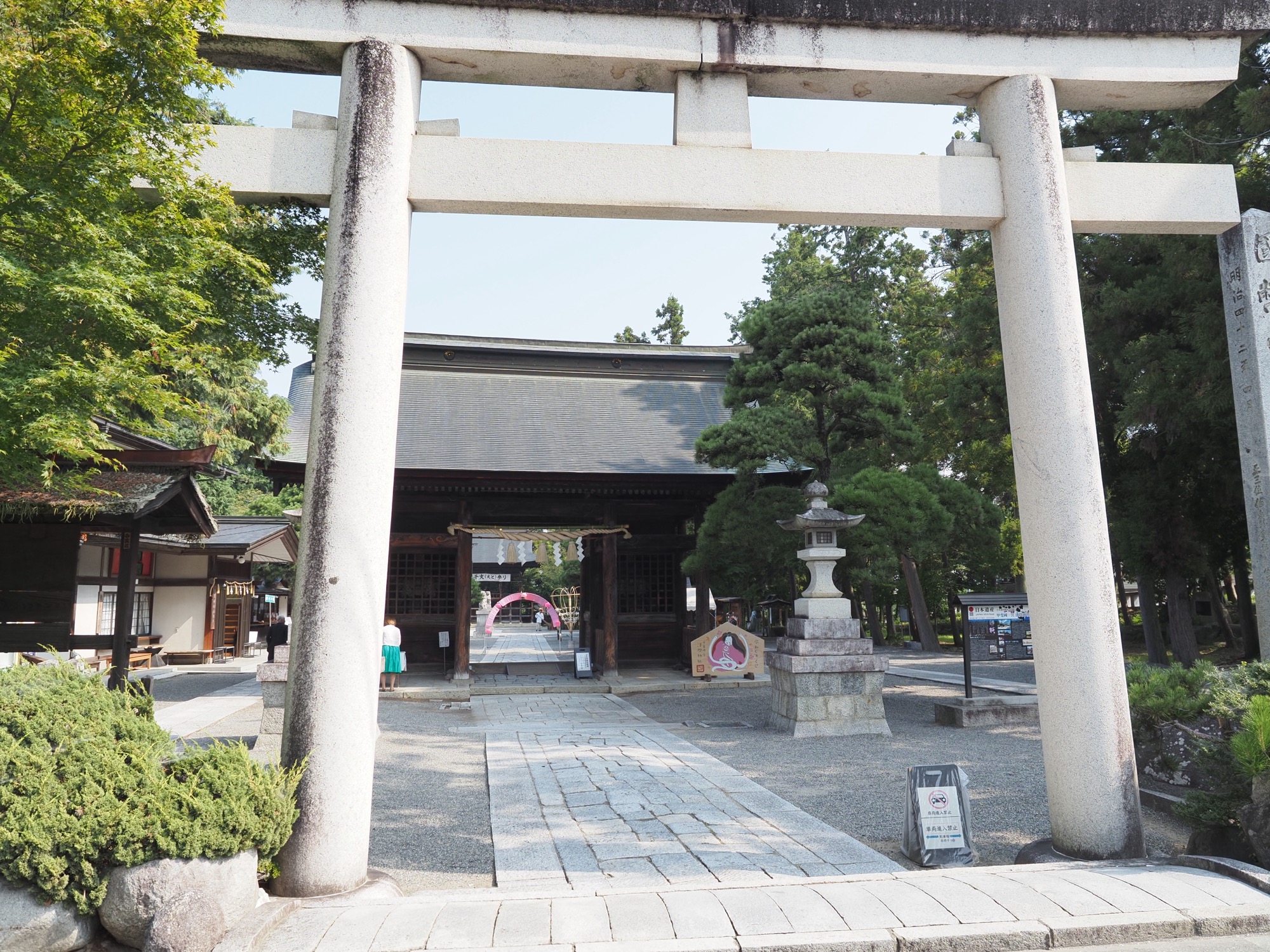
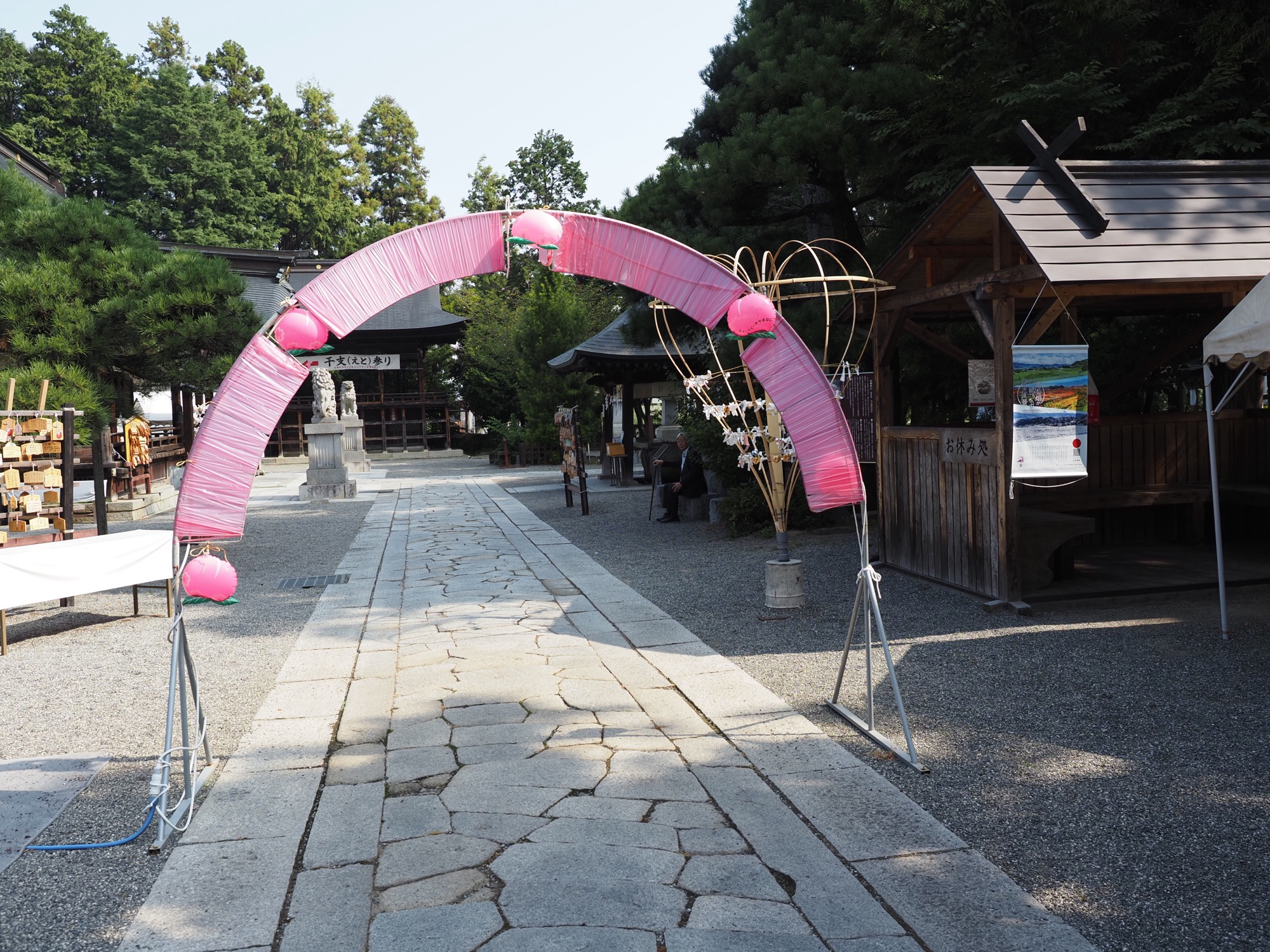
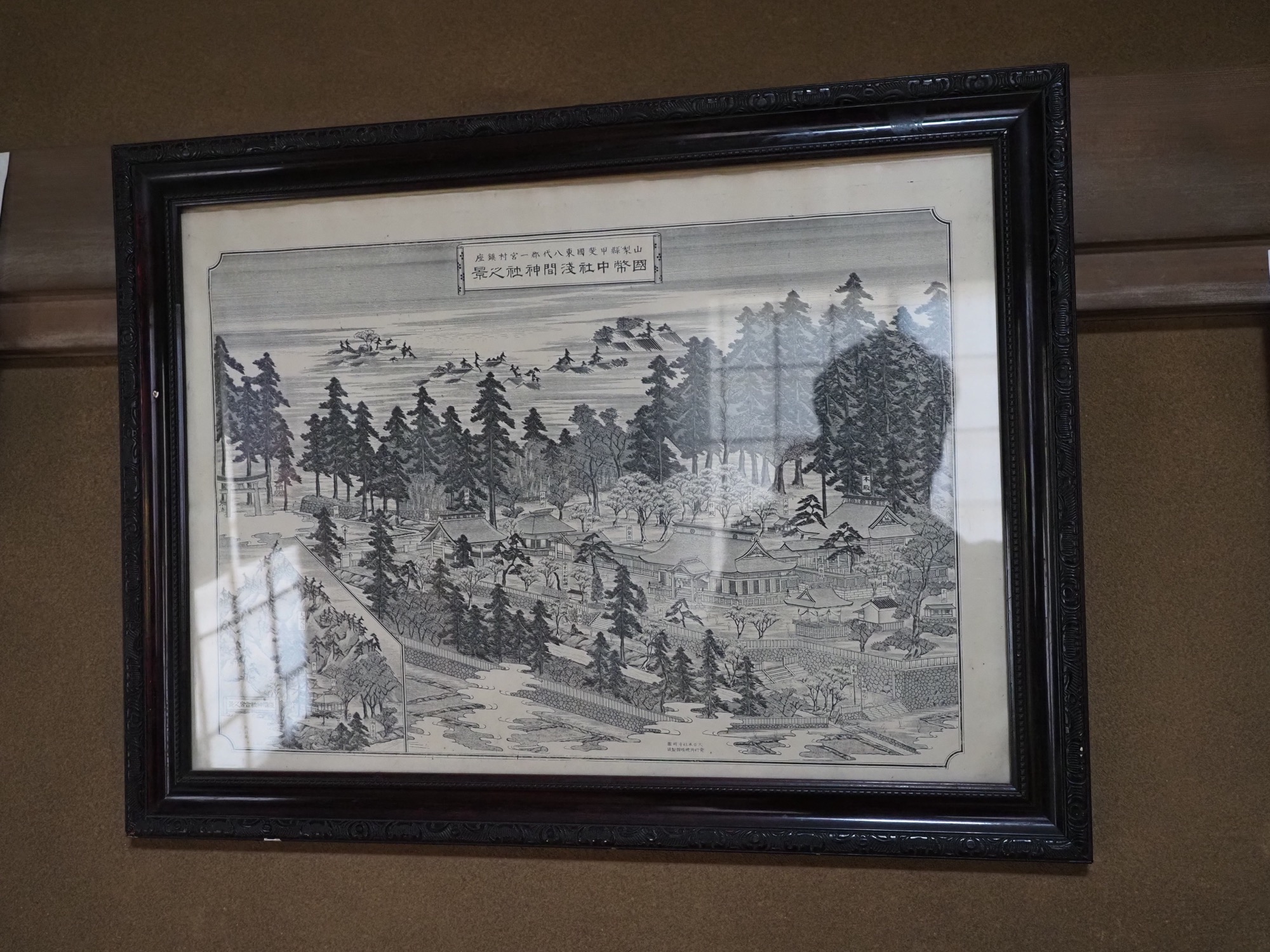
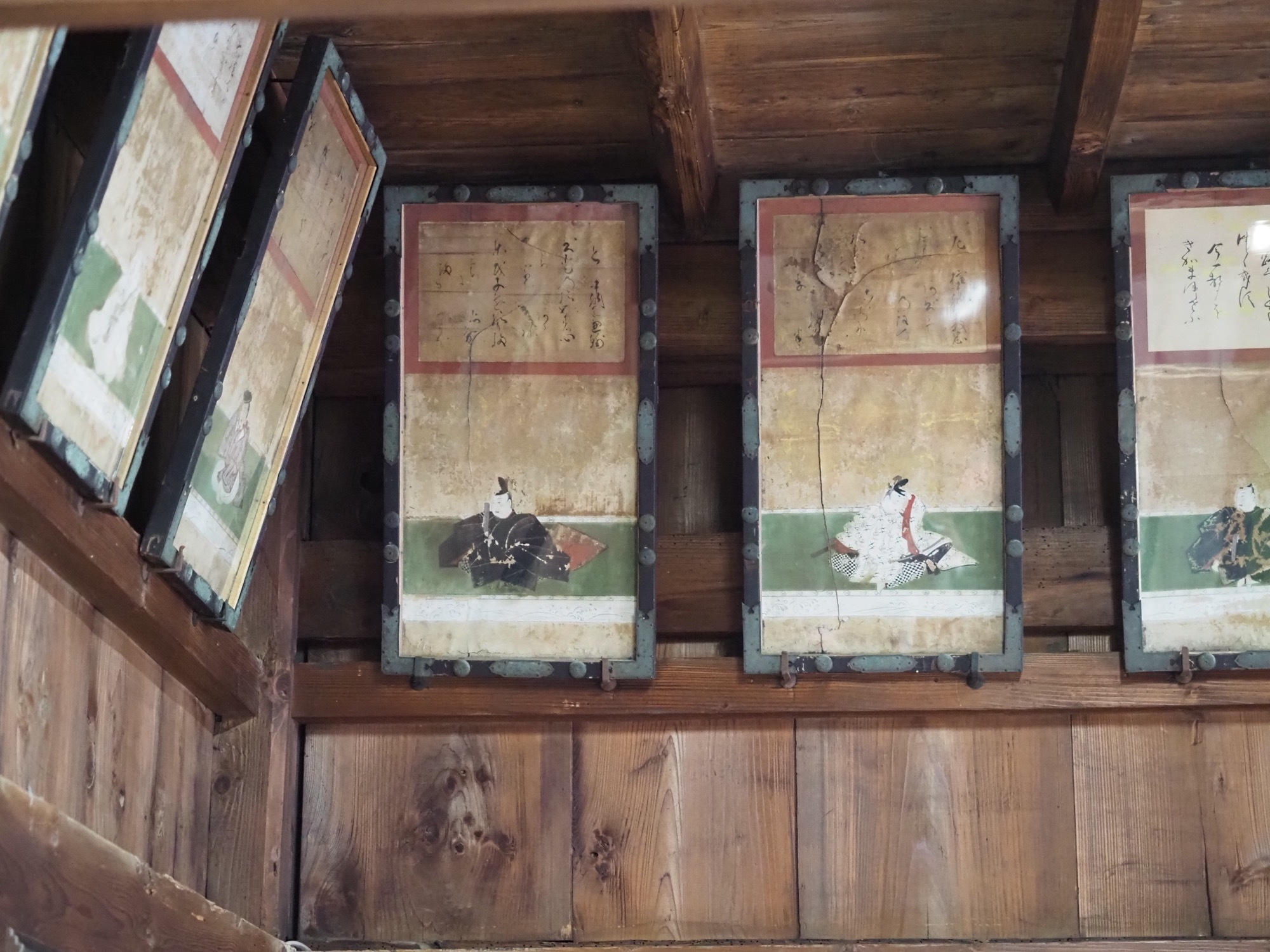
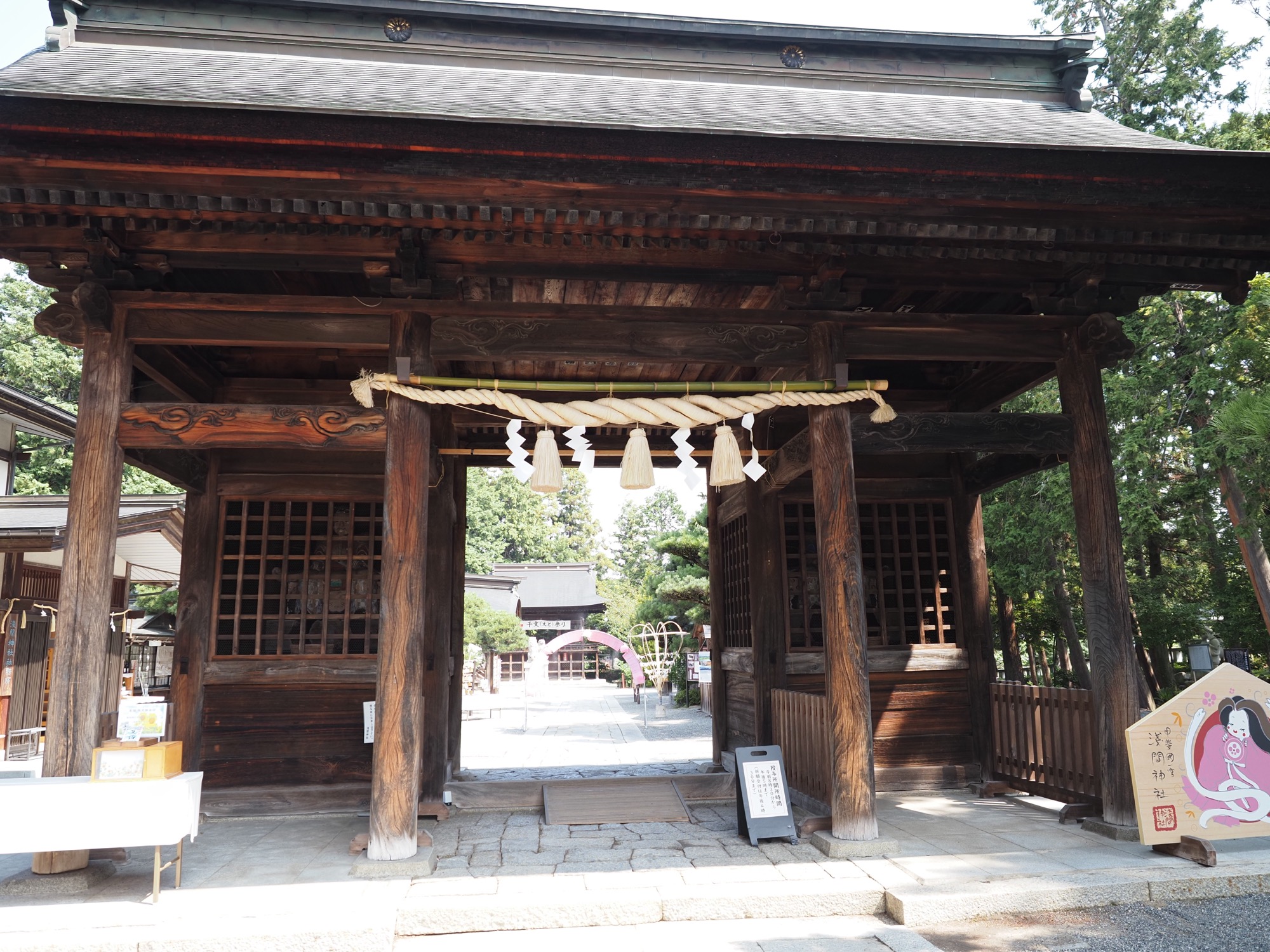
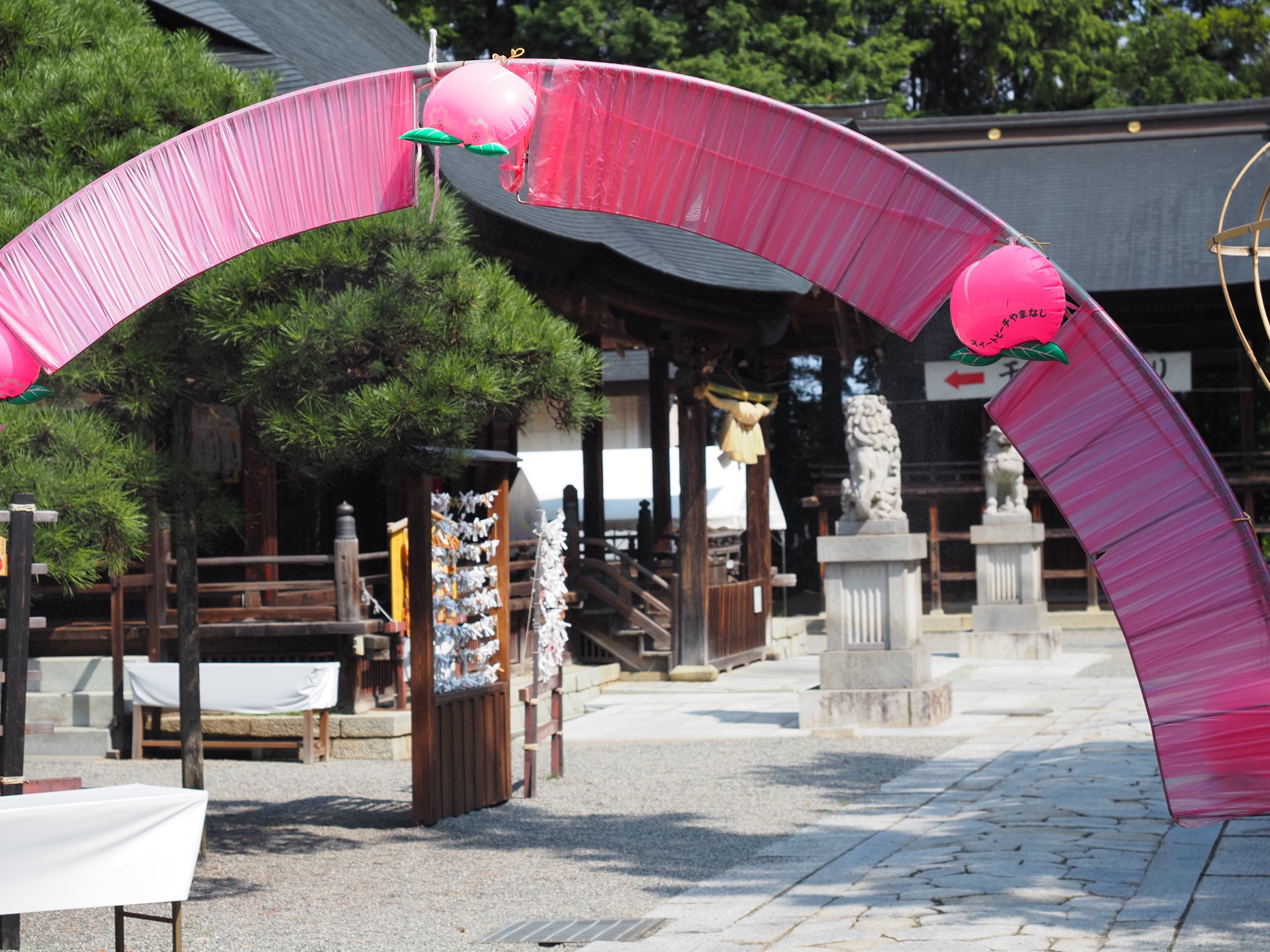
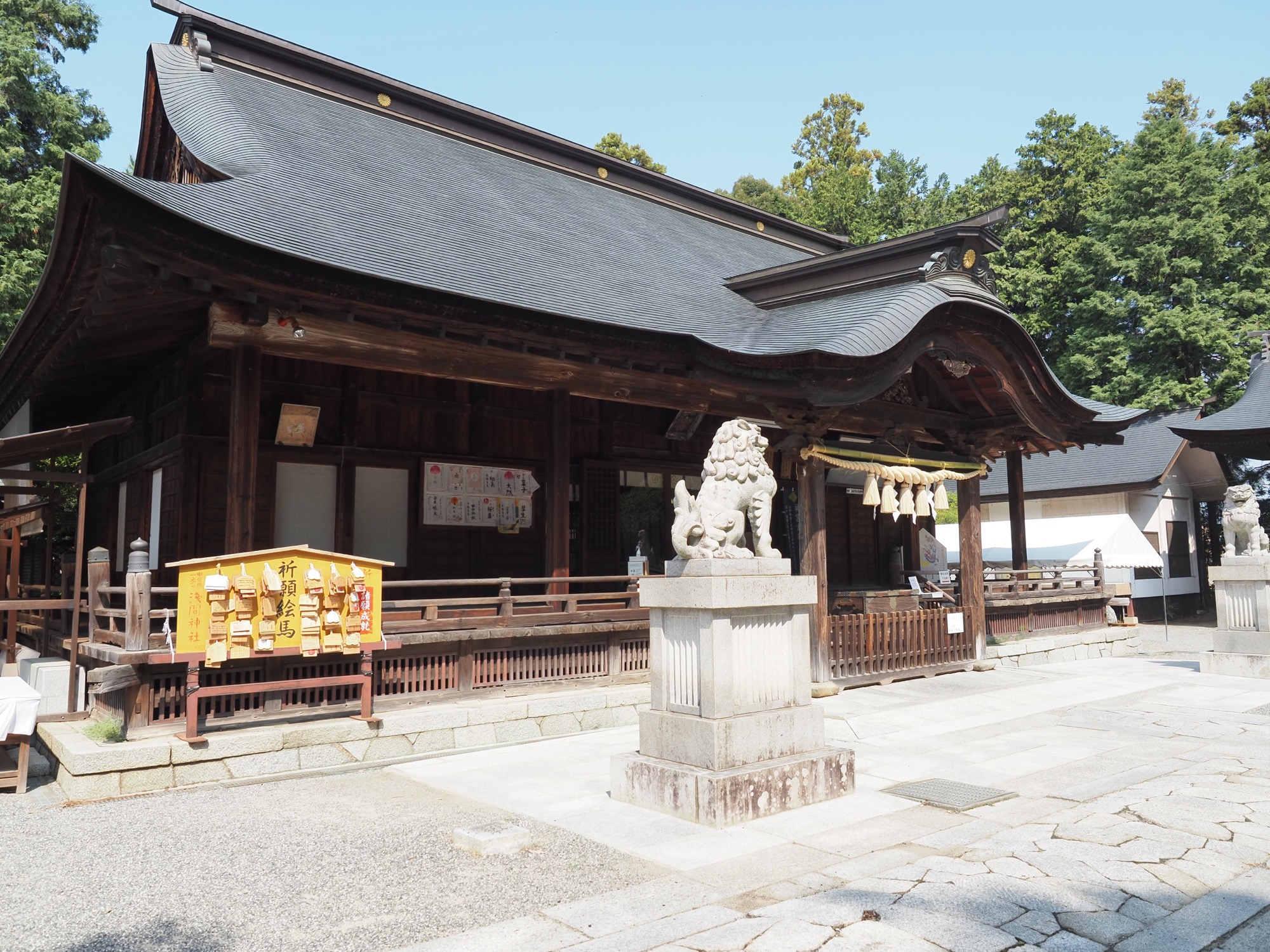
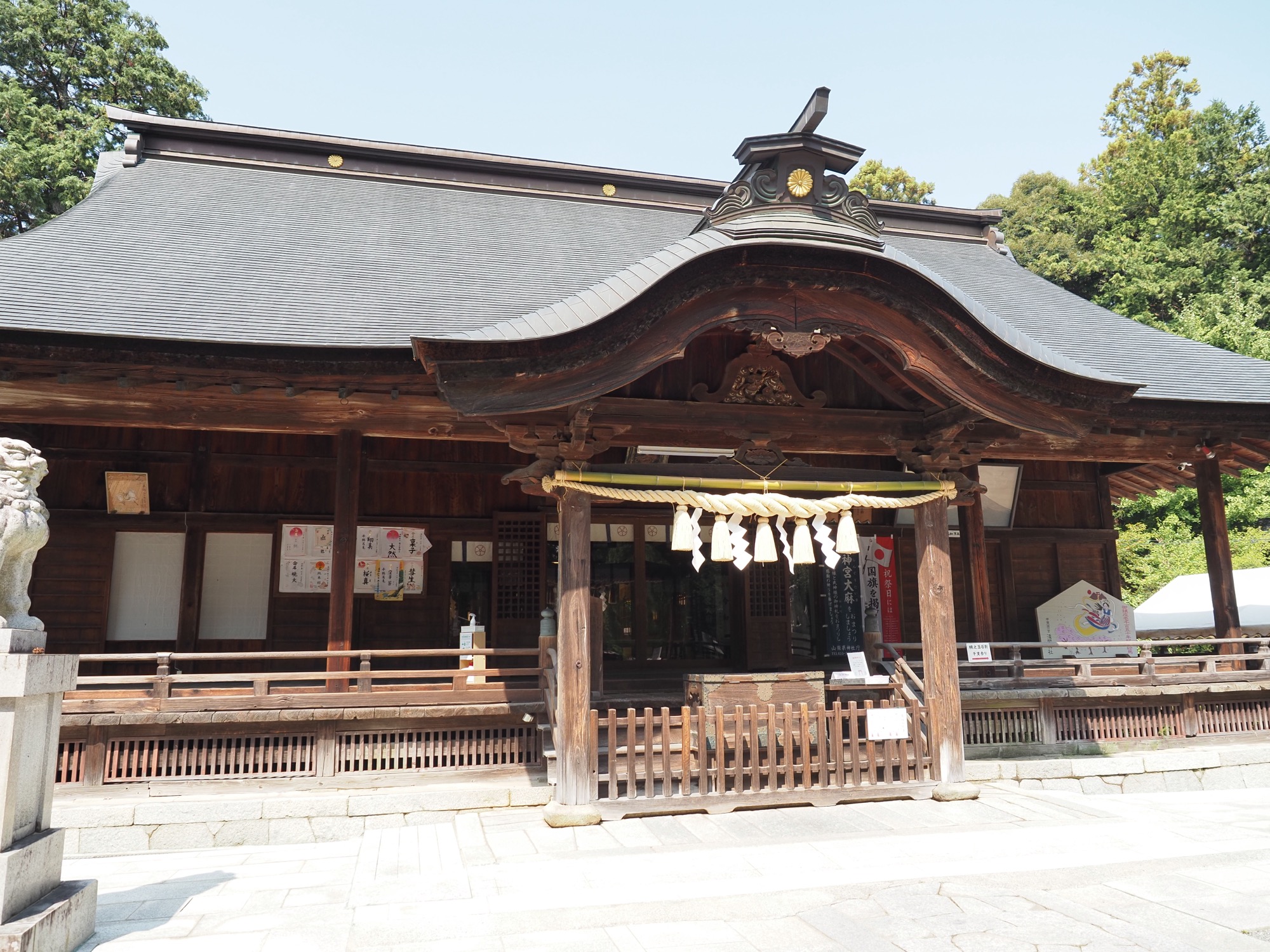
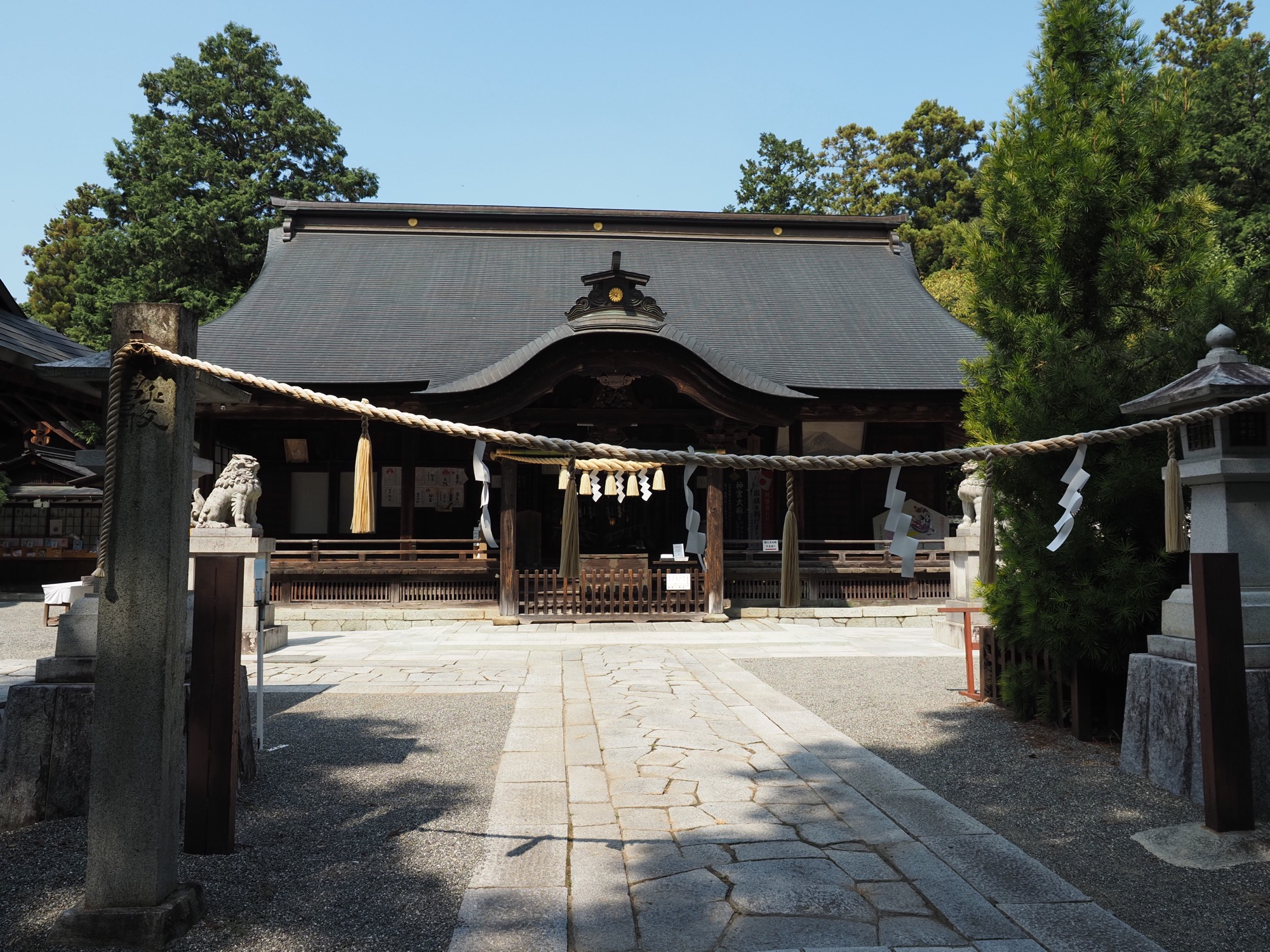
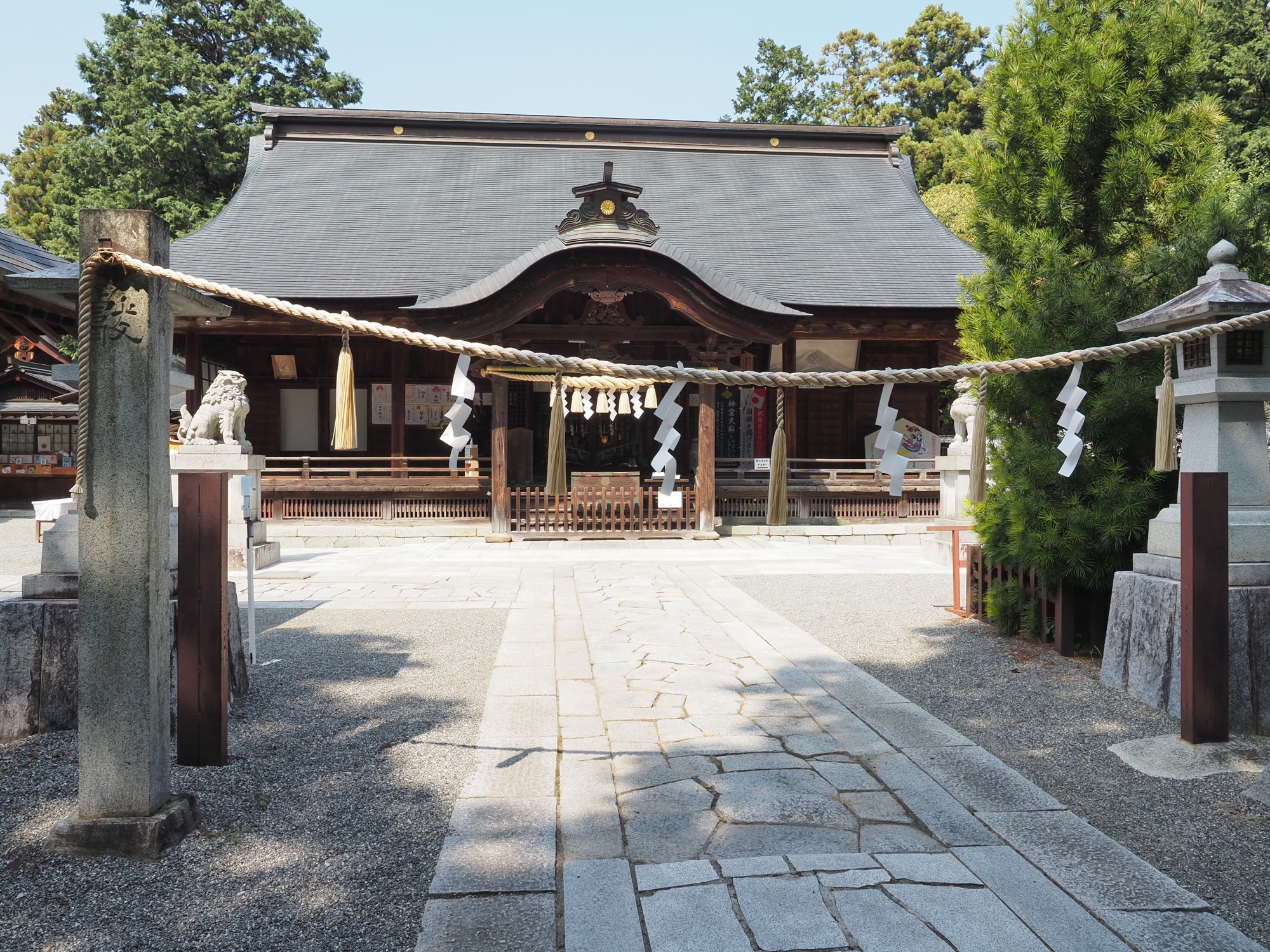
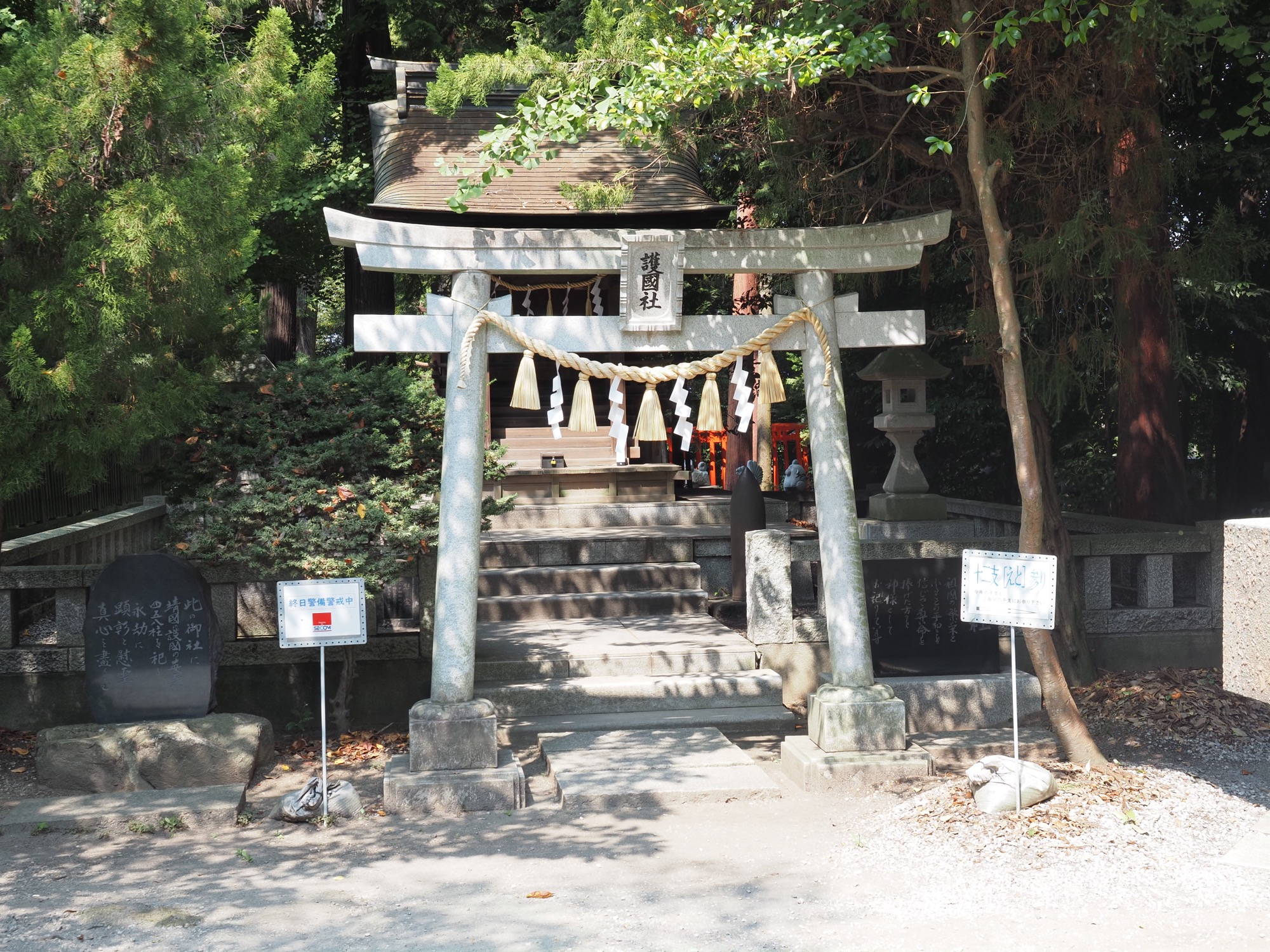
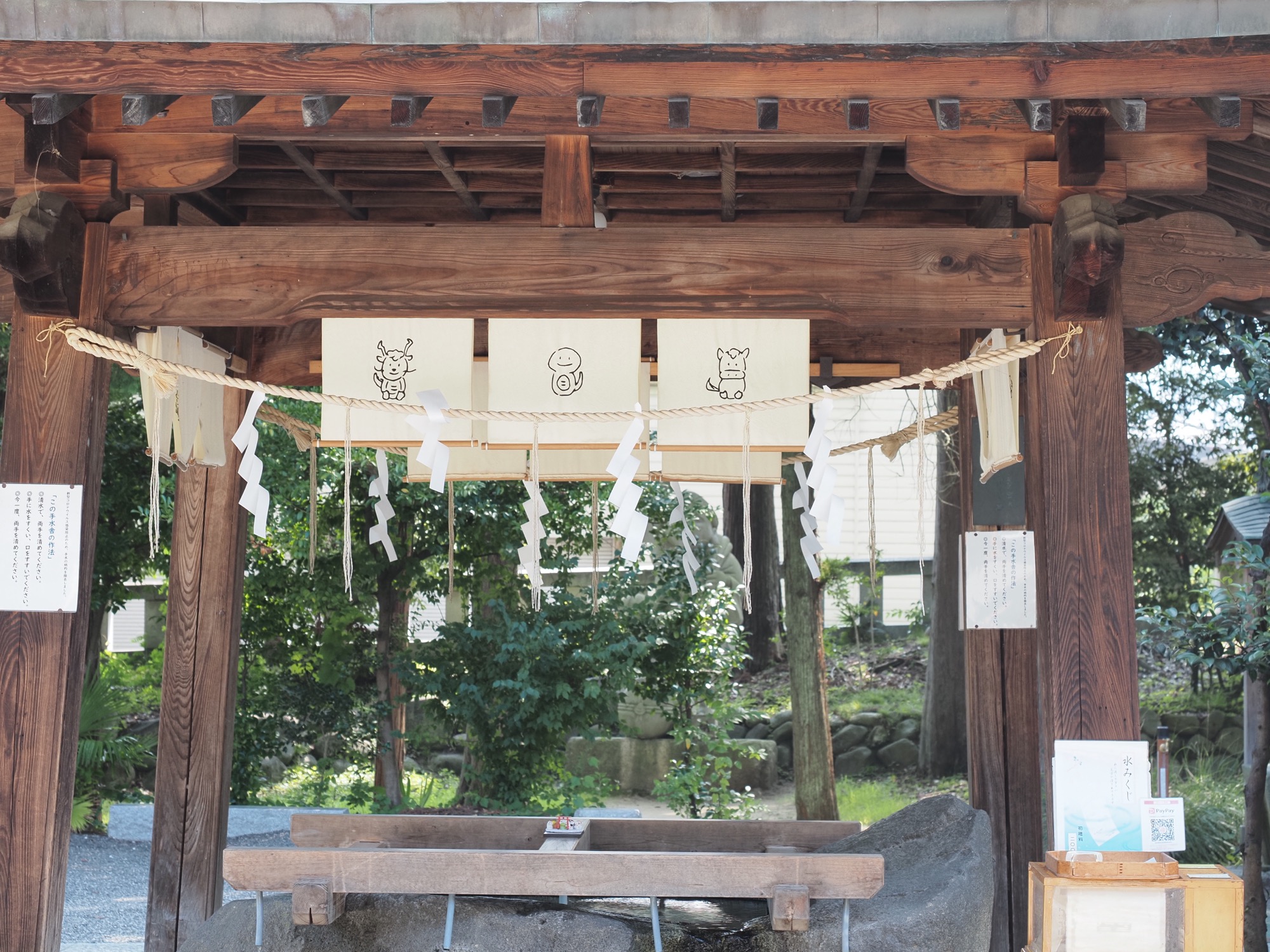
The photos show the precinct in late summer, in August: the Zuishin gate seen through the great stone torii, the grass ring (chinowa) for the summer purification, the front of the worship hall, portraits that appear to be of warriors and an old picture of the shrine grounds inside the worship hall, the torii of a subsidiary shrine, and a simple curtain painted with the zodiac animals hung at the purification basin.