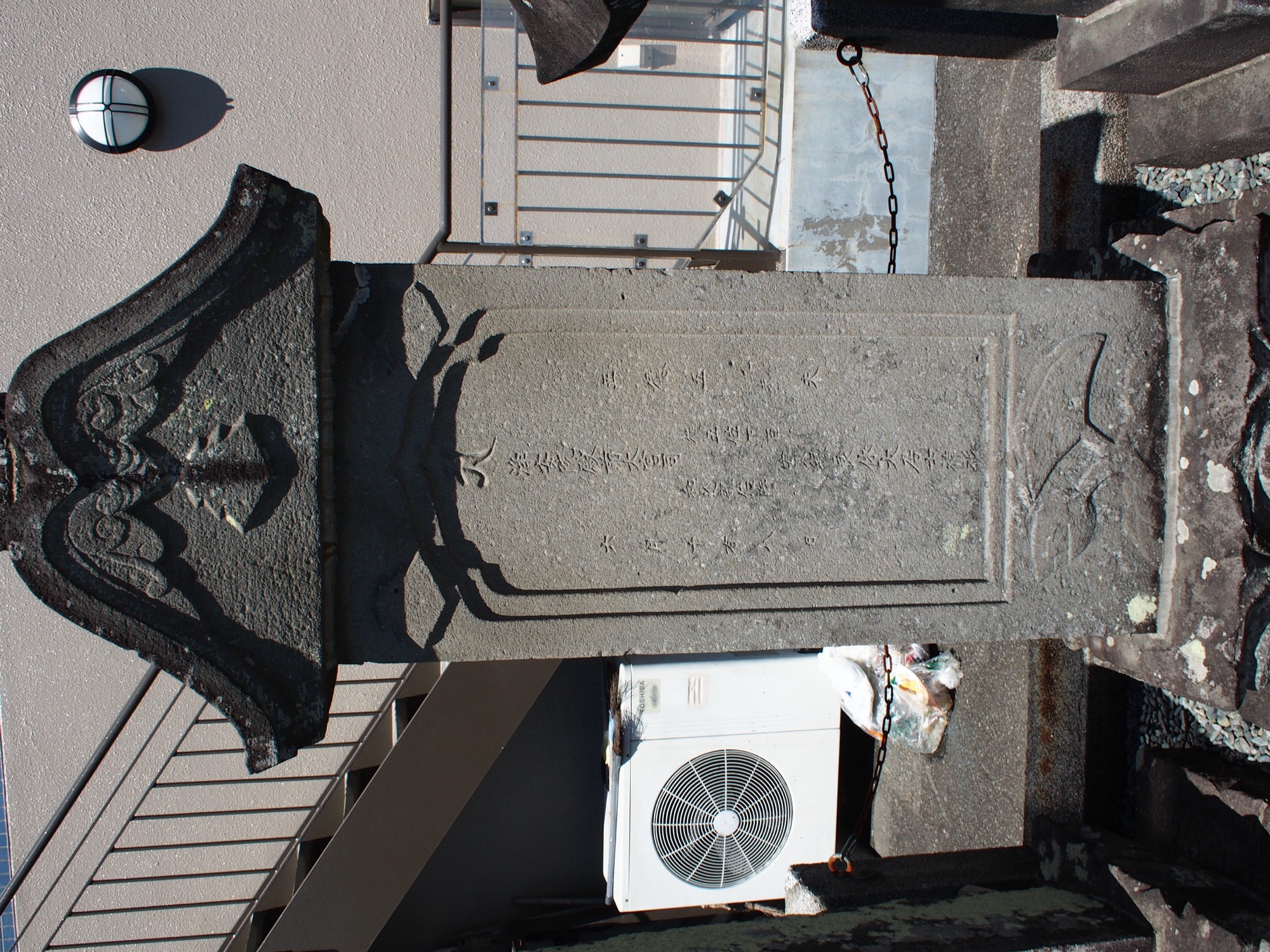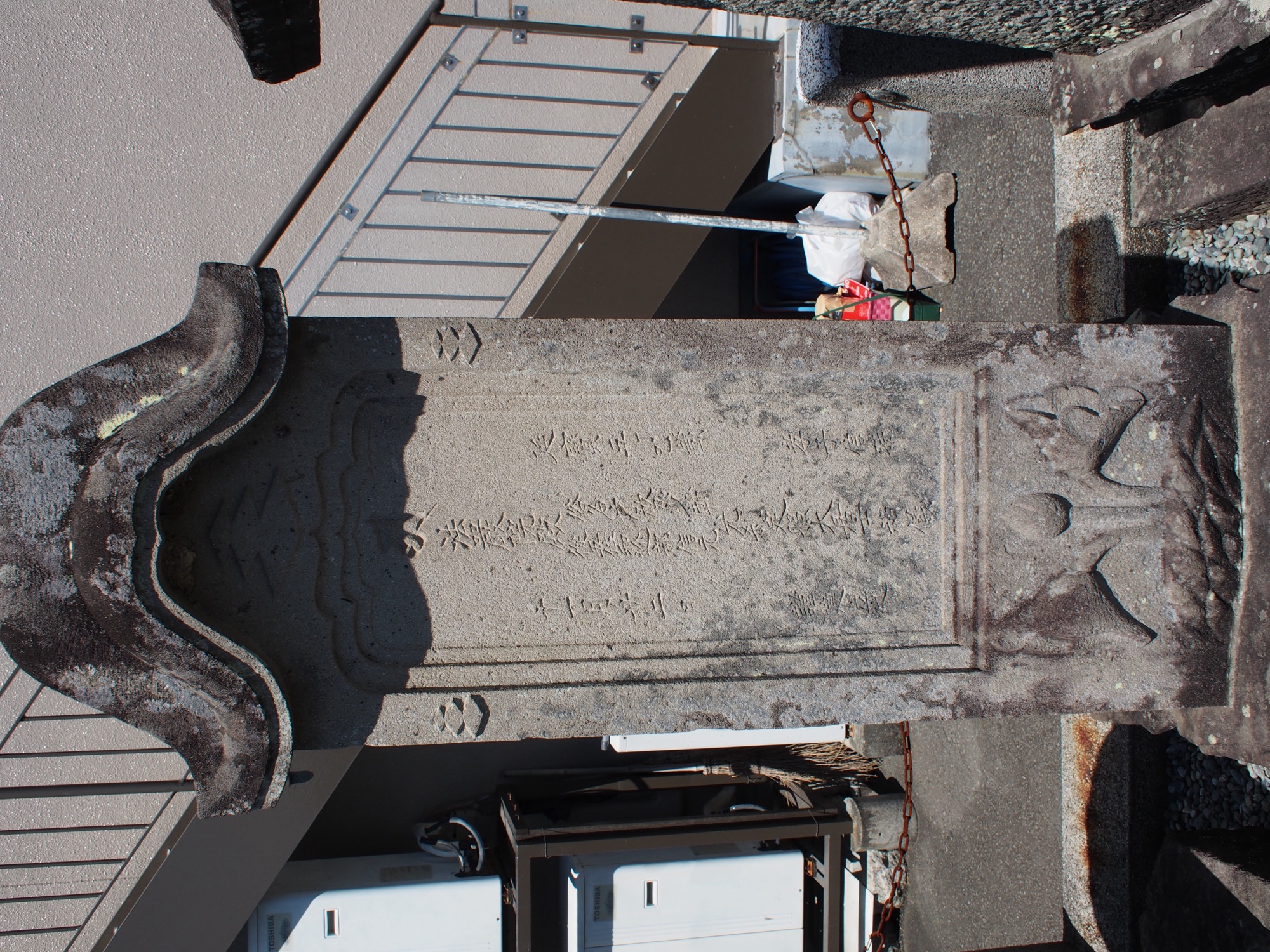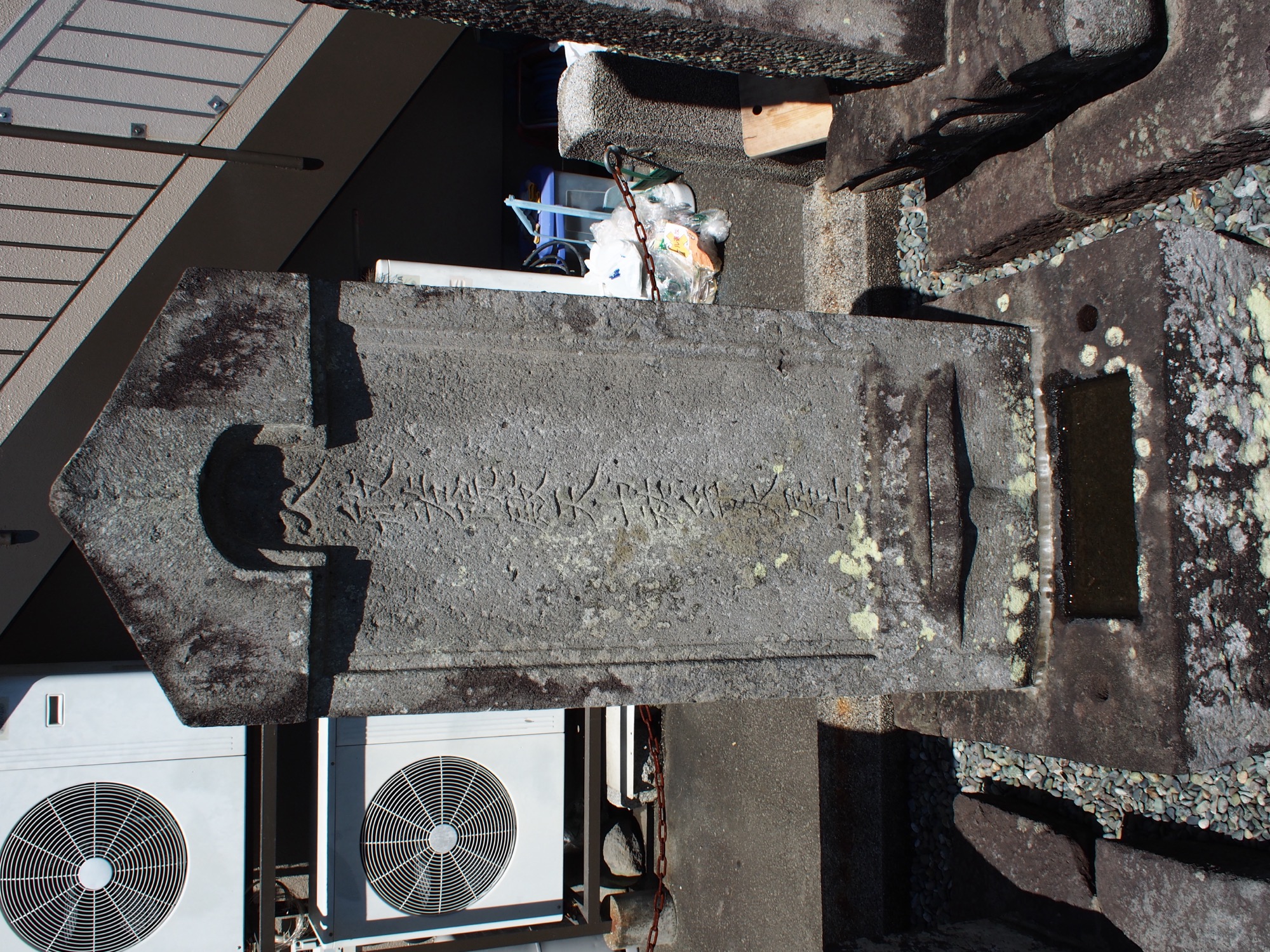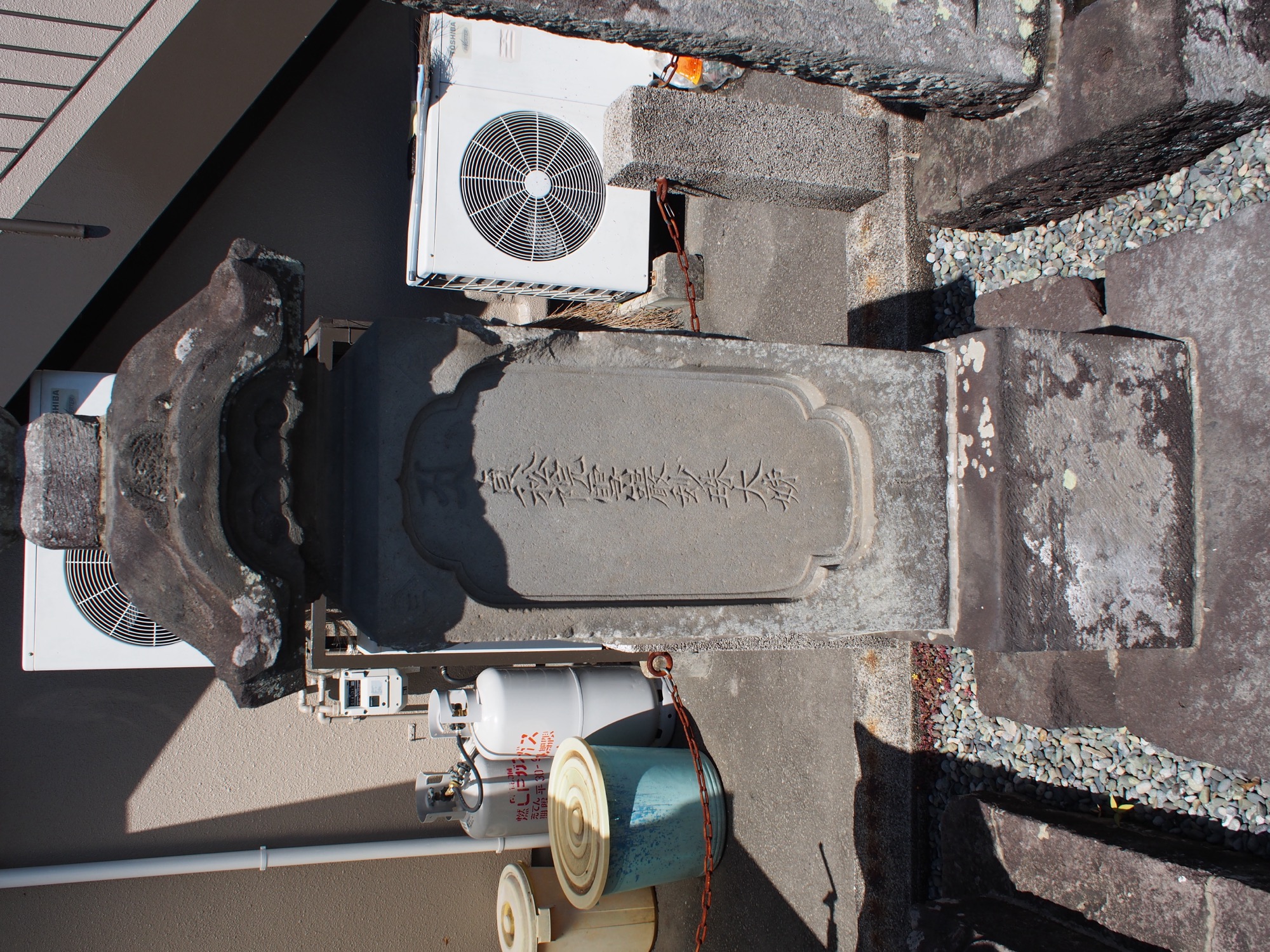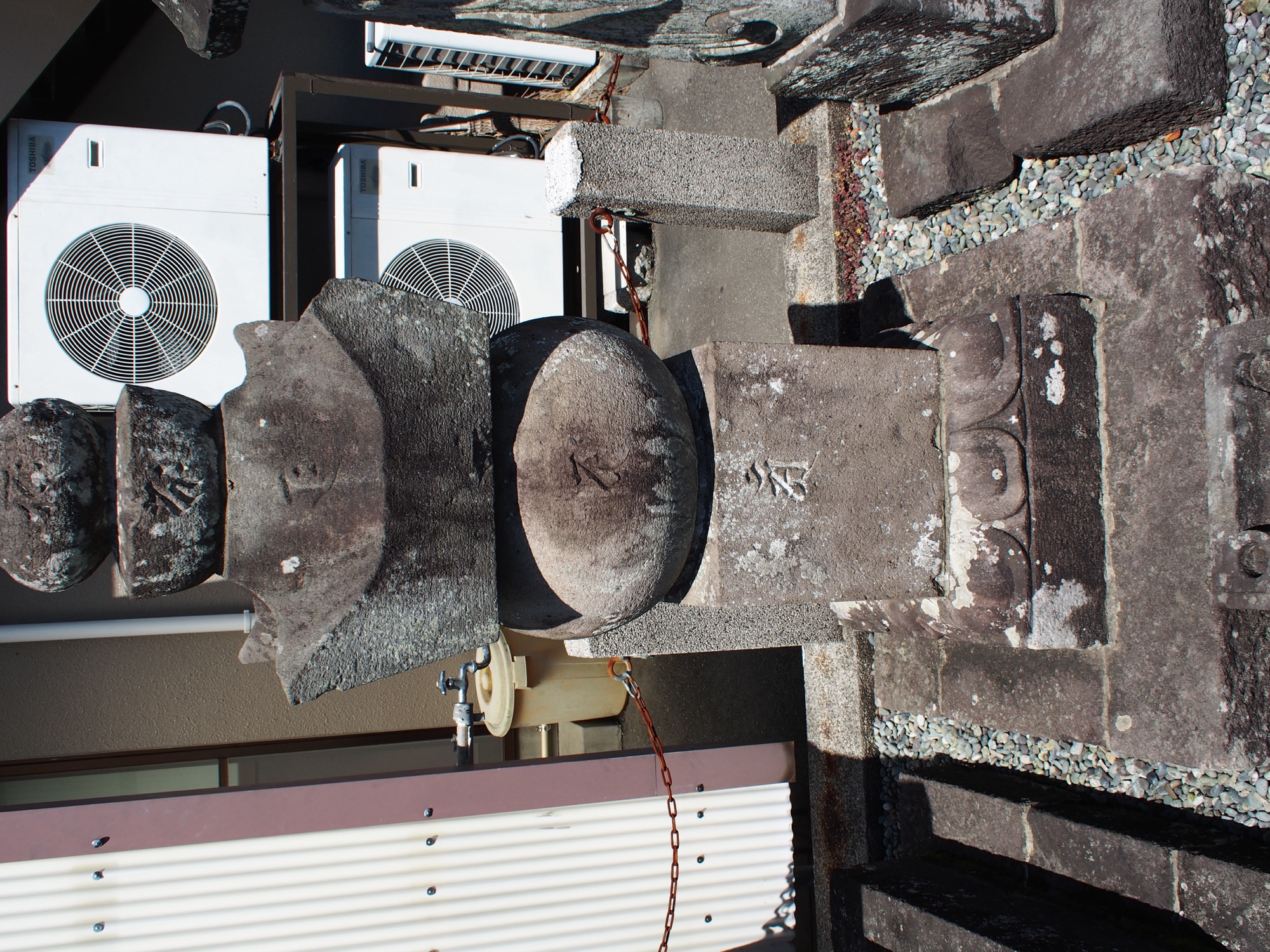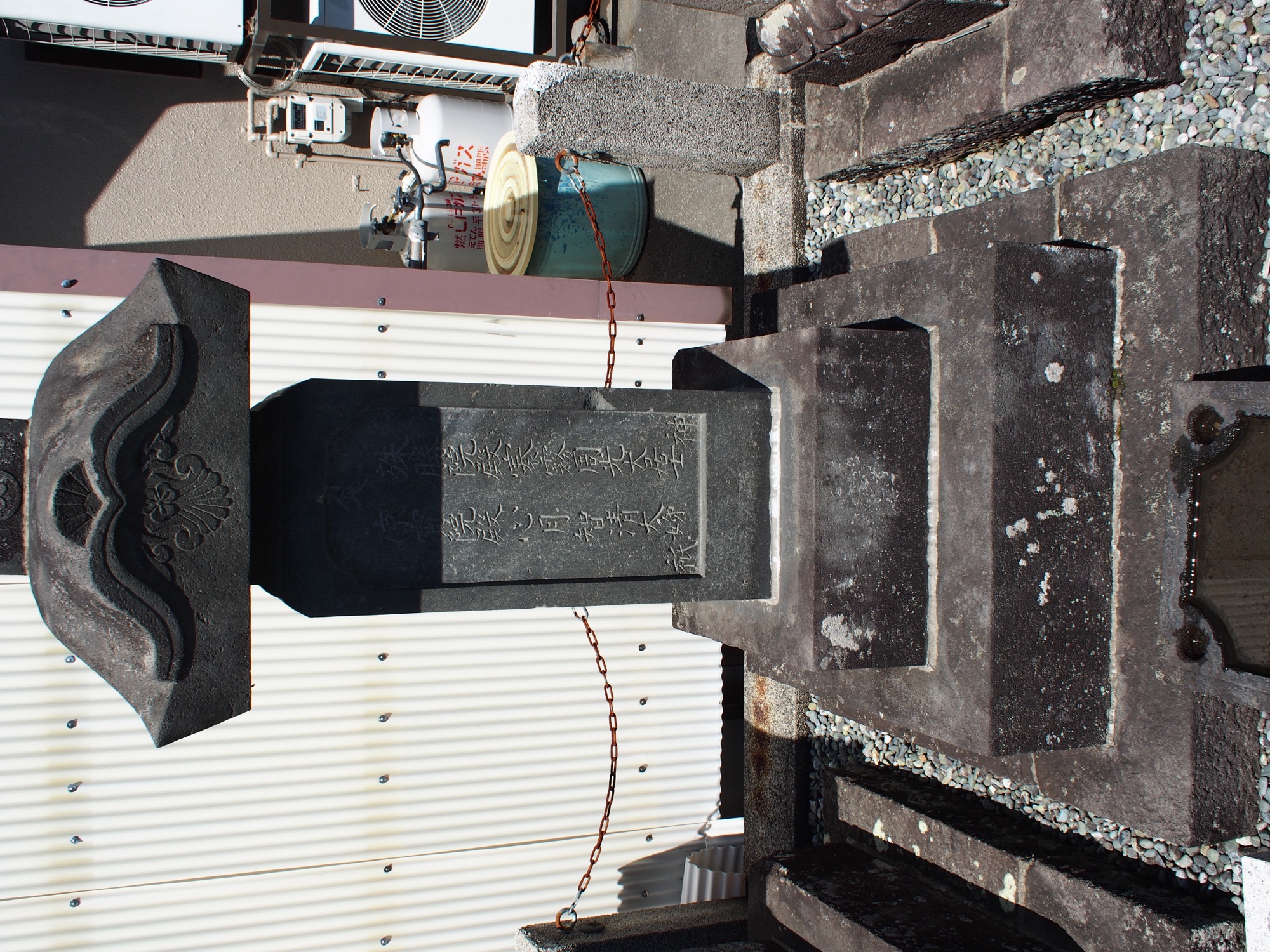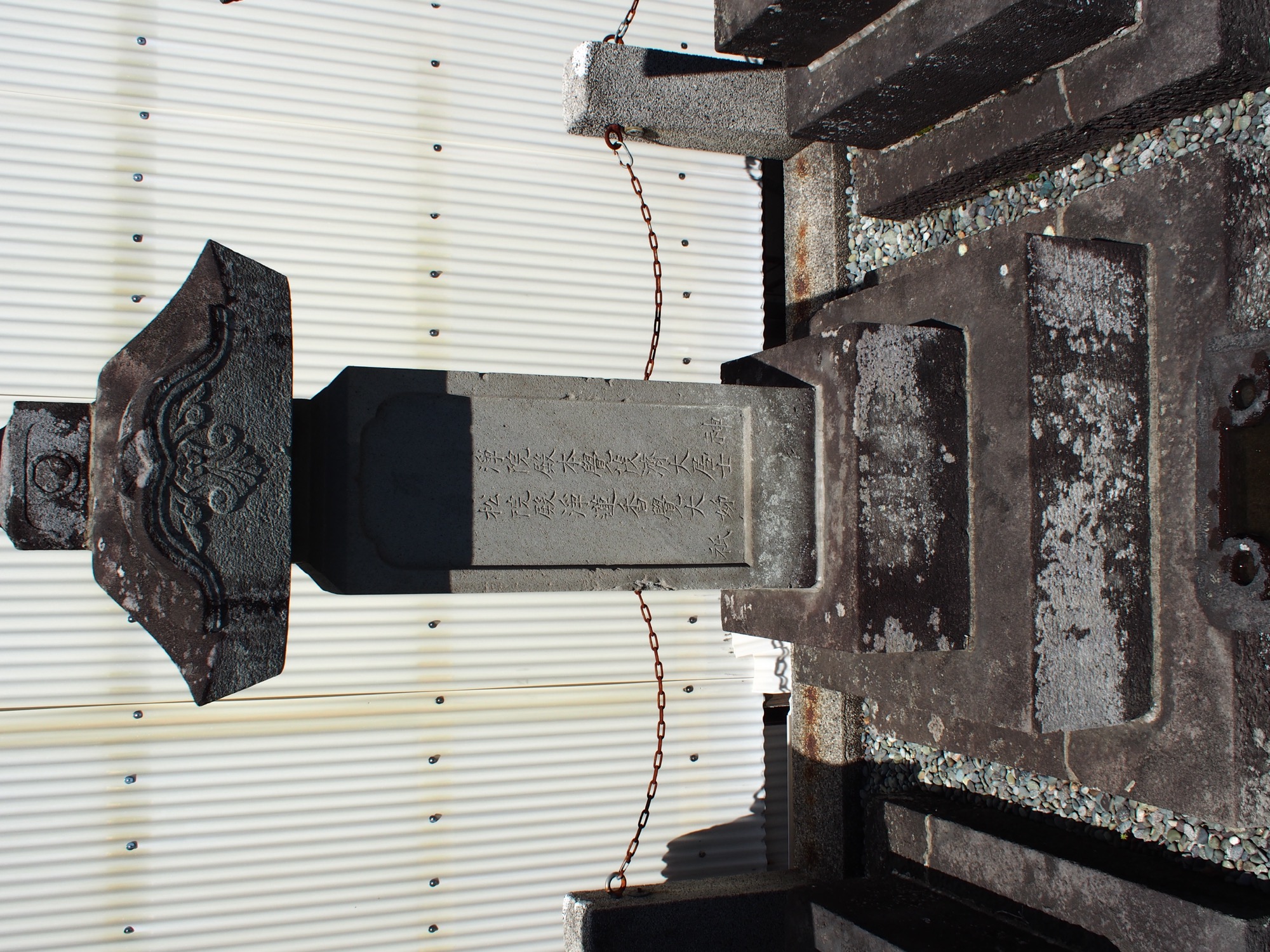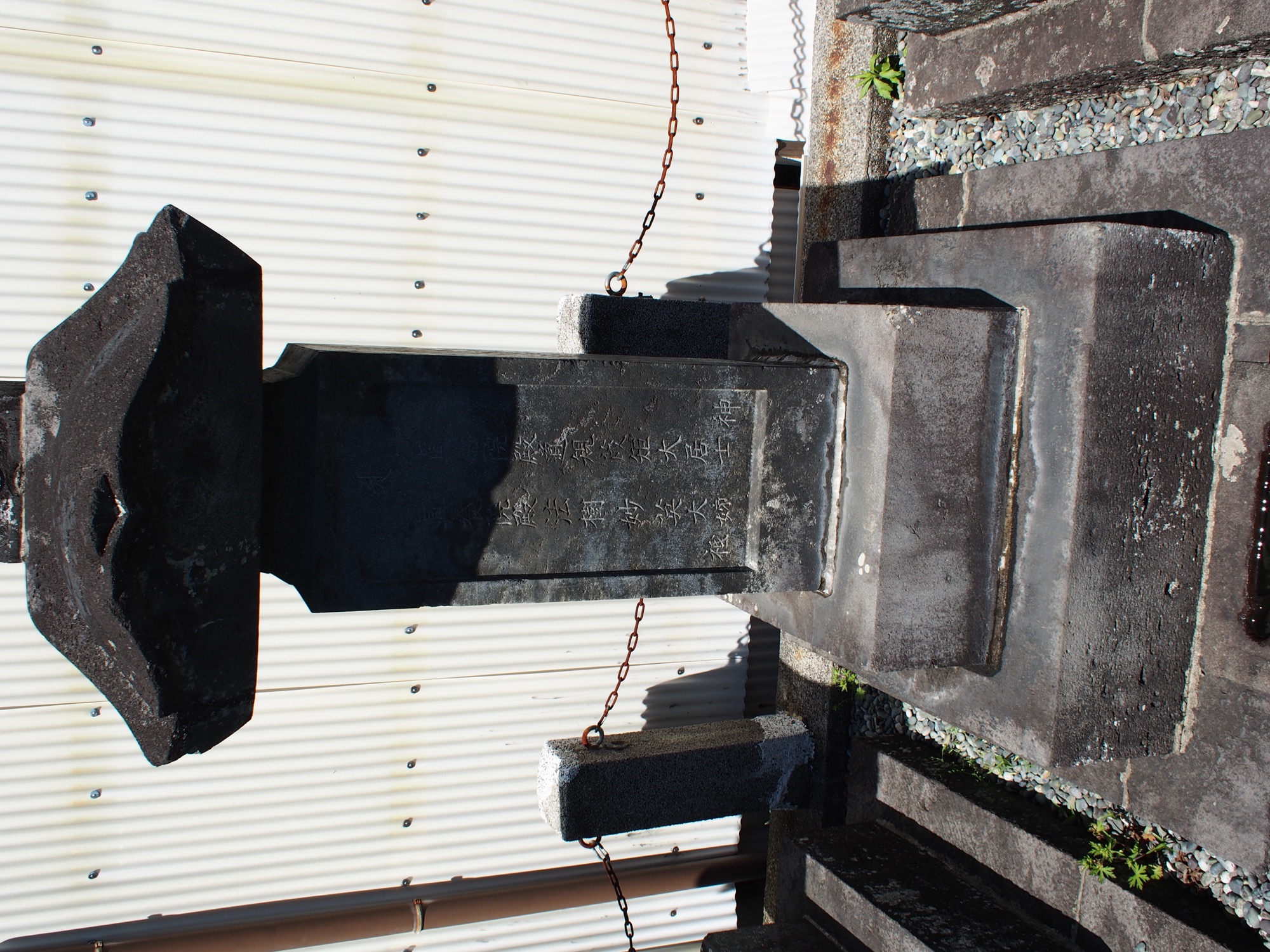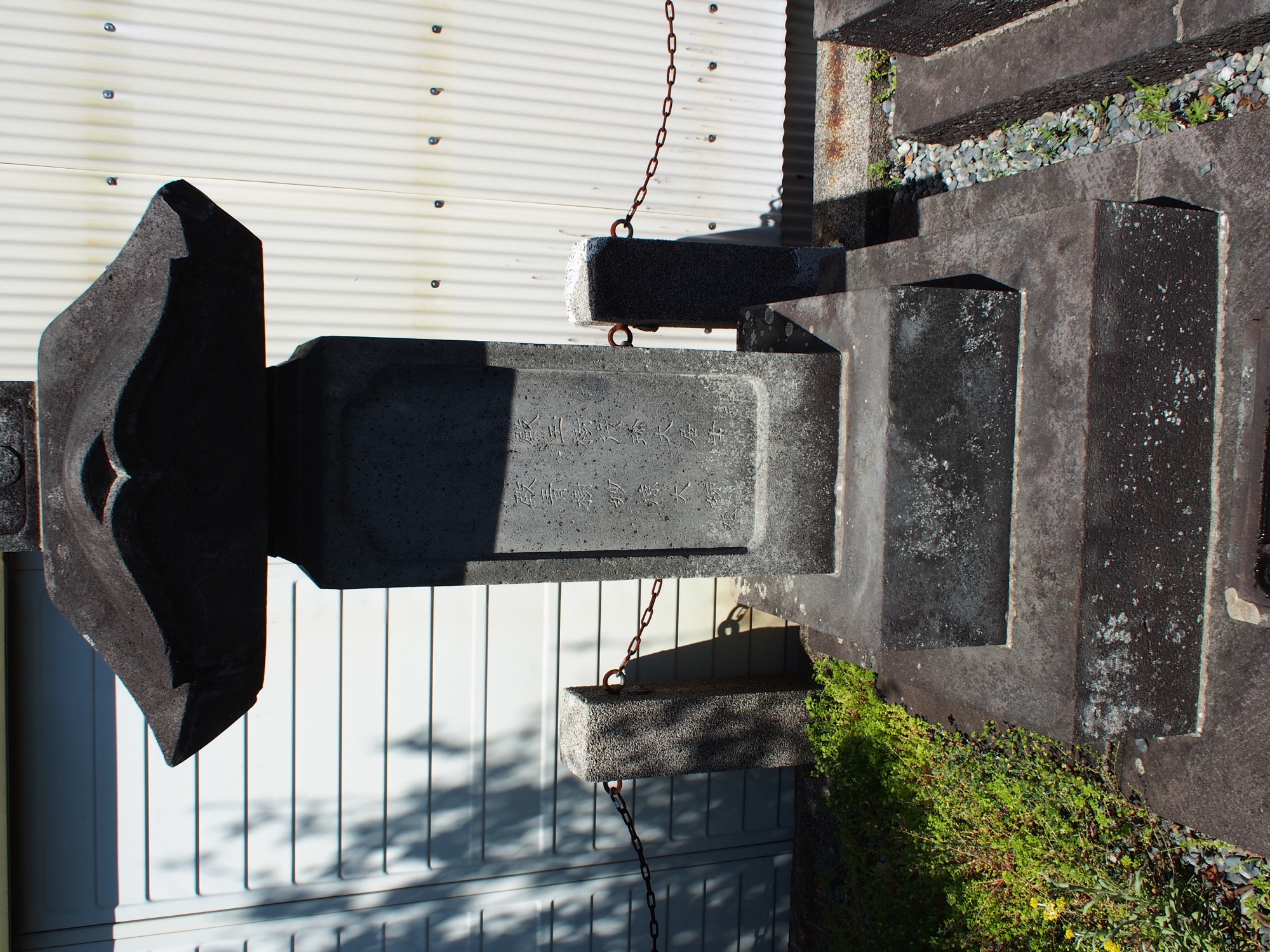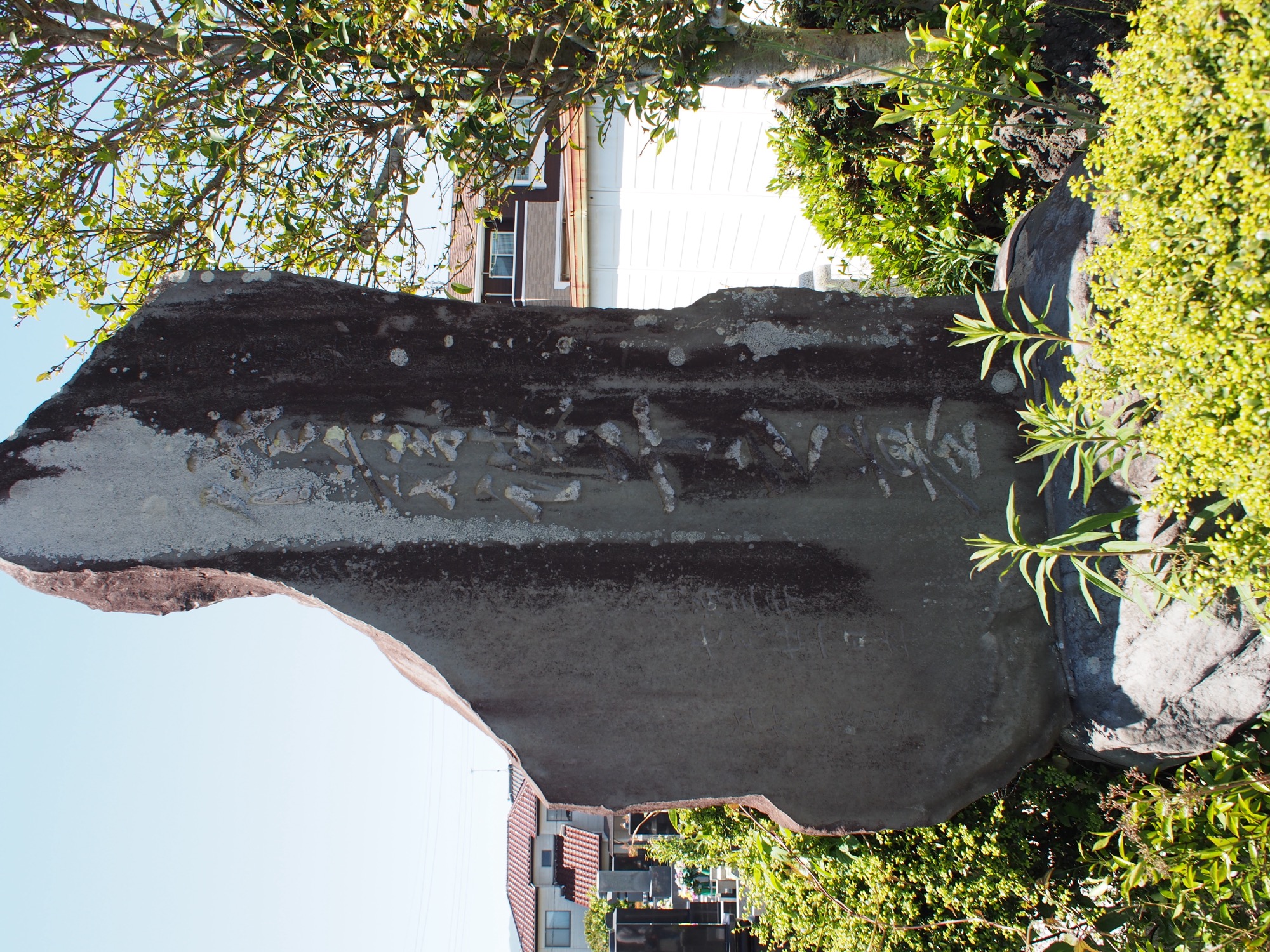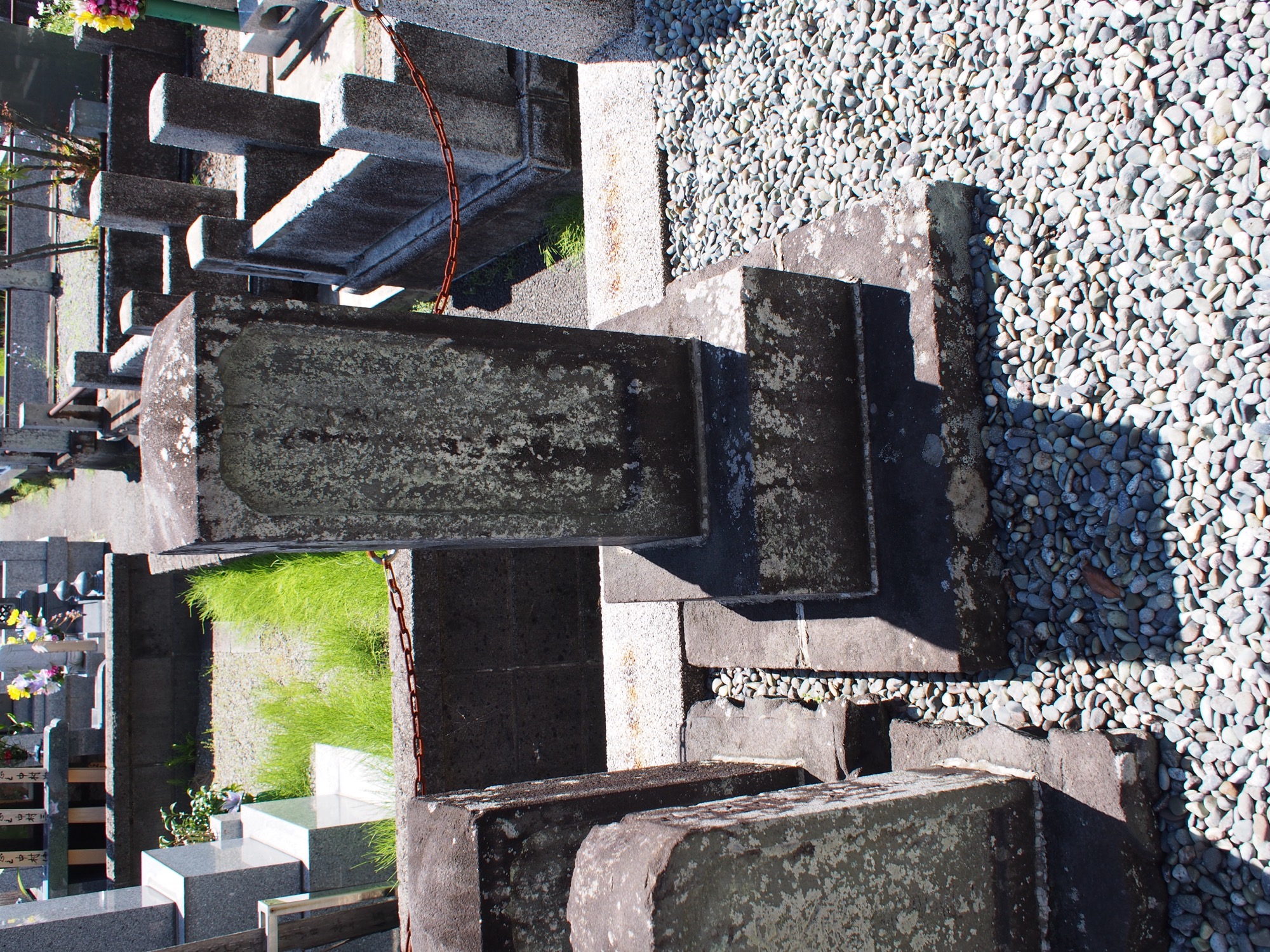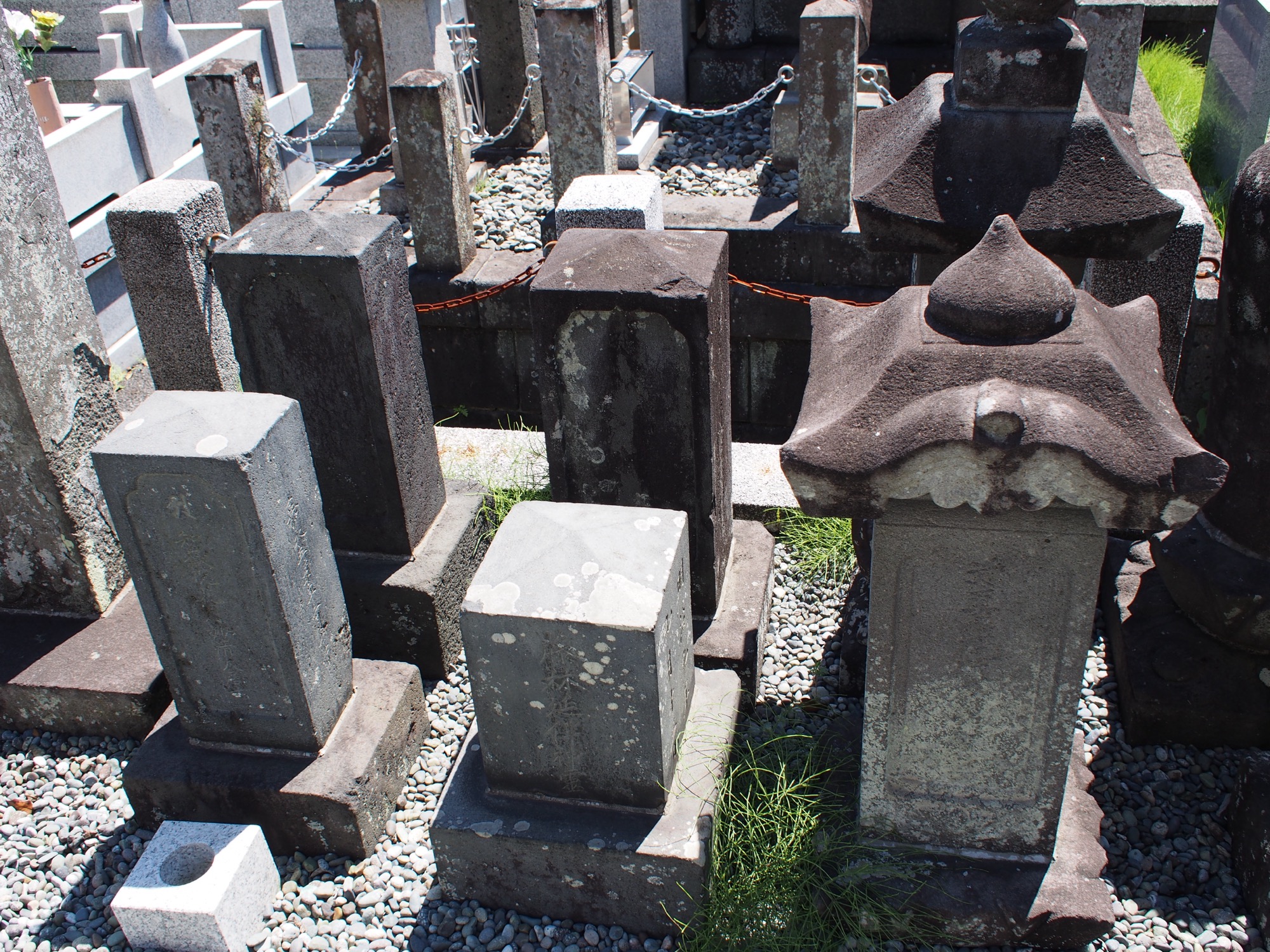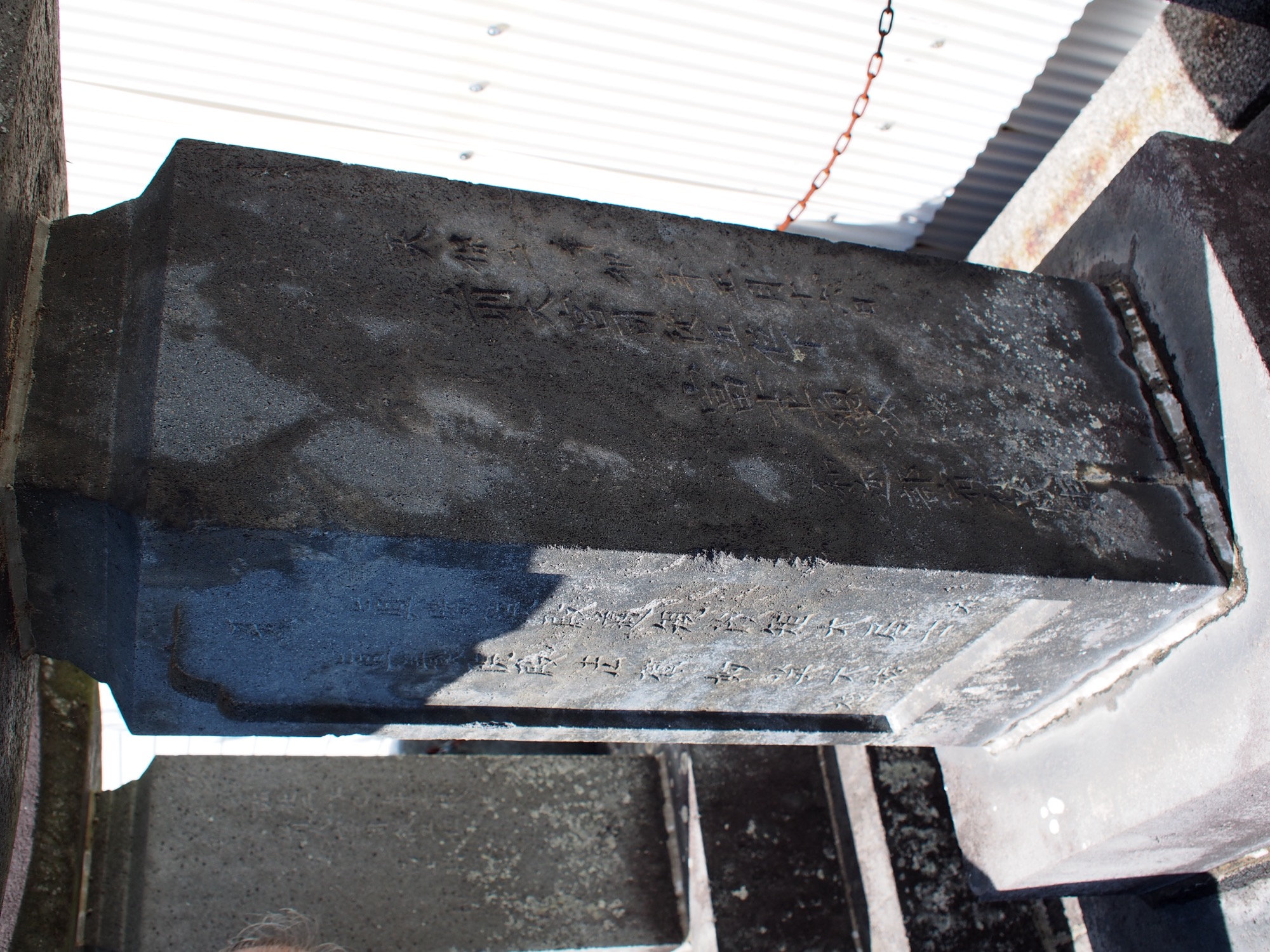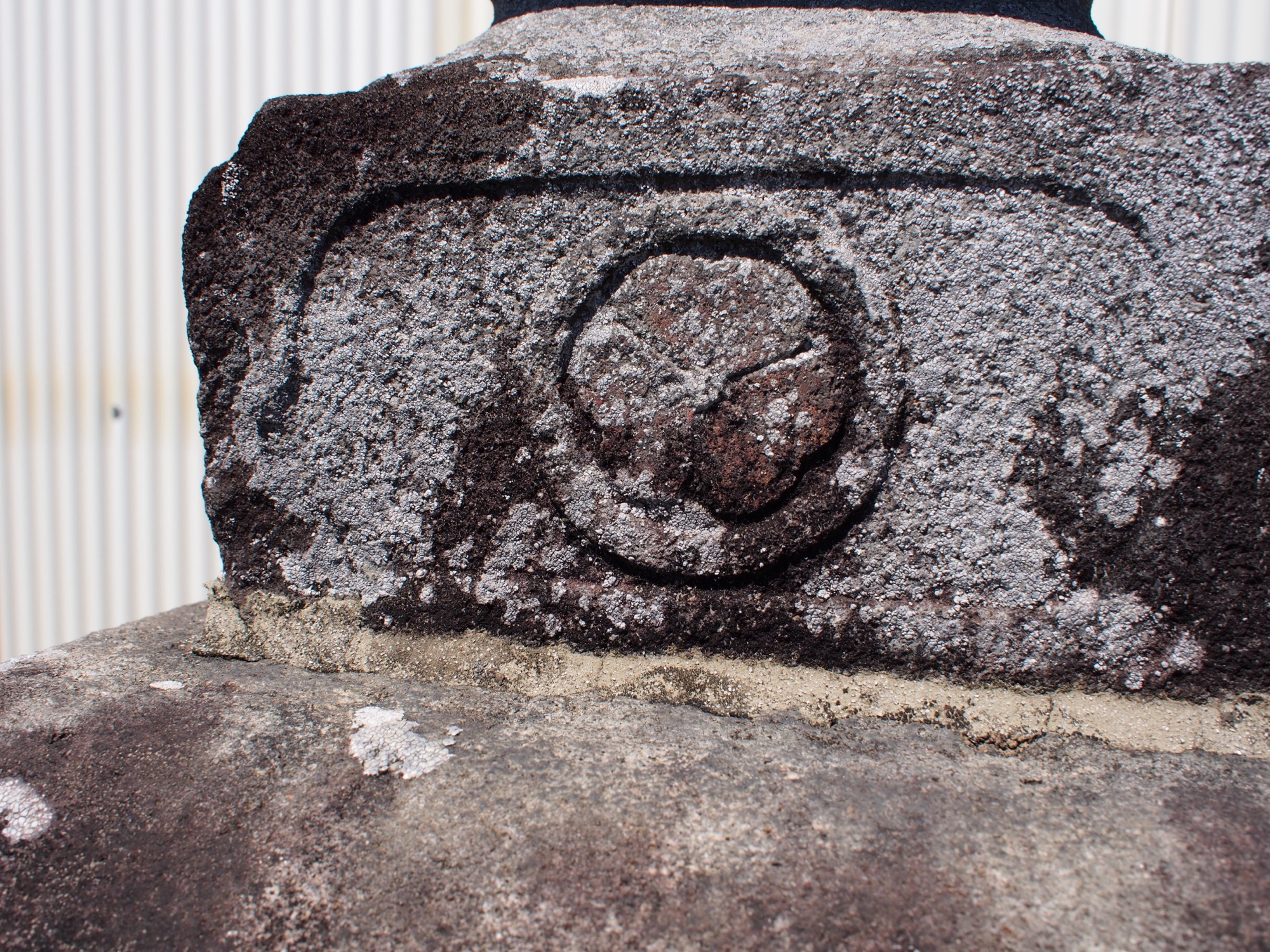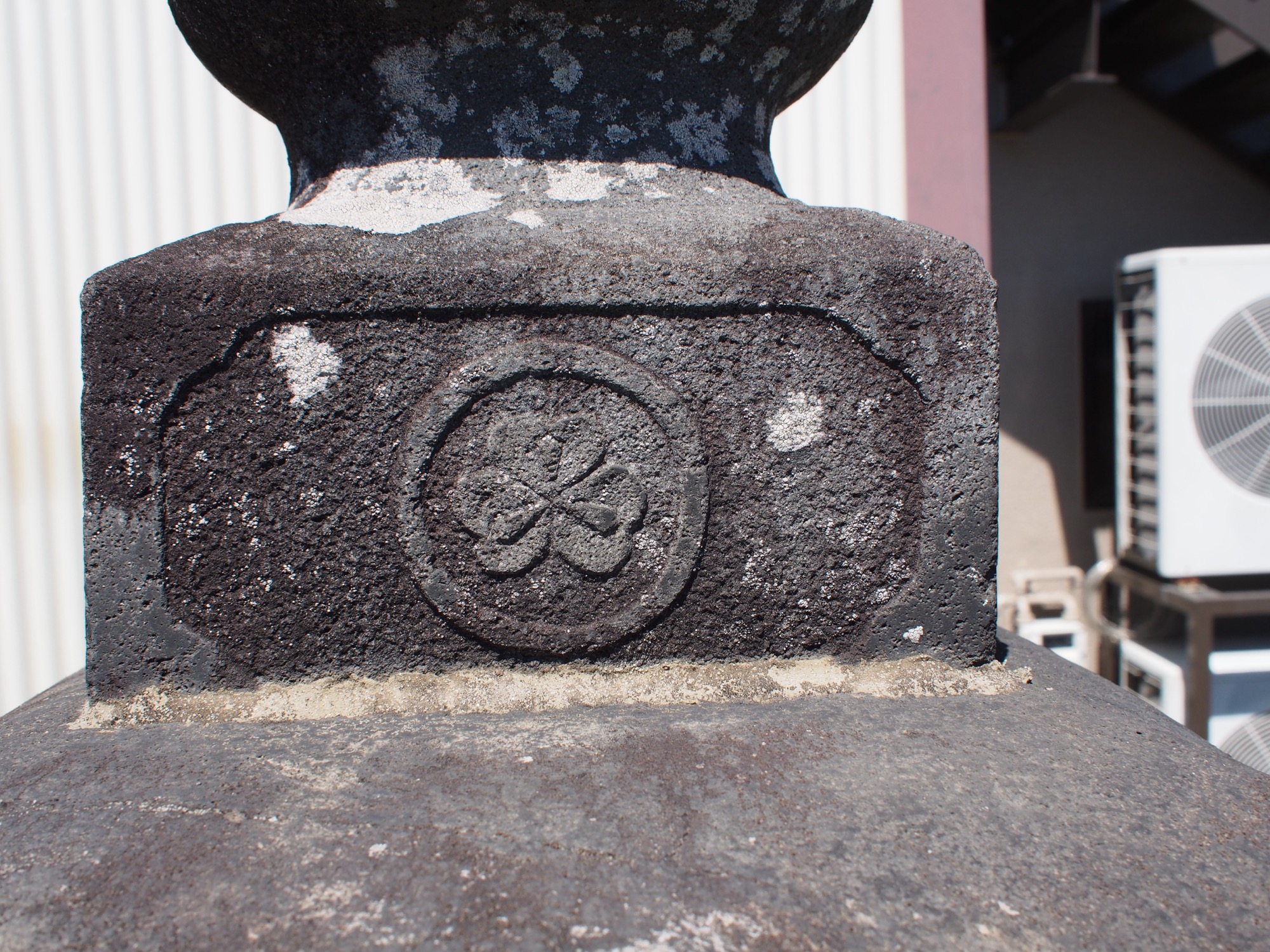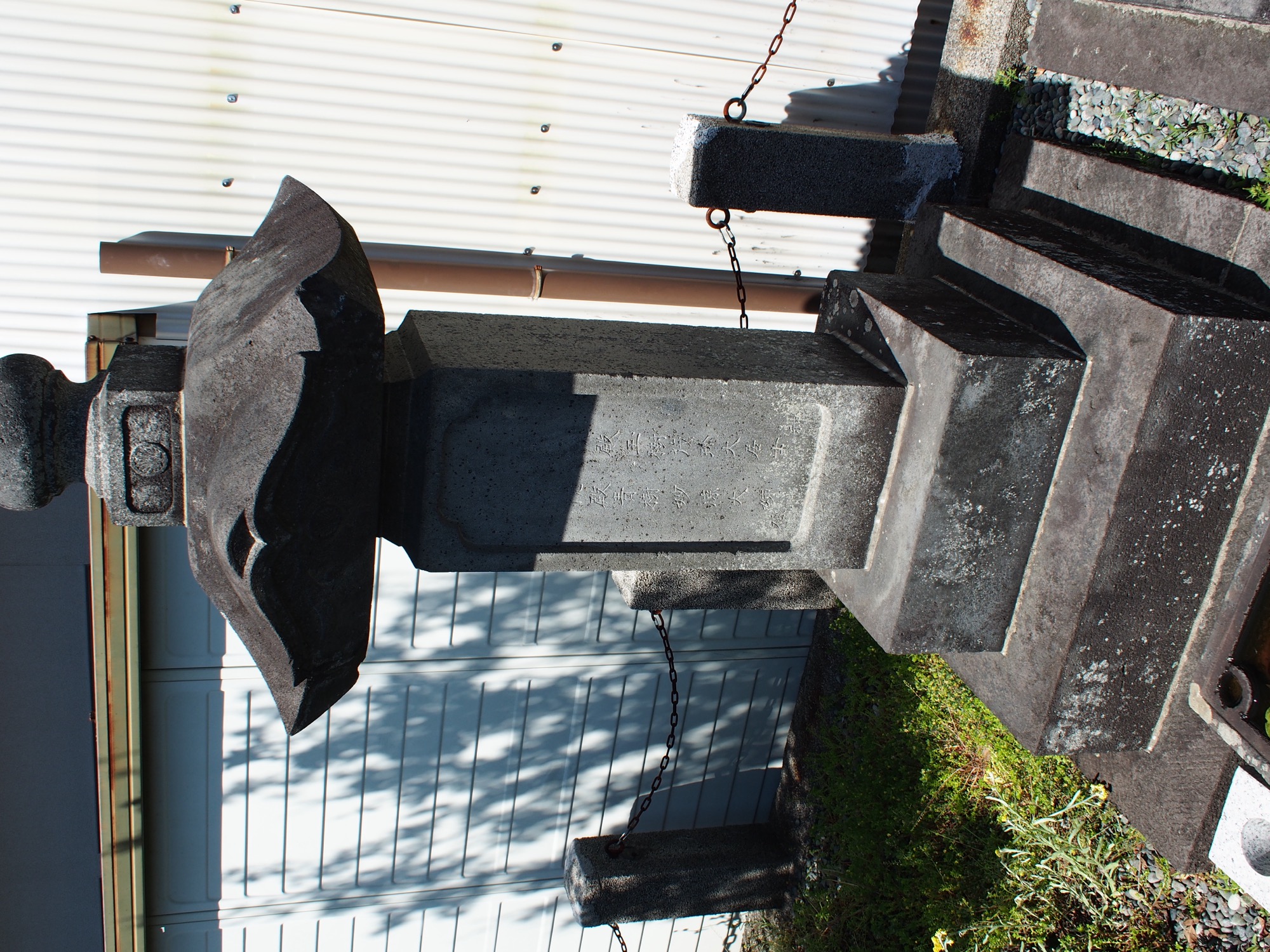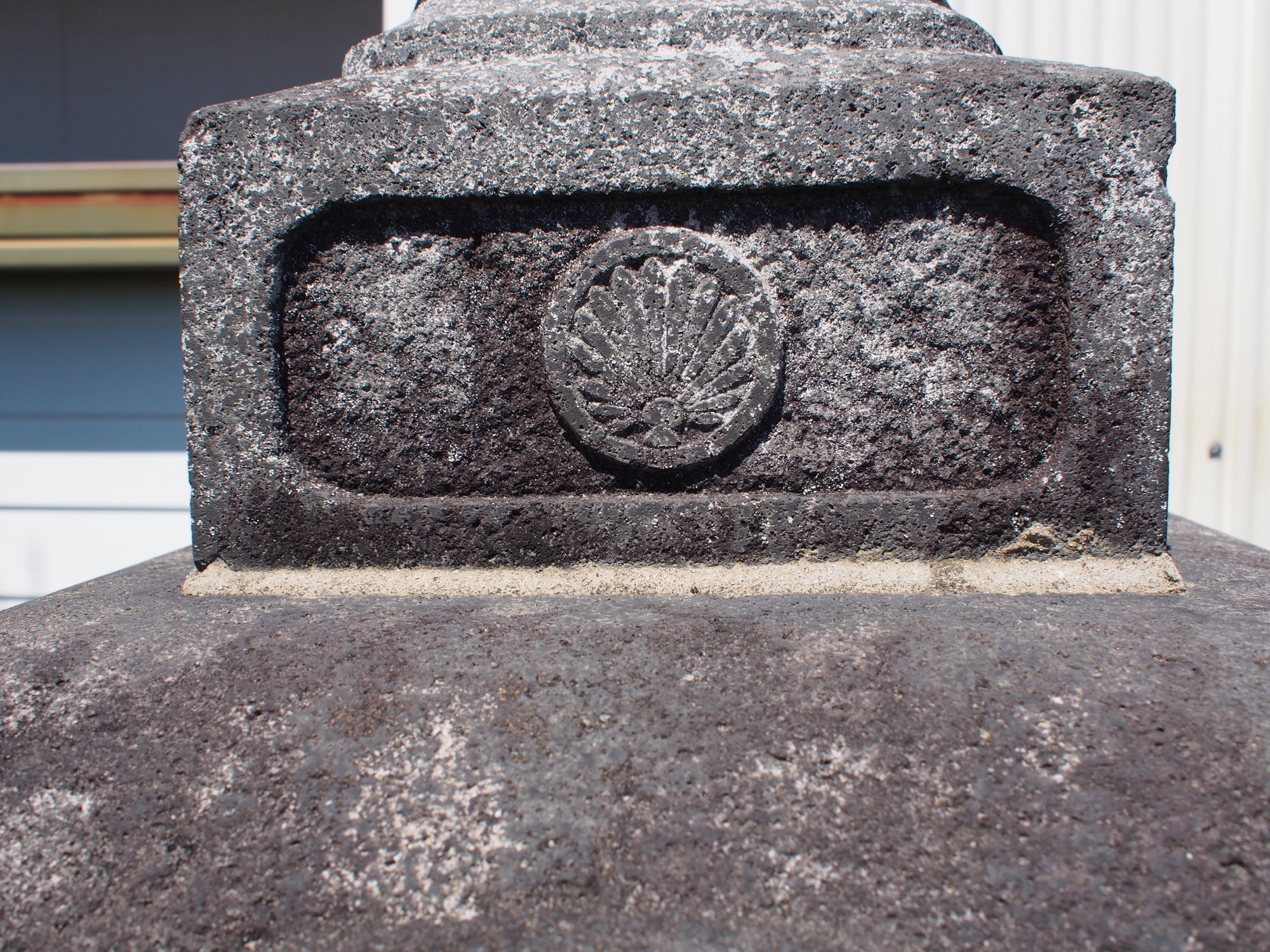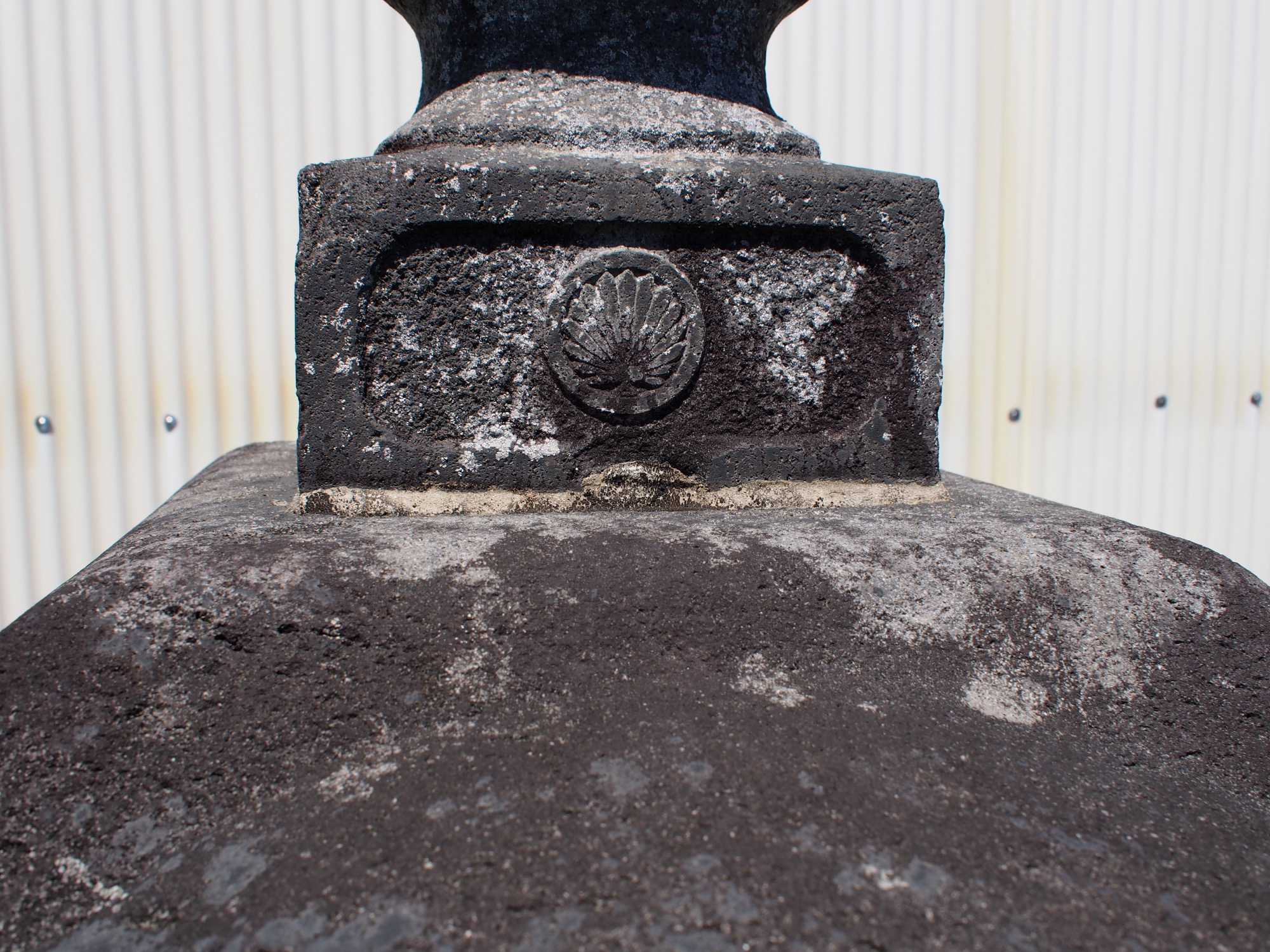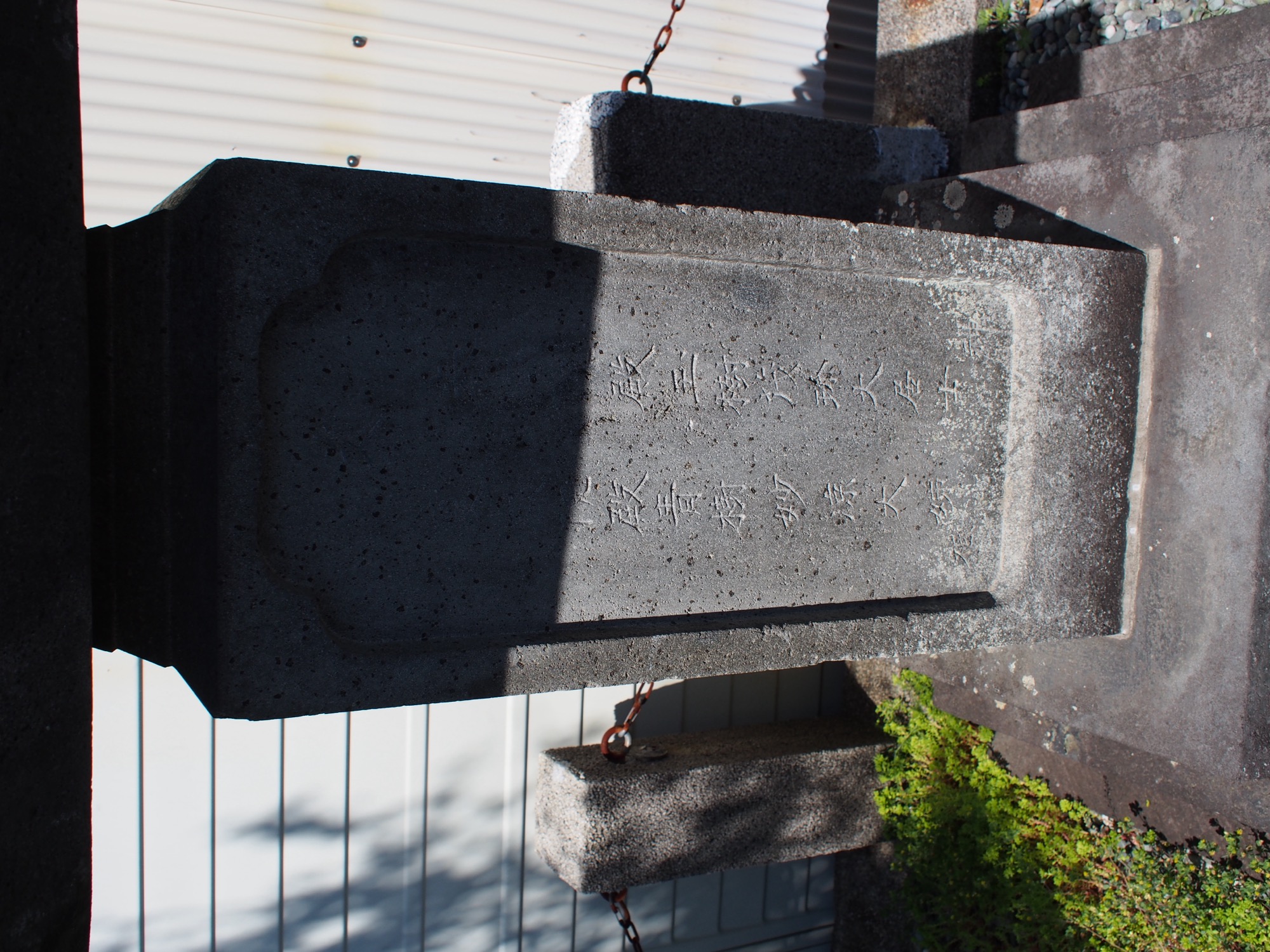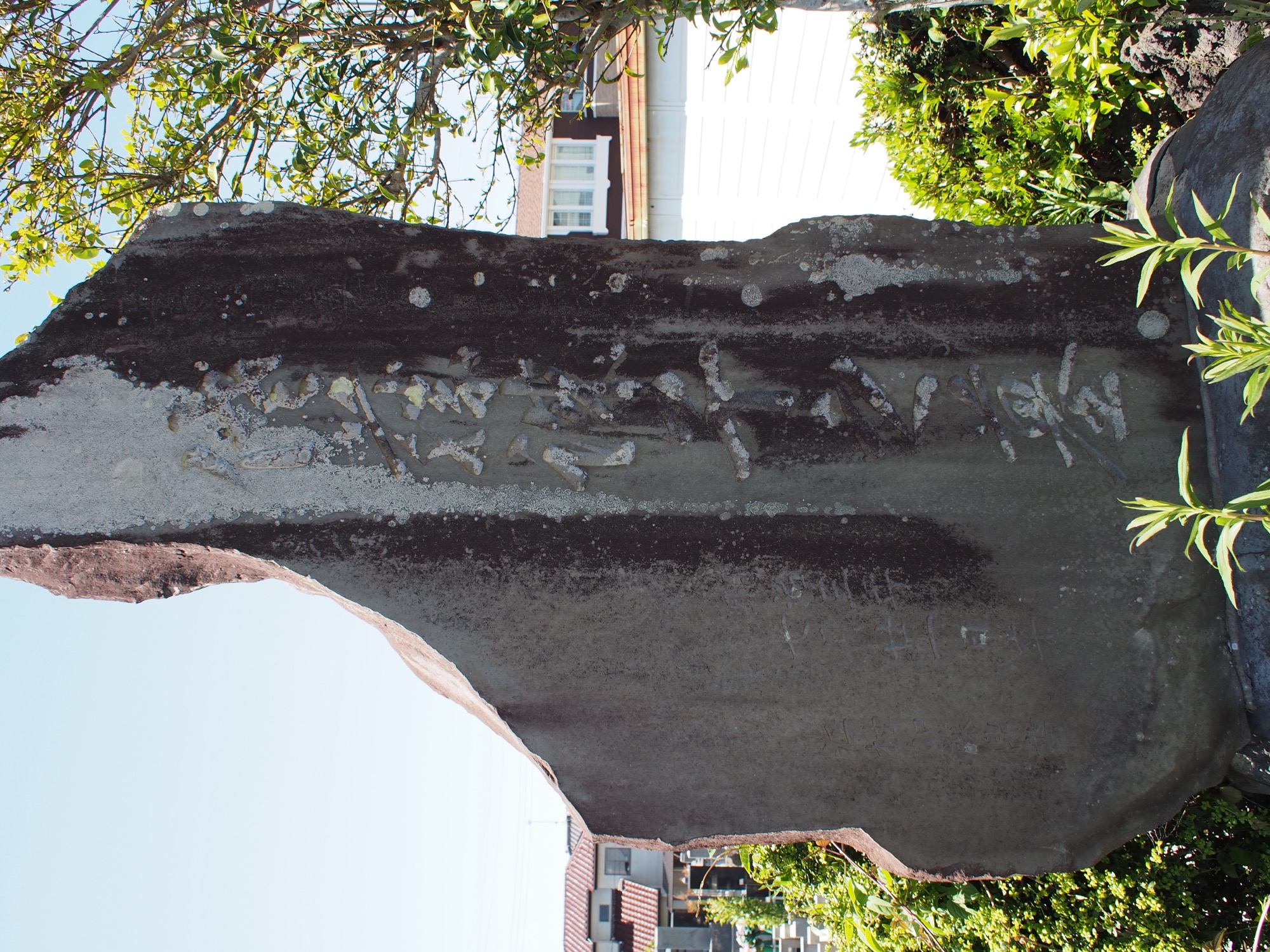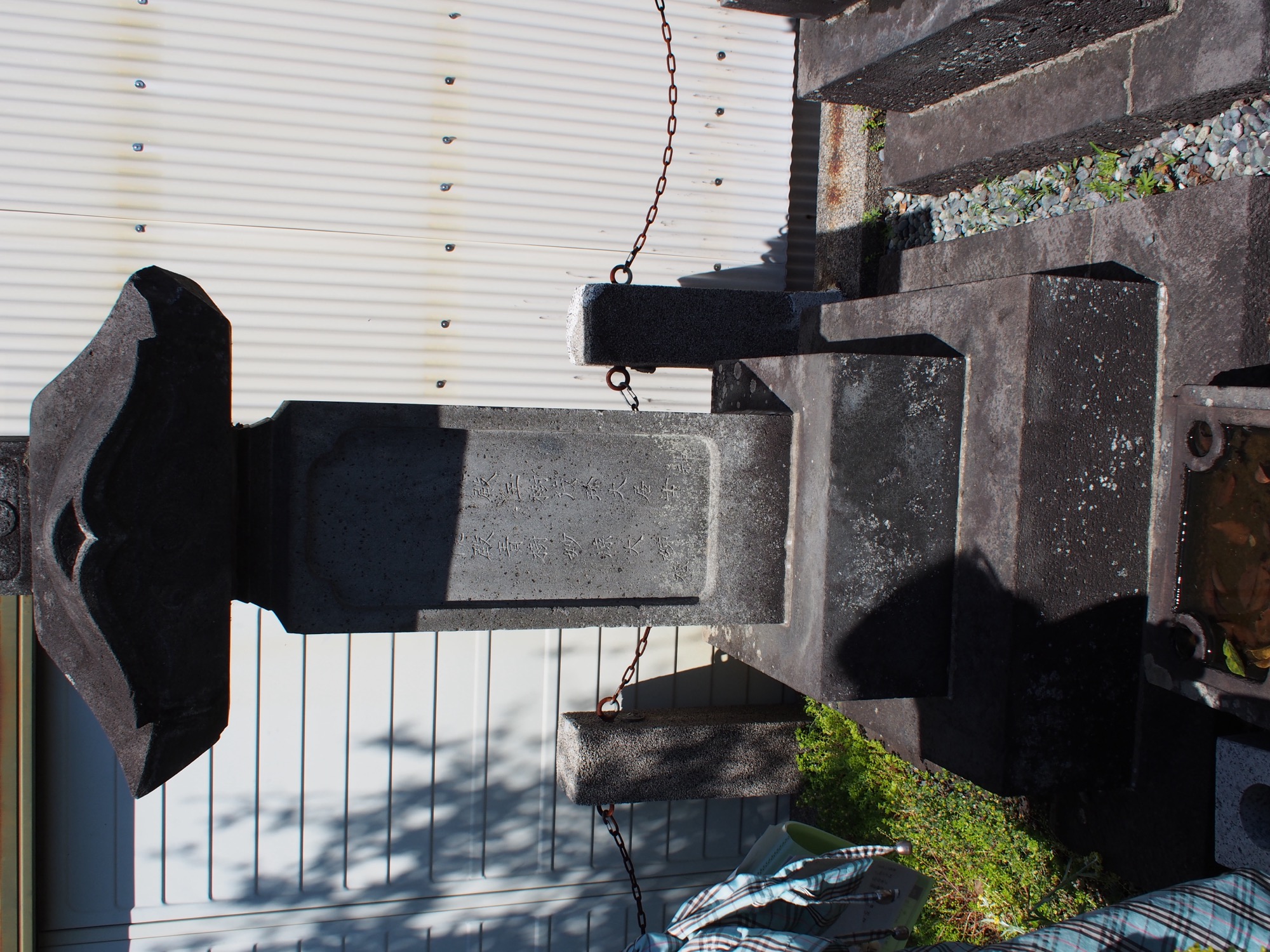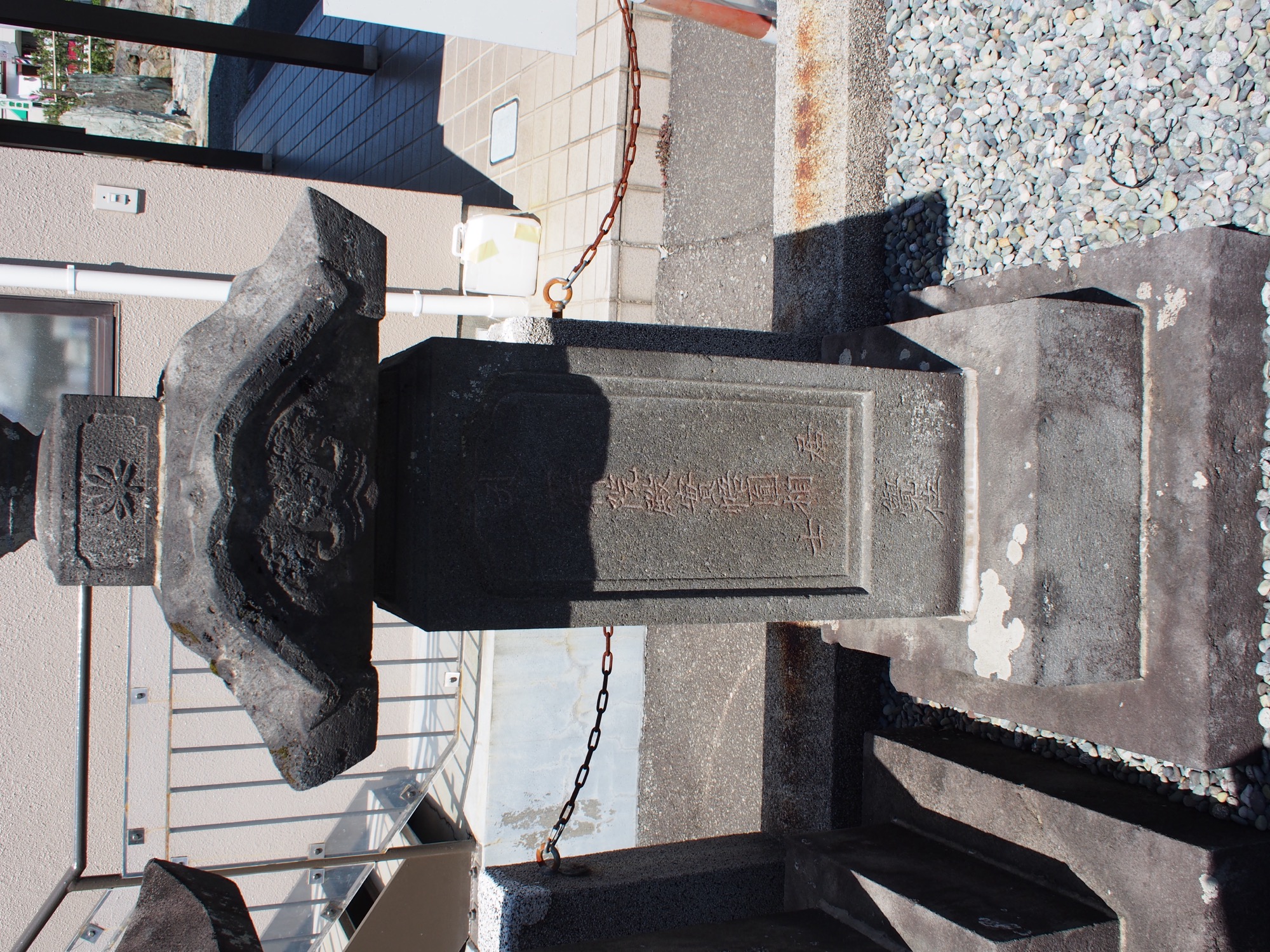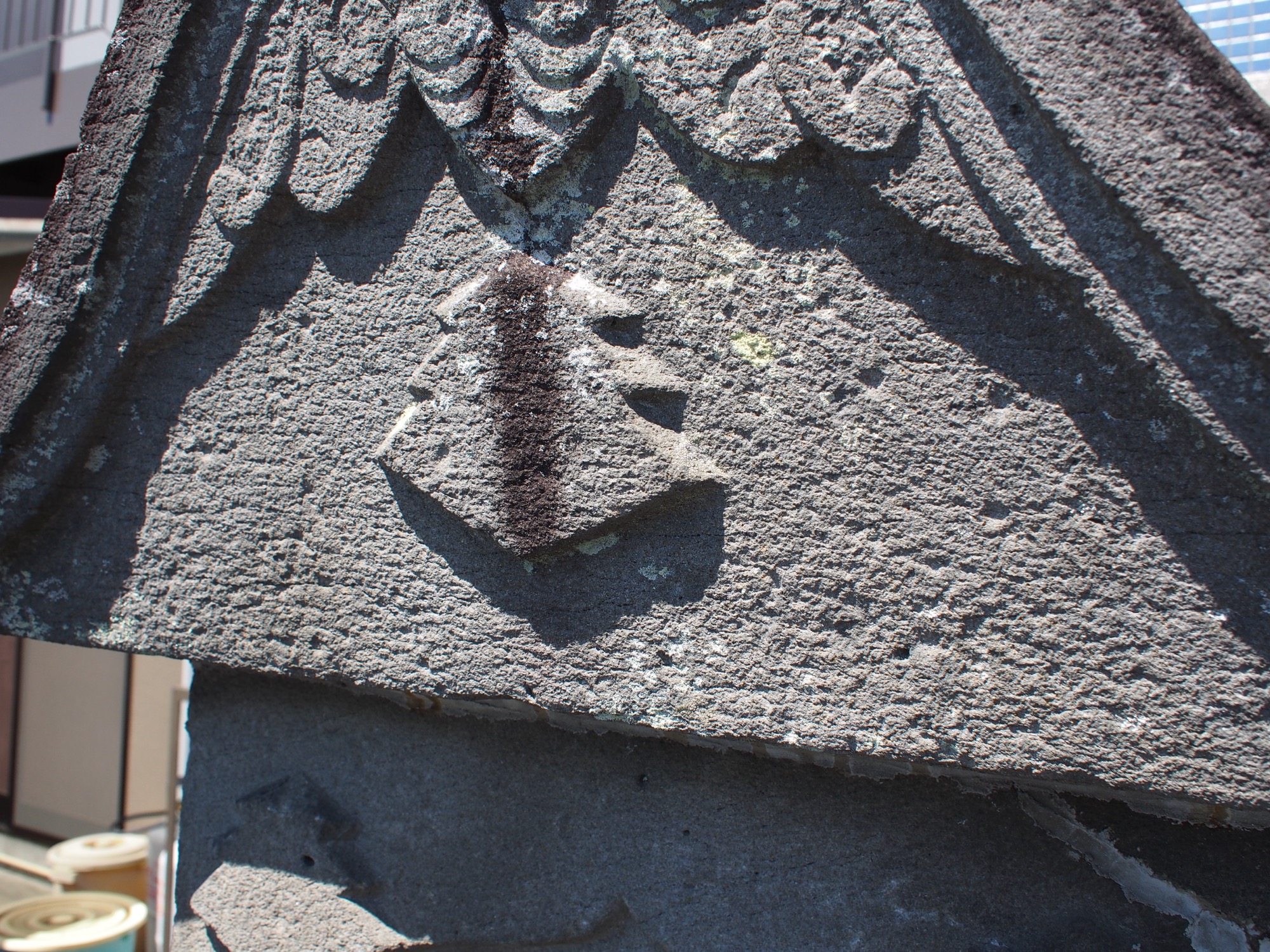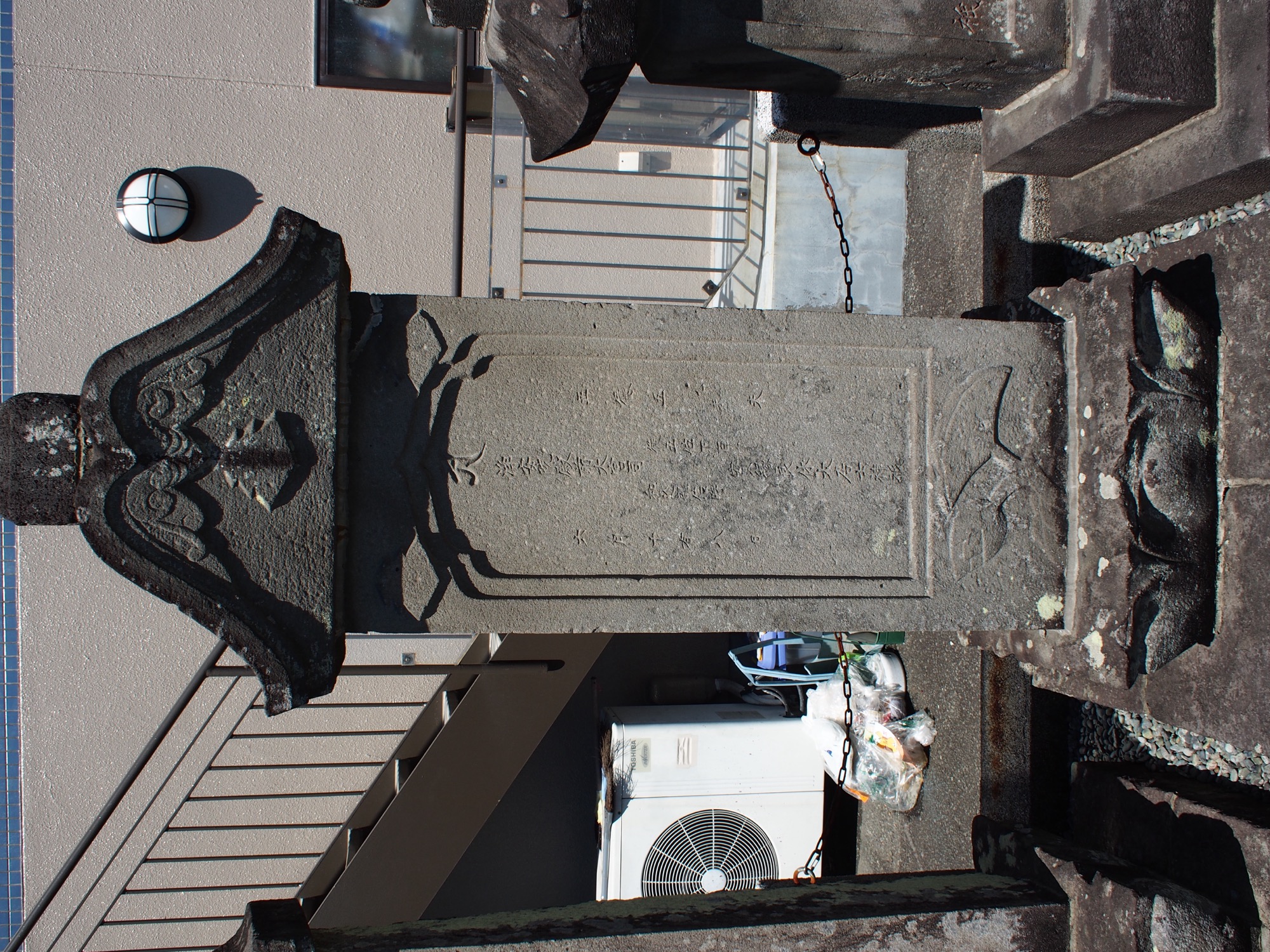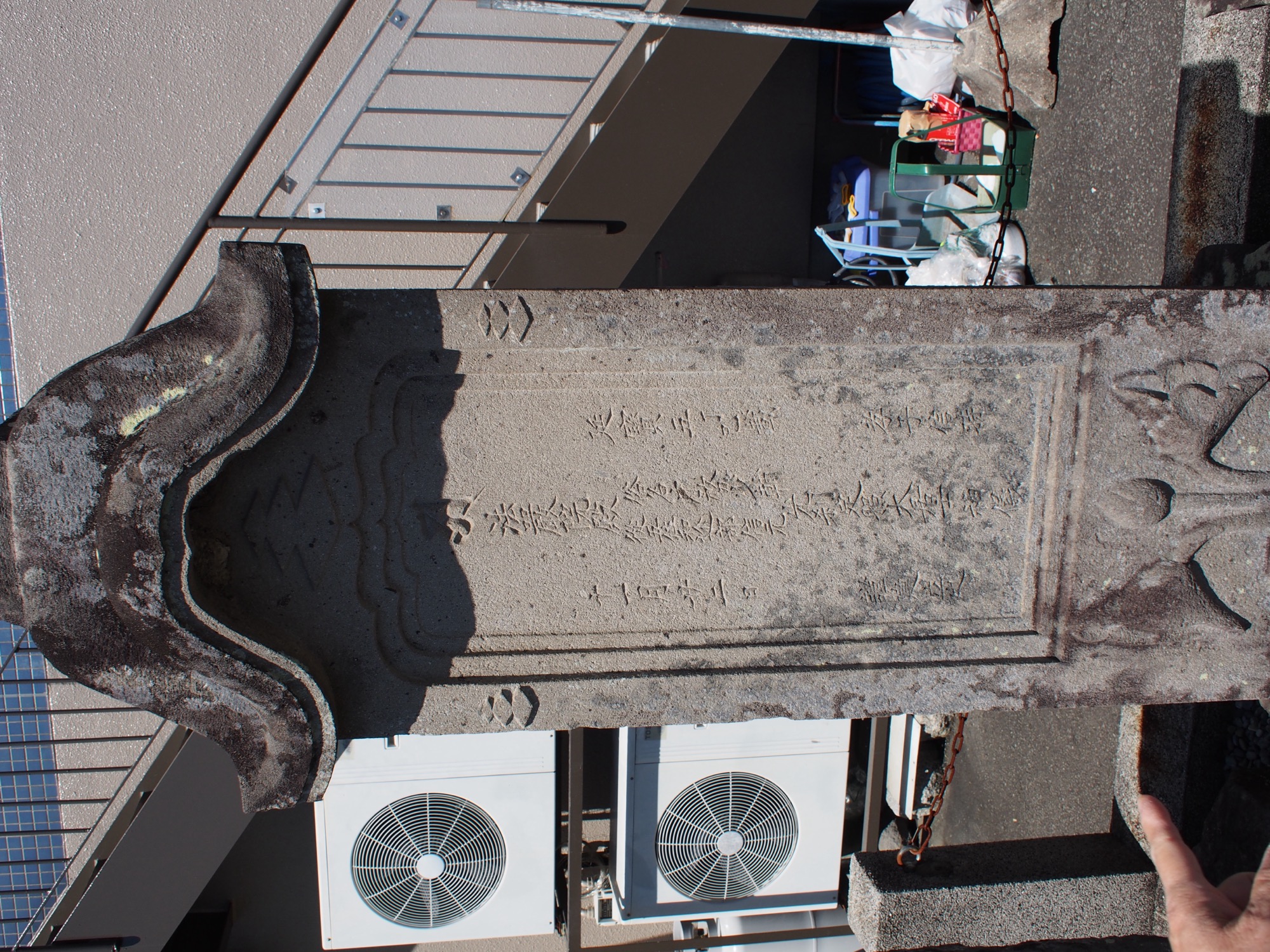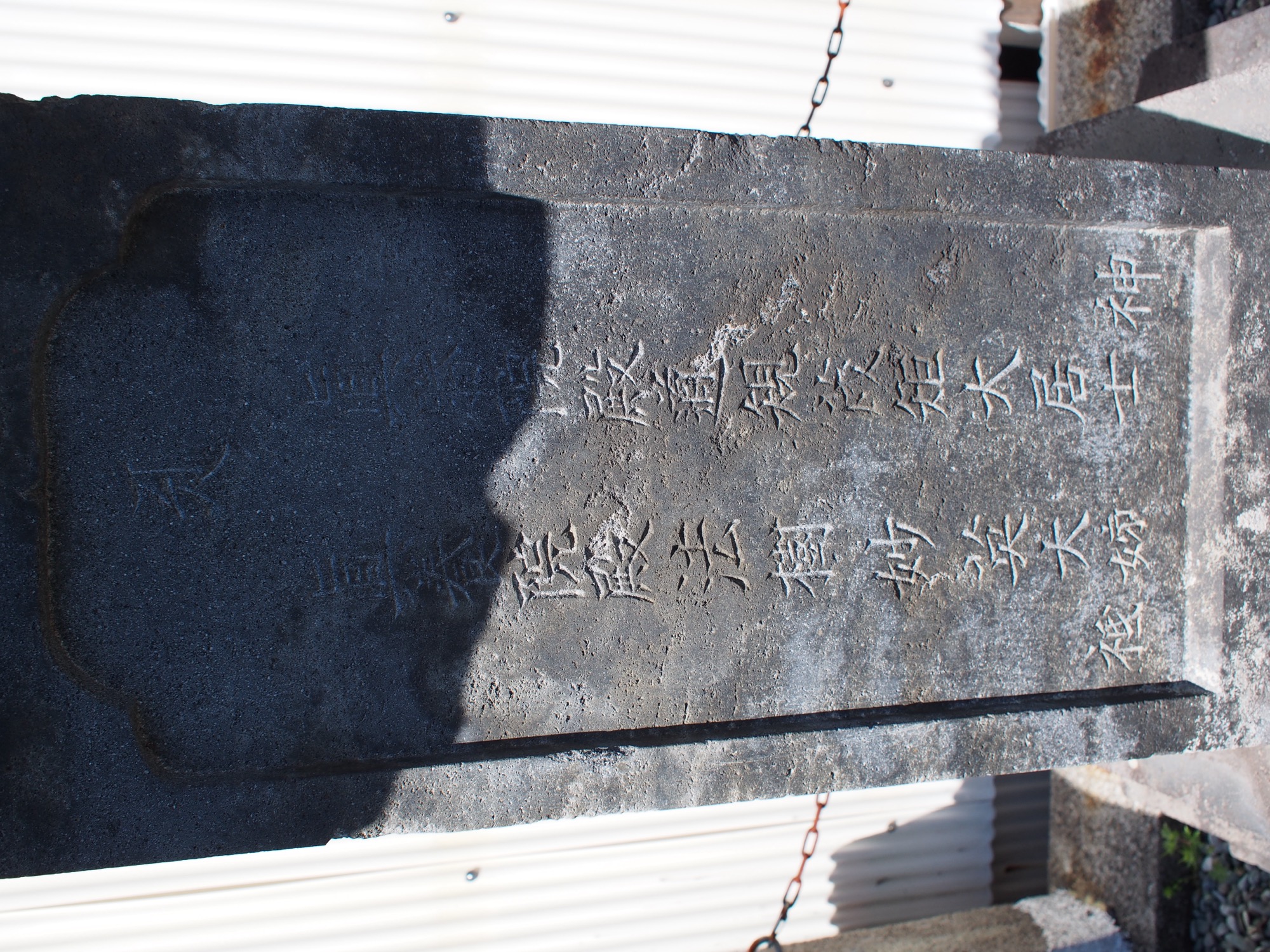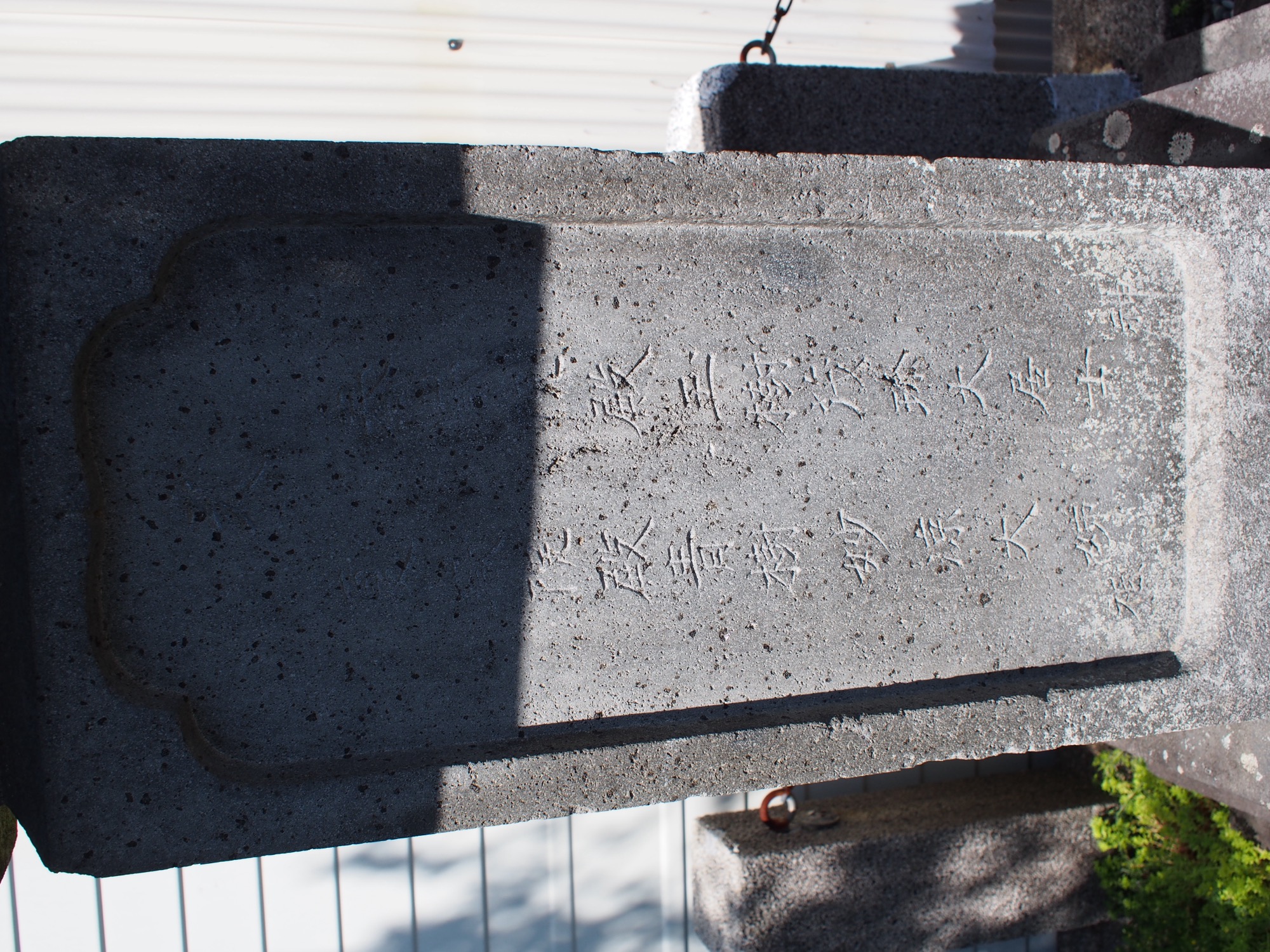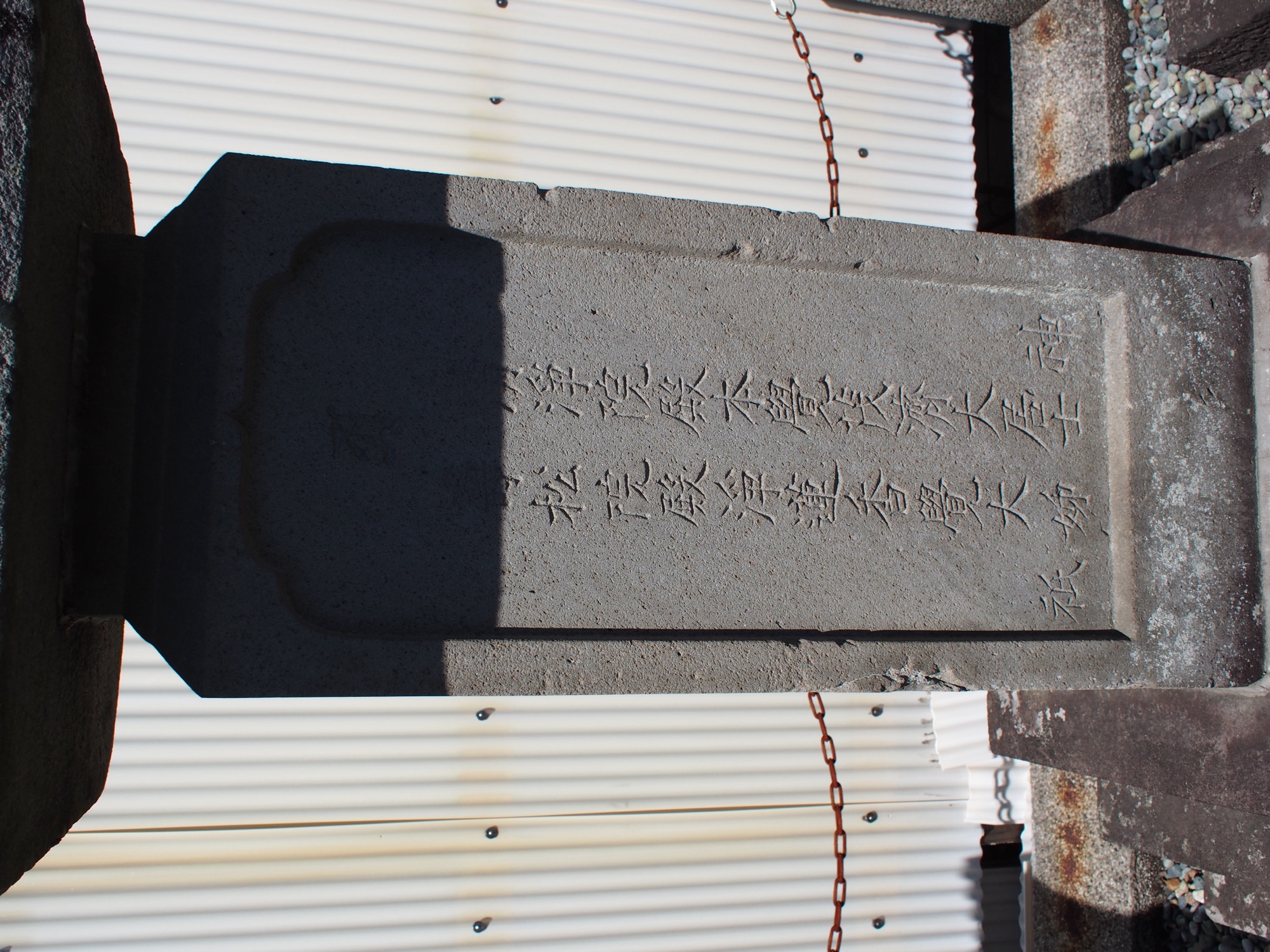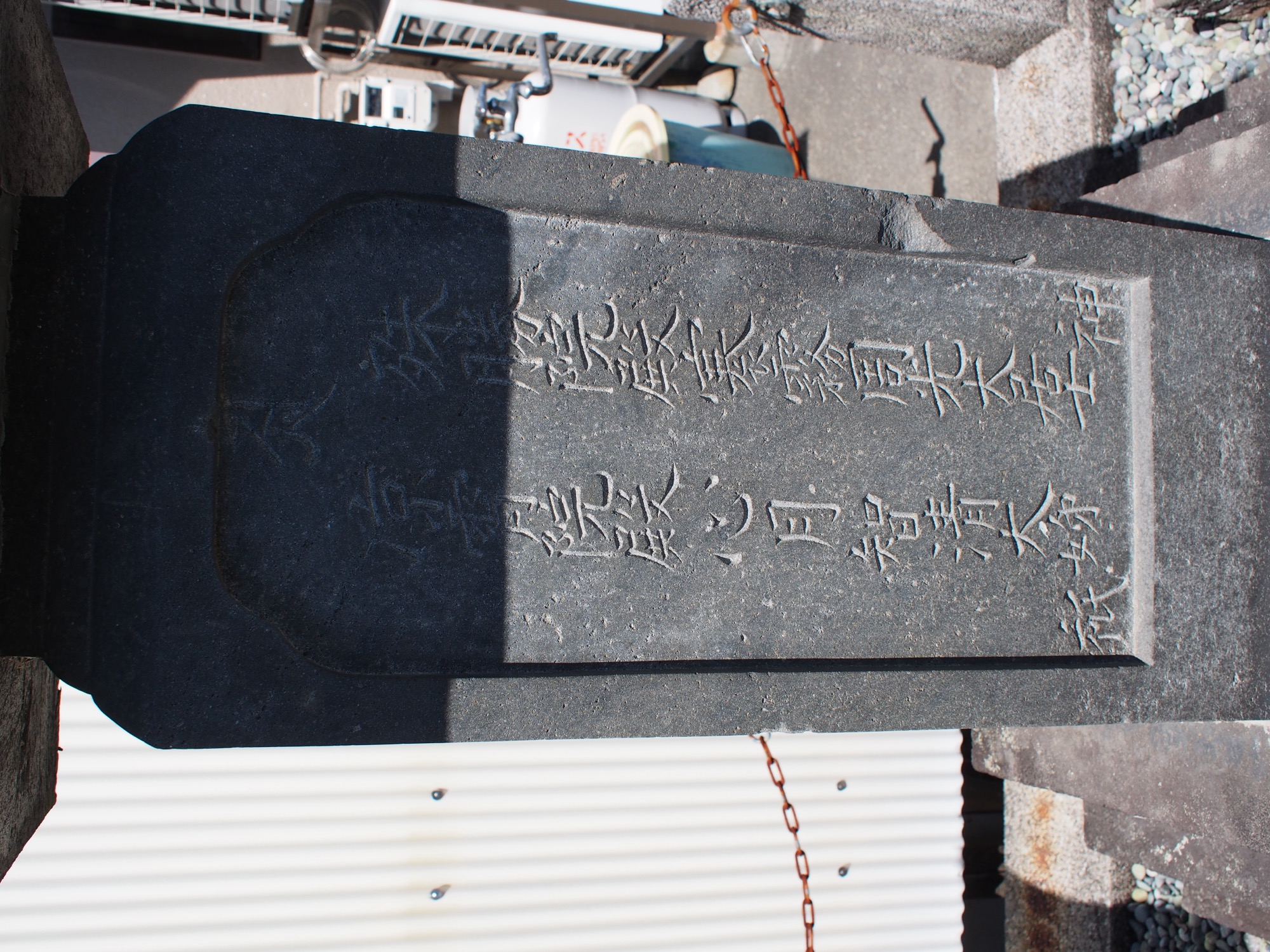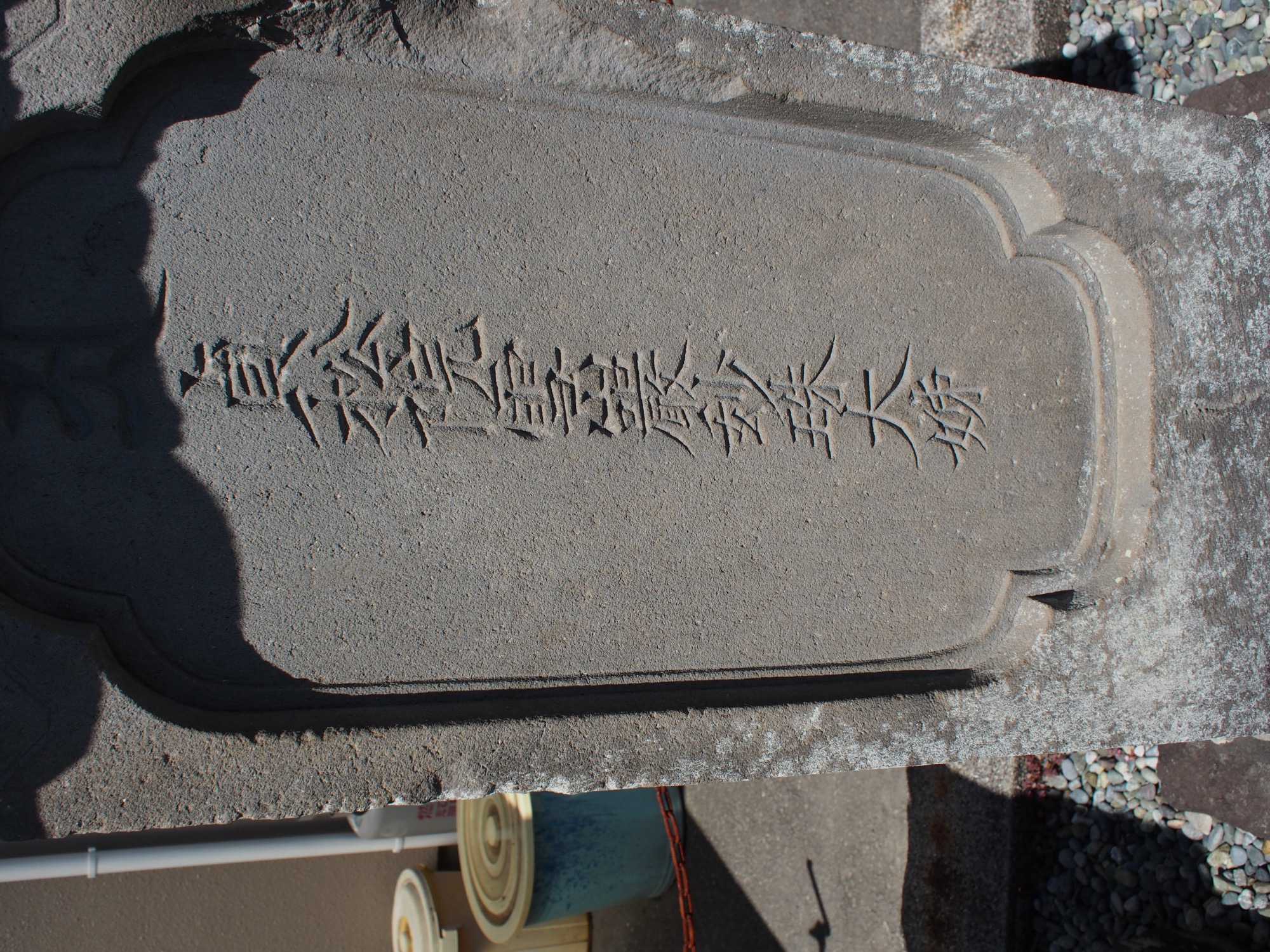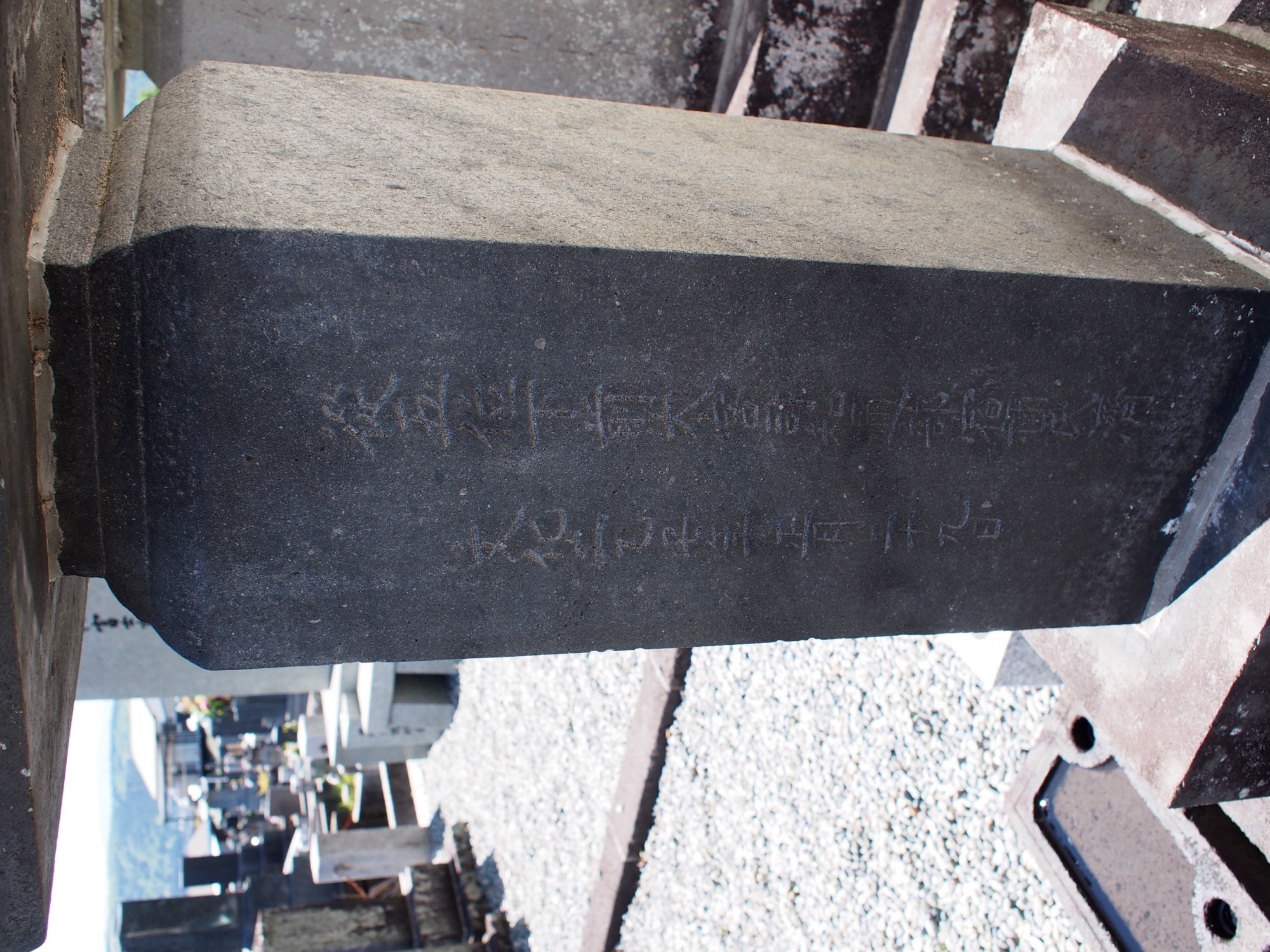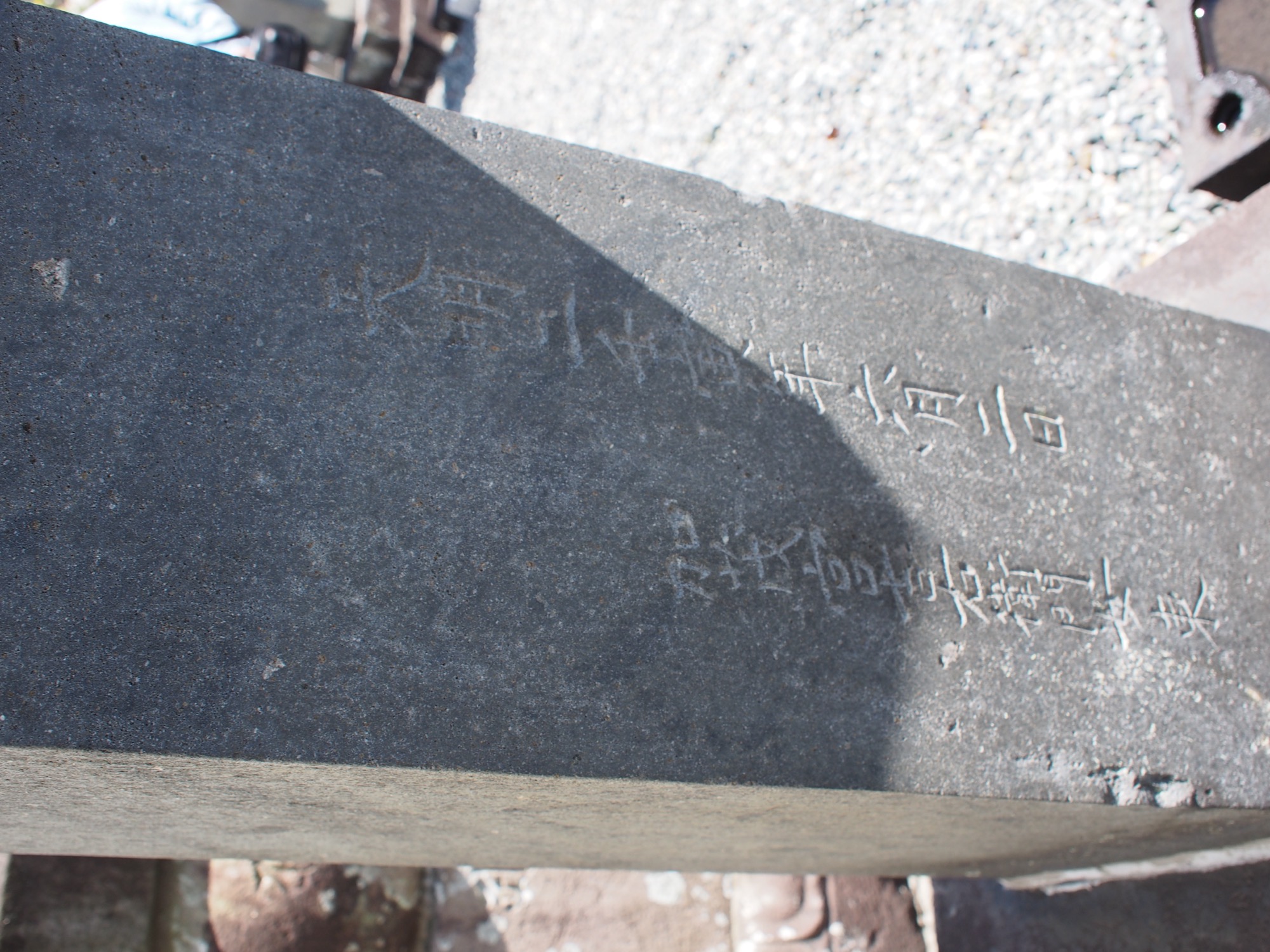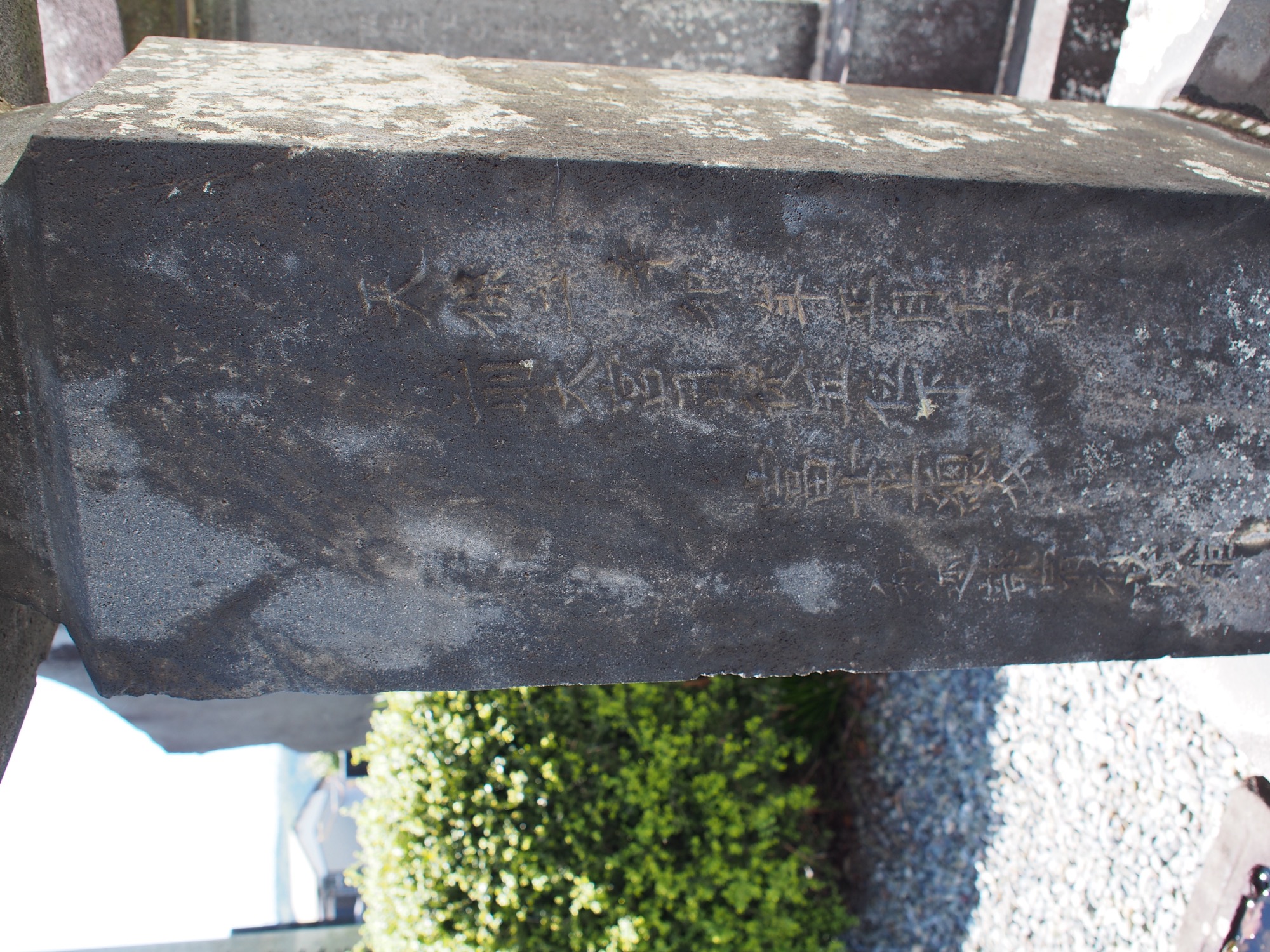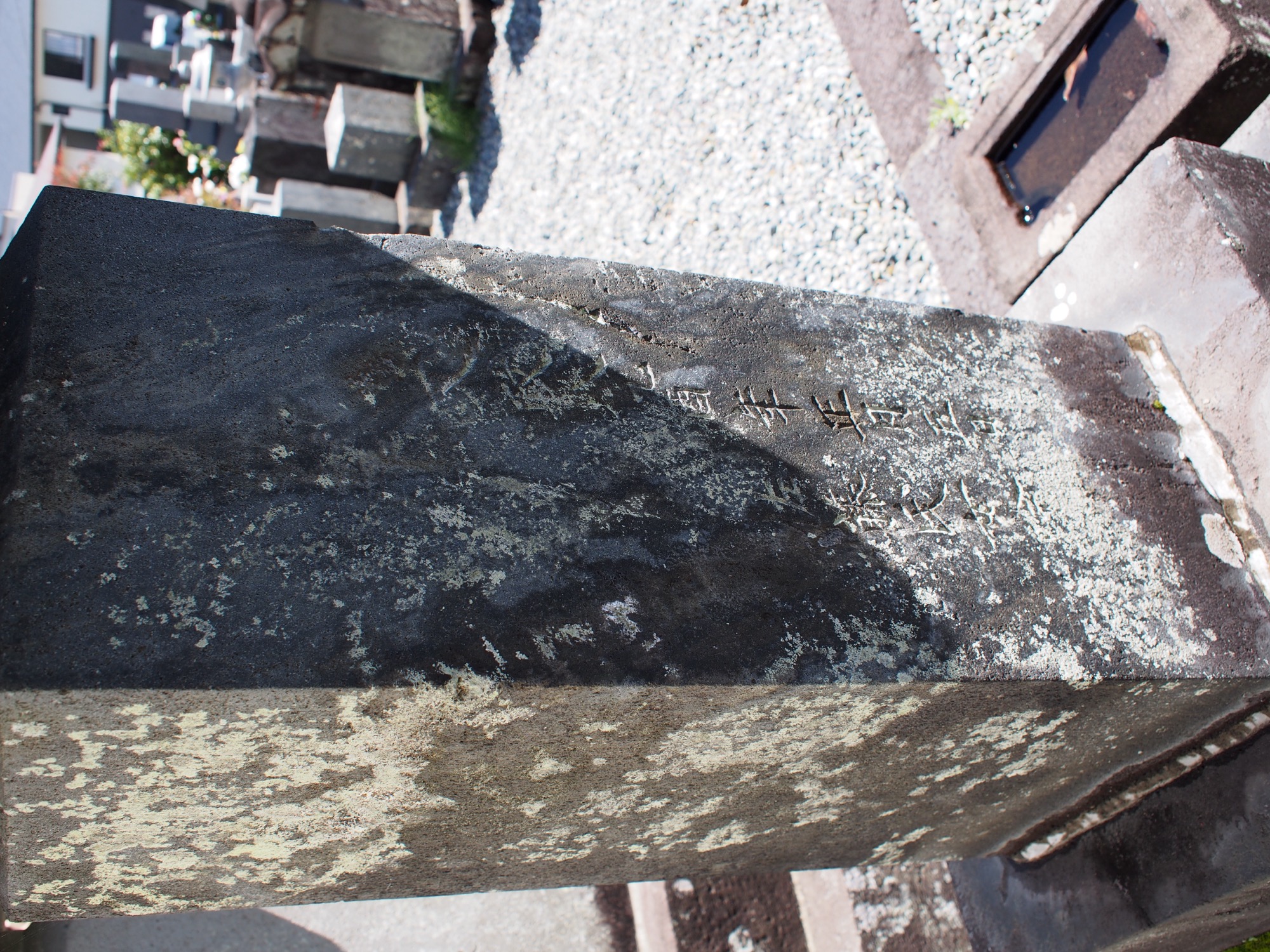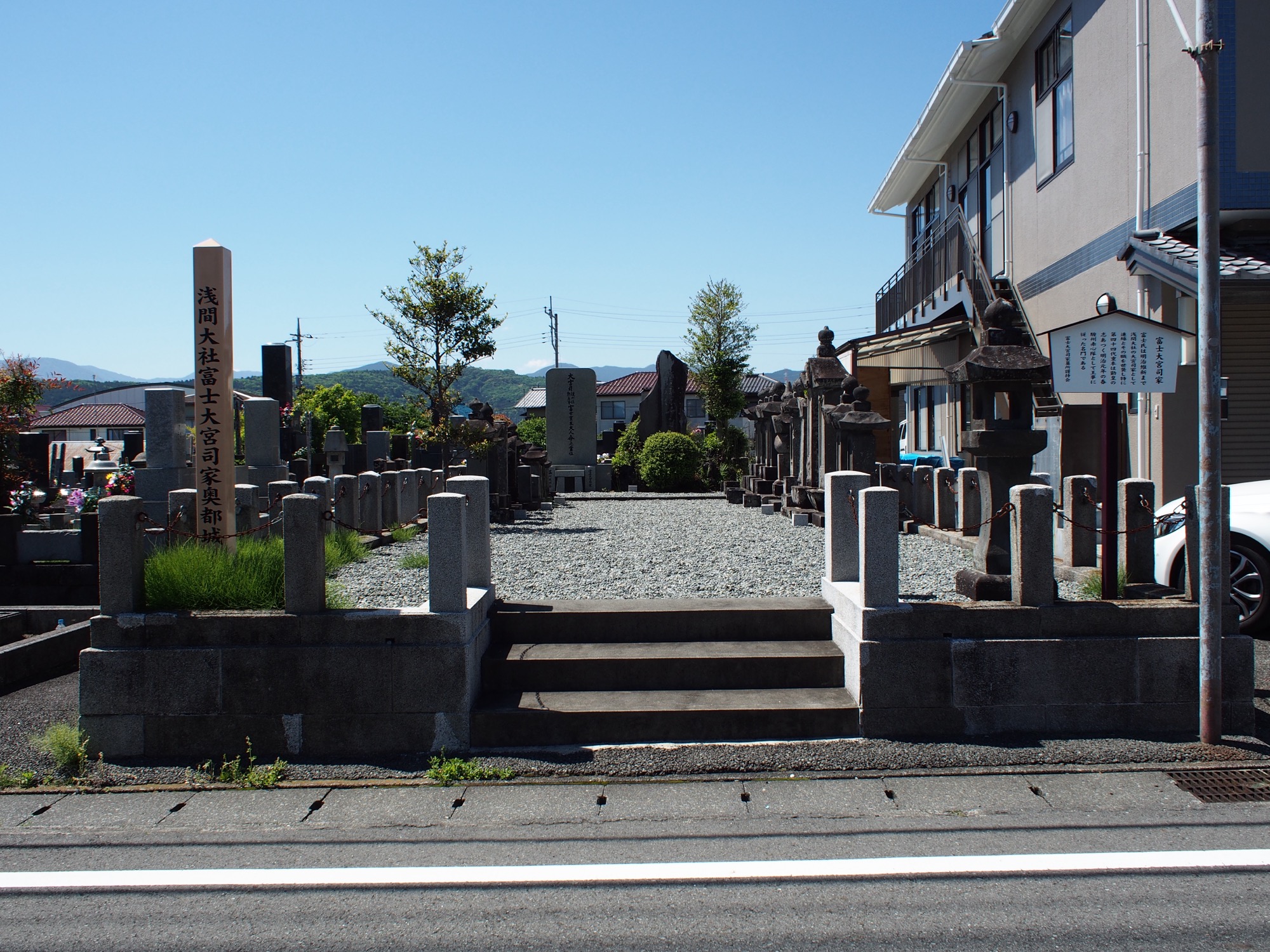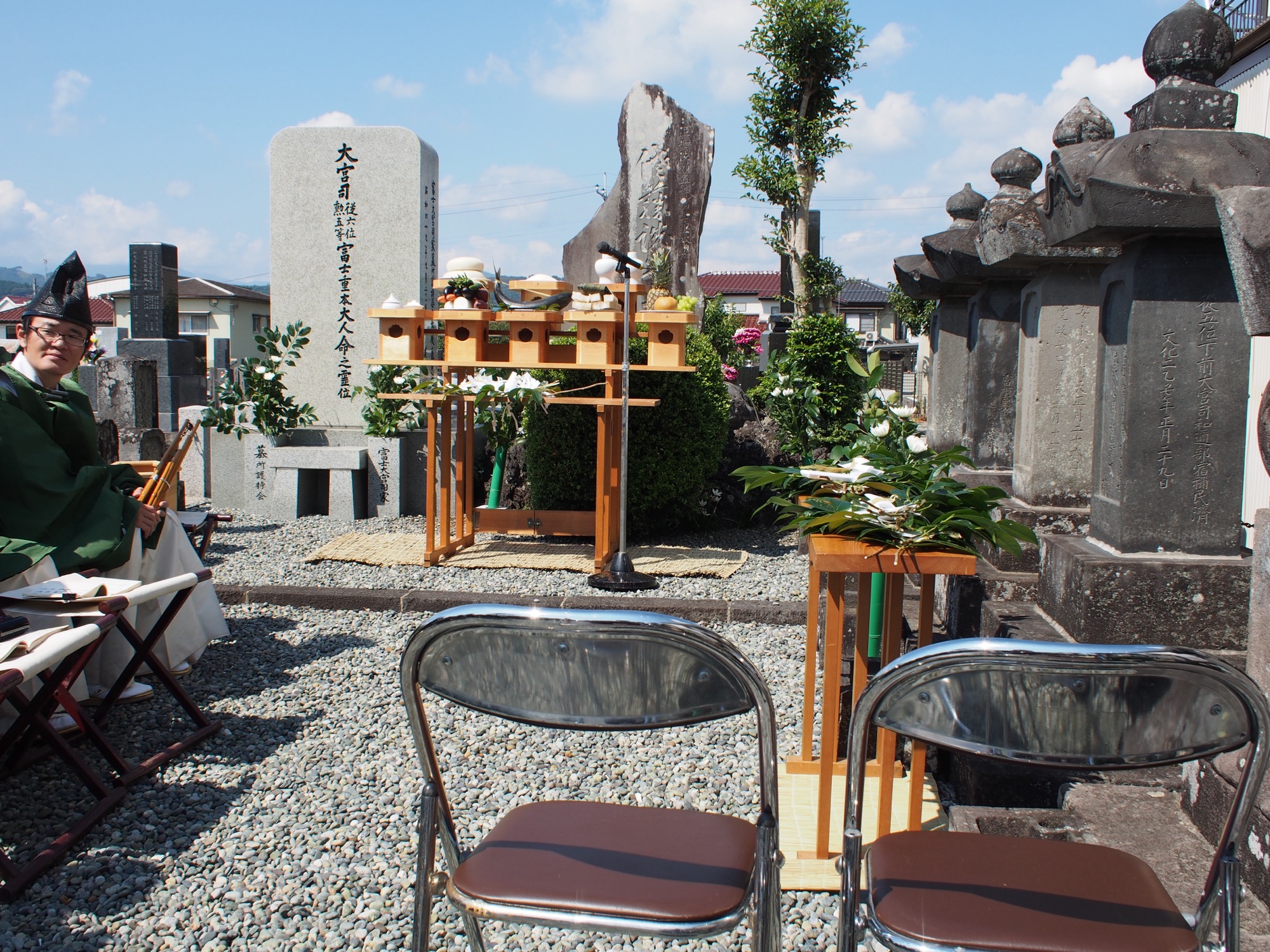
Fuji Grand Priest Mausoleum of Sengen Taisha
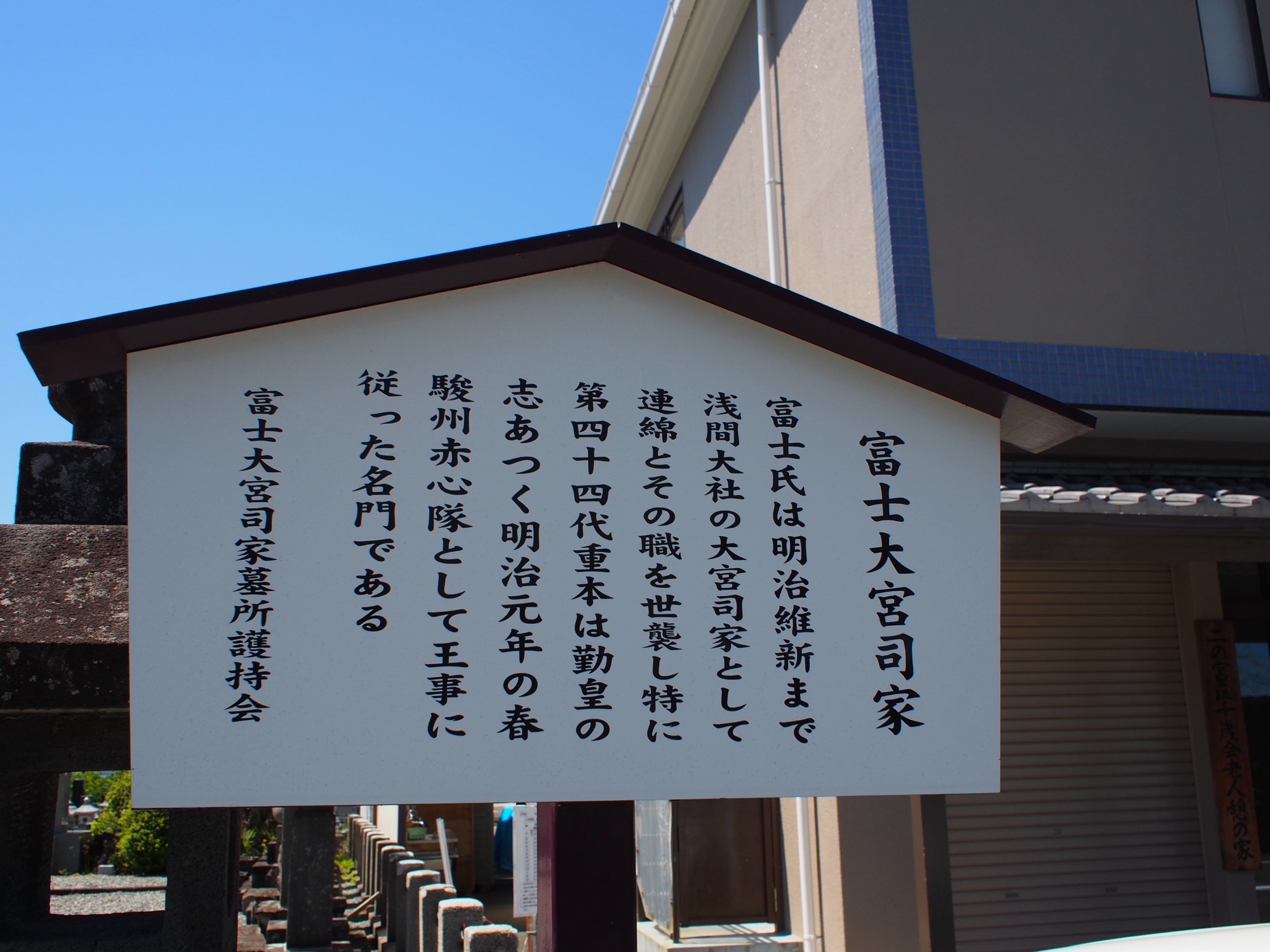
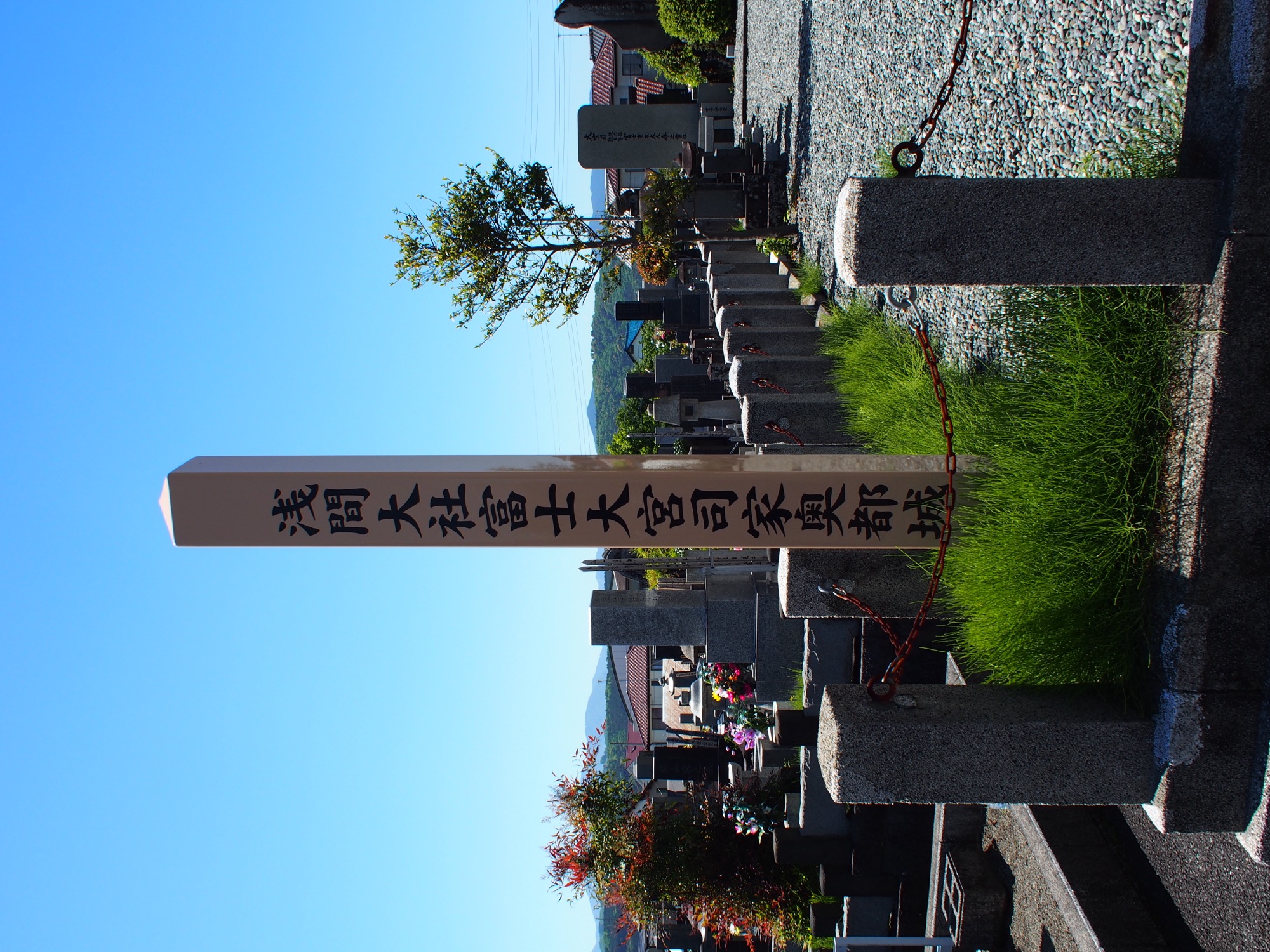
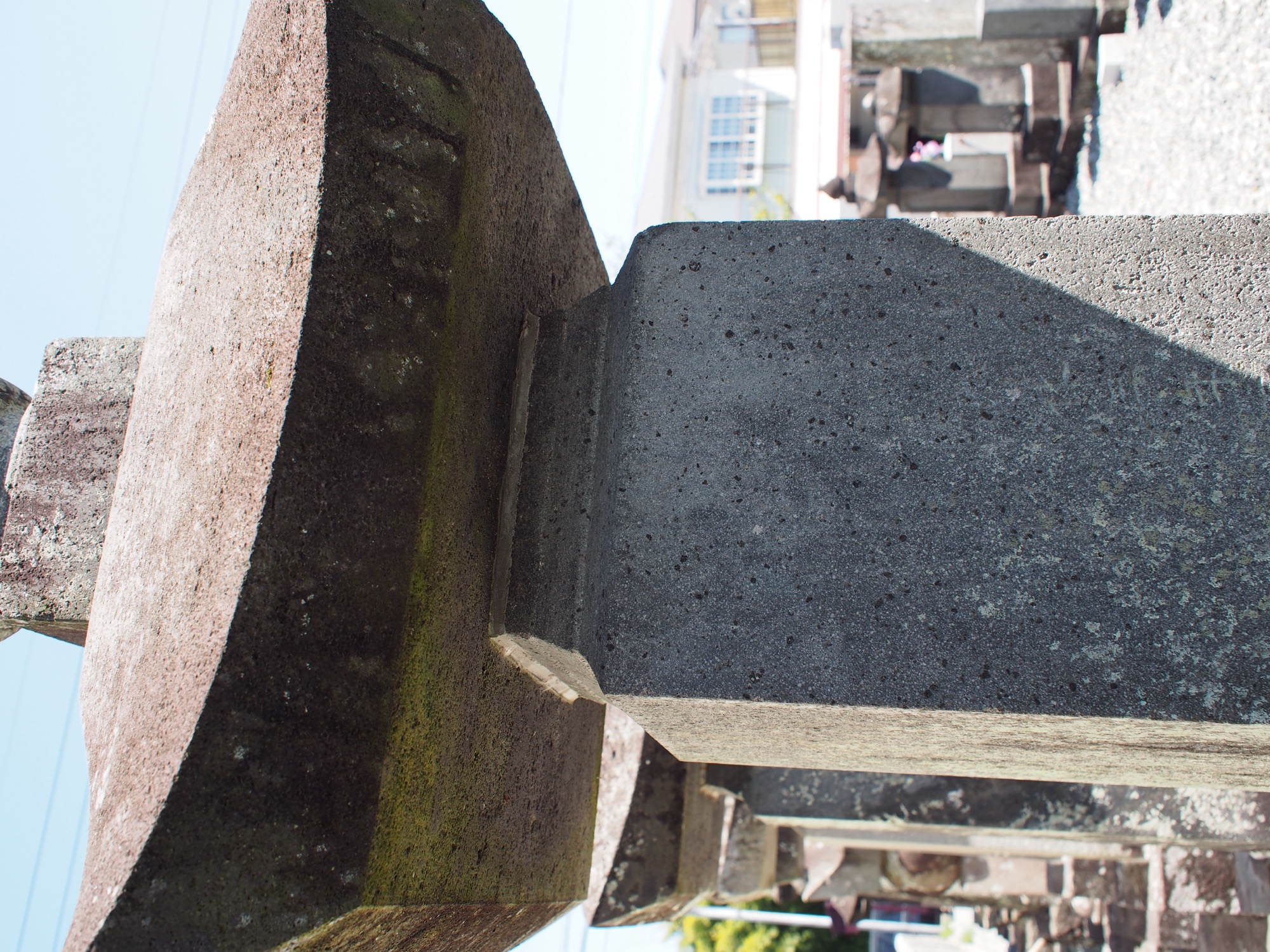
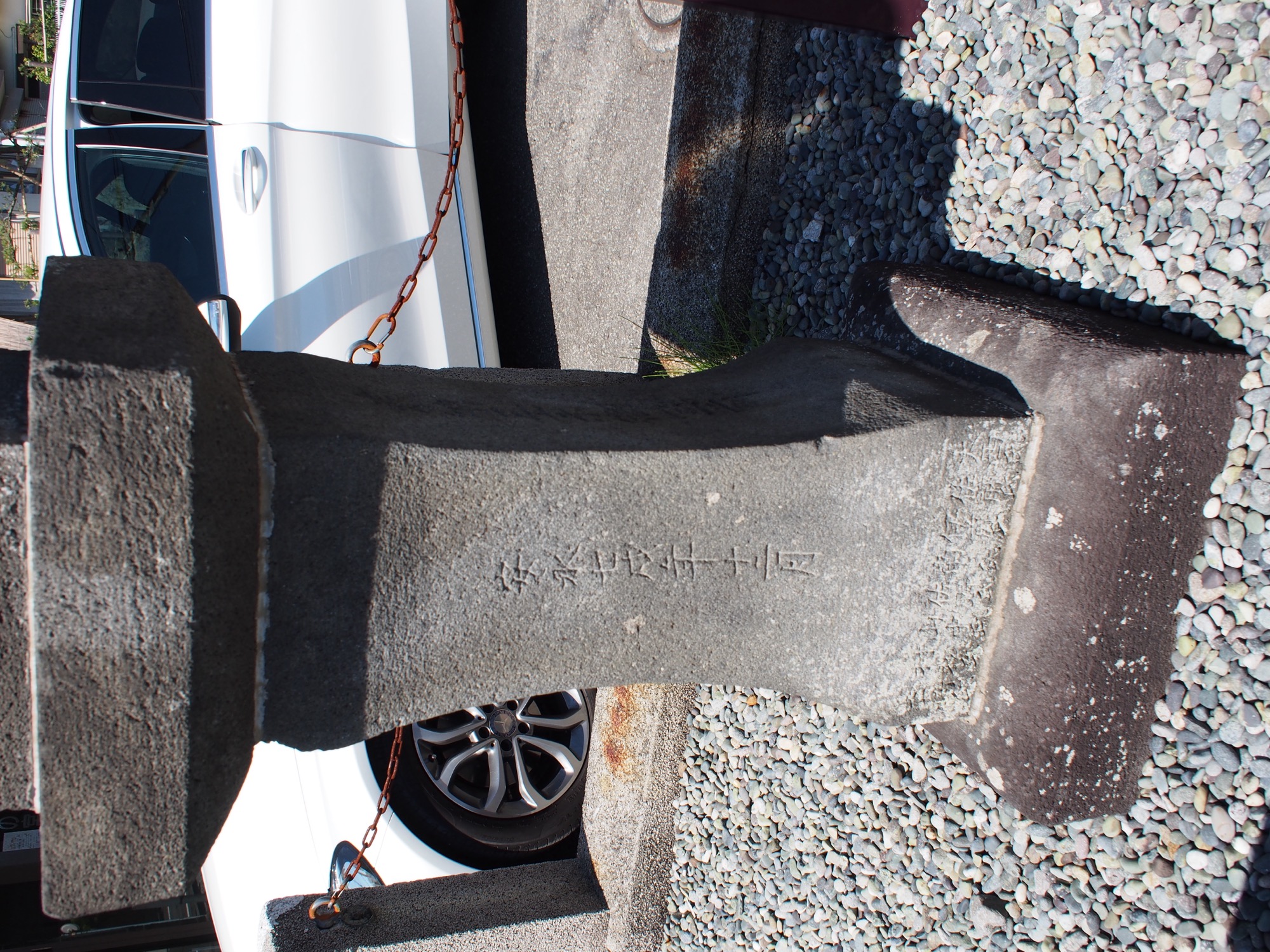
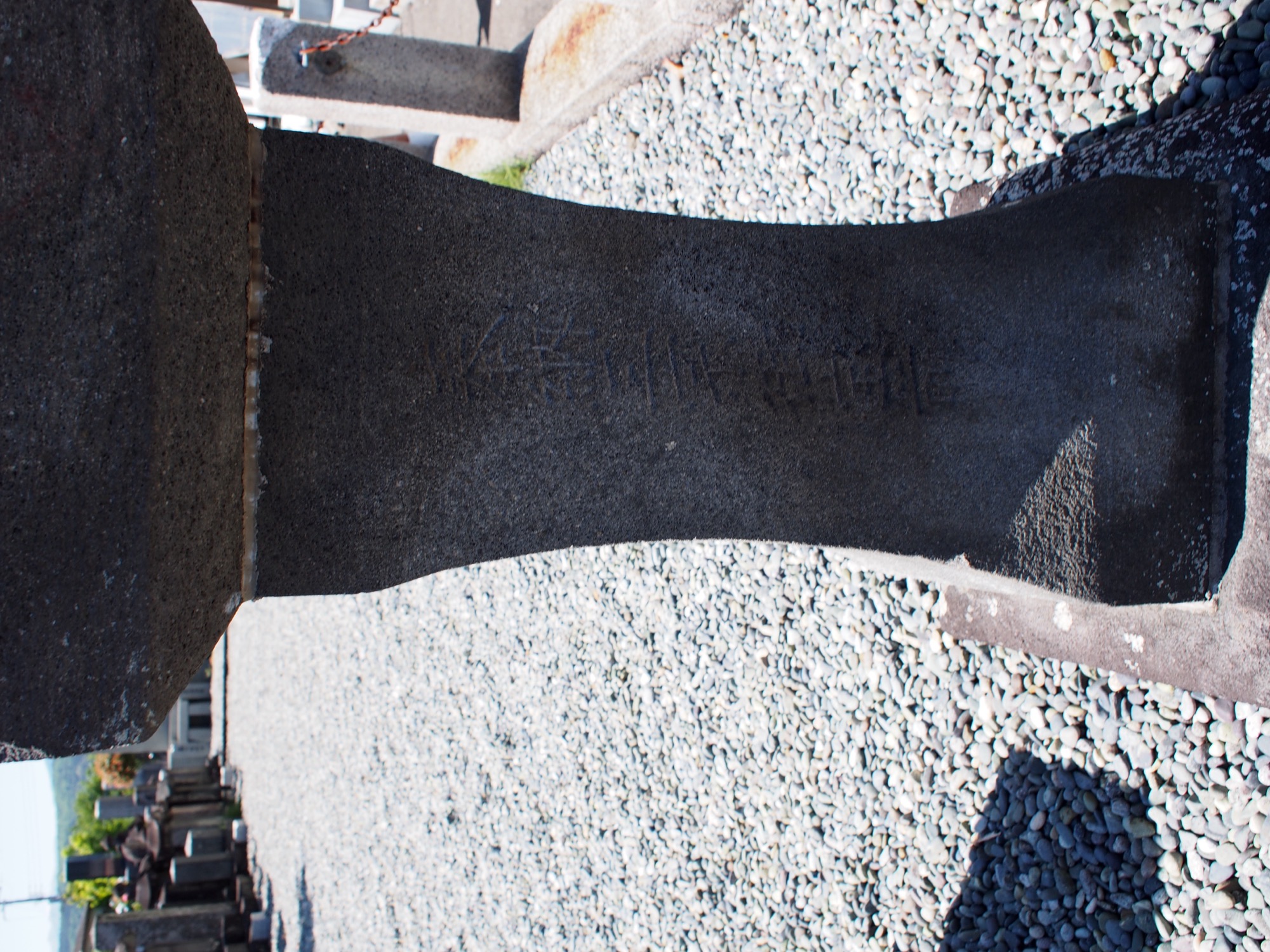
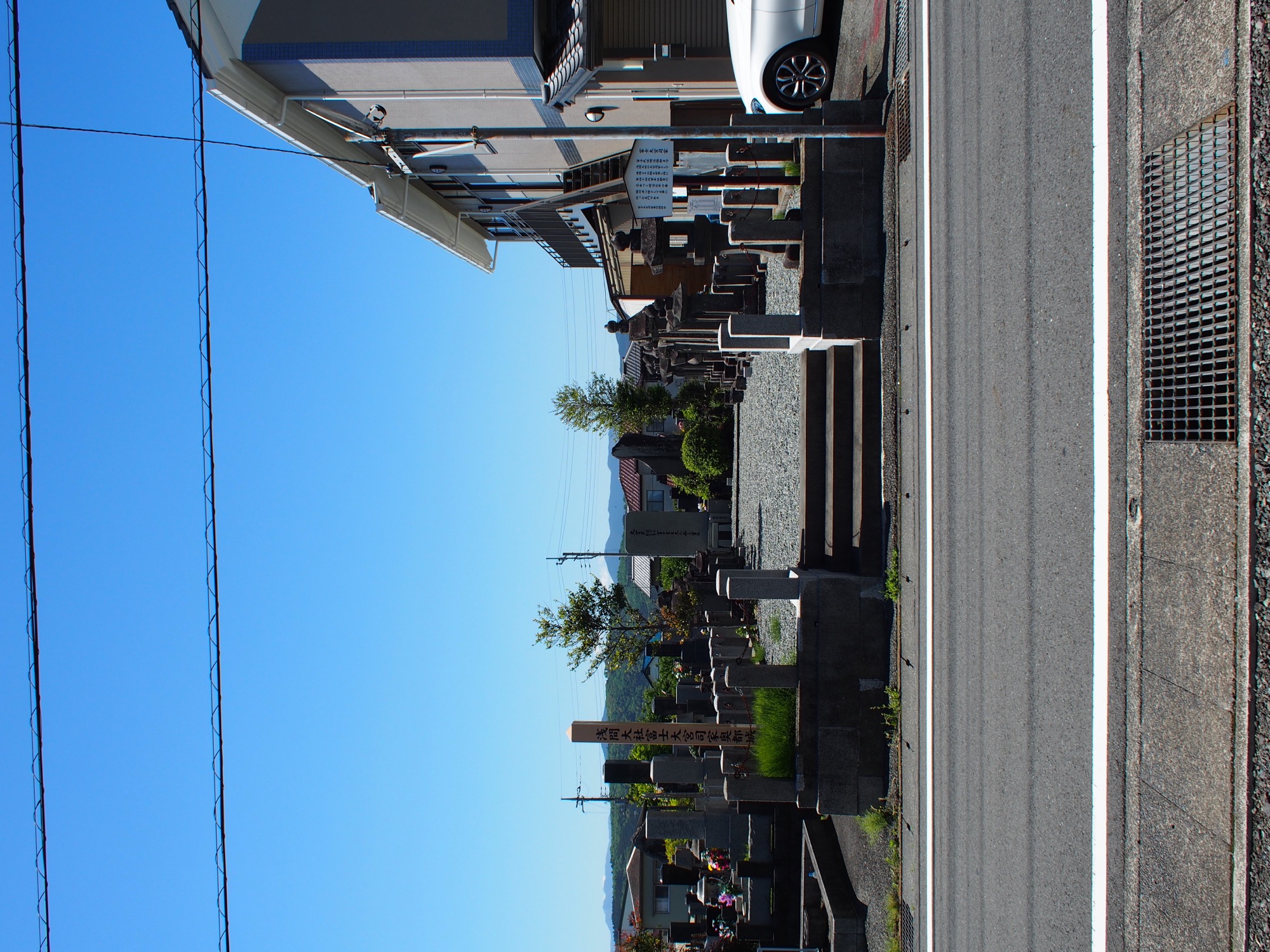
In Motoshiro-chō, Fujinomiya, near the former site of the temple Hōshaku-ji, lies the okutsuki — the burial ground — of the Fuji Ōmiyaji family, who held the hereditary priesthood of Fujisan Hongu Sengen Taisha from antiquity until the Meiji era.
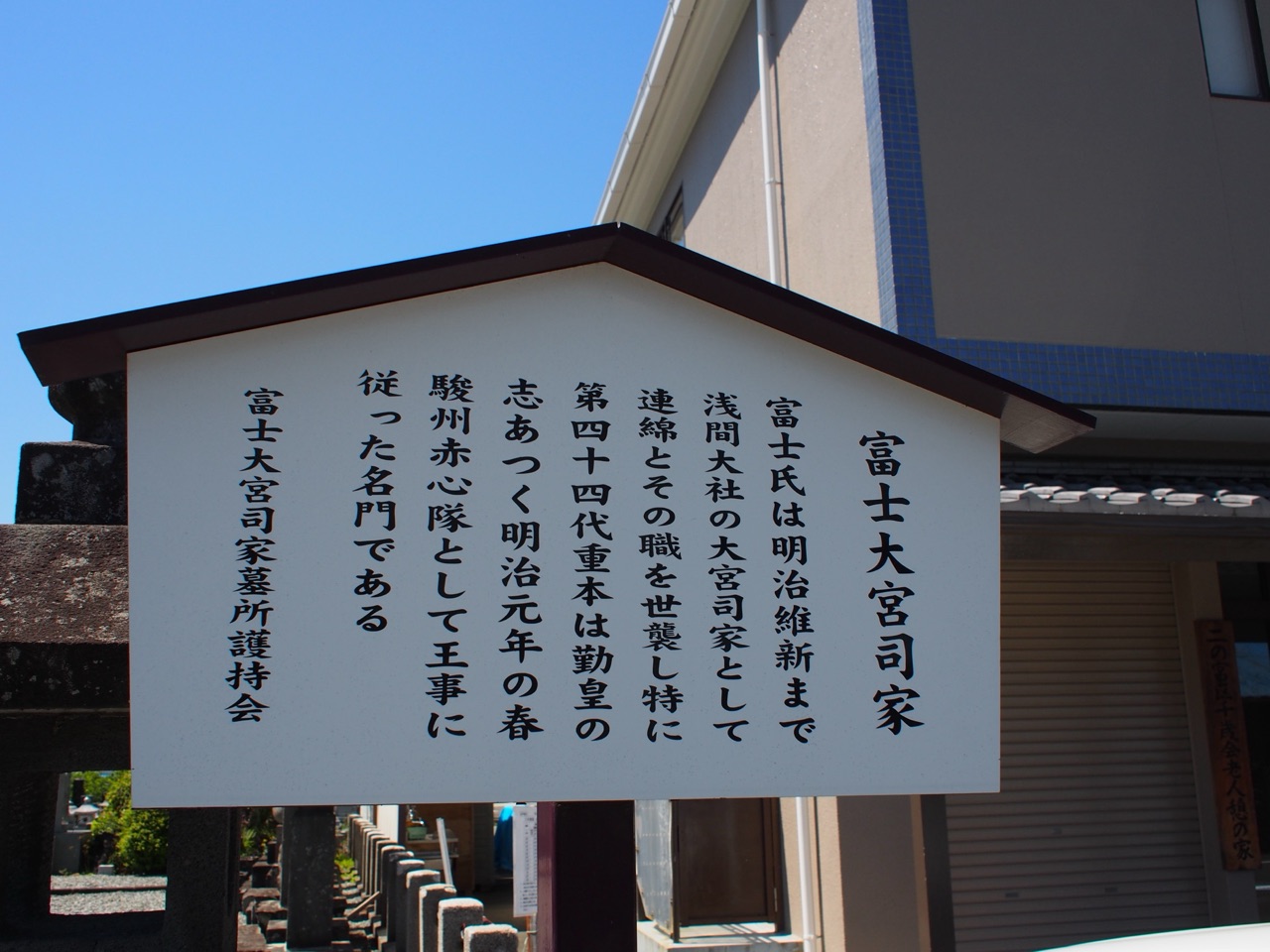
The Fuji clan claimed descent from the Wanibe lineage, tracing its ancestry to Emperor Kōshō. According to the family genealogy, the line began in 795 (Enryaku 14), when Wanibe no Omi Toyomaro was appointed district governor of Fuji and, six years later, took charge of the worship of Asama no Ōkami. Historians note, however, that the Heian-period genealogy may be a later construction; the family emerges clearly into the documentary record only from the fourteenth century, with the twenty-first head, Fuji Naotoki. It was from Naotoki’s generation that the title of Ōmiyaji was formally assumed and the family name of Fuji took root.
In the medieval period the family grew into something more than a priestly house: lords of Ōmiya Castle, they took on the character of warrior magnates rooted in the land. The last heads of the Sengoku age, Fuji Nobutada (Hyōbu no Shō) and his son Nobumichi (Kurōdo), served as leading vassals of the Imagawa of Suruga. When Takeda Shingen invaded the province, they shut themselves in Ōmiya Castle and resisted fiercely, yielding the fortress only through the mediation of the Hōjō. Priest and warrior at once — this duality of the Fuji clan testifies that medieval Sengen Taisha stood at the very centre of regional power.
The office of Ōmiyaji passed down through the generations, though in the mid-Edo period the male line failed and heirs were adopted from the Mori and Ōnishi families to preserve the name. With the abolition of hereditary priesthood in 1871 (Meiji 4), a succession of more than a thousand years came to its close.
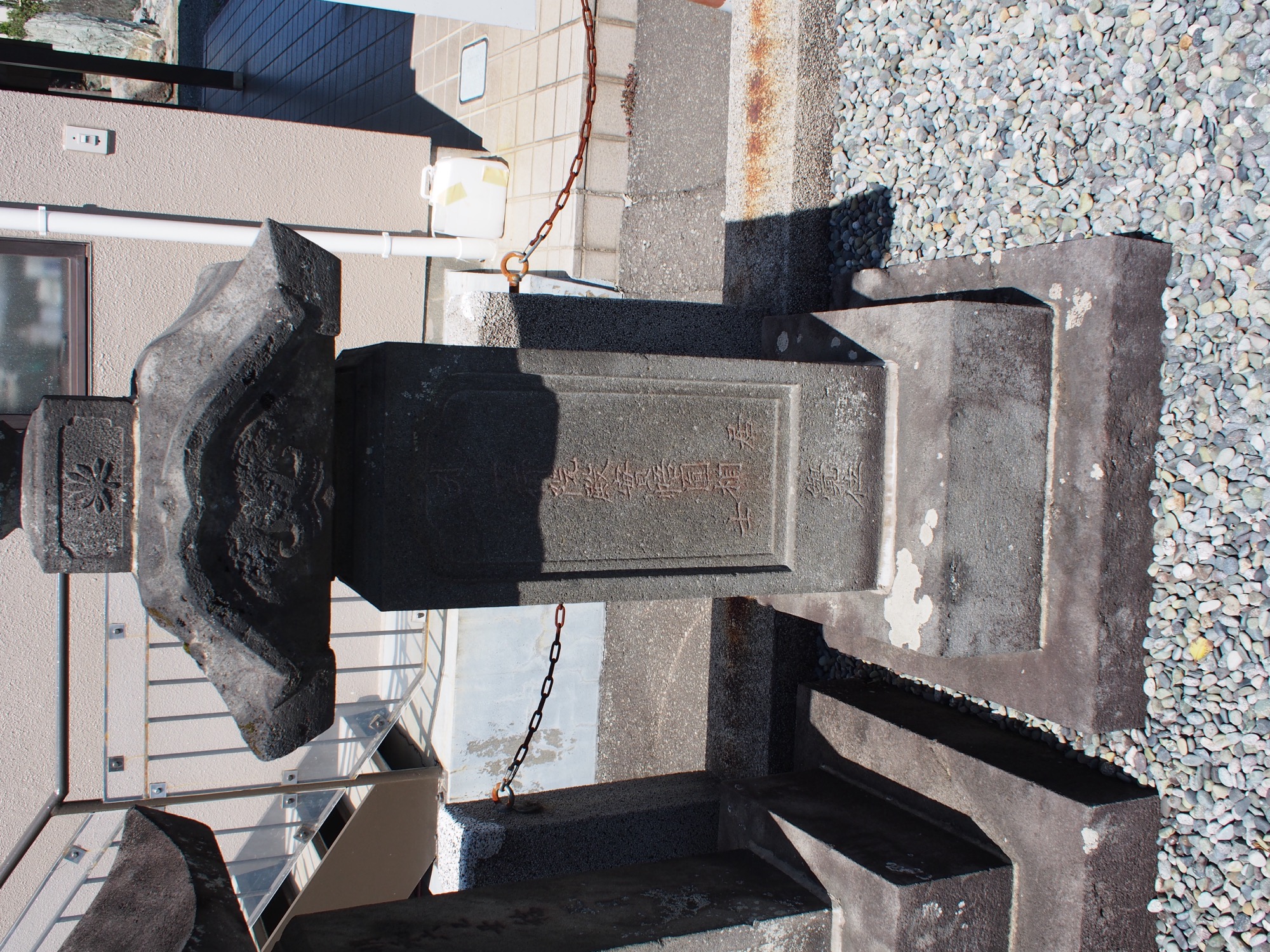
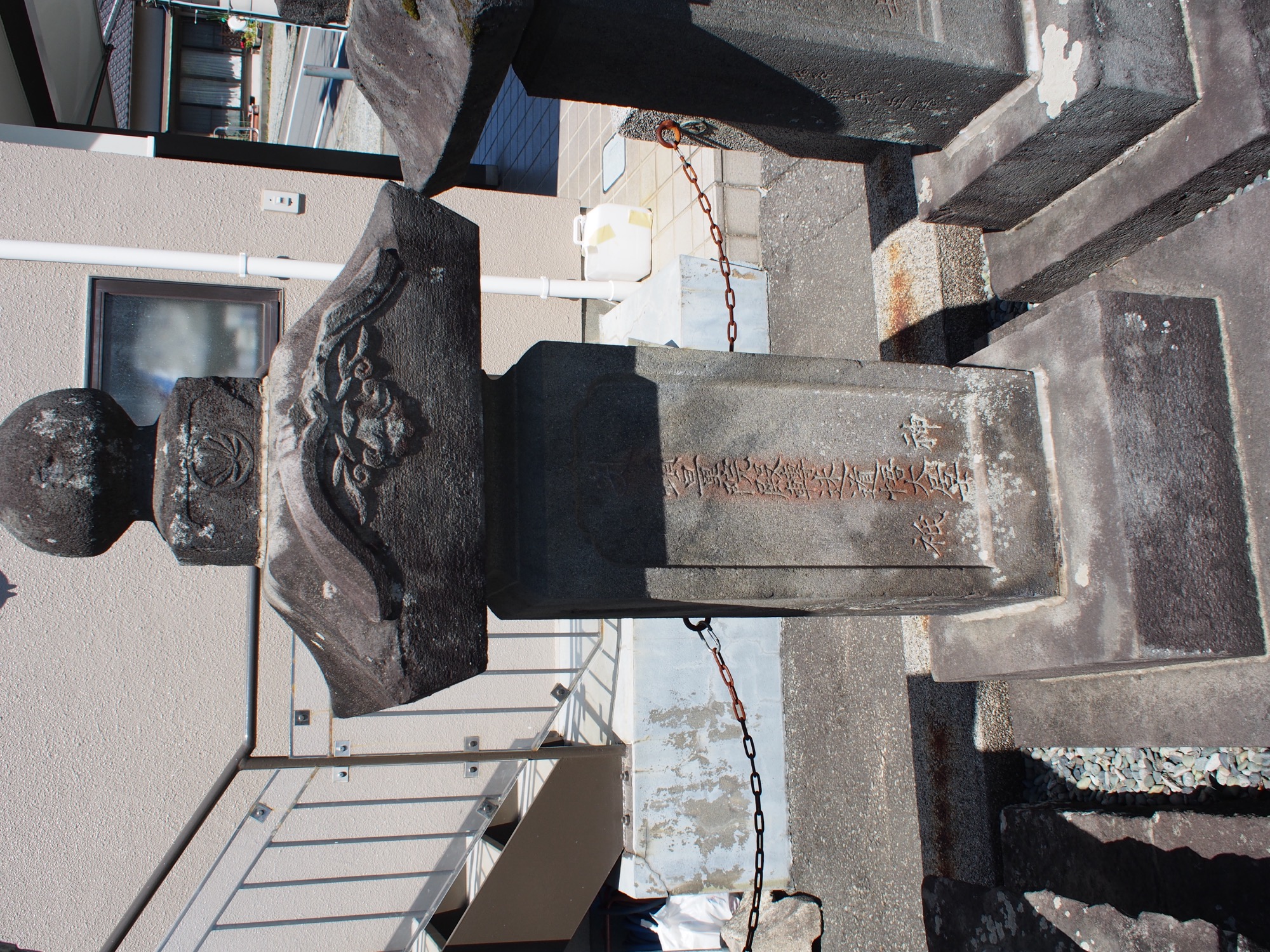
The spirits of the successive Ōmiyaji and their priestly households are venerated here, and in the quiet of the burial ground sleeps a millennium of Fuji worship.