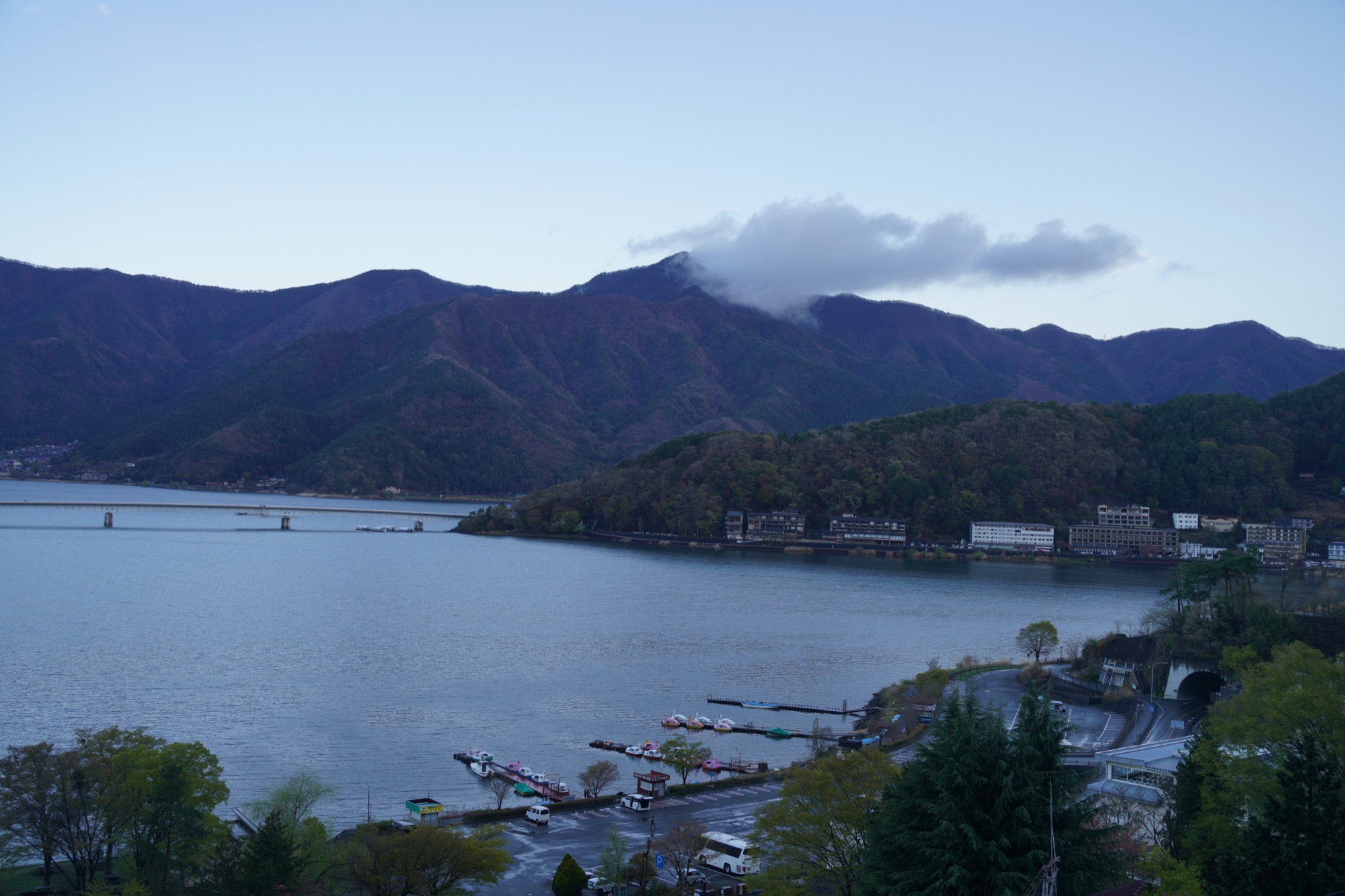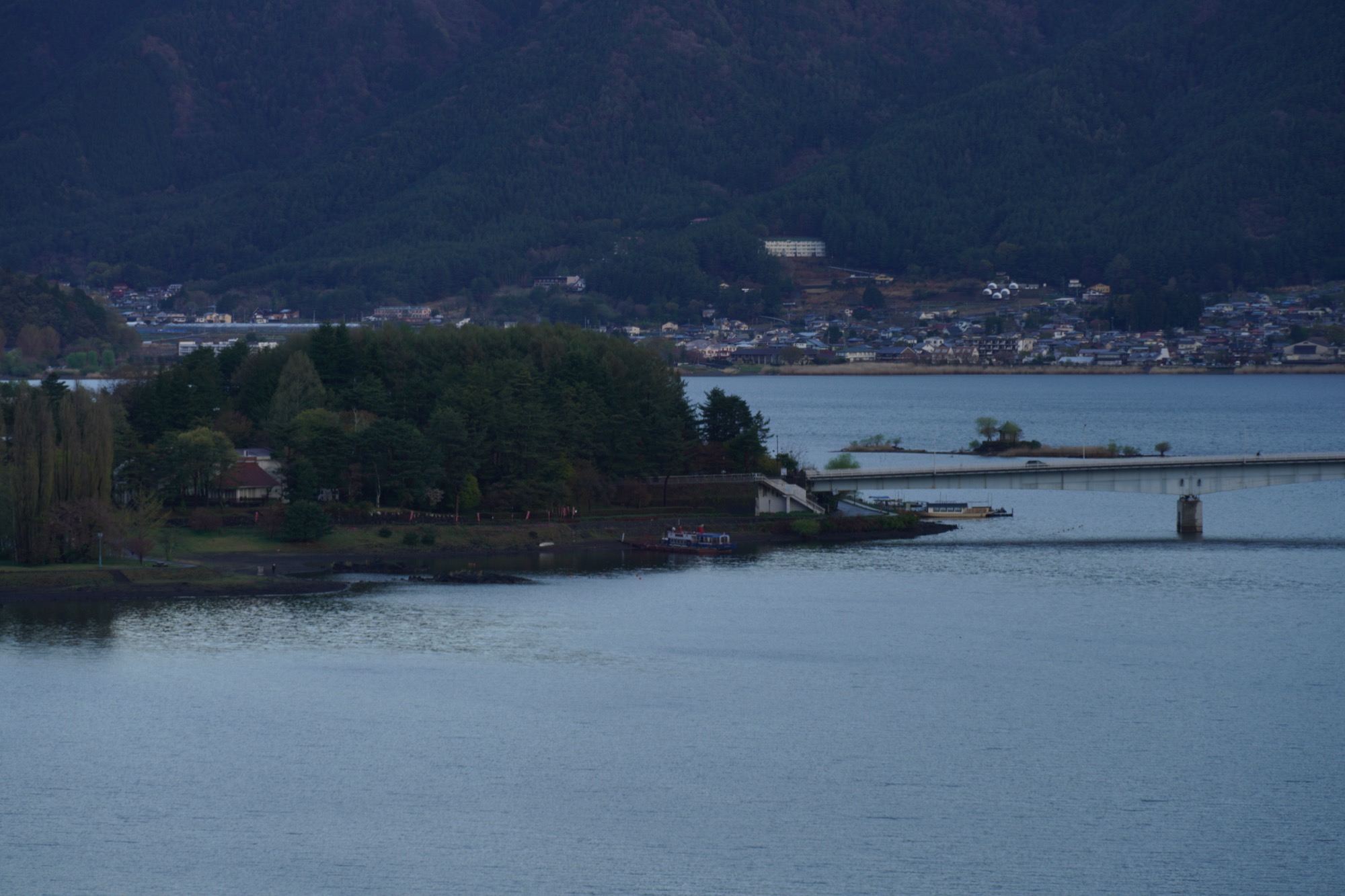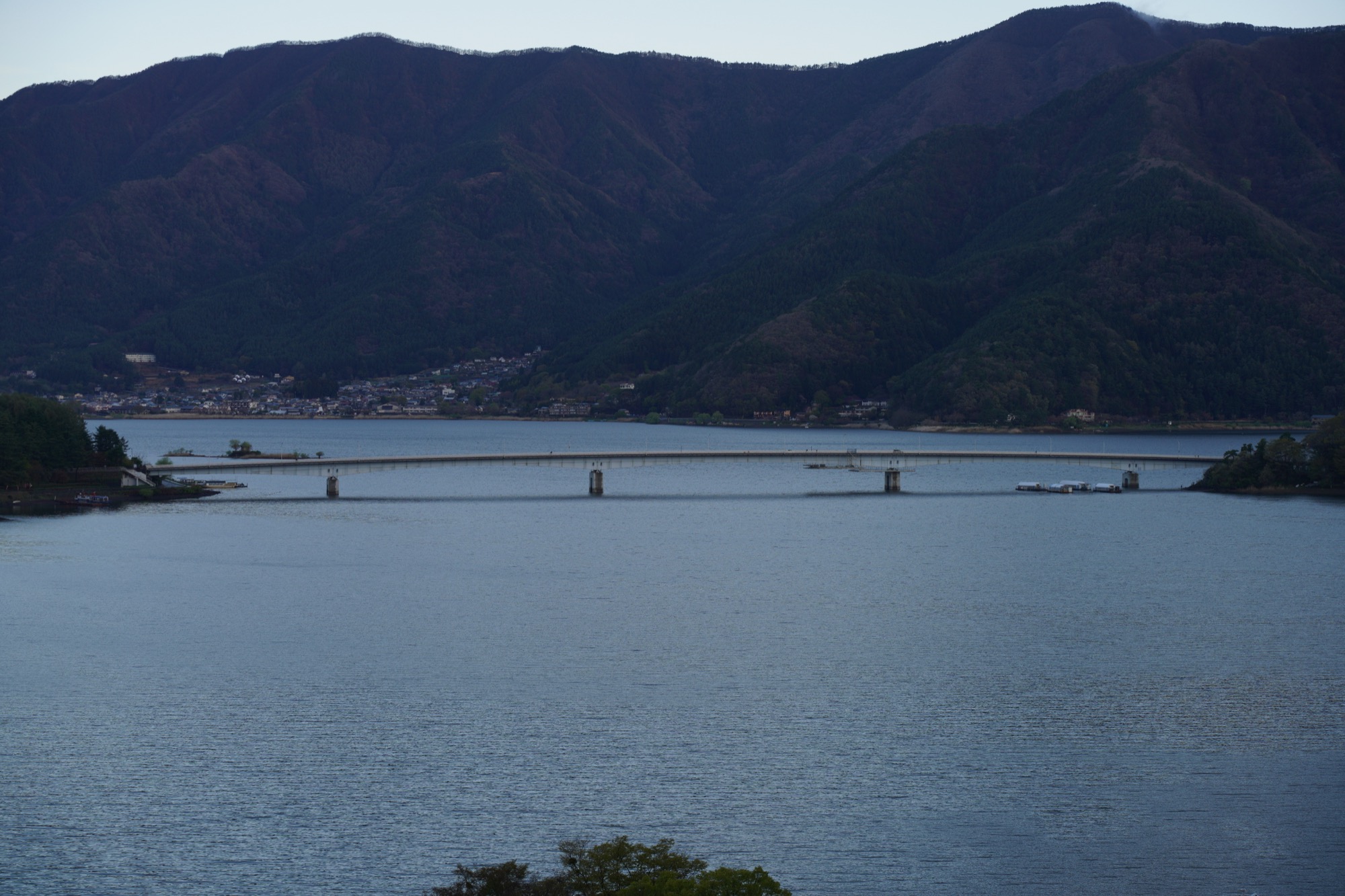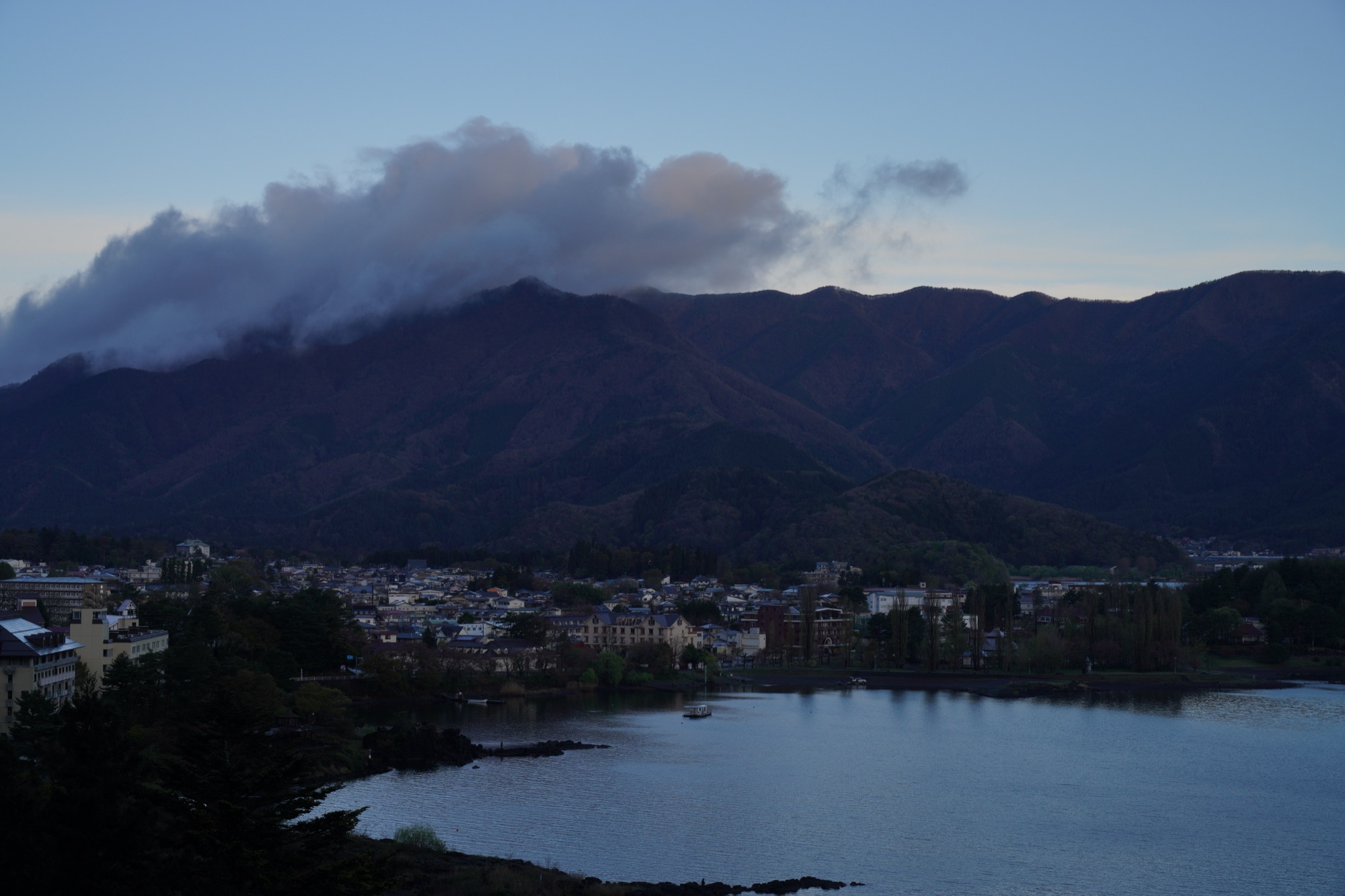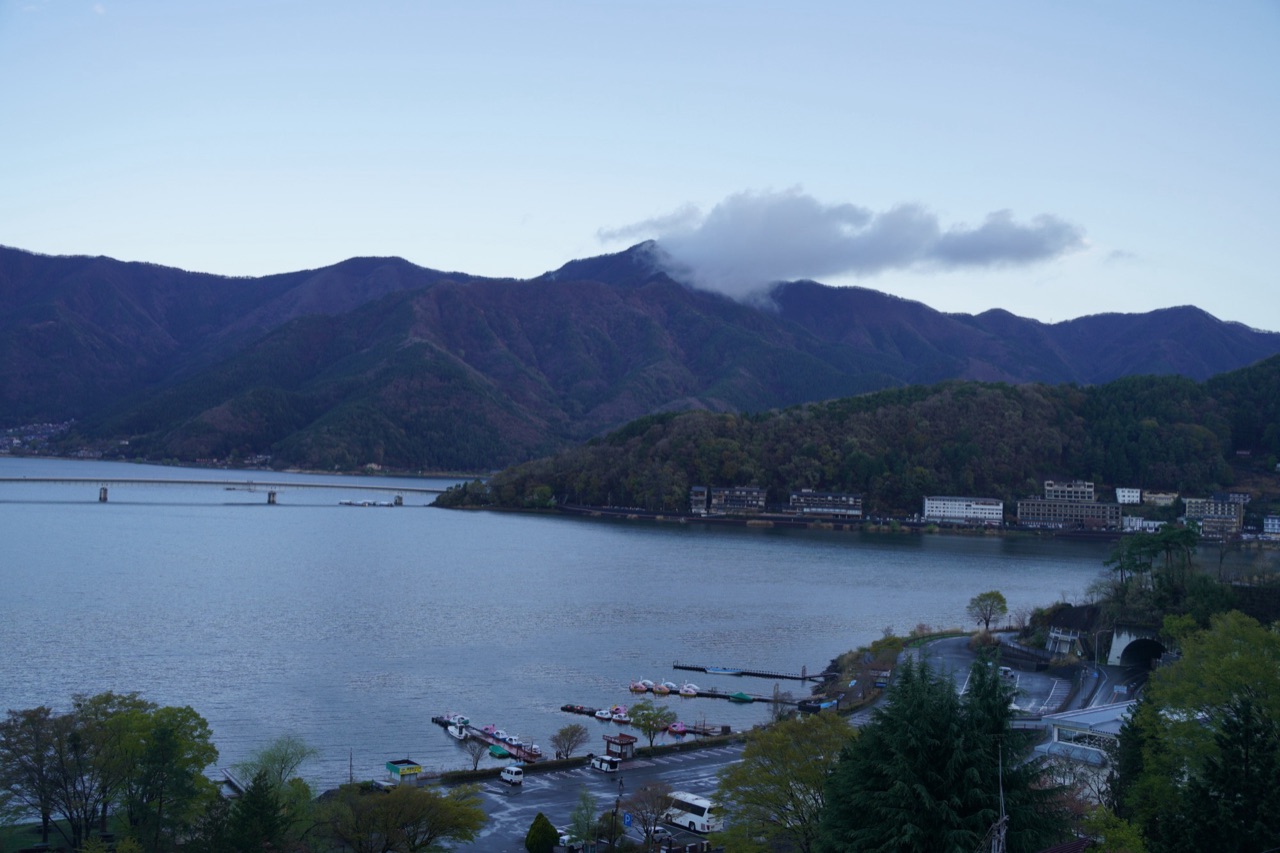
Lake Kawaguchi and the Kawaguchiko Ōhashi Bridge
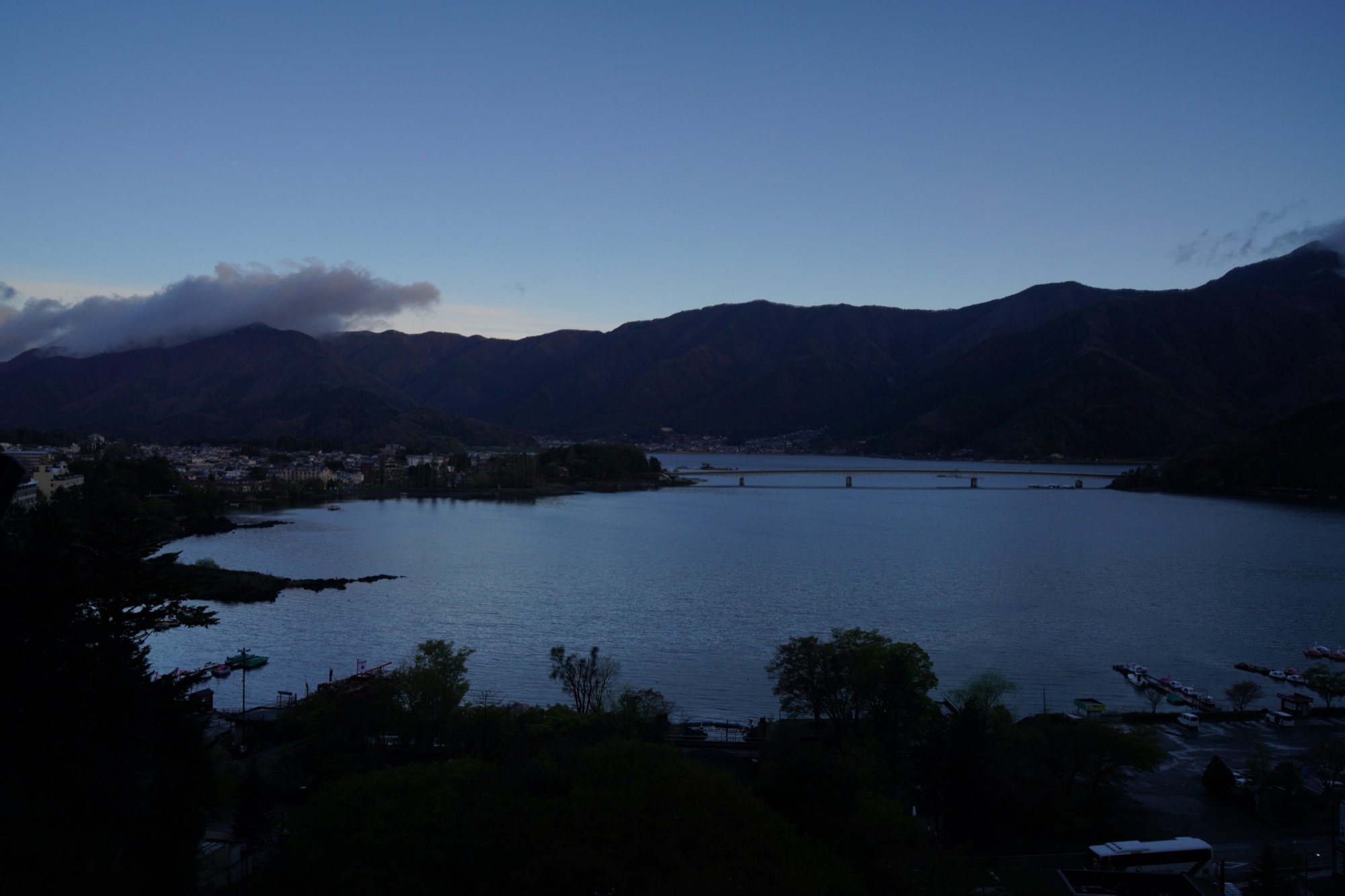
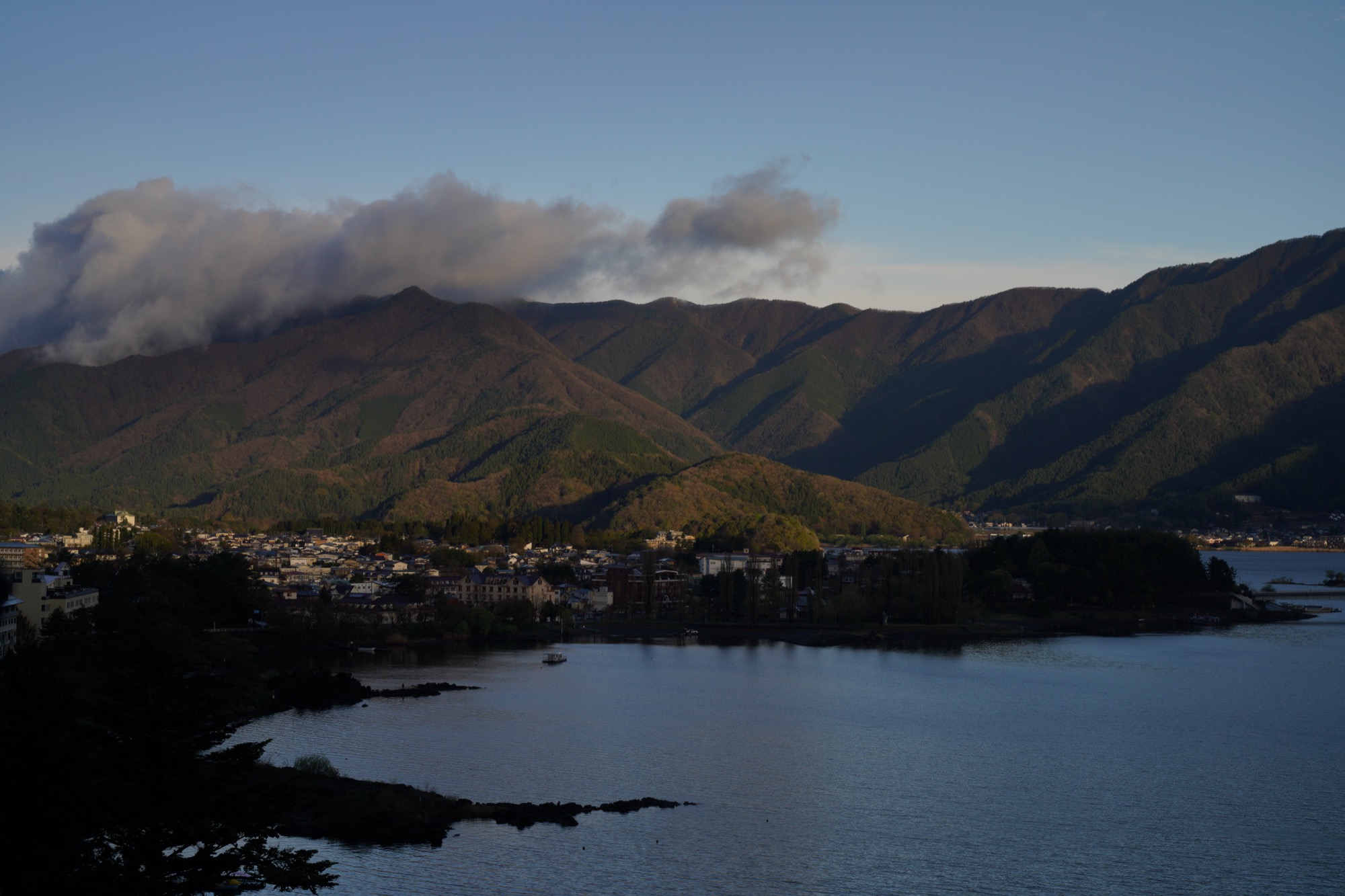
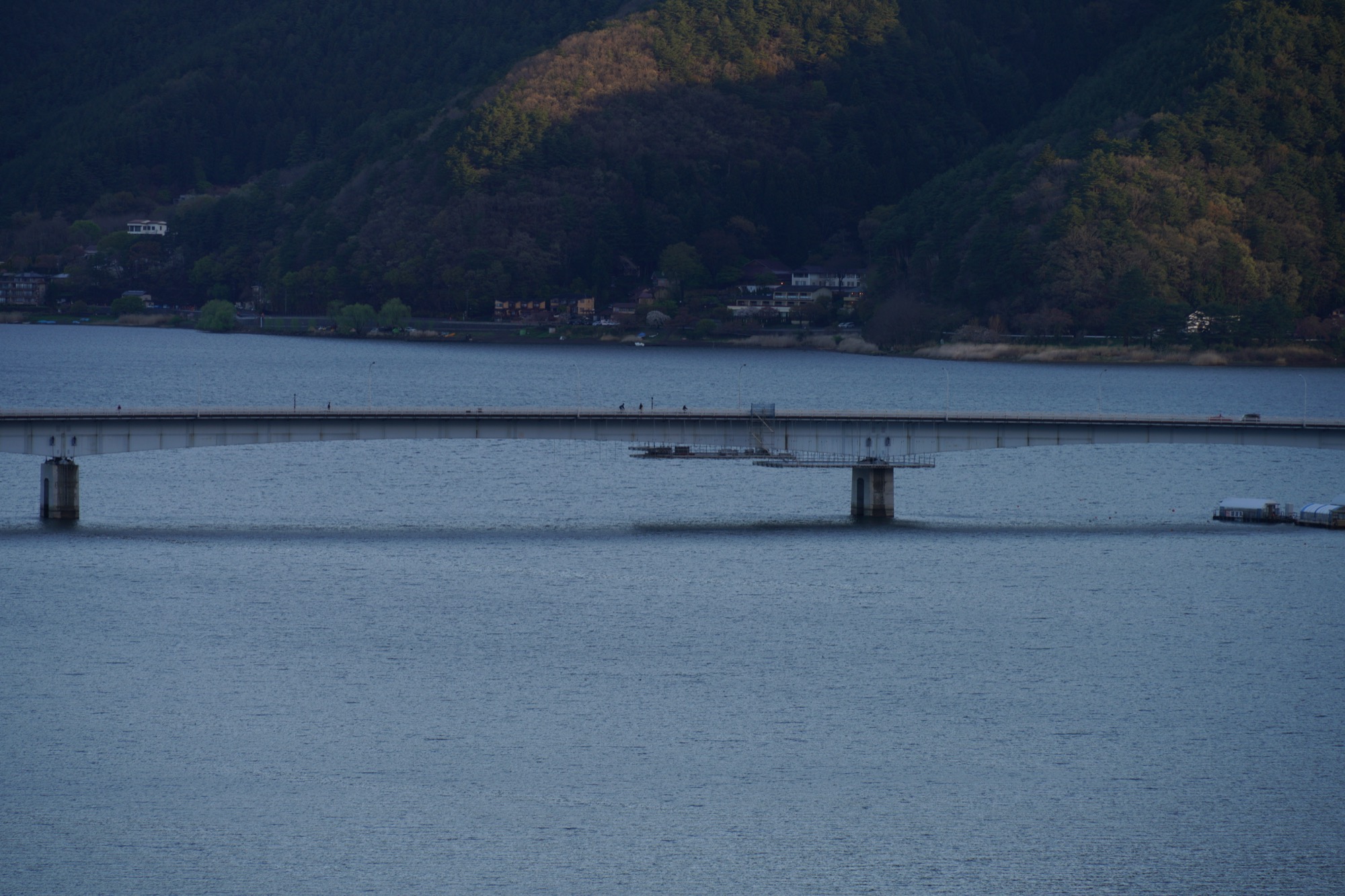
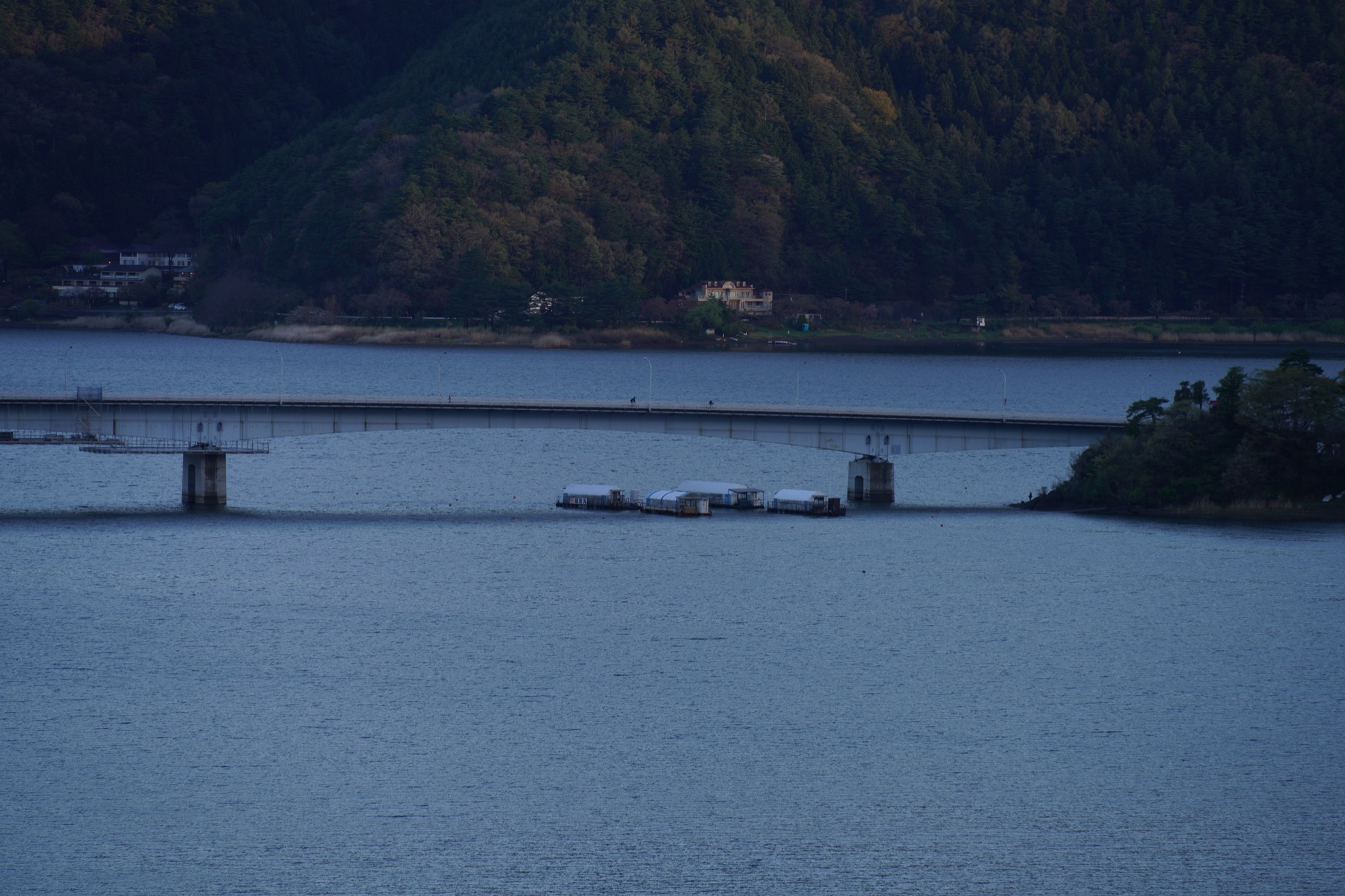
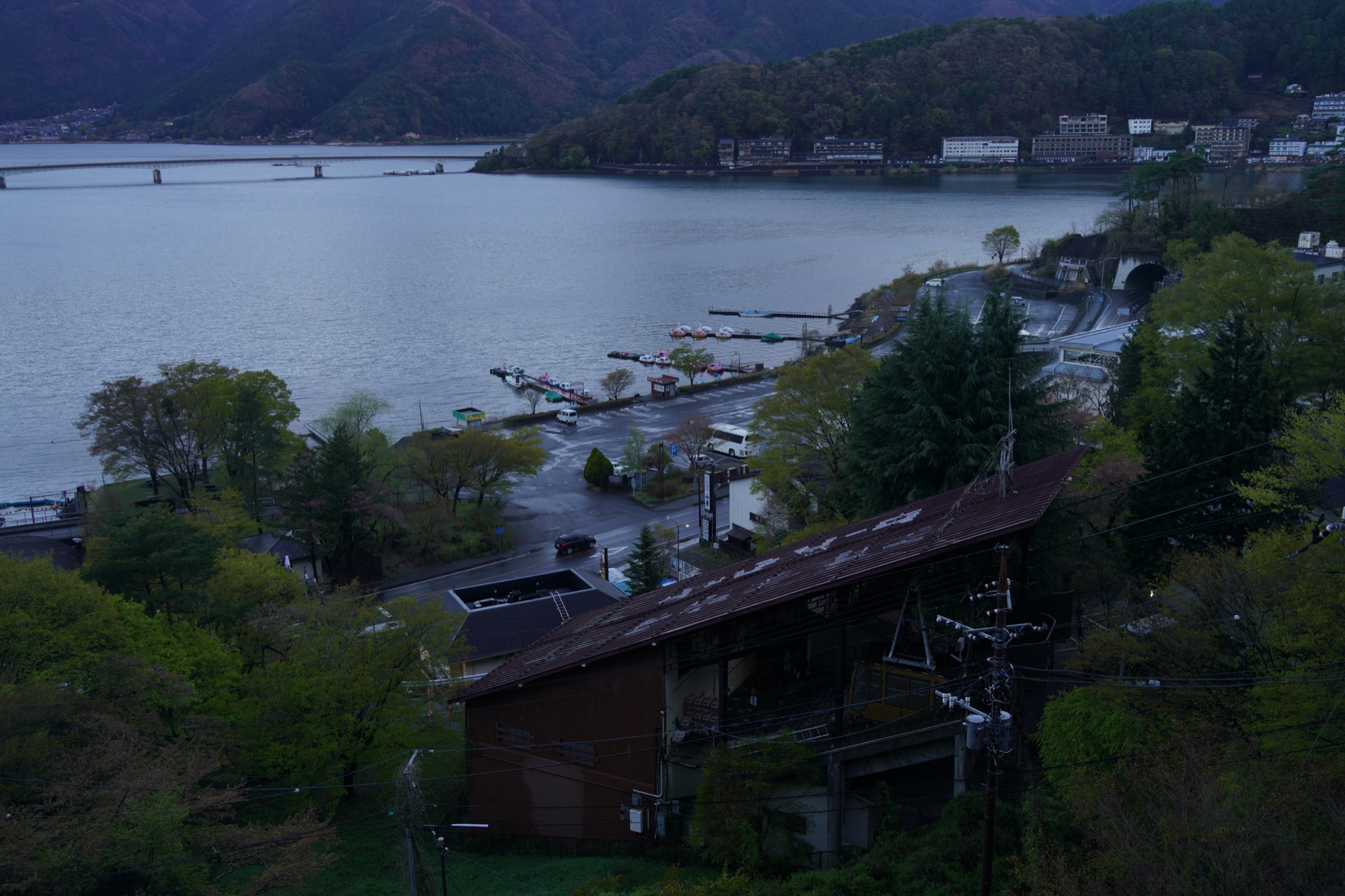
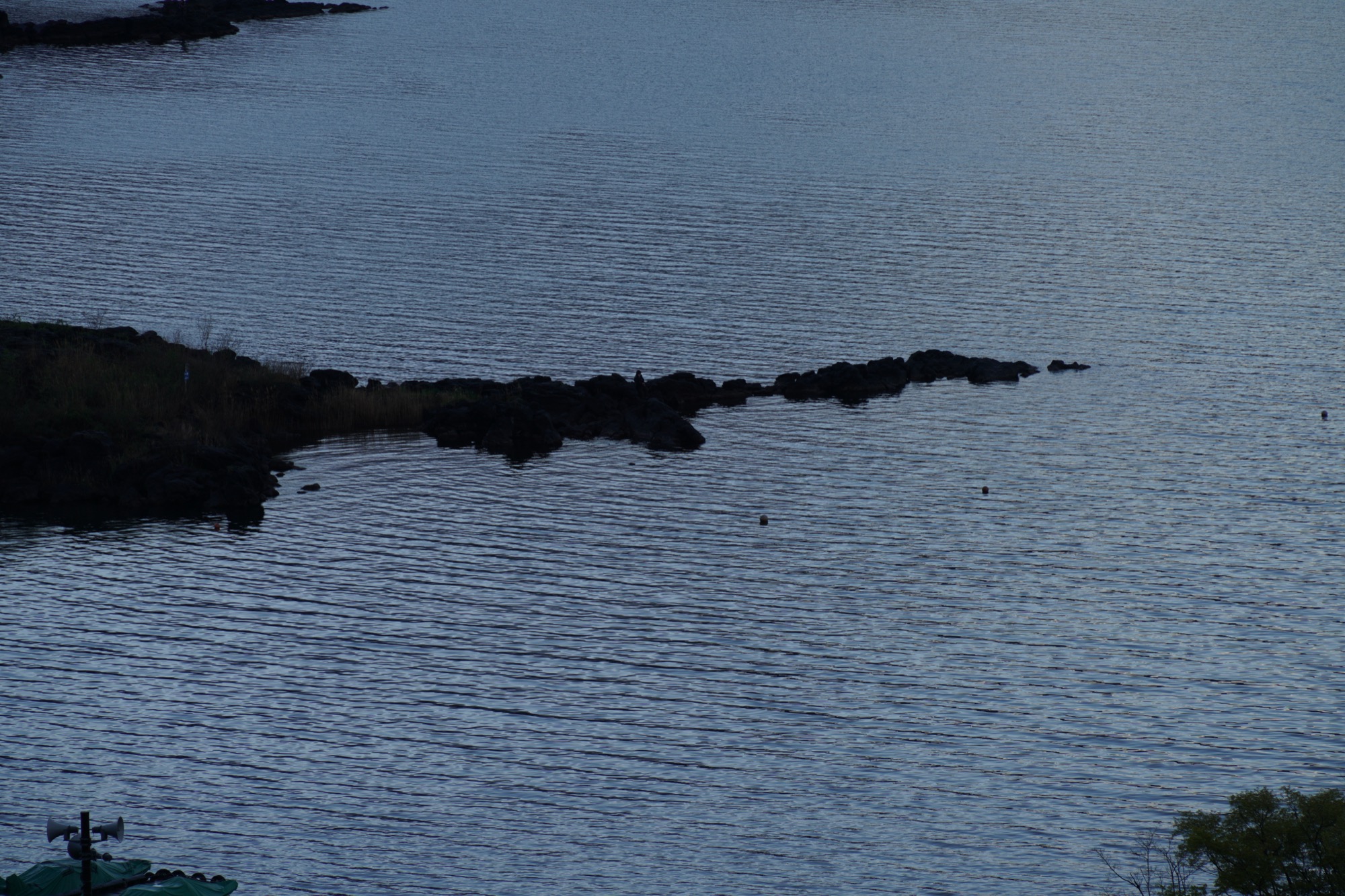
Lake Kawaguchi is one of the Fuji Five Lakes. The photos were taken early in the morning around the Kawaguchiko Ōhashi Bridge; in the half-light, the surrounding mountains are reflected on the still water.
Lake Kawaguchi is closely tied to the history of Fuji worship. Fuji-kō practice included a pilgrimage custom, the Uchi-hakkai meguri, of going round eight lakes and ponds at the foot of the mountain to perform water austerities, and Lake Kawaguchi was one of them. Before climbing, practitioners poured water over themselves in these lakes to purify body and mind. This practice is said to follow Hasegawa Kakugyō, regarded as the founder of the Fuji-kō, who went round the eight lakes at the foot of the mountain in his training.
The village of Kawaguchi on the north shore has a still older history. In 864 (Jōgan 6), in the Heian period, Mt. Fuji erupted violently and sent out a great amount of lava from its northwestern slope. To calm the eruption, the court had a shrine to the Asama deity built in Yatsushiro District, Kai, the next year, 865 (Jōgan 7), and one theory holds that this is today’s Kawaguchi Asama Shrine. Kawaguchi was also a key point on the Kamakura road (the Misaka road), which ran from Kōfu over the Misaka Pass toward Kamakura, and it prospered from early times as a post station with horses. It later became a base of the Fuji oshi, and at its height a religious town of as many as 140 lodgings had formed. The Kawaguchi trail, which started here, was a main pilgrim route until the early Edo period, but it later declined as the Yoshida trail prospered.
The inverted Fuji reflected on the lake has long been a subject of waka poems and ukiyo-e prints. As a sacred place of faith and a source of art, Lake Kawaguchi is a component of the World Heritage property Fujisan: Sacred Place and Source of Artistic Inspiration.