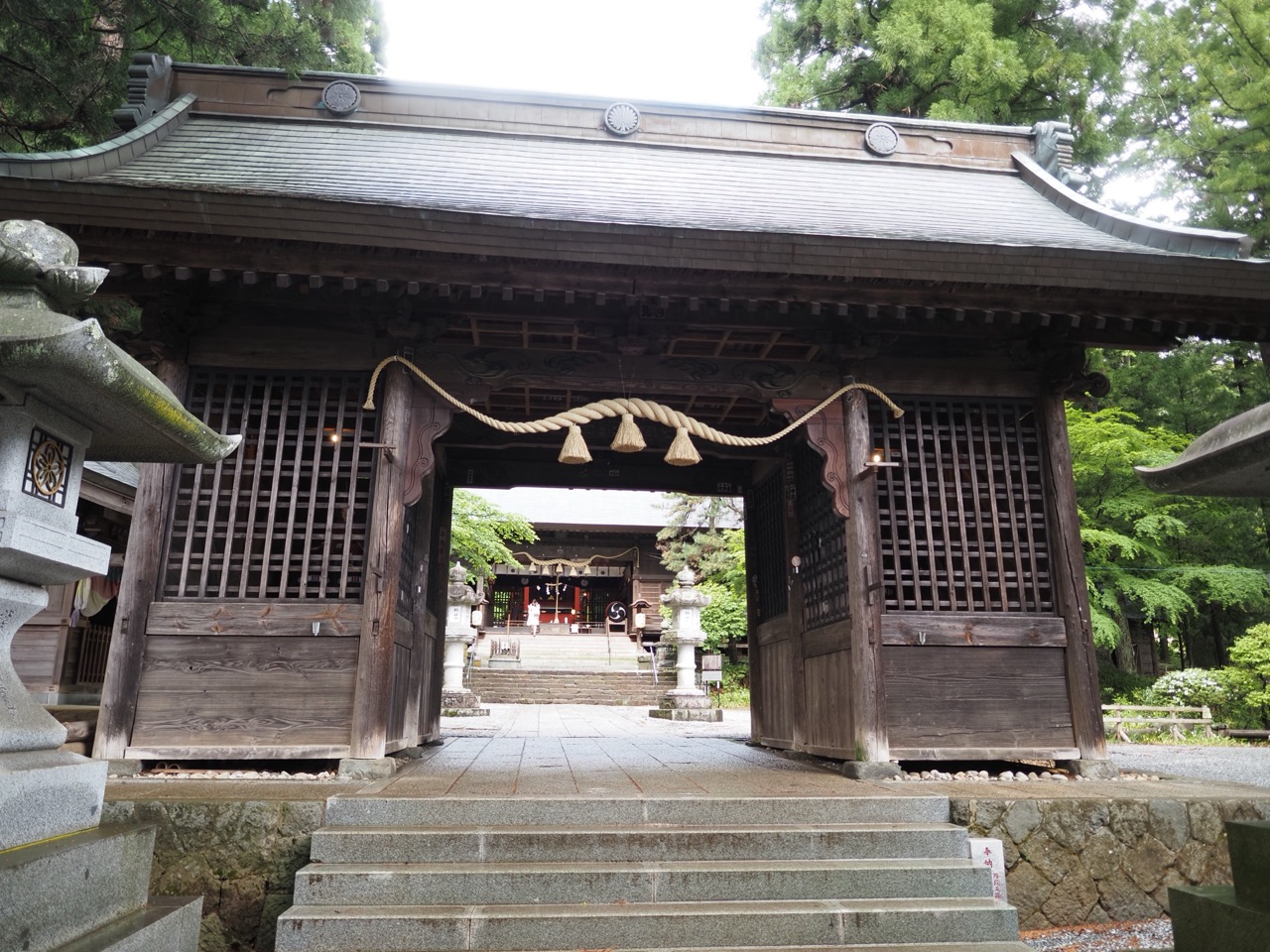
Kawaguchi Asama Shrine
Kawaguchi Asama Shrine stands in Kawaguchi, Fujikawaguchiko, Minamitsuru District, Yamanashi. It is an old shrine on the northern foot of Mt. Fuji, on the north shore of Lake Kawaguchi.
According to shrine tradition, it began in 865 (Jōgan 7), when Tomo no Atai Masada enshrined Asama no Ōkami to calm the great Jōgan eruption of Mt. Fuji the year before (864). The Nihon Sandai Jitsuroku records that the Asama deity spoke through an oracle to Tomo no Atai Masada, acting district chief of Yatsushiro District in Kai, and that a shrine was built south of the district office, with Masada as hafuri priest and Tomo no Akiyoshi as negi priest. The shrine is one of the candidates for the Asama Jinja of Yatsushiro District in Kai, listed as a major shrine in the Engishiki register of shrines, and together with Fuji Omuro Sengen Shrine it carries the old Asama faith of Kai.
Kawaguchi station on the ancient official road to Kai (the Misaka road) was placed here. The road branched from Yokobashiri station in Suruga and passed through Kawaguchi on its way to the provincial capital of Kai.
In the Edo period, the name Fujisan Kitaguchi Hongū appears in documents of the tsutsugayu rite held at the shrine on the fourteenth day of the first month, in which the oshi of Kawaguchi divined the harvest and the fortunes of the world. Kawaguchi is regarded as the cradle of the Fuji oshi, and as many as 140 oshi lodgings are said to have lined the valleys along the north shore. The oshi were both priests and innkeepers, and they toured their followers in many provinces, encouraging pilgrimages to Fuji.
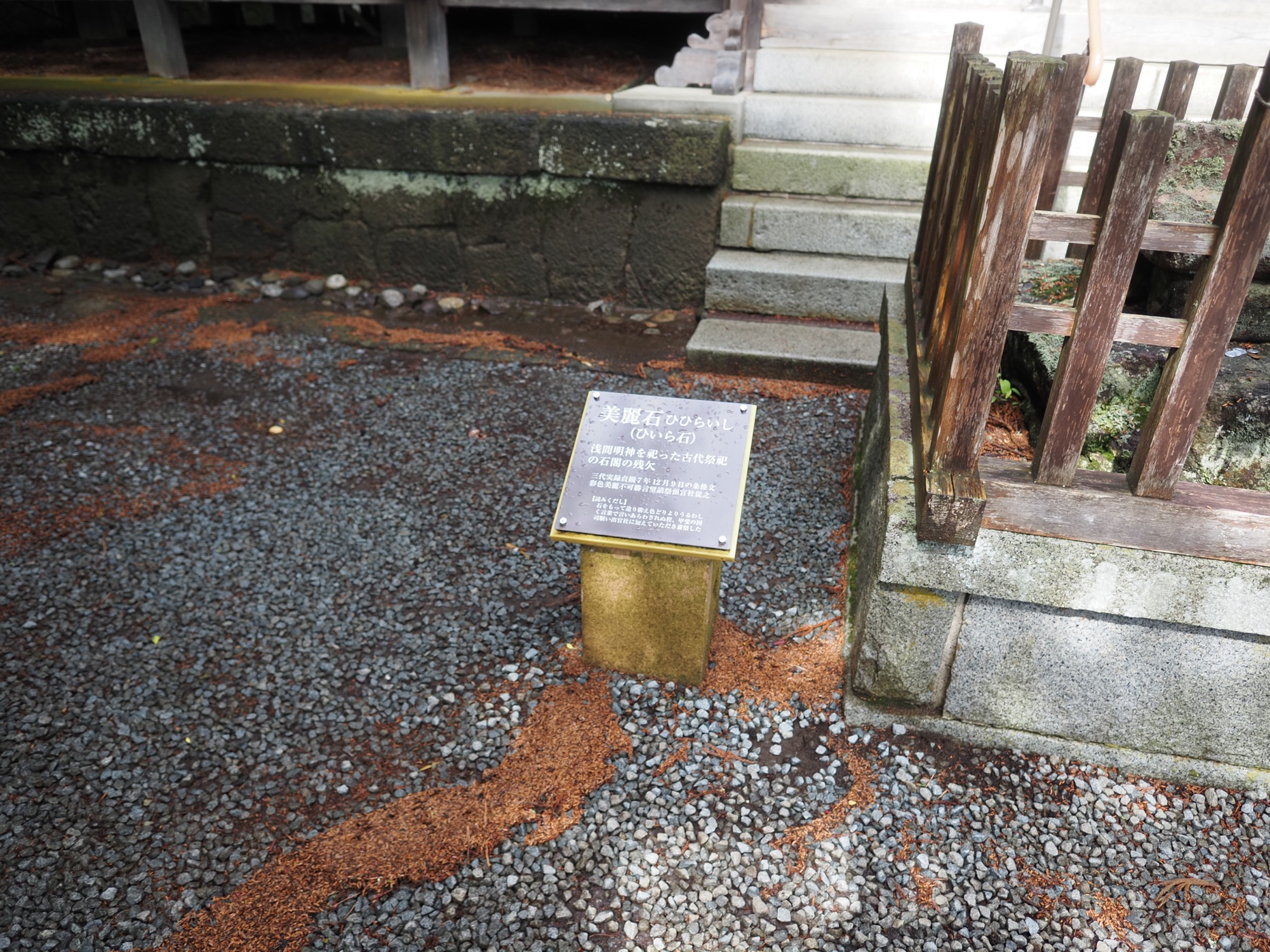
In the precinct is a stone called Hiira-ishi (written with the characters for “beautiful”), which is said to mark where Masada worshipped Asama no Ōkami. The Nihon Sandai Jitsuroku records that inside a lake filled with lava there was something like a shrine built of stone, “its colours beautiful beyond words”, and the stone’s name is said to come from this account. It has long been said that anyone who climbs onto the stone will be cursed.
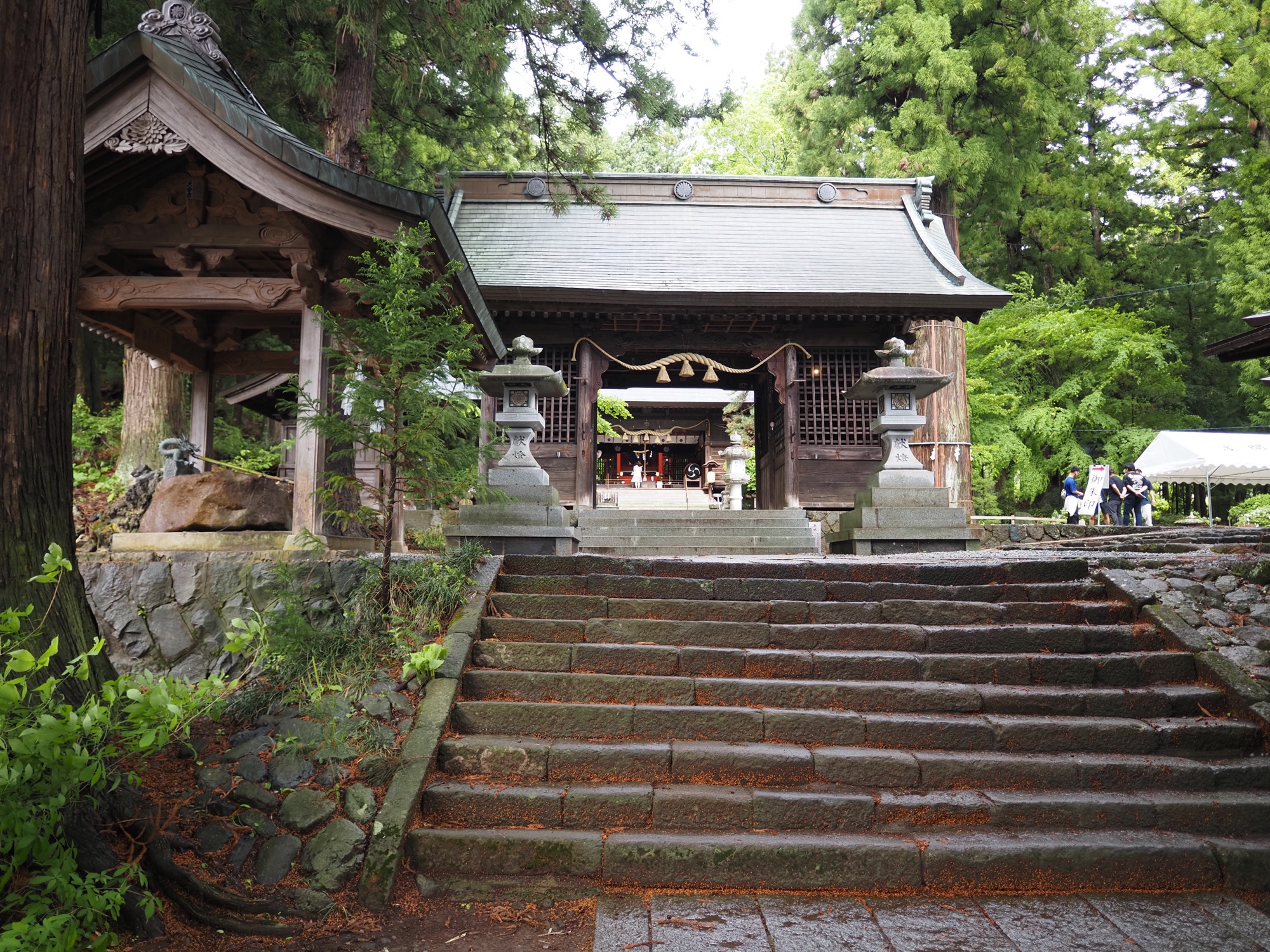
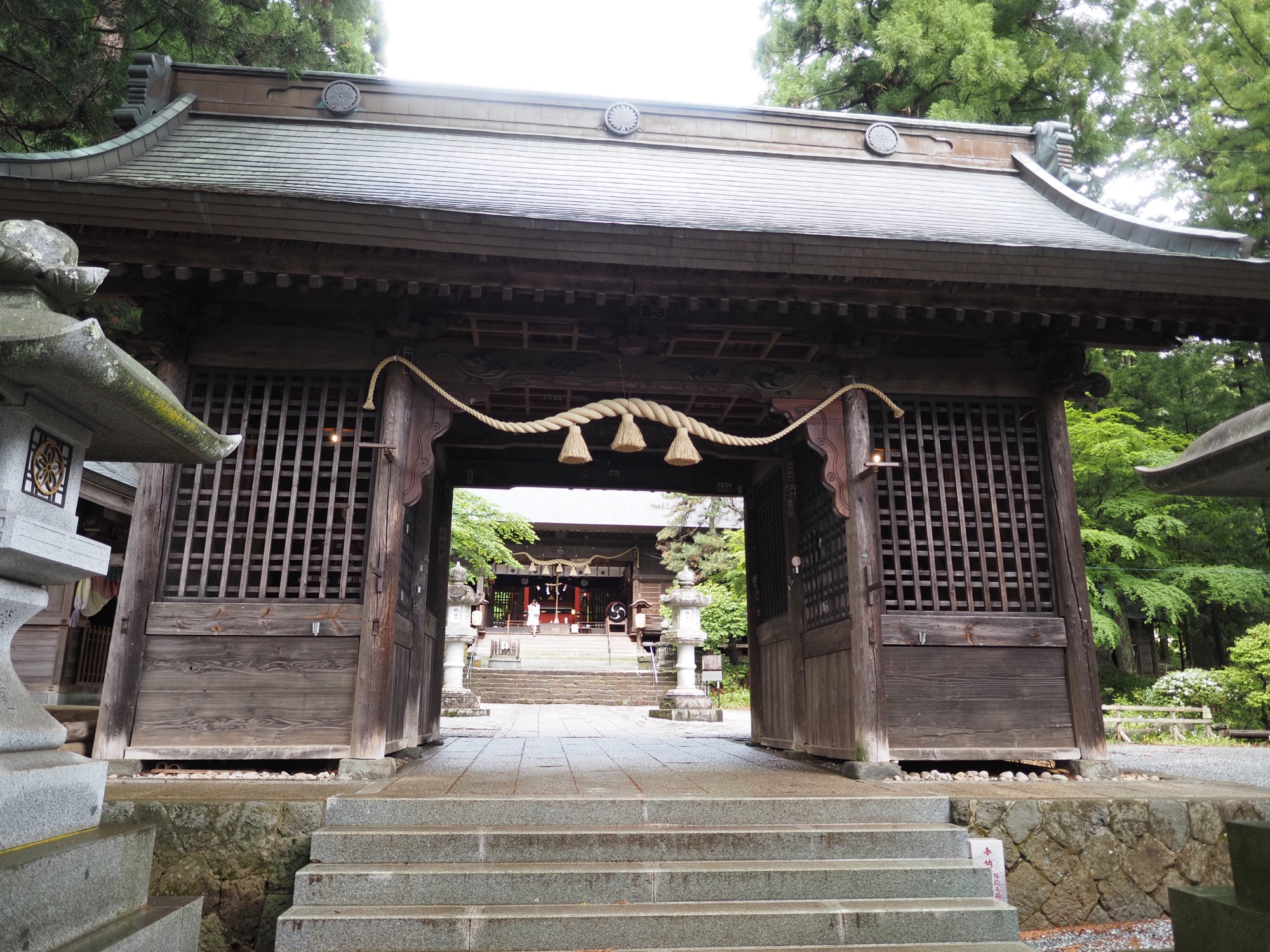
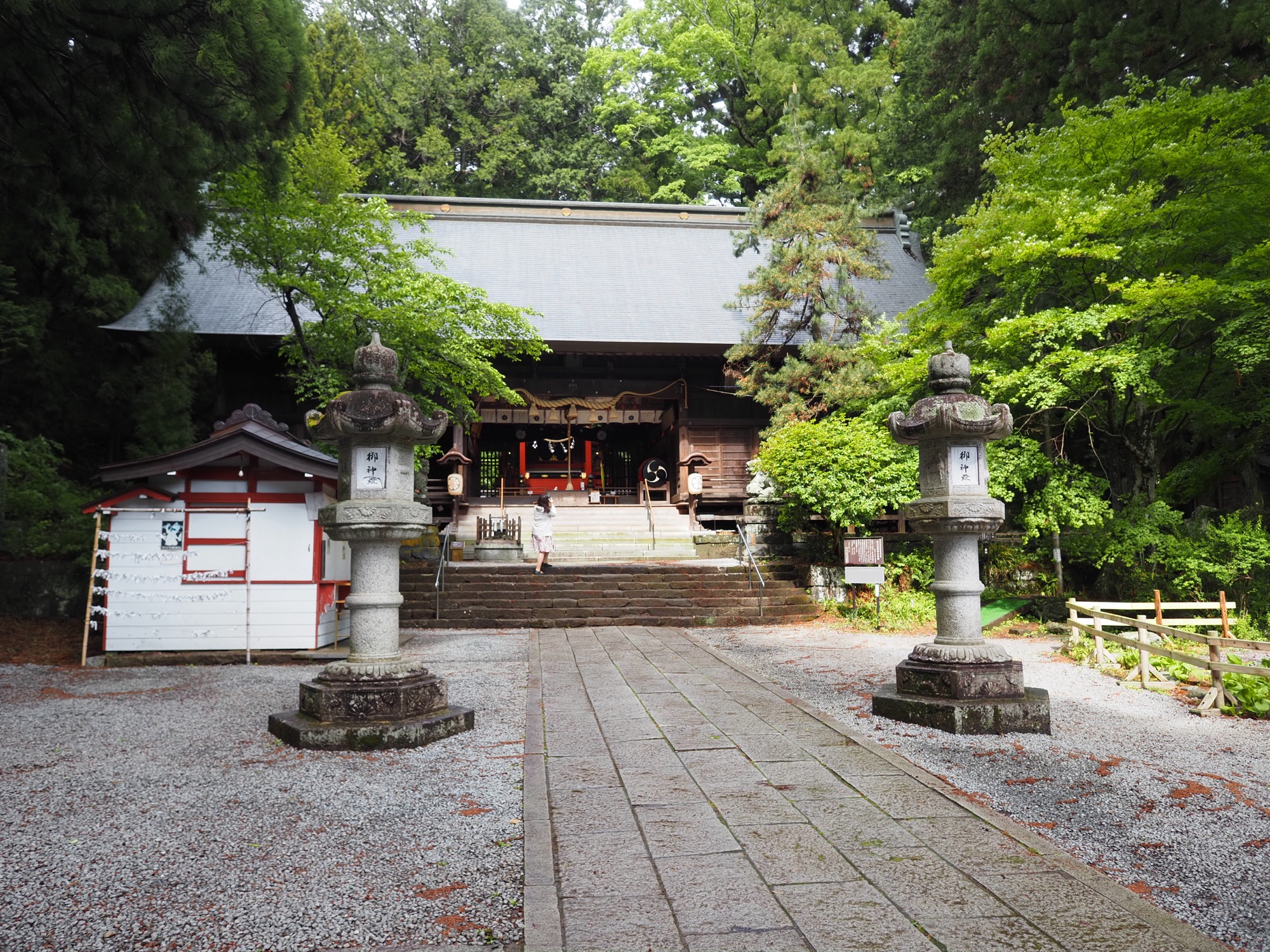
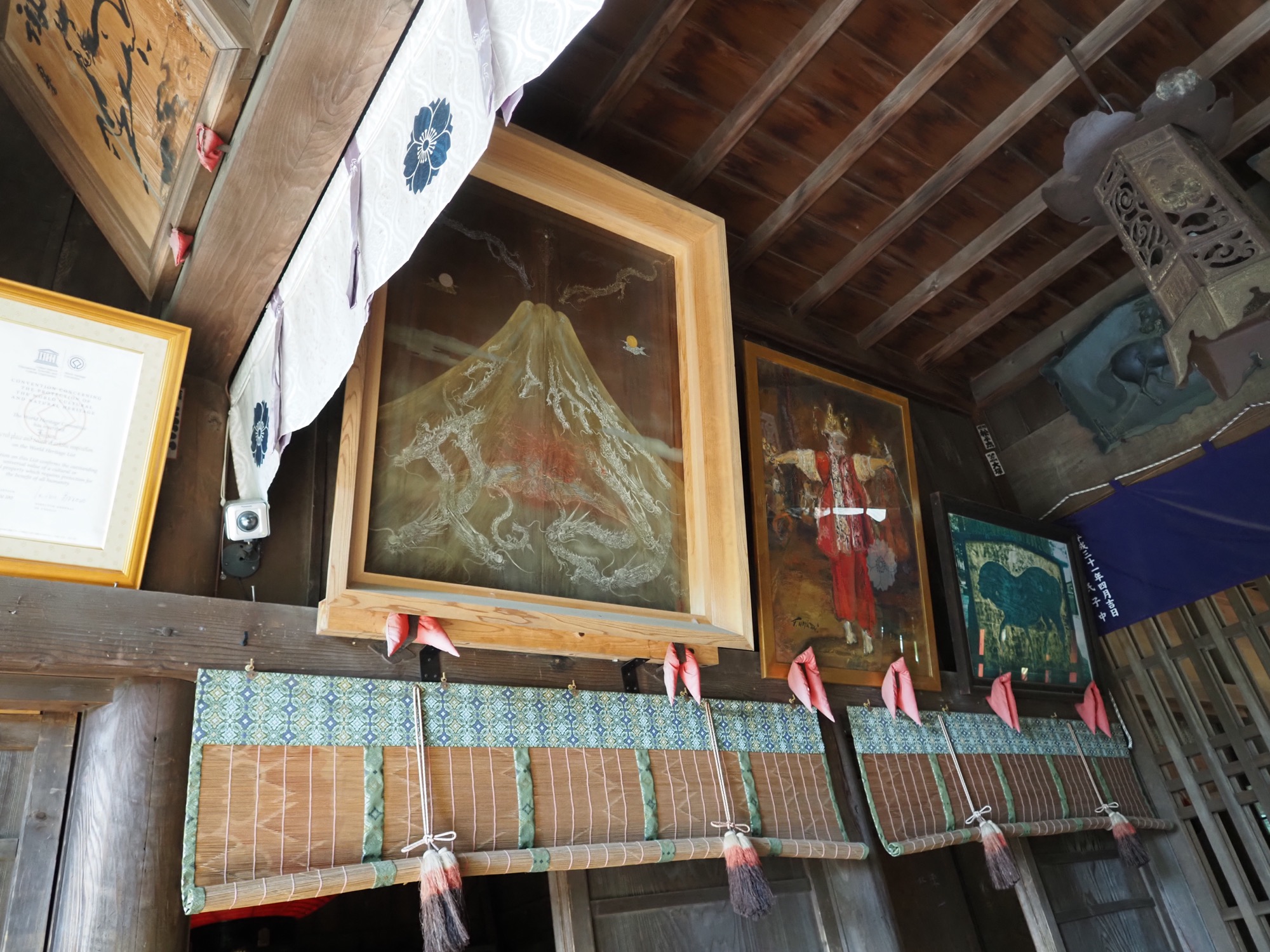
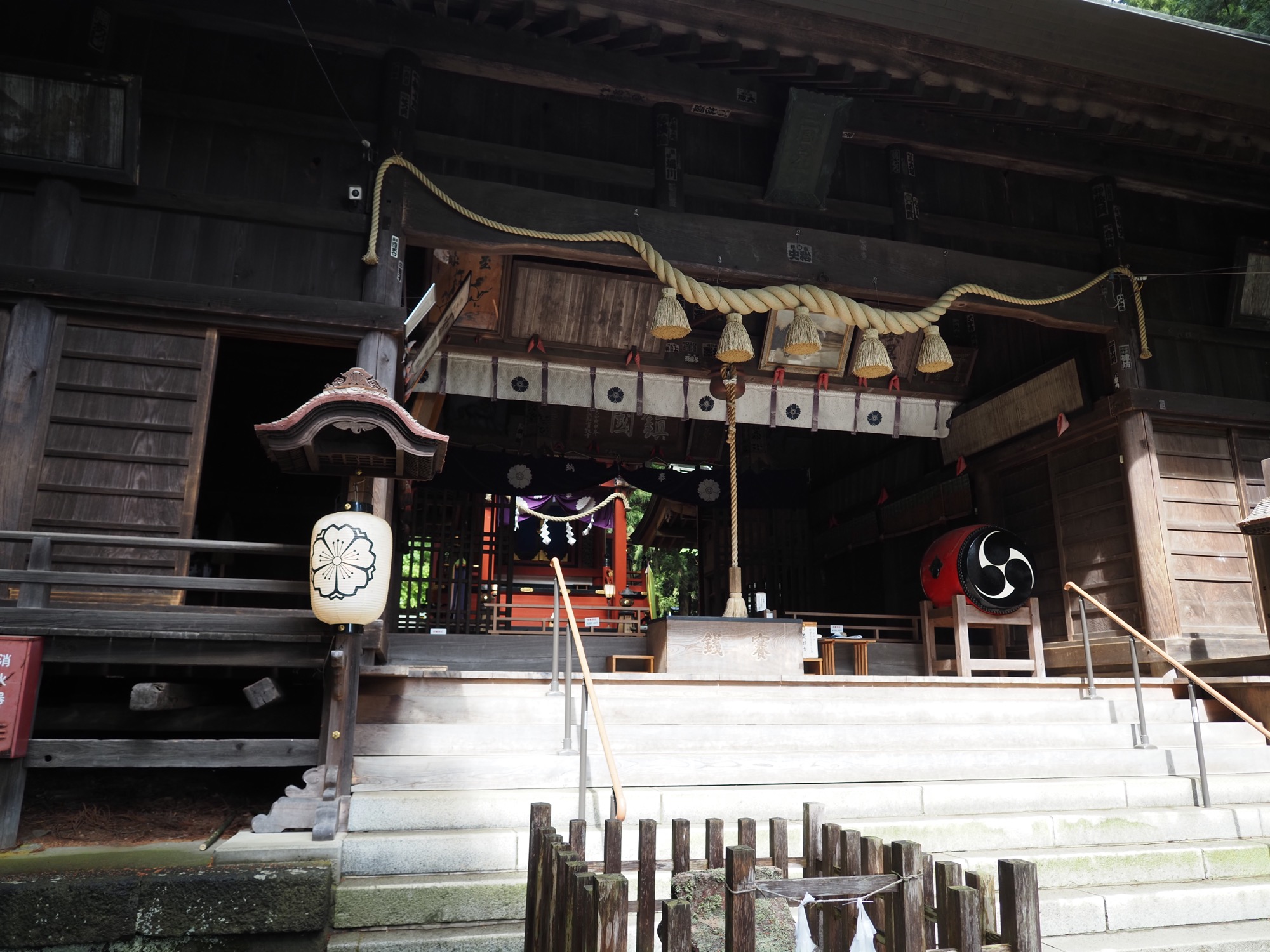
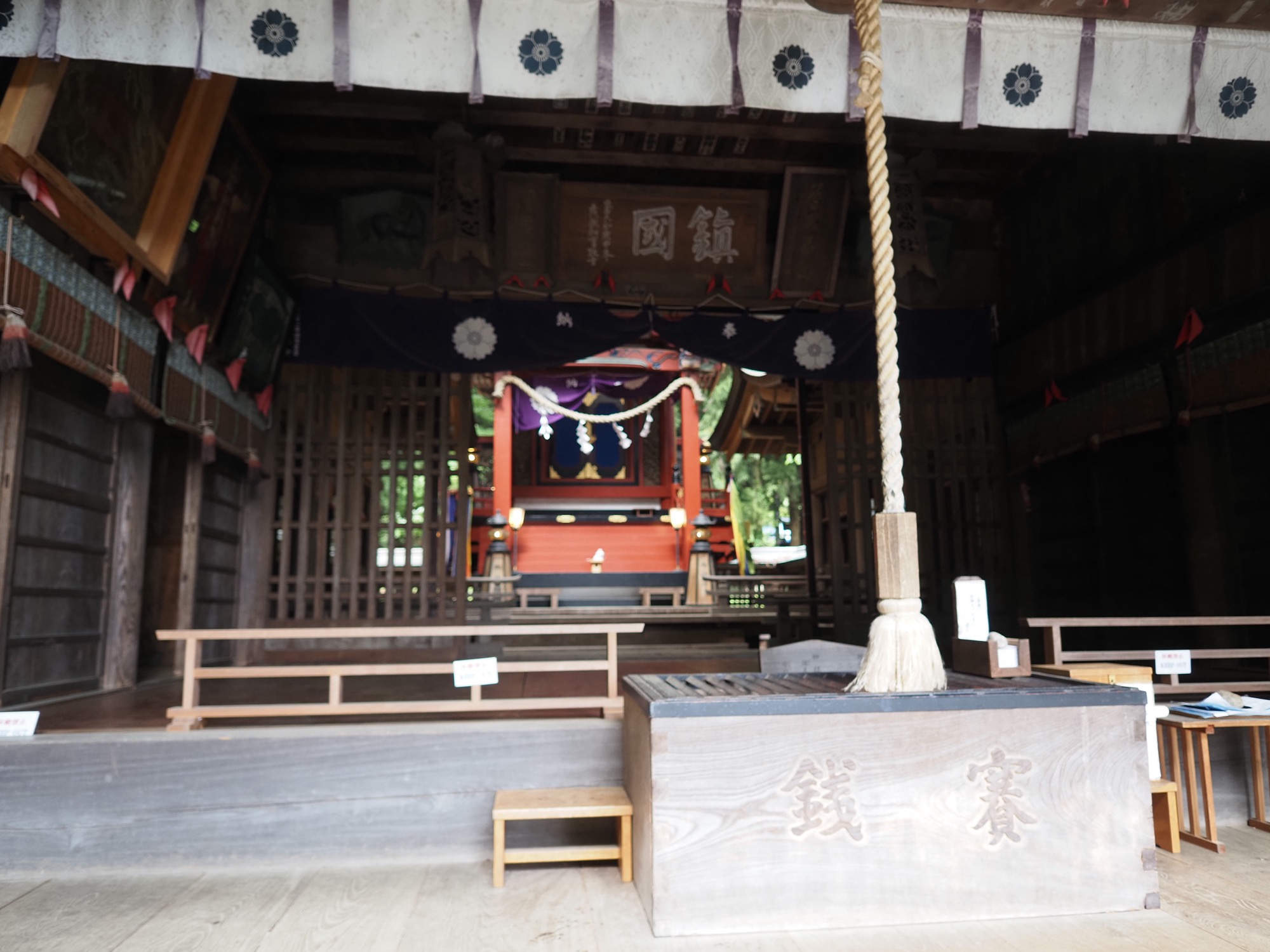
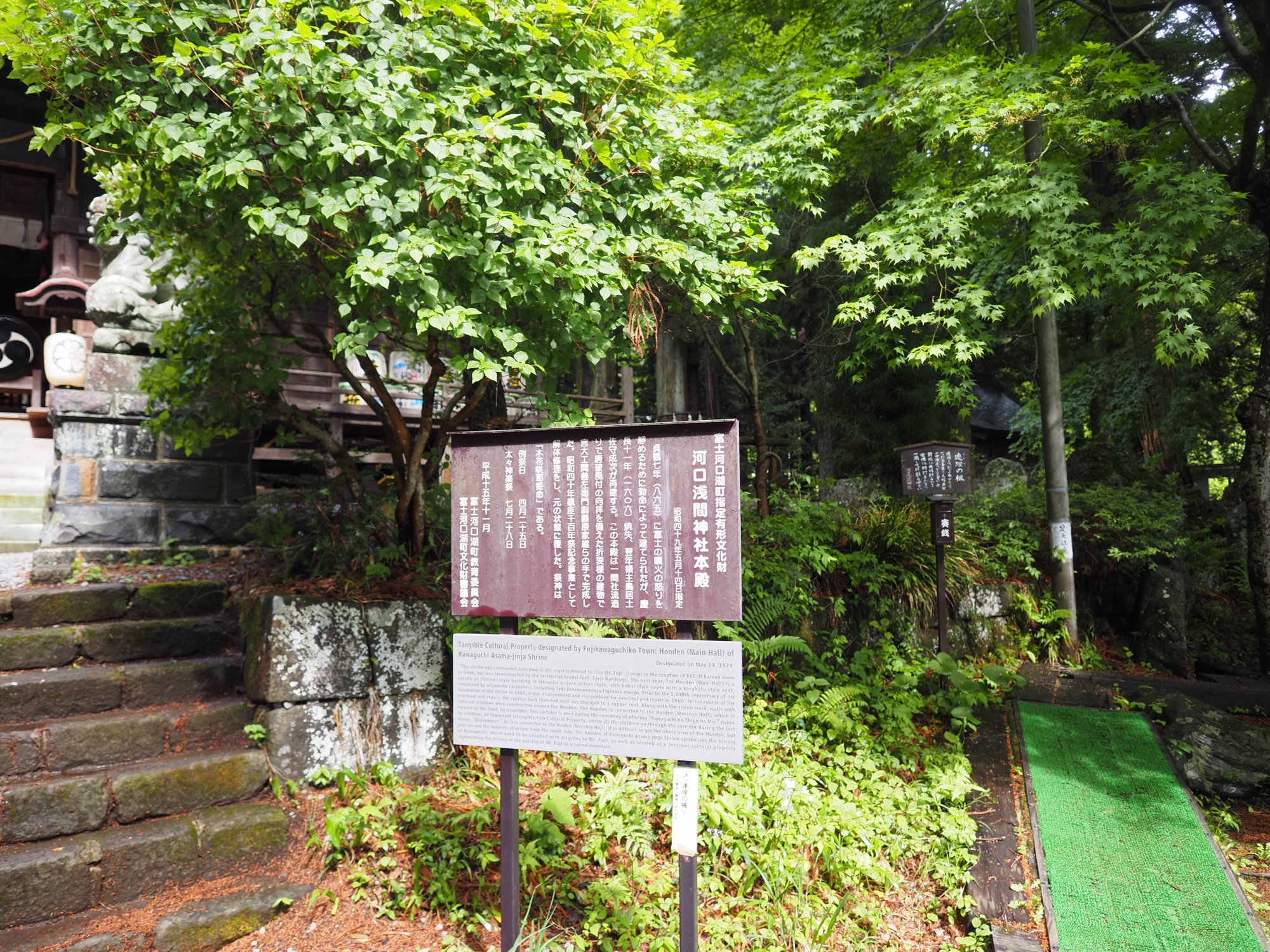
When Mt. Fuji was inscribed on the World Heritage list in 2013 as Fujisan: Sacred Place and Source of Artistic Inspiration, Kawaguchi Asama Shrine was counted as one of its components. The photos show the precinct in fresh green, the stone steps of the Zuishin gate, the worship hall, votive tablets painted with Mt. Fuji and the inner sanctuary, the sign for the Hiira-ishi, and the offering box hung with a plaque reading “Chinkoku”, with the main hall. Large trees stand in the shrine grove.