Sakaeibashi Inari Shrine
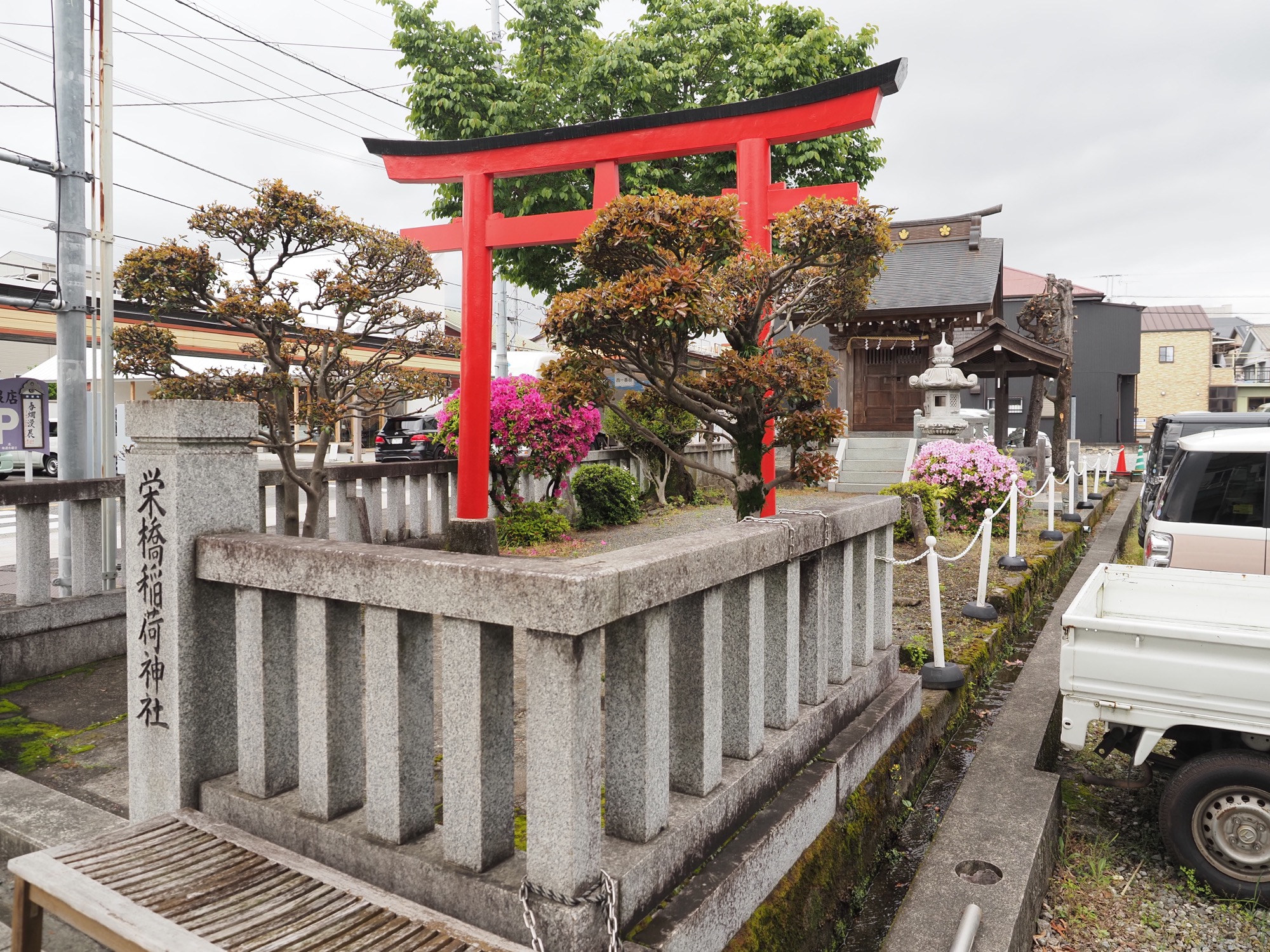
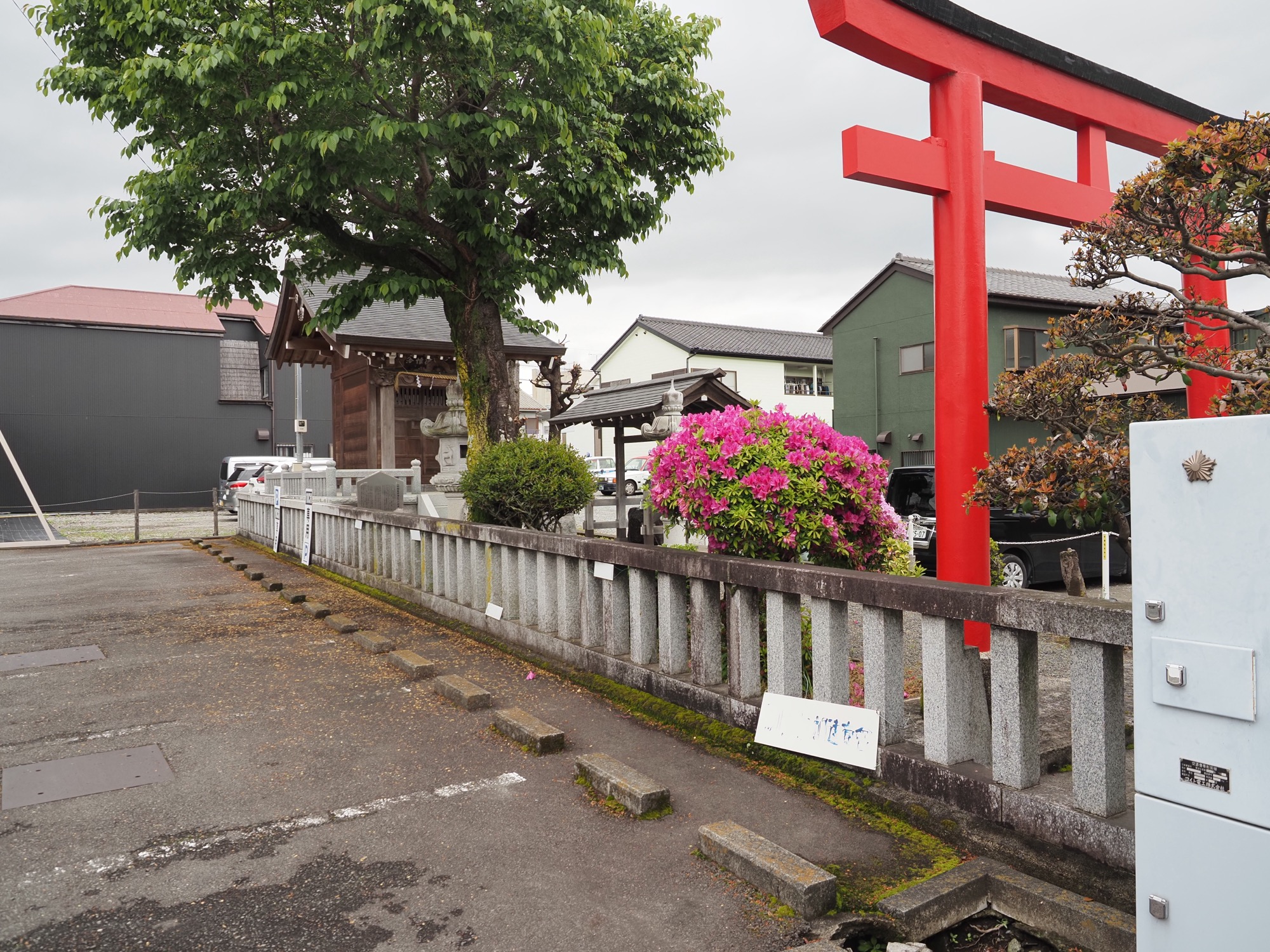
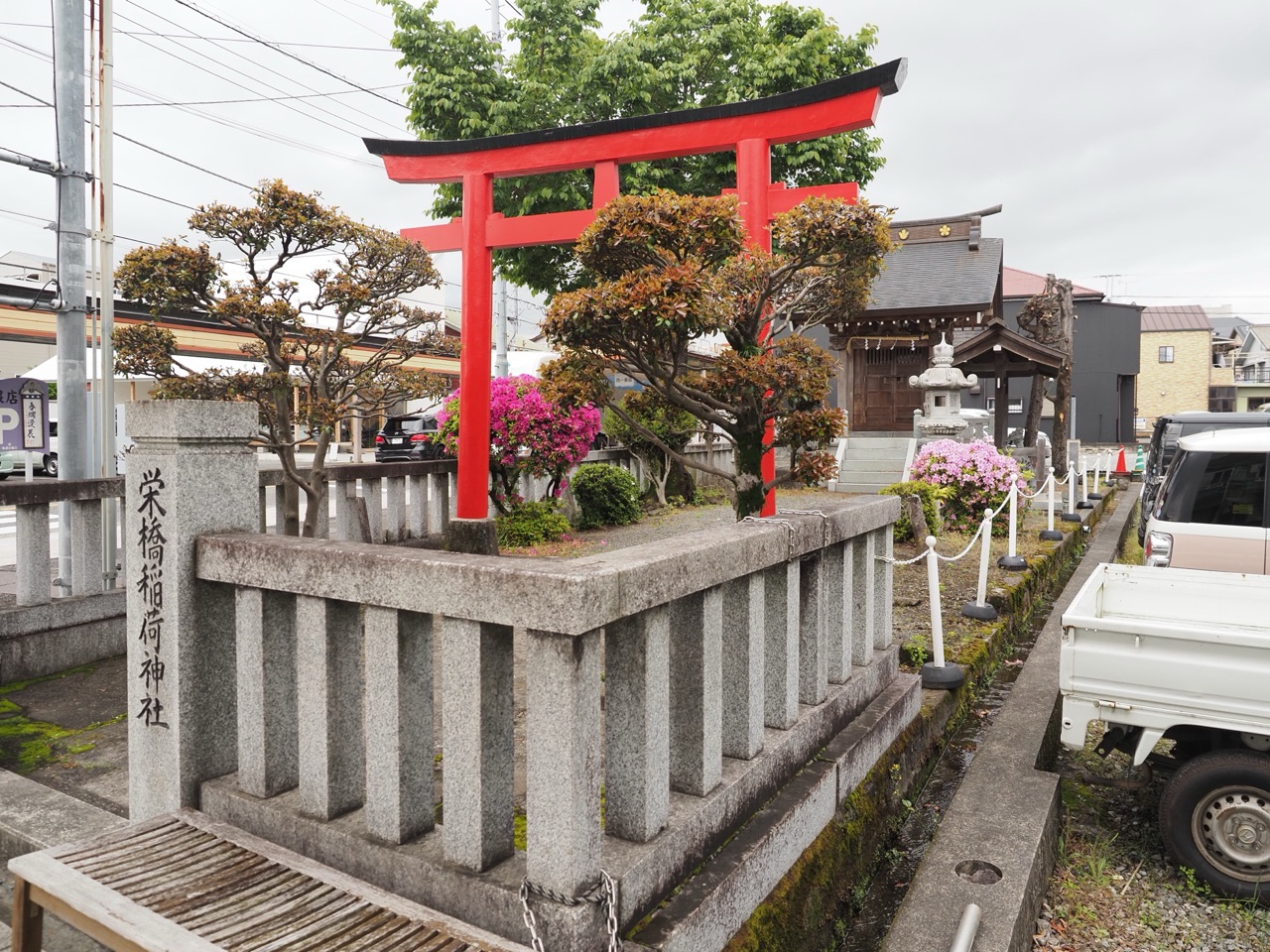
An Inari shrine seated on a roadside rise in the old Ōmiya district of Fujinomiya. A stone pillar carries the name Sakaebashi Inari Jinja, and above the stone embankment stand a vermilion torii and the sanctuary.
Ōmiya grew as the temple town before Fujisan Hongu Sengen Taisha and, at the same time, as Ōmiya-juku, a post station on the Nakamichi Ōkan highway joining Kōfu and Suruga. The turning point in its commercial history came in 1566 (Eiroku 9), when the Sengoku daimyo Imagawa Ujizane issued an edict of rakuichi — free market — for Ōmiya’s six-day market. Trade was thrown open to all comers, not merely privileged merchants; markets stood on days bearing the numbers one and six, and the town flourished as a hub through which rice, salt, fish, Suruga paper, tobacco, and tea all passed.
In the Edo period the town was divided at the Kanda River between the sacred lands of Sengen Taisha and the shogunal domain, and at its heart ran the orderly strip-divided rows of the merchant quarters — Tenma-chō, Renjaku, and Nakajuku. Powerful merchant houses such as the Yamanaka (Hinoya) and the Iketani, hailing from Hino in Ōmi, settled here and commanded the wide circulation of Suruga paper and Fuji leaf tobacco. The townscape expanded eastward through these quarters, and the road leading on toward Kurayashiki, before the main gate of Ōmiya Castle, was likewise a centre of trade.
With this prosperity, the Inari faith — the merchants’ prayer for flourishing business — took root in the district. Sakaebashi Inari Shrine is one of the shrines that keep that memory. Standing before it, one seems to glimpse, through the vermilion torii, the history of a town that wore two faces: temple town and post town both.