Higashiguchi Hongū Fuji Sengen Shrine (Subashiri Sengen)
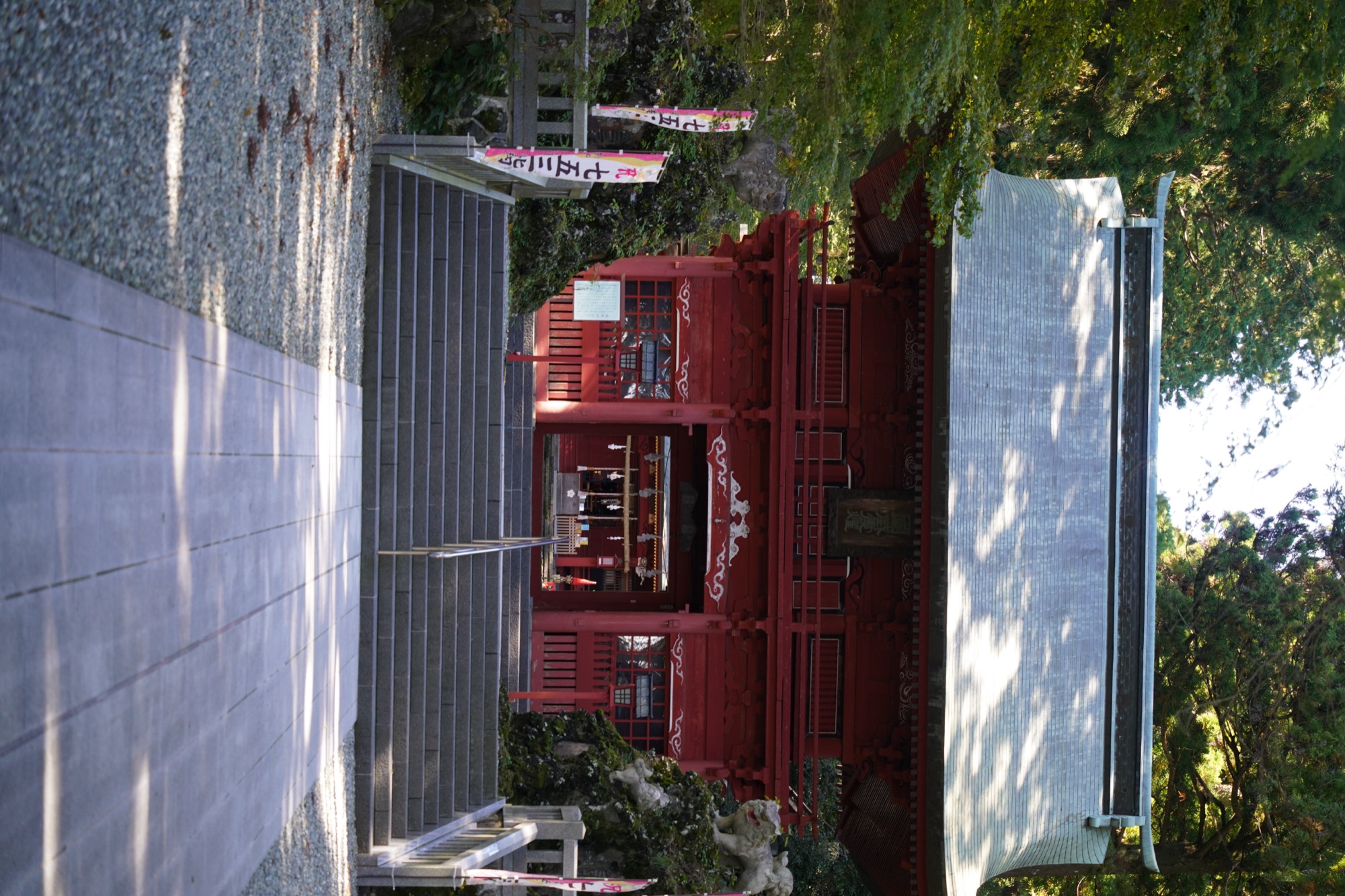
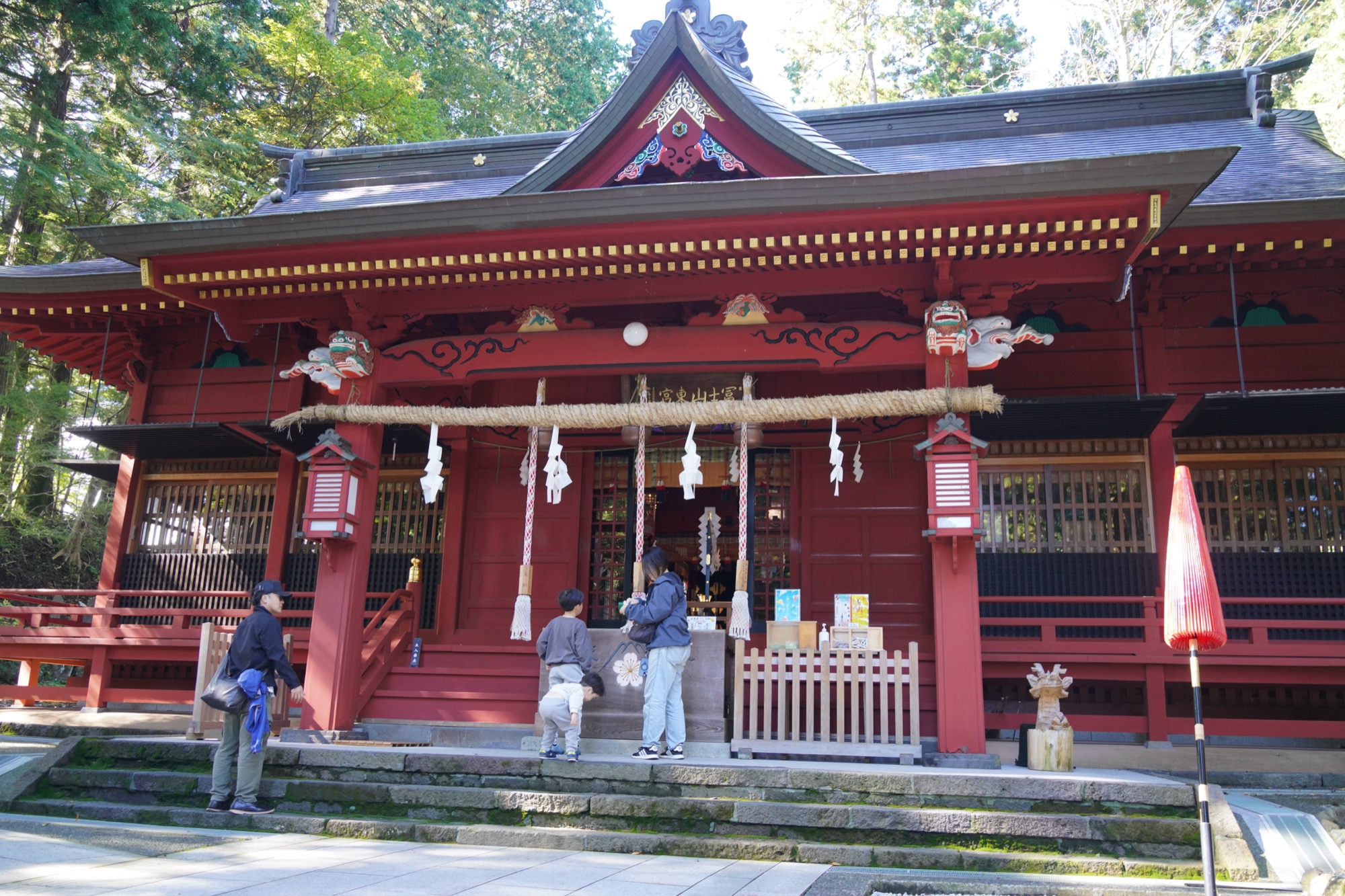
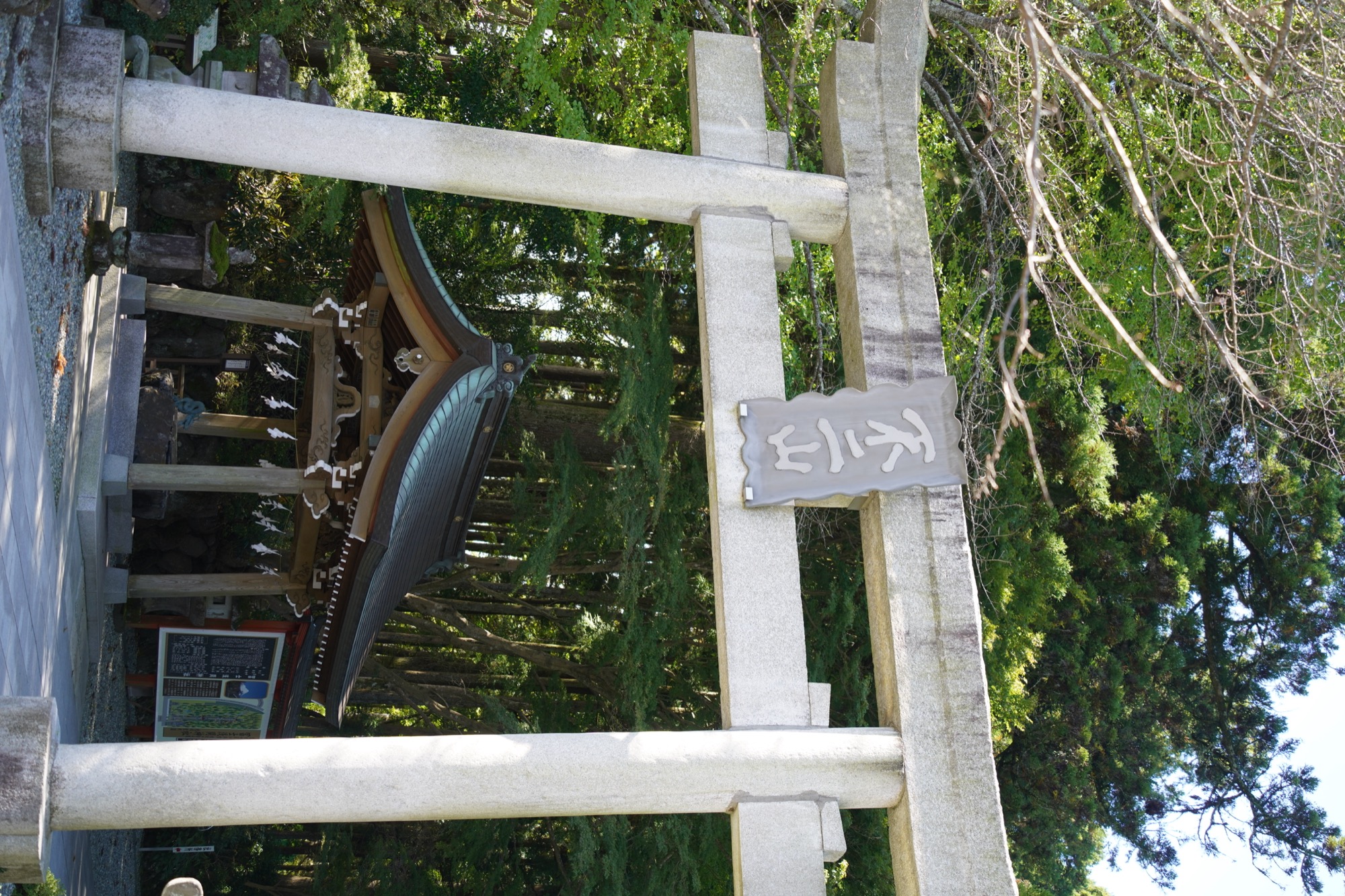
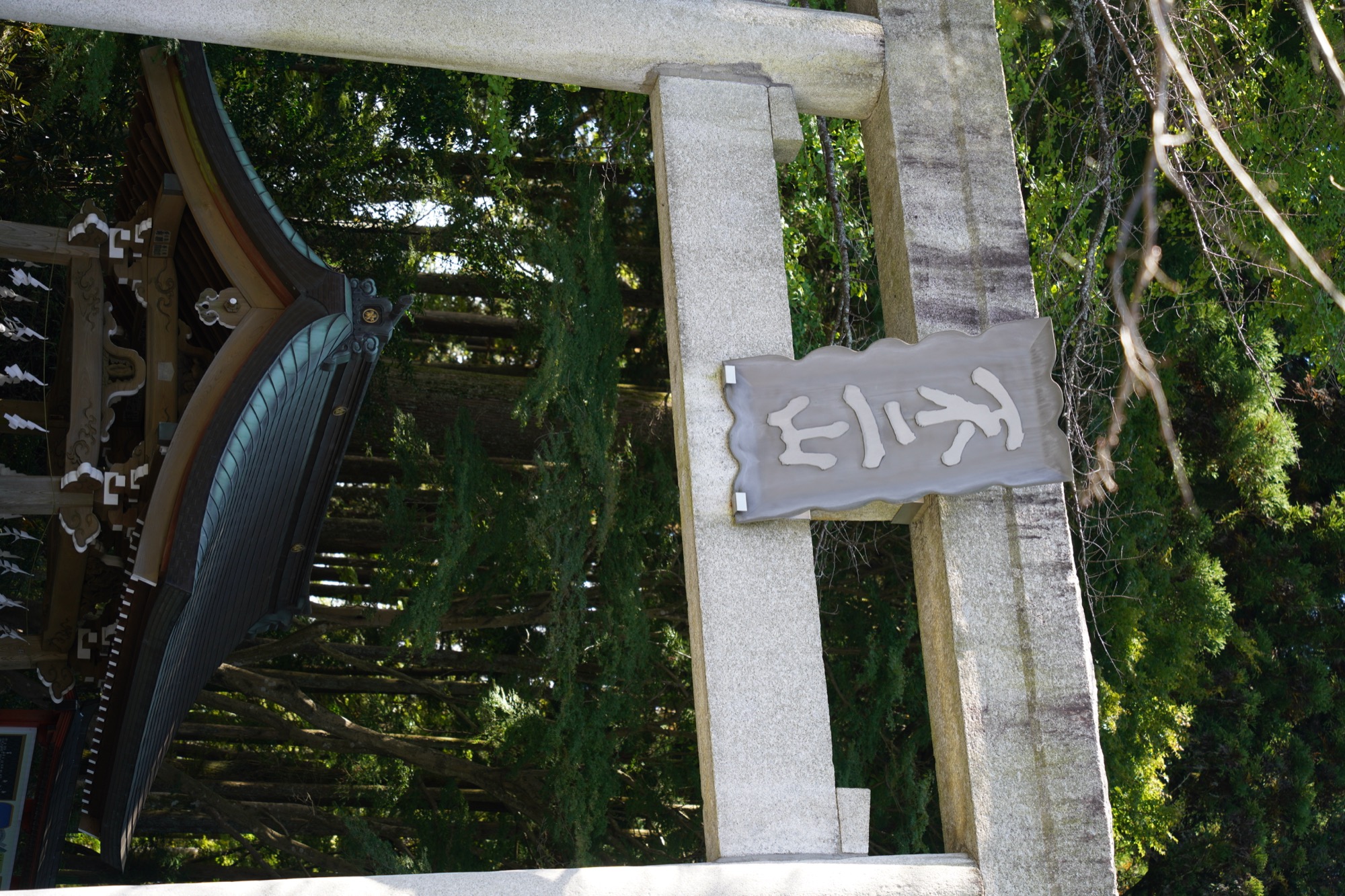
Higashiguchi Hongū Fuji Sengen Shrine, commonly called Subashiri Sengen Shrine, stands in Subashiri, Oyama, Sunto District, Shizuoka. As the start of the Subashiri trail up Mt. Fuji, it is the shrine of the eastern entrance that received pilgrims from Sagami and the Kantō region.
According to shrine tradition, it was founded in 802 (Enryaku 21). It is said to have begun with the enshrining of the deity to calm the eruptions of Mt. Fuji, and its main deity is Konohanasakuya-hime.
The Subashiri trail was a main entrance for worshippers from all over the Kantō region, gathering many pilgrims who came from the Sagami (Kanagawa) side over the Ashigara Pass. In the Sengoku period, under the Katsurayama family who ruled the area, a checkpoint aimed at Fuji pilgrims was also set up at Subashiri. For the descent there was the sunabashiri, a slope of sand and gravel that climbers ran straight down. The Subashiri trail joins the Yoshida trail at the eighth station.
A picture owned by the shrine, titled as the divine lineage of Mt. Fuji, first mountain of the three countries, and dated 1740 (Genbun 5), shows Konohanasakuya-hime wearing a crown and holding a sakaki branch and a jewel. In the medieval period the deity of Mt. Fuji was often said to be Kaguya-hime, and in the latter half of the Edo period it shifted to Konohanasakuya-hime. This picture is regarded as the earliest known example of Konohanasakuya-hime appearing as the deity of Mt. Fuji.
The Hōei eruption of 1707 (Hōei 4) dealt Subashiri village a devastating blow. Records say that during the eruption burning stones fell on the house of the village’s negi priest and set it on fire, the village burned, and more than one jō three shaku (about four metres) of sand fell in five days. The shogunate spent a special sum of more than 1,850 ryō on rebuilding Subashiri, which had suffered especially badly. For the shrine buildings, permission to raise funds in Edo was granted in 1715 (Shōtoku 5) with a letter of support from Ina Hanzaemon, and with further help from Ōkubo Dewa no Kami, lord of Odawara, the main hall, offering hall, worship hall, torii and other structures were newly built in 1742 (Kanpō 2). All the roofs were covered in copper.
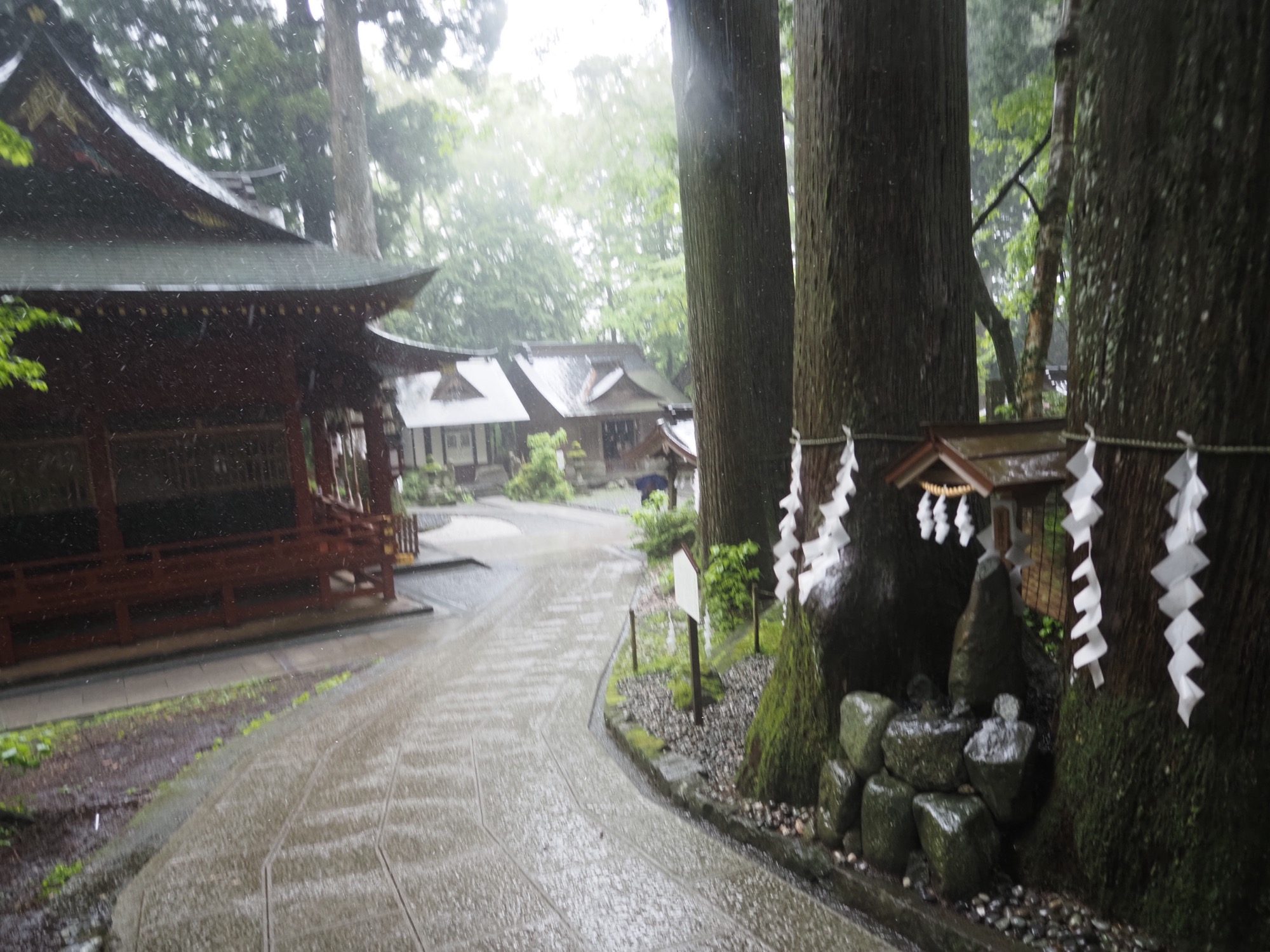
When Mt. Fuji was inscribed on the World Heritage list in 2013 as Fujisan: Sacred Place and Source of Artistic Inspiration, Higashiguchi Hongū Fuji Sengen Shrine was counted as one of its components. Large trees, such as the Japanese elm known as the Subashiri Sengen Harunire, stand in the precinct.
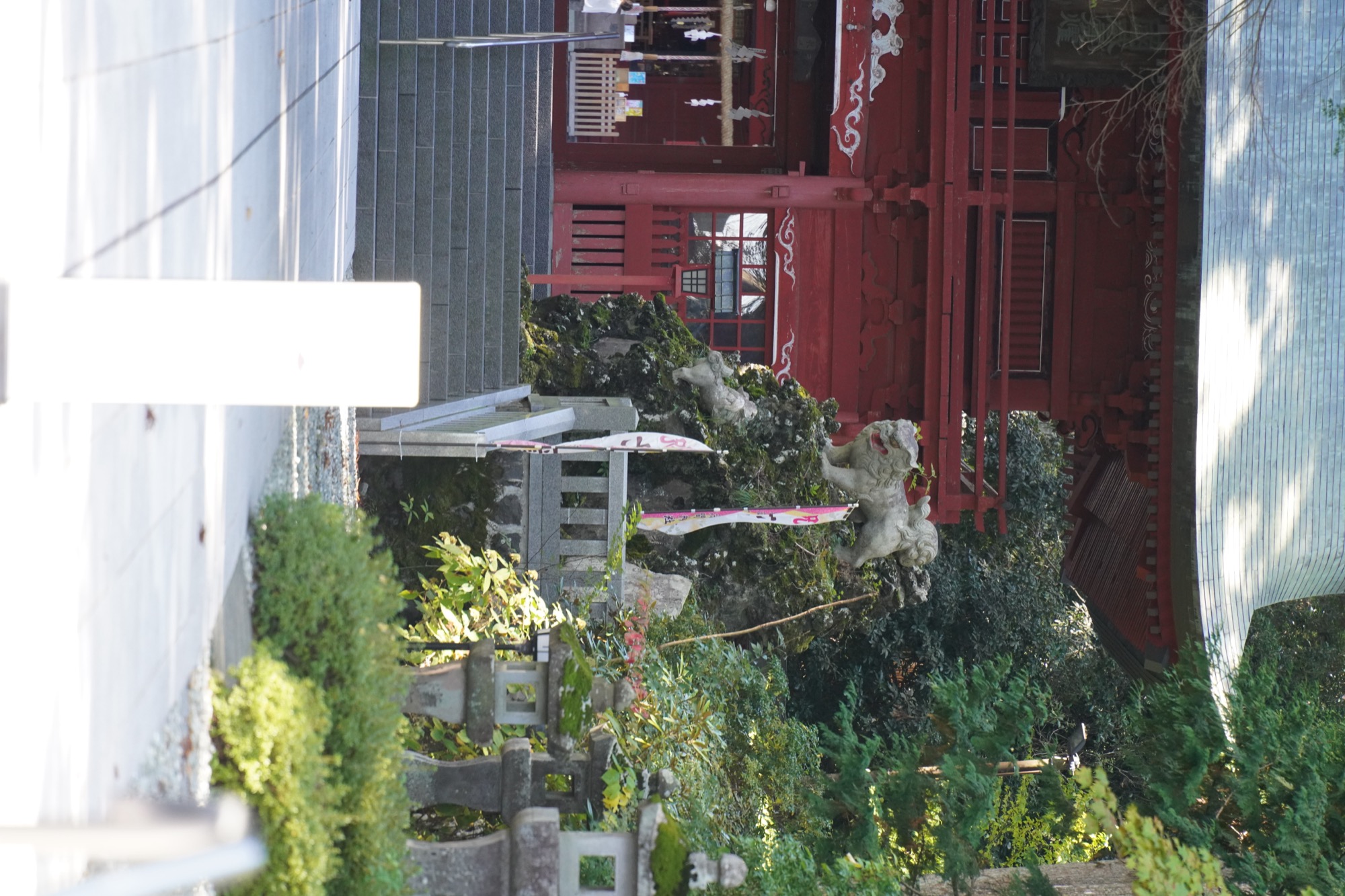
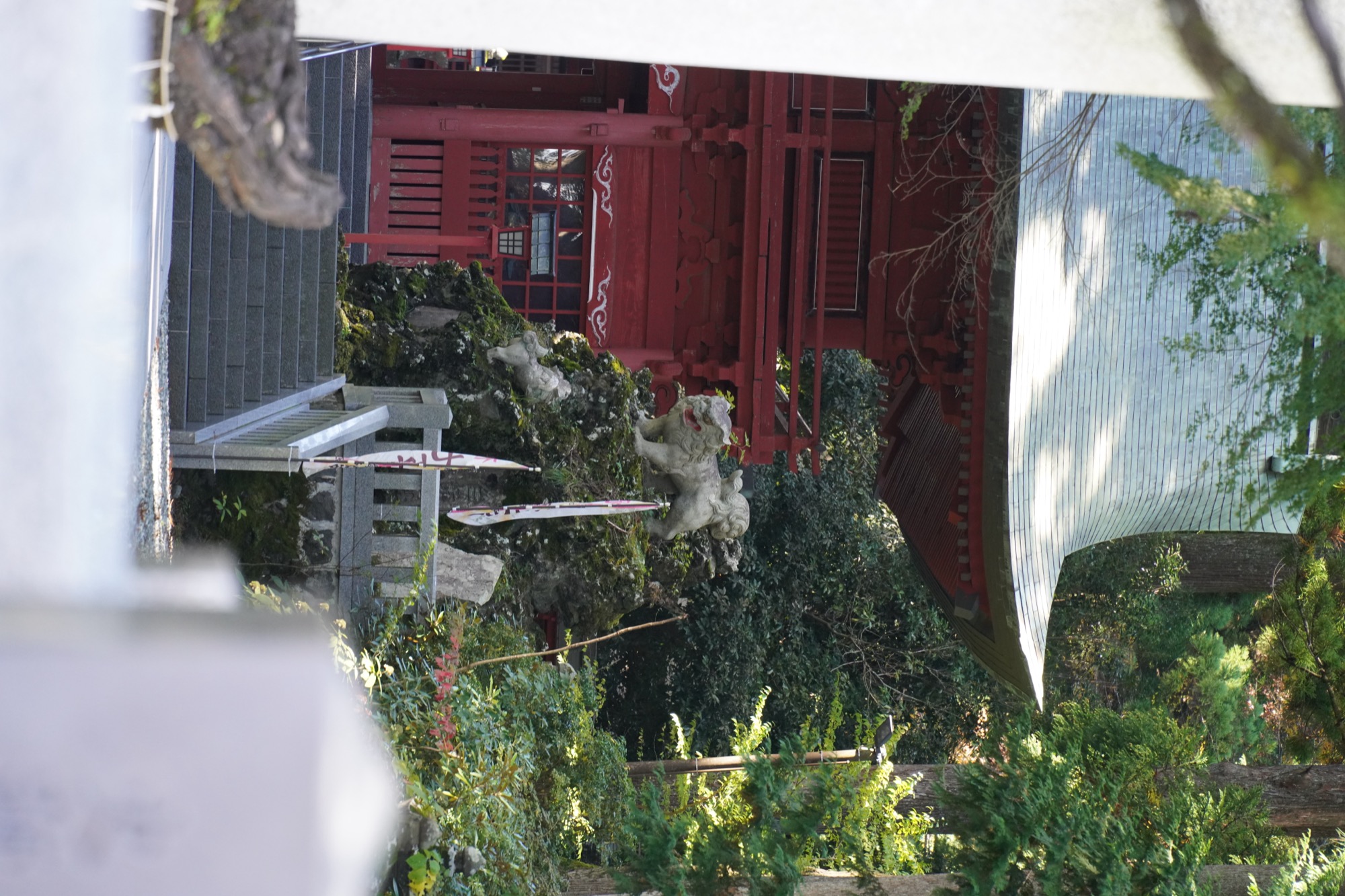
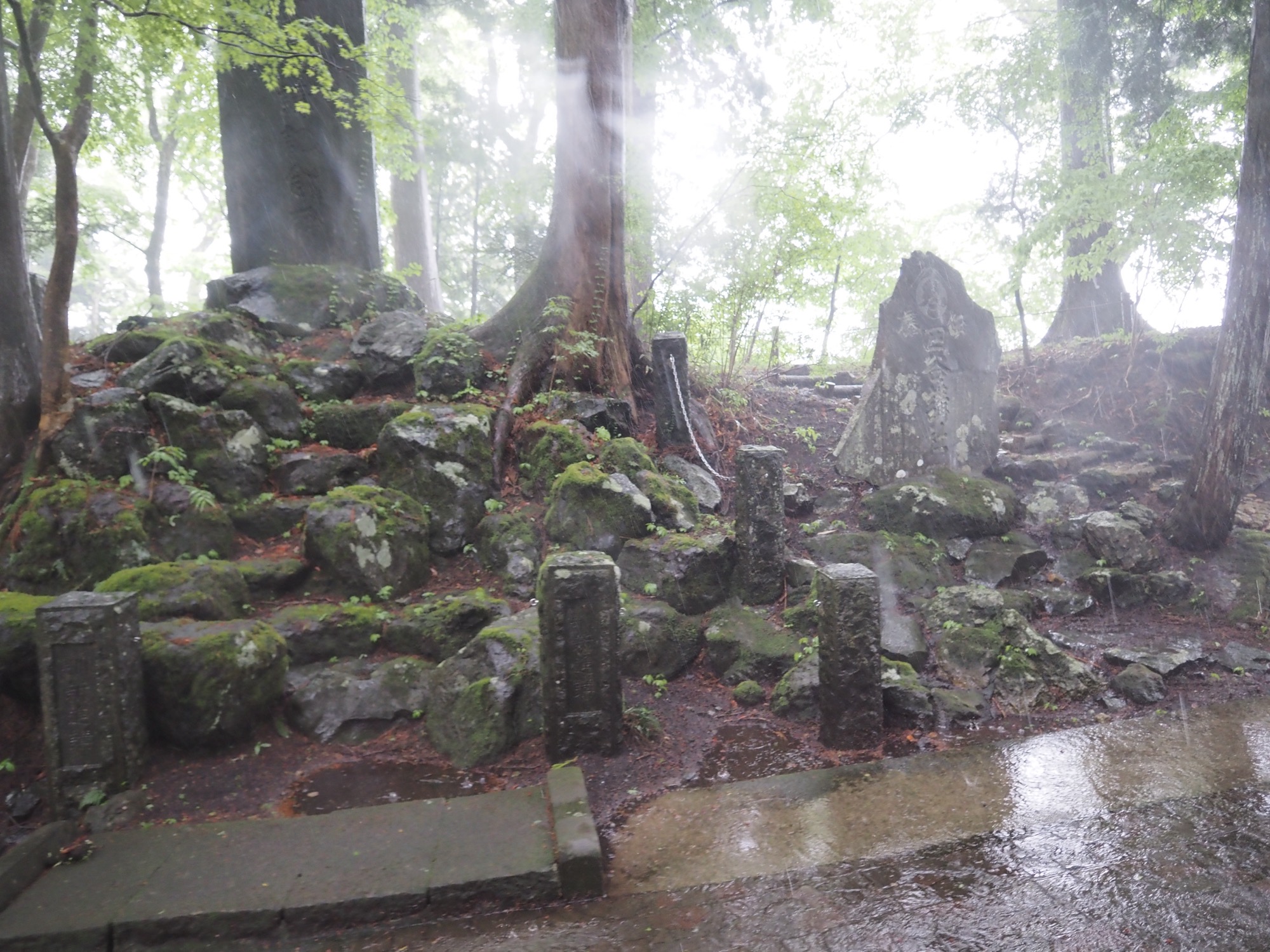
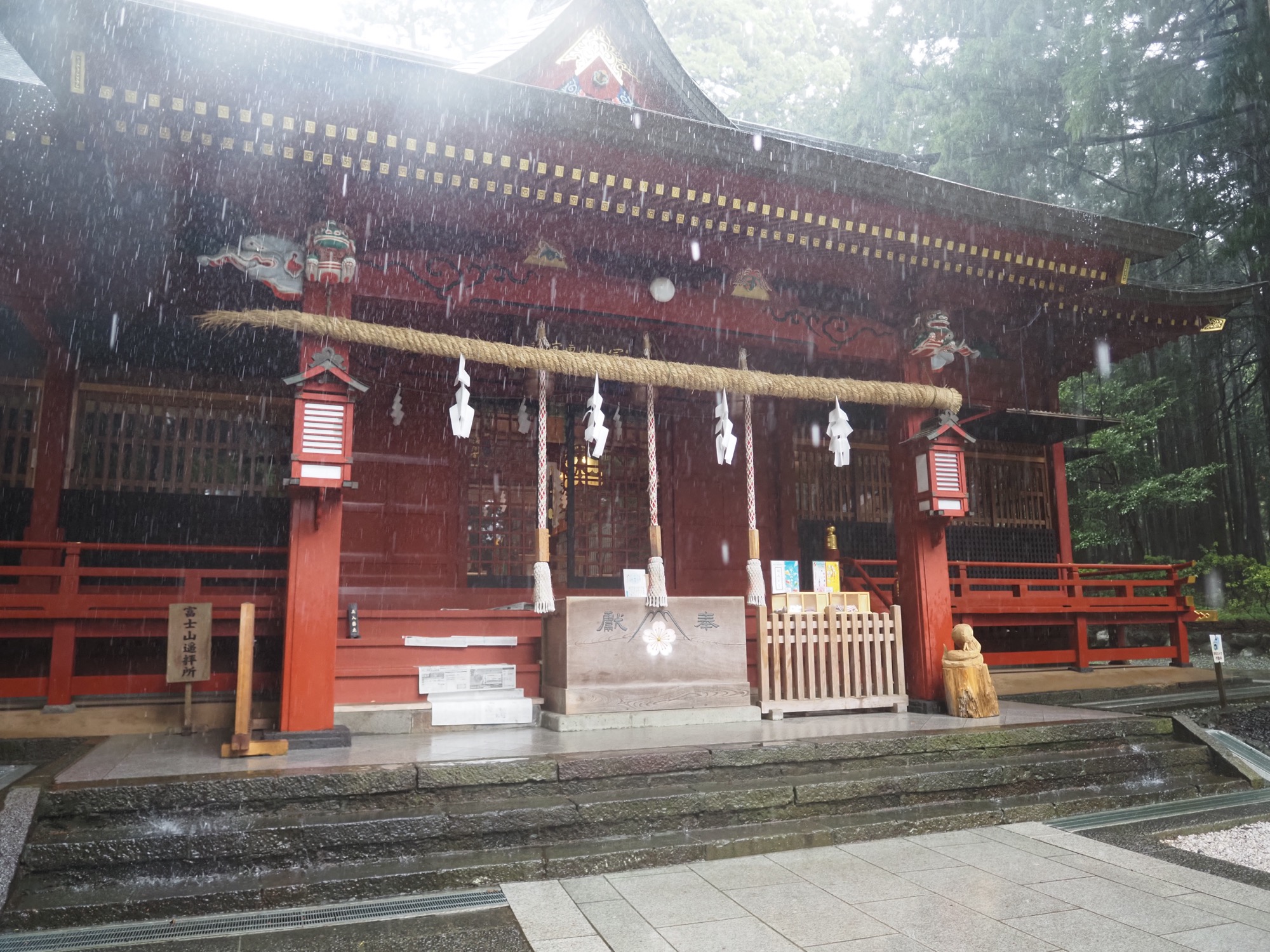
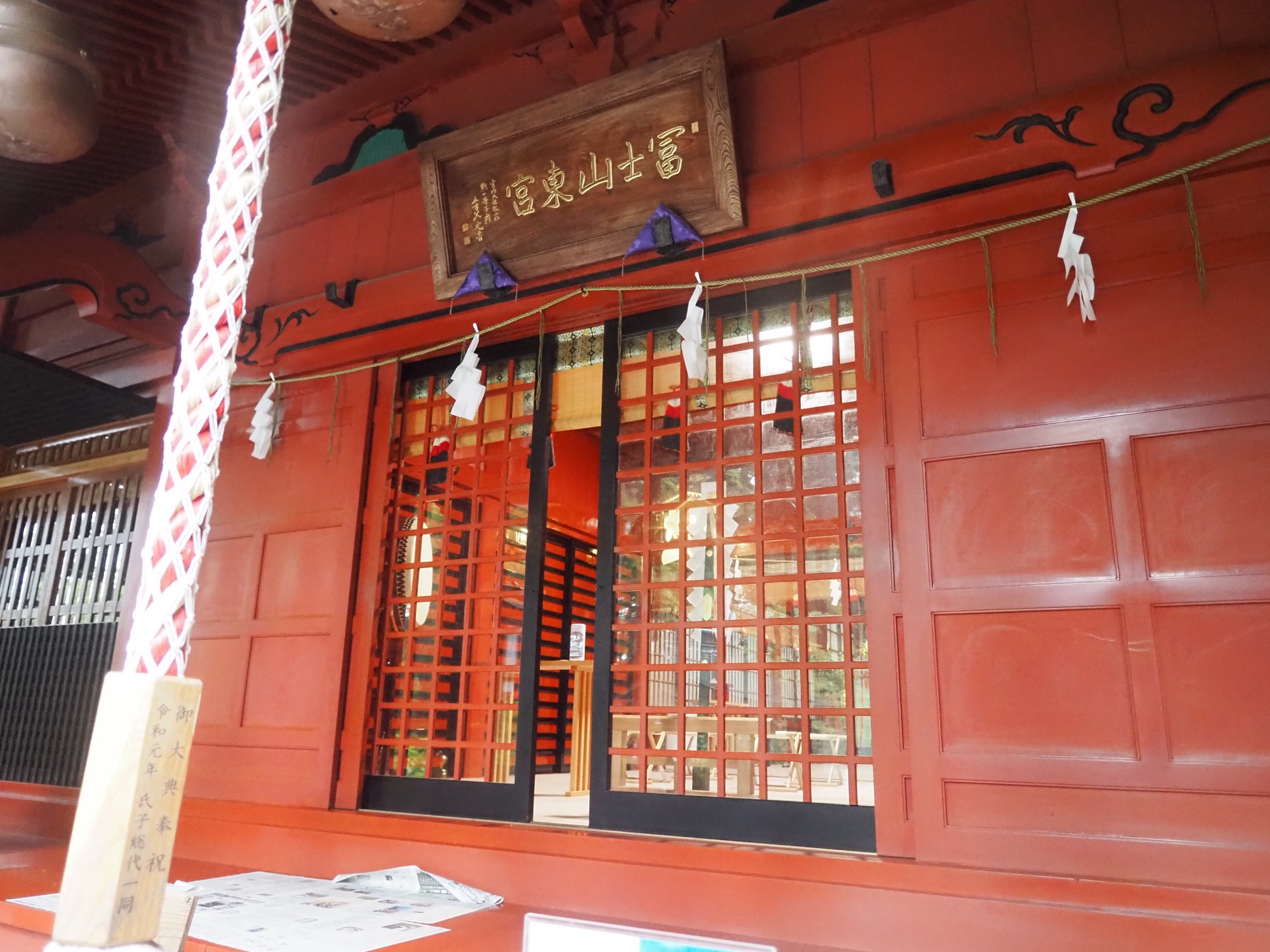
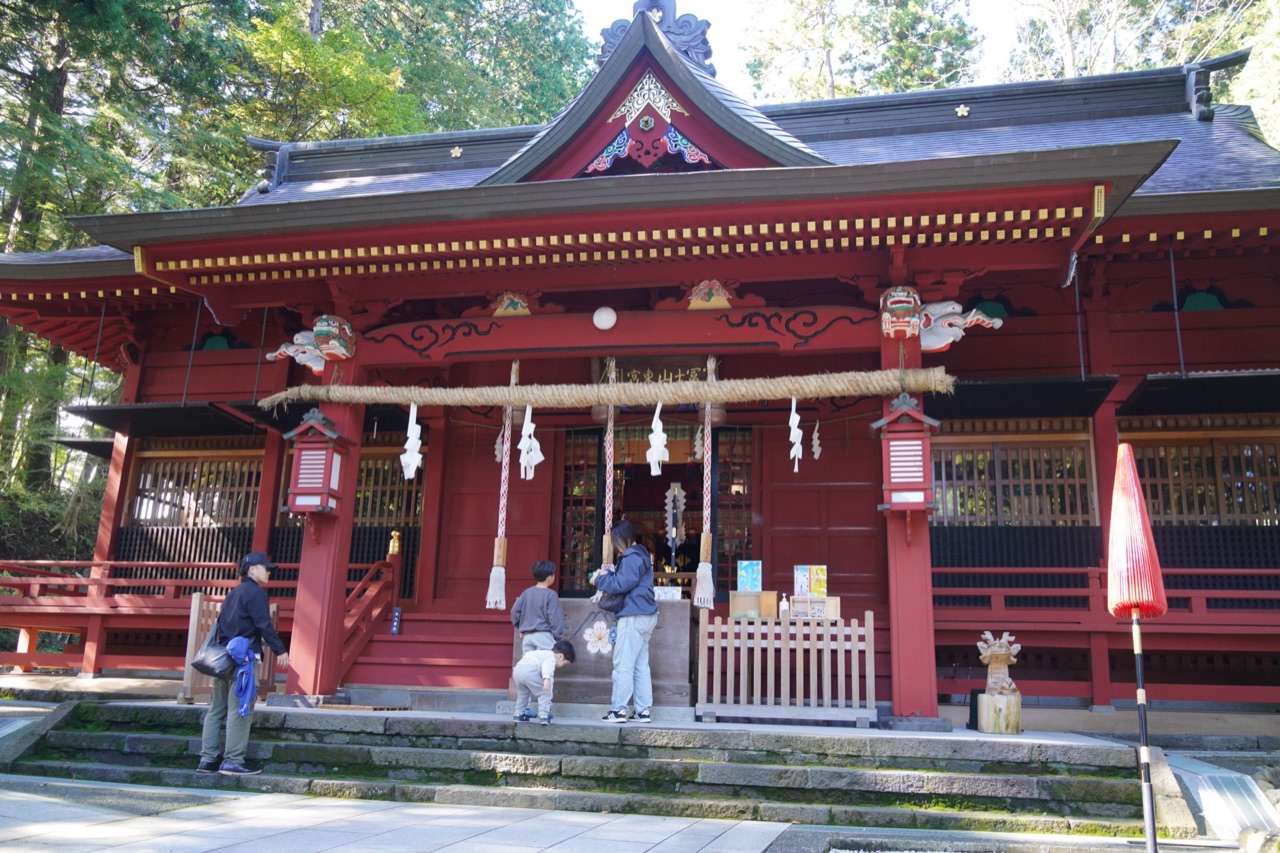
The photos show the vermilion worship hall under a clear autumn sky, the precinct misty with May rain, and the plaque reading “Fujisan Tōgū” seen through the sacred rope.