Fusō-kyō Original Shrine
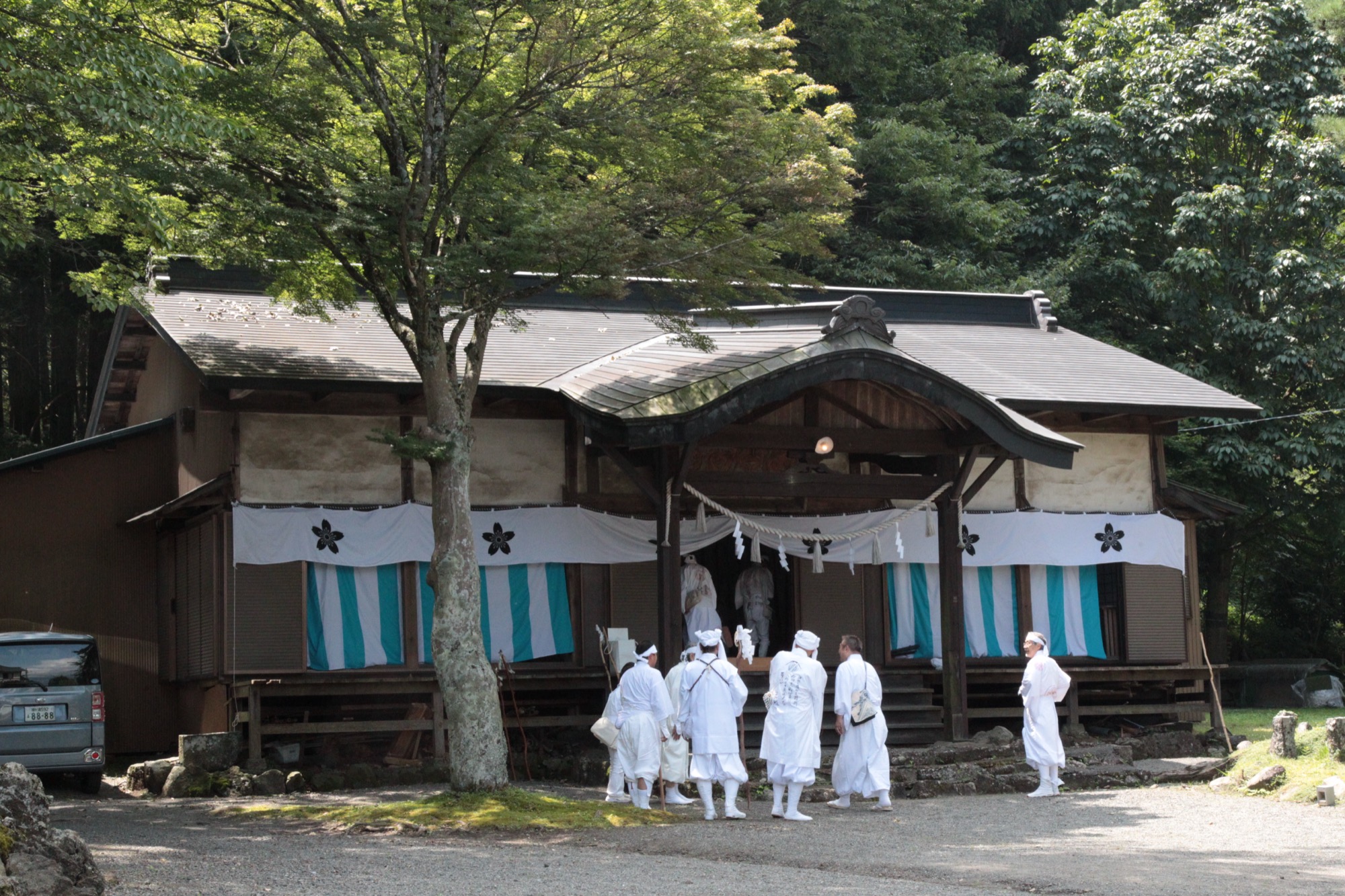
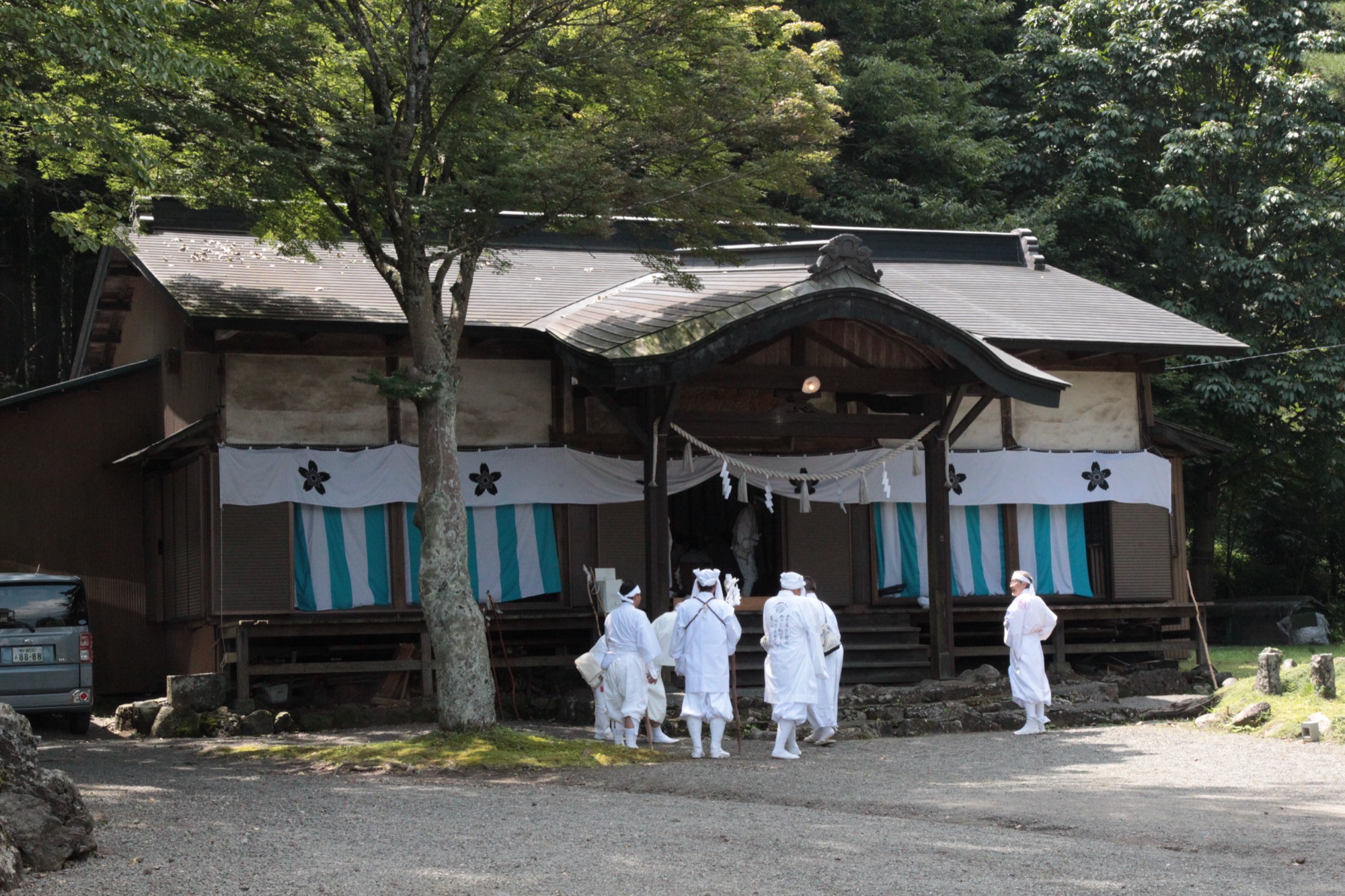
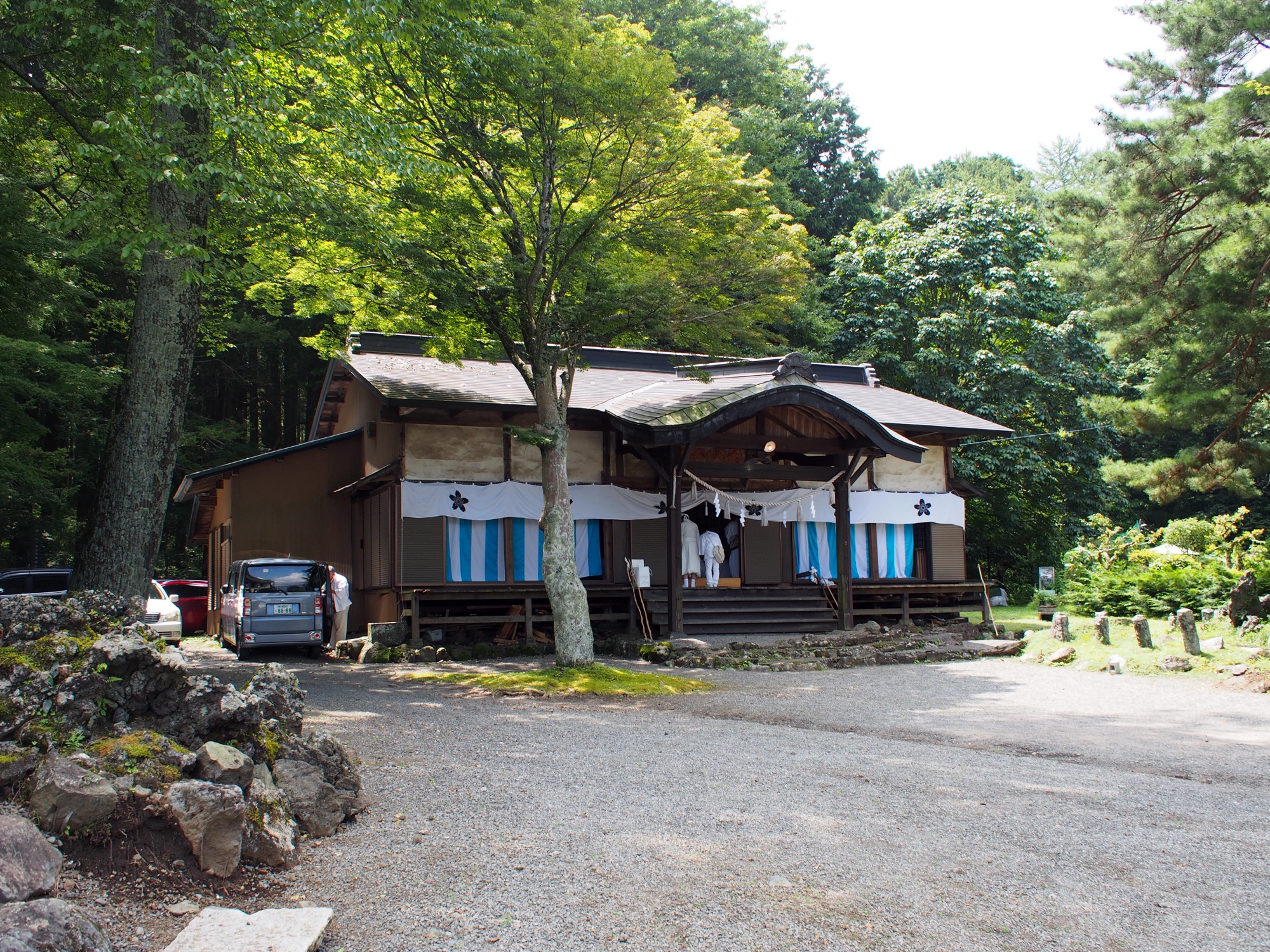
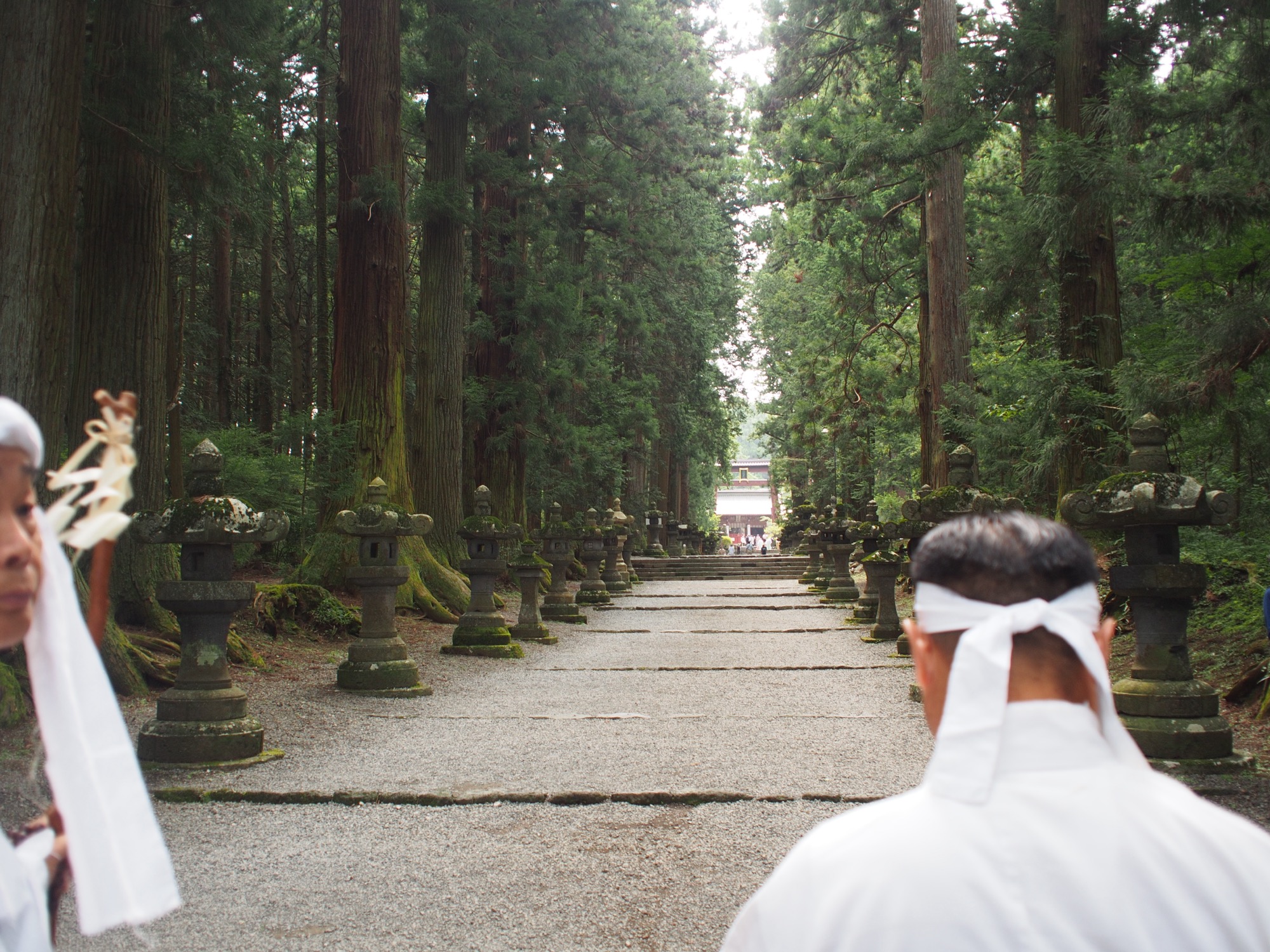
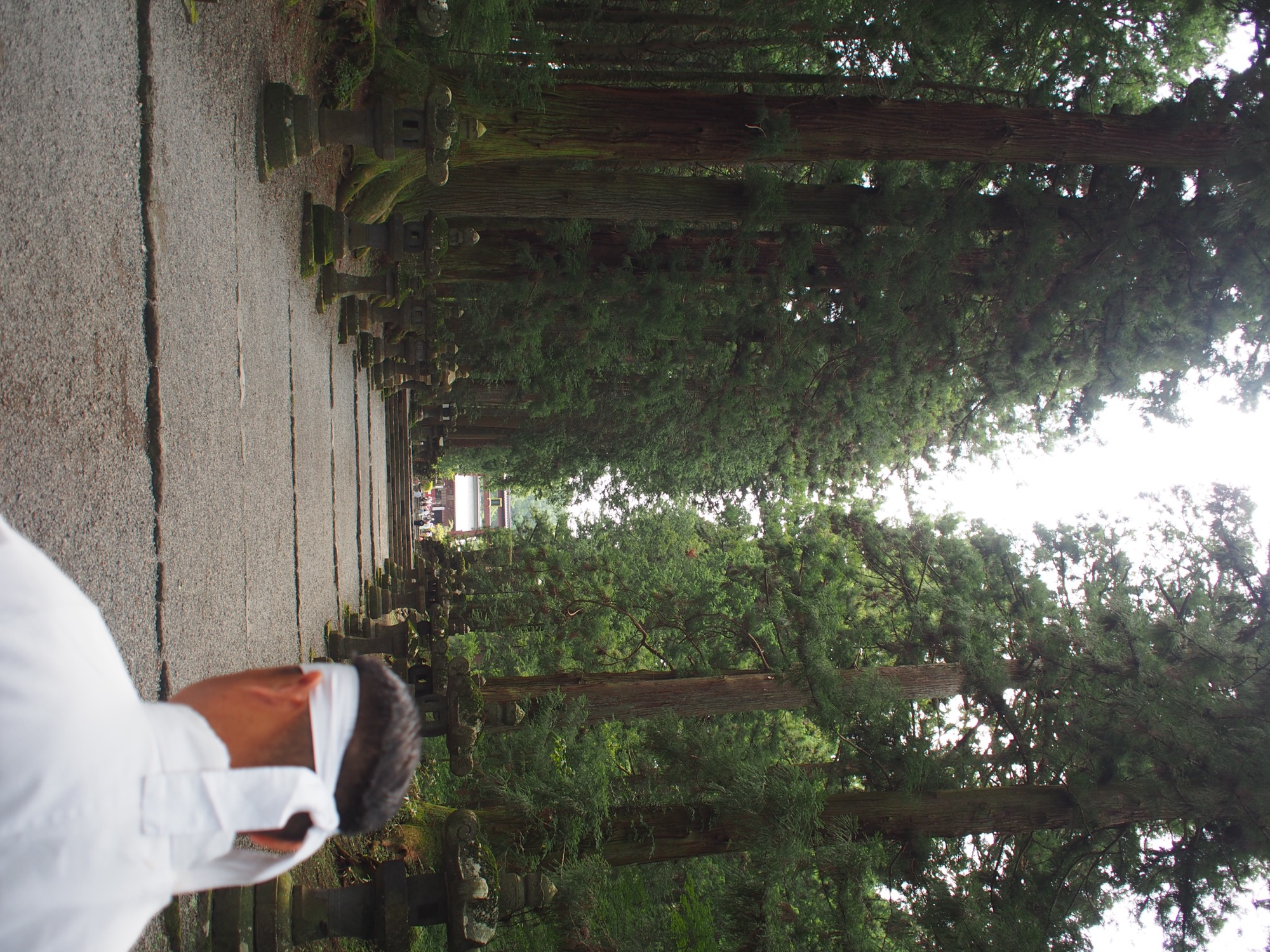
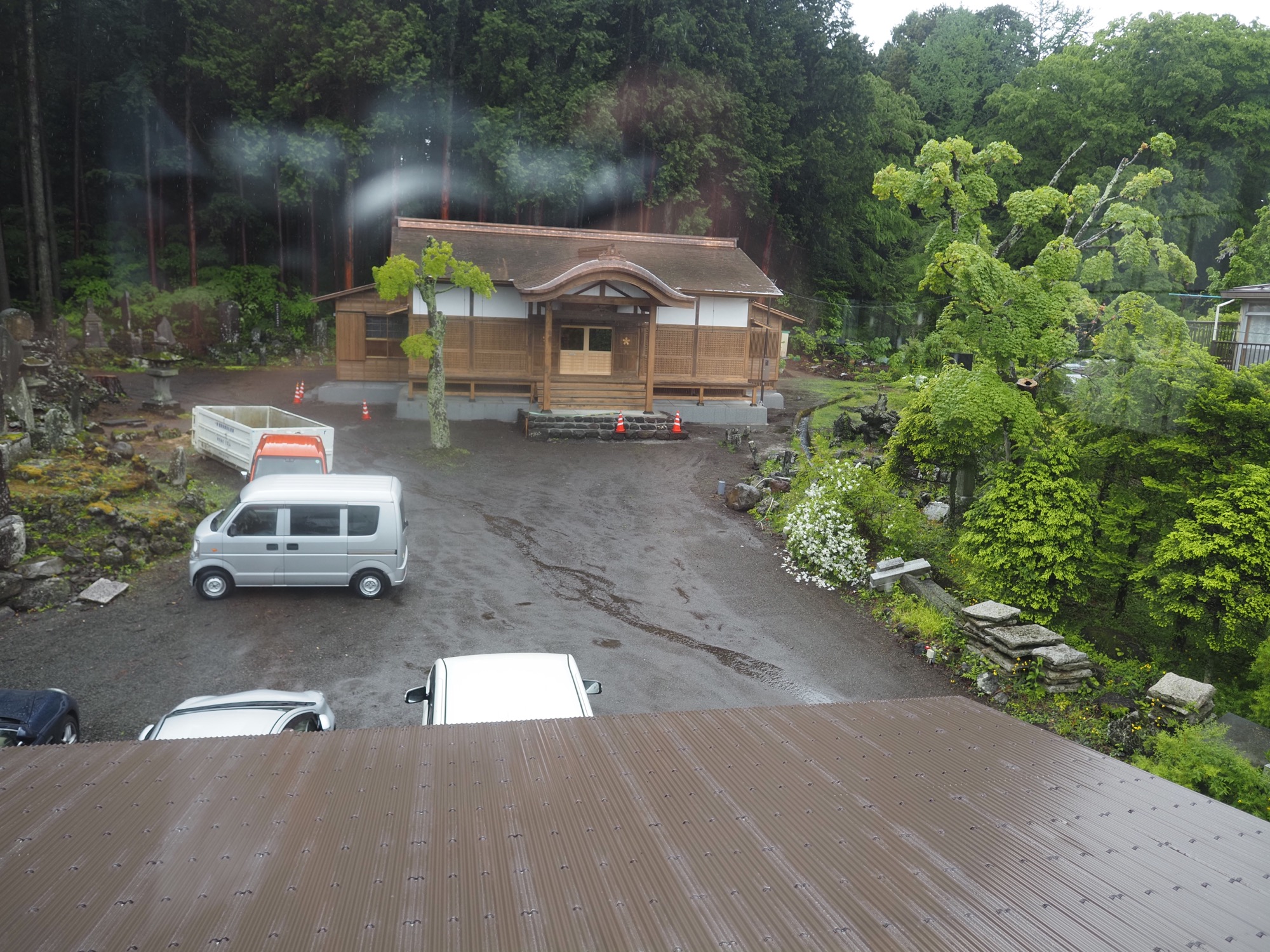
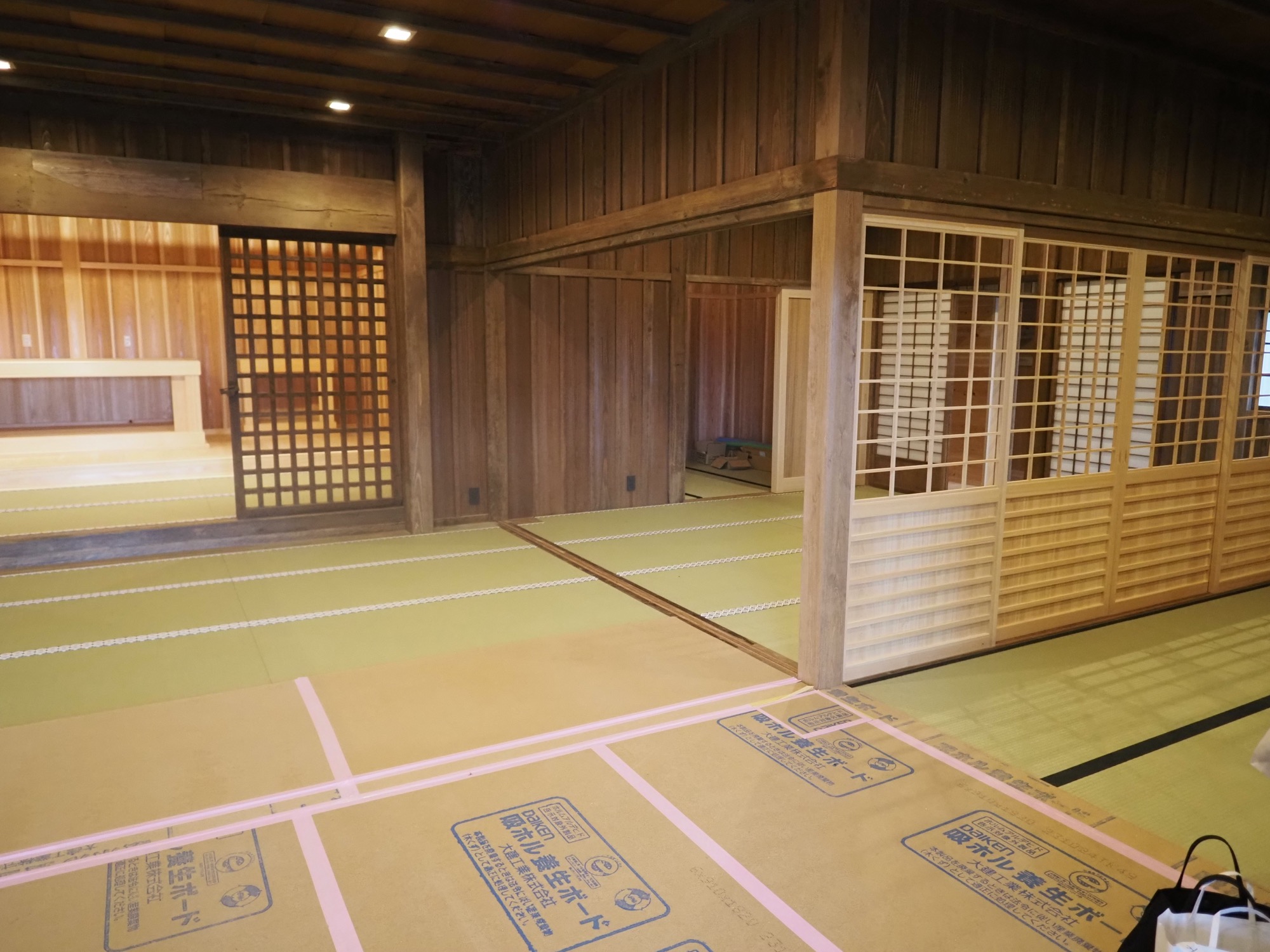
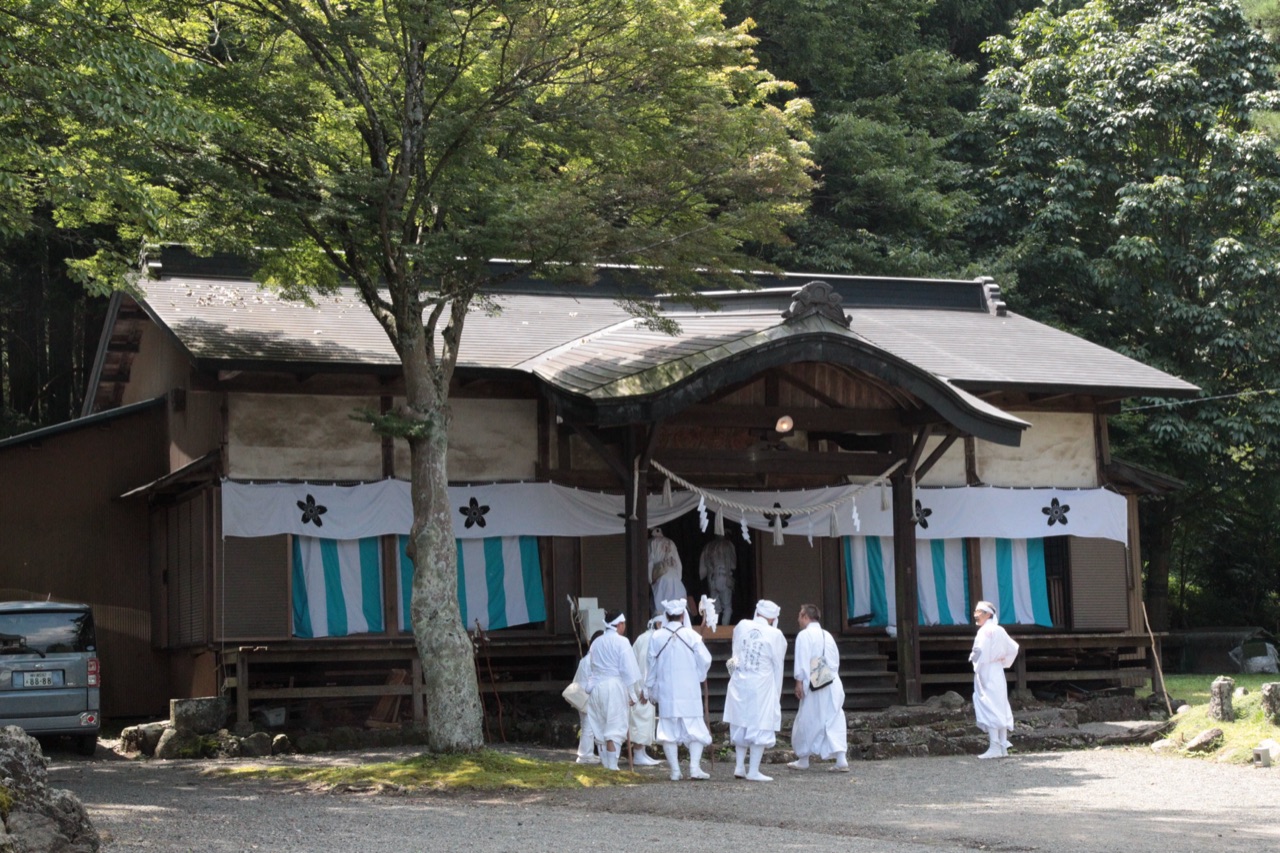
The Genshi, or original shrine, of Fusōkyō stands in Kamiyoshida, Fujiyoshida City. The photographs were taken during the Kankōsai festival in August: practitioners in white robes process along an avenue of cedars and attend the rites at the unpainted-timber sanctuary.
Fusōkyō is a religious body born of the unification of the Fuji-kō confraternities, which had been driven to the brink of extinction by the Meiji separation of Shinto and Buddhism and the suppression of folk religion. Organised in 1873 (Meiji 6) as the Fujisan Issan Kōsha, renamed the Fusō Kyōkai in 1875, it achieved independence as Fusōkyō in 1882 (Meiji 15), becoming one of the thirteen officially recognised sects of Shinto. Its role was to preserve and carry forward, within the framework of modern Shinto, the lineage of the Fuji-kō that had flourished in the Edo period from its founder Hasegawa Kakugyō.
The founder, Shishino Nakaba, was a samurai of the Satsuma domain who studied under the nativist scholar Hirata Kanetane. After the hereditary priesthood of the Fuji Ōmiyaji family — the Fuji clan — was abolished in 1871, Shishino was appointed in 1873 as the first chief priest of Fujisan Hongū Sengen Taisha, concurrently serving the shrines at the Yoshida, Subashiri, Suyama, and Murayama trailheads. In 1874 he removed the Buddhist images from the Dainichidō hall on the summit and converted it into the Okumiya enshrining the deity Asama; he also secured the renaming of the mountain’s Buddhist place-names, such as Yakushigatake to Kusushidake. He was the central figure in the Meiji transformation of Fuji’s religious landscape into a Shinto one. In 1876 (Meiji 9) he leased one hundred tsubo of land beside the Kinmeisui spring on the summit from Sengen Taisha and built the Tenpaisho, a place of worship to the deities of creation — the origin of Fusōkyō’s primal sanctuary on the mountain, from which the Genshi derives.
The white robes and the chant of rokkon shōjō that sustained the Fuji confraternities for centuries live on in the rites of this body. In the line of practitioners moving along the cedar-lined approach, one sees the continuity of Fuji worship from Edo into the present day.