Fuji Omuro Sengen Shrine
Fuji Omuro Sengen Shrine stands in Katsuyama, Fujikawaguchiko, Minamitsuru District, Yamanashi. Local people know it fondly as Omuro-sama.
The main shrine stood at the second station of Mt. Fuji (about 1,700 metres above sea level), halfway up the Yoshida trail, and was called the oldest shrine on the mountain. It is regarded as the first Sengen shrine established on Mt. Fuji, after the eruption of 864 (Jōgan 6), and one theory holds that the shrine built in 865 (Jōgan 7) to calm the eruption was this one. According to the Kai Kokushi, the Kitaguchi Hongu Fuji Sengen Shrine in the Suwa forest was called the lower Sengen and the Omuro on the mountain the upper Sengen, because the two were originally the same shrine. Beside the main shrine at the second station there was once also a small shrine to Yamato Takeru, and a statue of him dated 1189 (Bunji 5) is said to have stood there. The village shrine is at Katsuyama on the shore of Lake Kawaguchi, and it has been worshipped together with the main shrine on the mountain.
Successive lords revered the shrine. In the Muromachi period a lay monk of the Kobayashi family donated shrine land, and in 1508 (Eishō 5) another Kobayashi lay monk travelled the provinces to raise funds for building work. The Takeda and Oyamada families also protected the shrine. Best known is the written prayer of Takeda Shingen. In the eleventh month of 1557 (Kōji 3) he prayed for a safe birth for his daughter, who had married Hōjō Ujimasa, and wrote that if she gave birth safely and lived long in good health, he would “remove the barrier of the Funatsu checkpoint for ever”, a vow to abolish the checkpoint at Funatsu (in today’s Fujikawaguchiko).
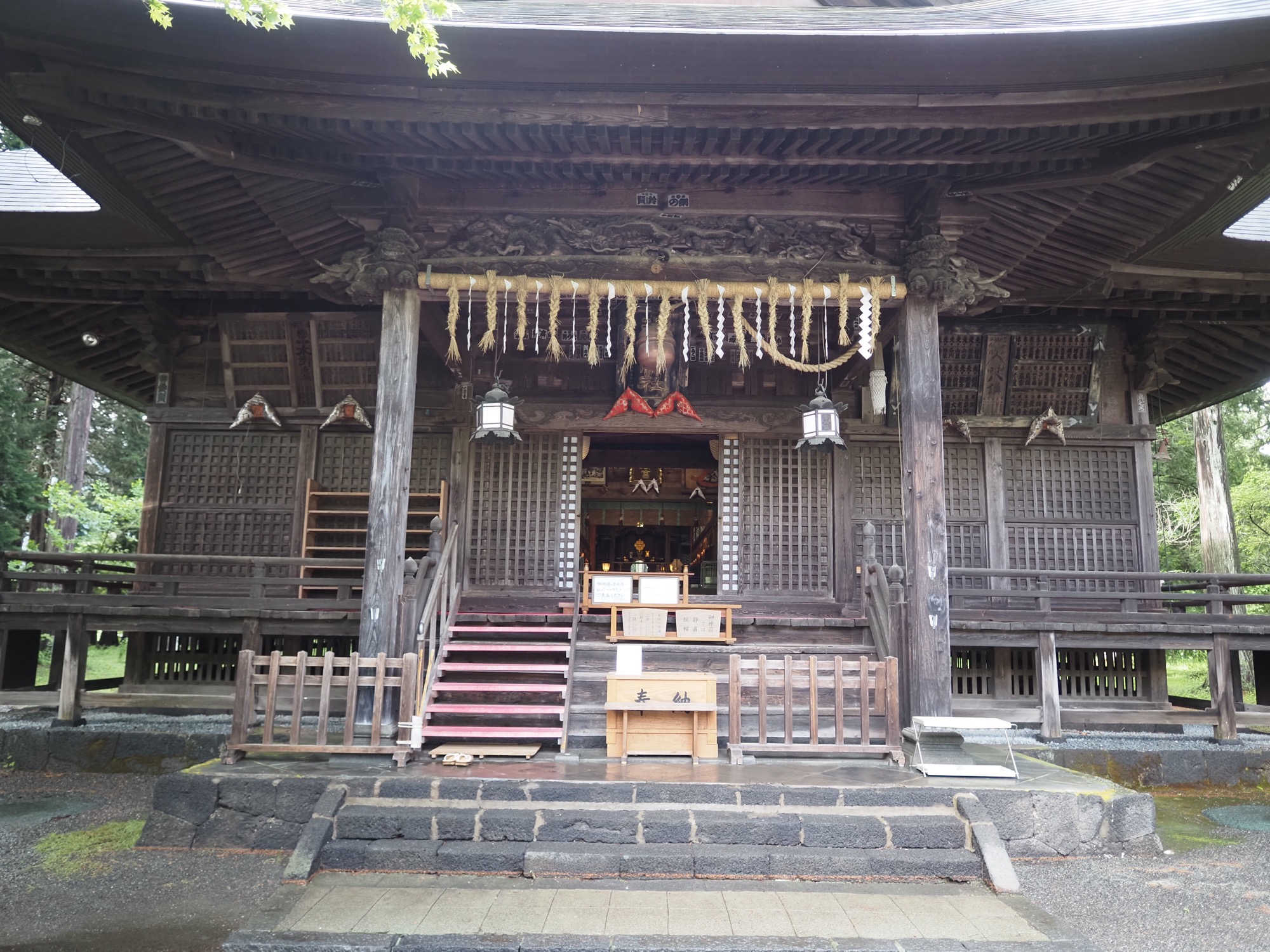
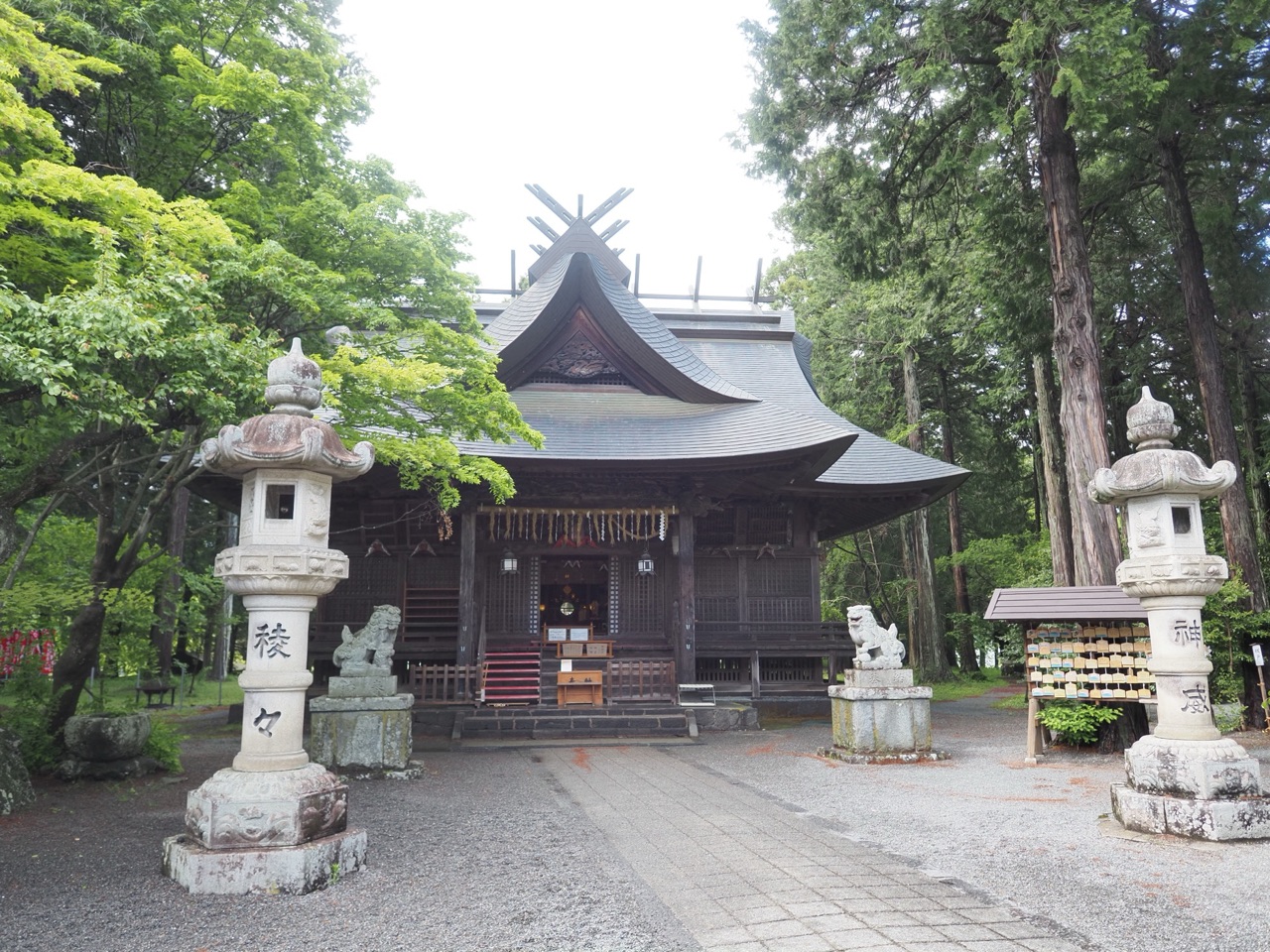
The surviving ridge tags show that the main shrine building was put up in 1612 (Keichō 17) at the wish of Torii Tosa no Kami Naritsugu, lord of Gunnai. The building has the features of the Momoyama period and is designated an Important Cultural Property. To prevent damage from the harsh mountain climate, it was moved to the precinct of the village shrine at Katsuyama in 1974 (Shōwa 49).
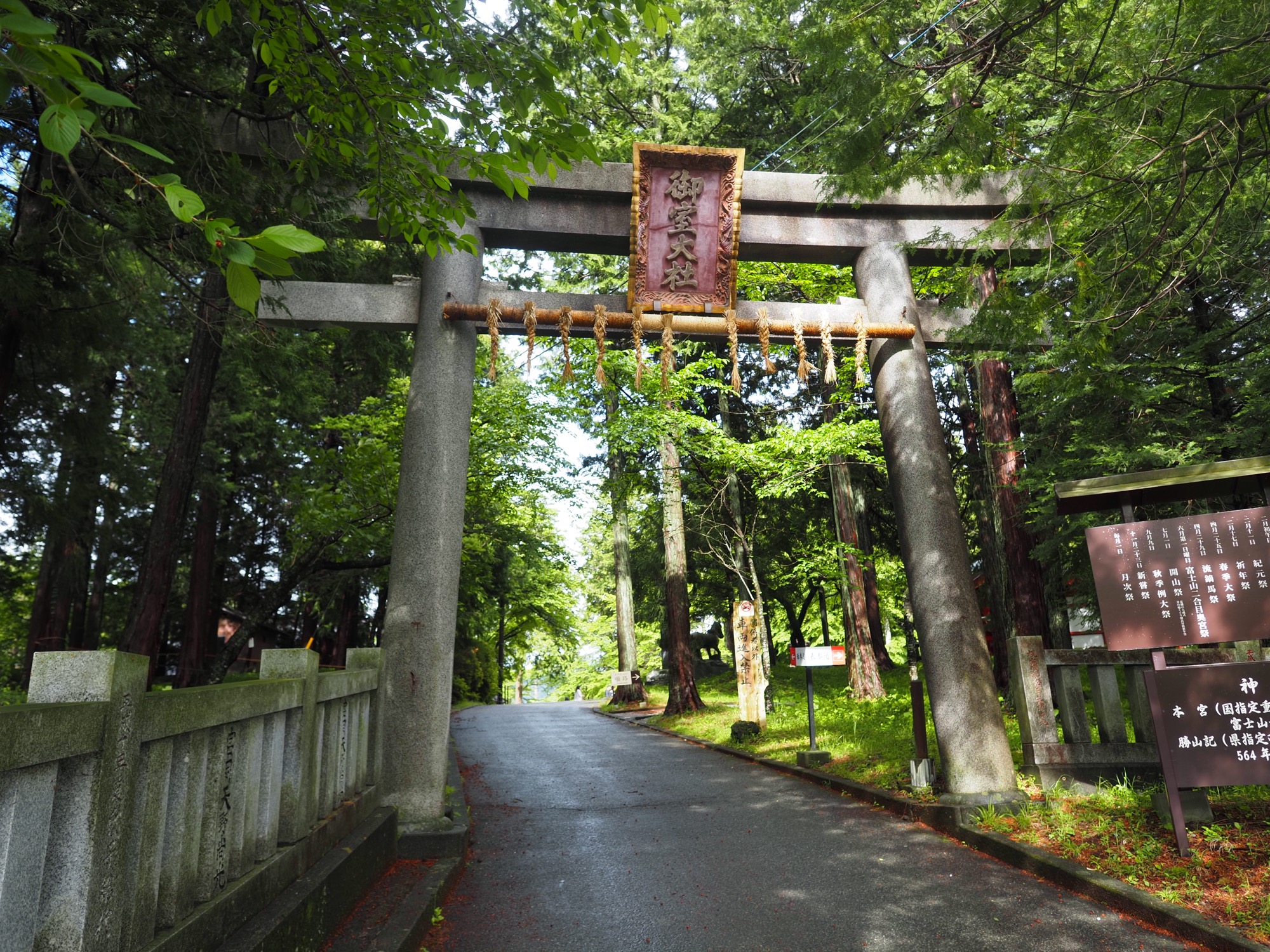
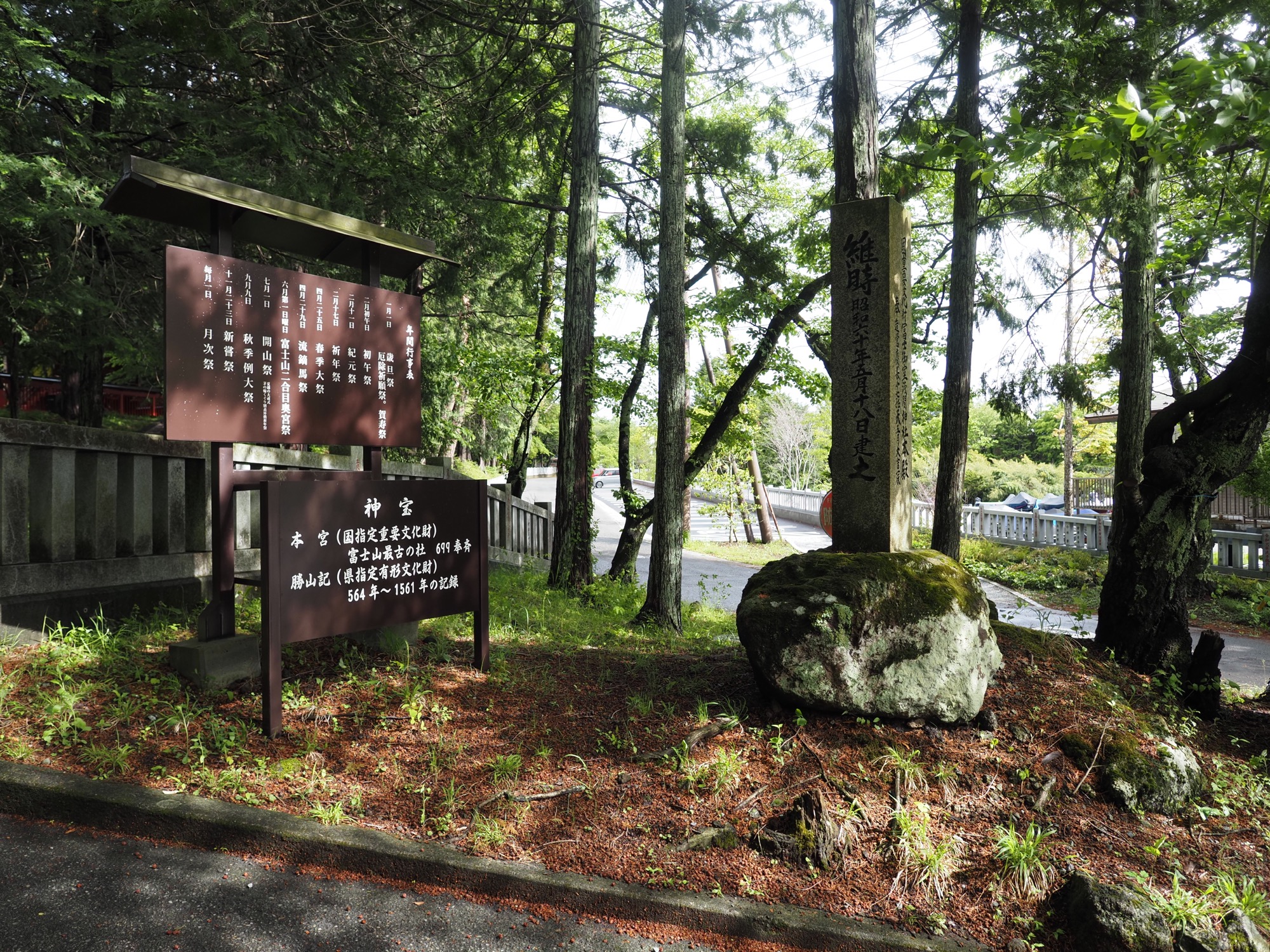
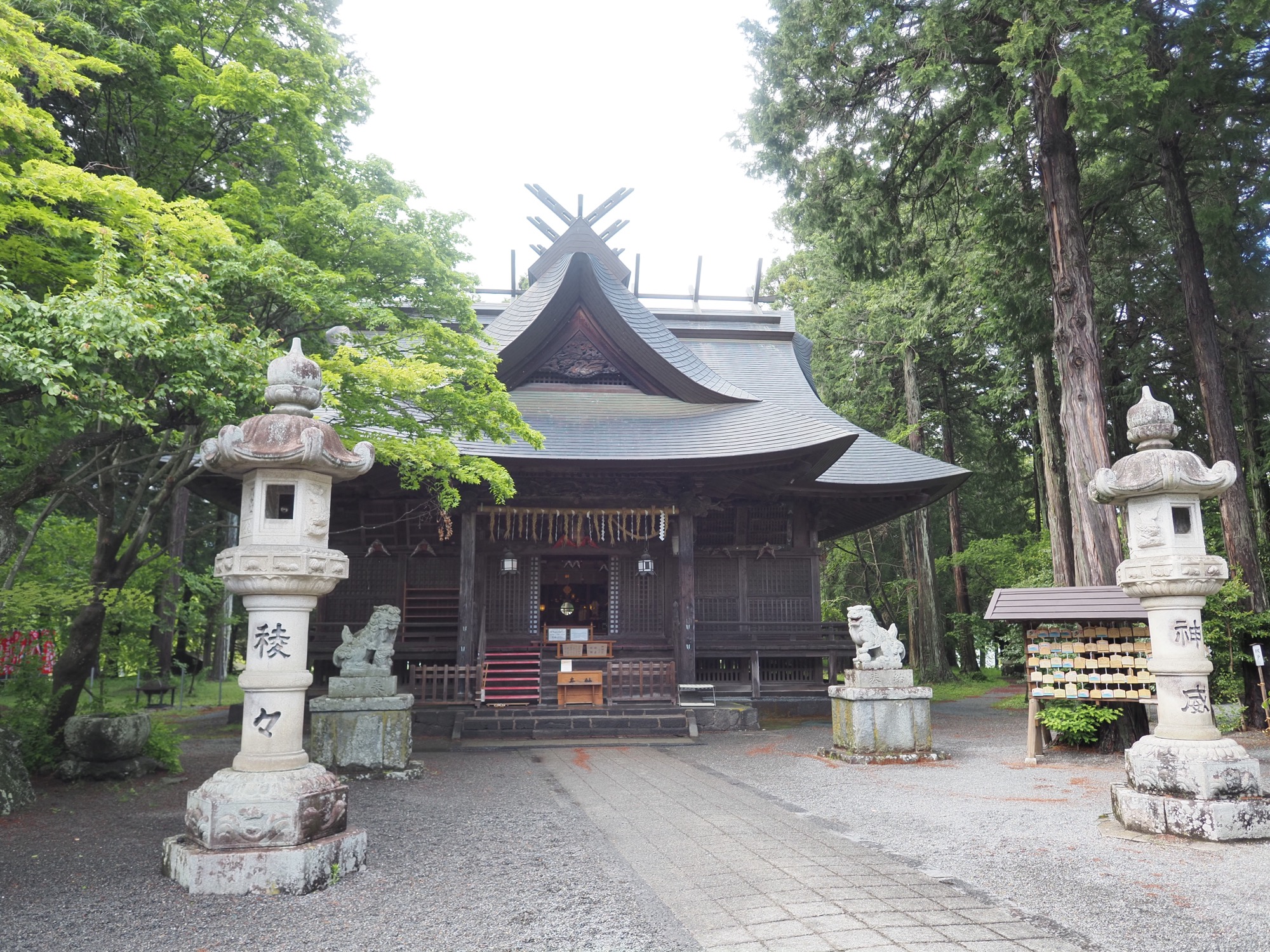
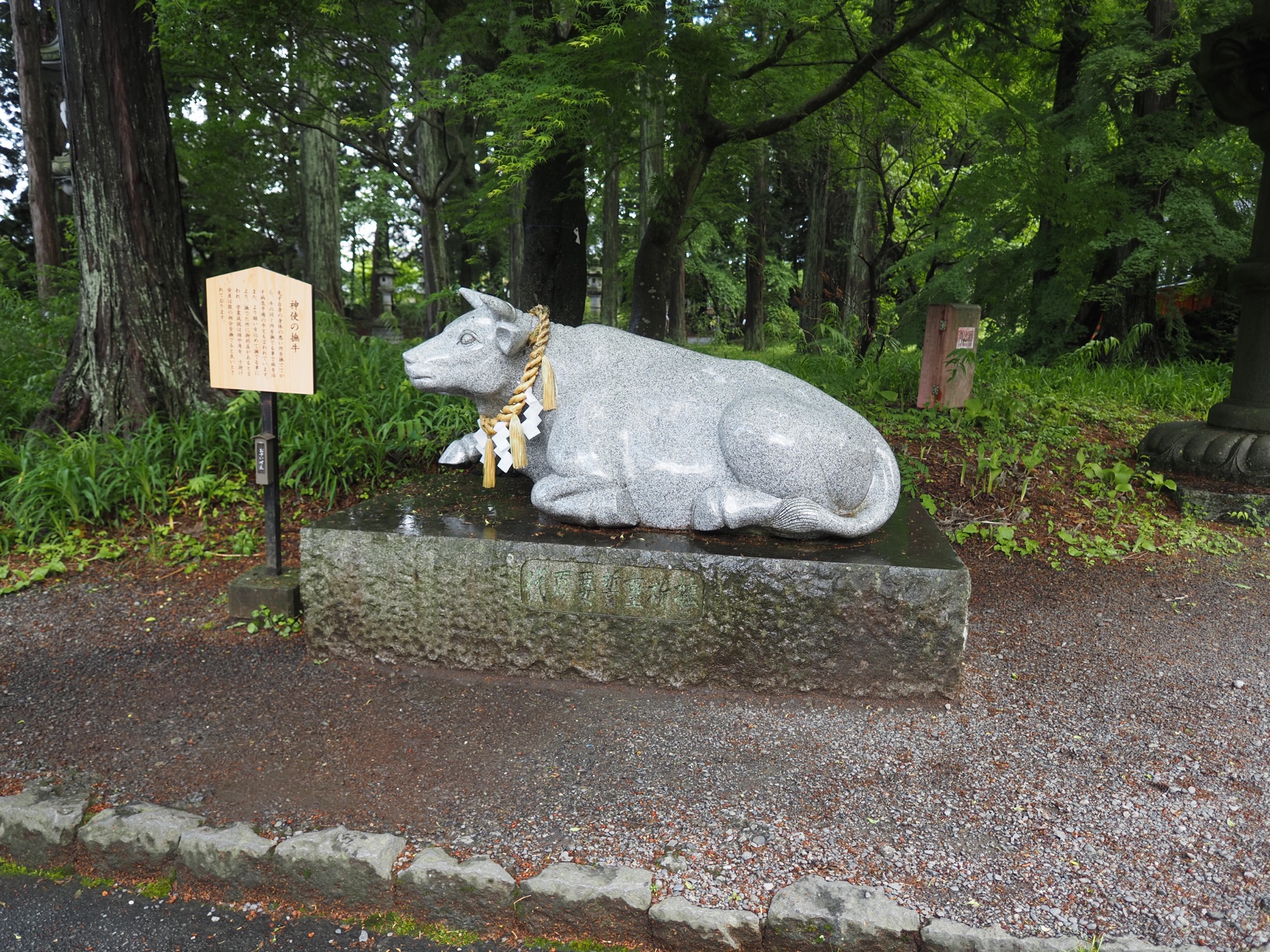
When Mt. Fuji was inscribed on the World Heritage list in 2013 as Fujisan: Sacred Place and Source of Artistic Inspiration, Fuji Omuro Sengen Shrine was counted as one of its components. The photos show the precinct in fresh green, the great torii at the entrance to the approach, the relocated main hall of the mountain shrine, the main hall of the village shrine, and a stone statue of the sacred ox.