Komuro Sengen Shrine (Shimomiya Sengen)
Komuro Sengen Shrine stands in Shimoyoshida, Fujiyoshida. It was formerly called Shimomiya Sengen Myōjin and has long been known affectionately as Shimomiya Sengen.
According to shrine tradition it was established in 807 (Daidō 2). Its deity is Konohanasakuya-hime. It was originally the tutelary deity (ubusunagami) of the three villages of Kamiyoshida, Shimoyoshida and Matsuyama, but later, as each village set up a guardian deity of its own, it is said to have become the guardian deity of Shimoyoshida alone.
By the Edo period at the latest it was regarded as the guardian shrine of nearby Gekkōji, and at festivals such as the yabusame, monks of Gekkōji, its bettō temple, recited sutras before the deity. In 1868 (Meiji 1) a boundary dispute broke out after the Gekkōji side cut down the shrine’s woods, and records show the officials of Shimoyoshida village taking the shrine’s side.
The shrine’s great feature is the yabusame rite held at its annual festival in September. Along with prayers for the realm, the success or failure of the shots foretells the year’s fortunes, and the way the horses’ hooves leave their prints foretells fires. The rite was originally performed with four sacred horses, but after the Meiji Restoration the rule on numbers was lost and accidents occurred, so in 1884 (Meiji 17) a written agreement on the shrine’s horse rite set rules such as limiting the horses to four, morning and evening horses together.
Medieval Shimoyoshida was already a town that received Fuji pilgrims. Shōshun’an, regarded as the forerunner of Gekkōji, is said to have been built with donations from Fuji pilgrims, and it seems to have played a role like that of the oshi. In 1496 (Meiō 5) a “Lord Hōjō” moved to Shōkakuan in Shimoyoshida and went on to Fuji, and one theory identifies him with Ashikaga Chachamaru, the Horigoe kubō. Shimoyoshida, like Kamiyoshida, was an oshi town that welcomed Fuji-kō pilgrims.
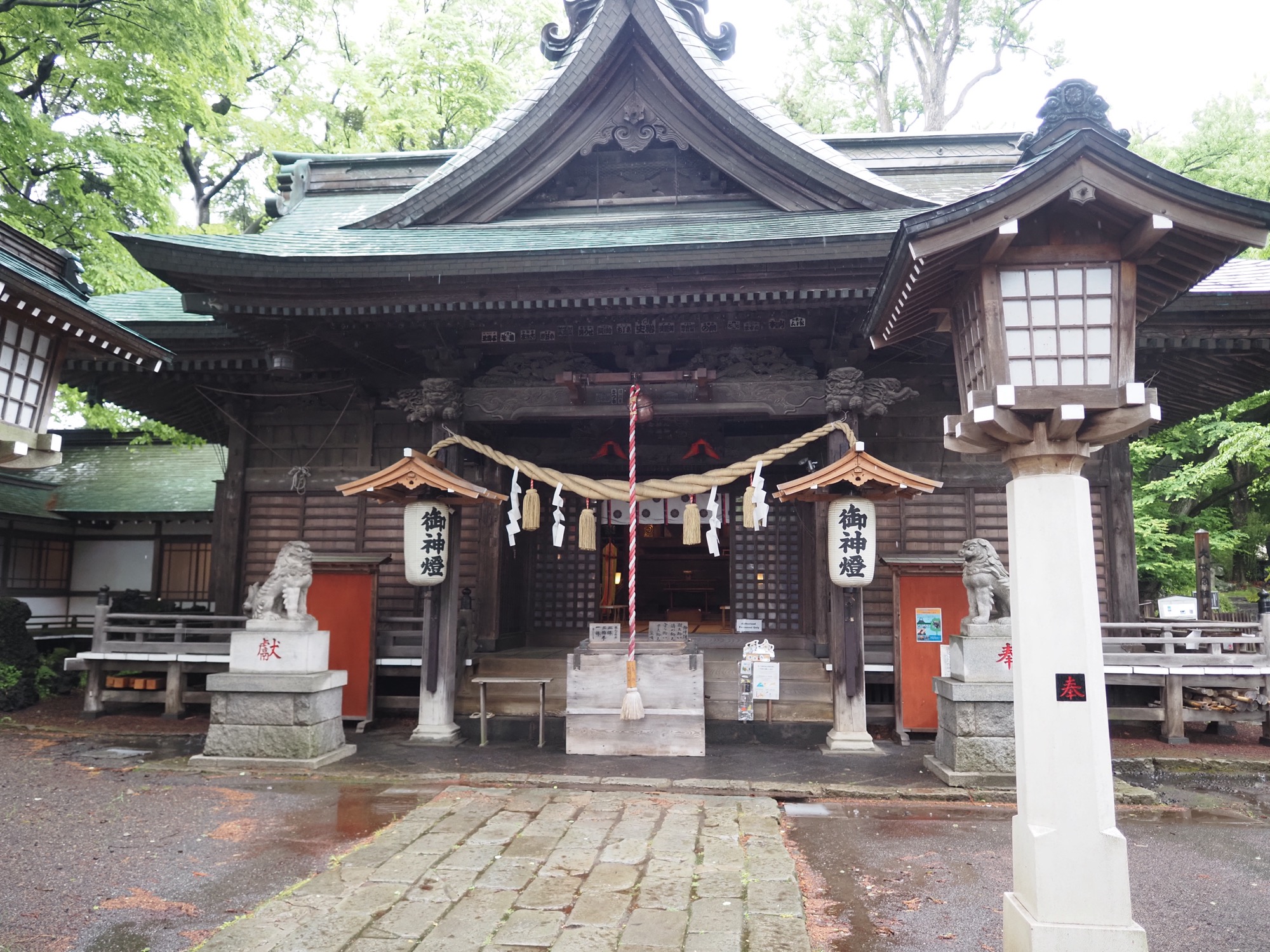
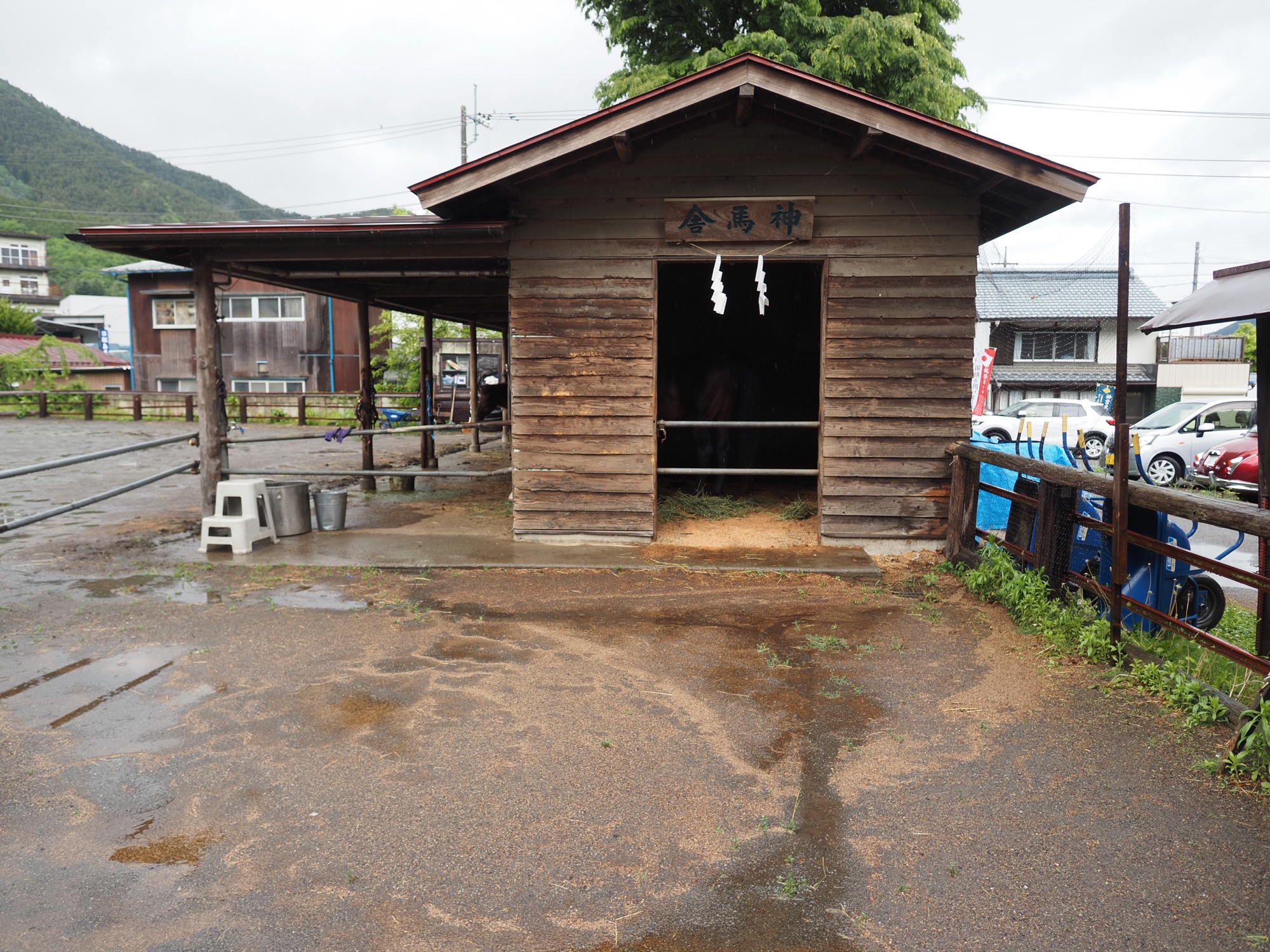
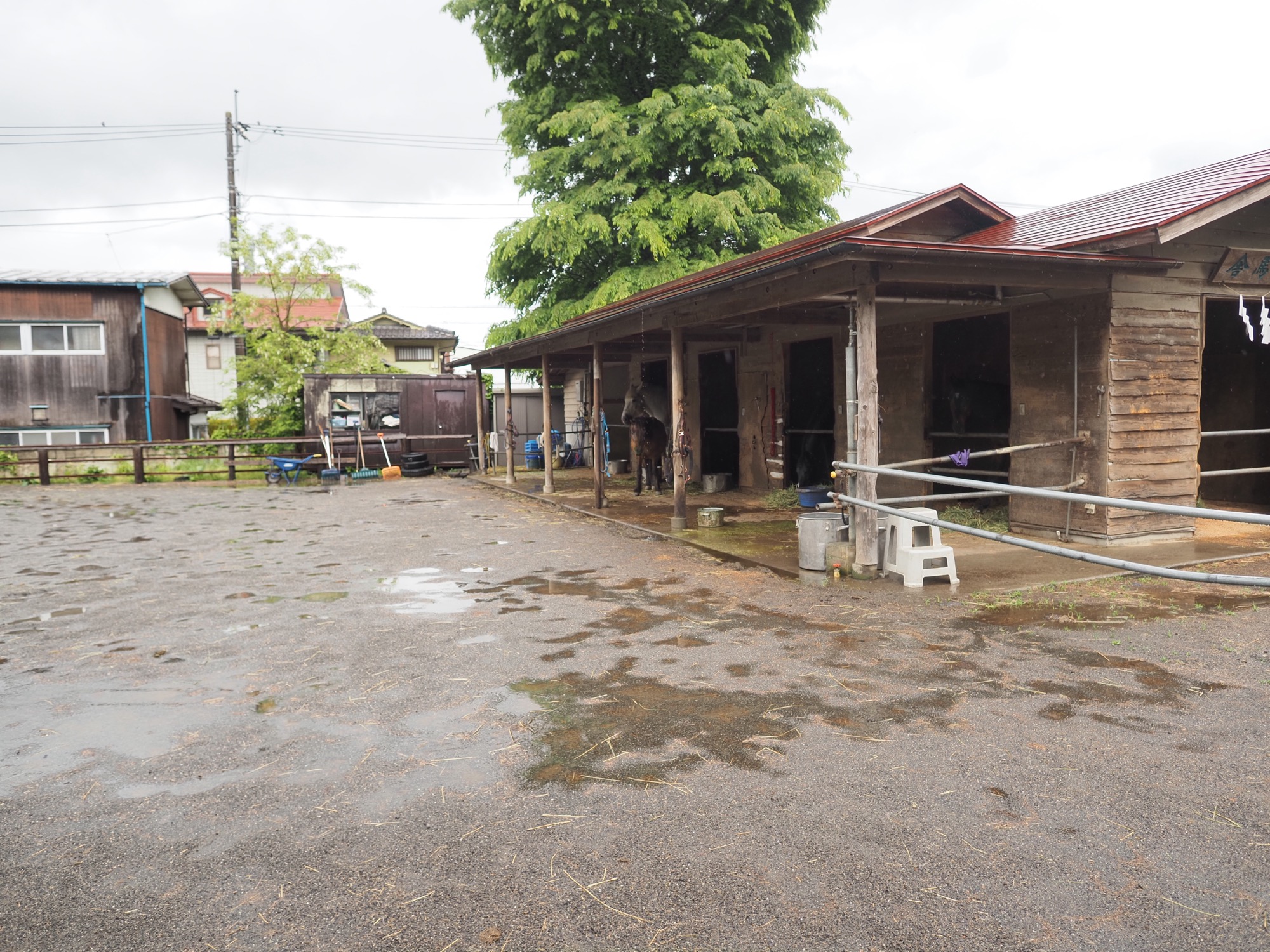
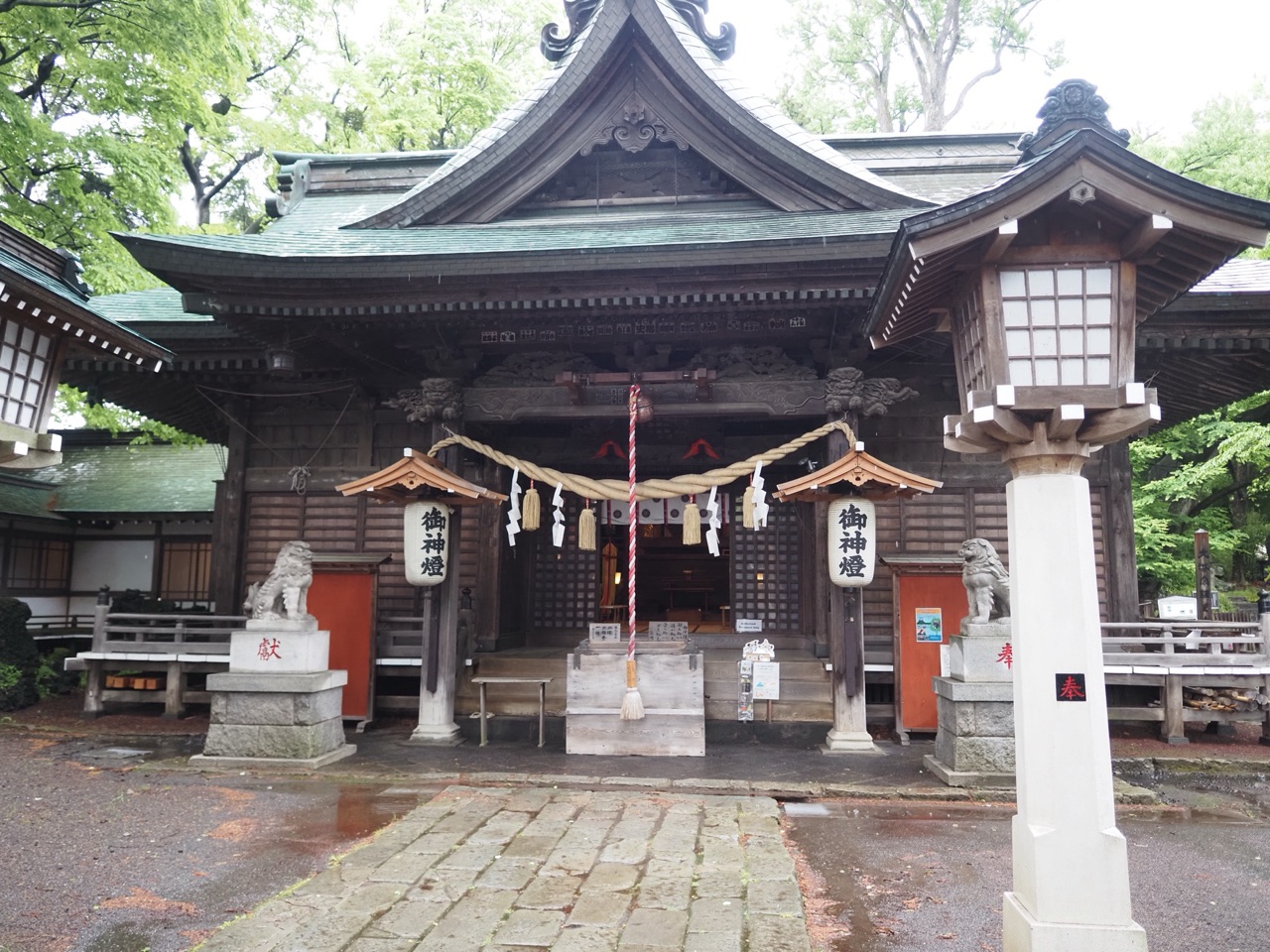
The photos show the worship hall after rain and the stable for the sacred horses in the precinct, where a sacred horse stands inside a plain wooden shed.