Miyauchi Hachimangu
A Hachiman shrine standing near Yamamiya Sengen Shrine. The place name Miyauchi — “within the shrine” — is thought to signify that this land lay within the sacred precincts, or immediate neighbourhood, of Yamamiya Sengen Shrine, the original shrine of Sengen Taisha. The name itself tells that this ground has been understood since antiquity as part of Yamamiya’s holy domain.
The enshrined deity is Emperor Ōjin, the Hachiman deity. Around the old Ōmiya district of Fujinomiya are scattered Hachiman shrines that drew the devotion of the warrior bands, among them the Hachiman-Soga-sha, where the Soga brothers are jointly enshrined in connection with Minamoto no Yoritomo’s great hunt at the foot of Fuji. That hunt of 1193 (Kenkyū 4) was the very occasion from which the mounted archery rite of Sengen Taisha took its origin — and so the worship of Hachiman and the worship of Fuji cross paths here through the history of the warrior class.
According to the records of the Kumon Fuji family, hereditary officials of Sengen Taisha, Miyauchi Hachimangū was incorporated into the great shrine’s ritual network as a district shrine lying near the route of the Yamamiya Goshinkō — the procession by which the deity returned from Ōmiya to Yamamiya. Twice each year, when the sacred hoko staff bearing the deity’s spirit passed between the two shrines, the road before this shrine too became a path of ritual.
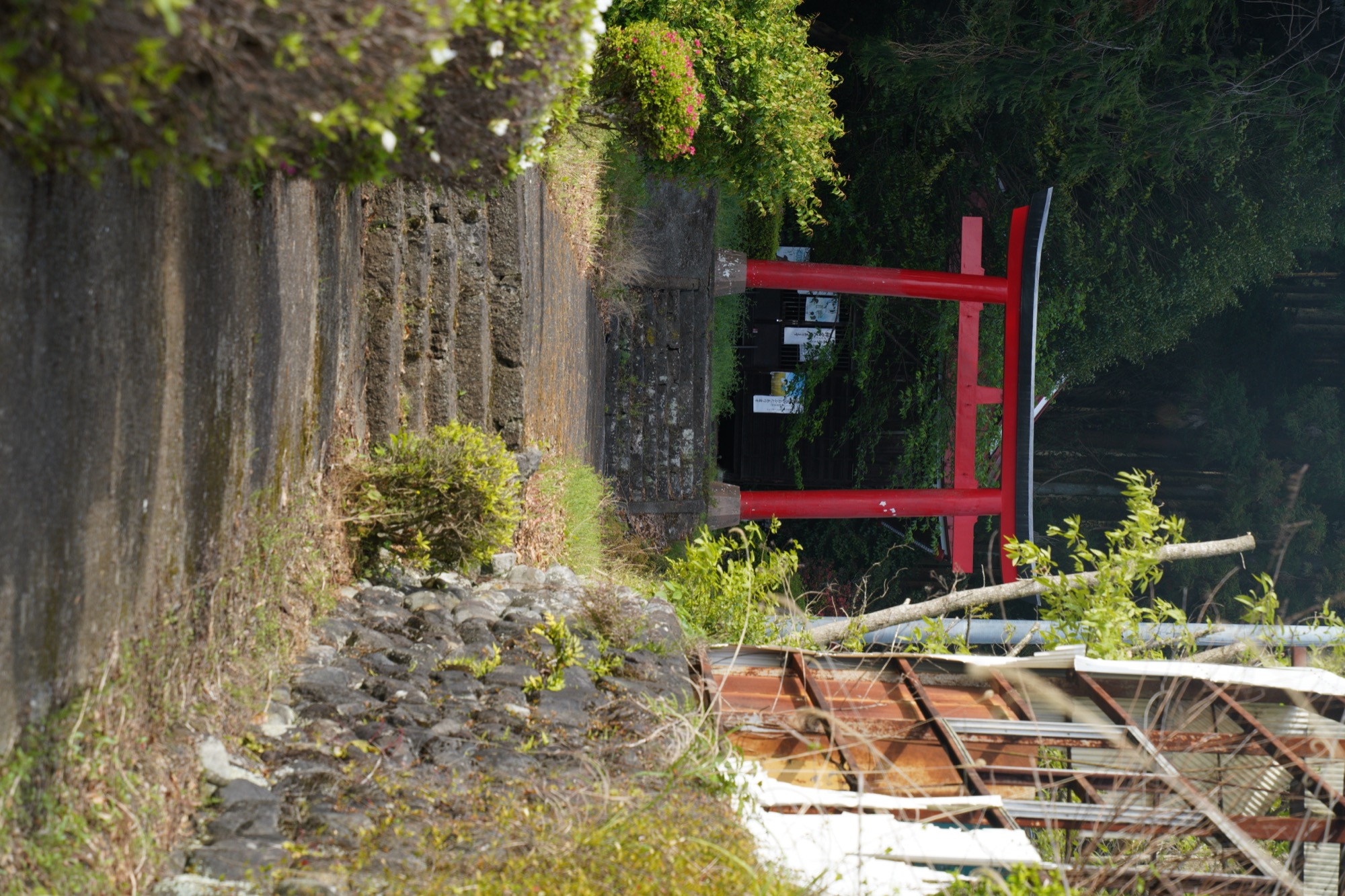
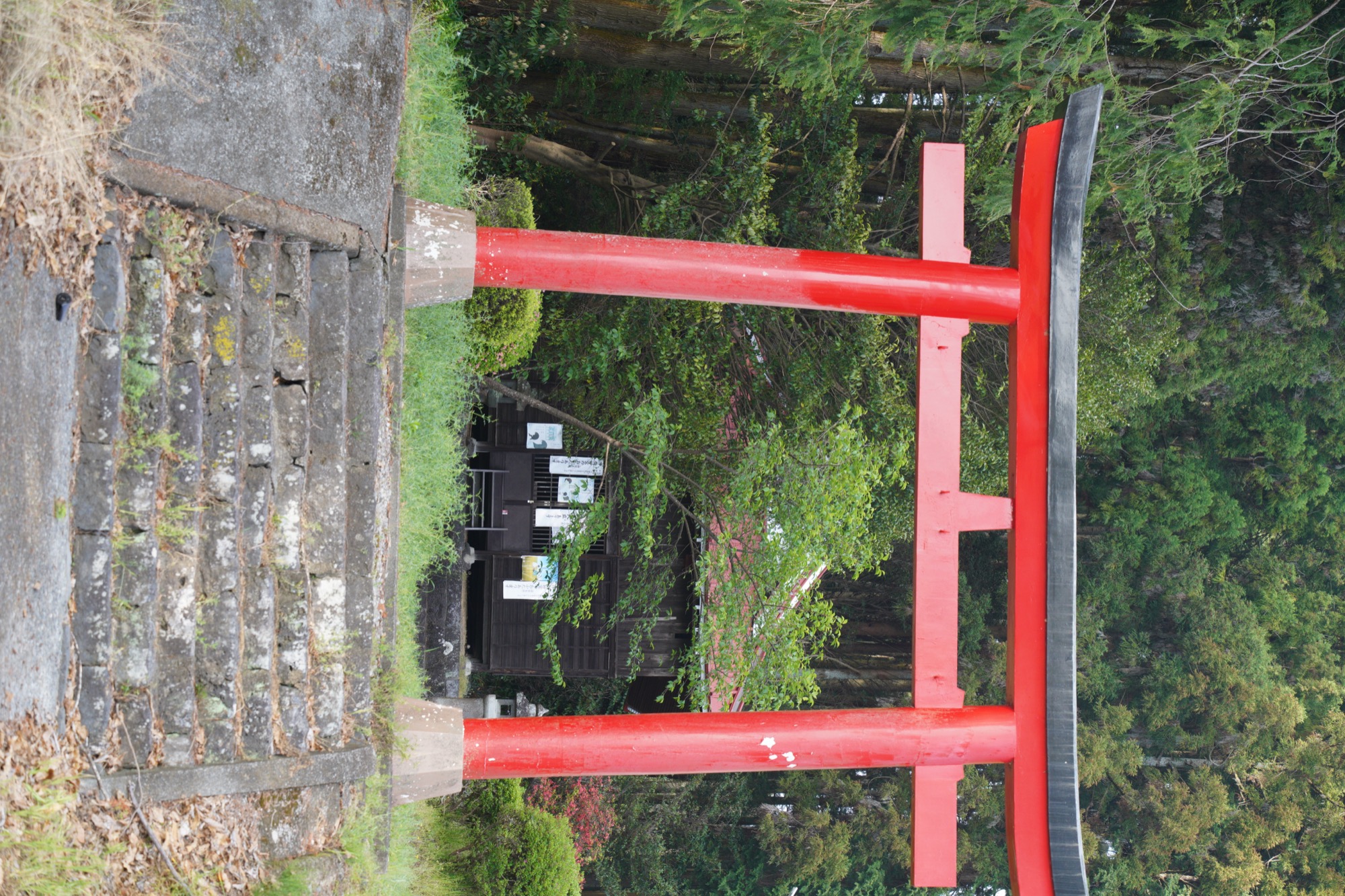
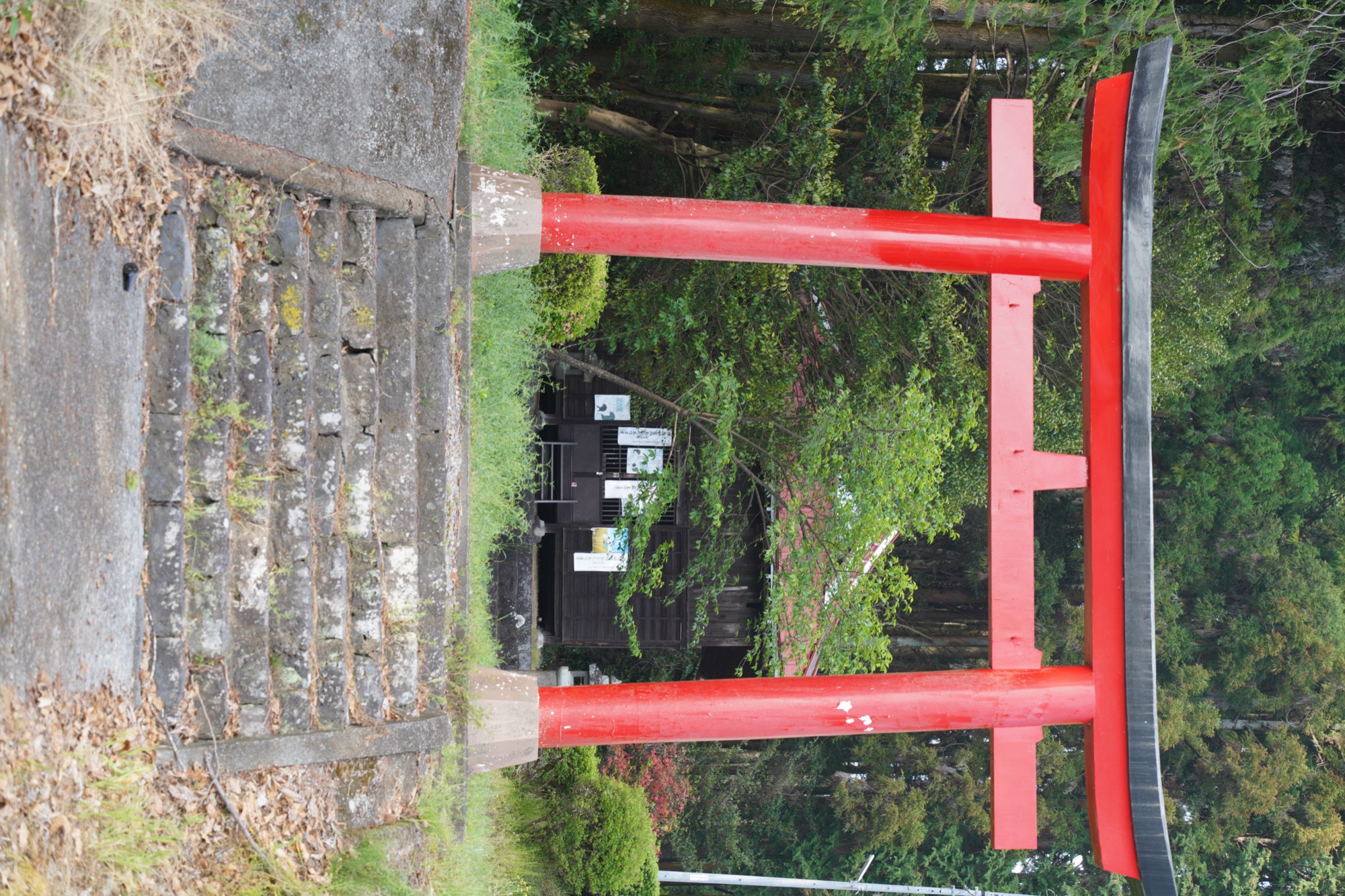
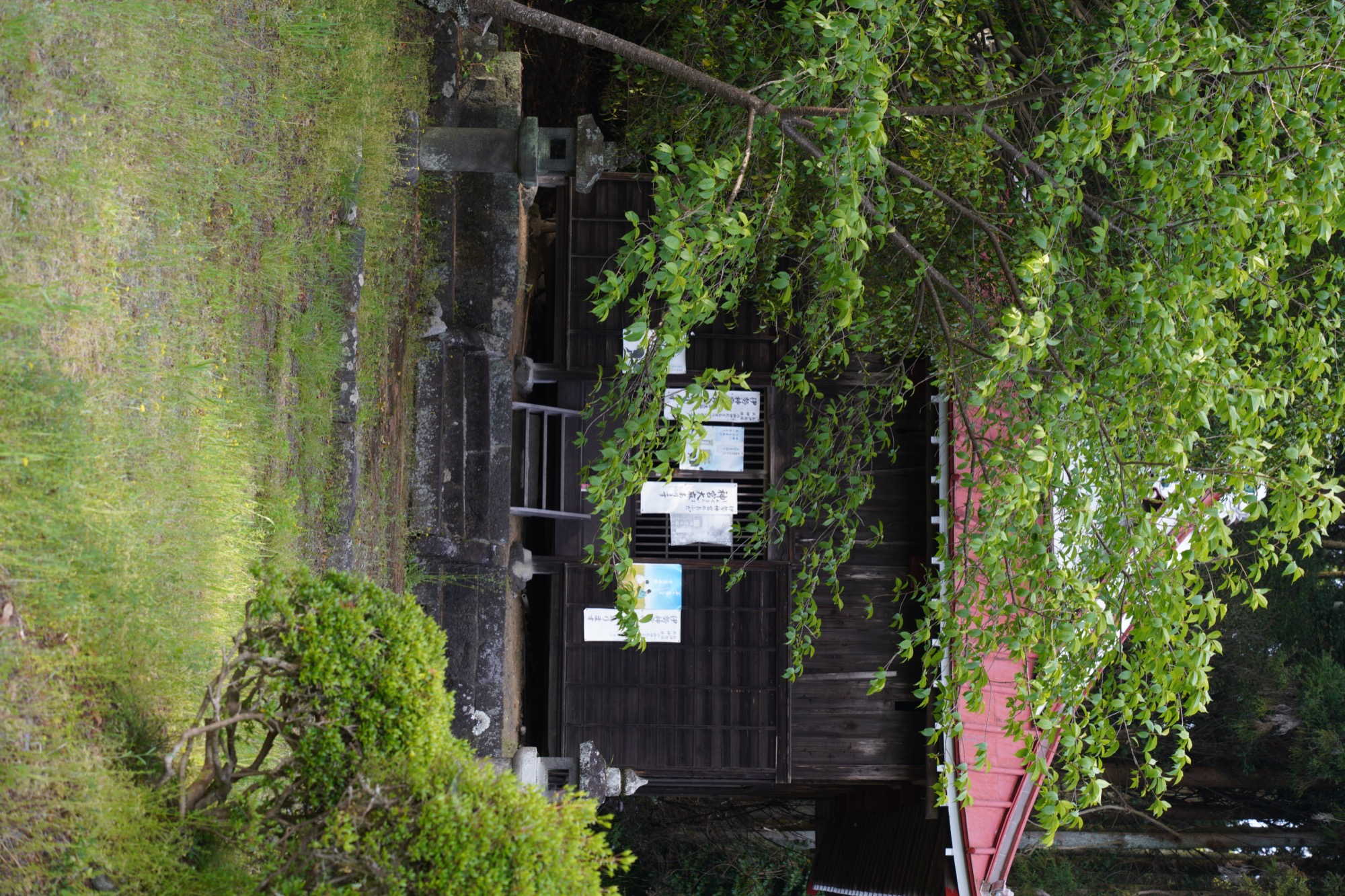
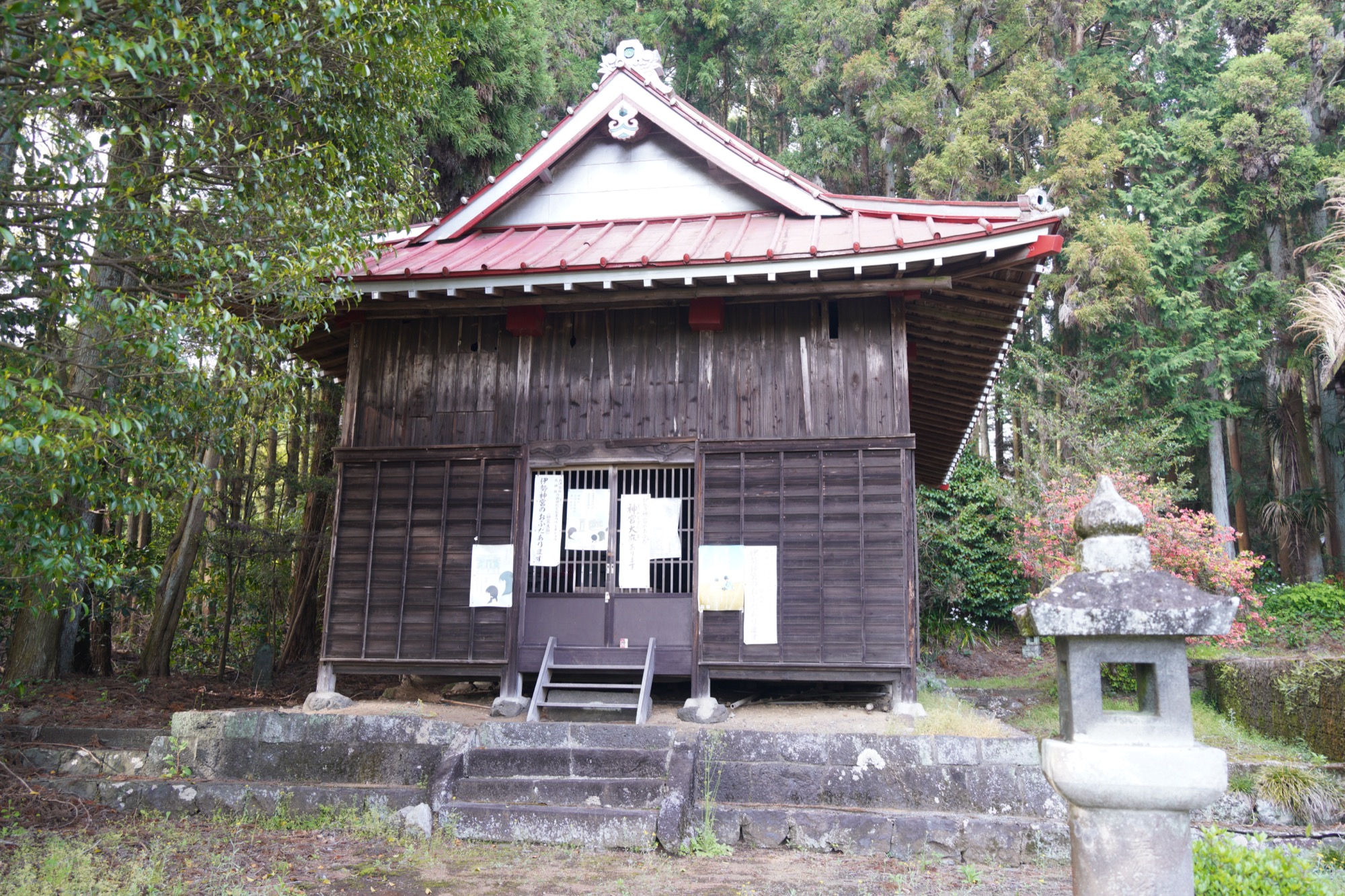
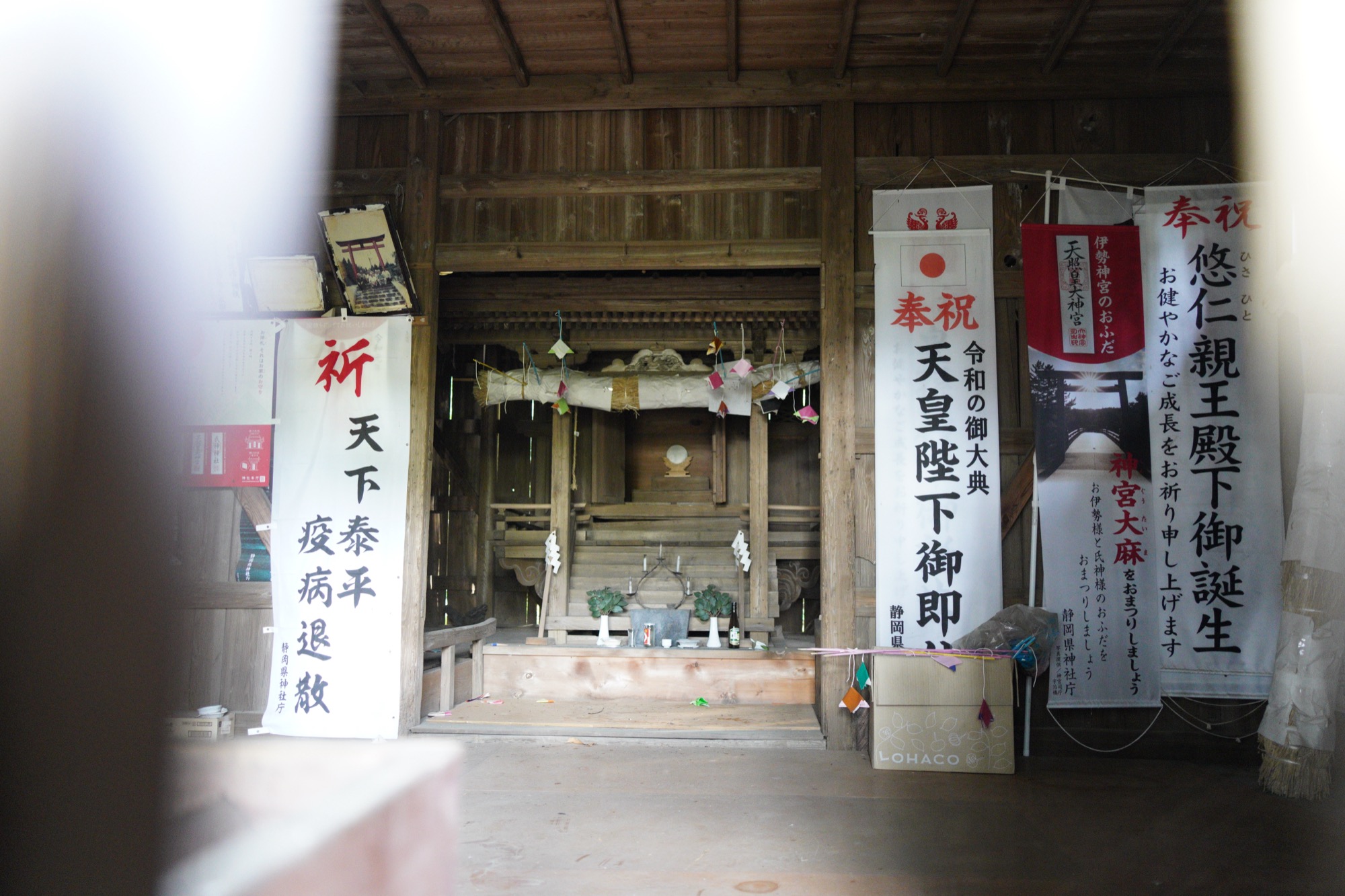
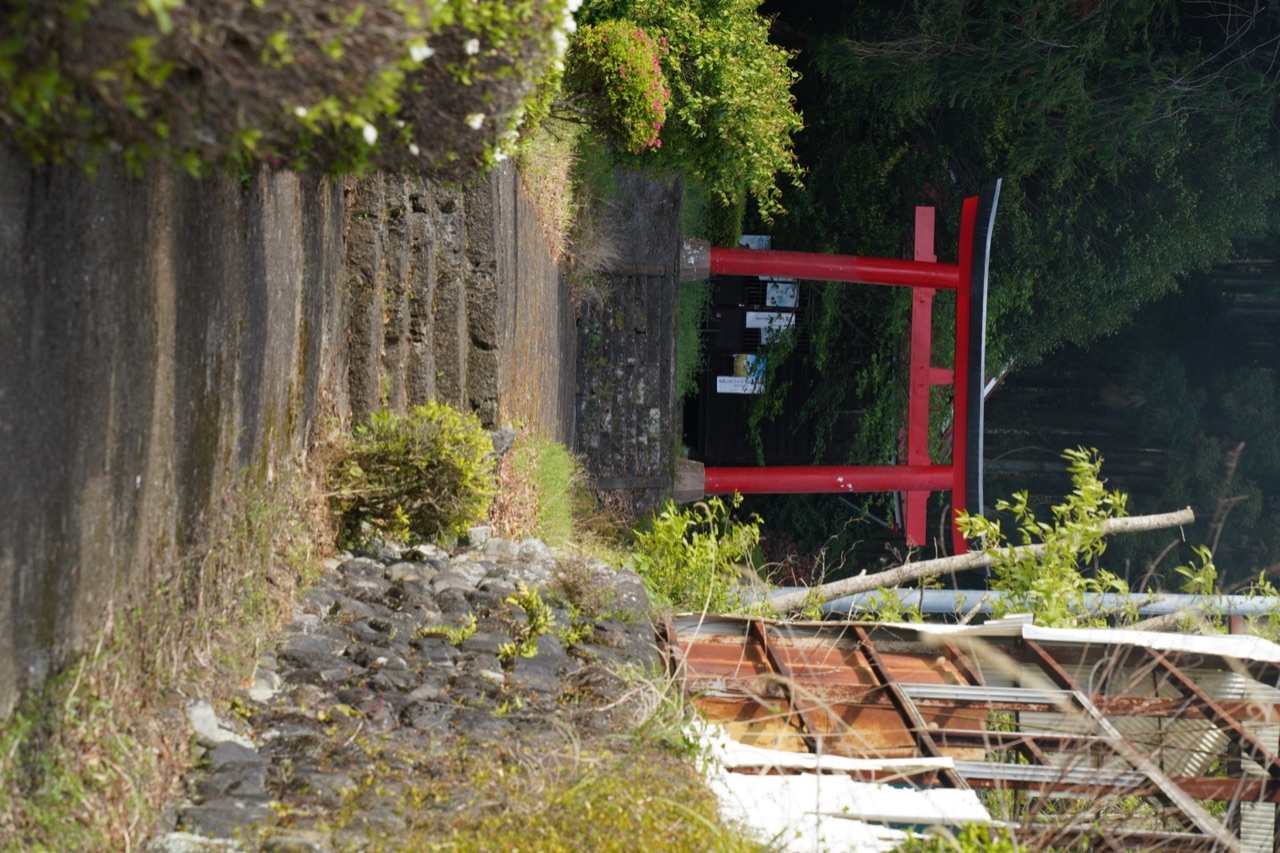
Through the vermilion torii, a wooden sanctuary with a red roof stands in silence. Few travellers come to this small shrine, yet it is countless local tutelary shrines such as this that have upheld the religious landscape of Ōmiya, where Sengen belief runs deep. On the path of prayer joining the great shrine and its original seat, it remains enshrined, unchanged.