Kitaguchi Hongu Fuji Sengen Shrine
Kitaguchi Hongu Fuji Sengen Shrine stands at the head of the Yoshida Trail on the northern flank of Mt. Fuji. Tradition traces its origin to a small sanctuary raised by Yamato Takeru at the Ōtsuka mound, where he is said to have reverenced the mountain on his return from the eastern campaign; a hall was reportedly erected on the present site in 788 (Enryaku 7). The earliest secure documentary reference is a record of a torii gate built here in 1480 (Bunmei 12).
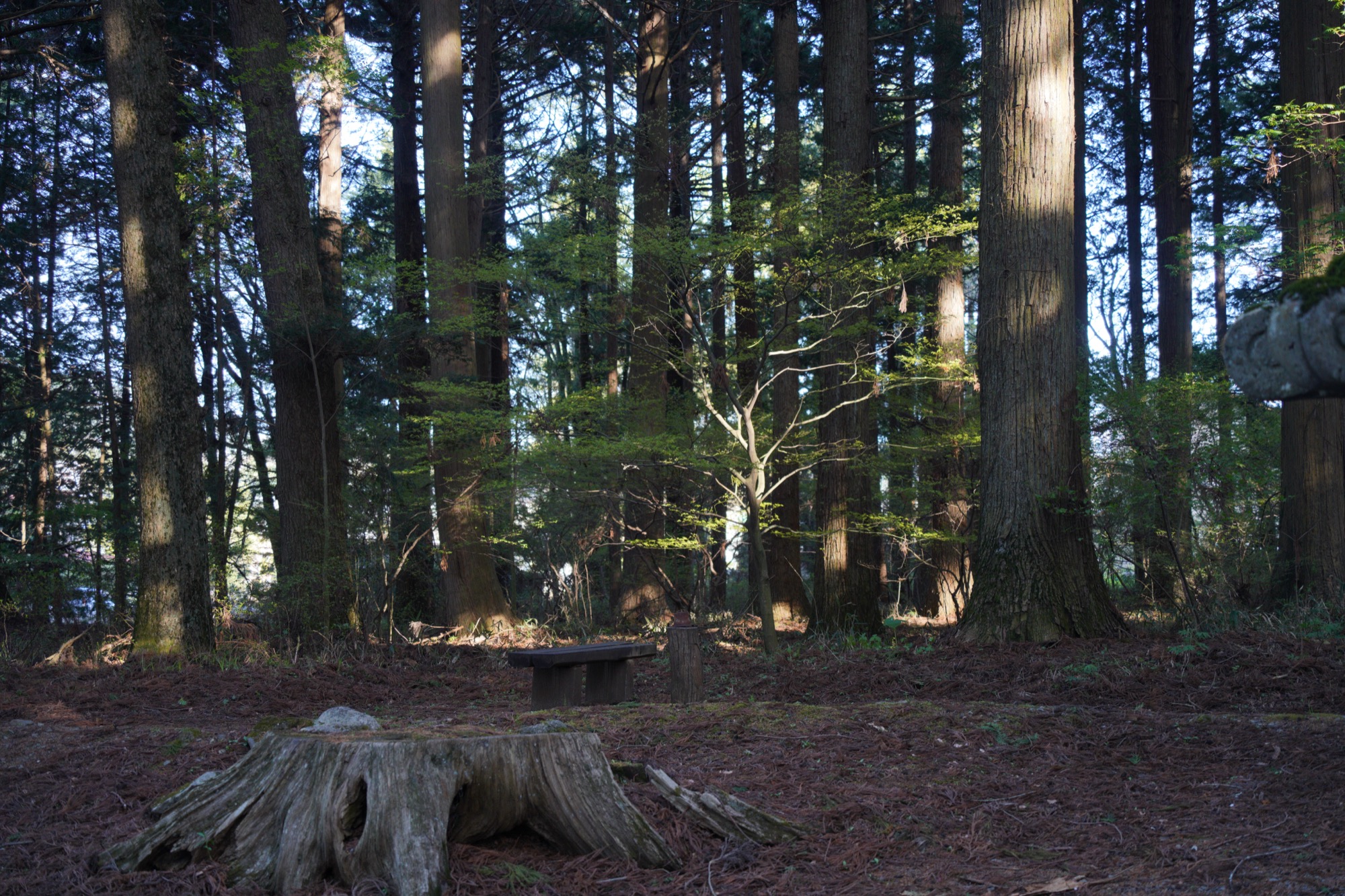
The ground beneath the shrine was originally the “Forest of Suwa” — a sacred grove belonging to the local tutelary deity, Suwa Myōjin. The Suwa shrine predates the Sengen shrine itself, and that sequence of precedence is still visible each August. The Yoshida Fire Festival (Yoshida no Himatsuri), held on the 26th and 27th, began as a rite of the Suwa deity and fused over time with a belief in quelling Fuji’s volcanic fire; it is counted today among Japan’s three great unusual festivals (nihon sankisai). On the evening of the 26th, takematsu — pine torches shaped into three-metre bamboo-shoot forms — are erected along the streets of the town and lit simultaneously at dusk. The Sengen shrine’s Myōjin-san mikoshi and the Suwa shrine’s Oyama-san mikoshi — modelled on the shape of Fuji itself — proceed together through the streets, while the walls of flame mark the close of the climbing season.
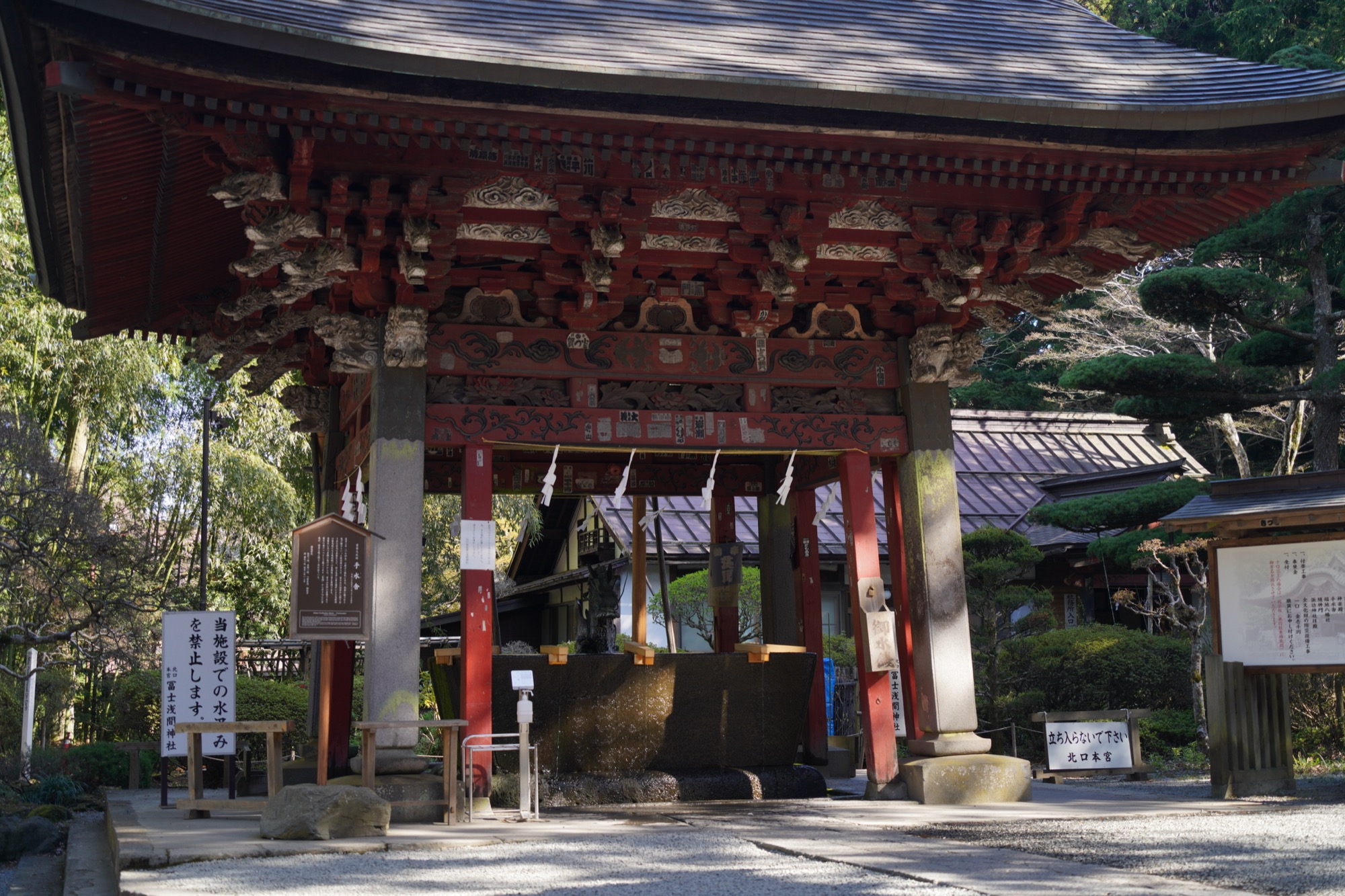
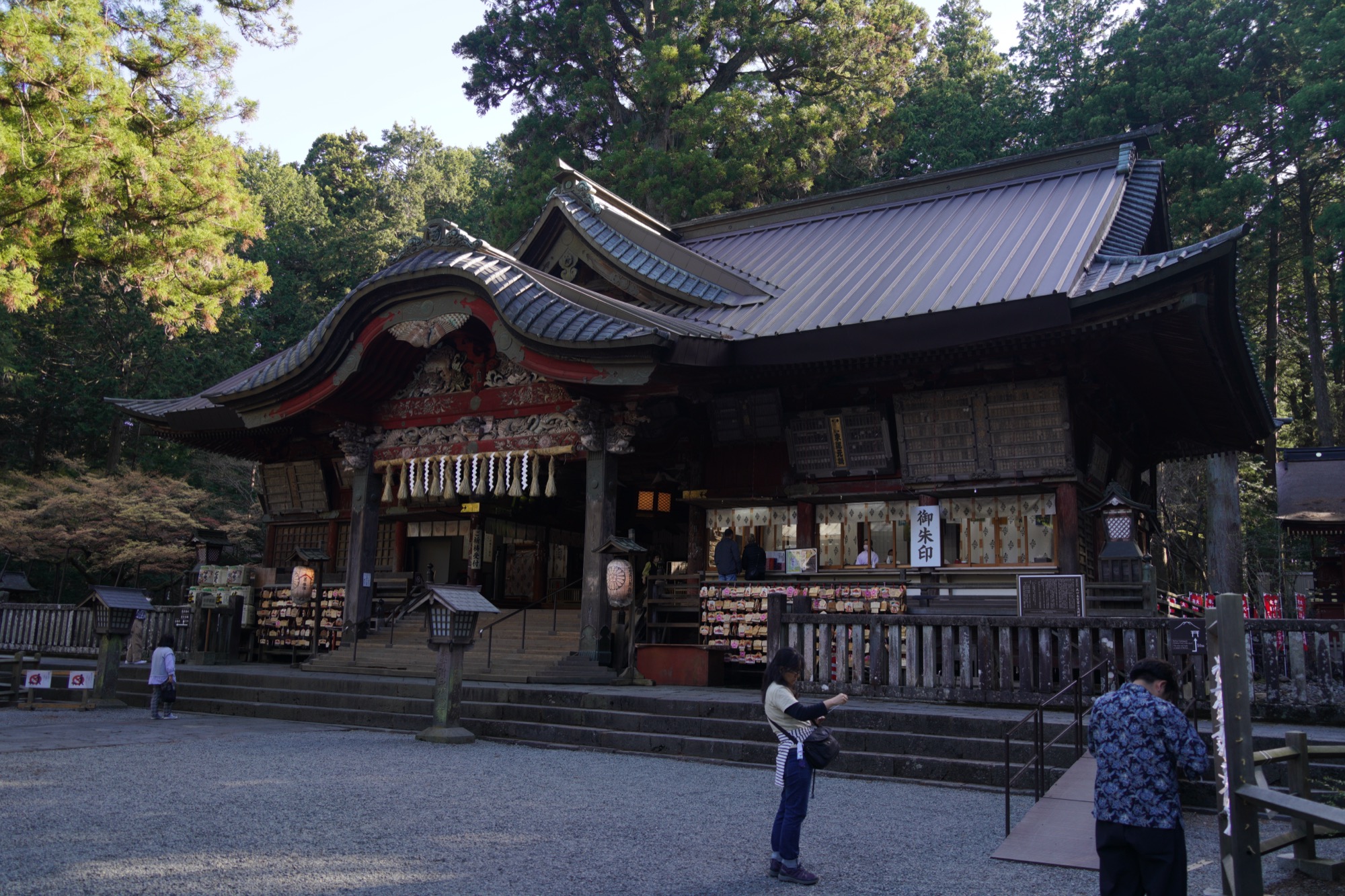
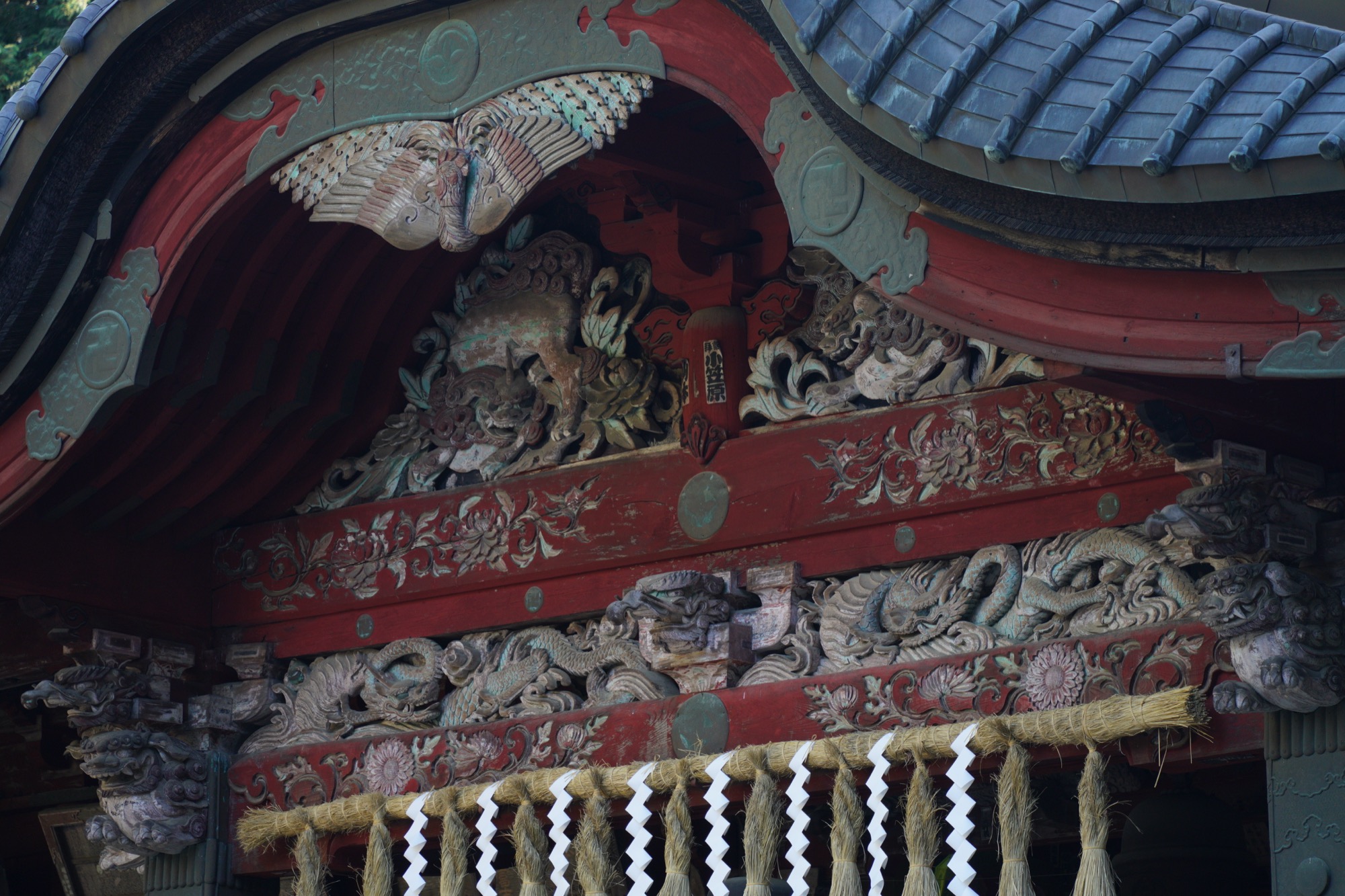
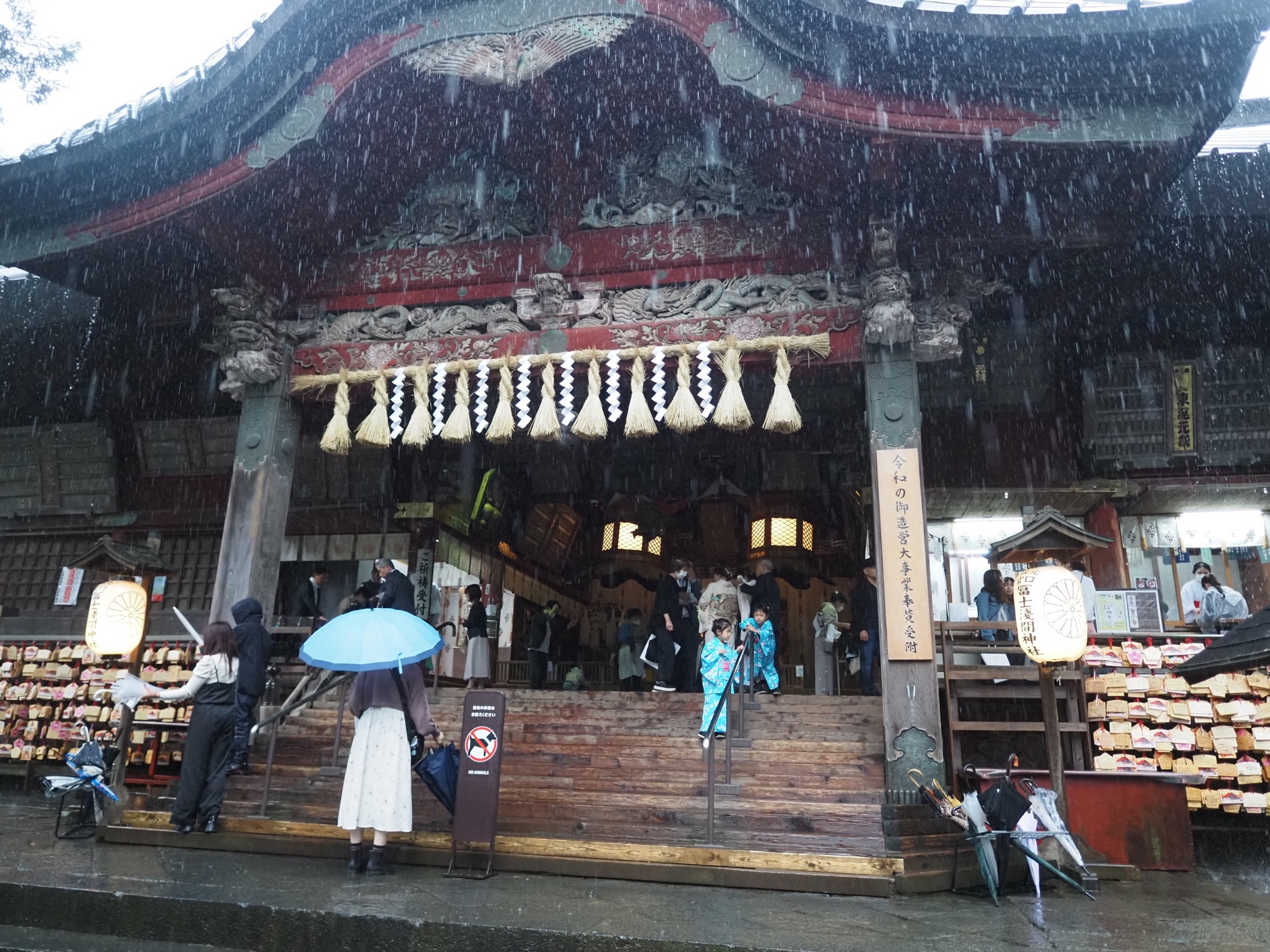
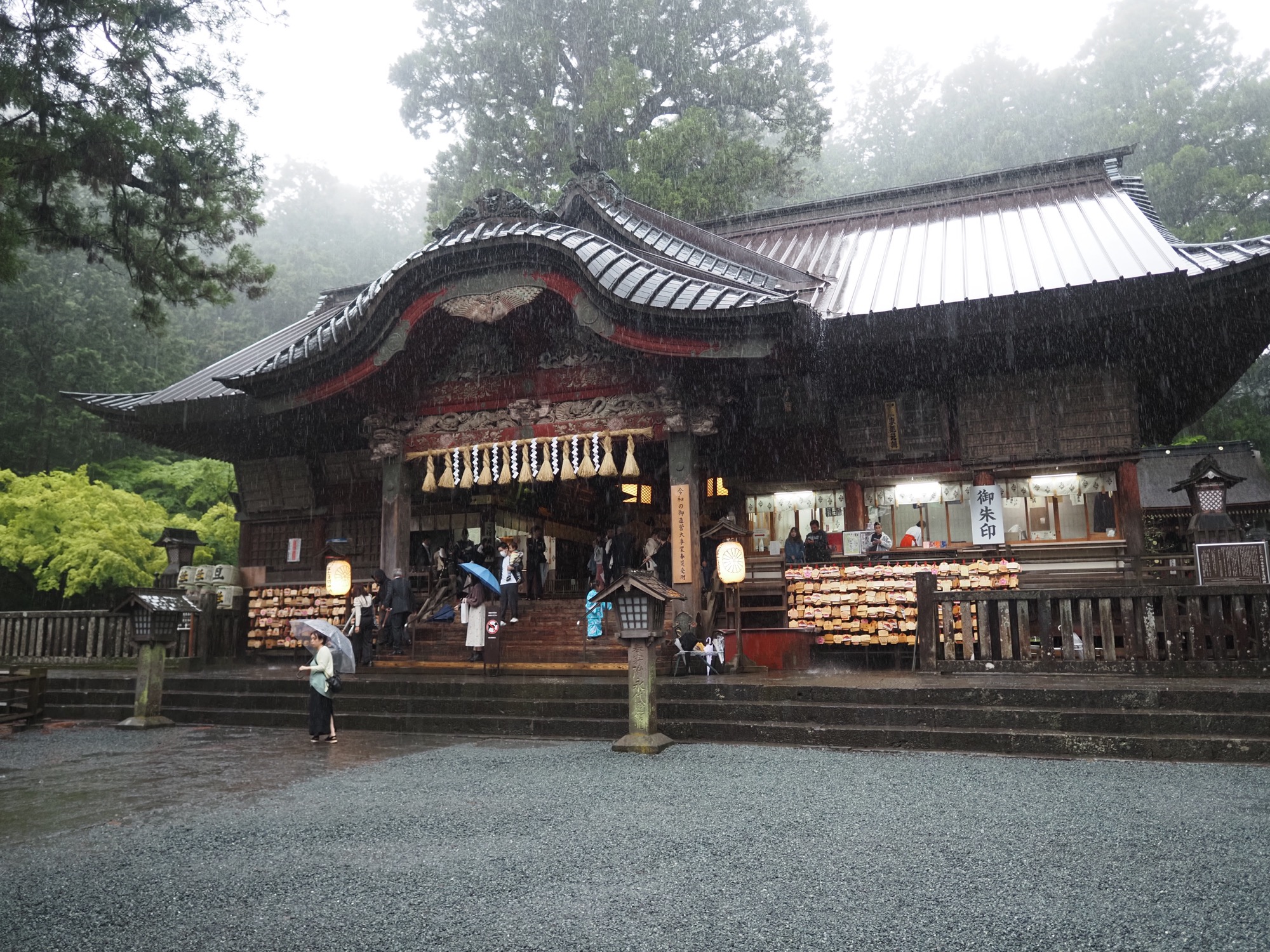
The present main hall was rebuilt in 1623 (Genna 9) by Torii Shigenobu, lord of the Kōnai domain of Kai. A far more sweeping transformation followed between 1733 (Kyōhō 18) and 1738 (Genbun 3), when Murakami Kōsei, a lay leader of the Fuji-kō movement, invested his personal fortune to reconstruct the main hall and haiden, and to add the heiden, zuishin gate (zuishinmon), and kaguraden from nothing. The shrine’s current appearance — its ichikensha-irimoya-zukuri structure lacquered in black and red, finished in polychrome, and covered in meticulous carved decoration — is substantially his creation, and the complex is today designated an Important Cultural Property. That a private religious figure, not a feudal lord or the court, should have so completely remade a major shrine’s physical form is itself a statement about the extraordinary energy that popular Fuji faith generated in the Edo period.
When the Fuji-kō confraternities spread across the Kantō region in the eighteenth and early nineteenth centuries, the shrine at the Yoshida gate presided over a pilgrimage economy that dwarfed all rivals. Records from the Bunka era (roughly 1804–1818) show that some 8,000 pilgrims a year ascended by the Yoshidaguchi route — a figure that vastly exceeded every other trail. The oshi — hereditary priest-innkeepers who ran lodges (shukubō) in the monzen district outside the shrine — held territorial contracts (dannabasho) with villages across the Kantō plain. Each winter, during the off-season, they would circuit their territories, delivering divine talismans (fuda) and collecting dues from subscriber households (danna) — a practice known as danna-mawari. The Ozawa family, one of the most powerful oshi houses, held contracts with over 16,000 households on its own.
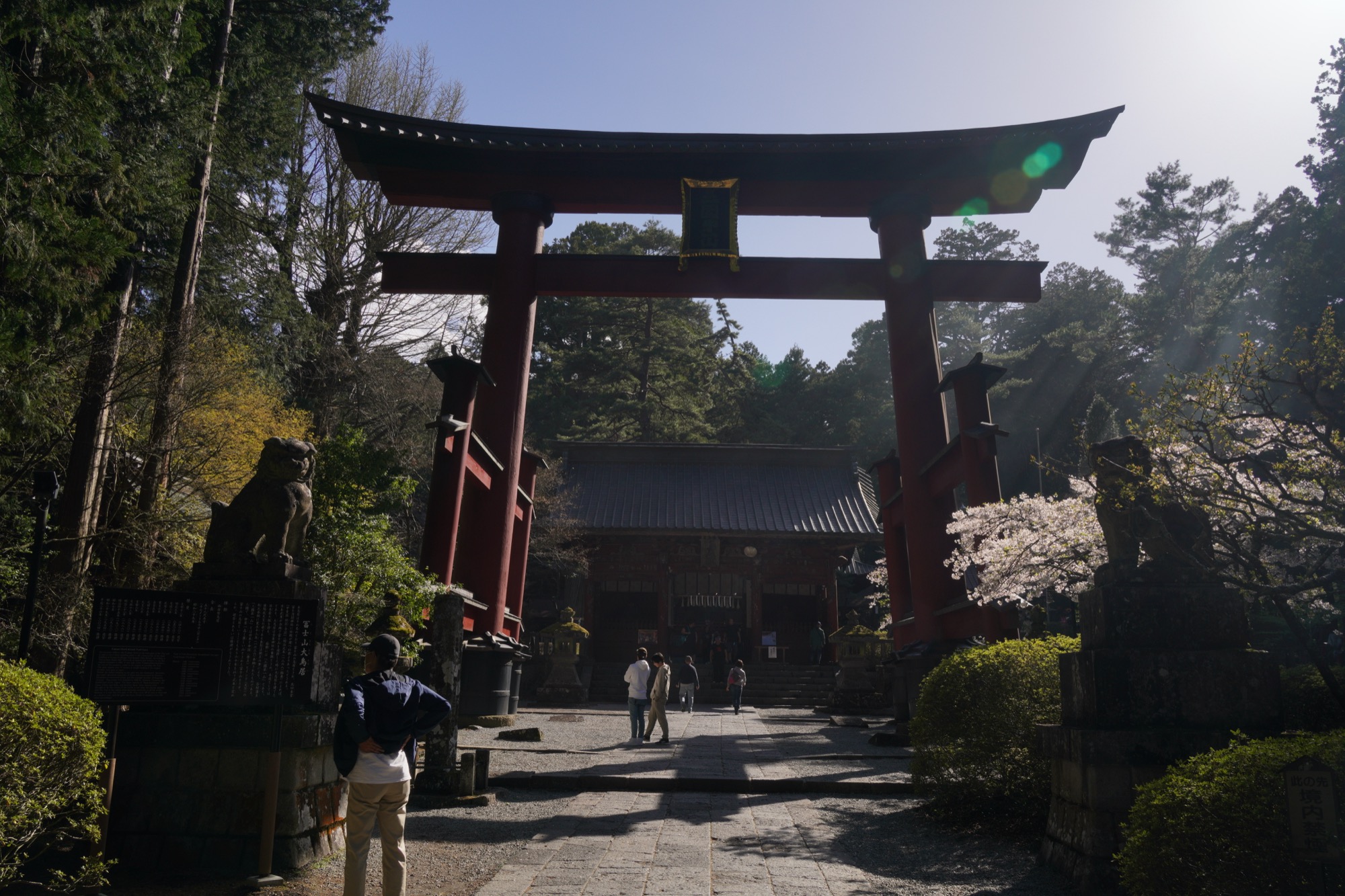
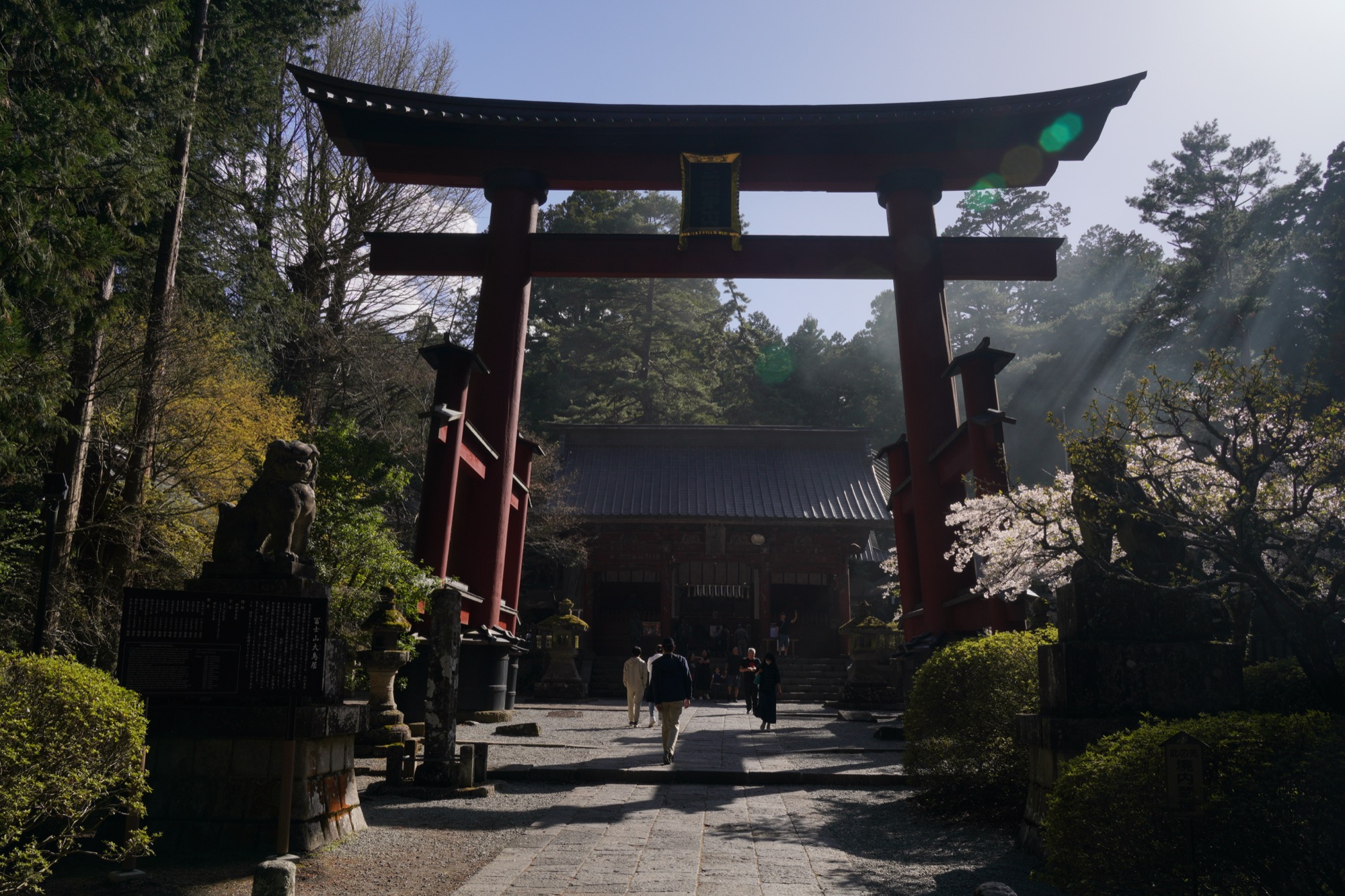
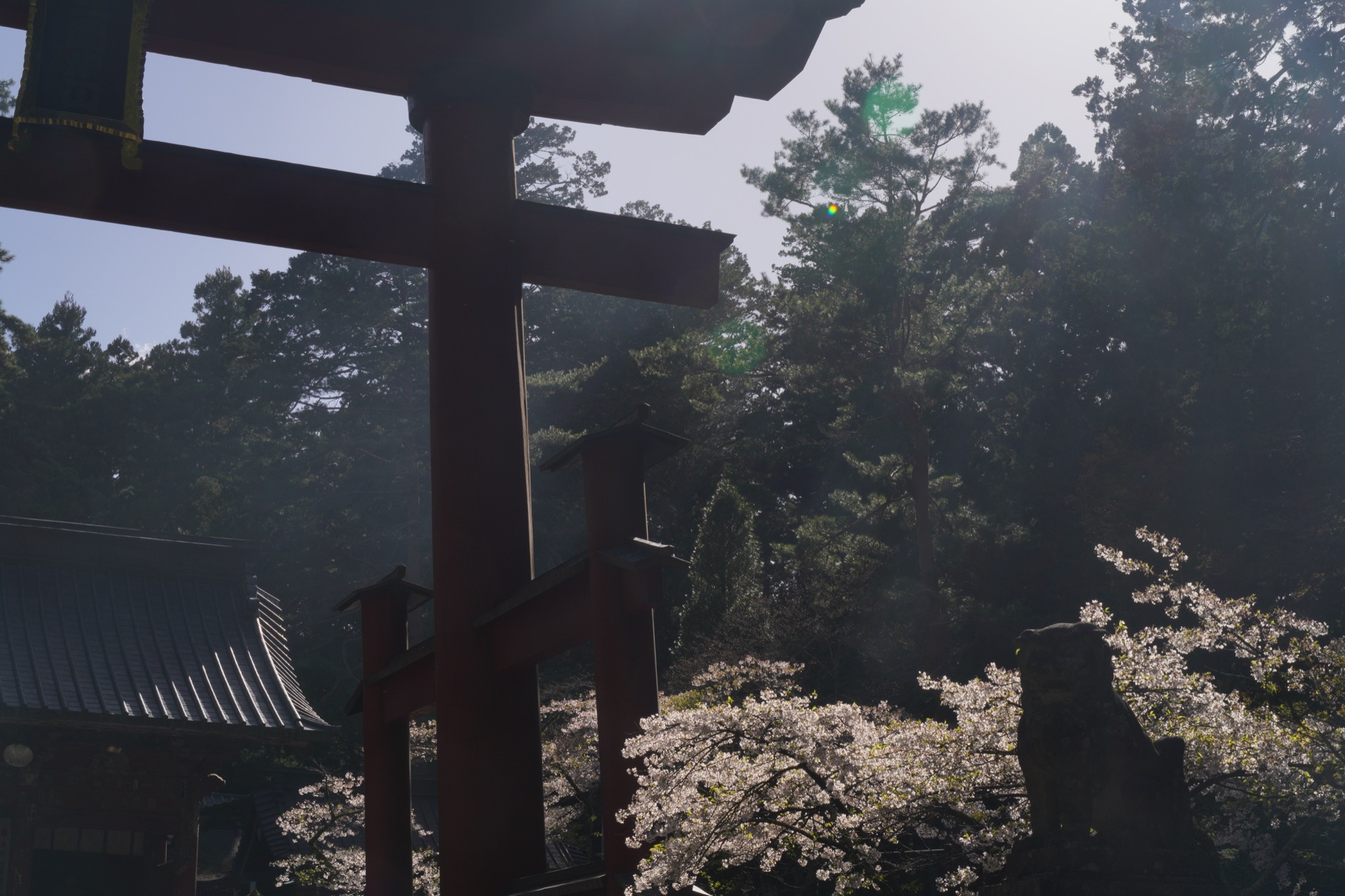
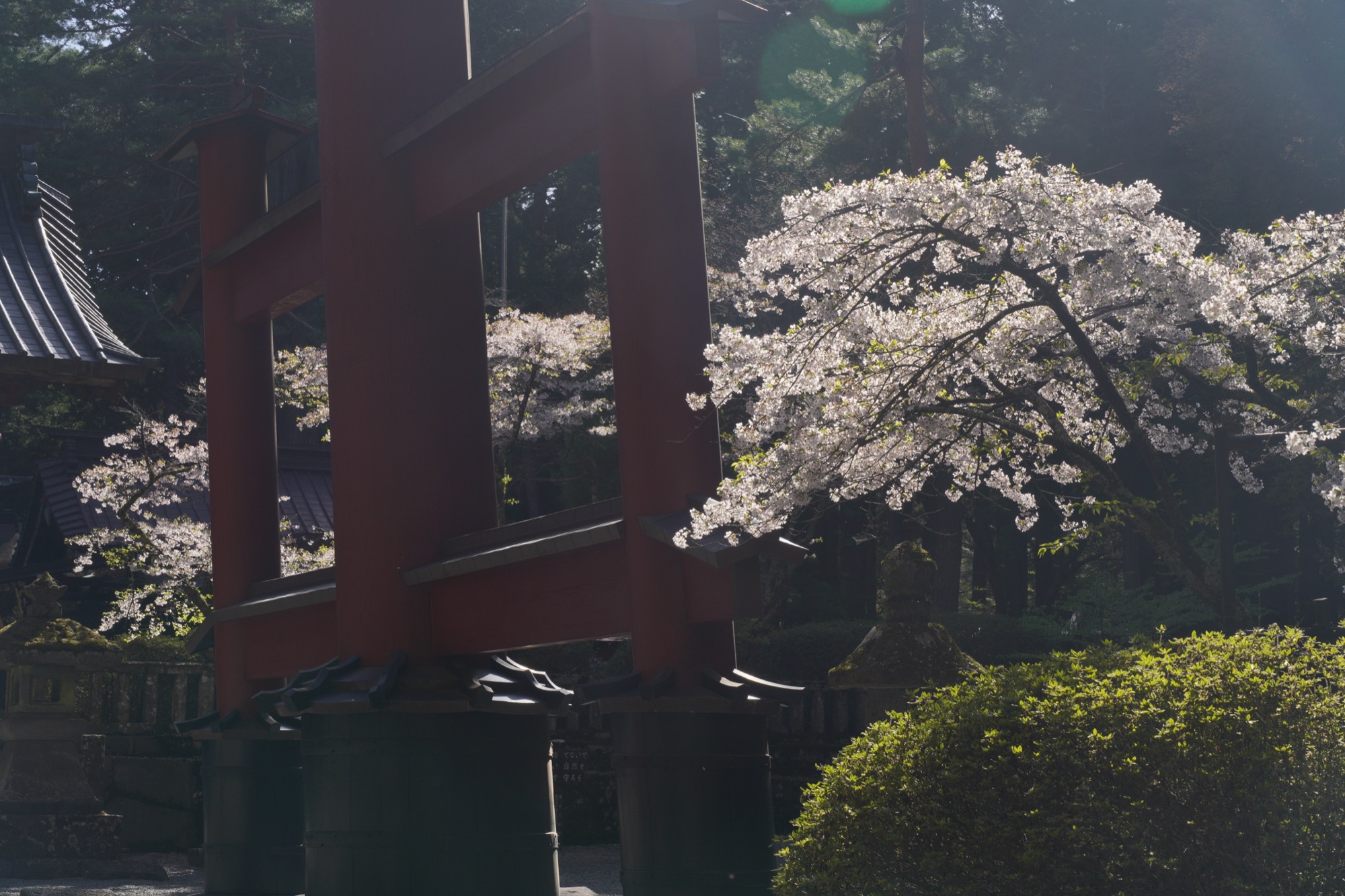
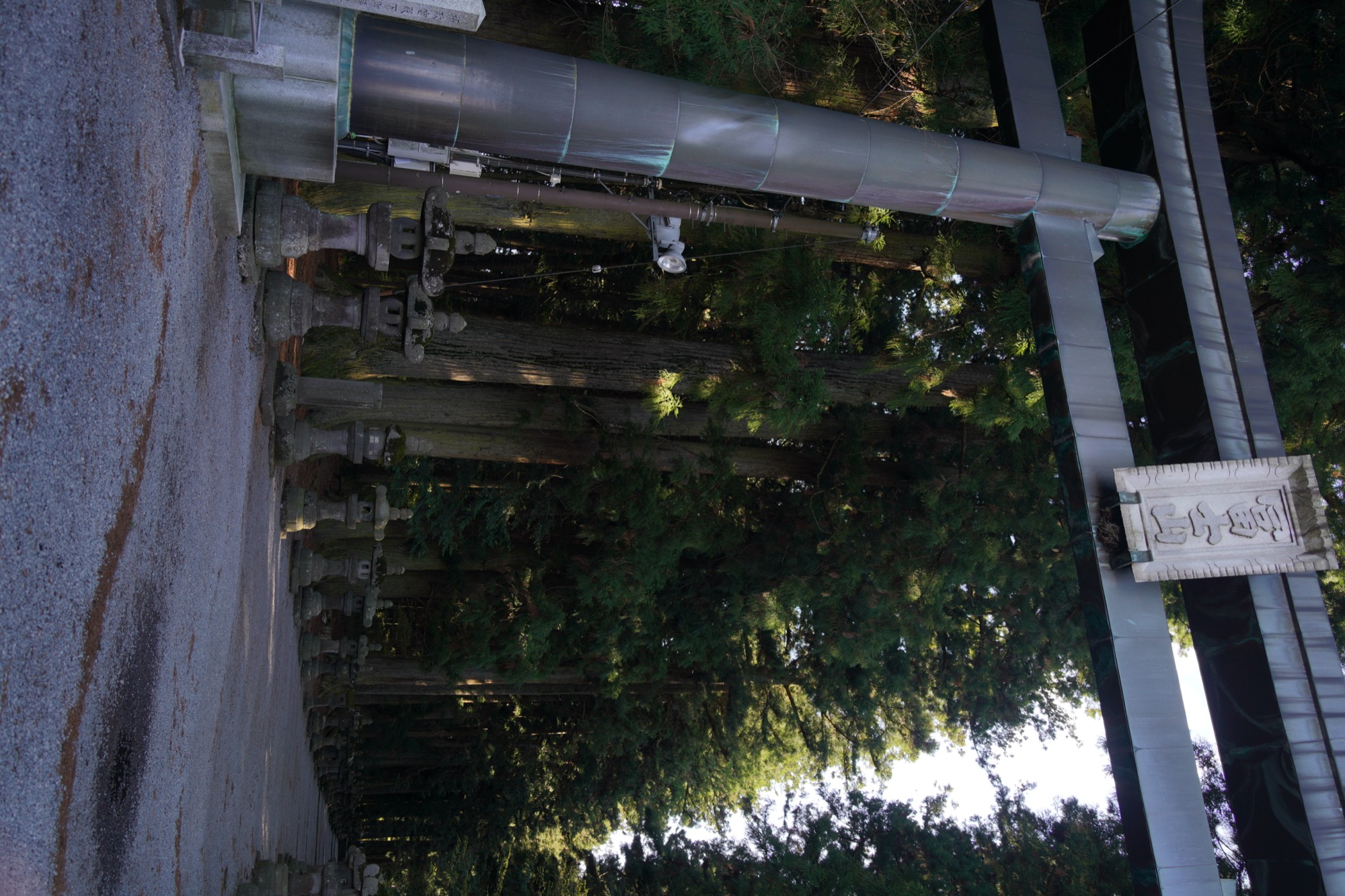
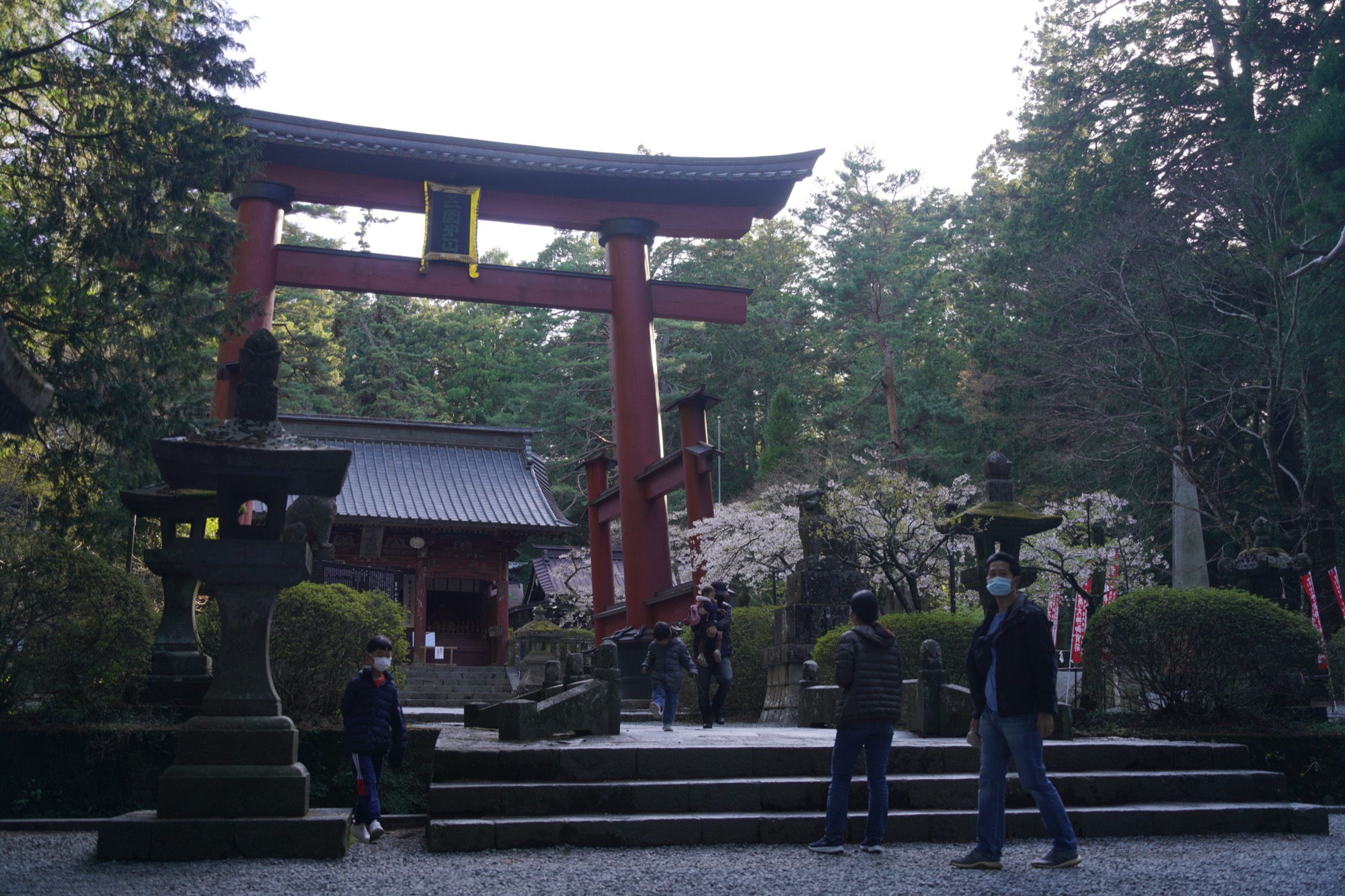
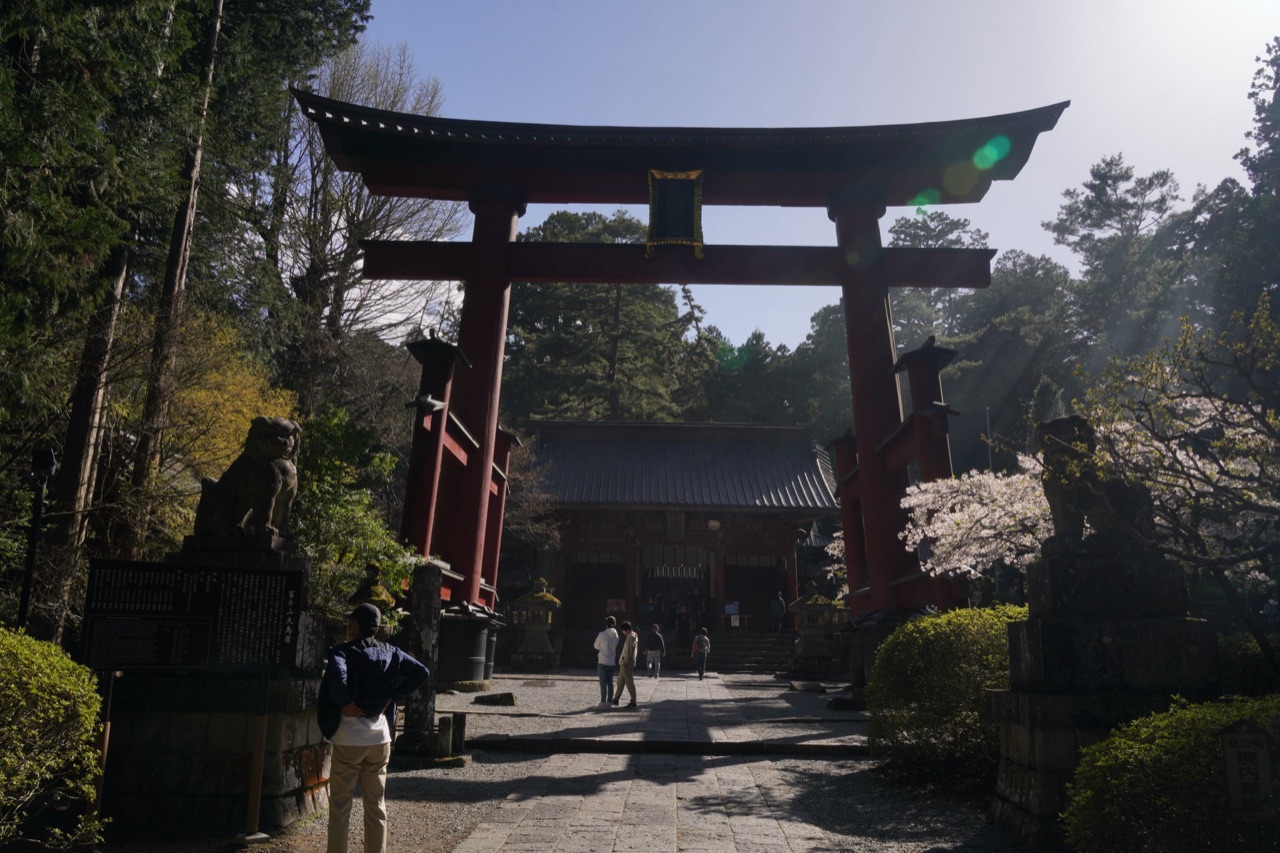
The great torii at the precinct’s entrance has functioned less as the gate of a shrine than as the gate of the mountain. It is rebuilt in a distinct cycle: once every sixty years, in the kōshin year of the sexagenary calendar. The plaque hanging from it — reading Sangoku Daiichi Zan, “Foremost Mountain of the Three Realms” — was donated by the Akimoto clan and is traditionally attributed to the brush of Prince Kōben (Kōmyō-in), a monzeki prince of the Shōgoin. The pilgrims in white robes who passed beneath it were crossing not merely a shrine threshold but entering the sacred body of the mountain itself.
This prosperity cannot be separated from the long rivalry with the Ōmiya shrine in Suruga — today’s Fujisan Hongū Sengen Taisha. A shogunate ruling in 1779 (An’ei 8) formally established that the territory above the eighth station belonged to Ōmiya. Yet the weight of pilgrim traffic remained overwhelmingly with Yoshida. The result was a structural paradox: institutional sovereignty over the mountain went to Ōmiya, while the economic and social life of Fuji pilgrimage was dominated by the Yoshida gate. That tension persisted through the remainder of the Edo period.
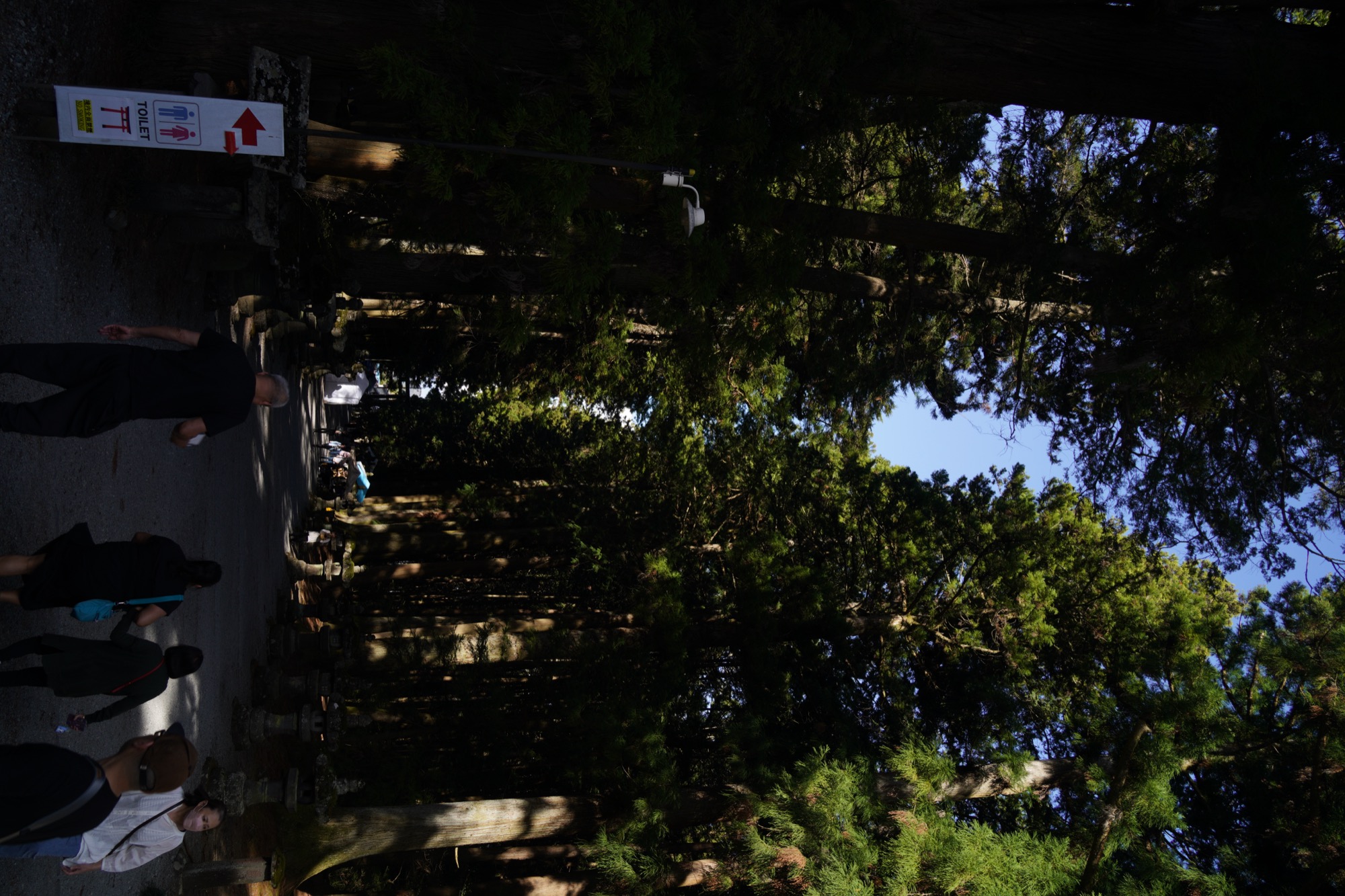
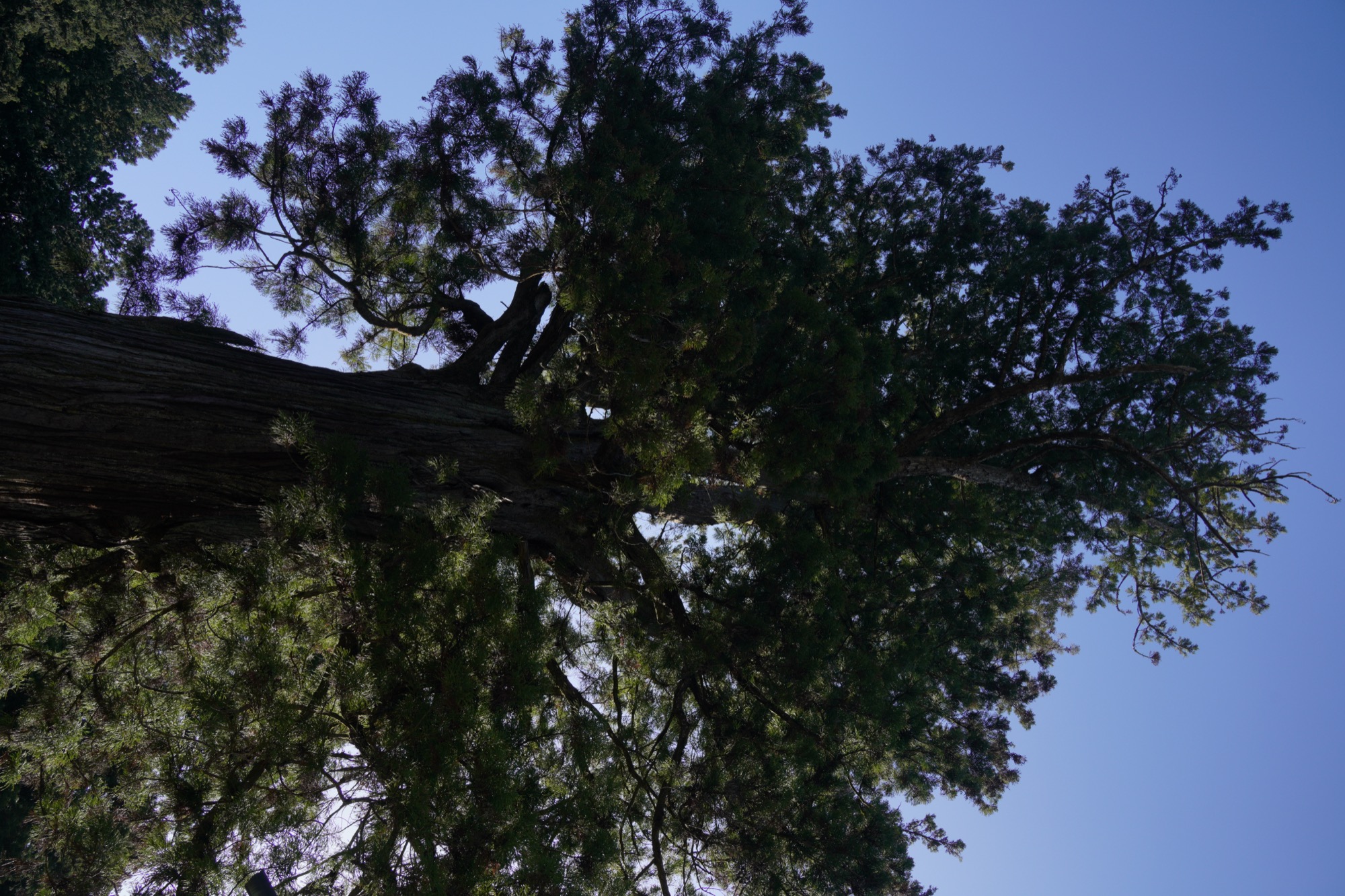
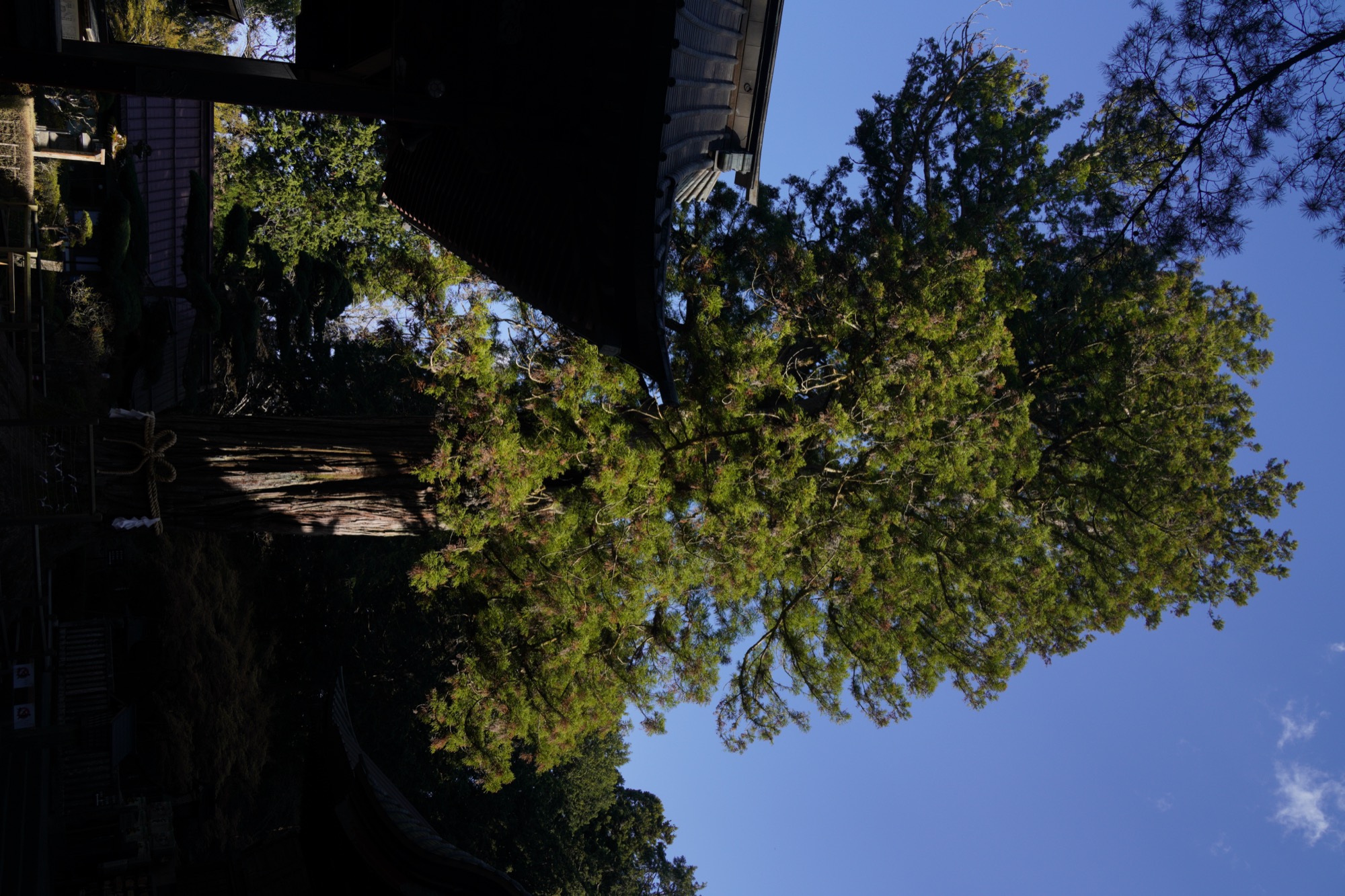
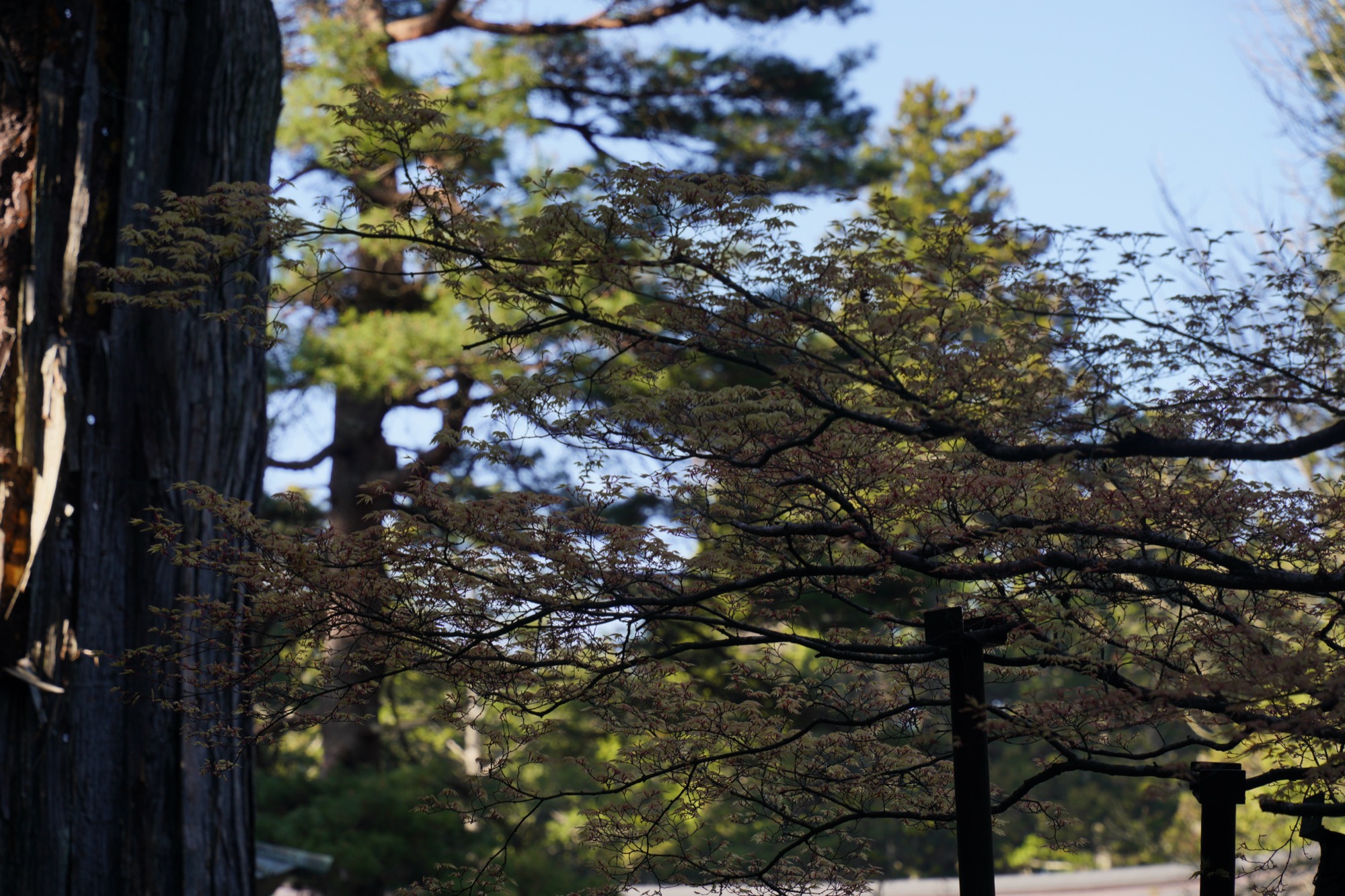
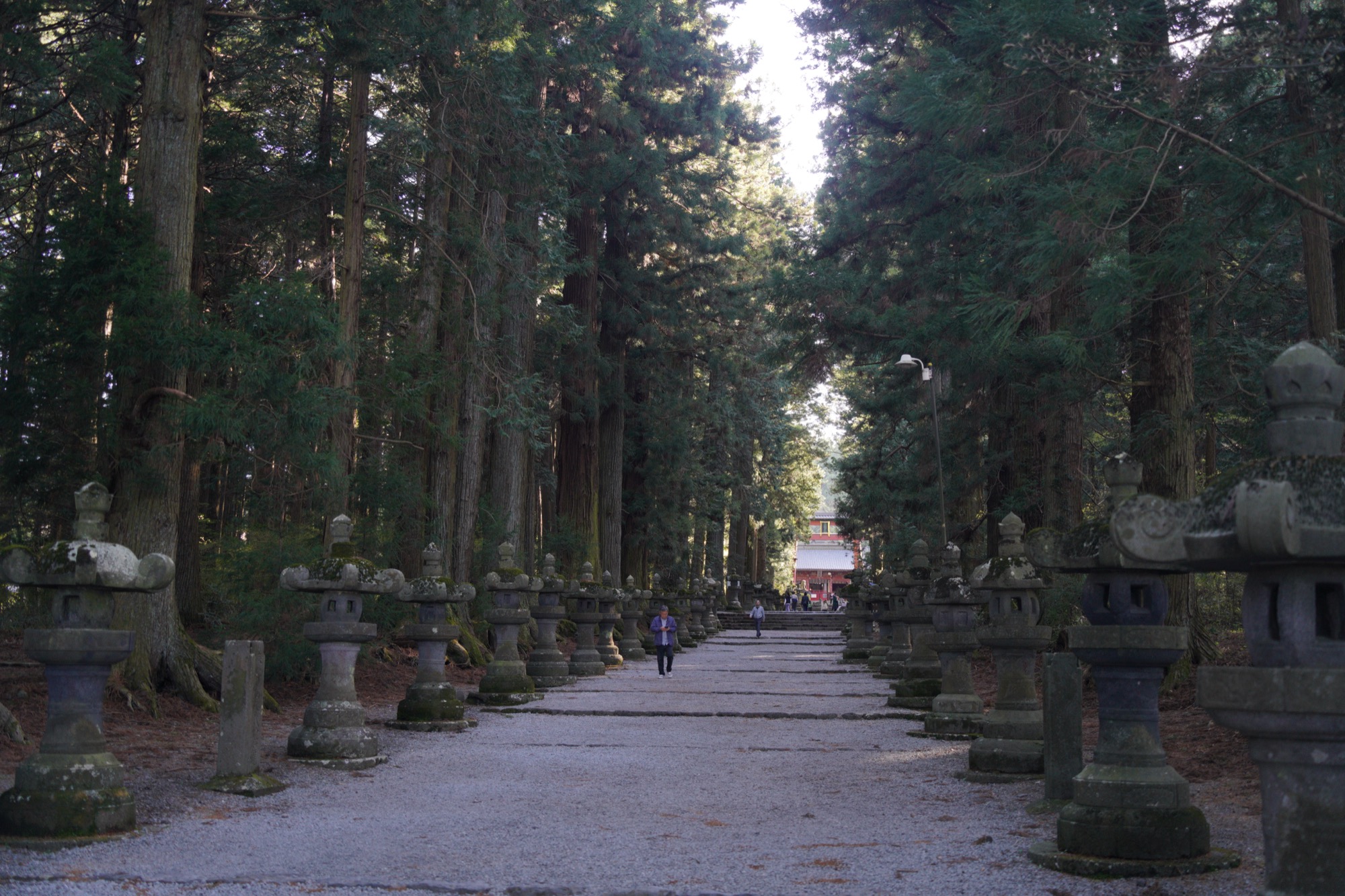
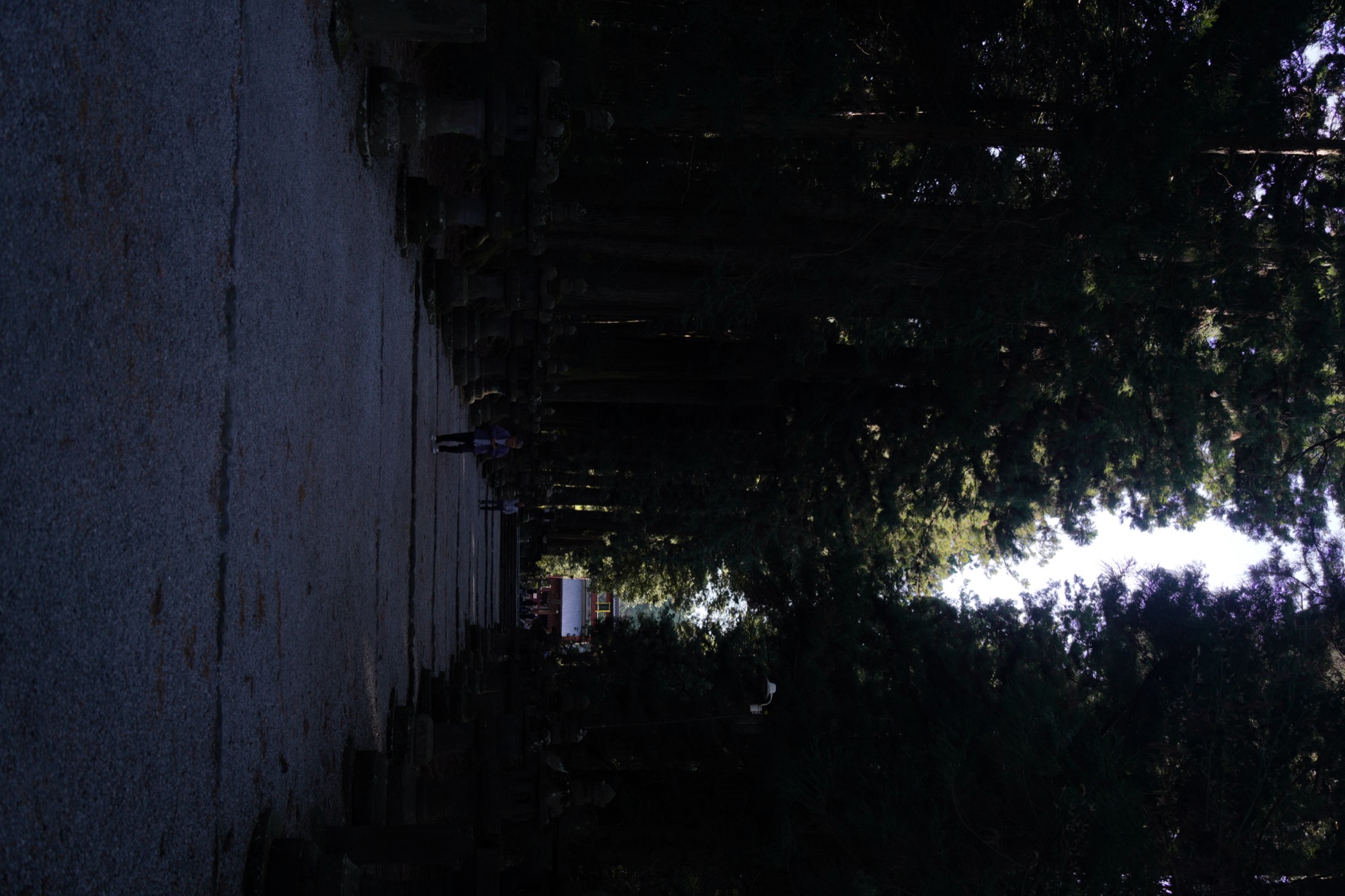
The cedar-lined approach, the Momoyama-style sanctuary, and the Yoshida Trail beginning beside the main hall — the spatial composition of the precinct is itself an argument: Fuji begins here. In 2013, the shrine was inscribed as a component of the UNESCO World Heritage property Fujisan: Sacred Place and Source of Artistic Inspiration.