Tokiwadai Tenso Shrine
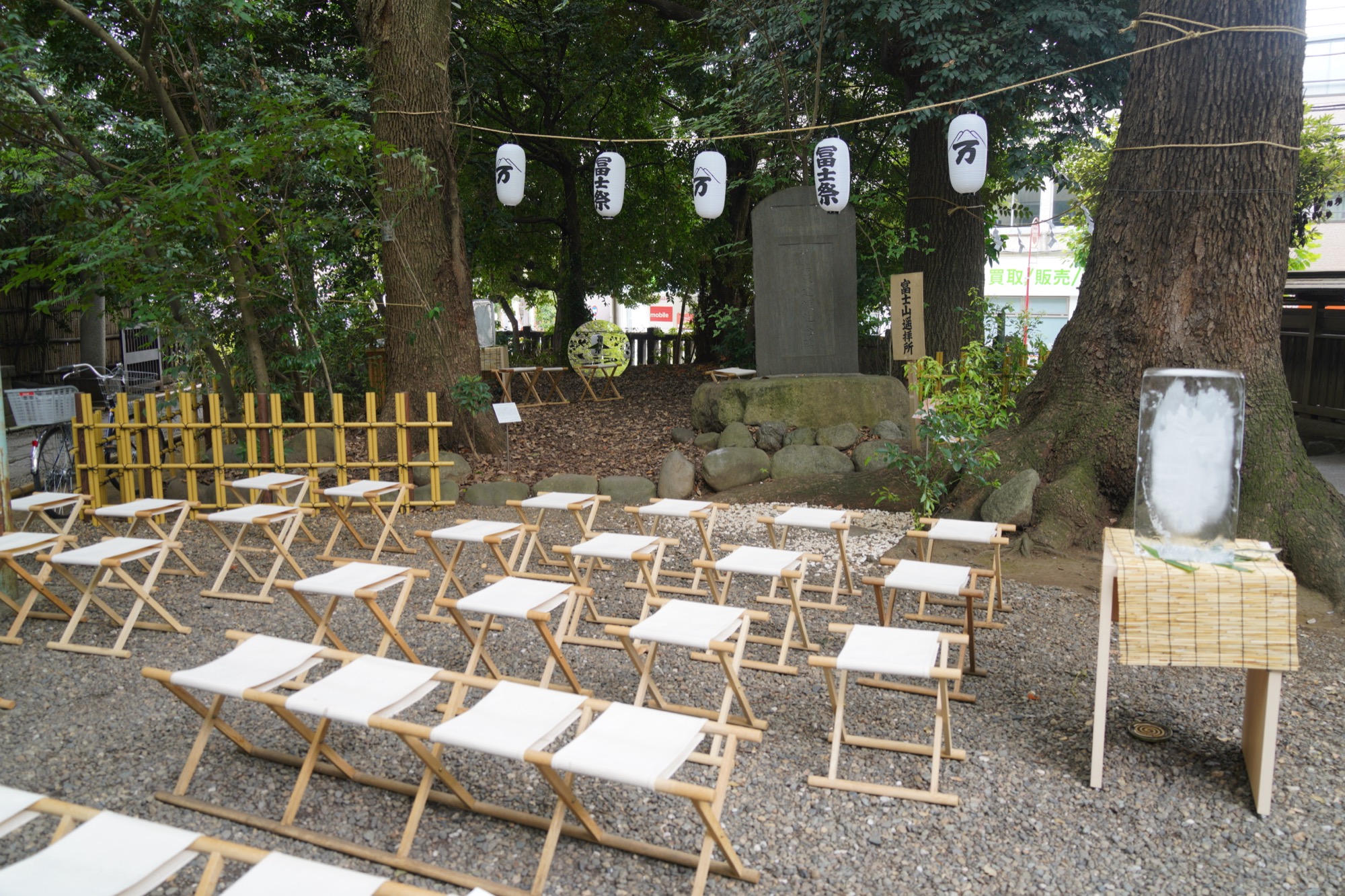
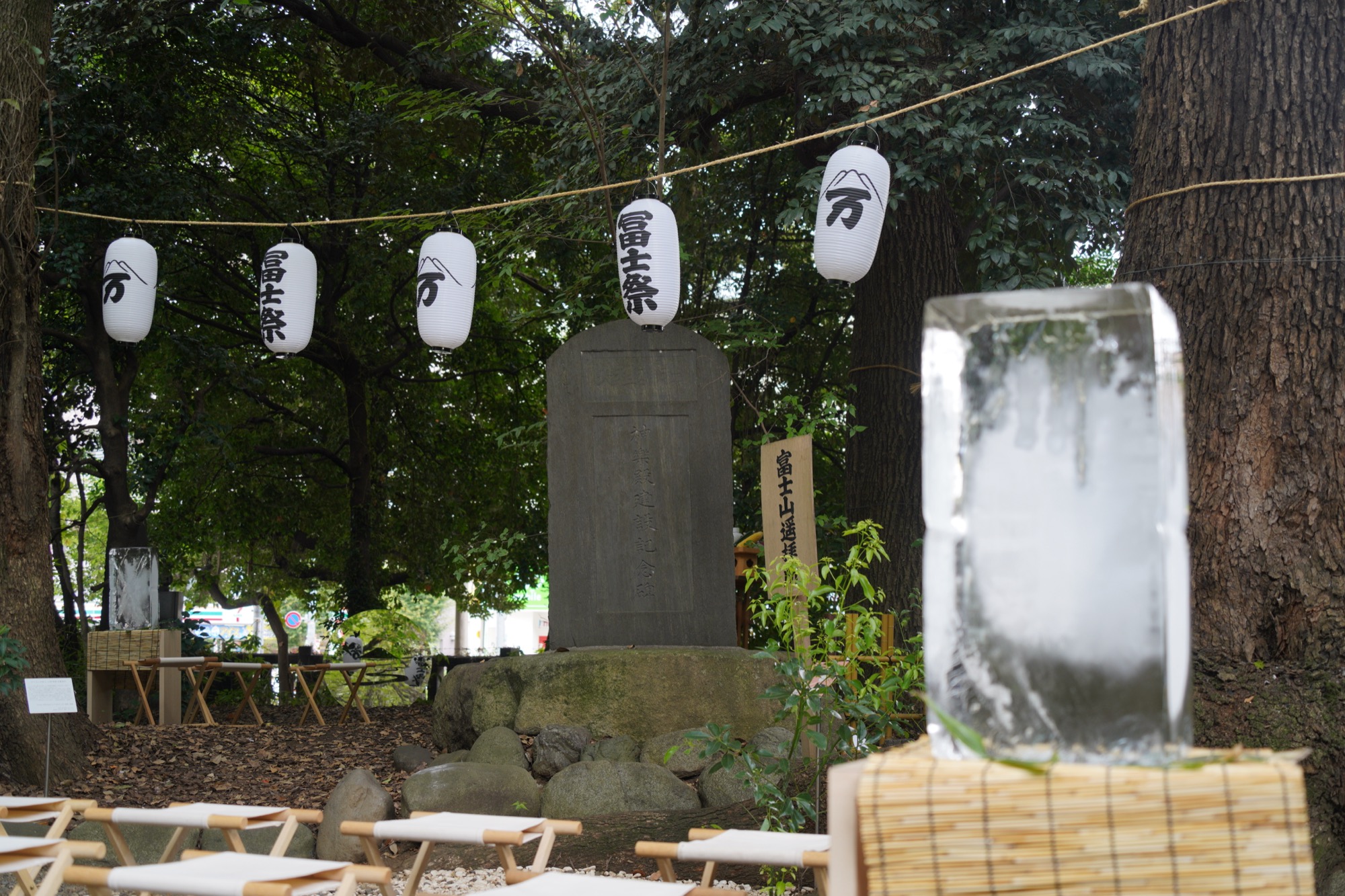
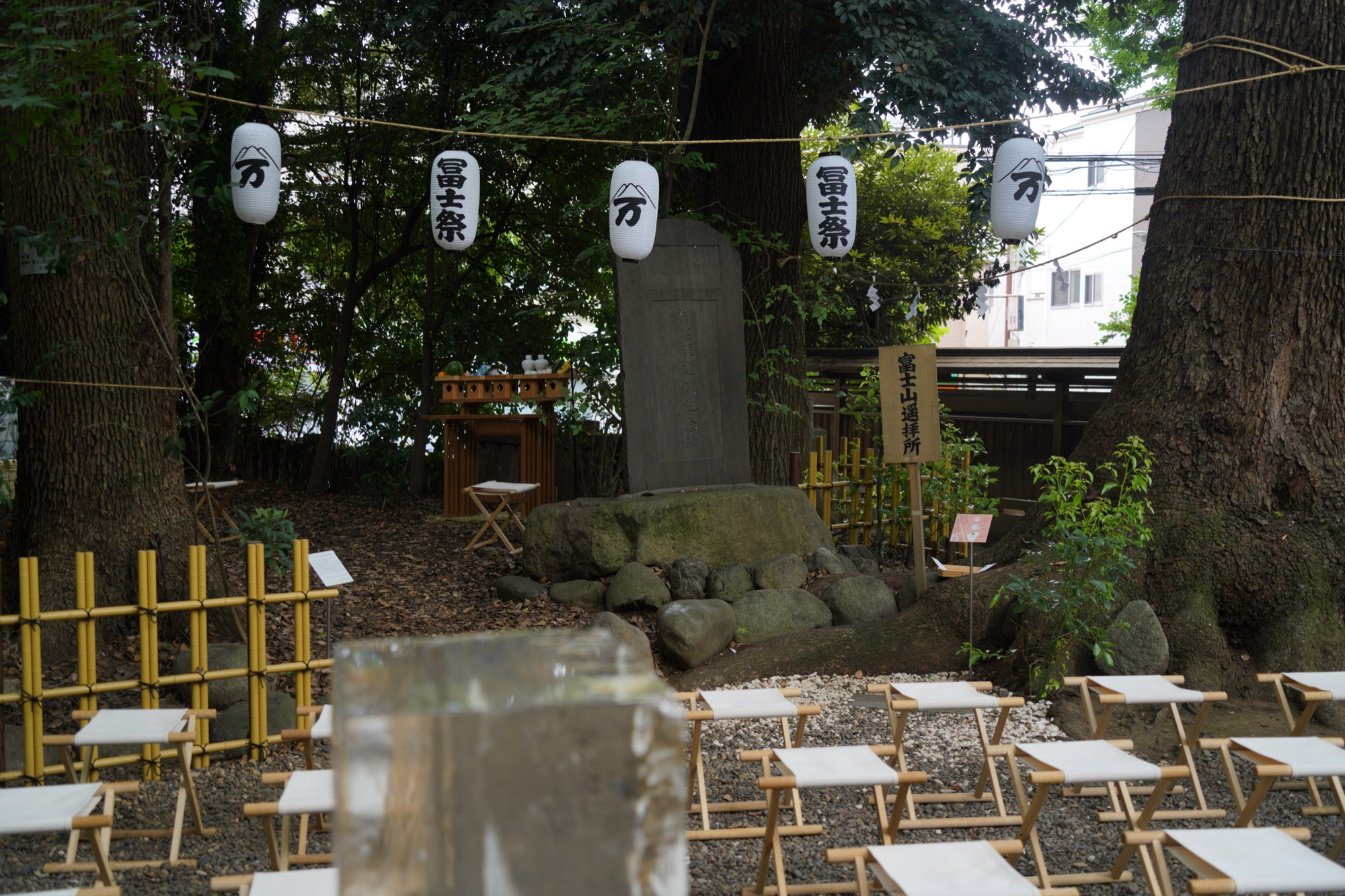
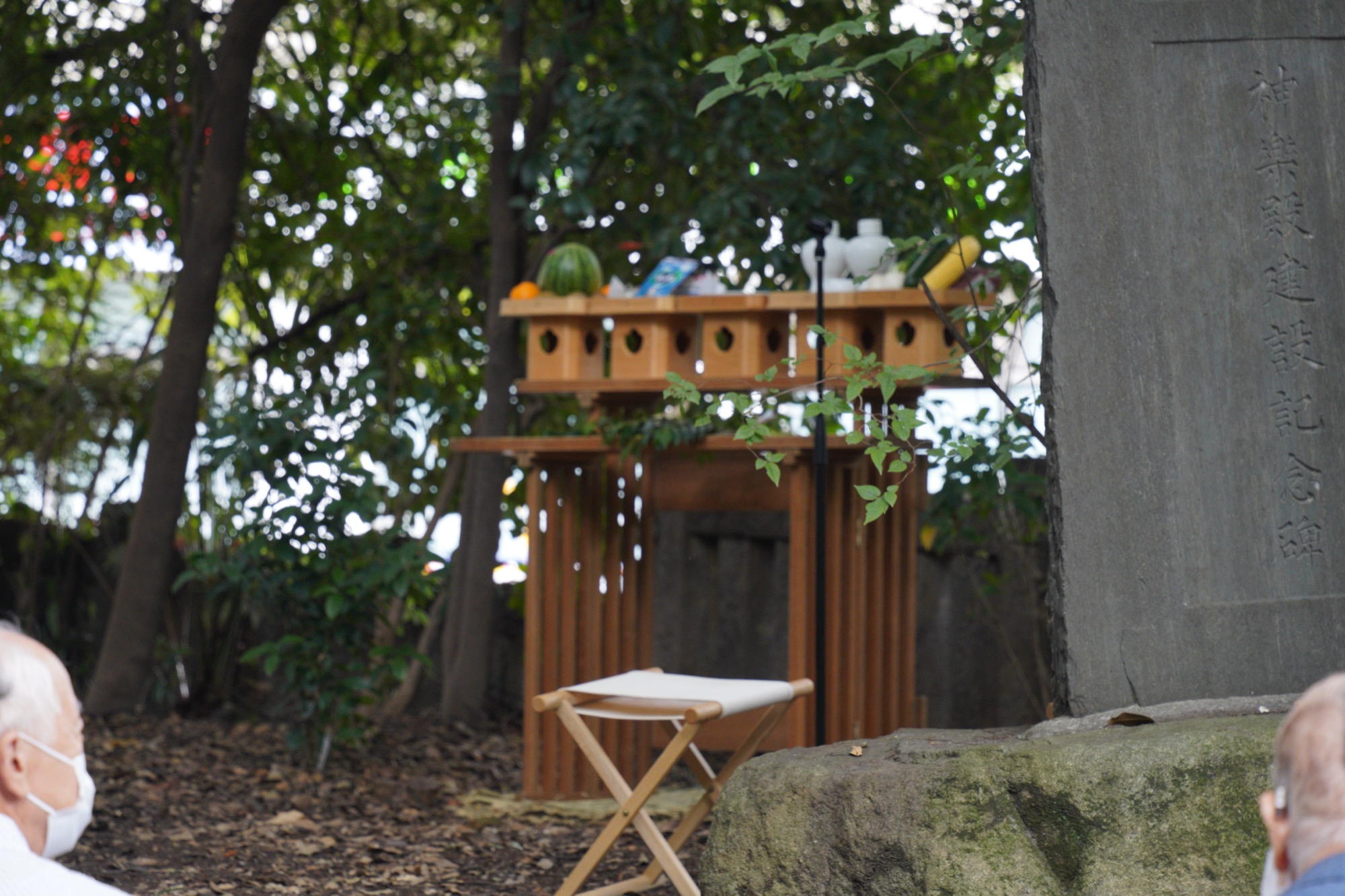
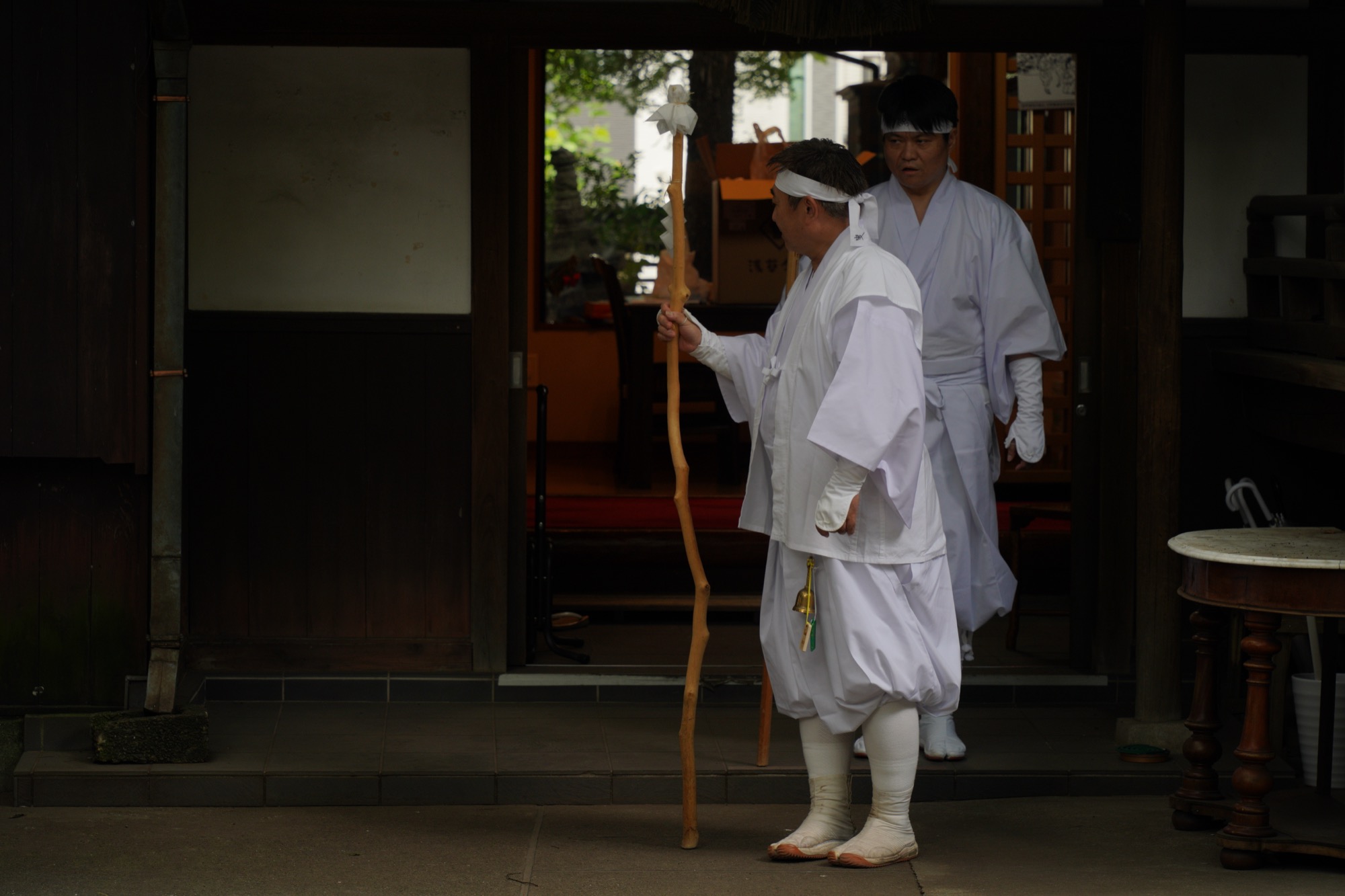
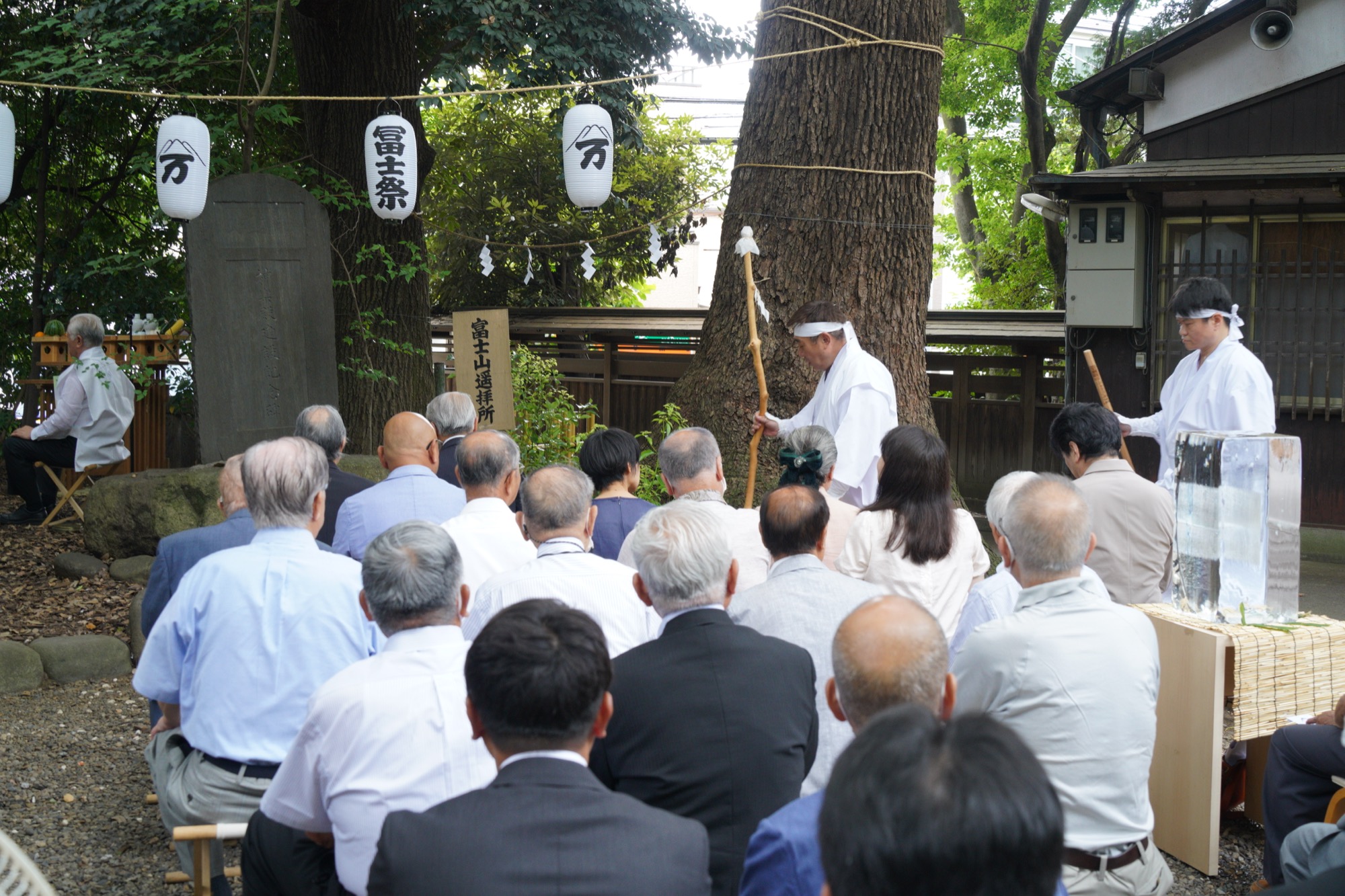
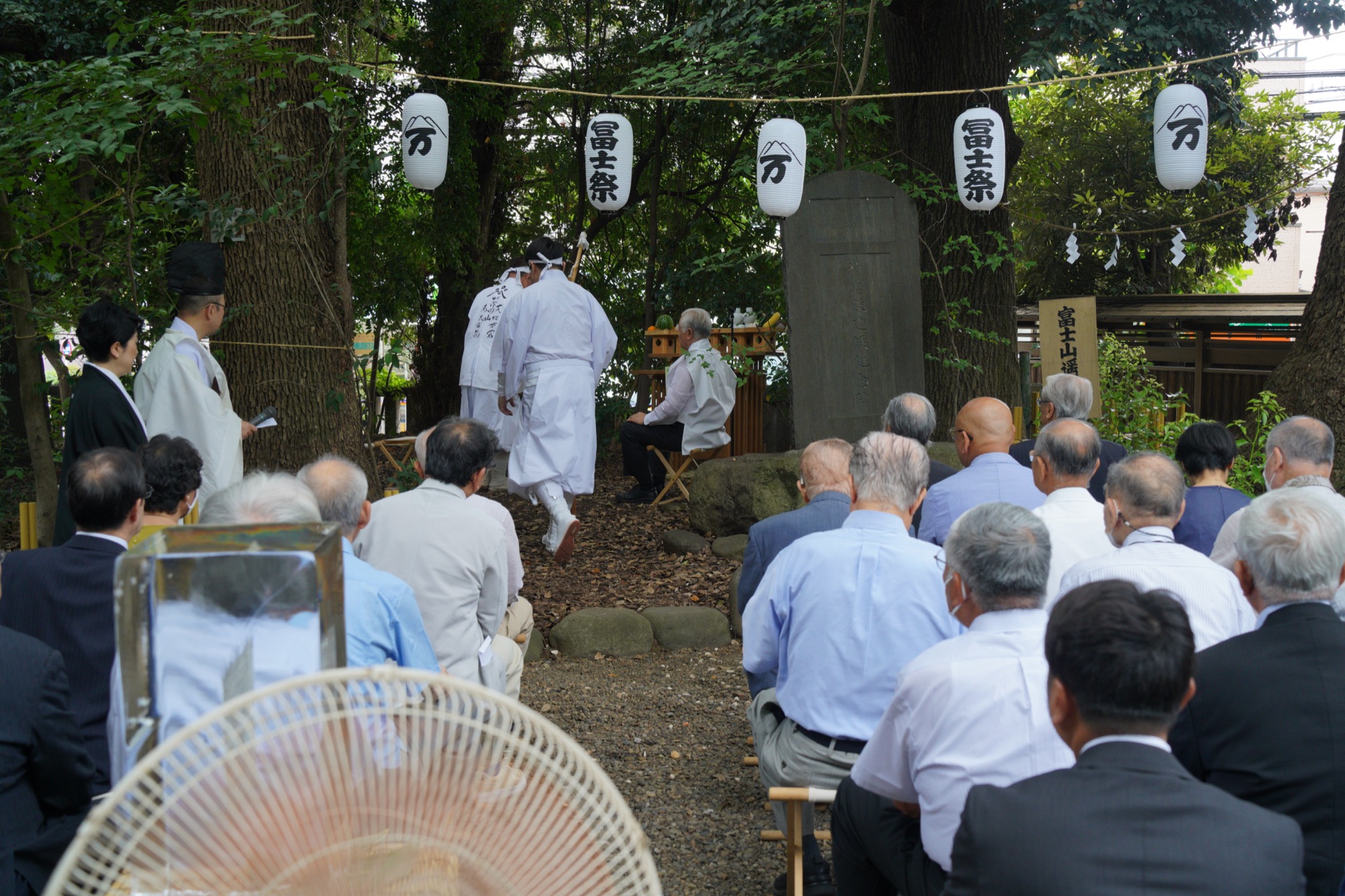
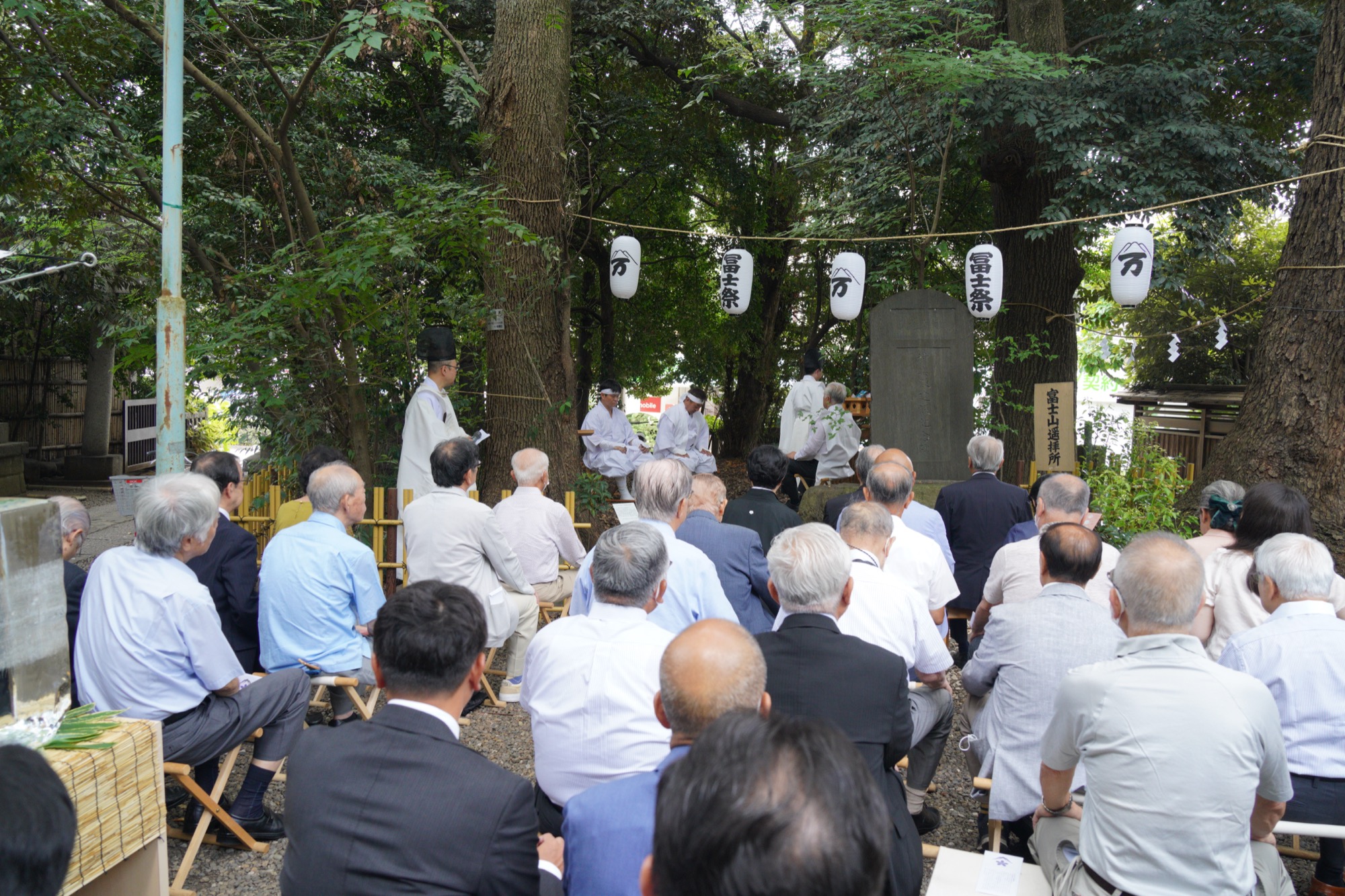
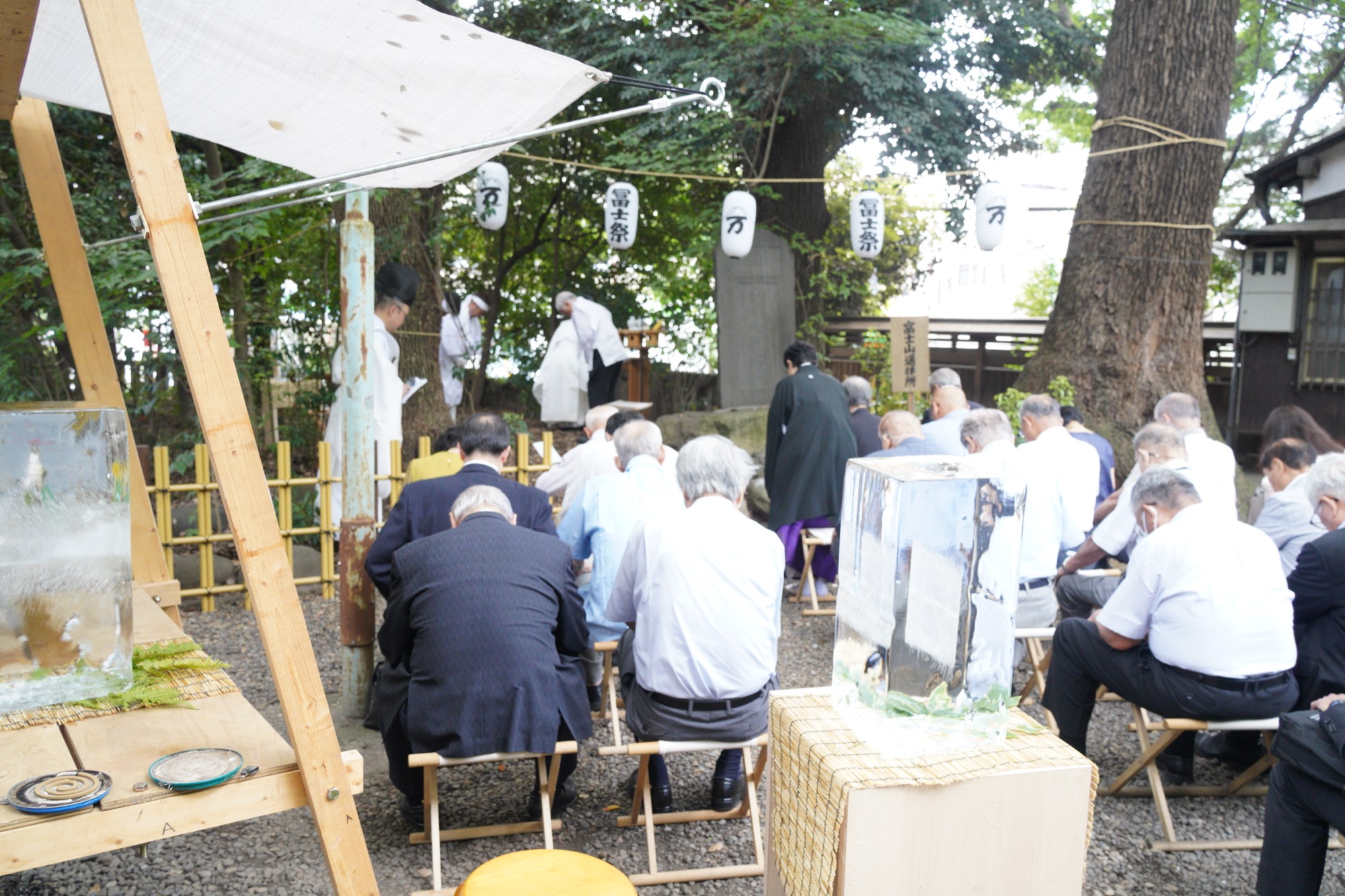
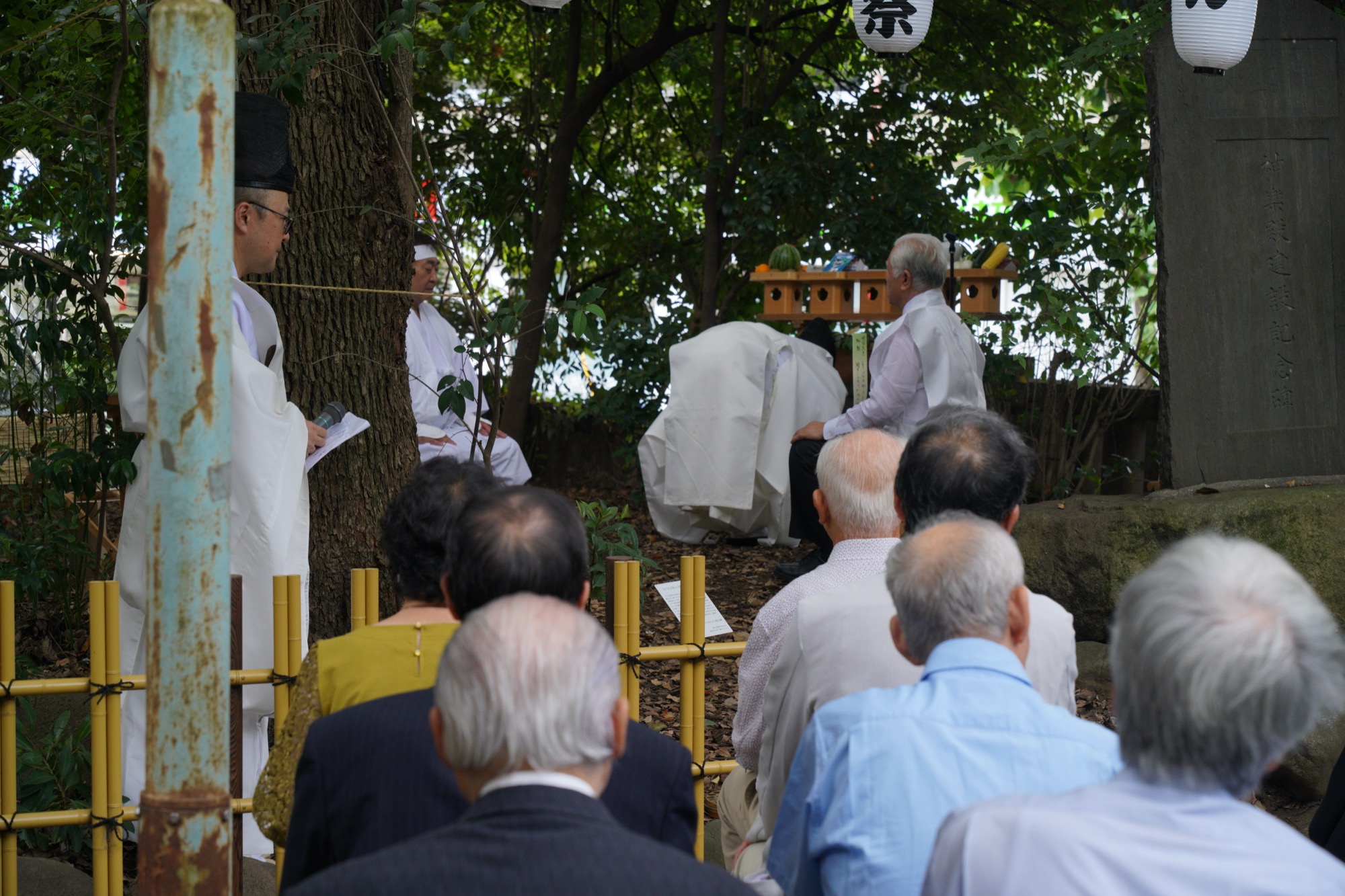
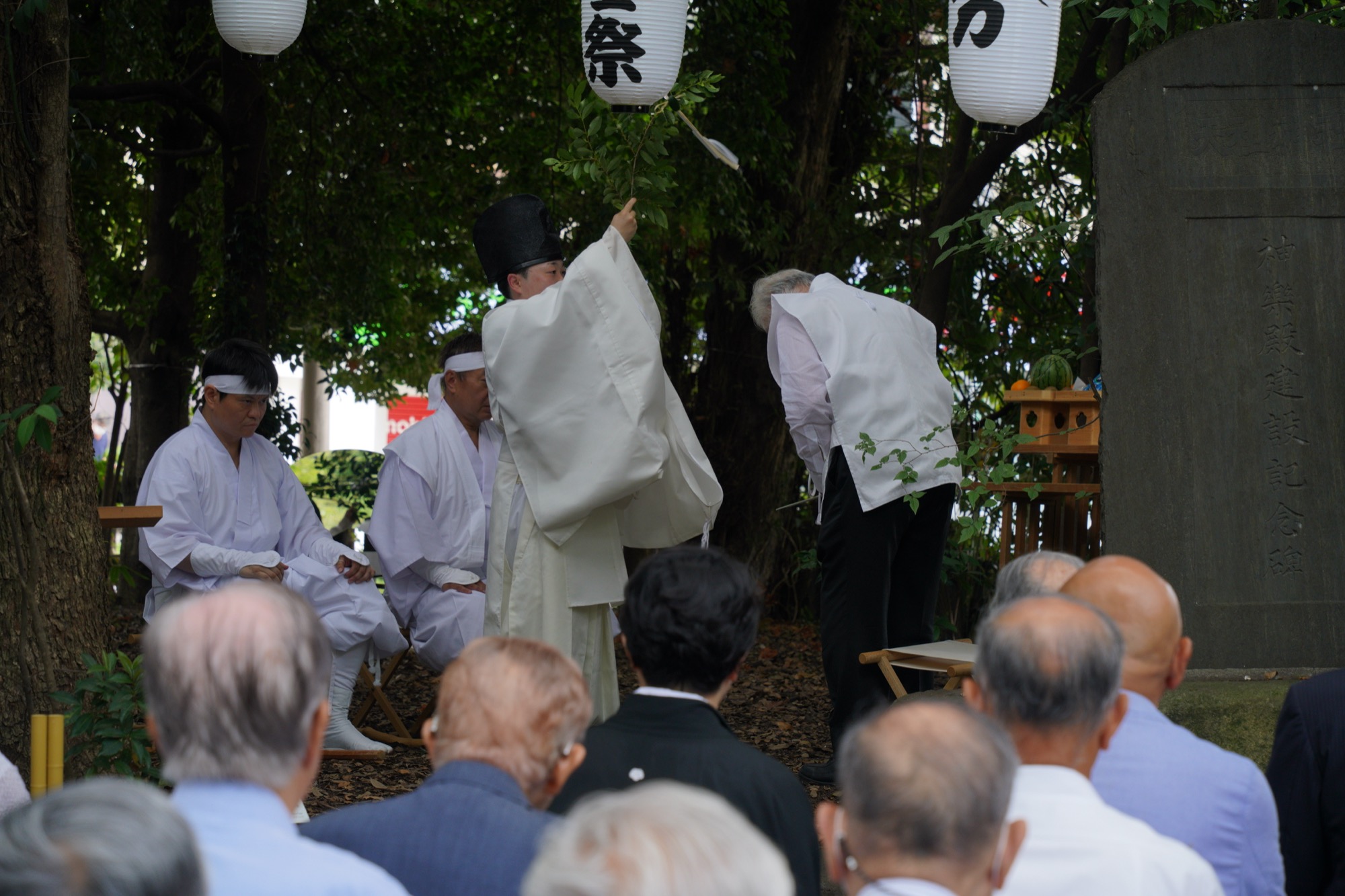
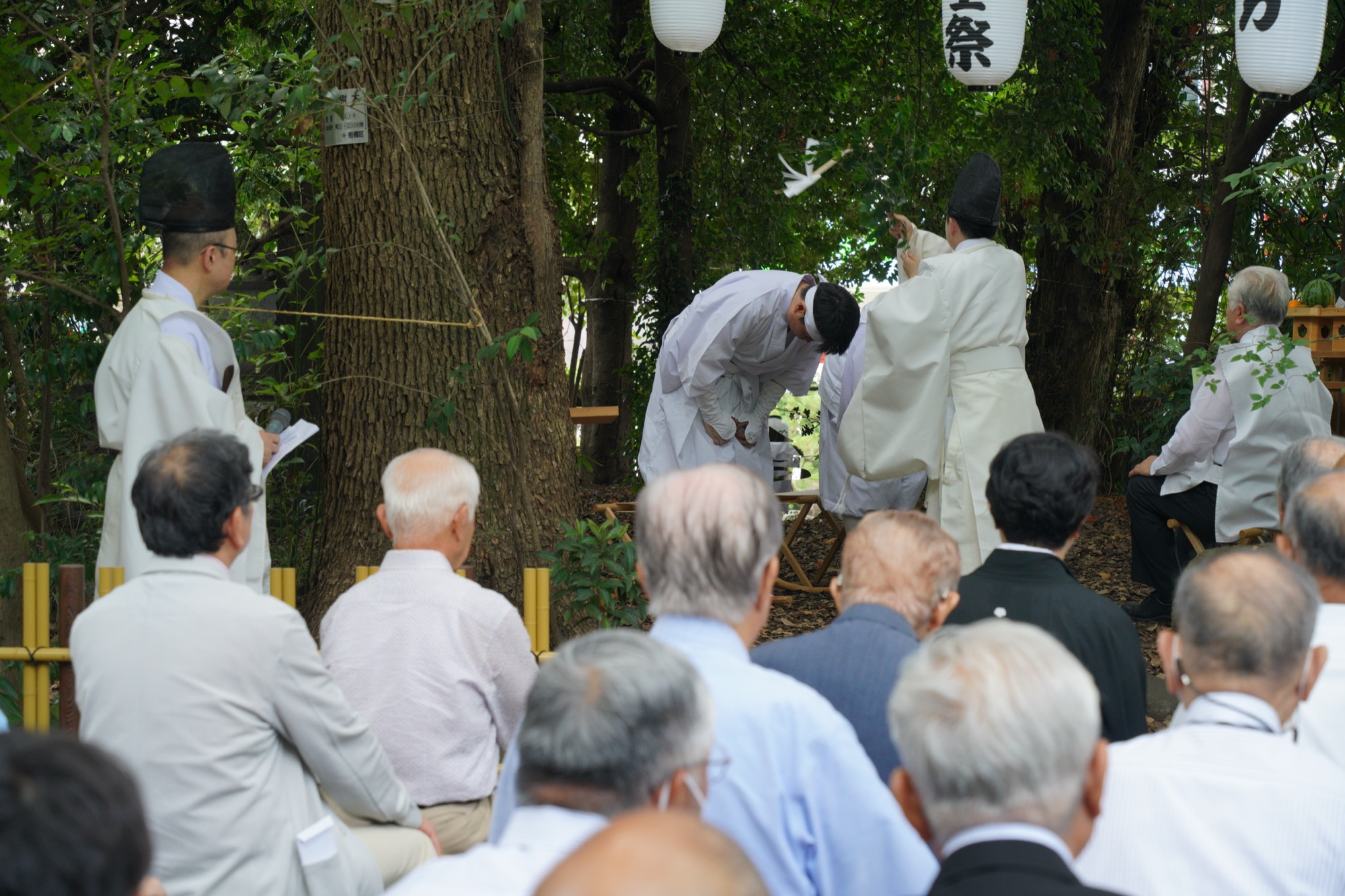
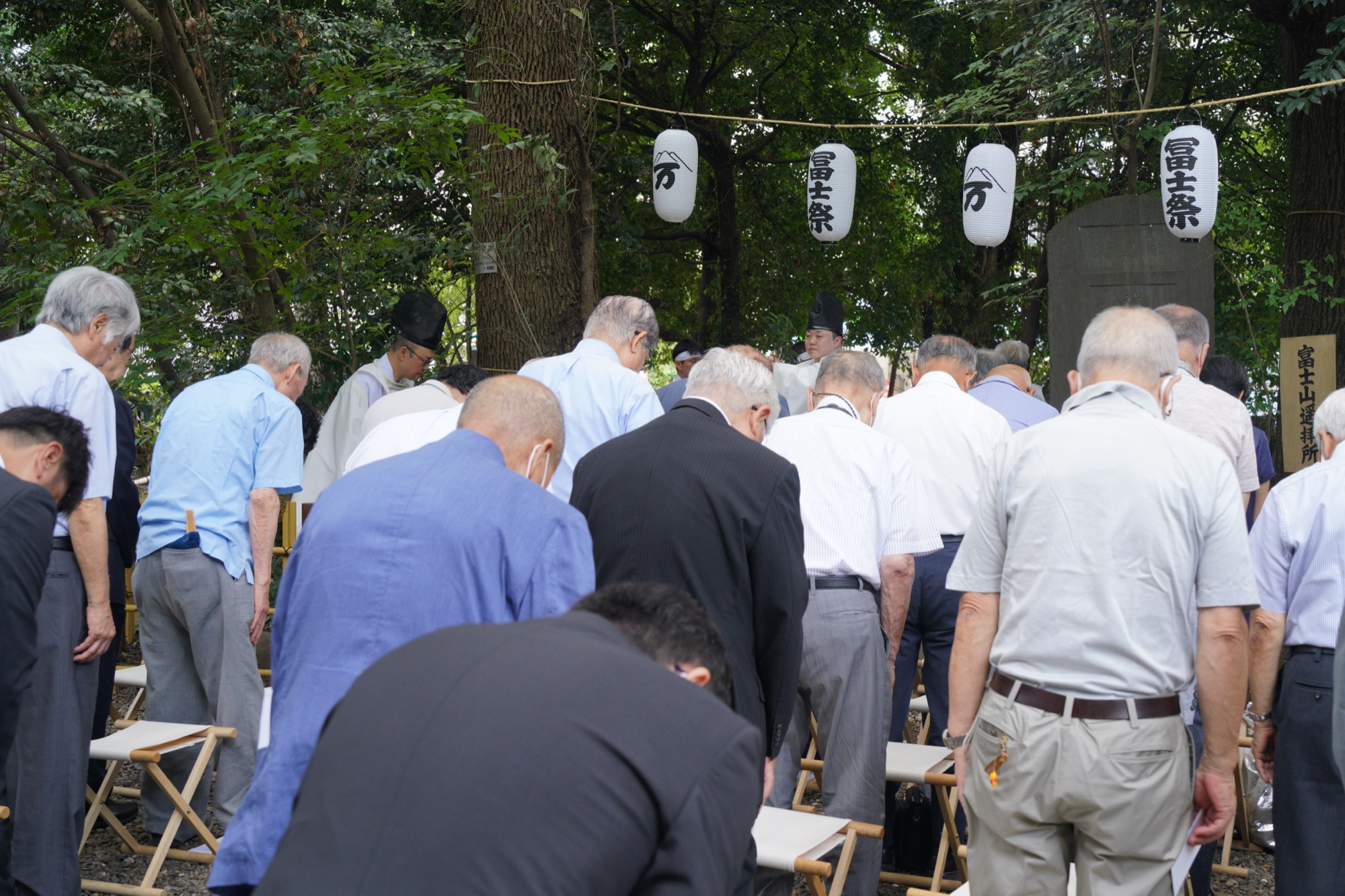
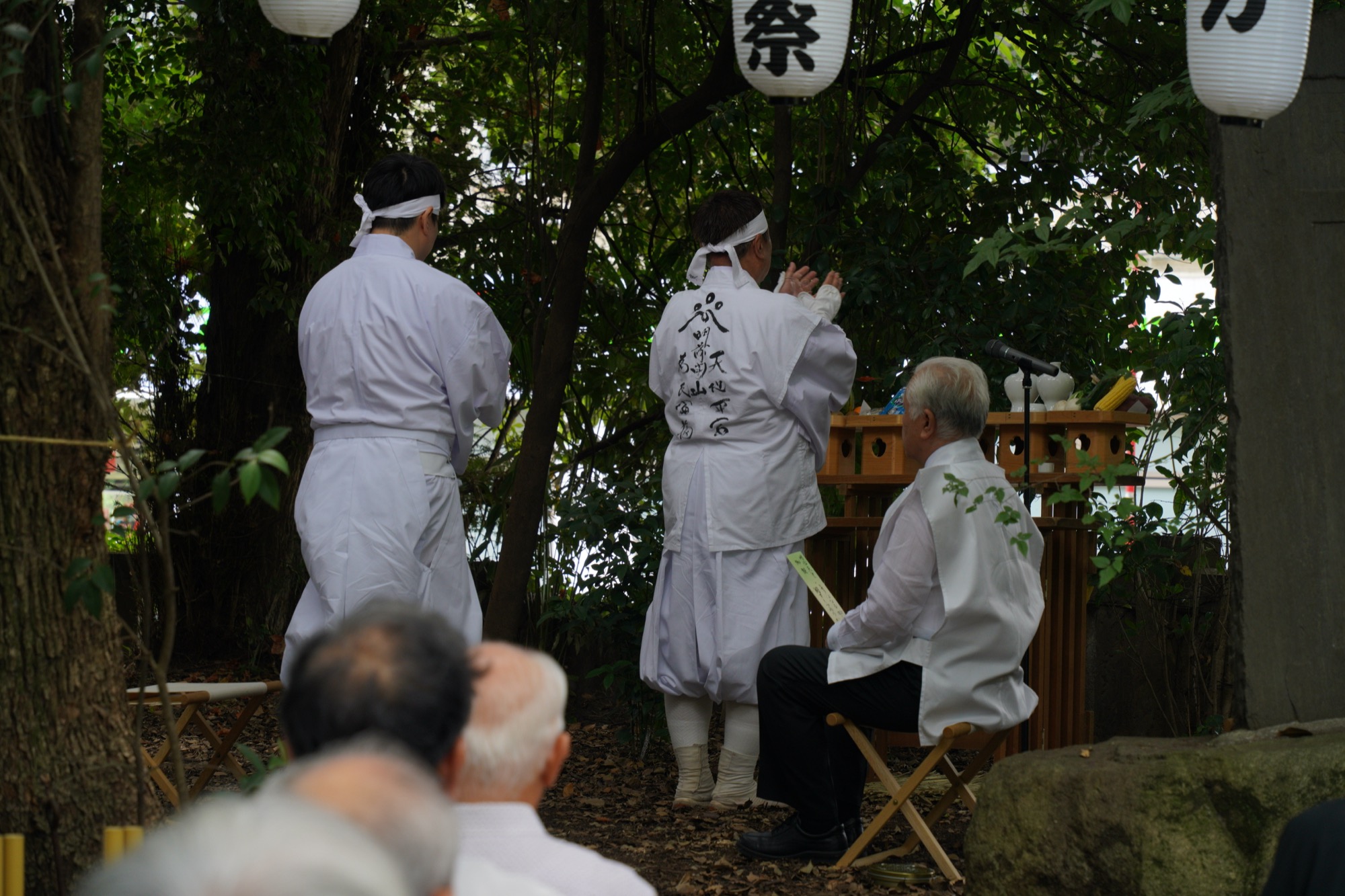
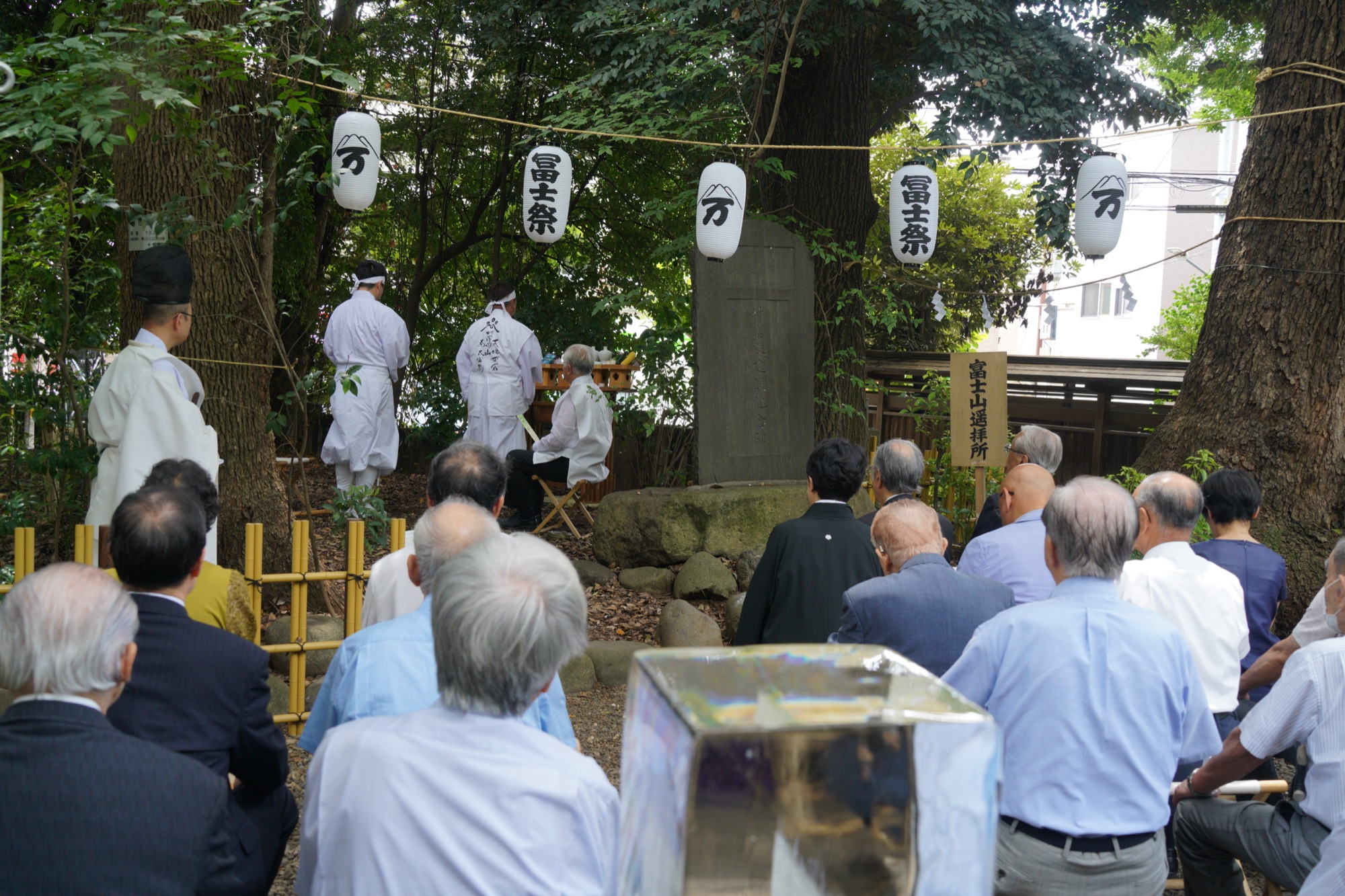
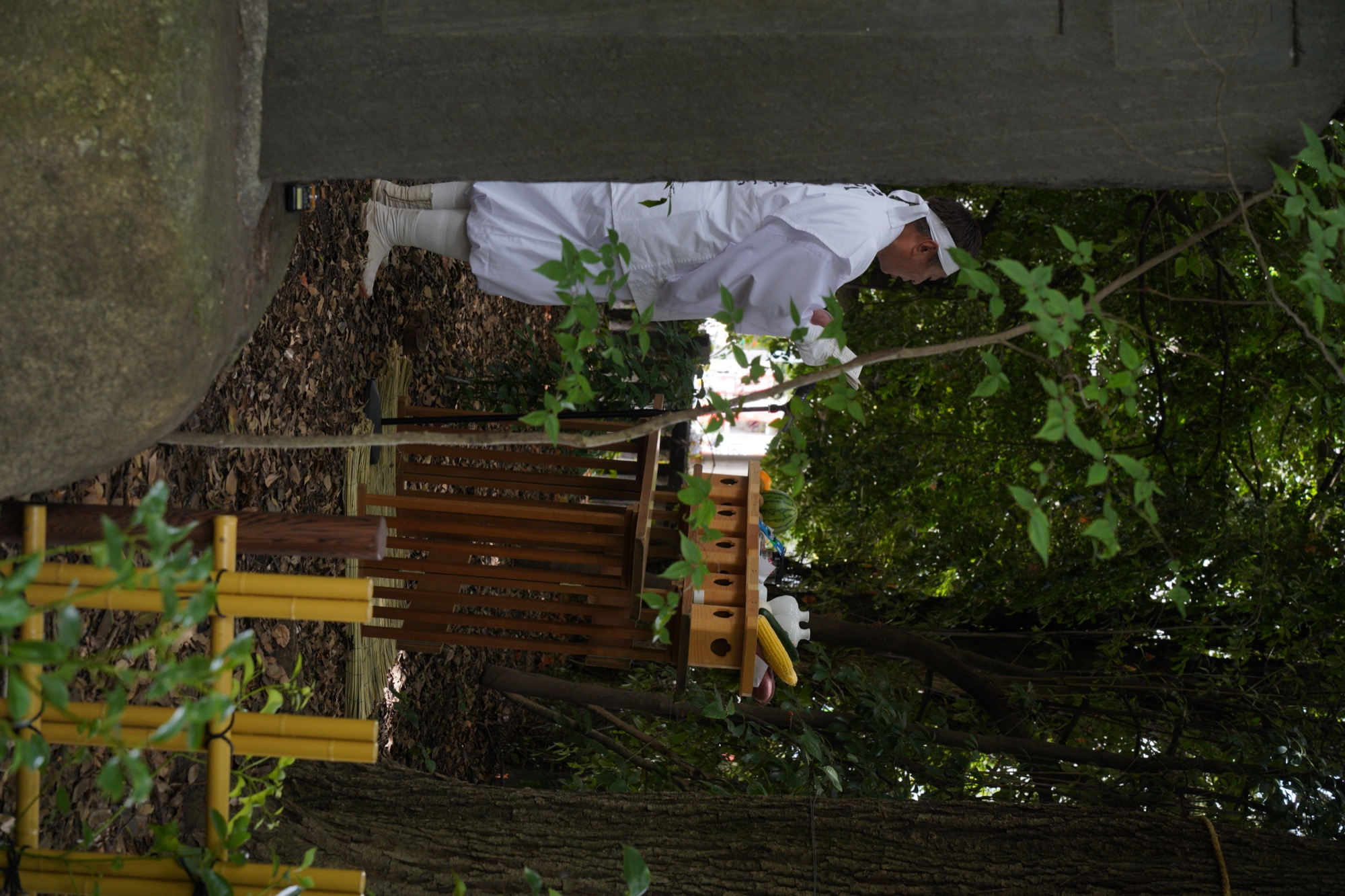
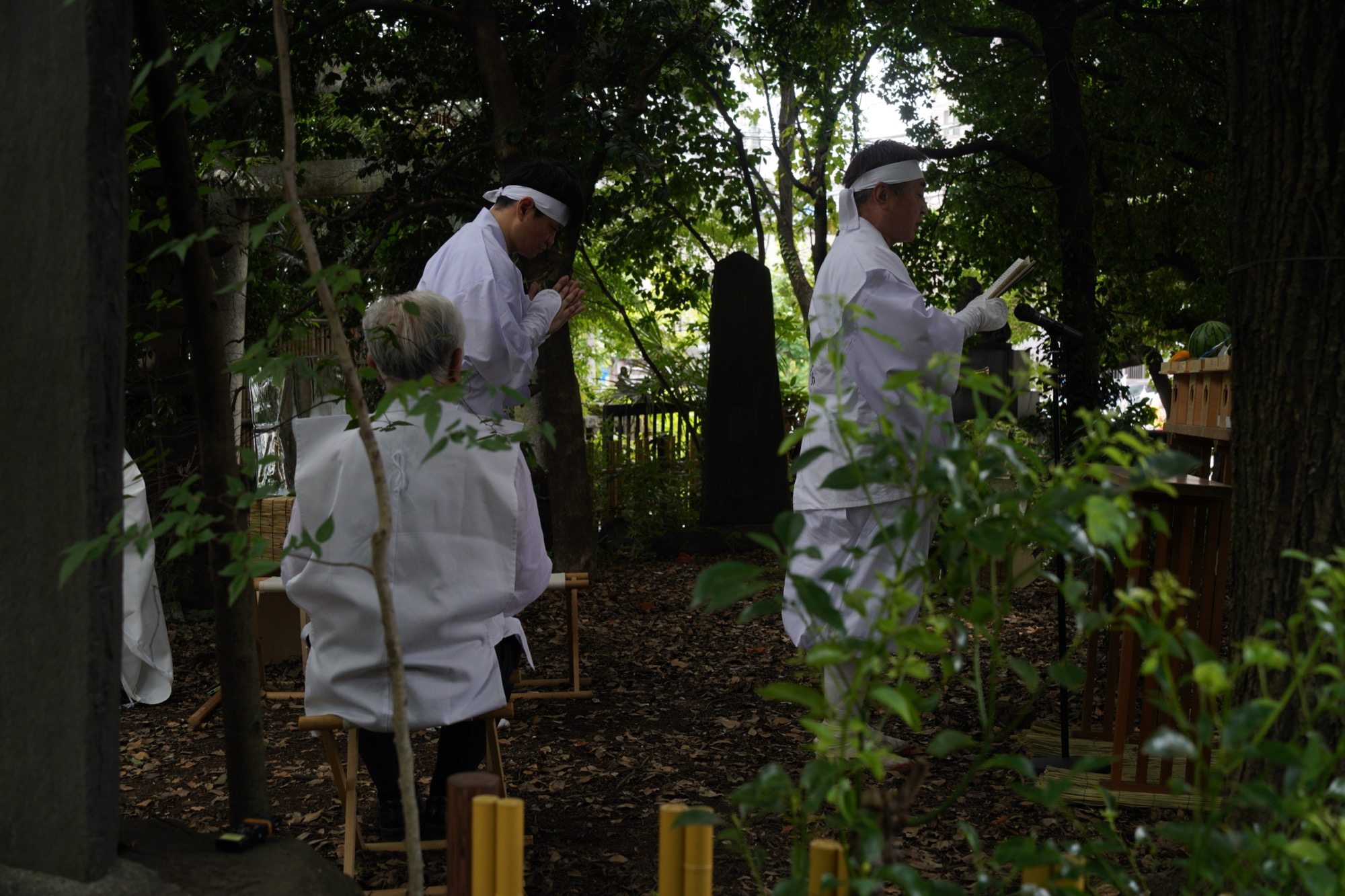
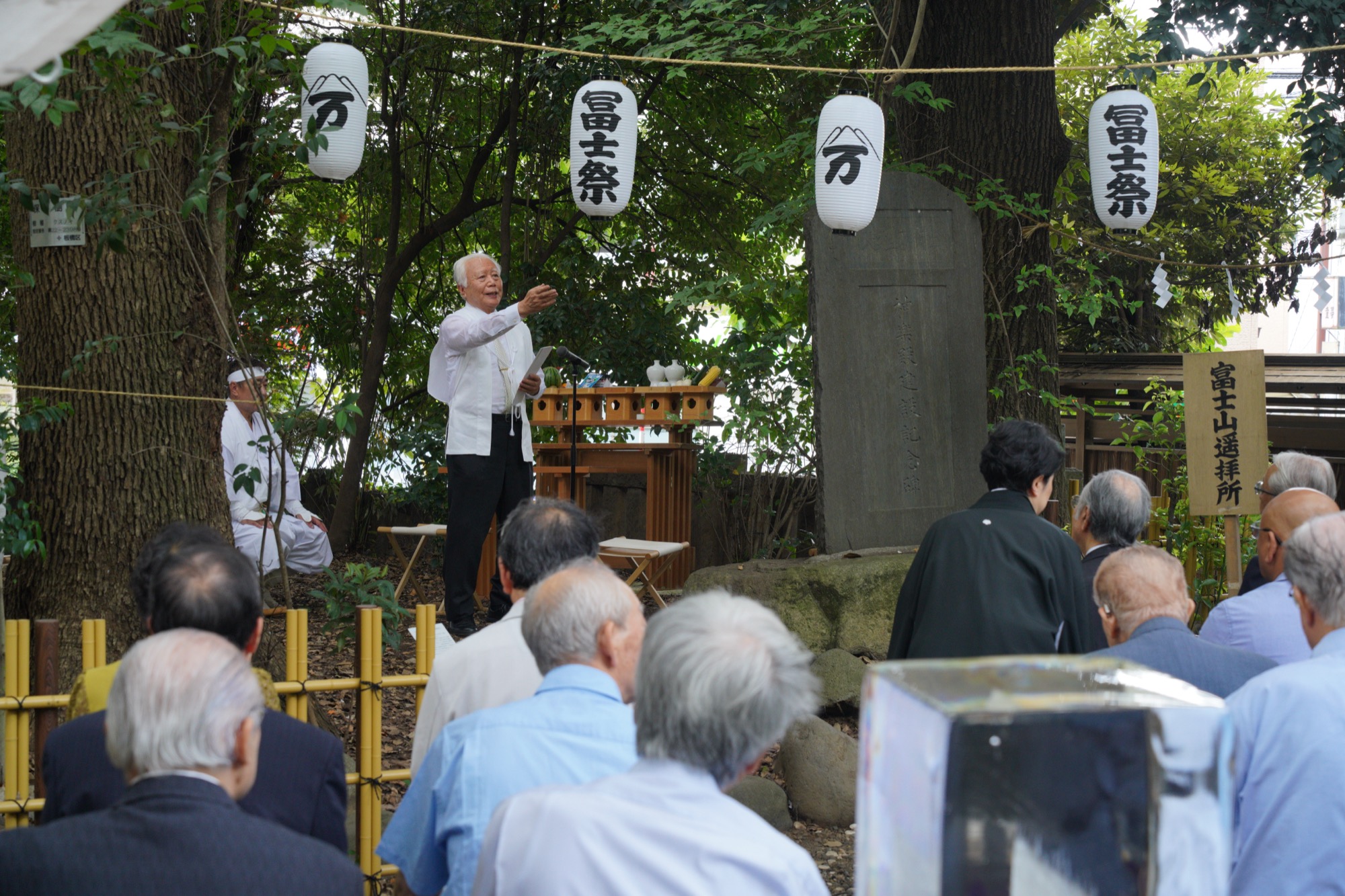
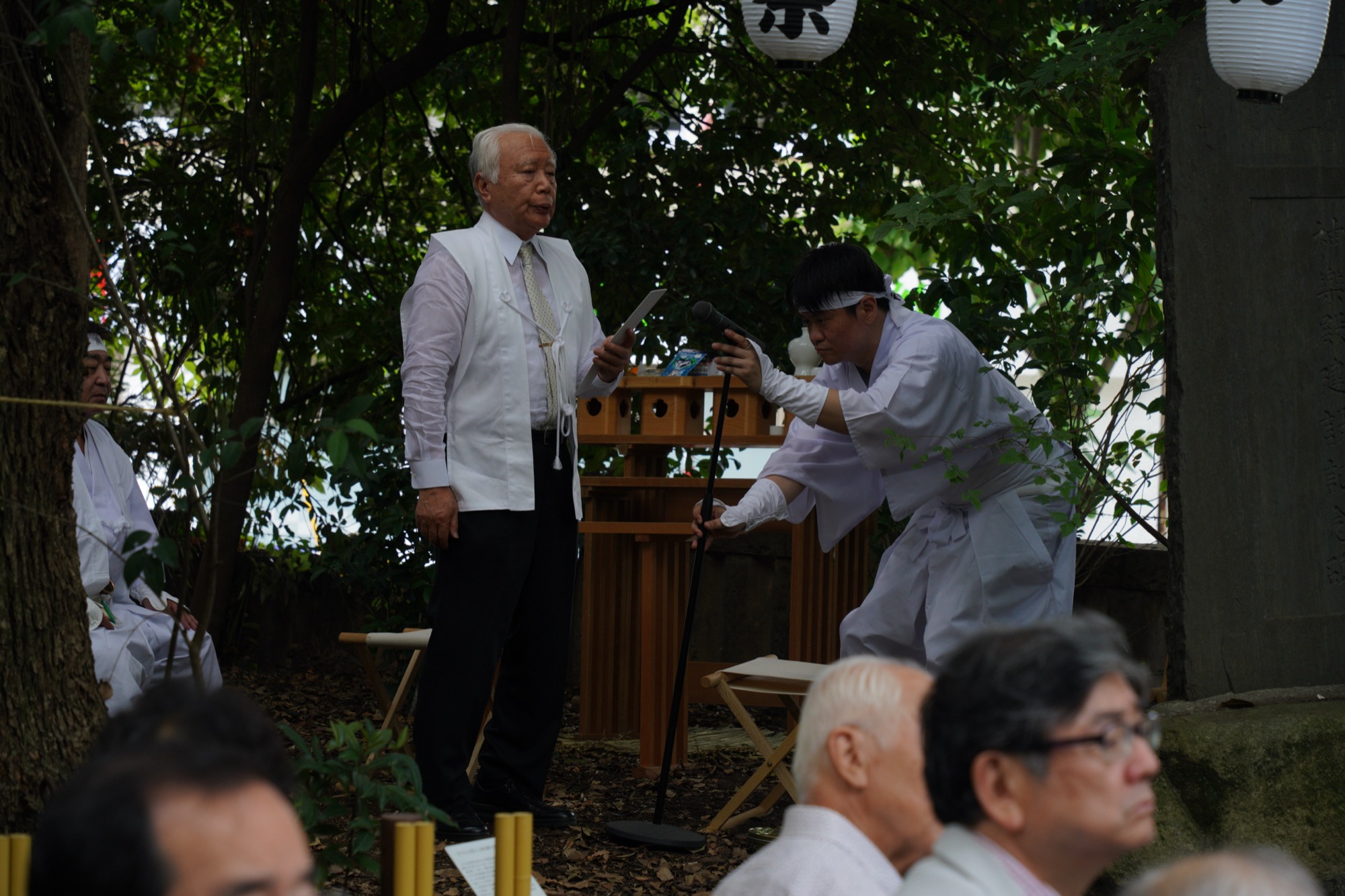
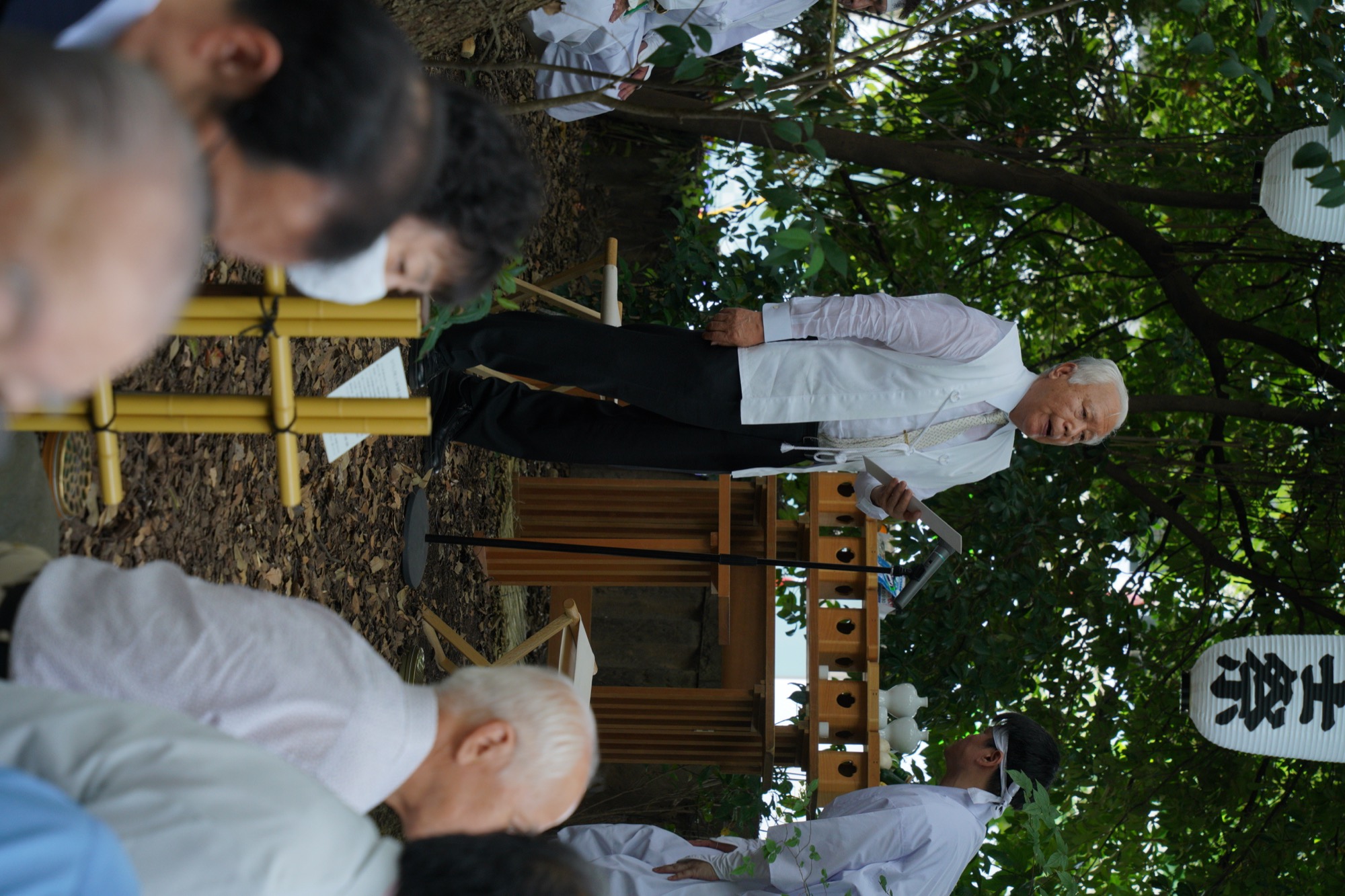
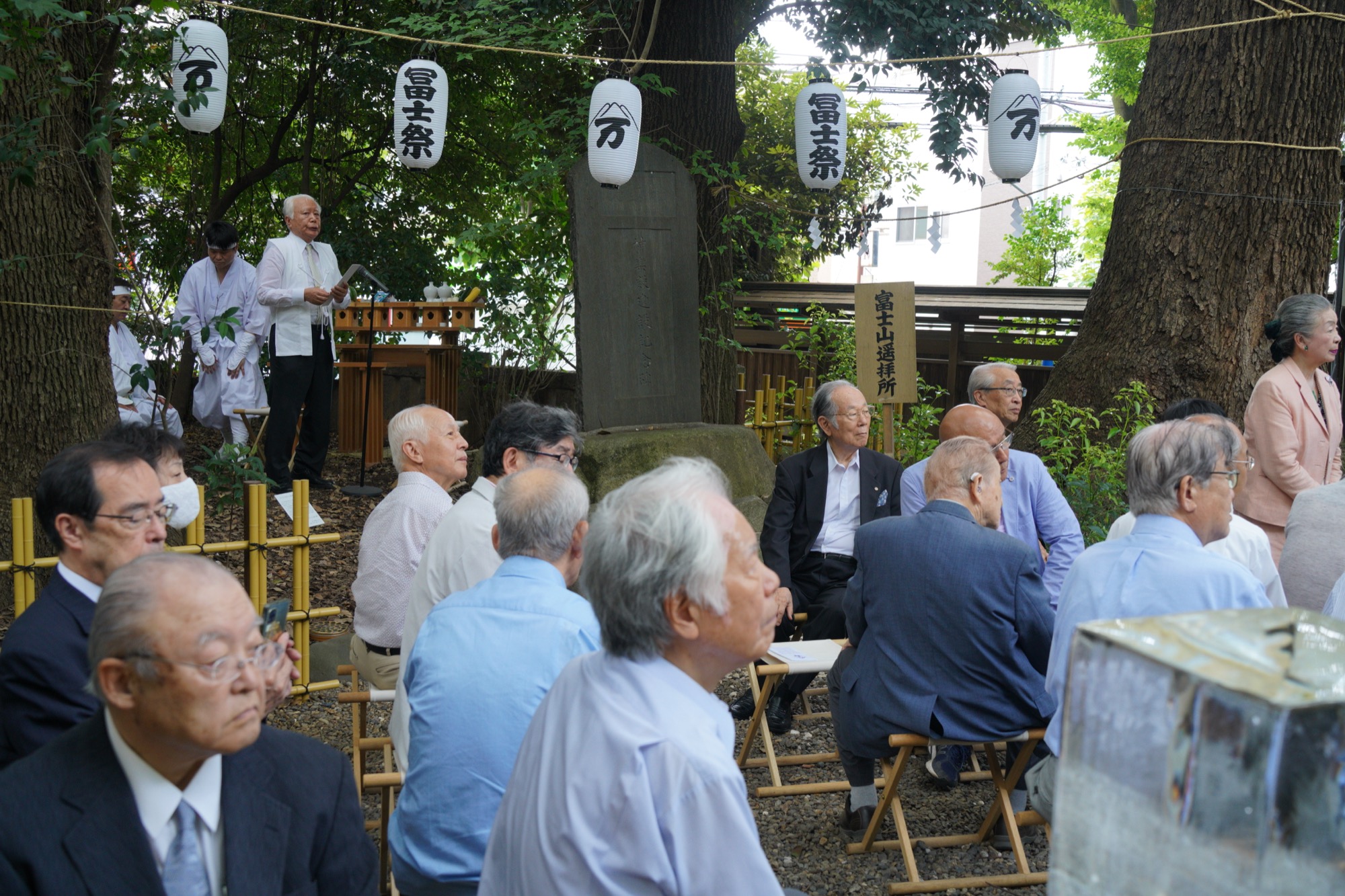
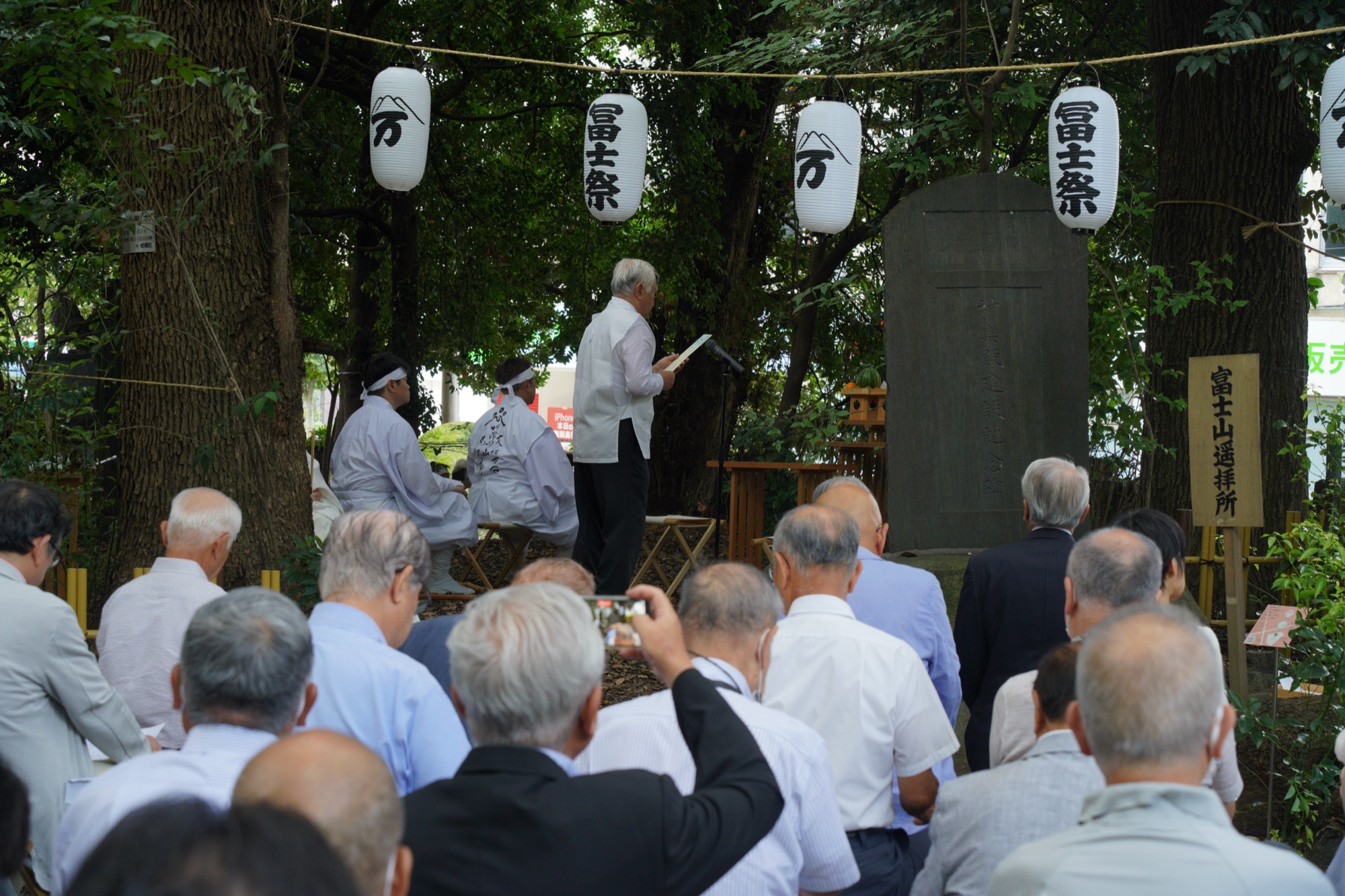
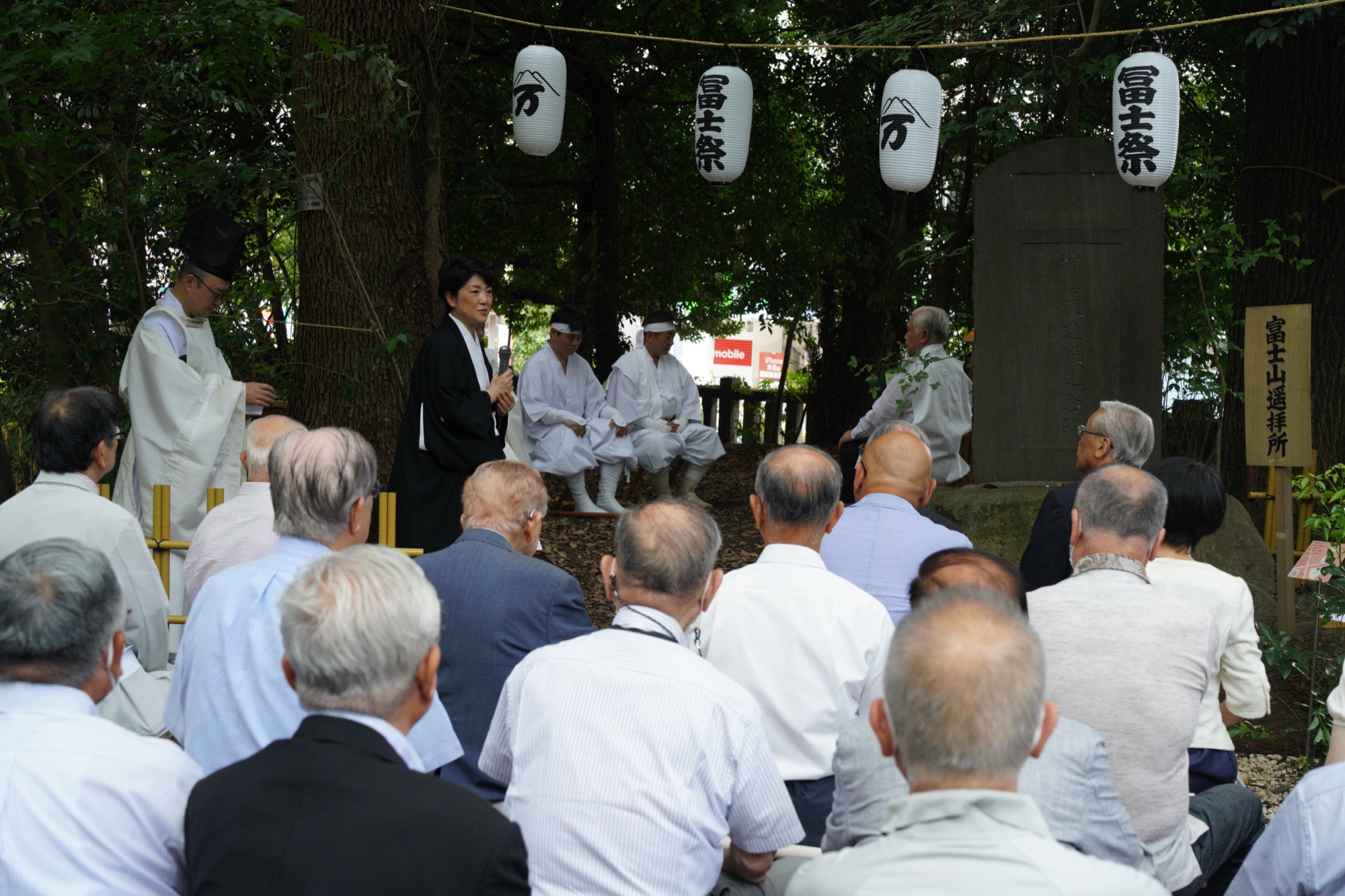
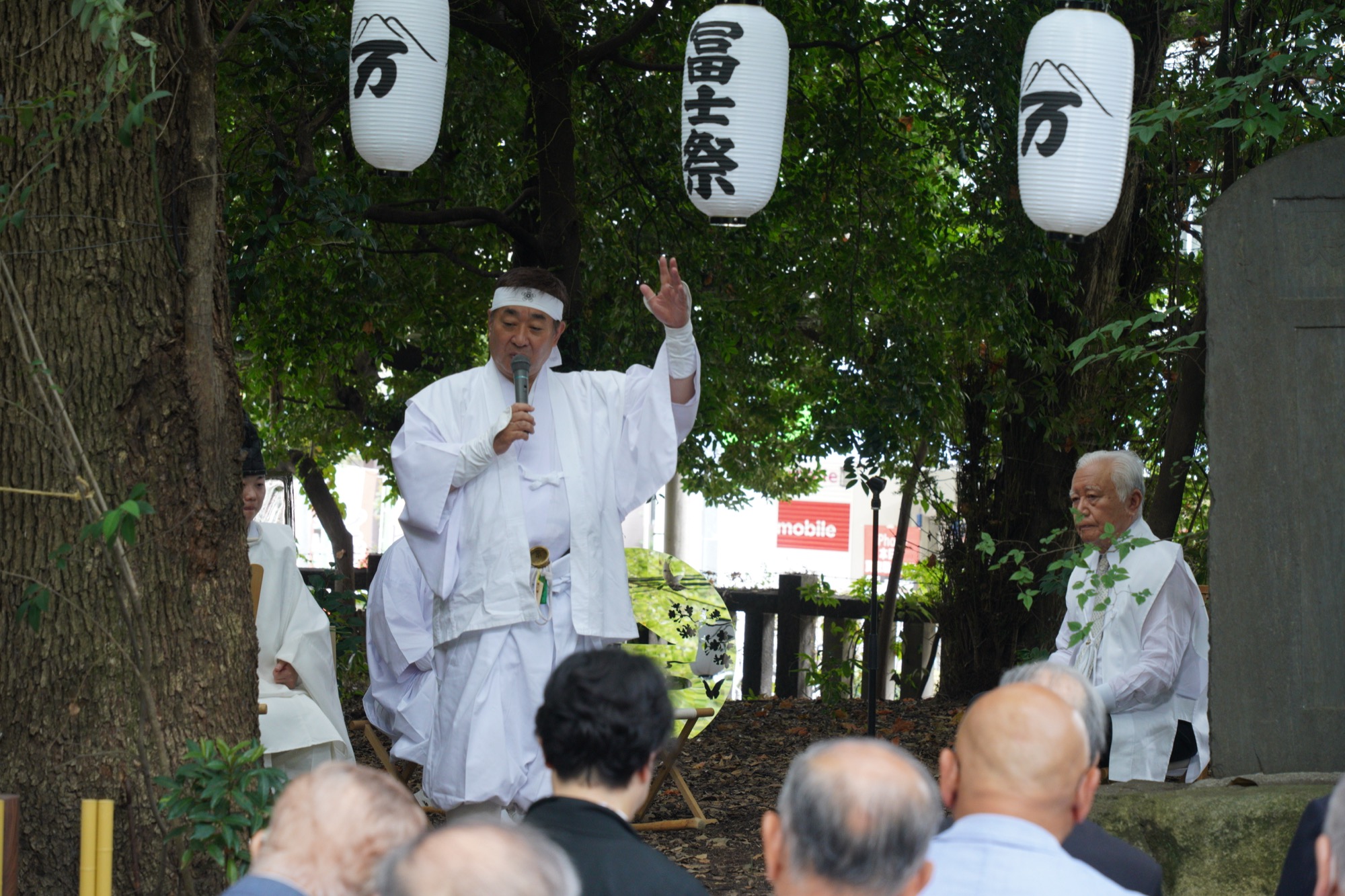
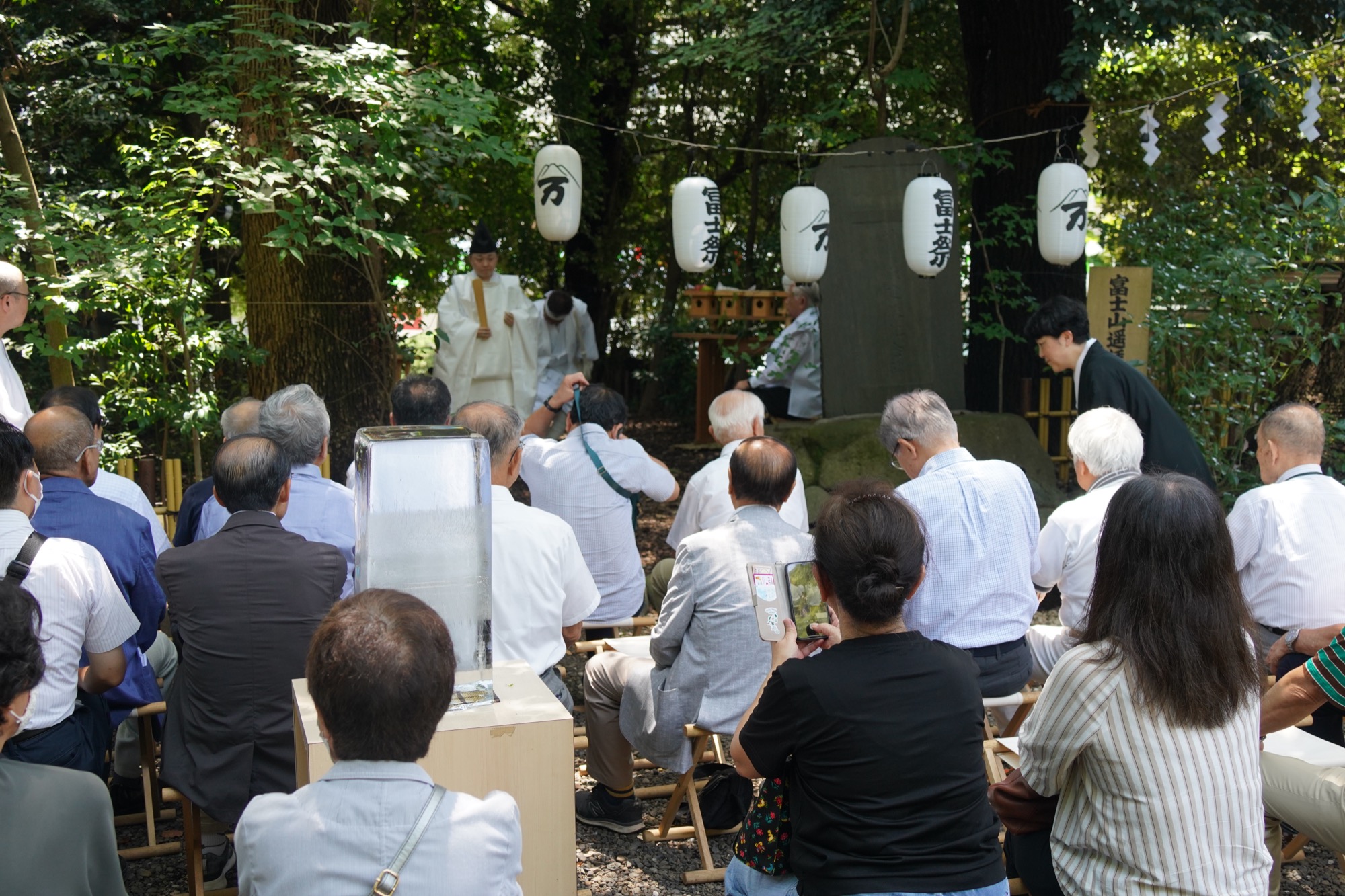
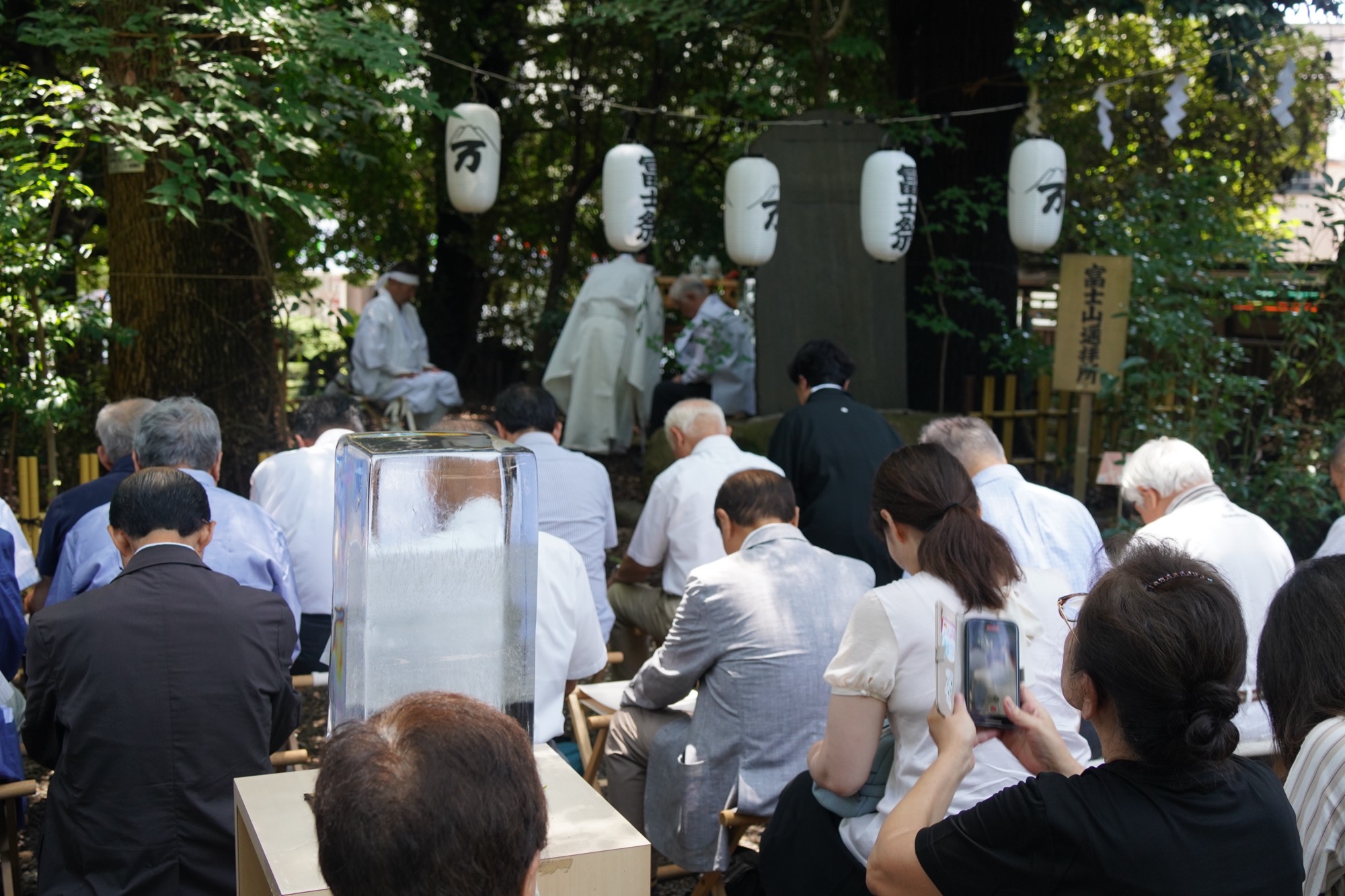
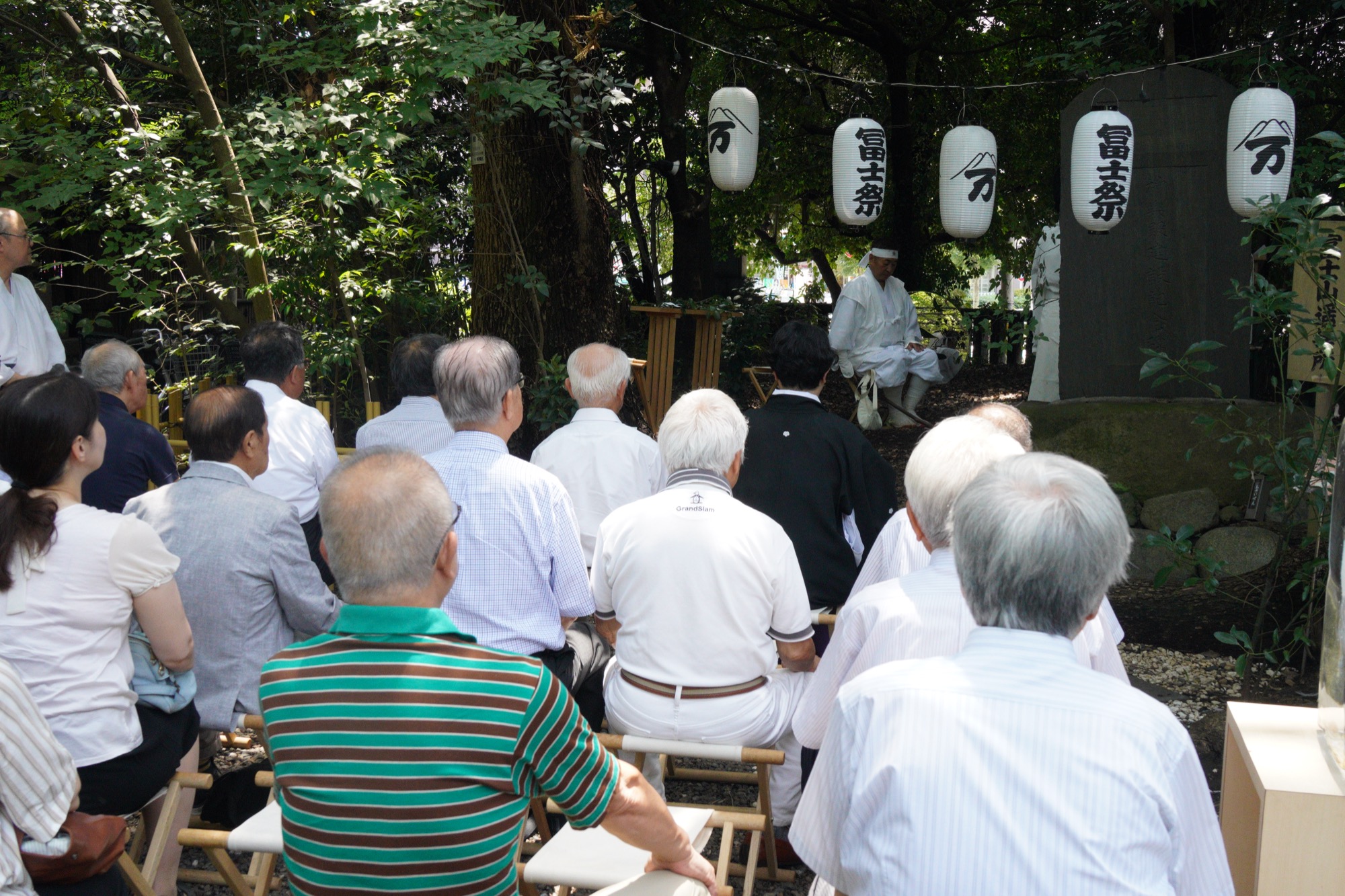
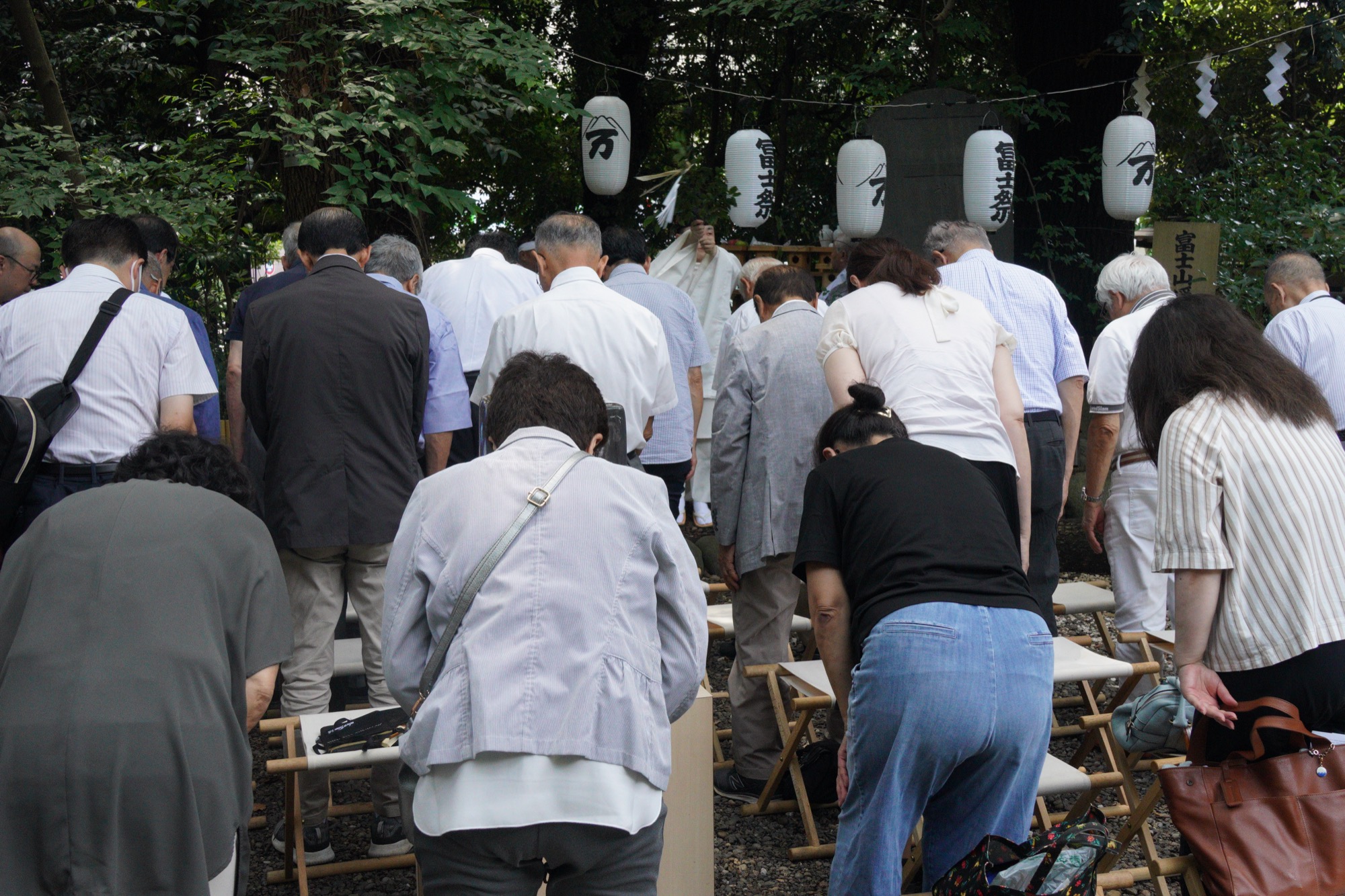
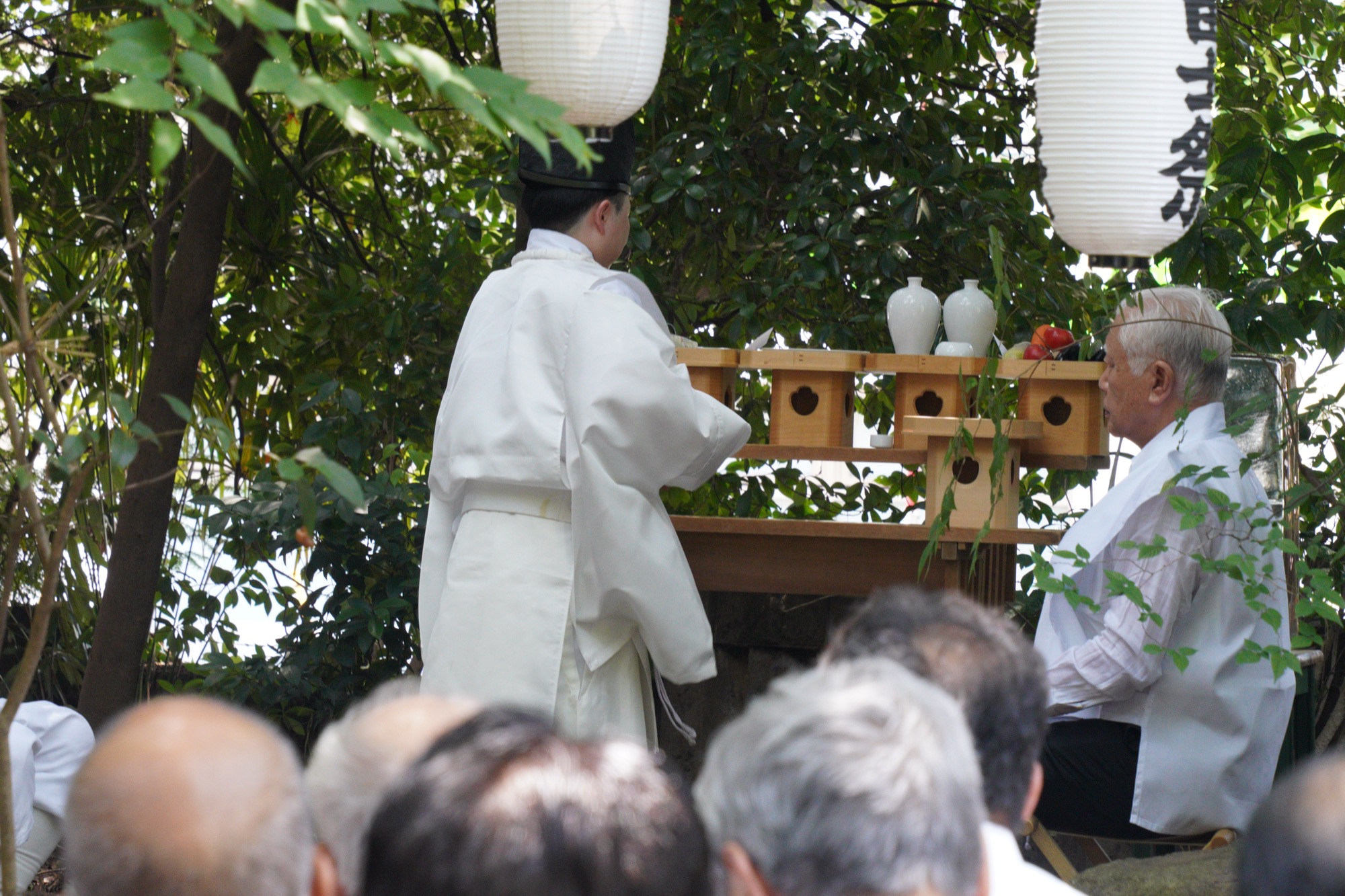
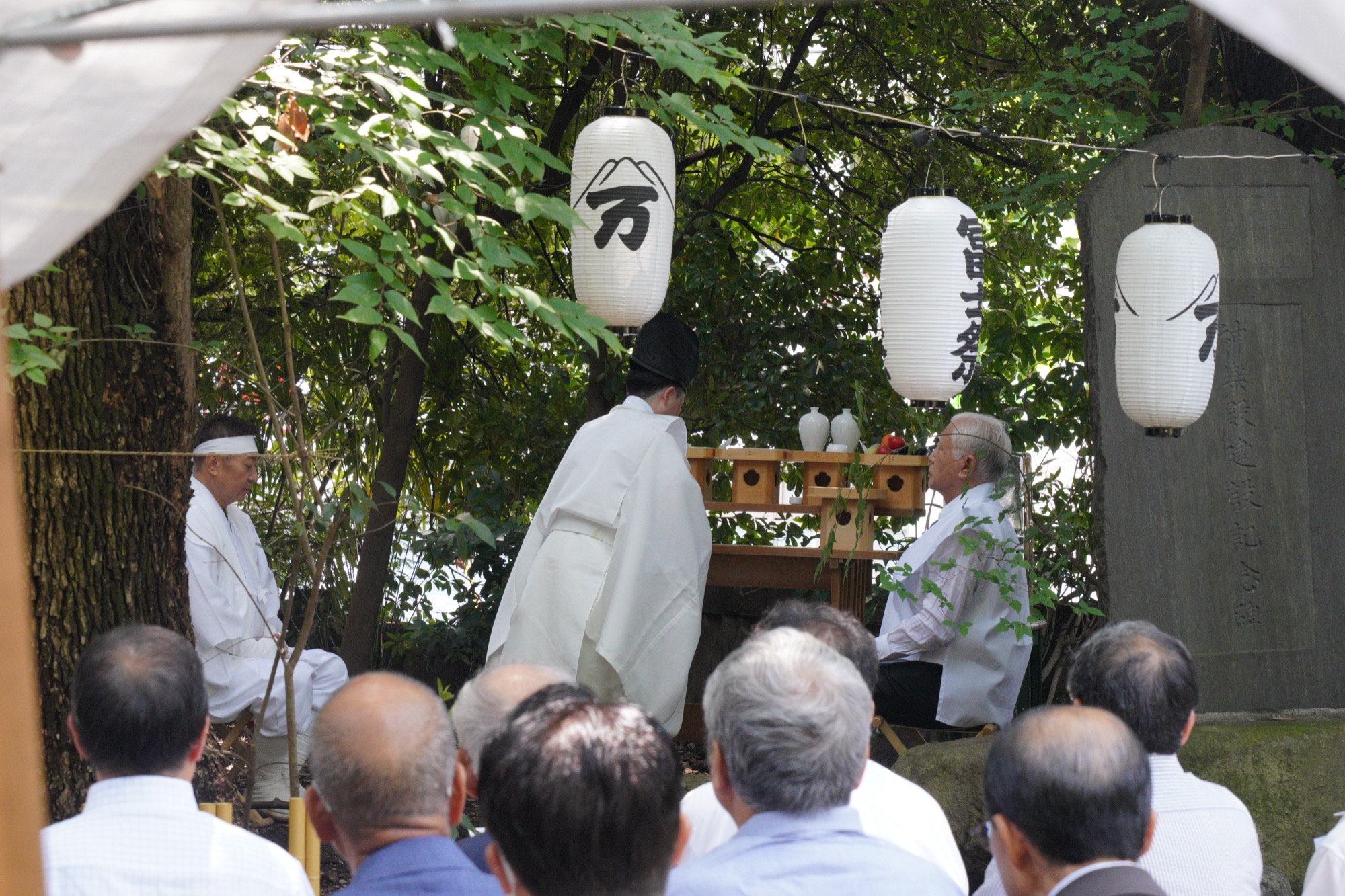
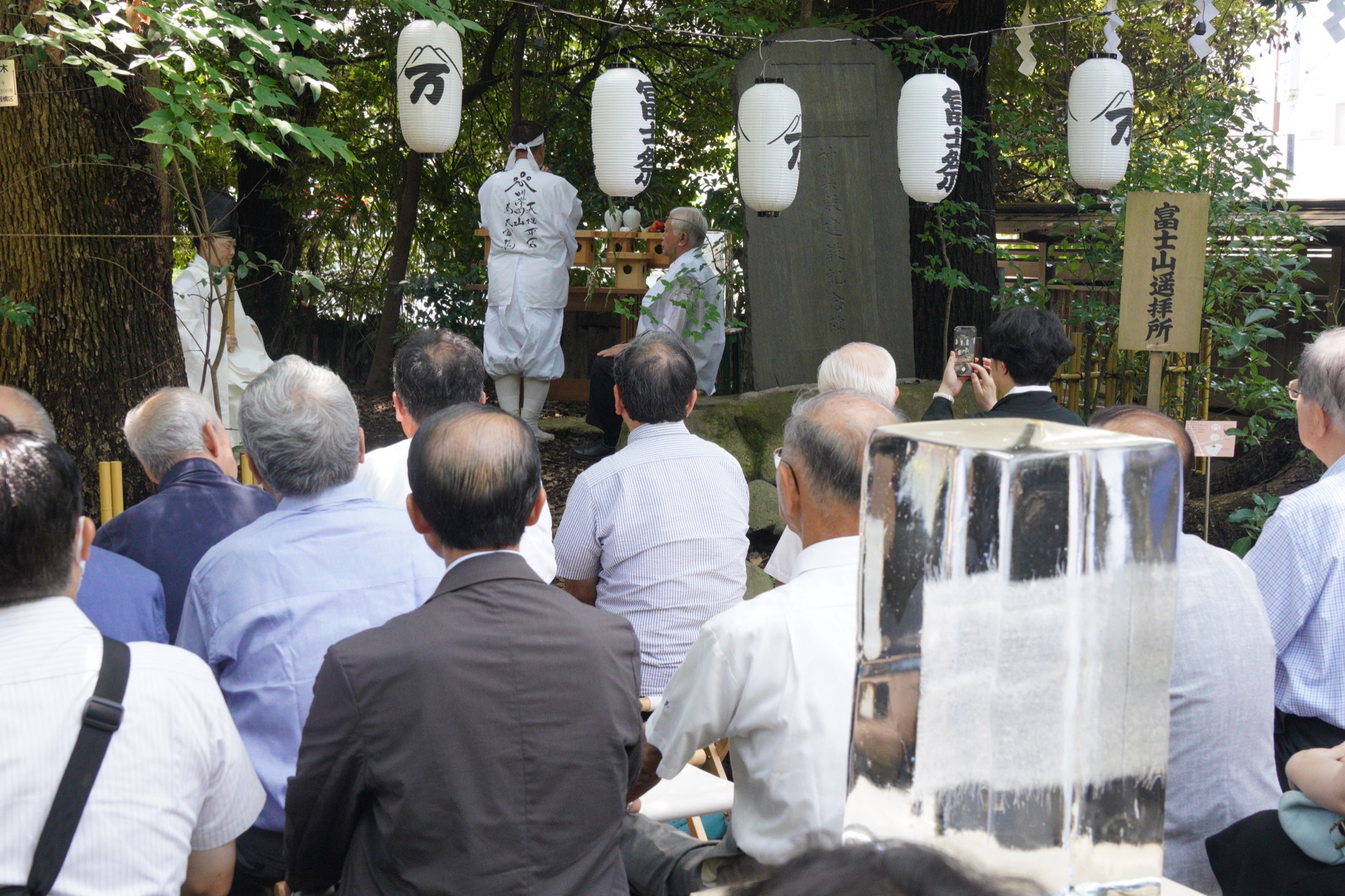
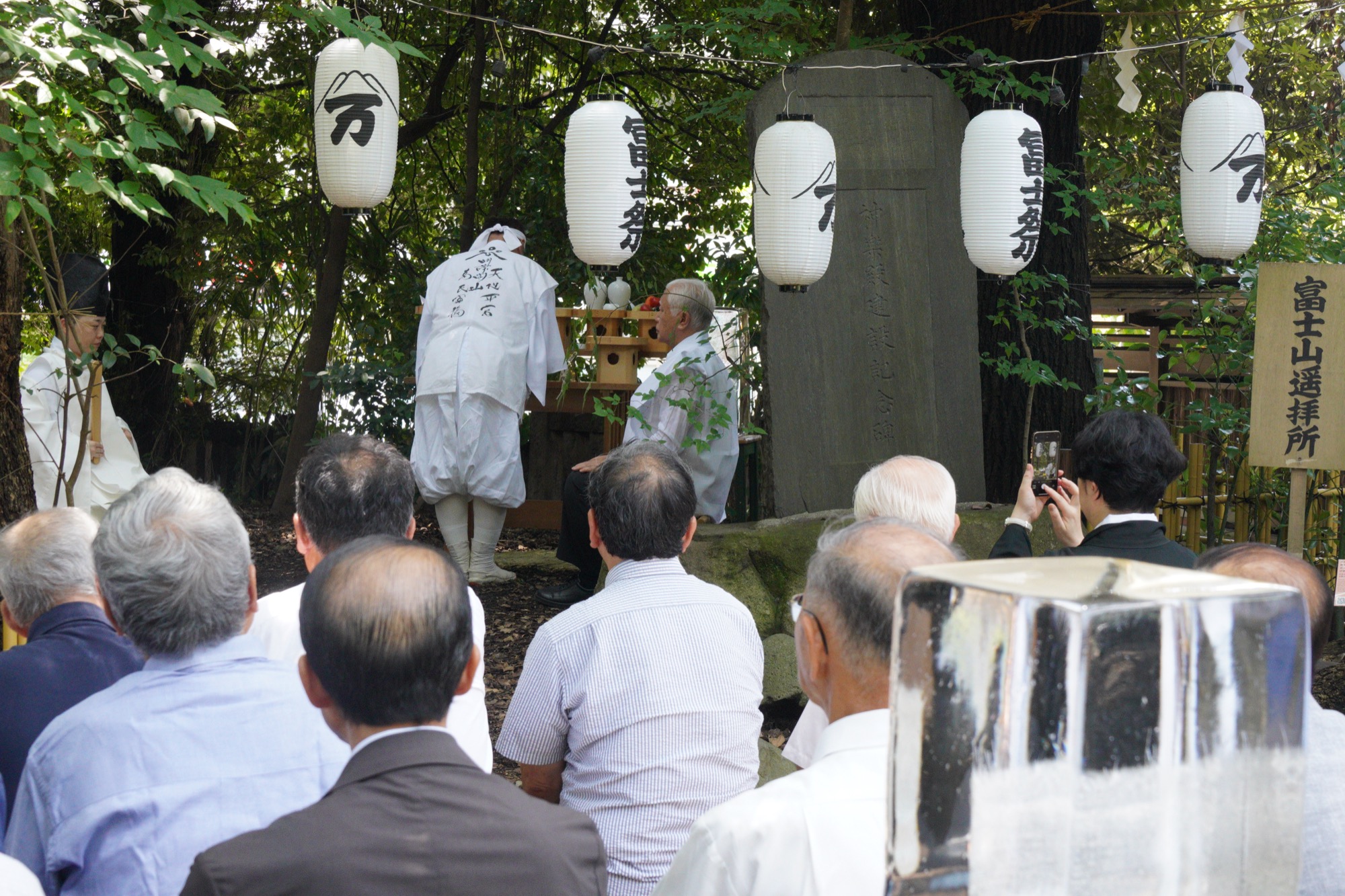
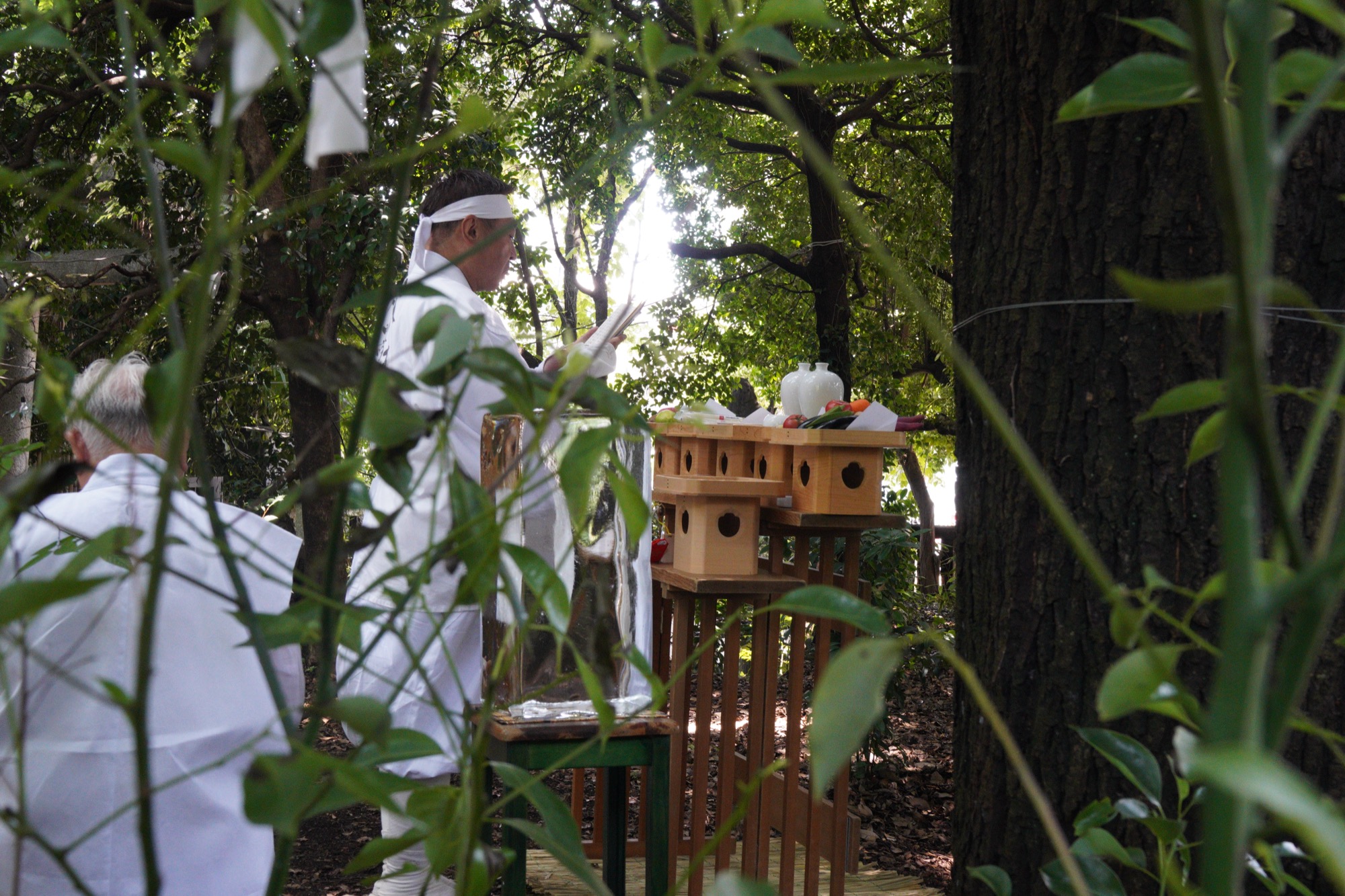
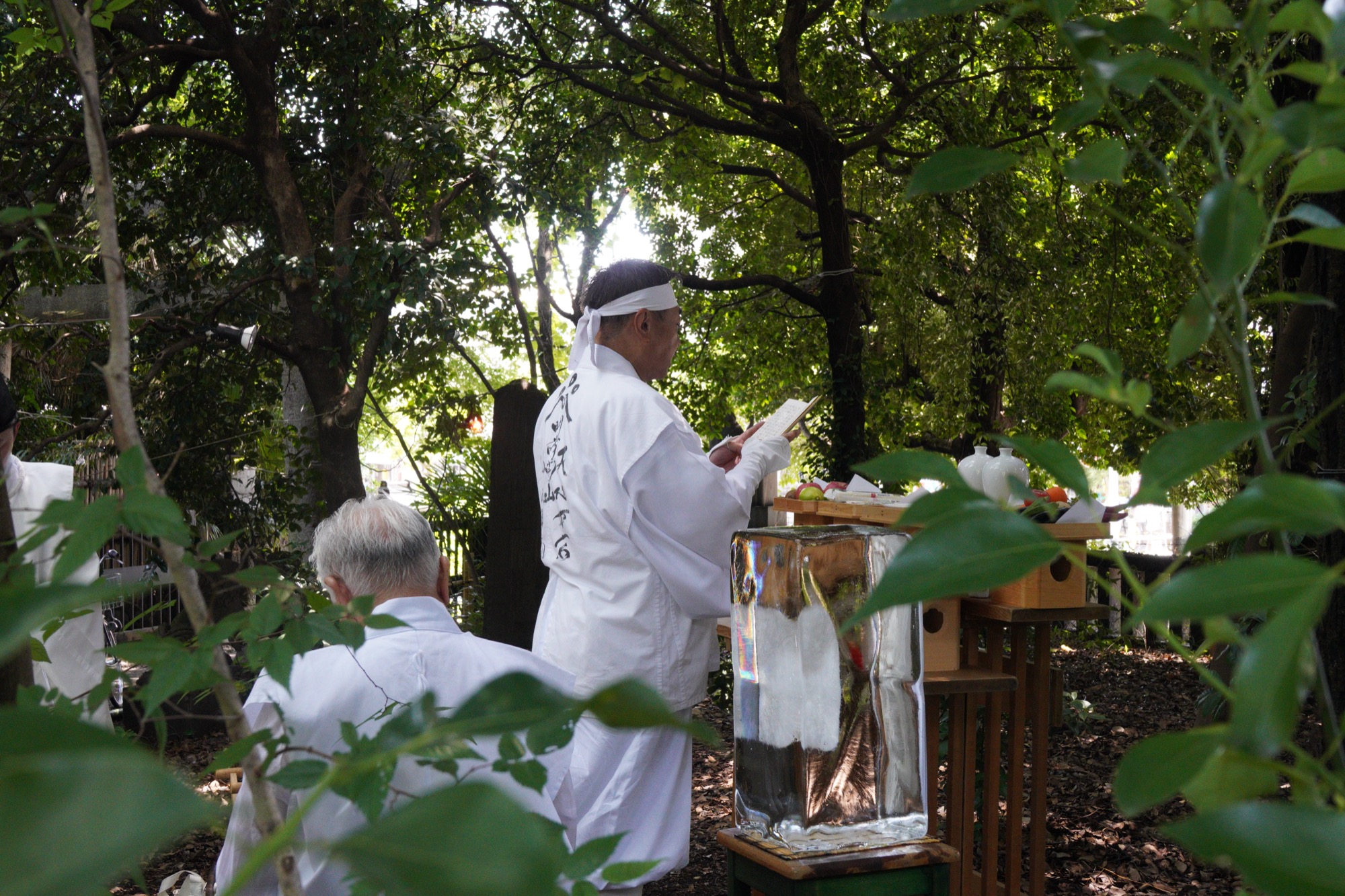
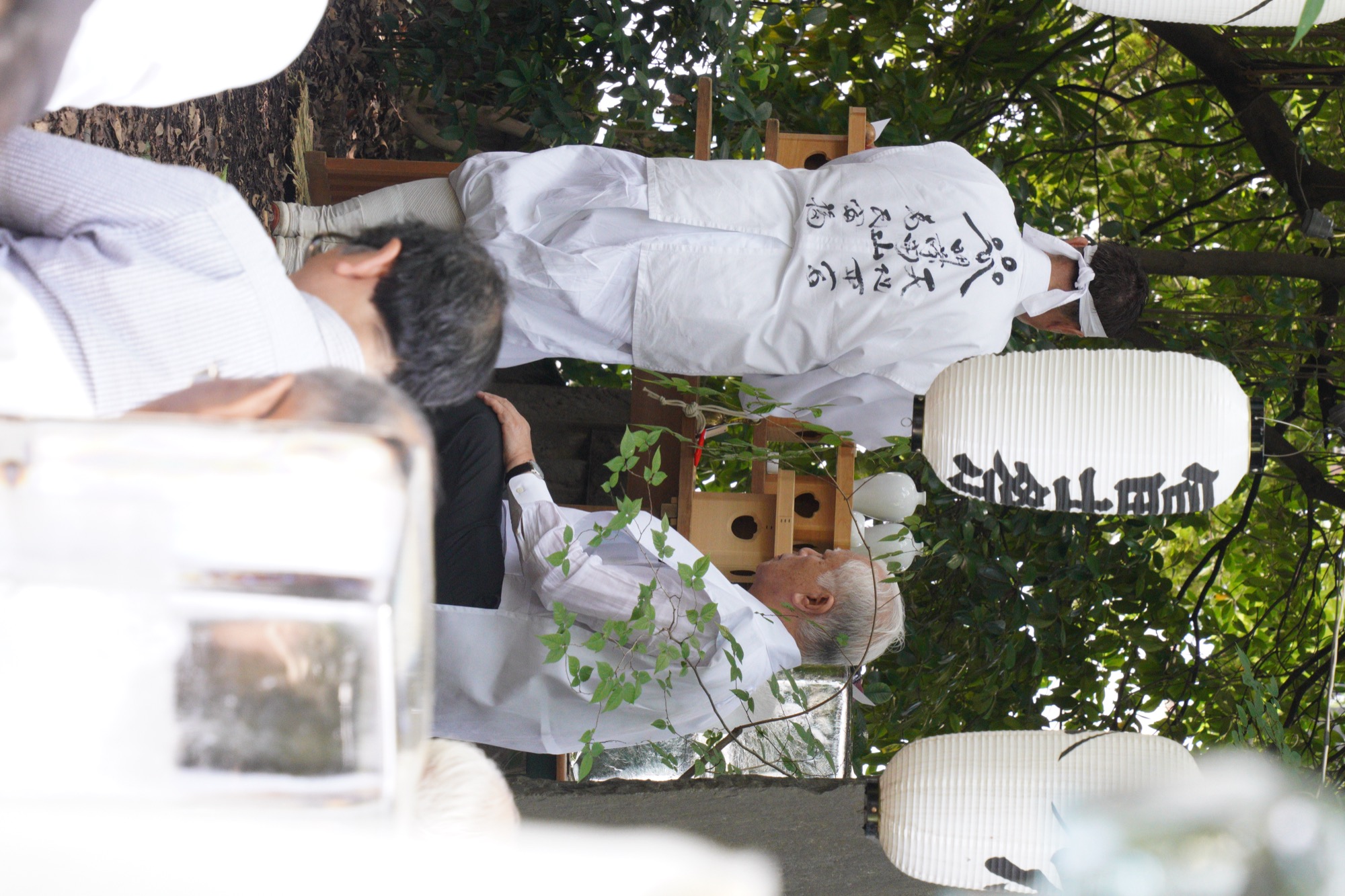
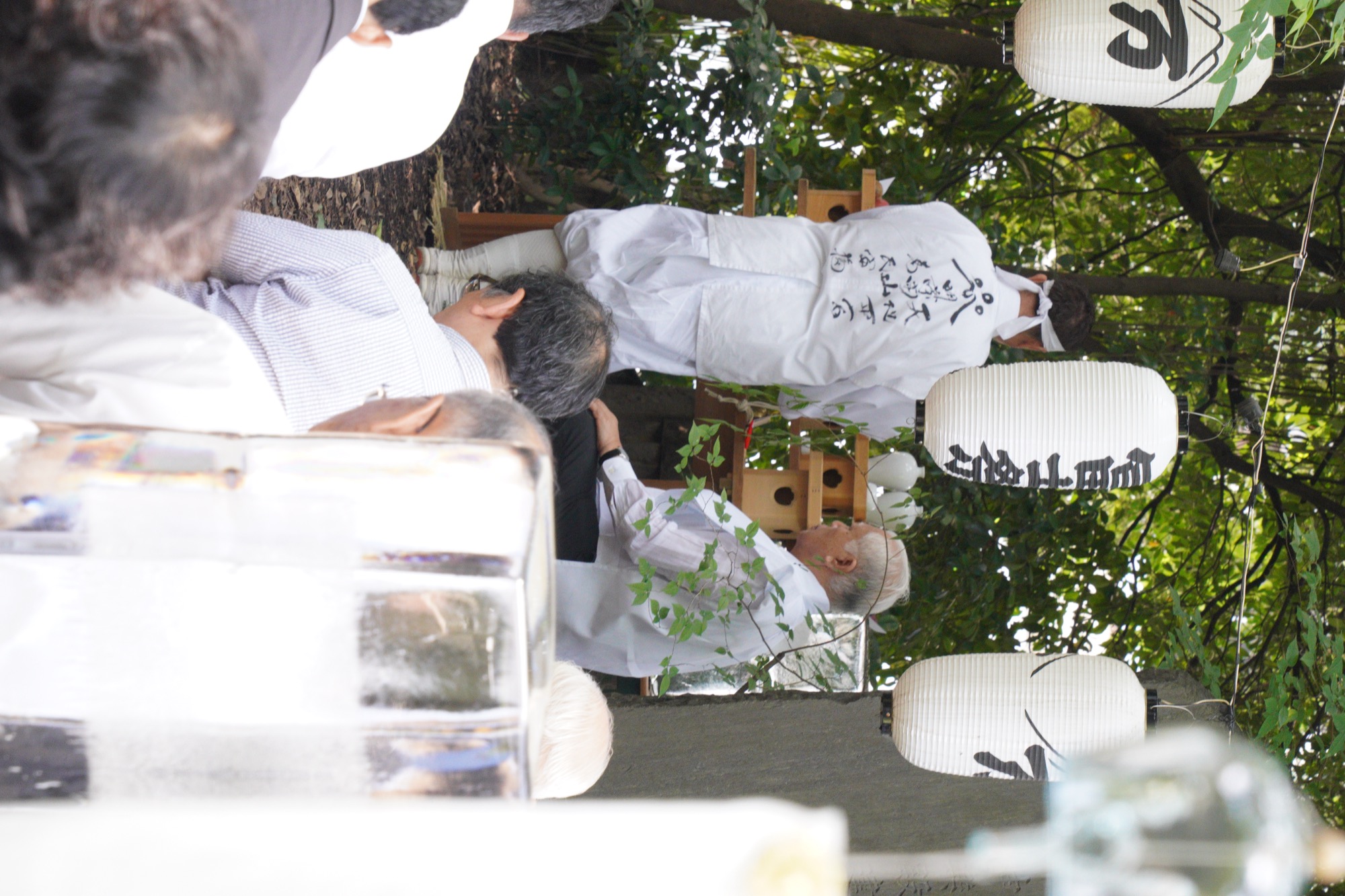
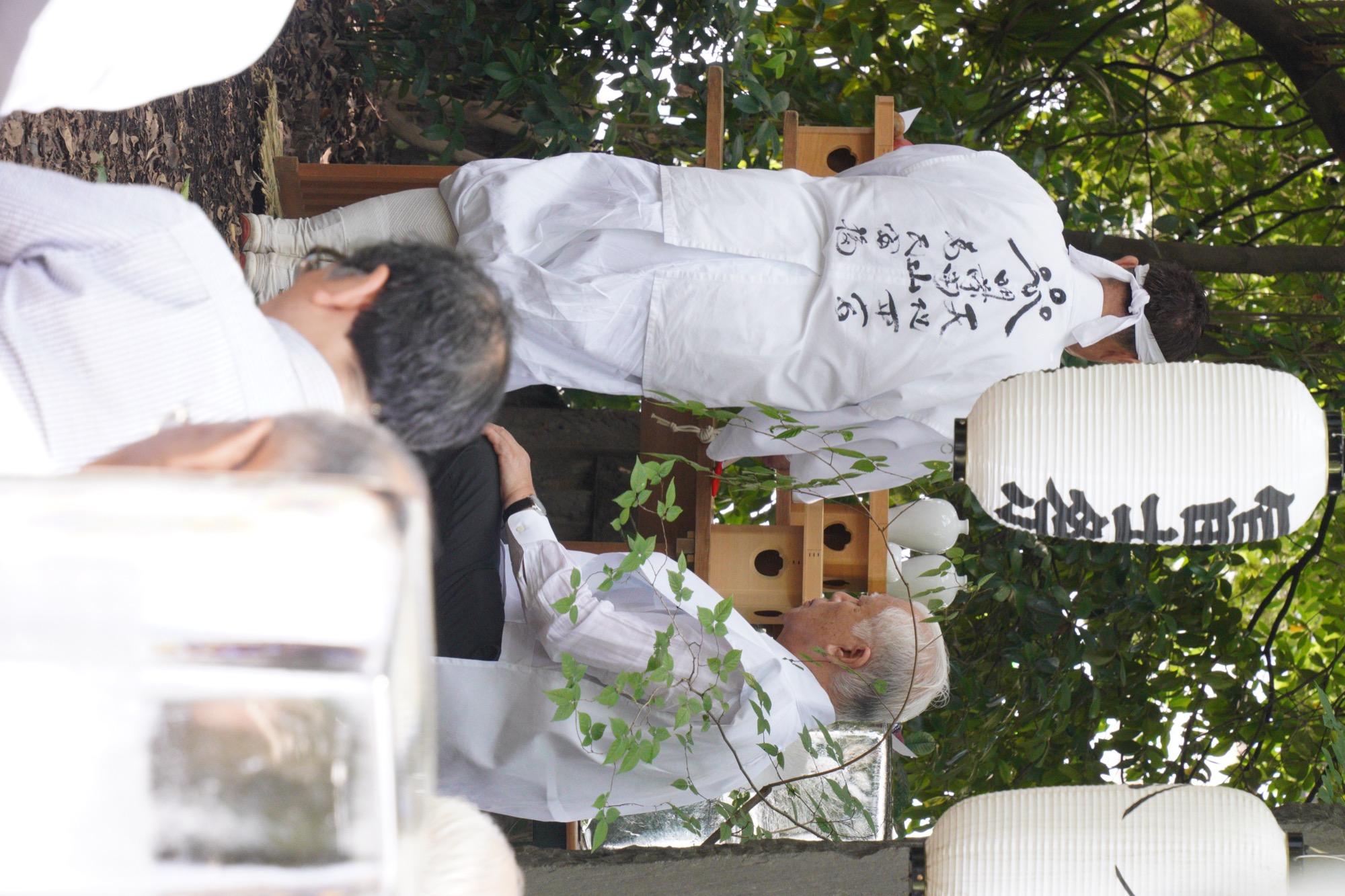
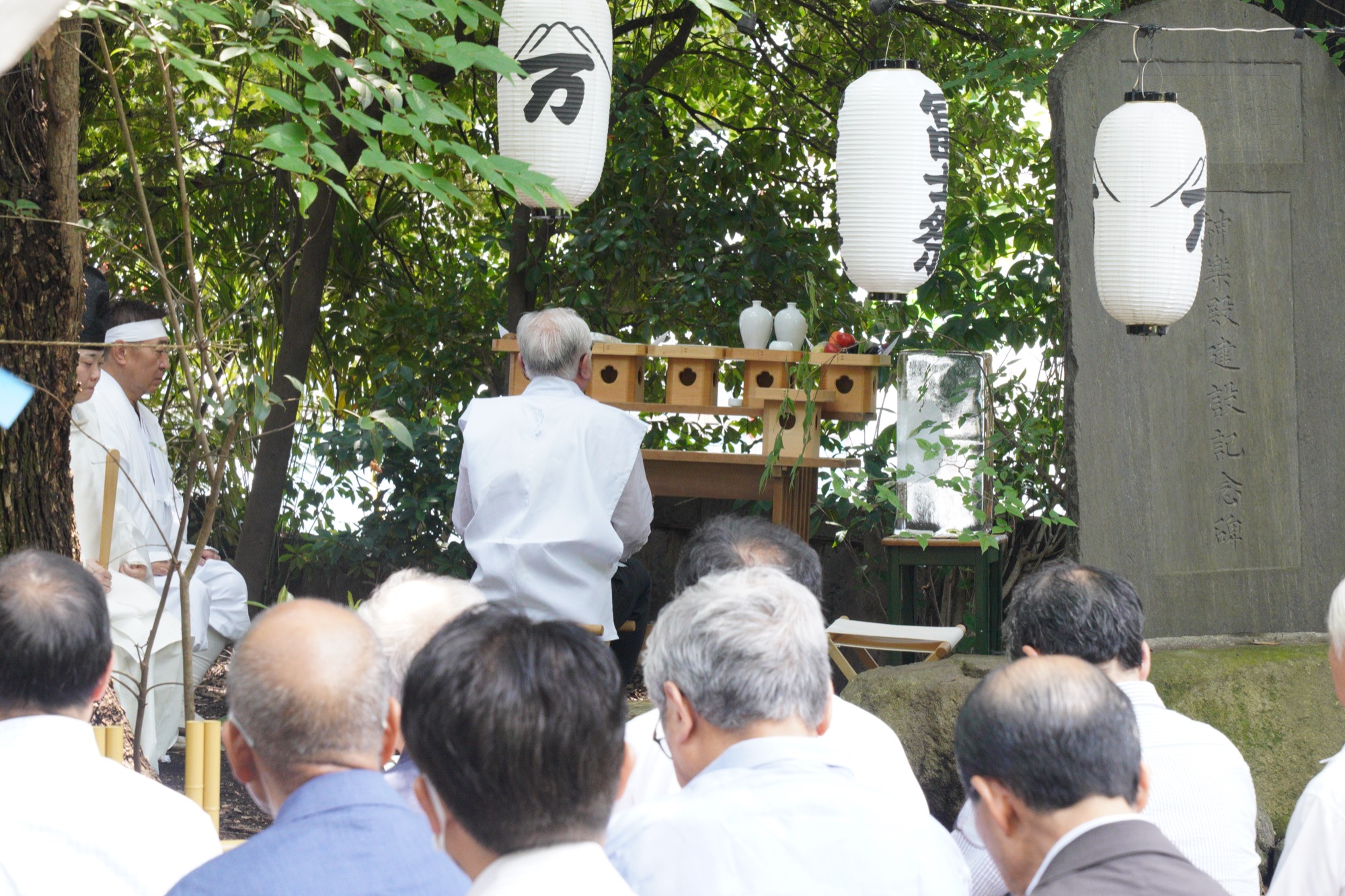
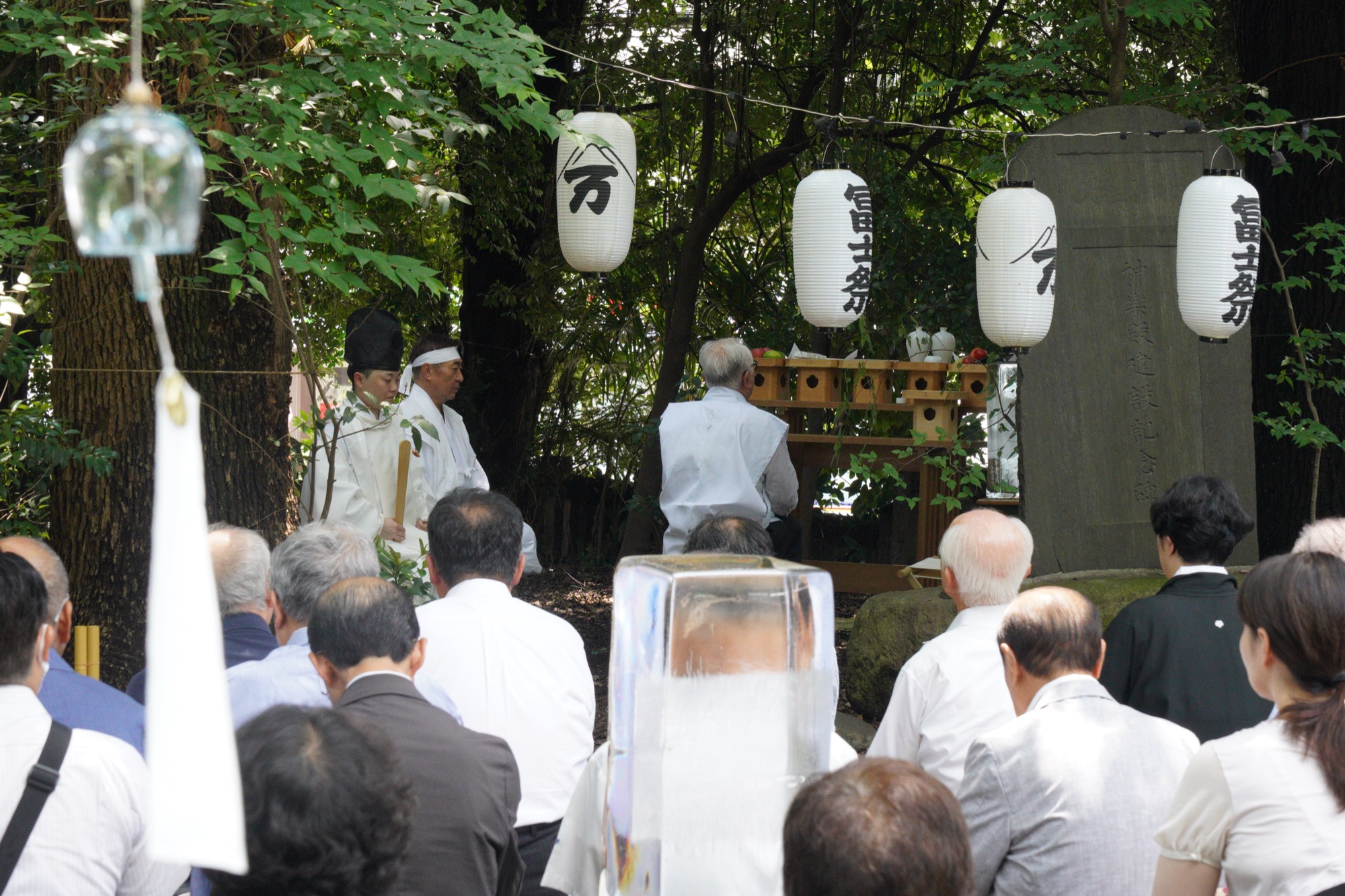
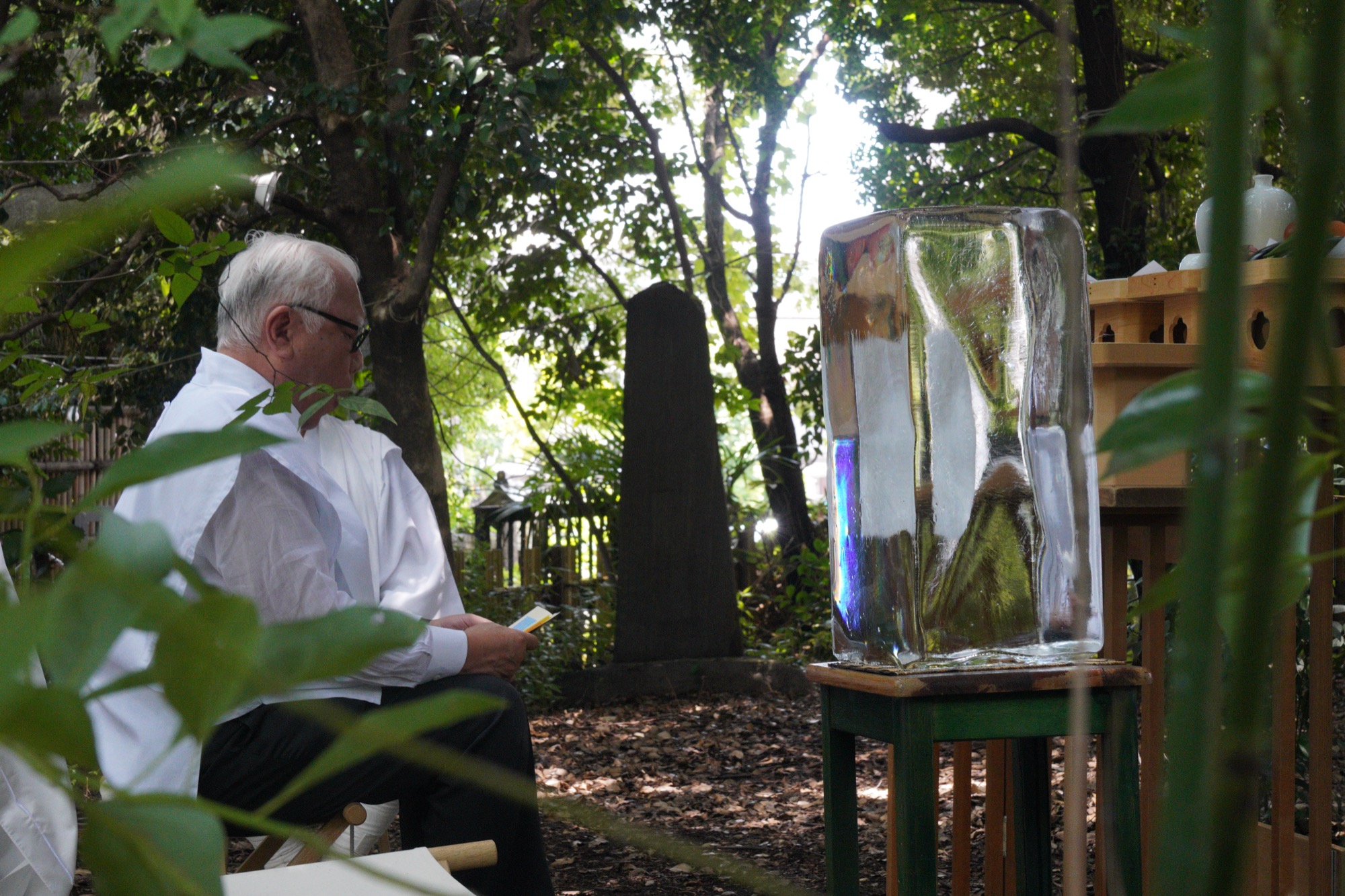
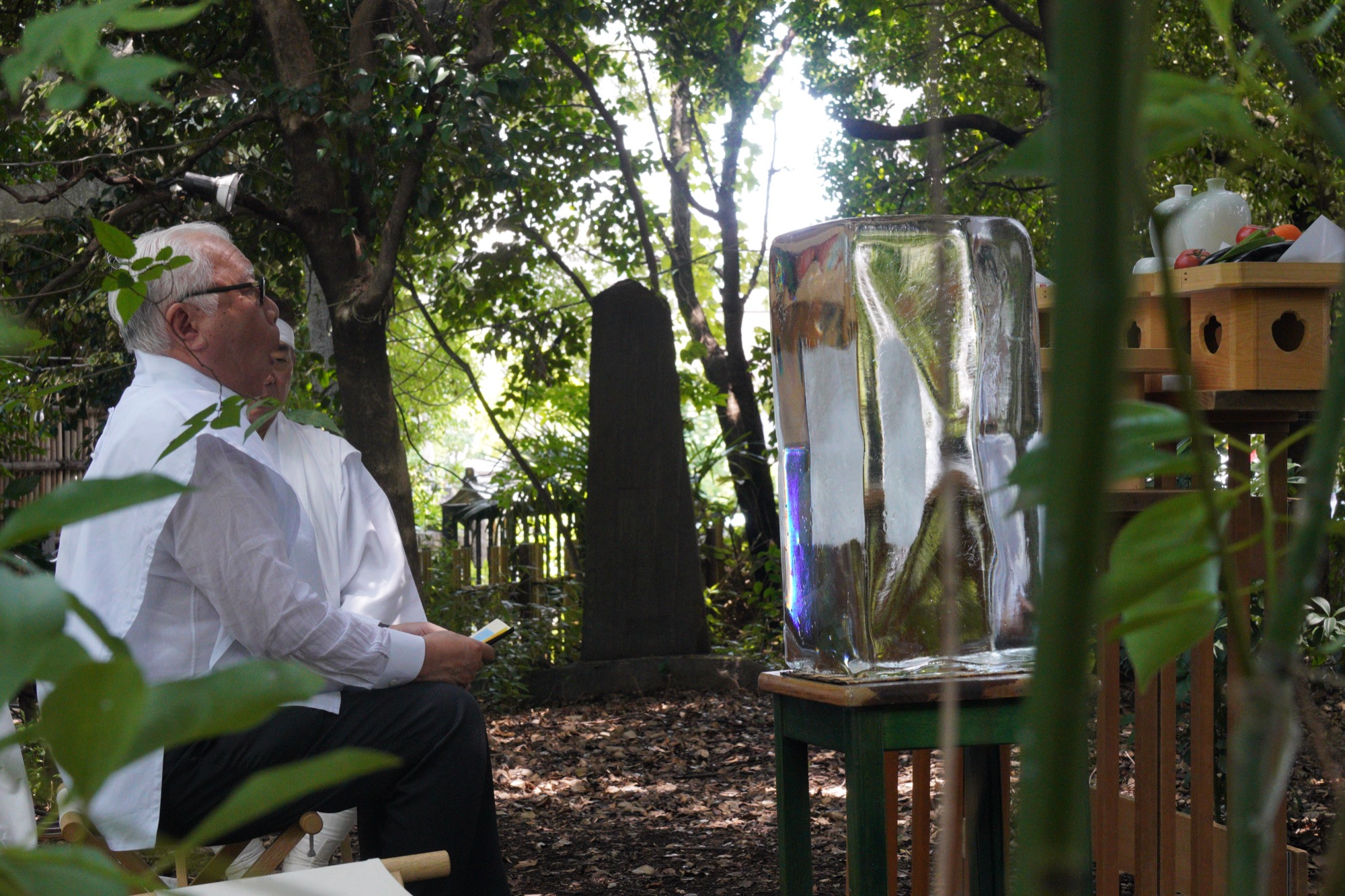
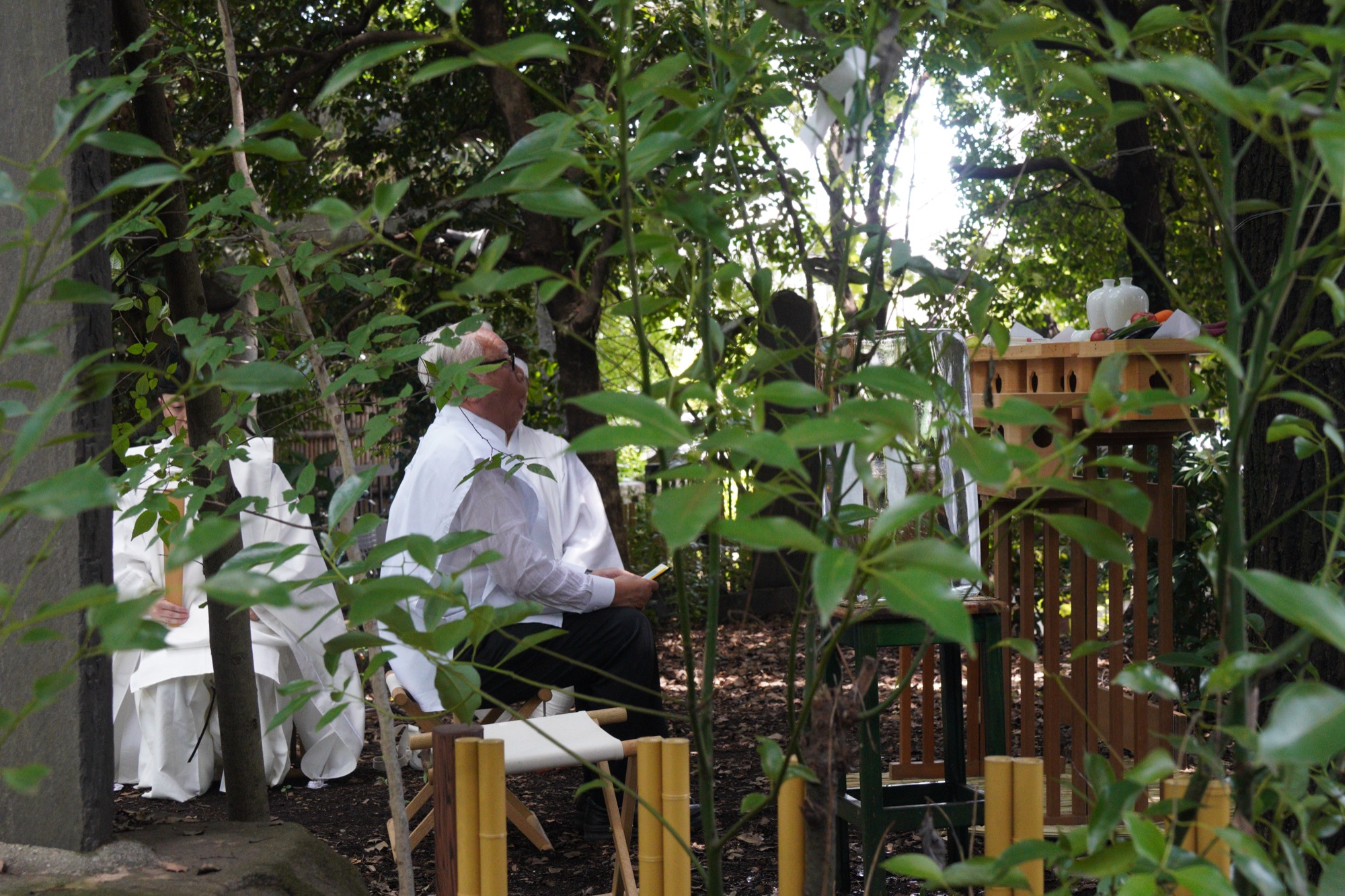
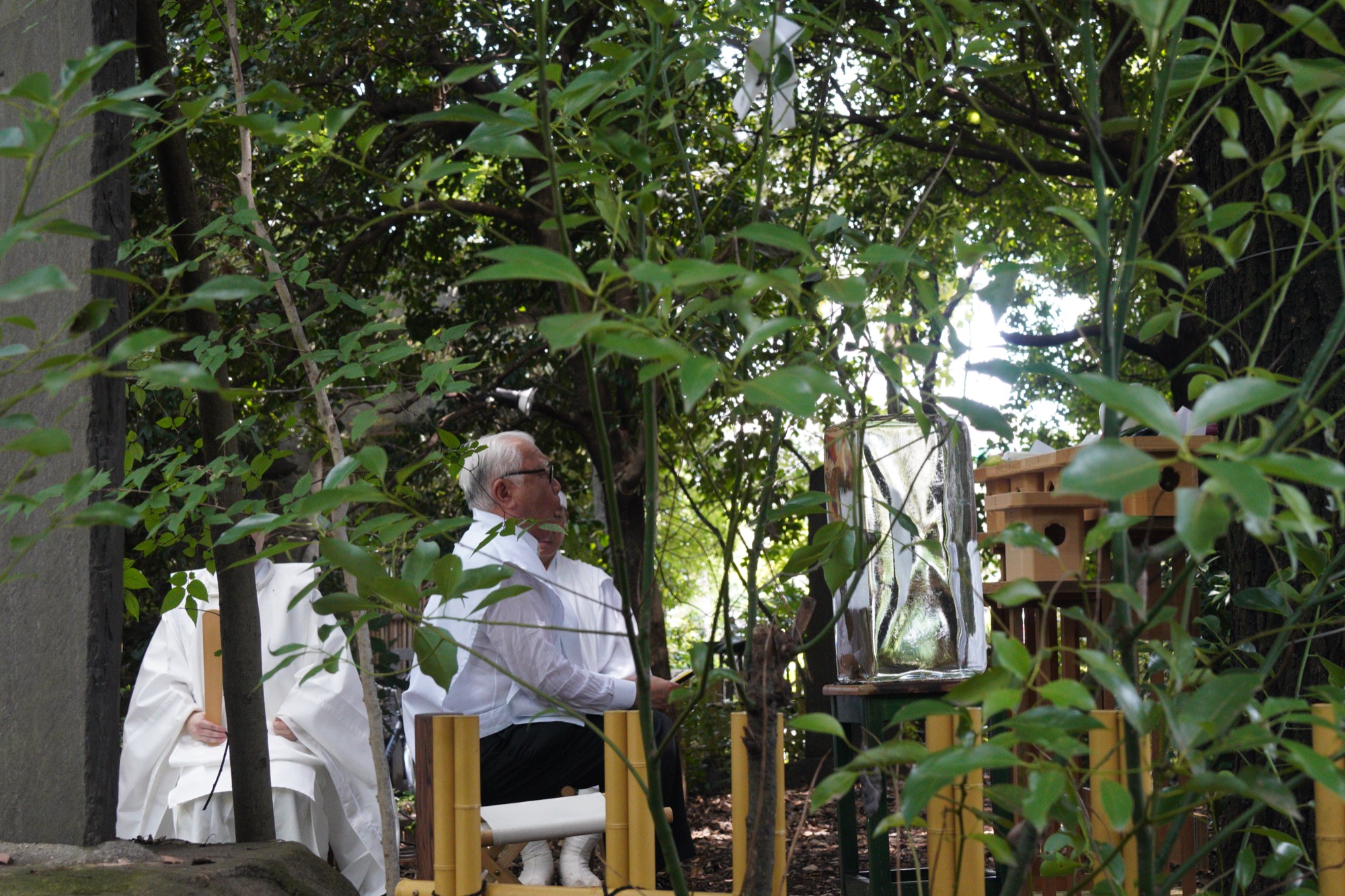
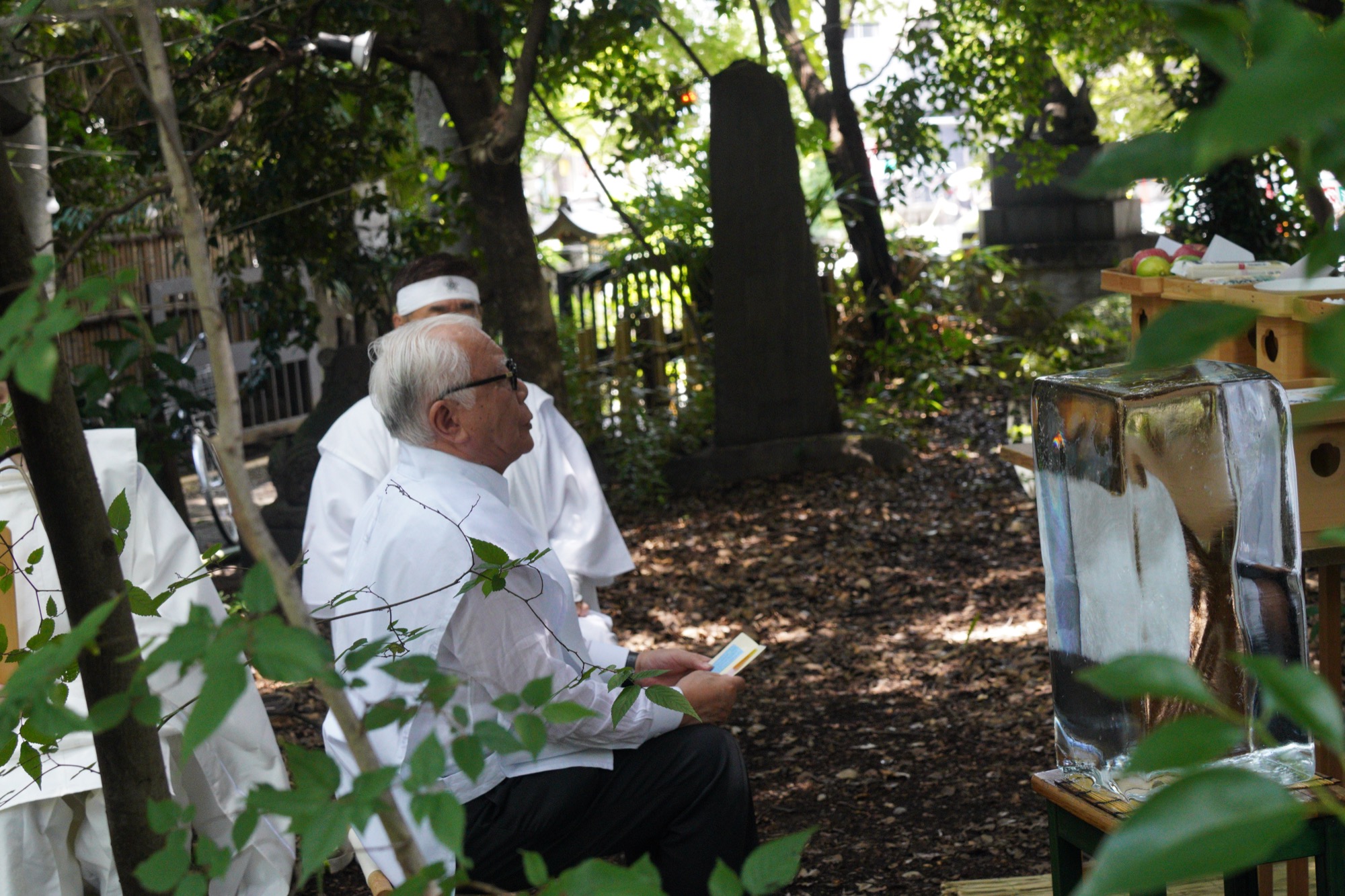
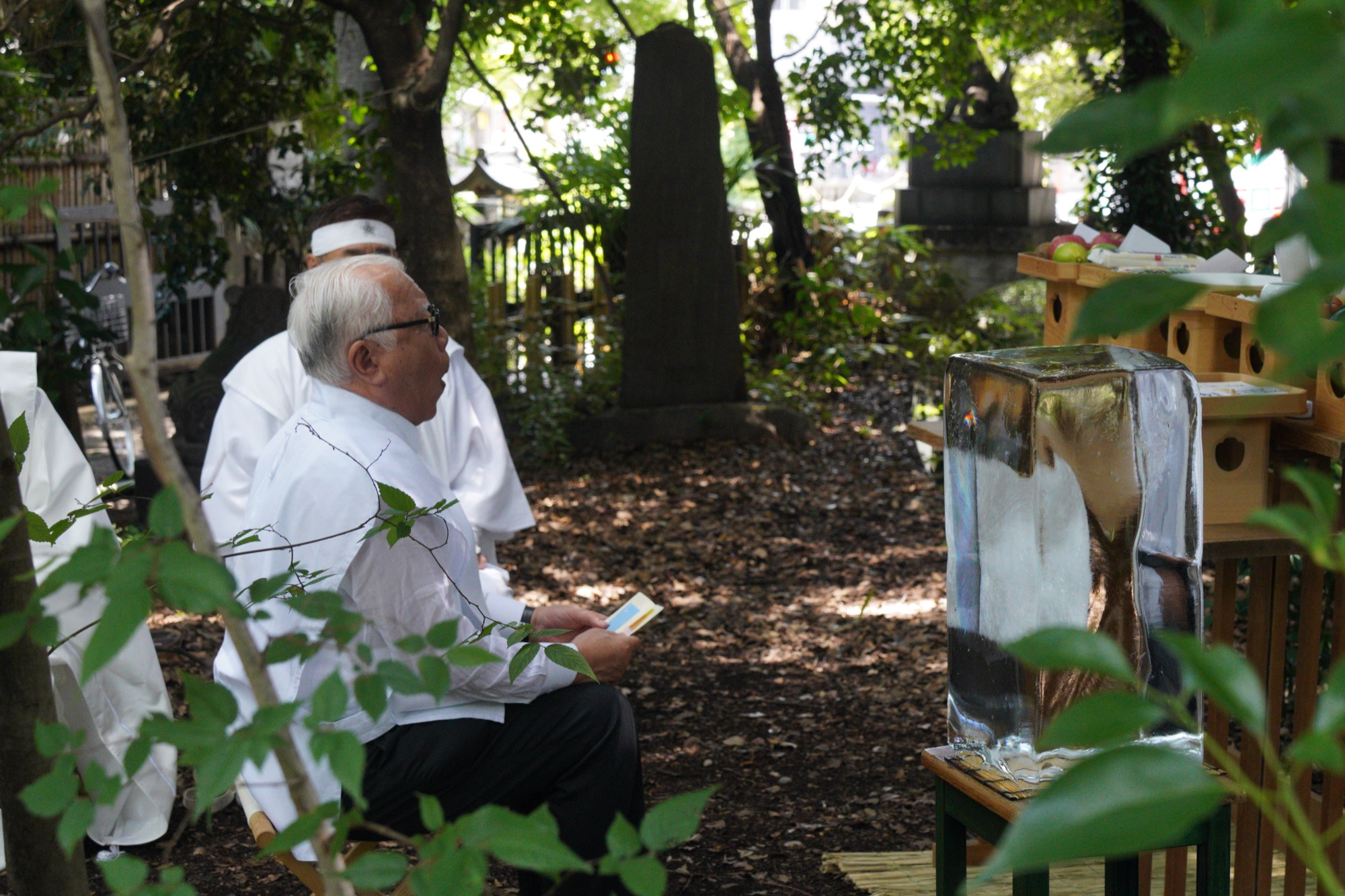
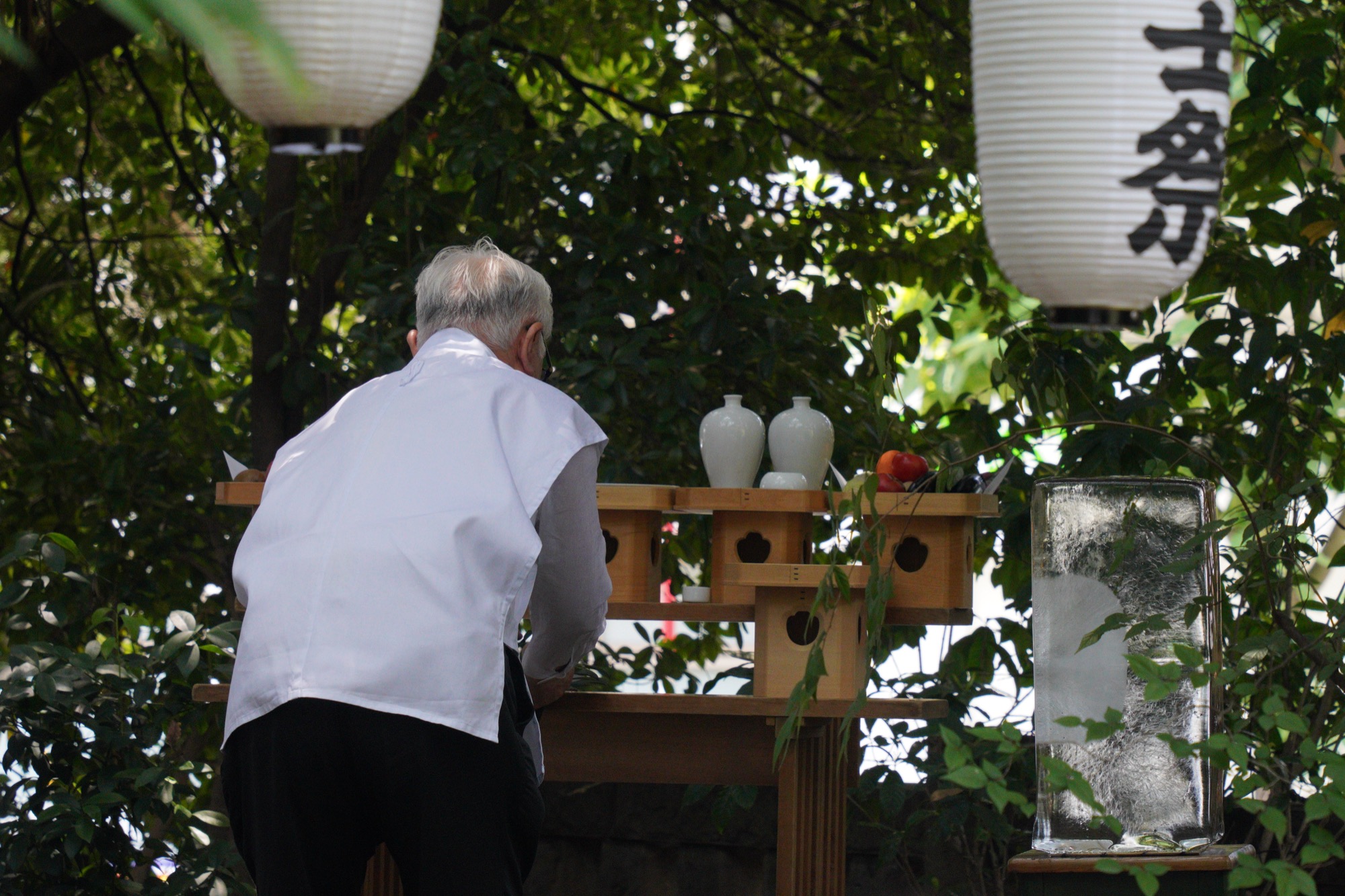
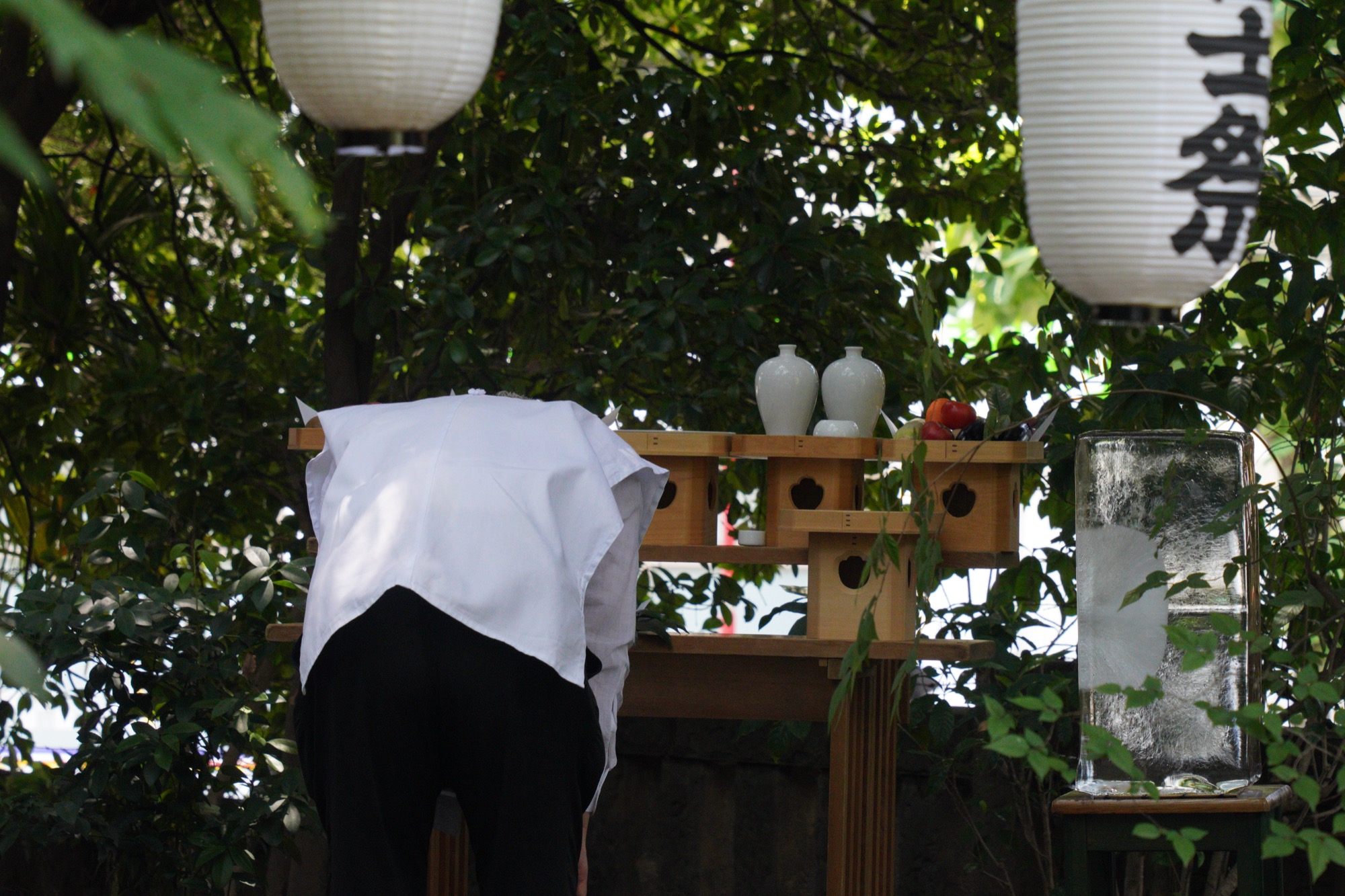
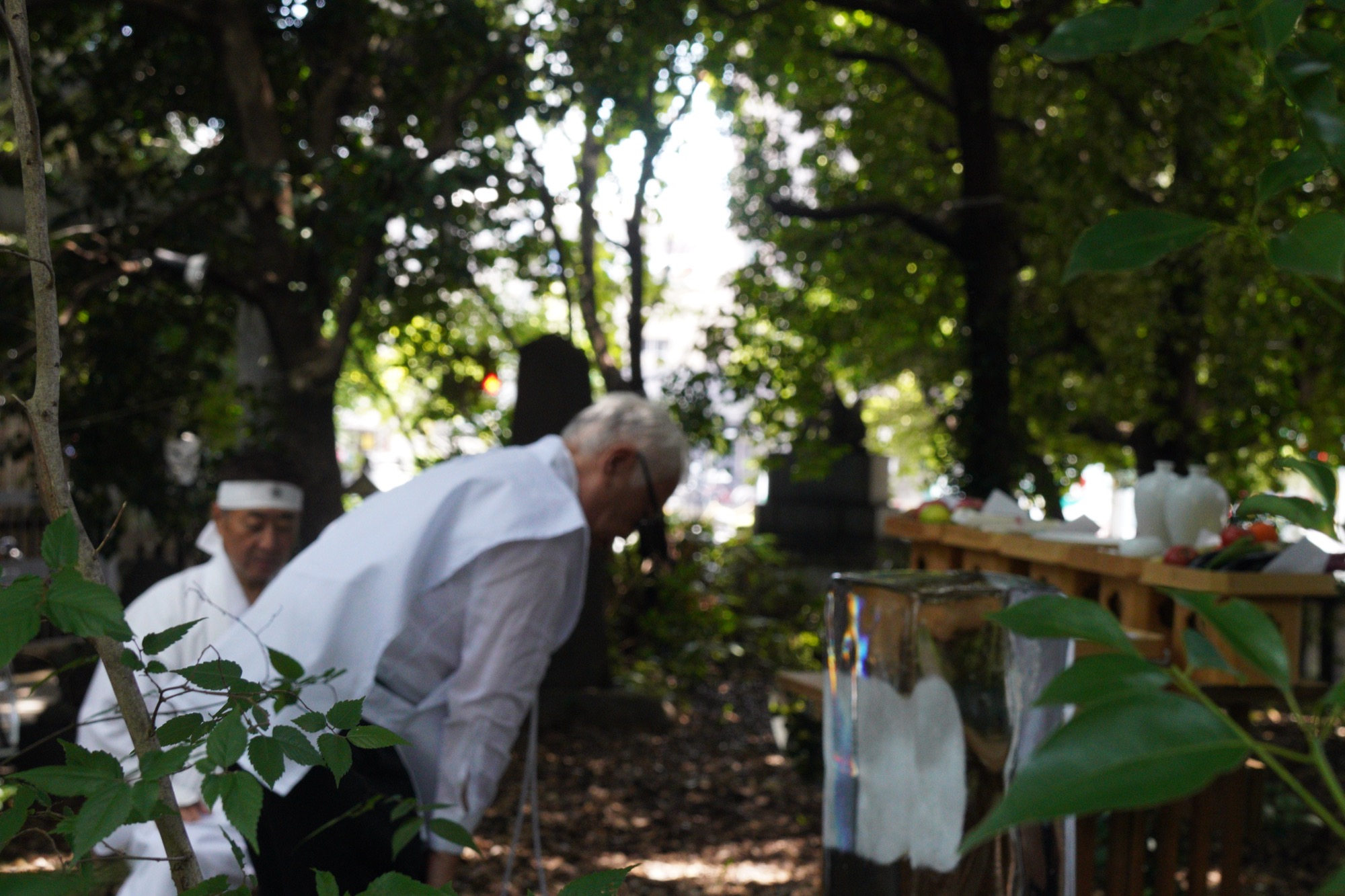
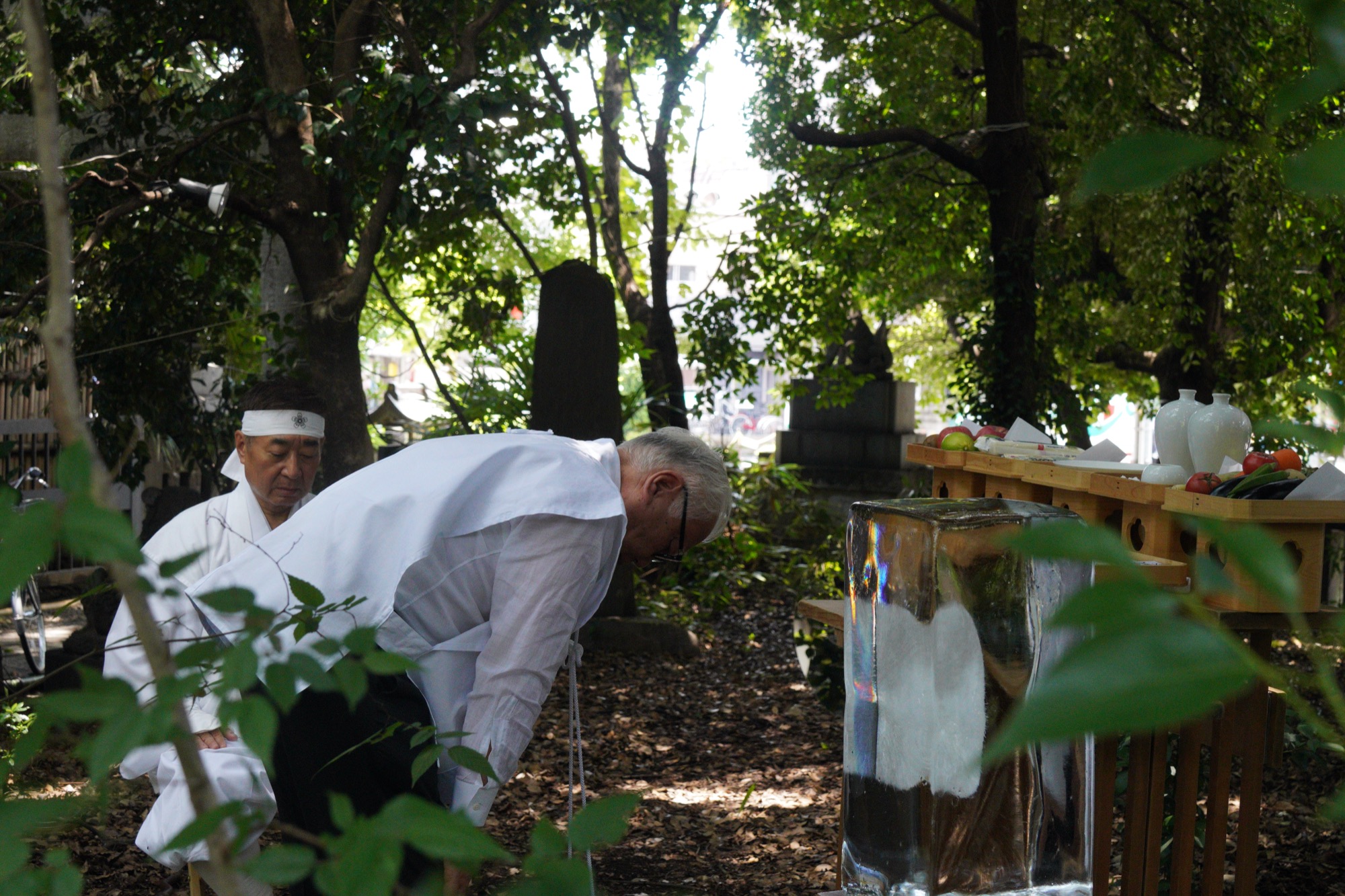
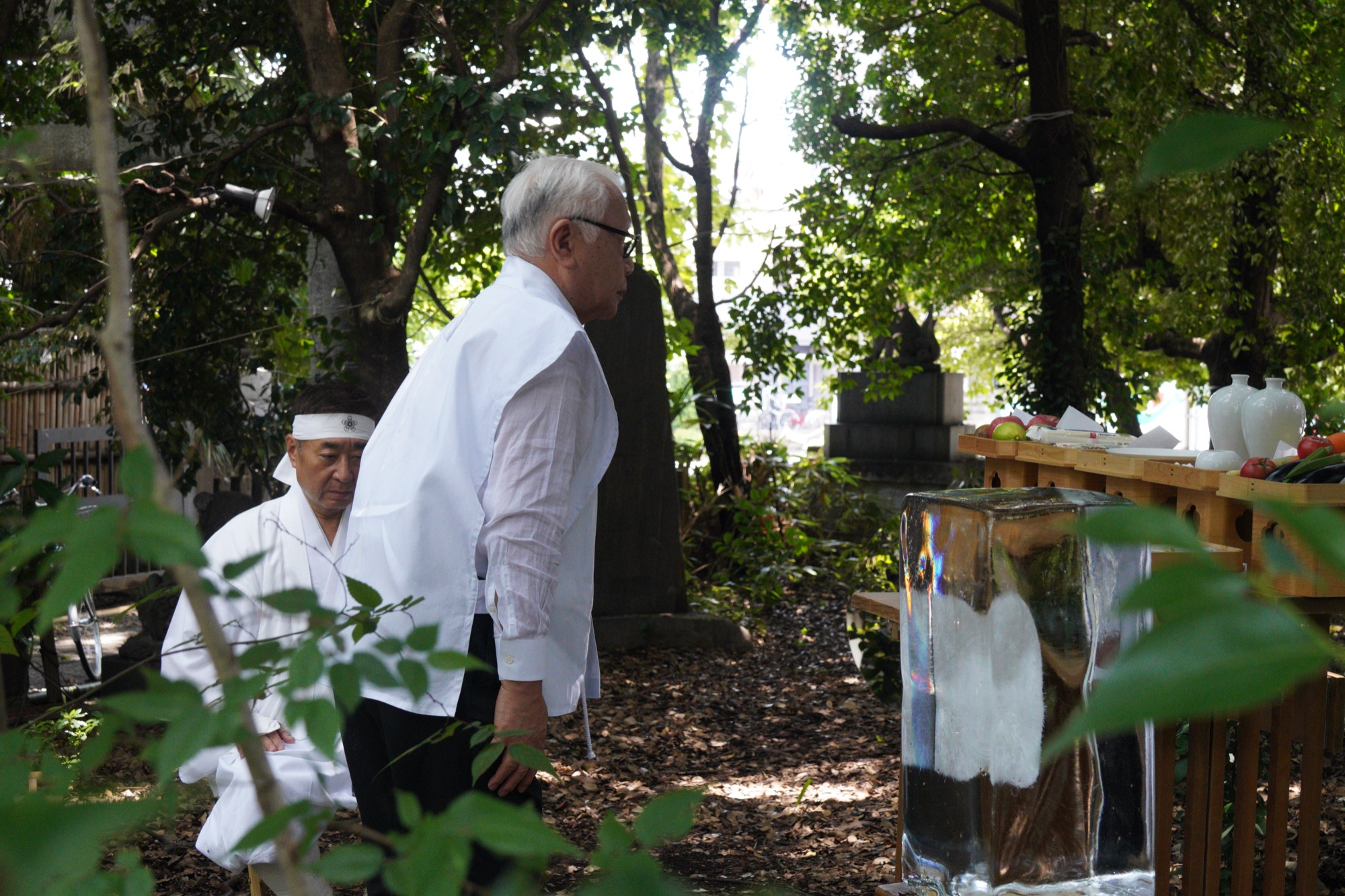
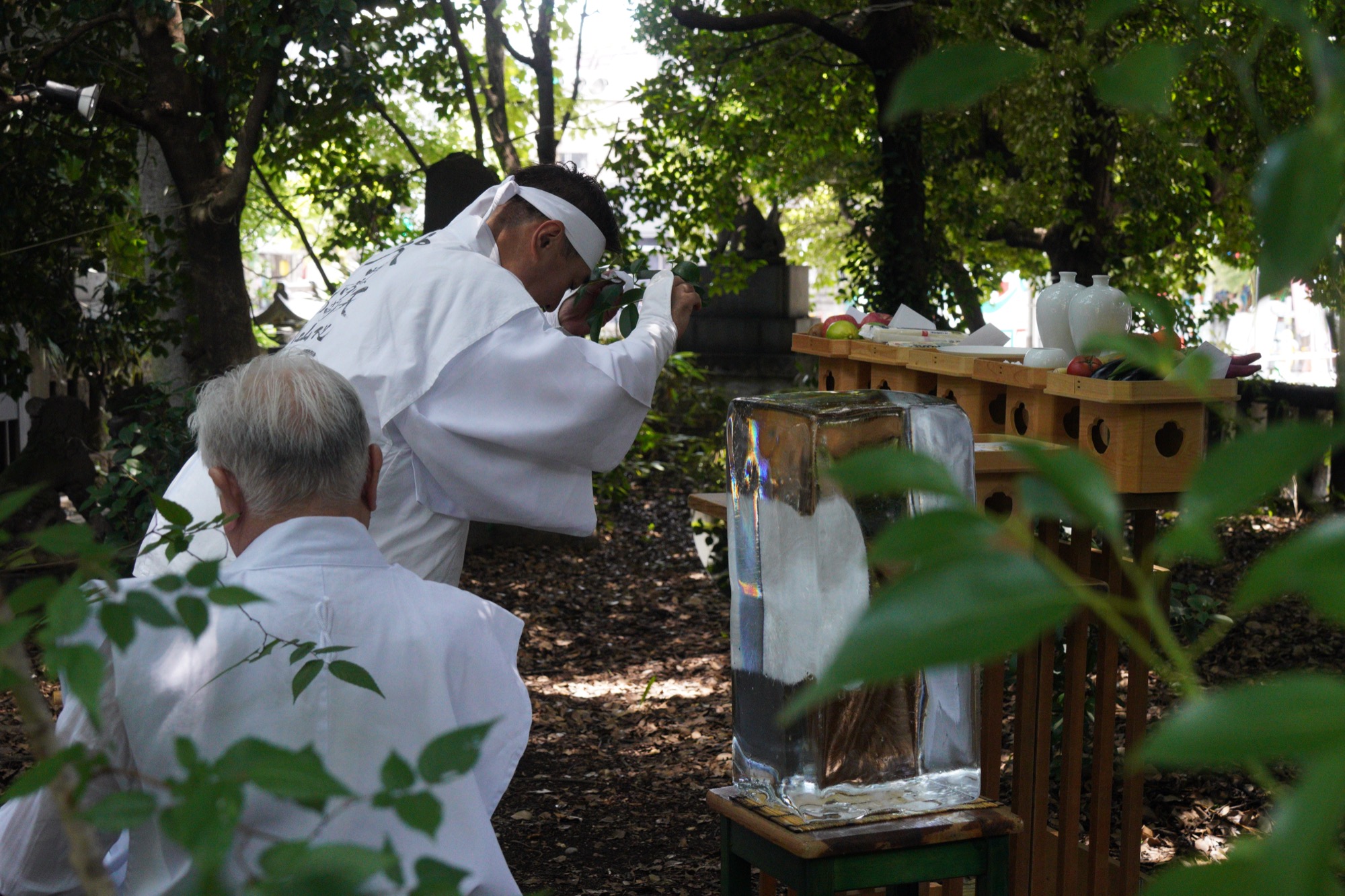
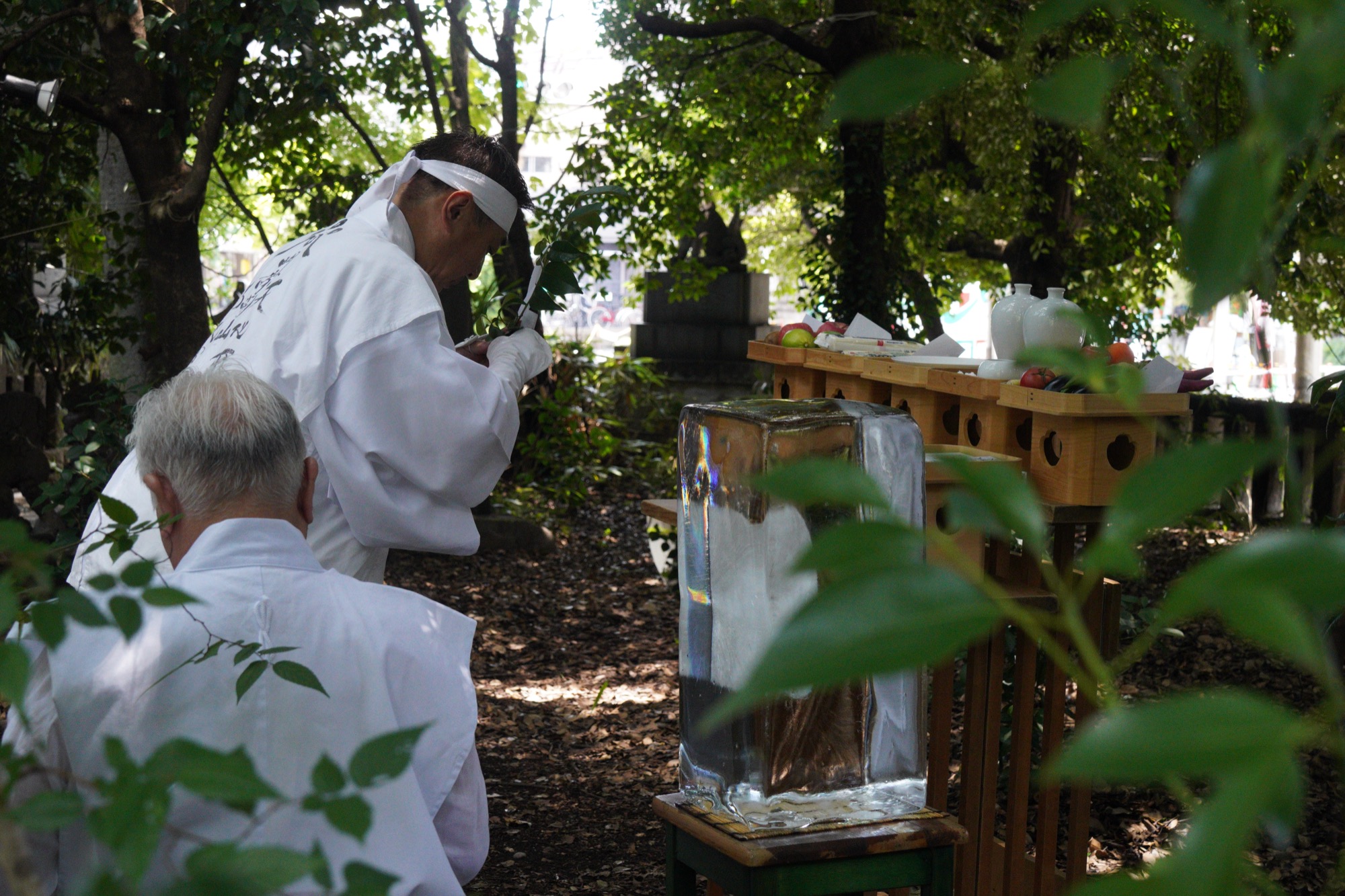
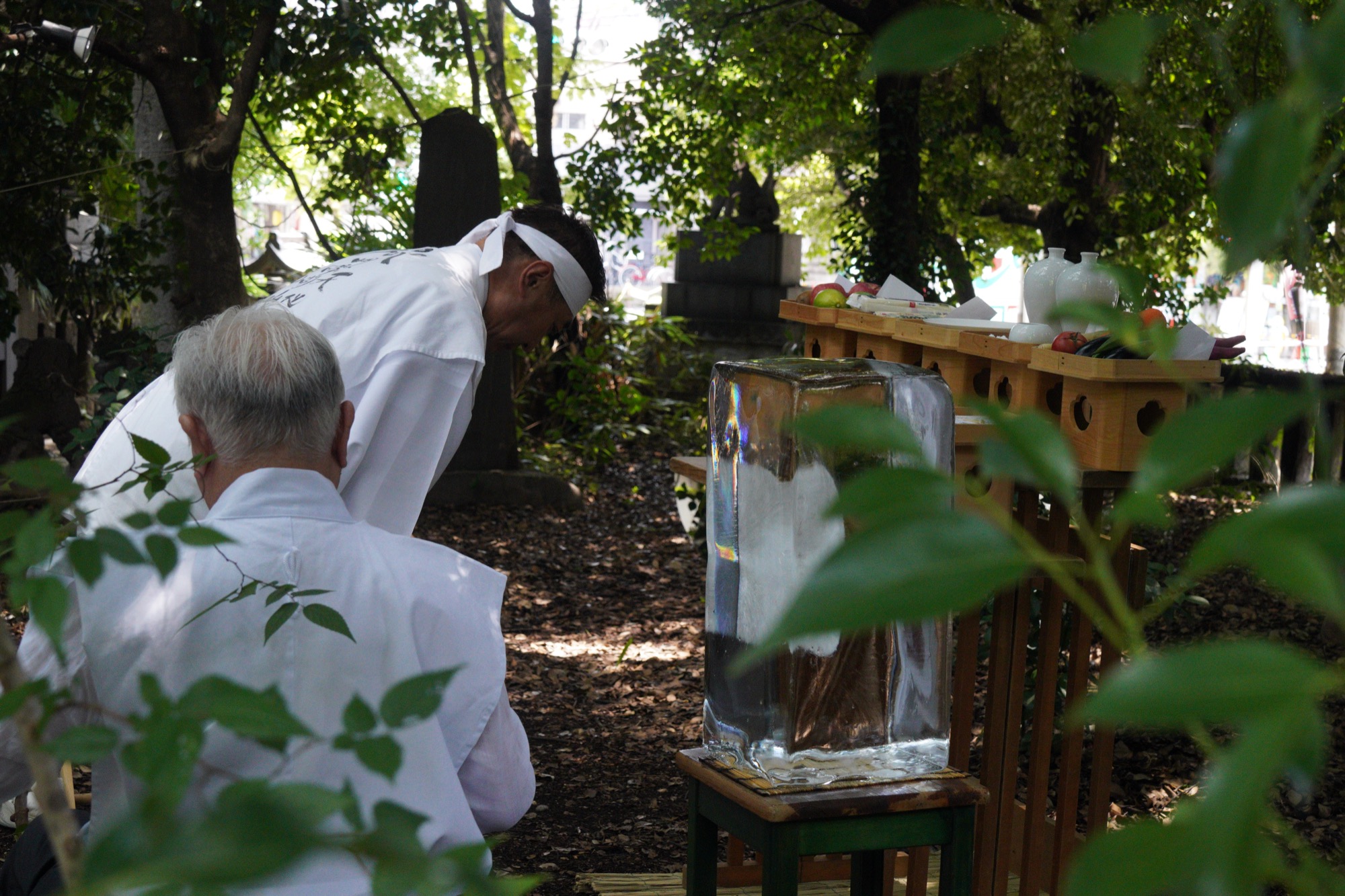
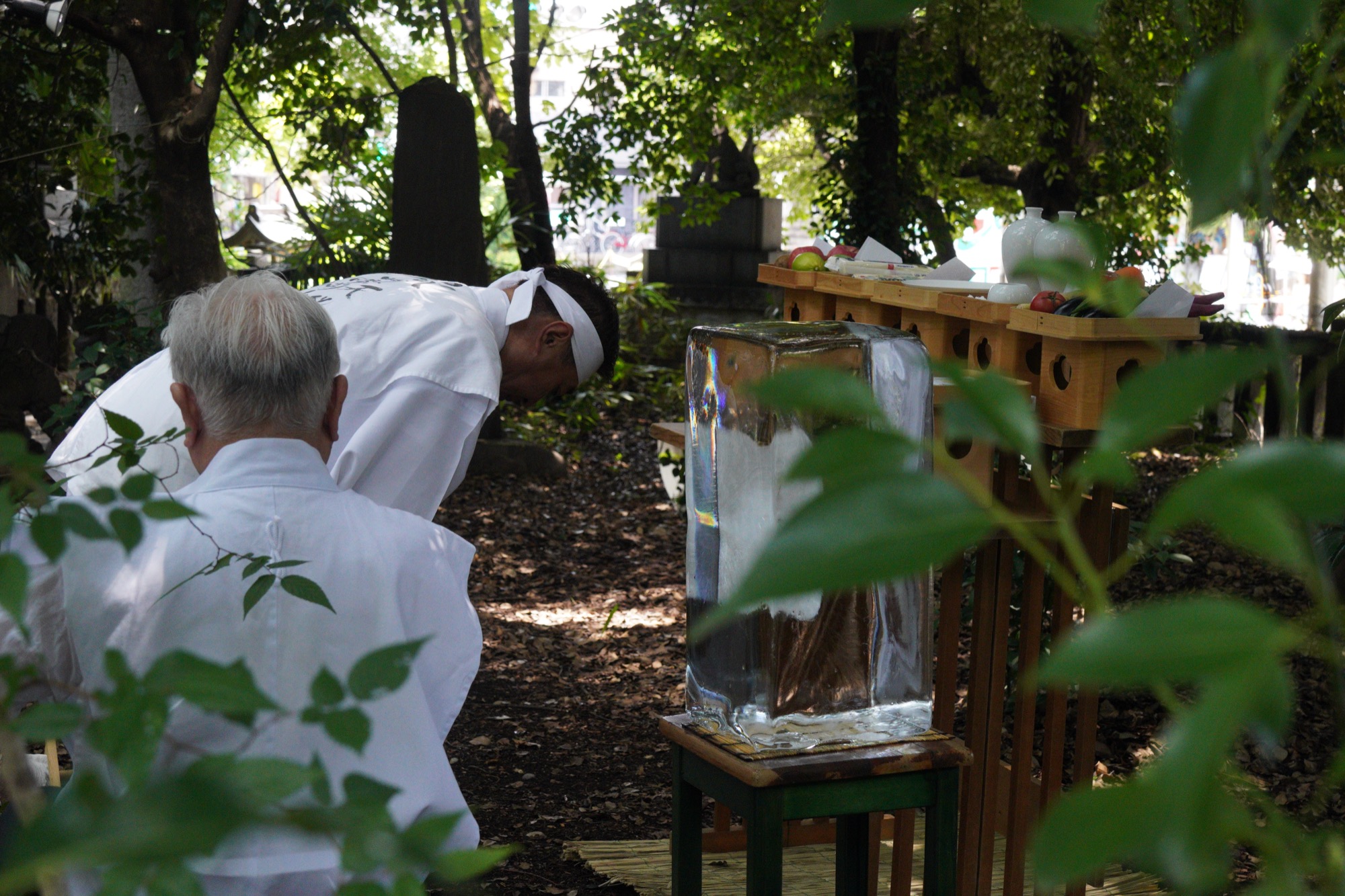
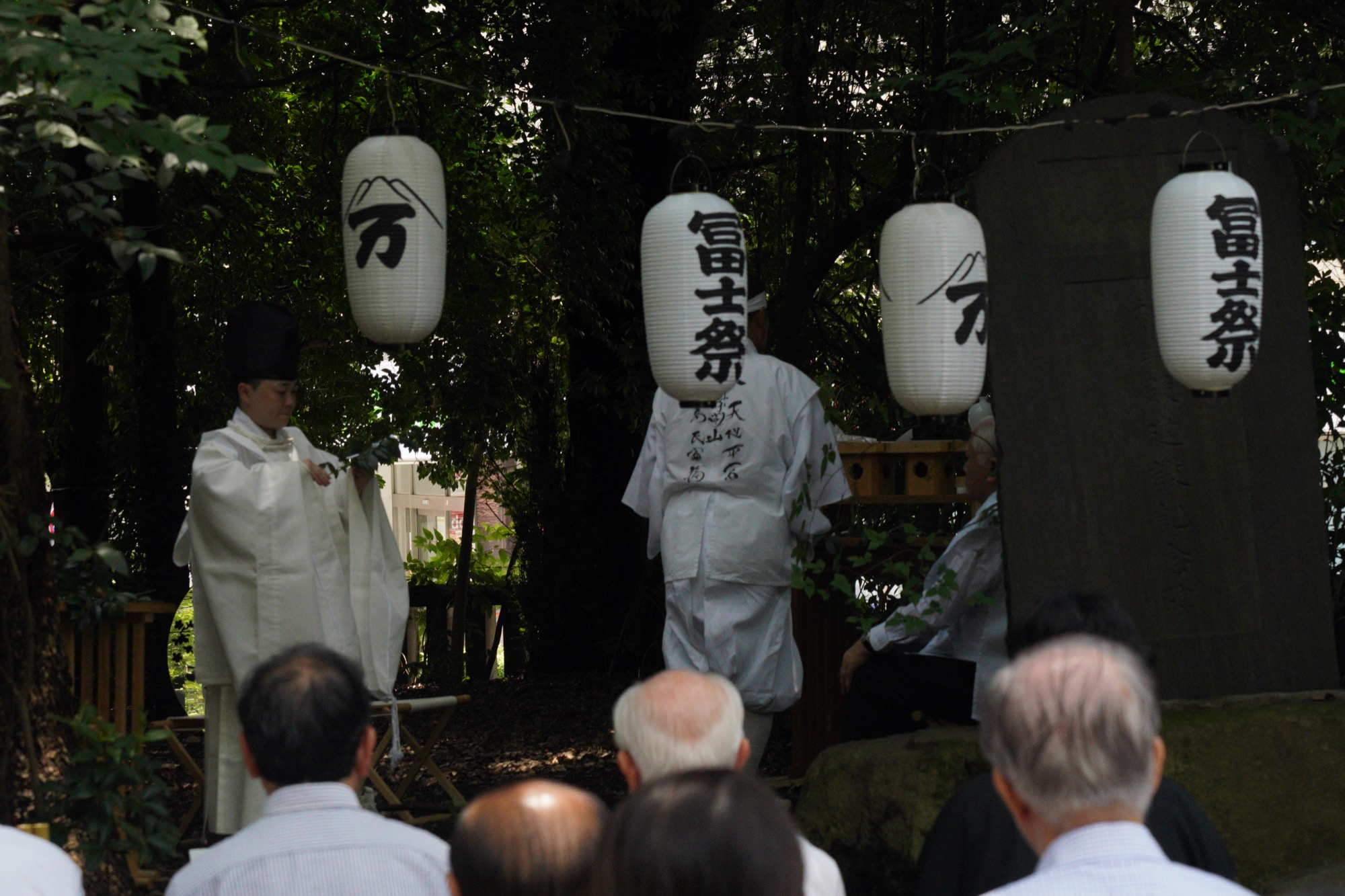
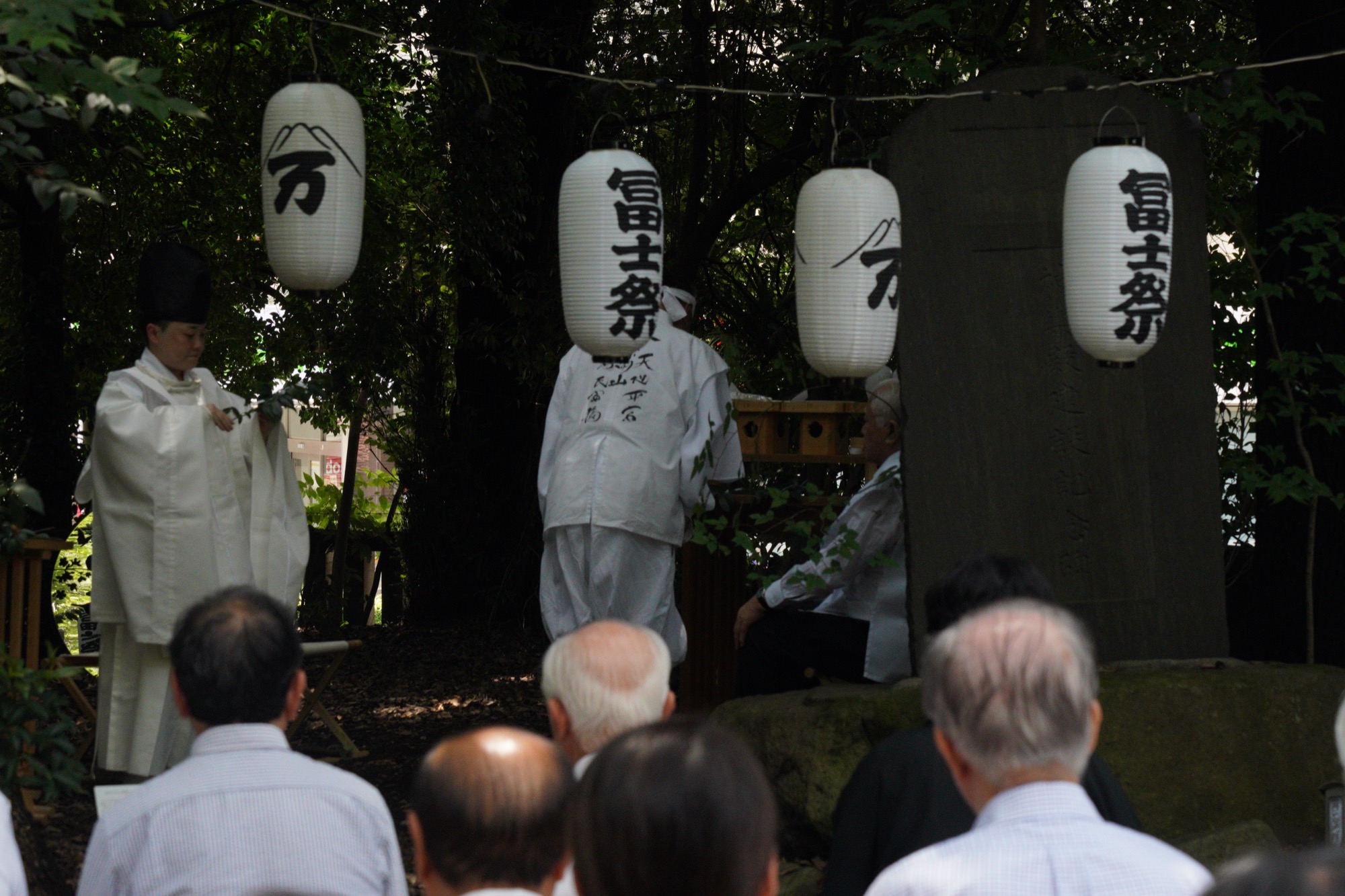
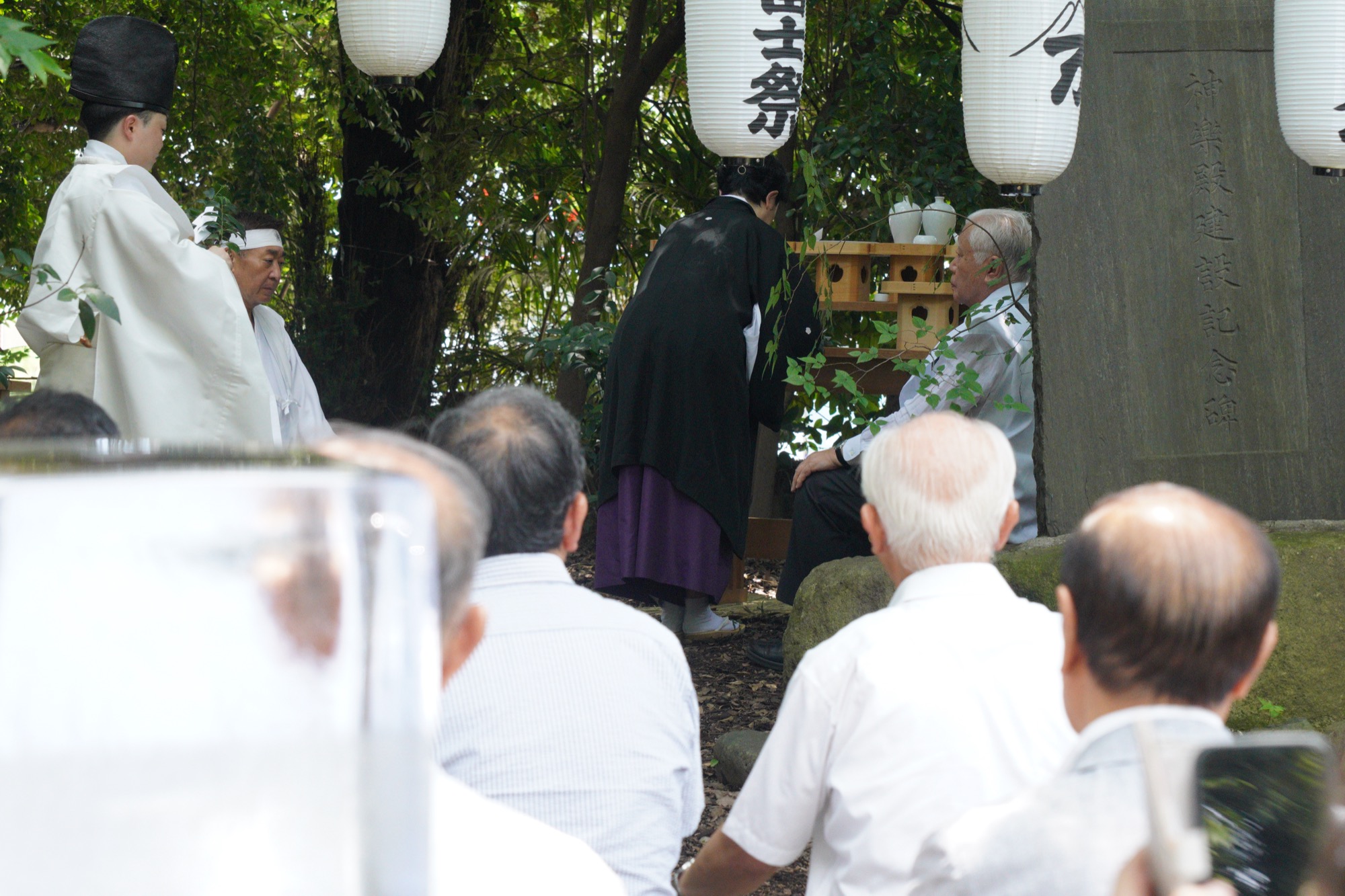
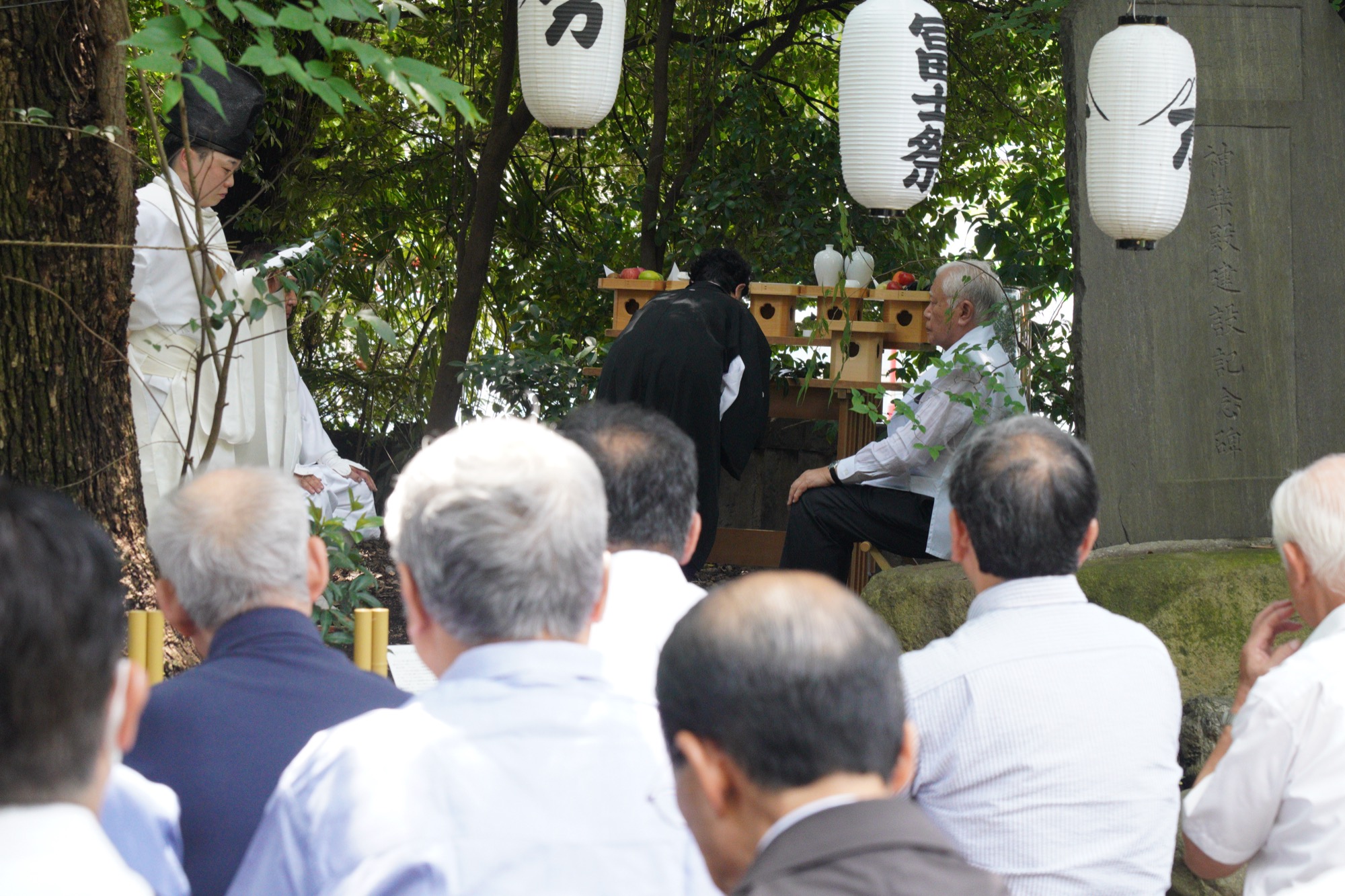
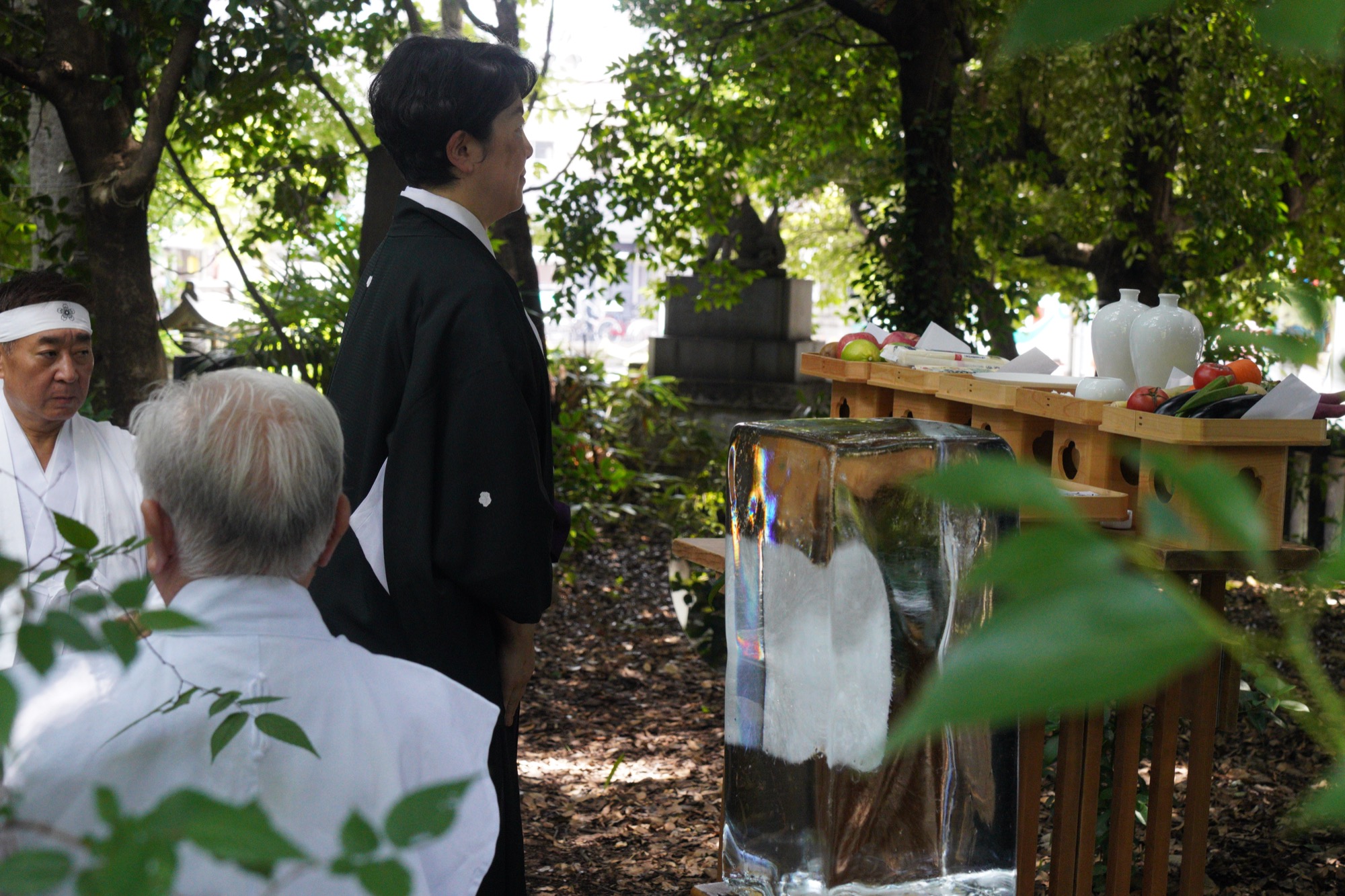
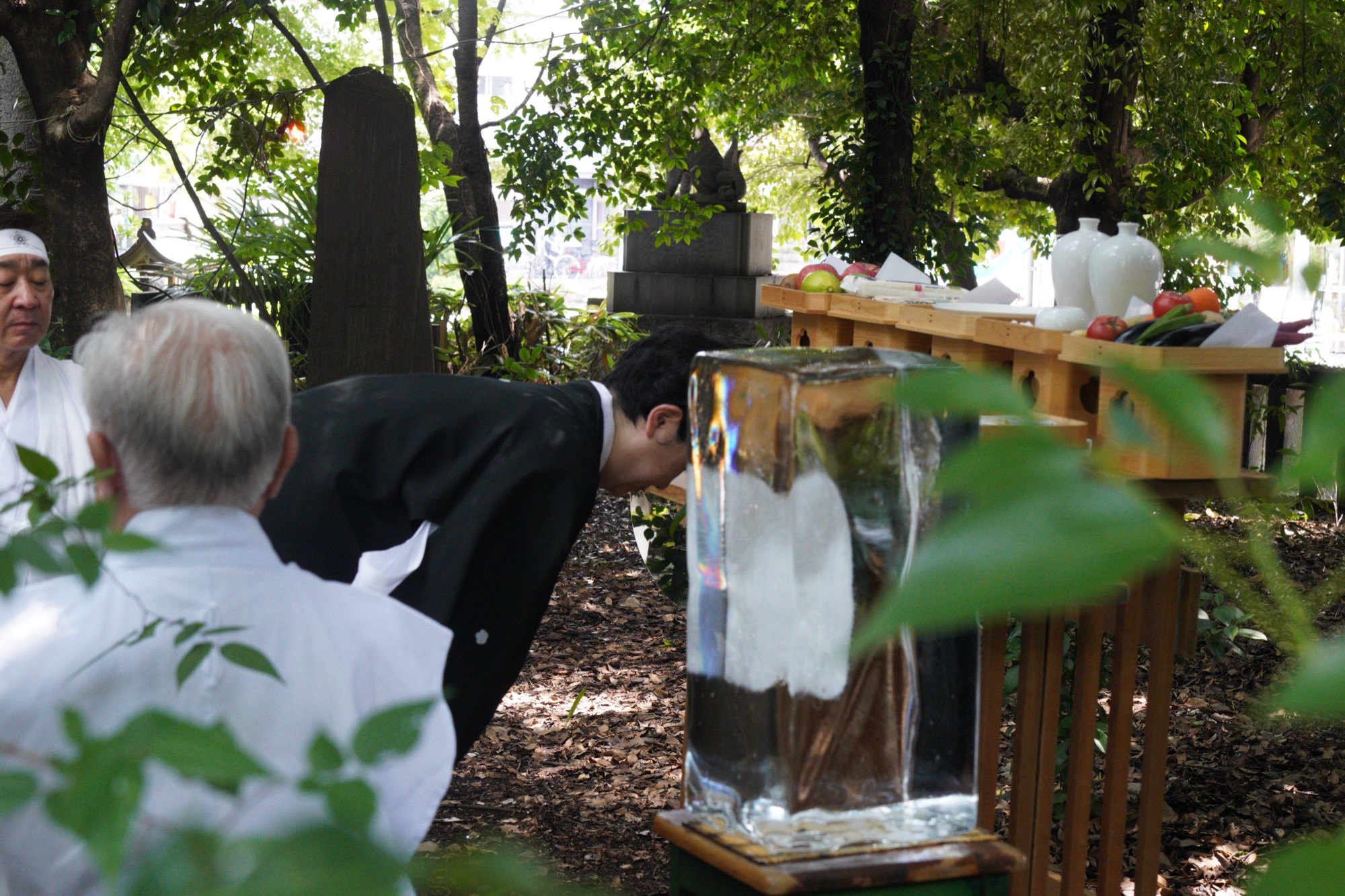
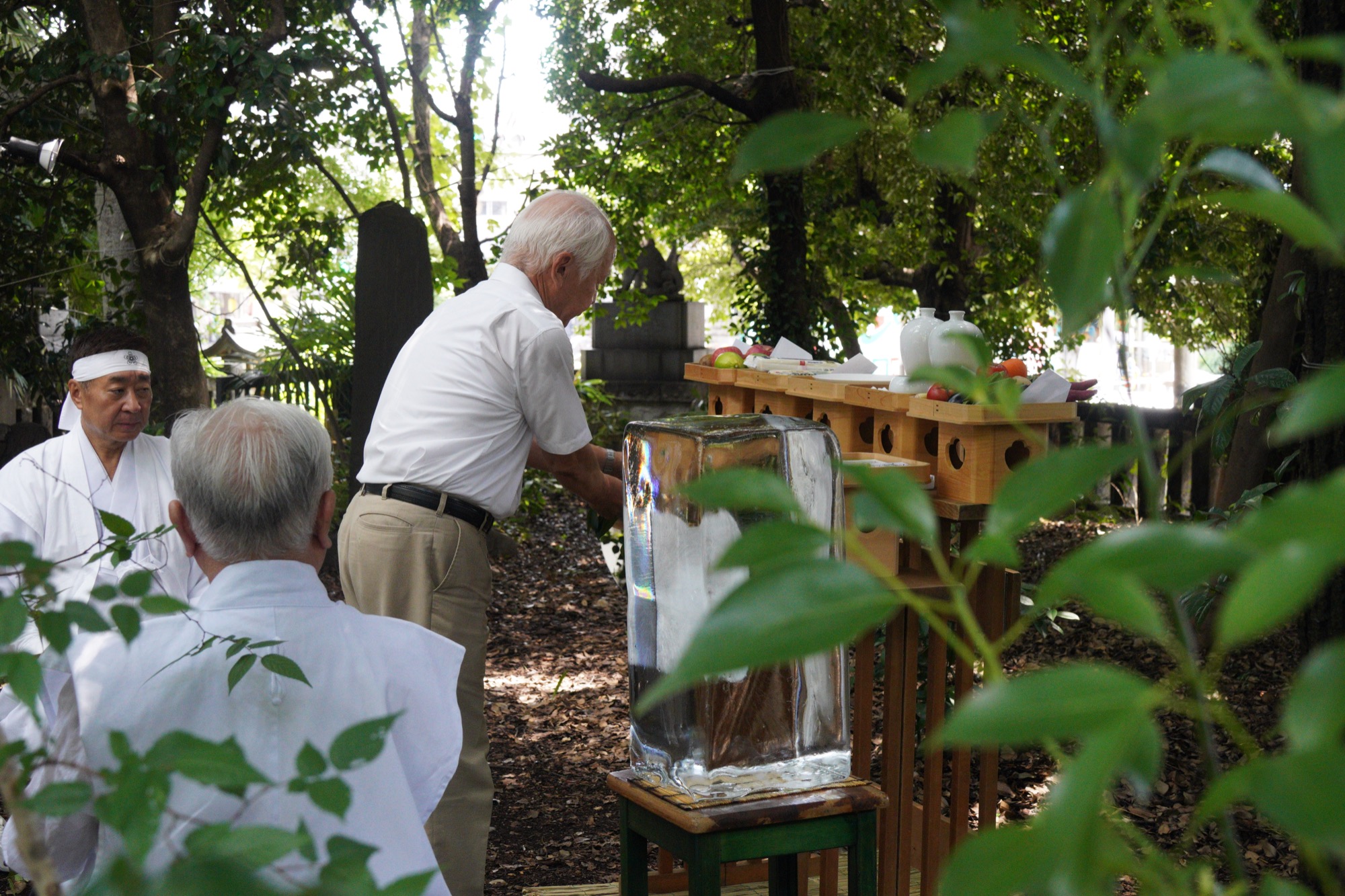
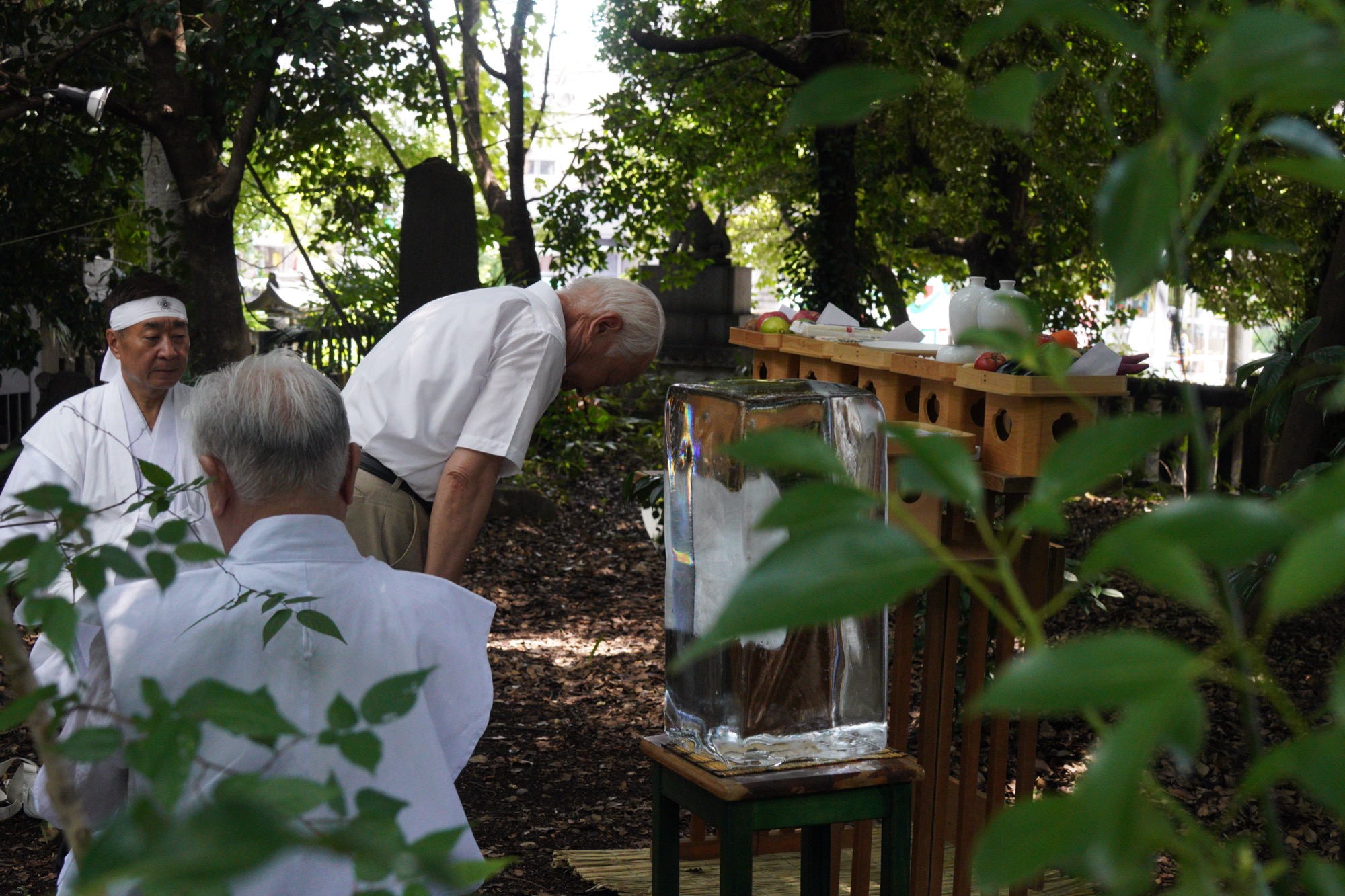
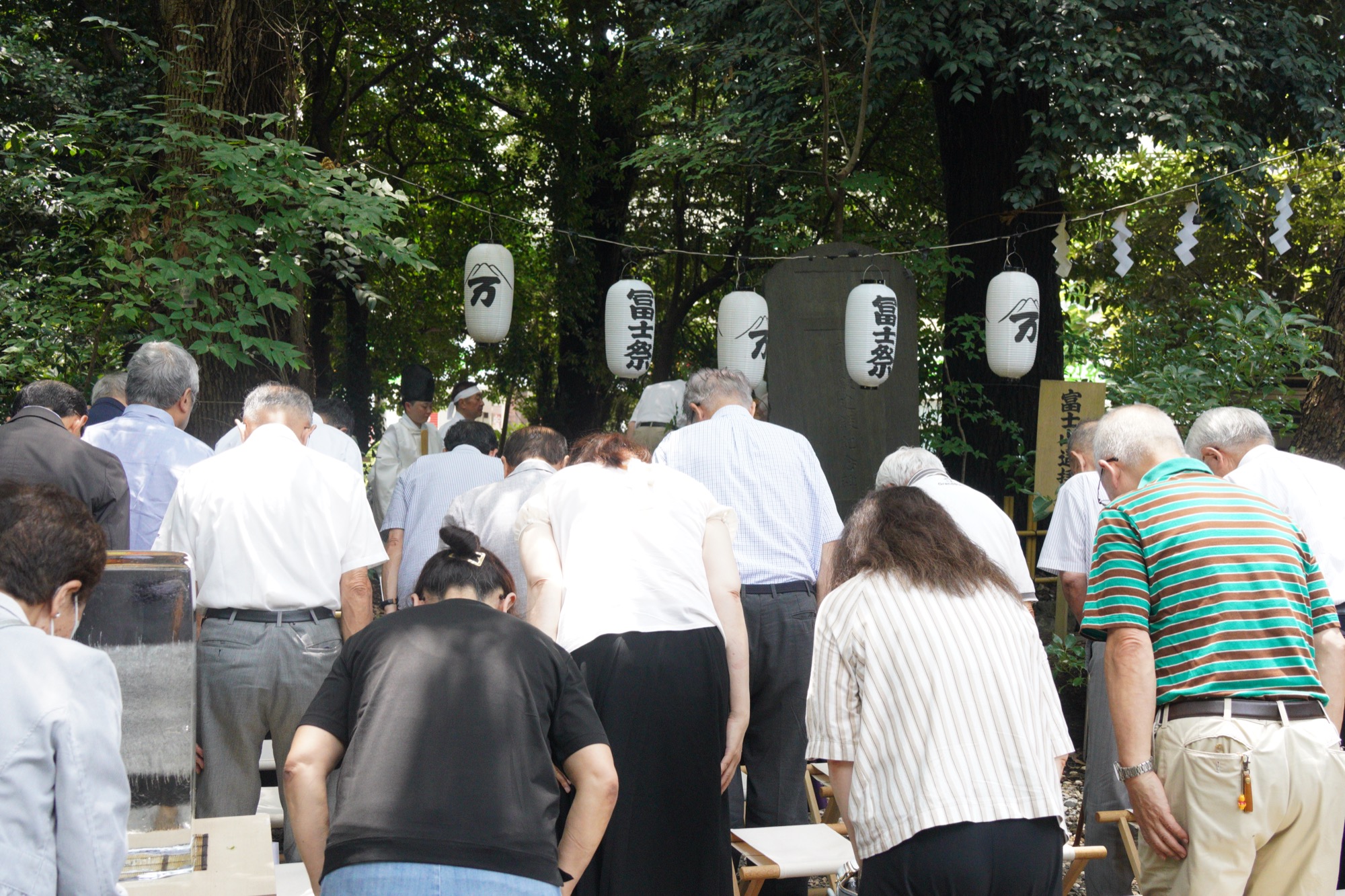
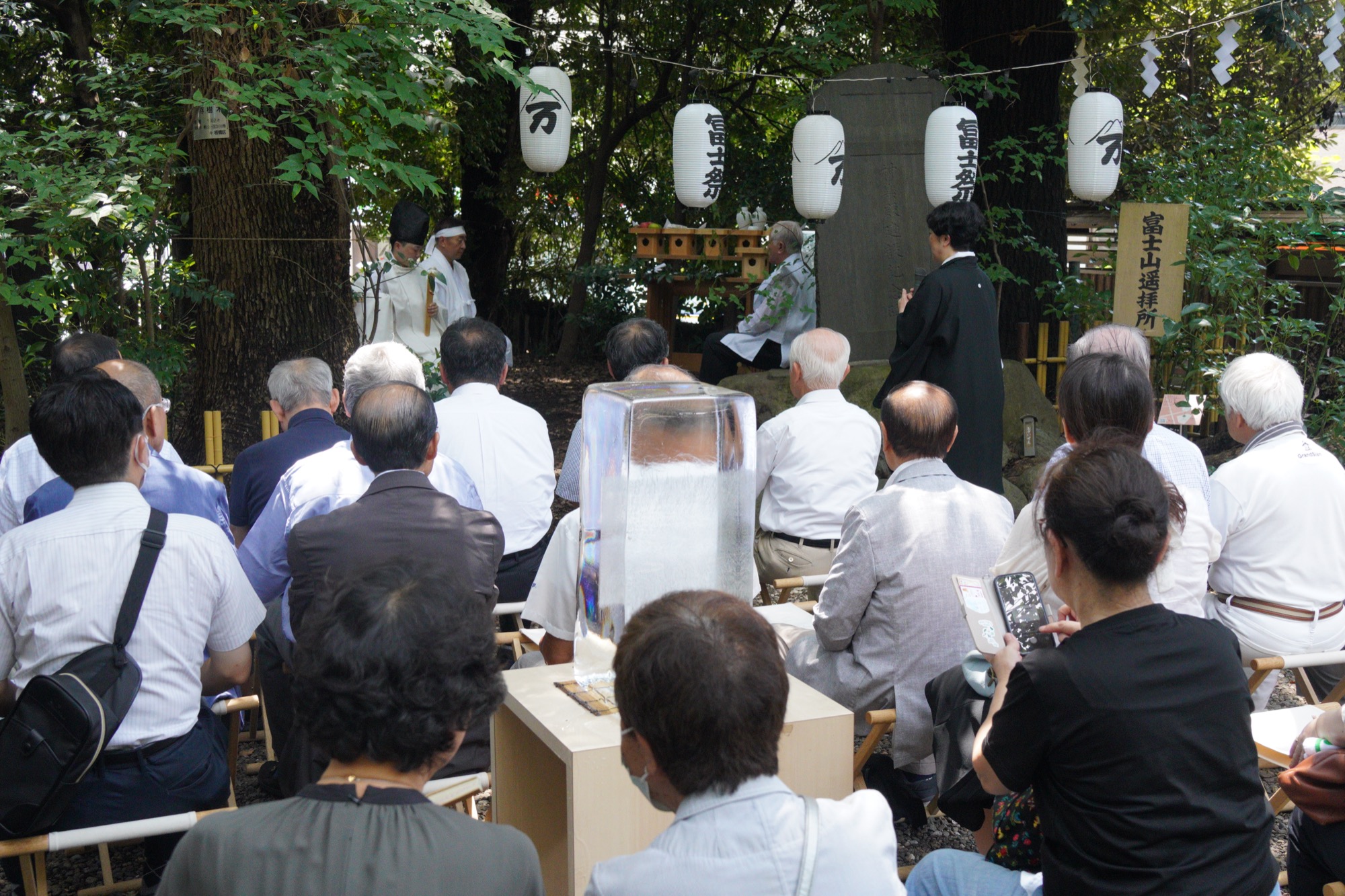
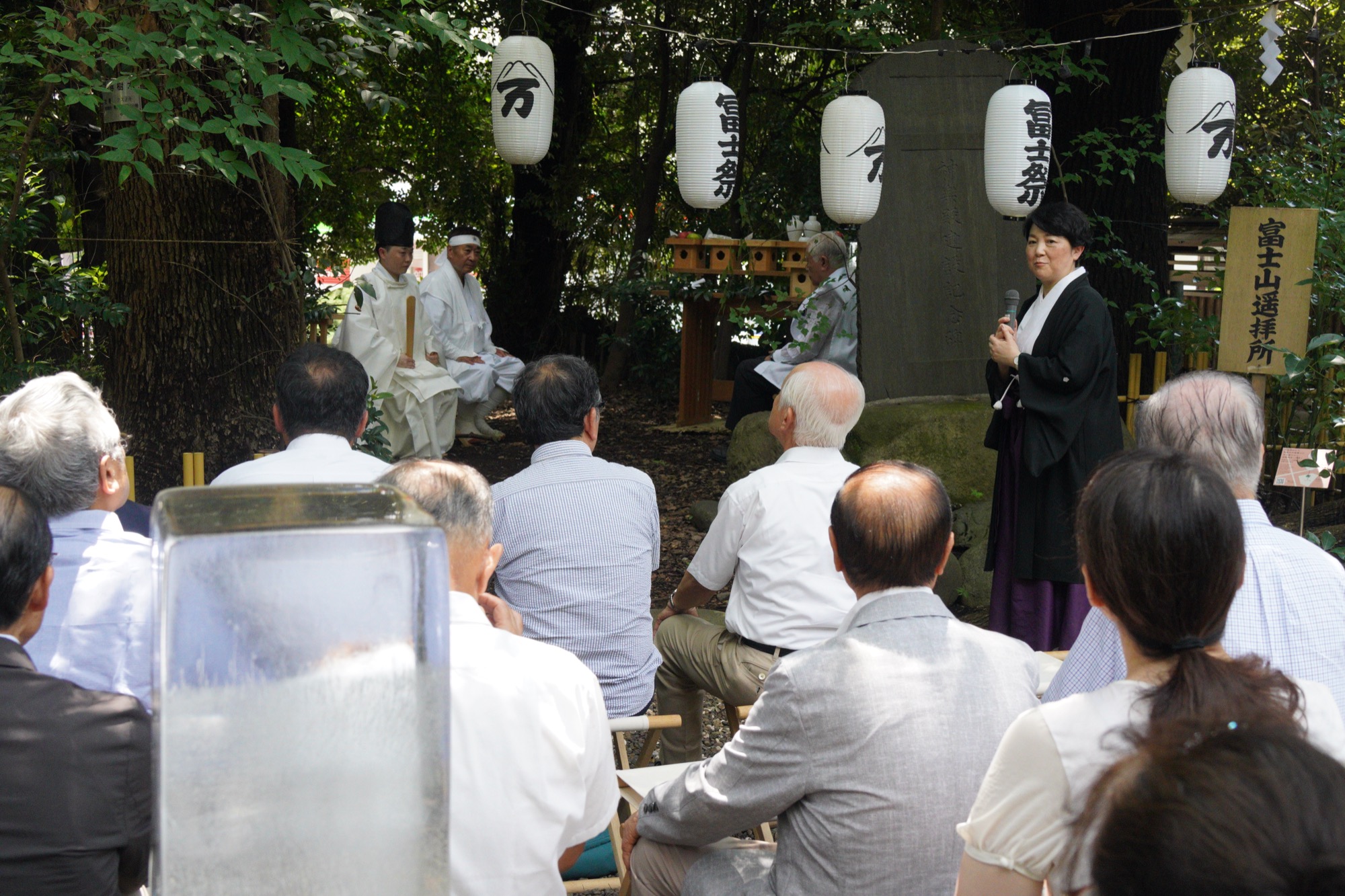
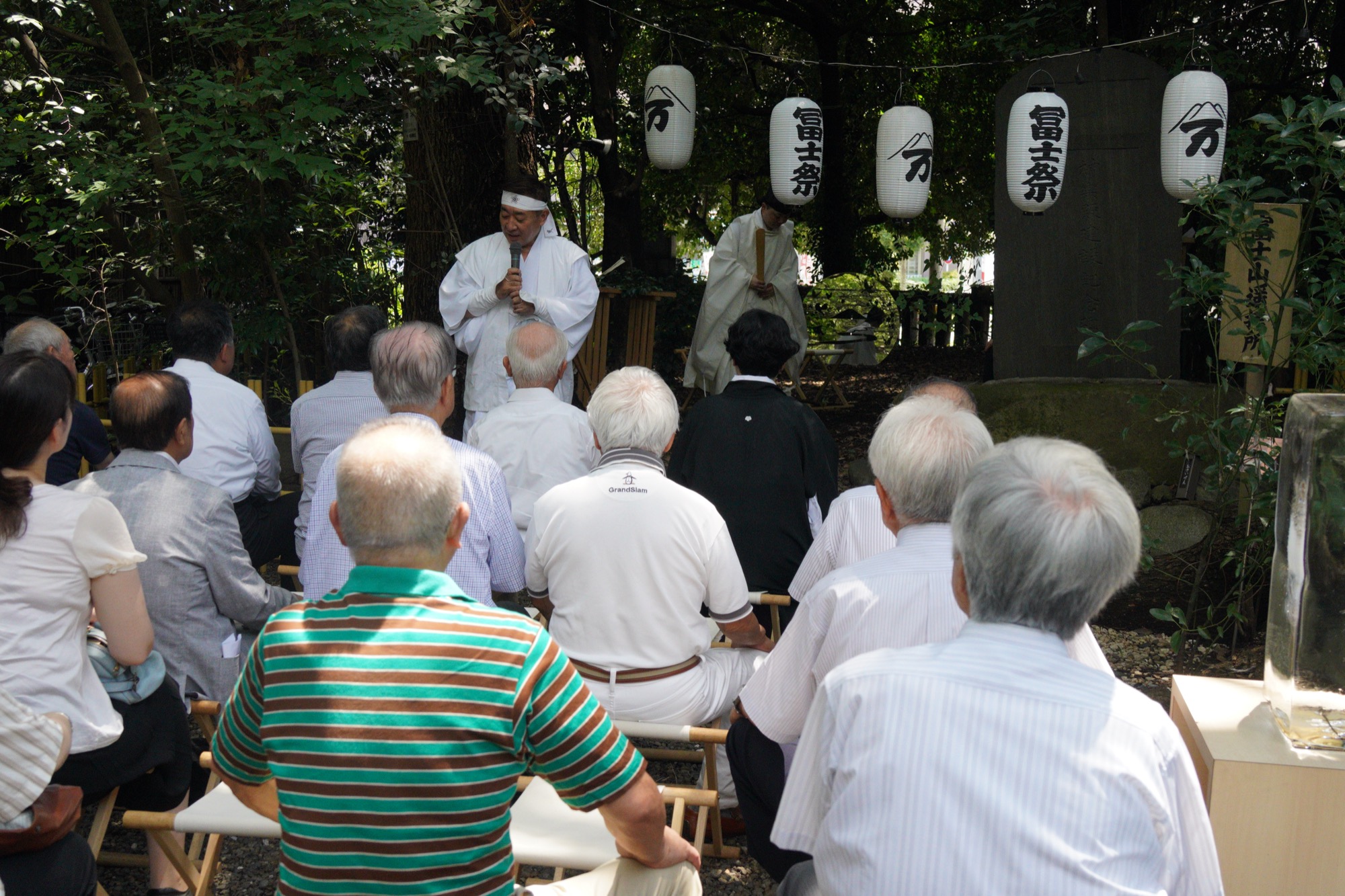
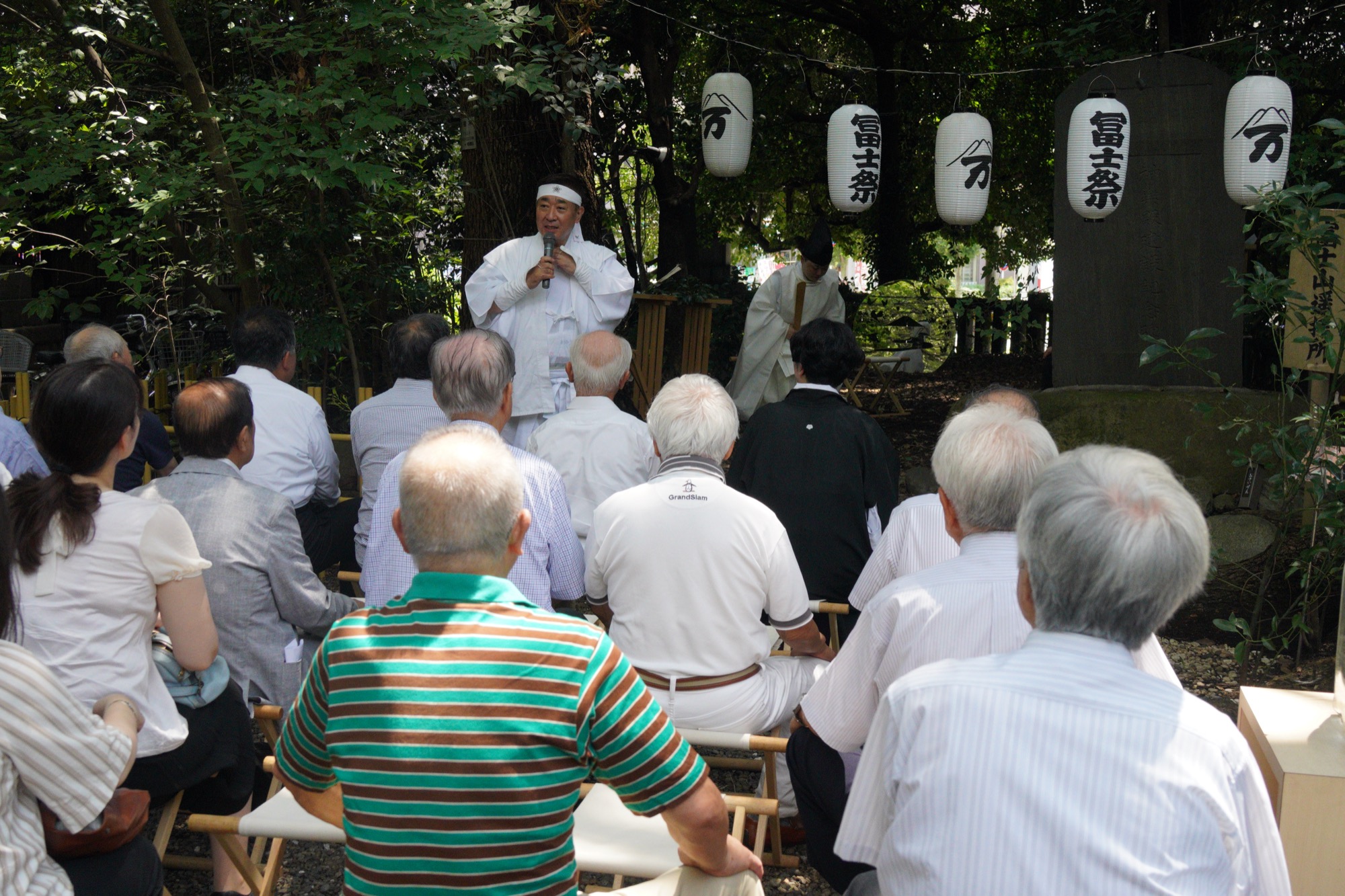
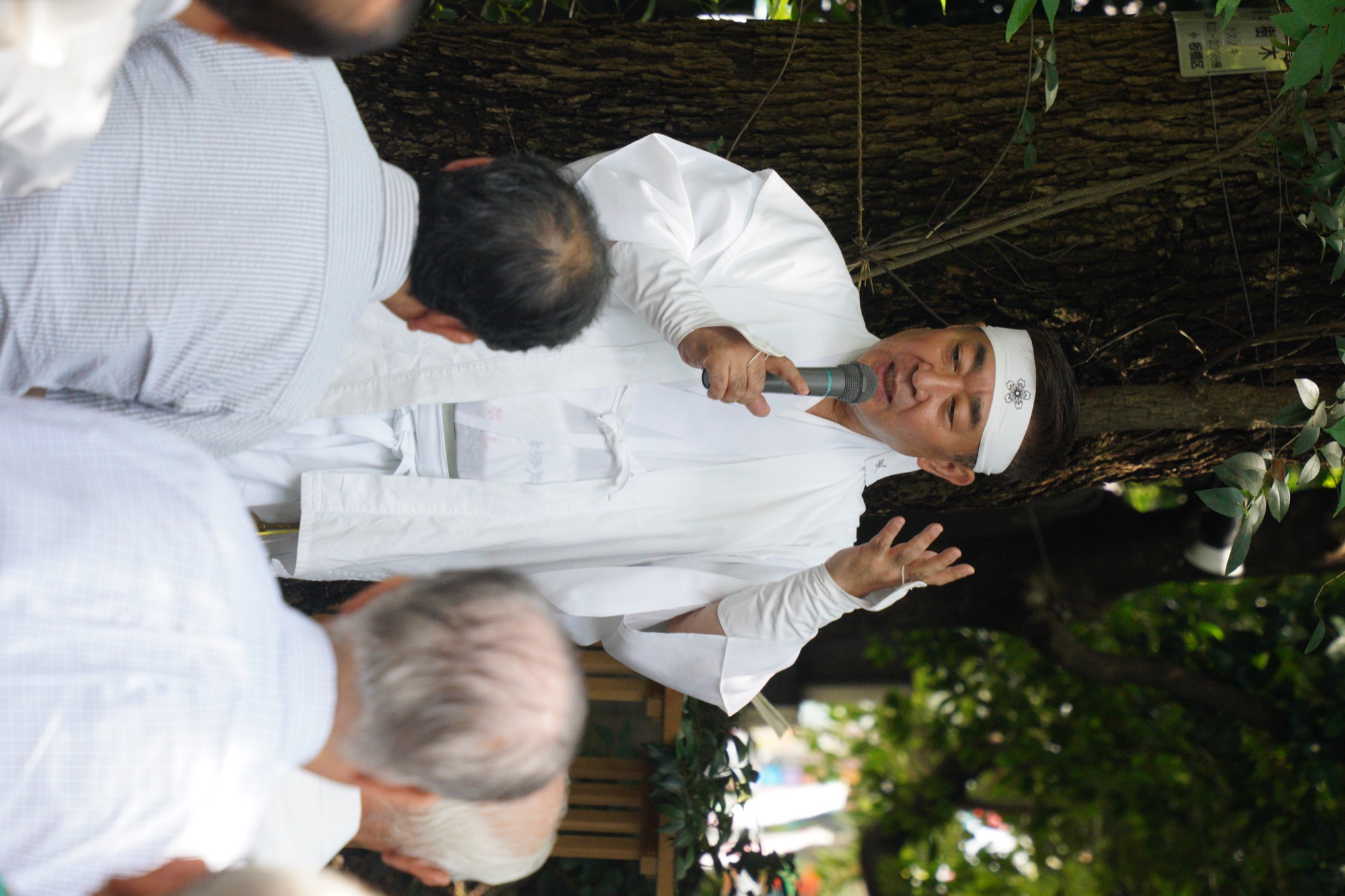
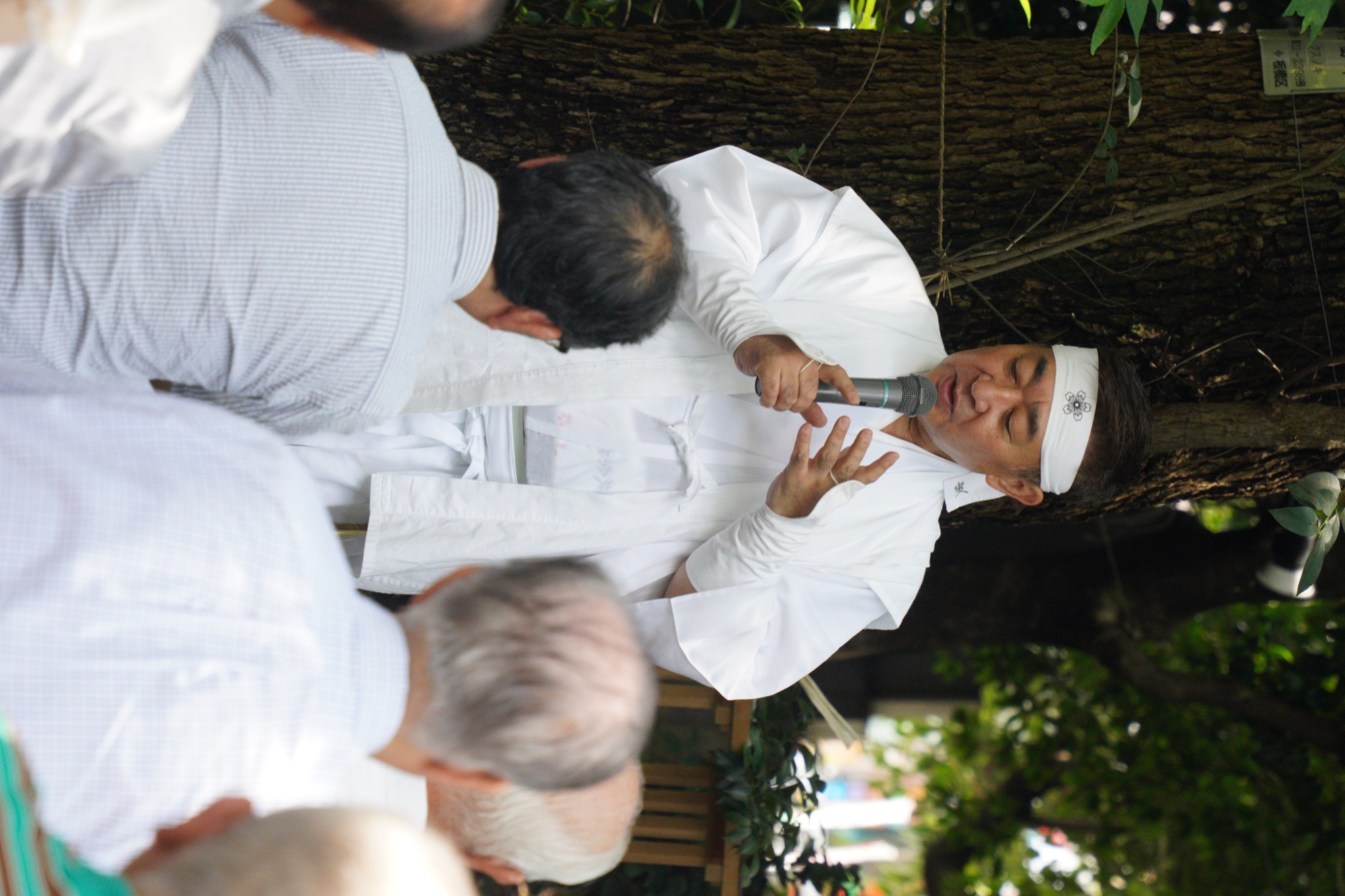
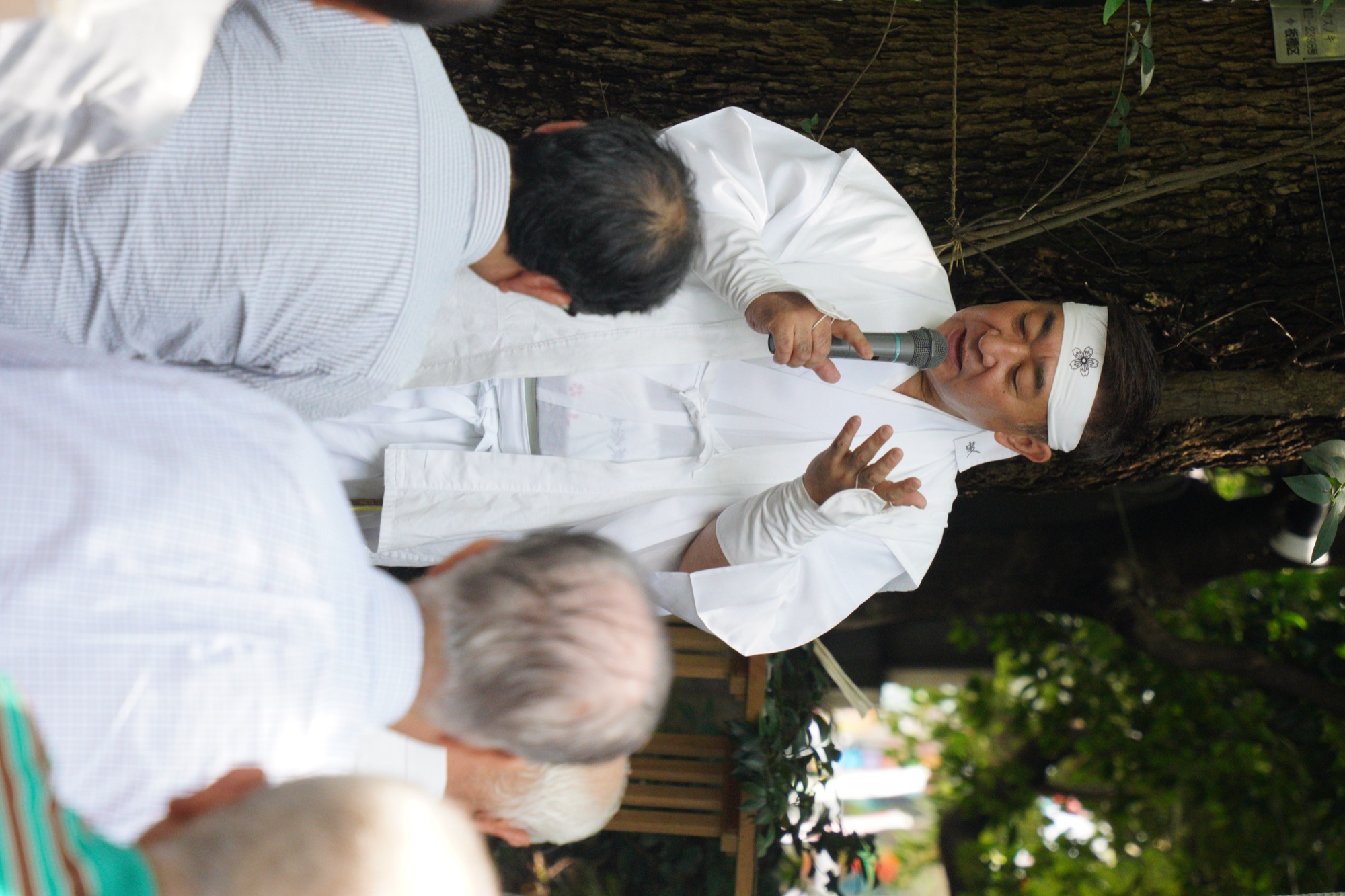
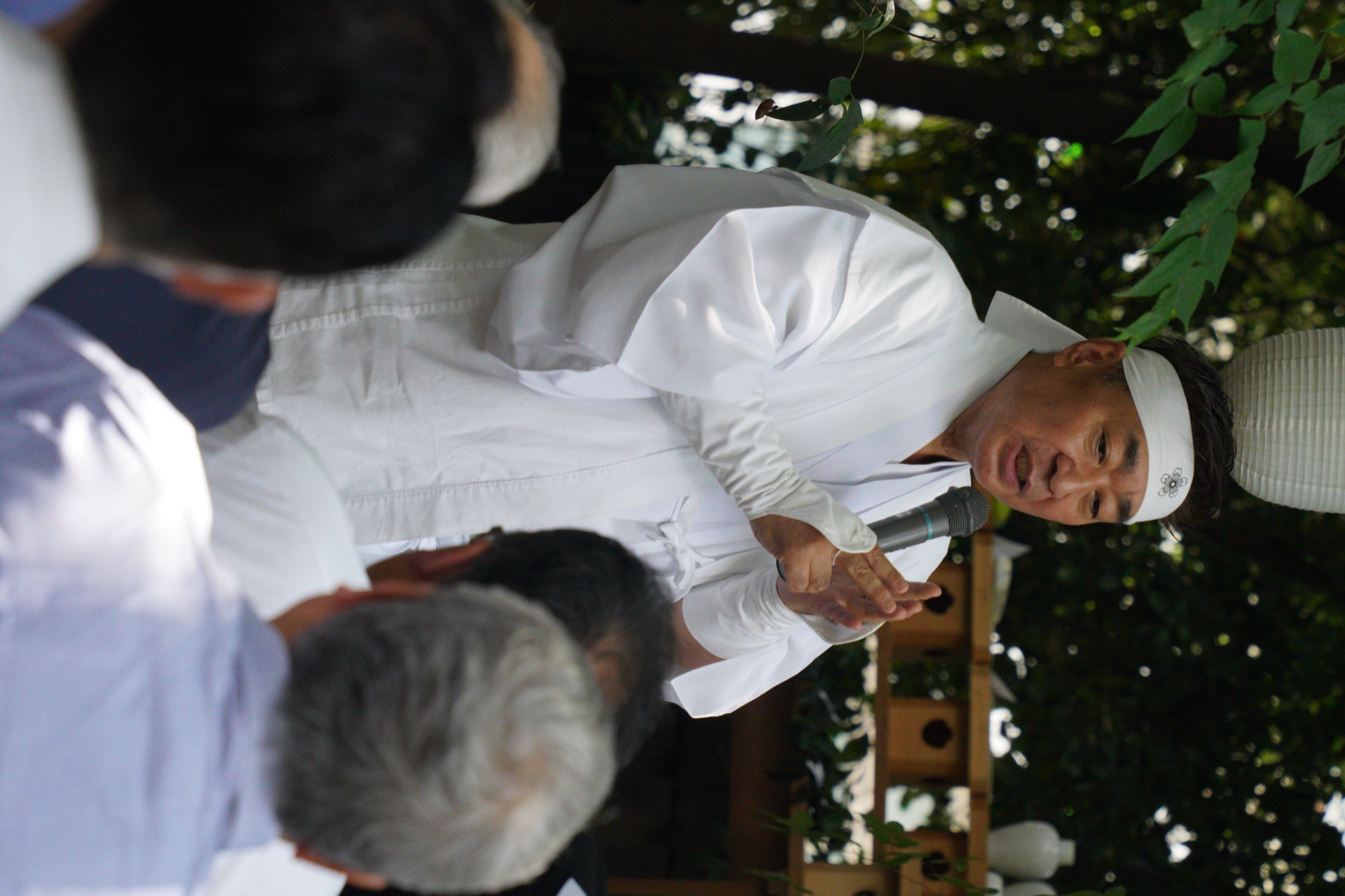
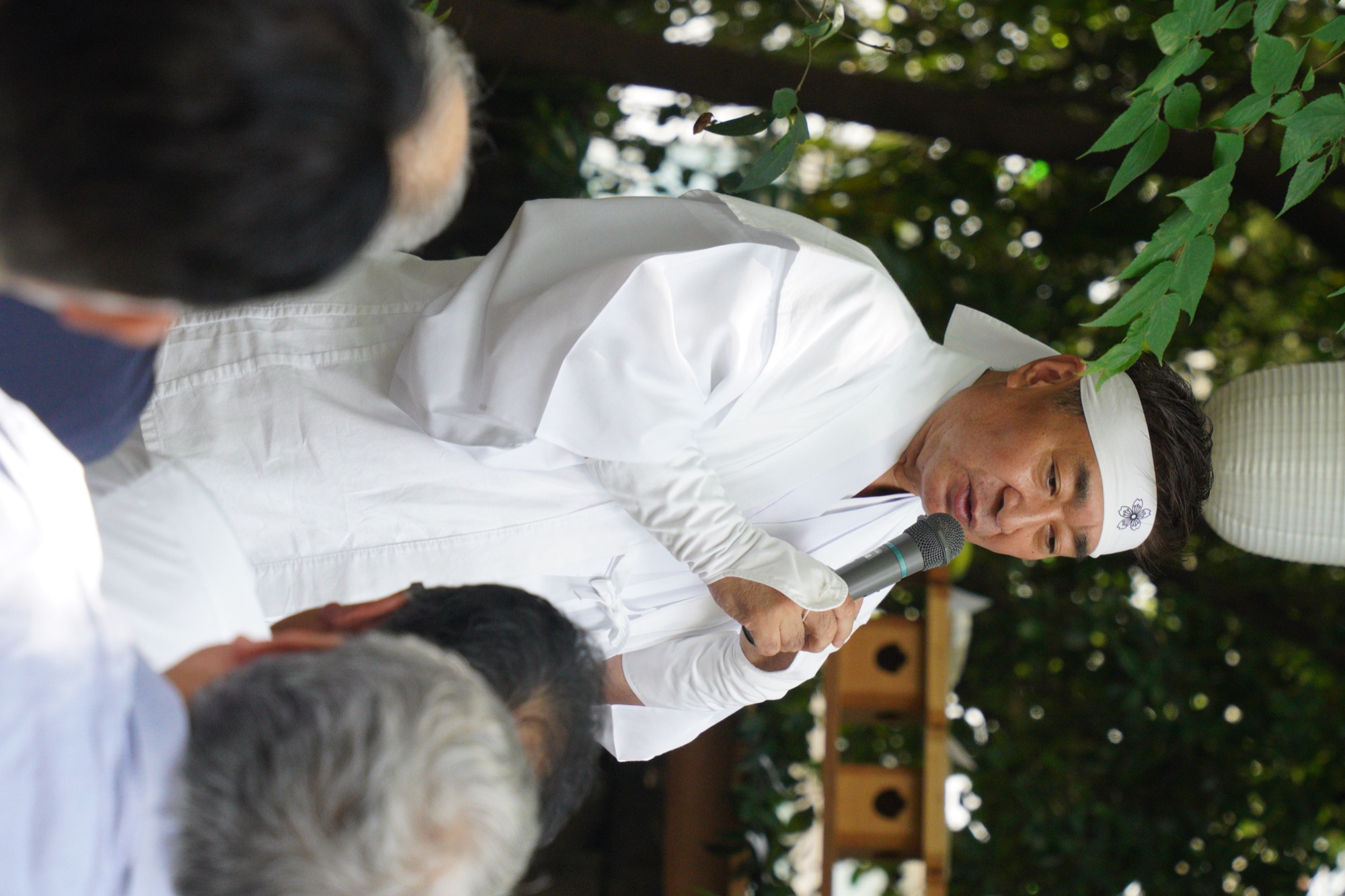
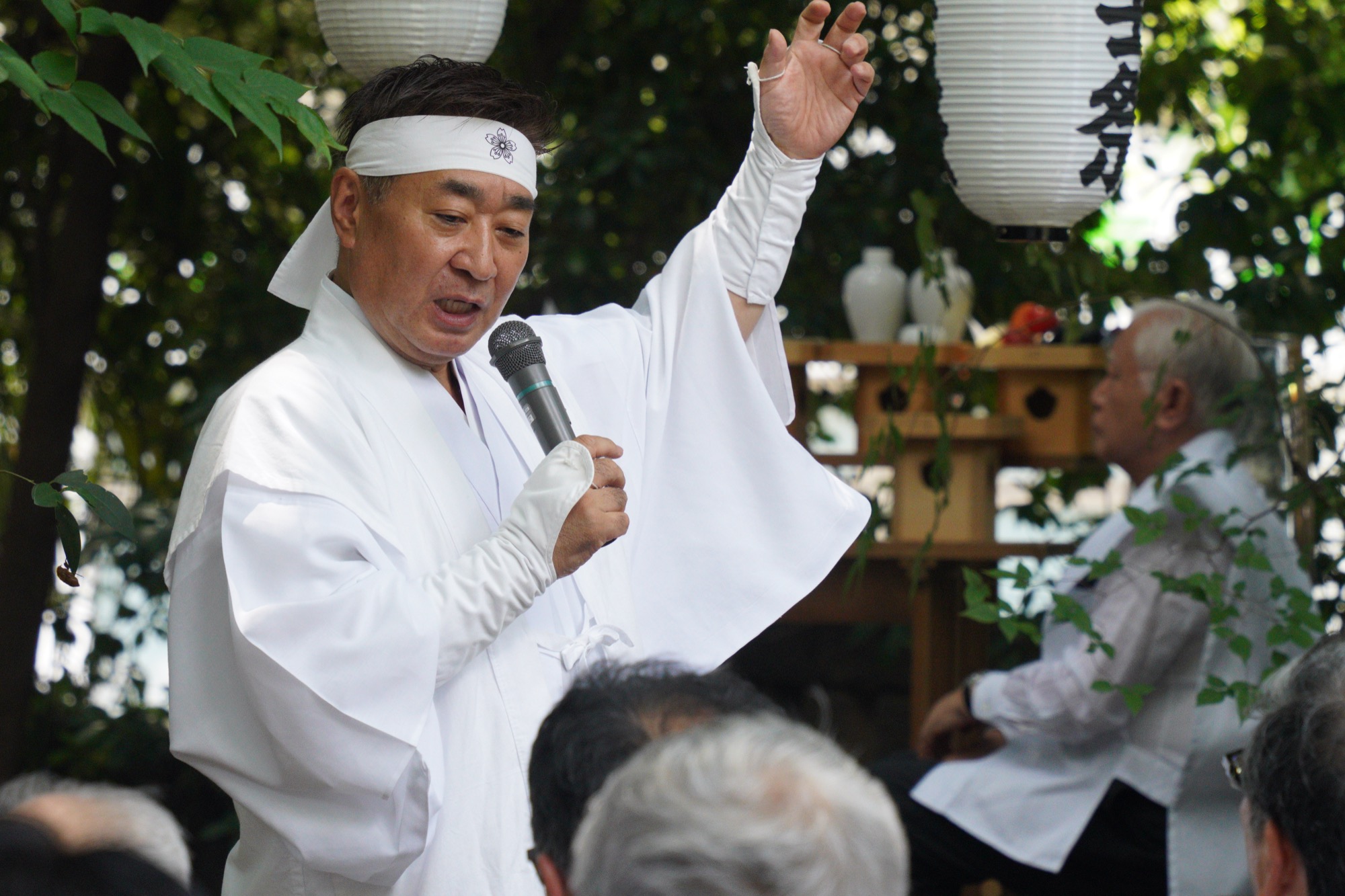
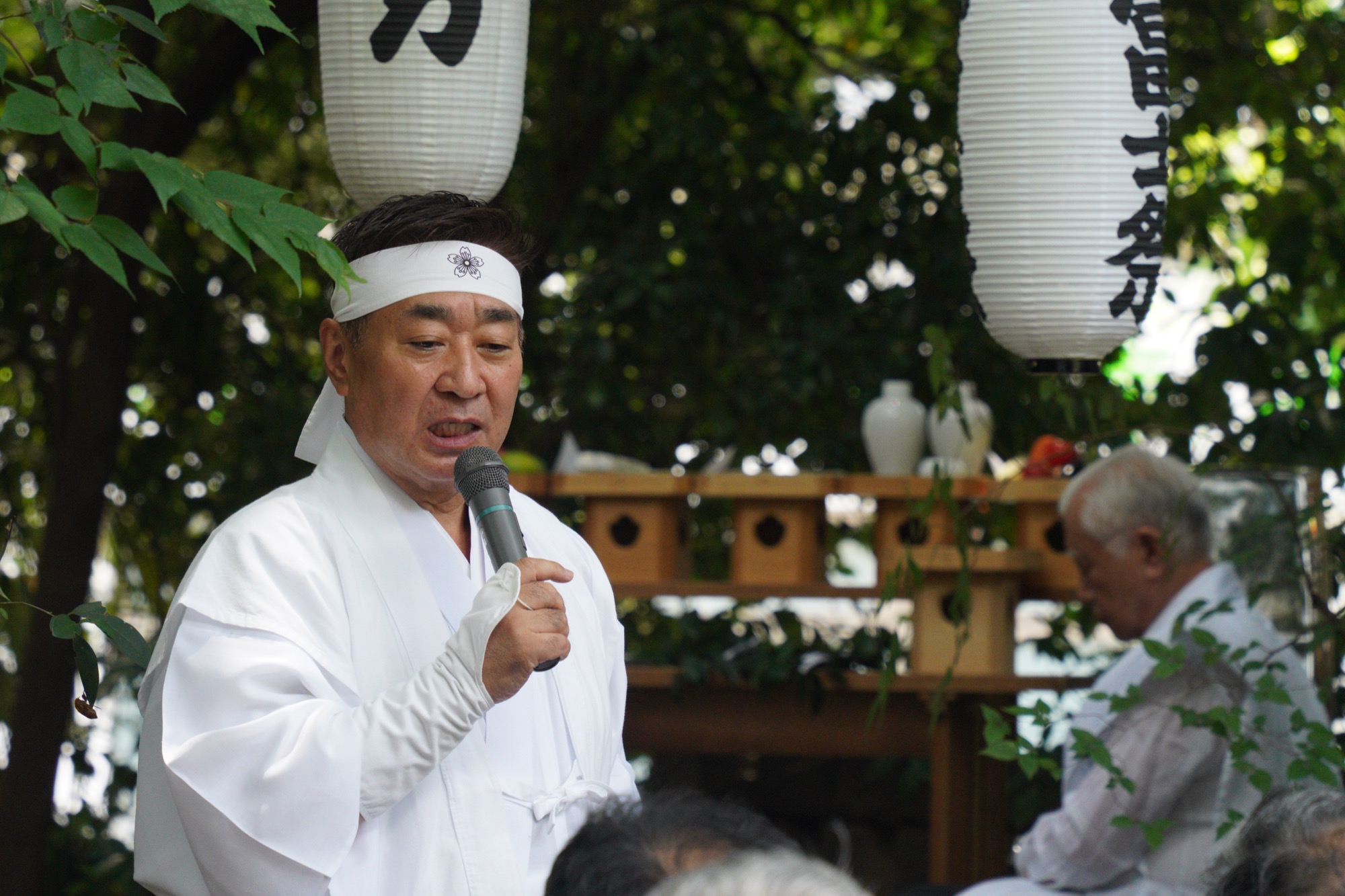
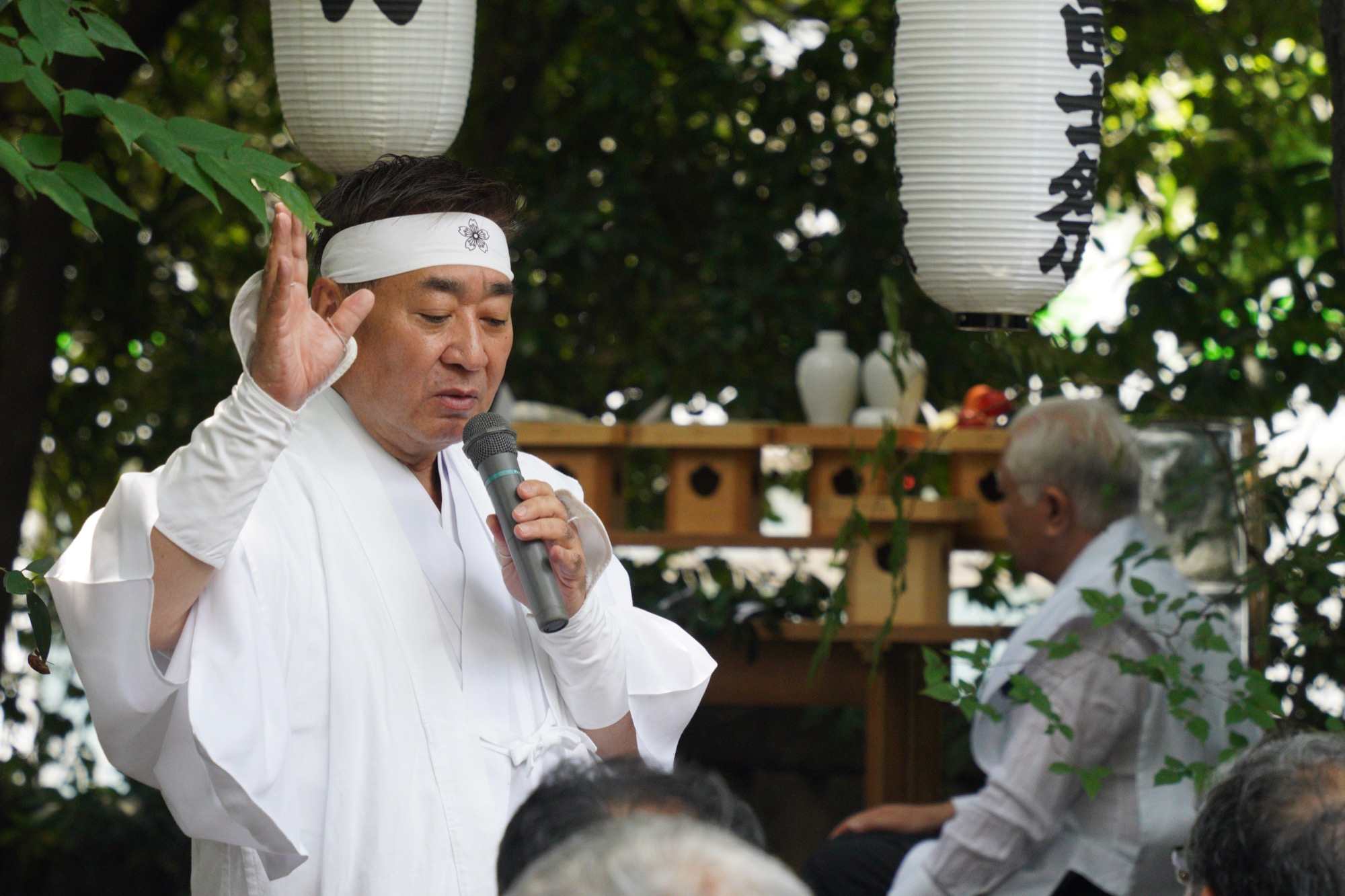
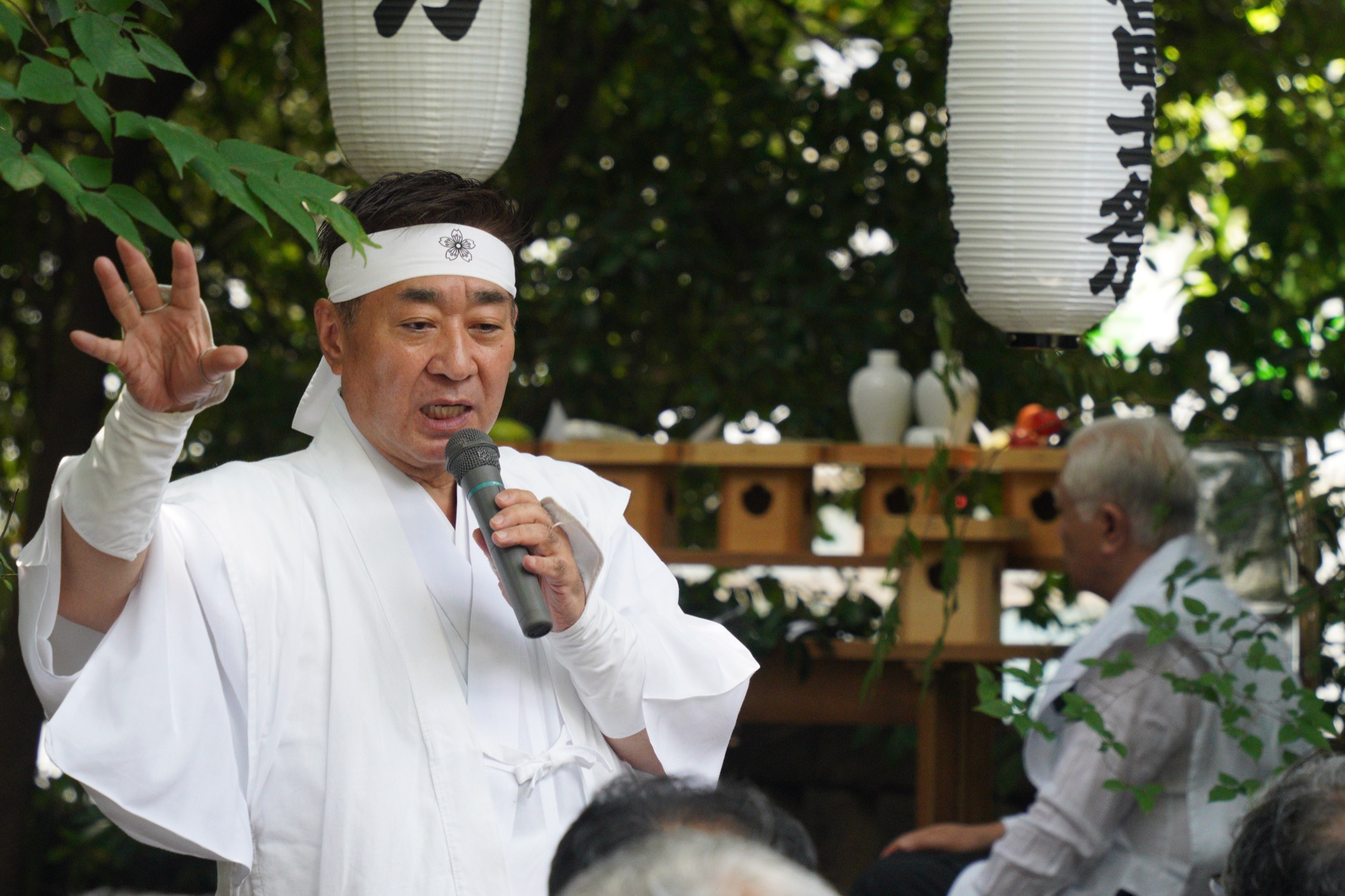
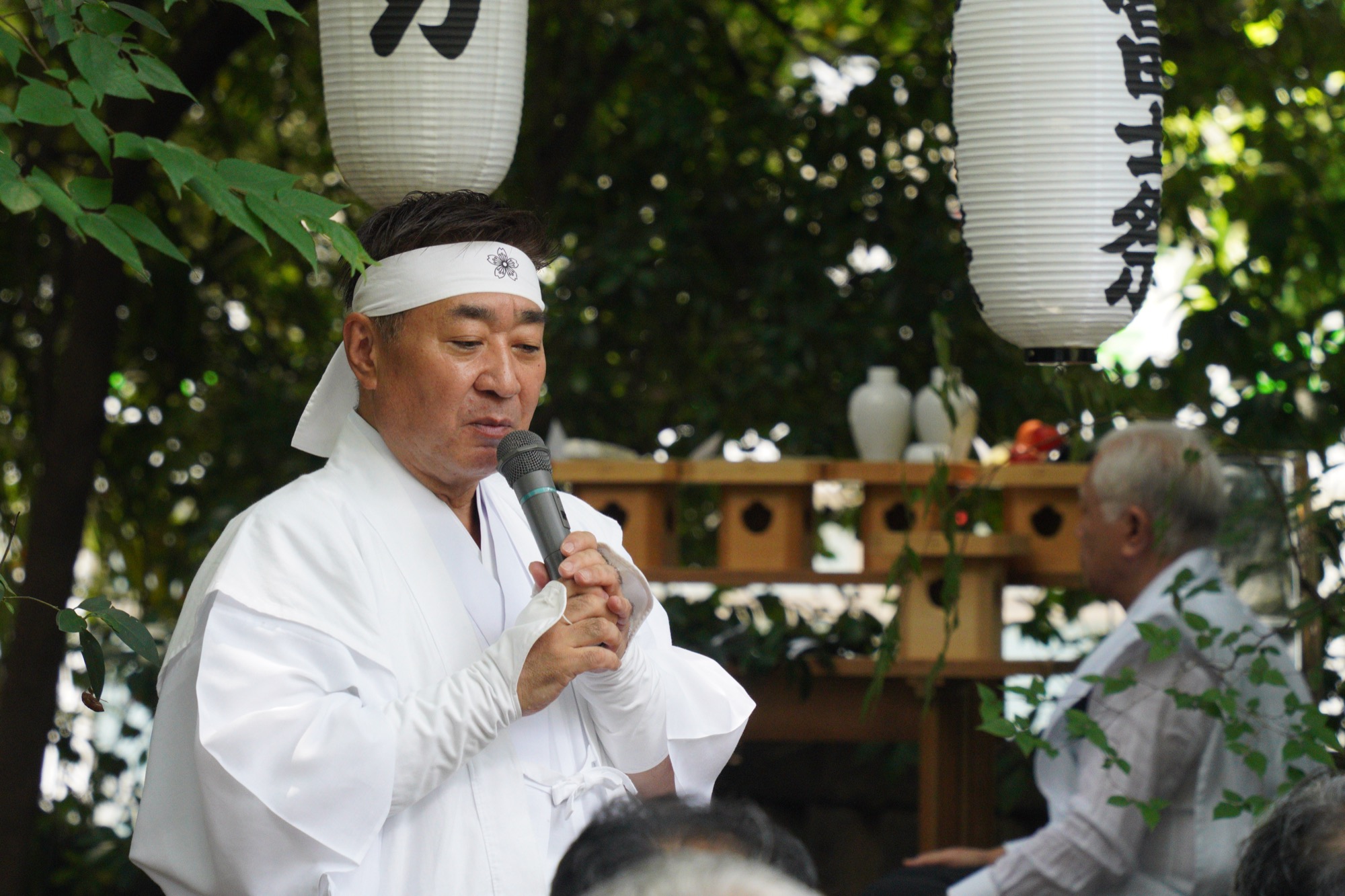
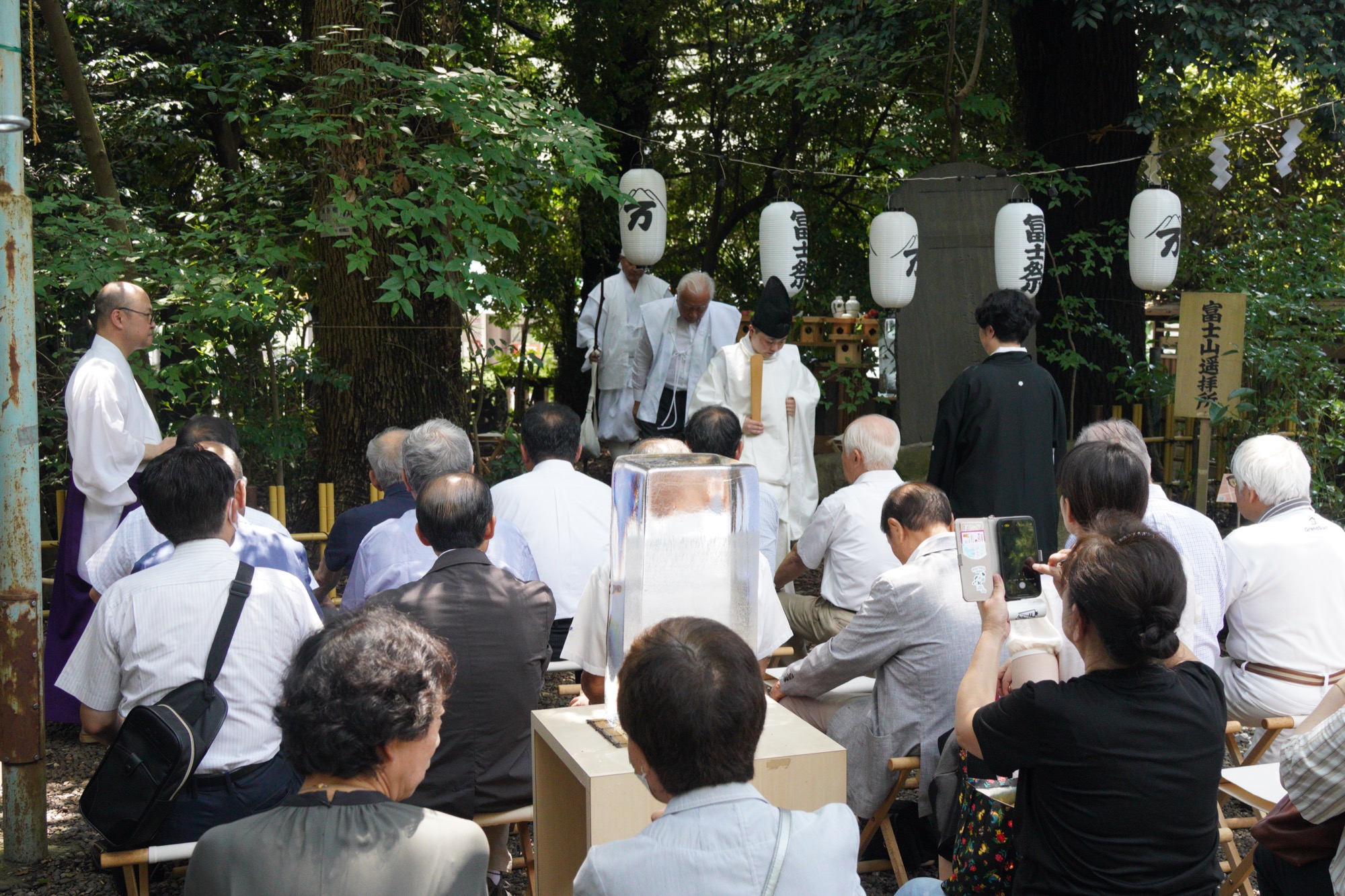
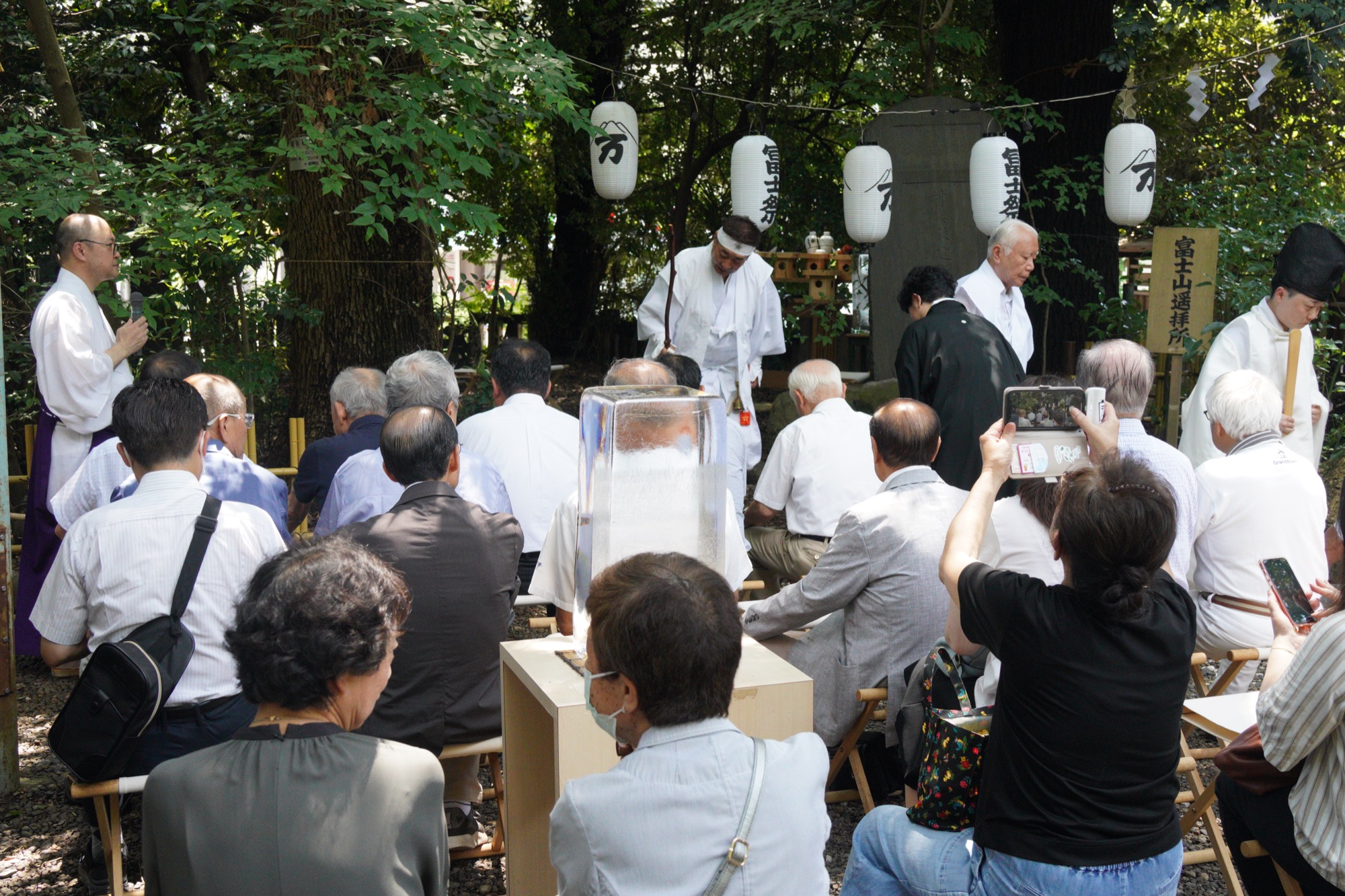
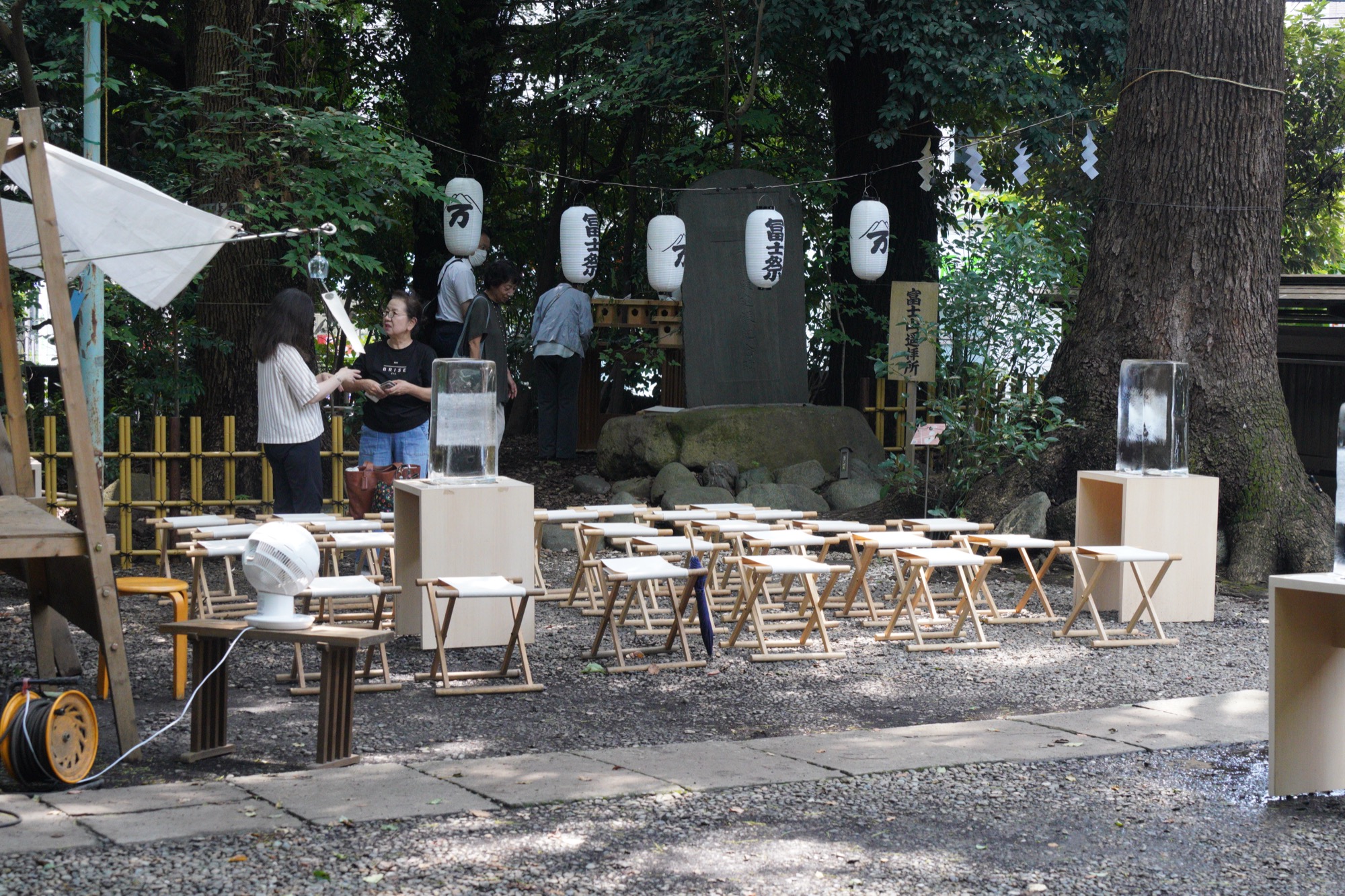
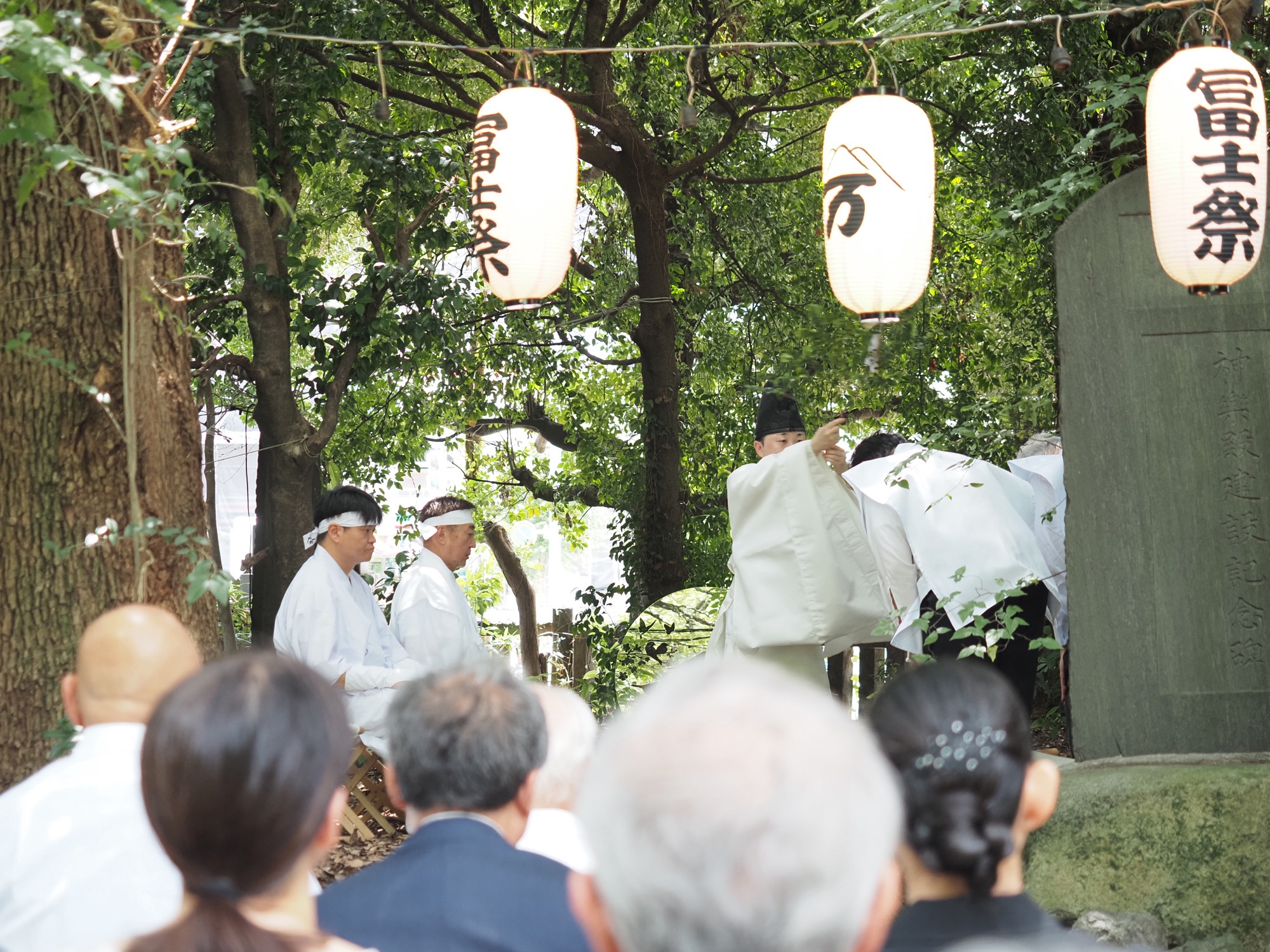
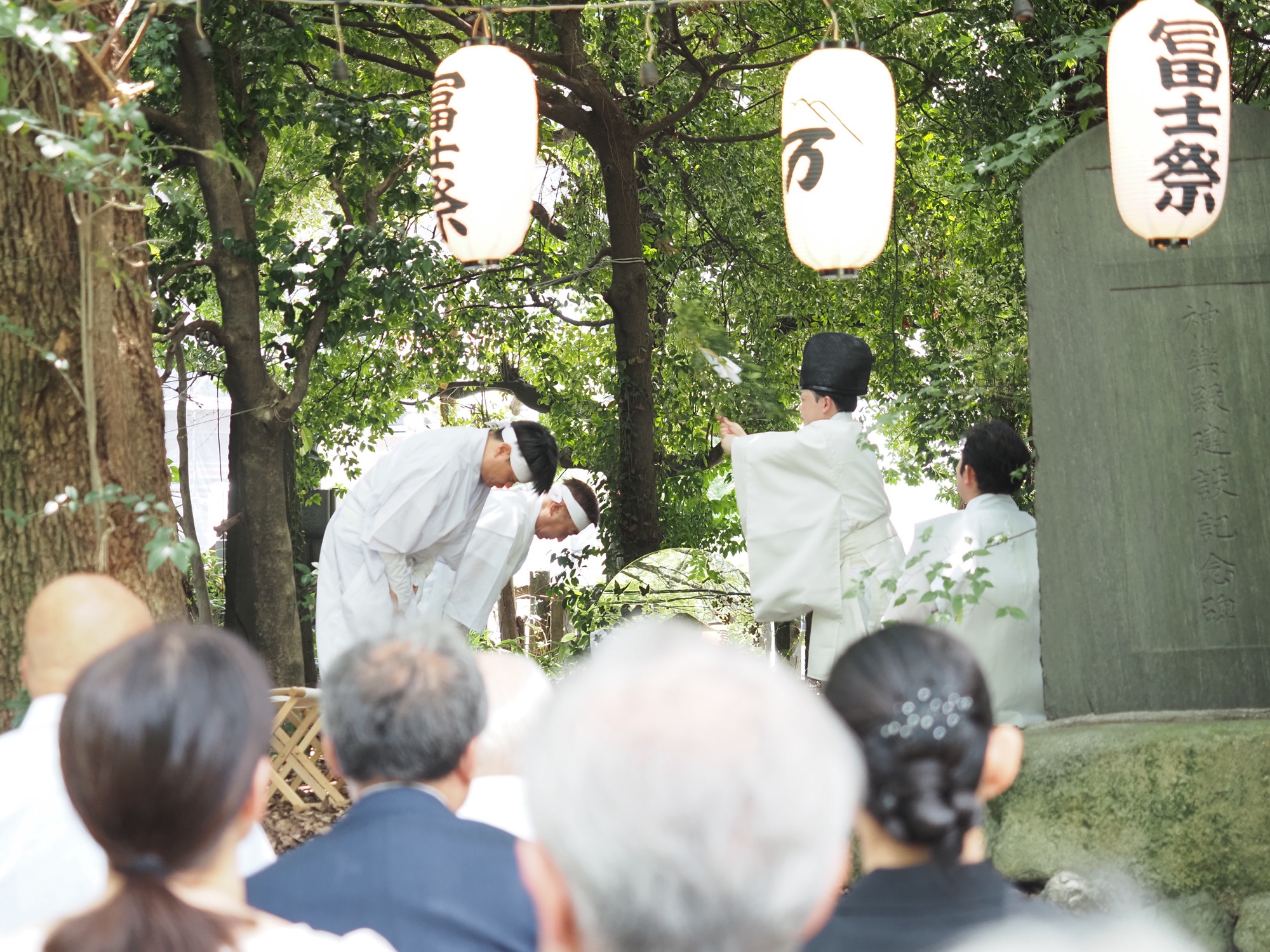
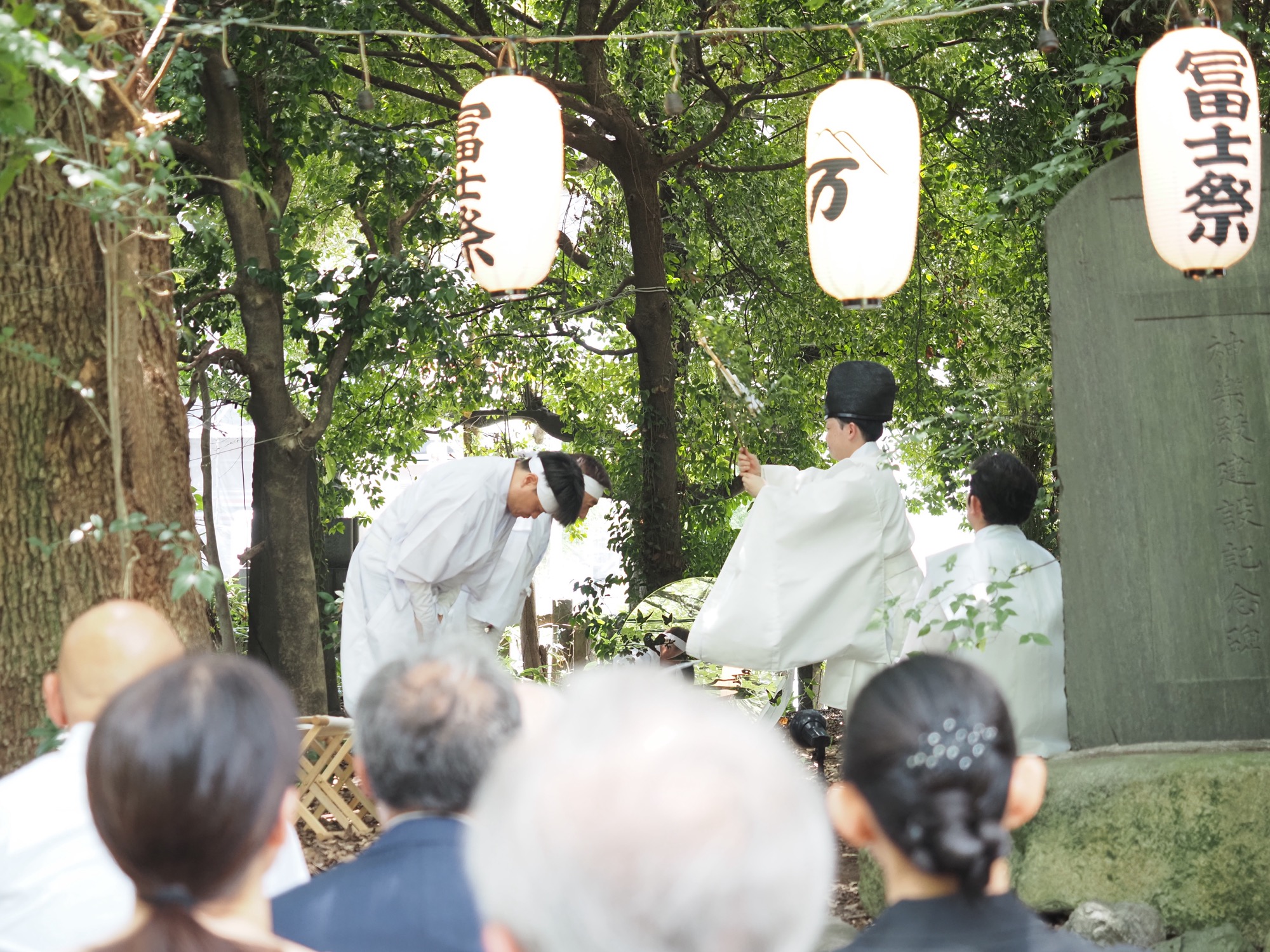
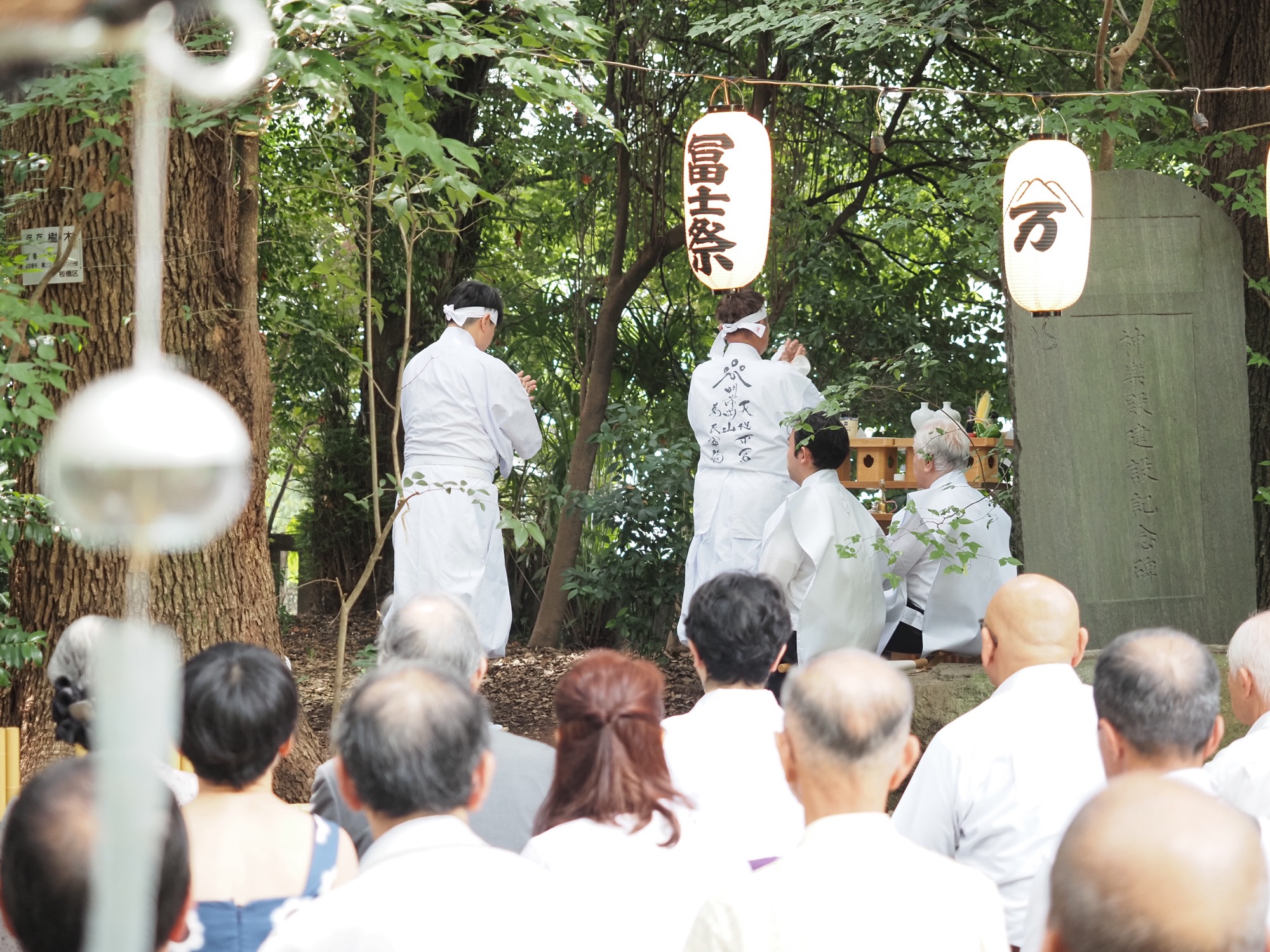
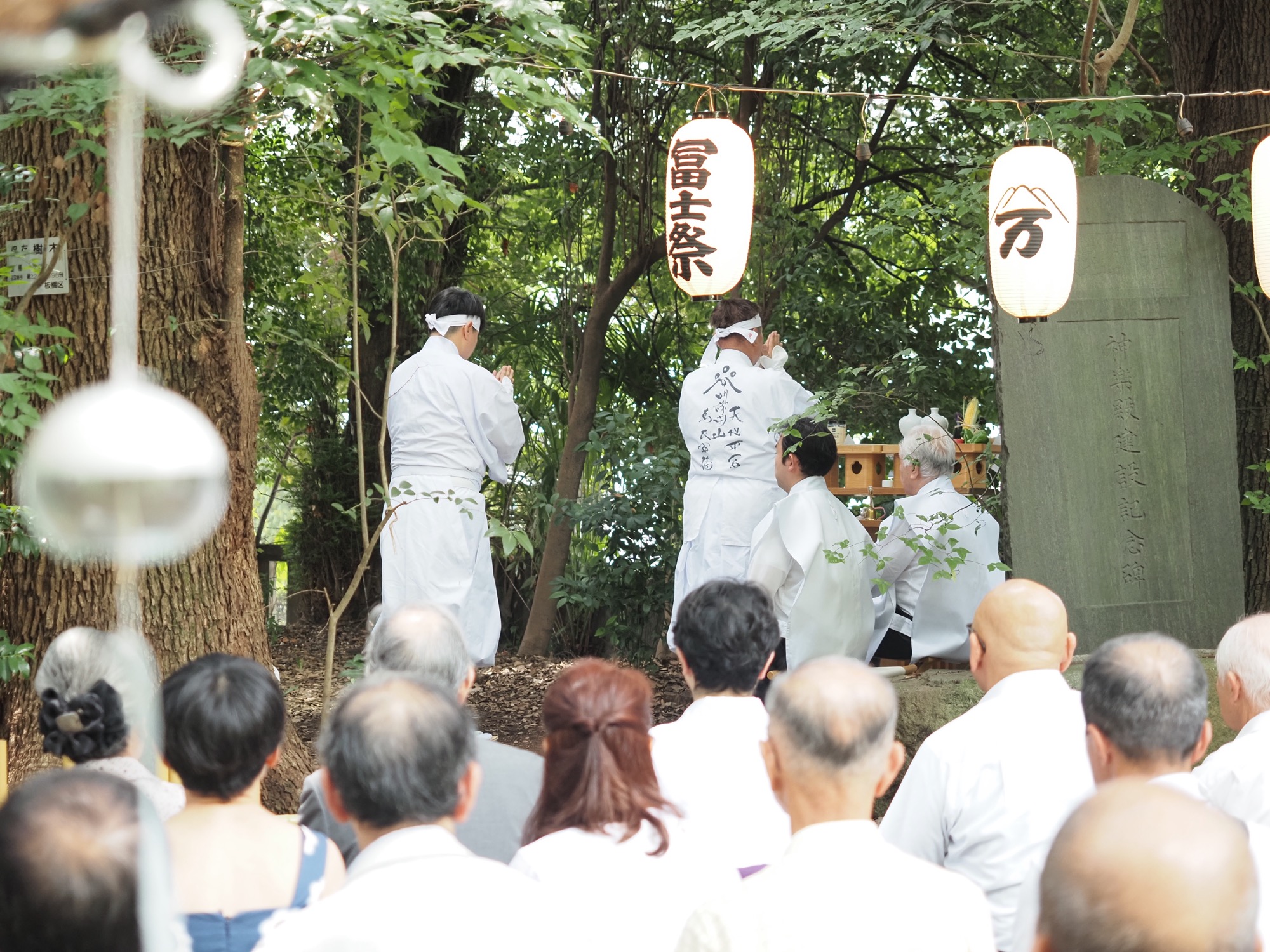
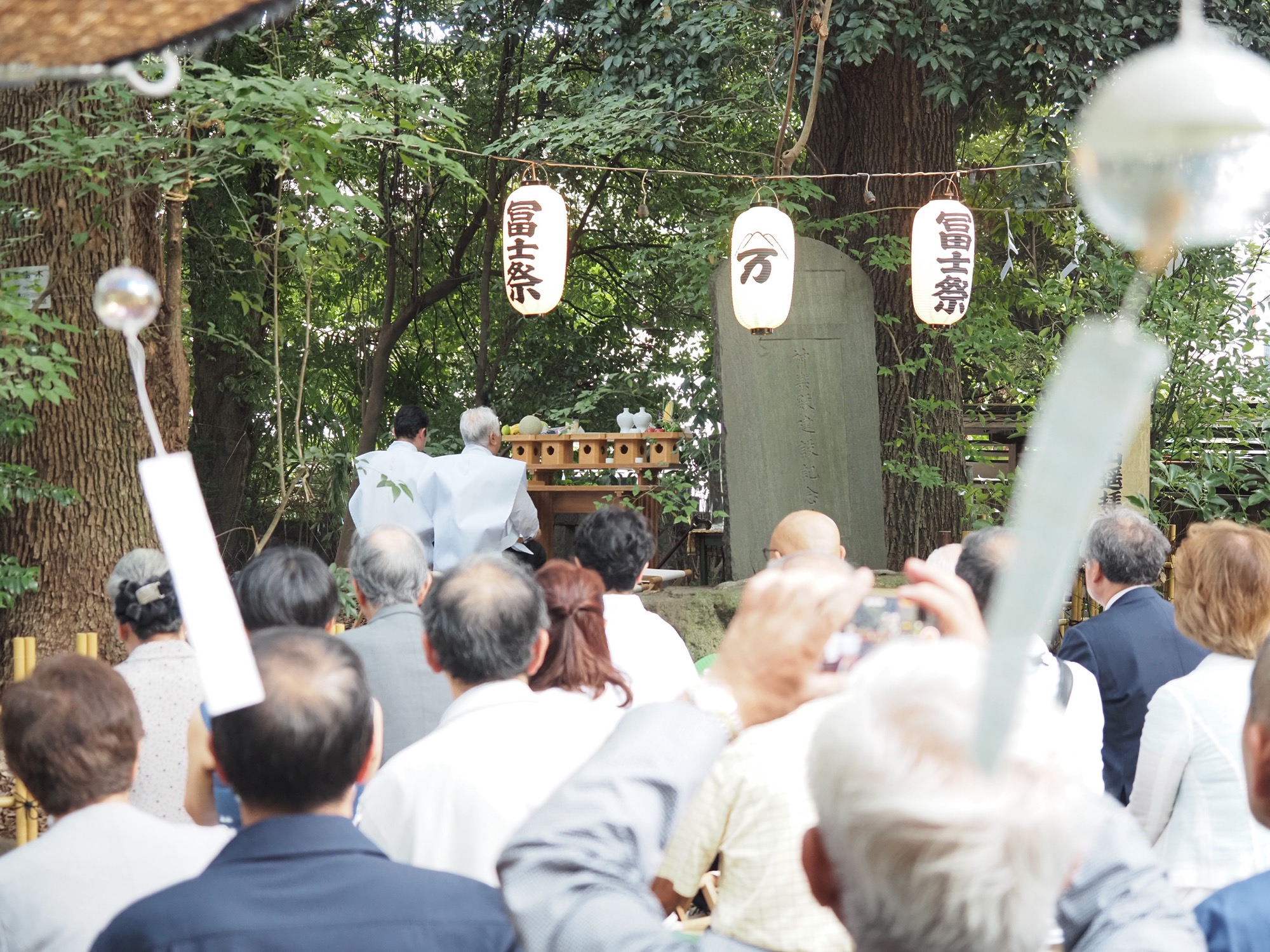
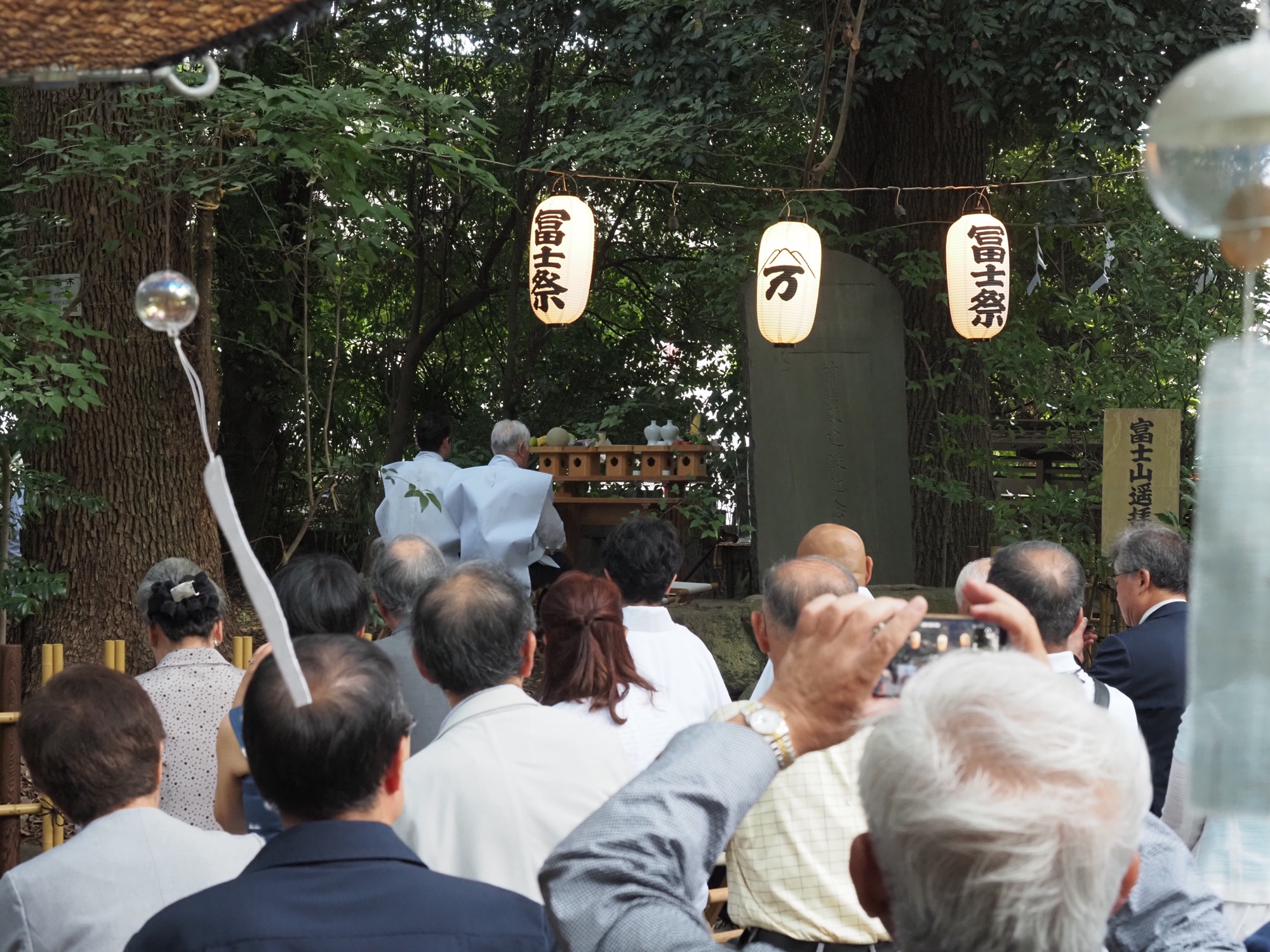
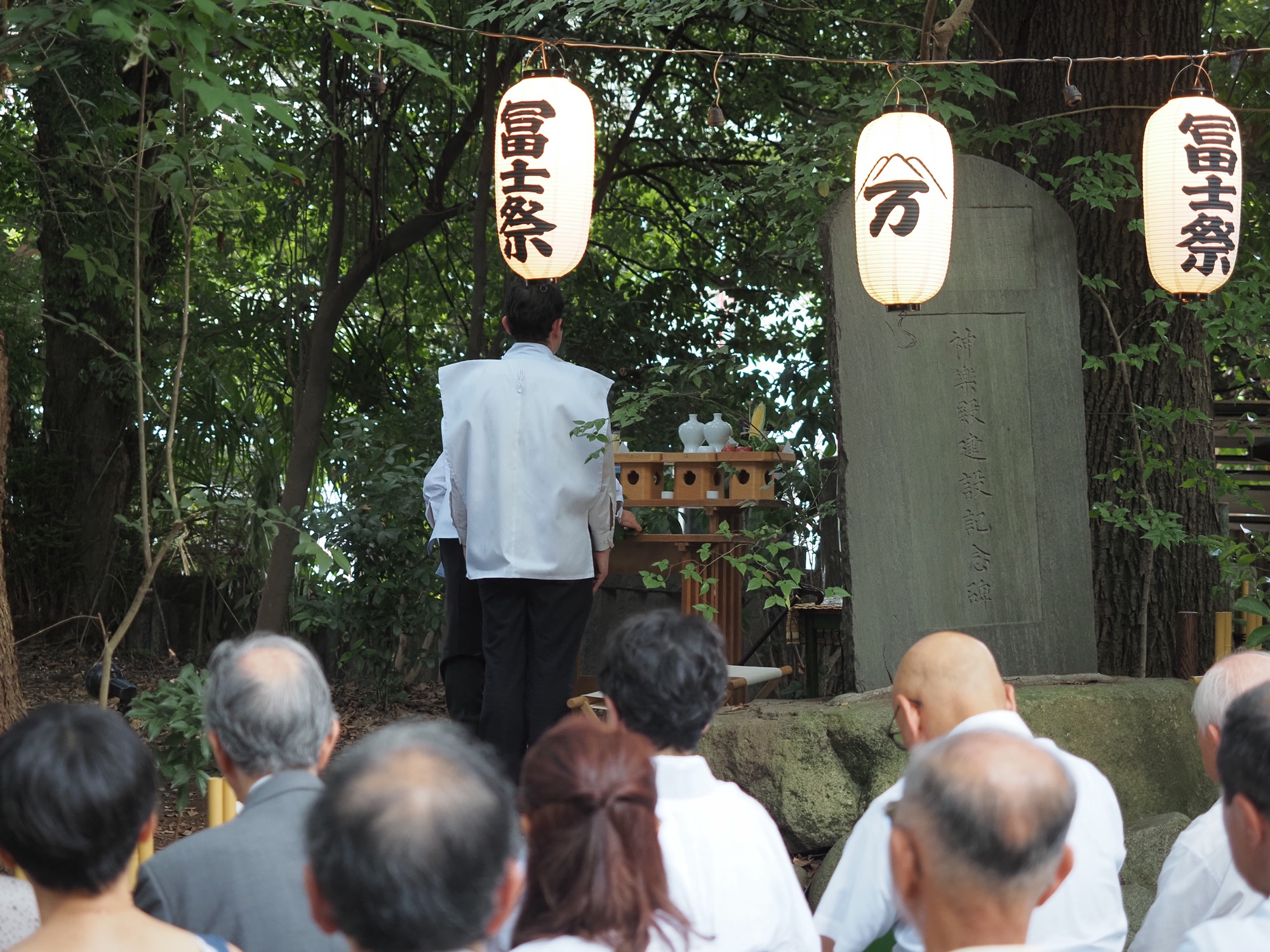
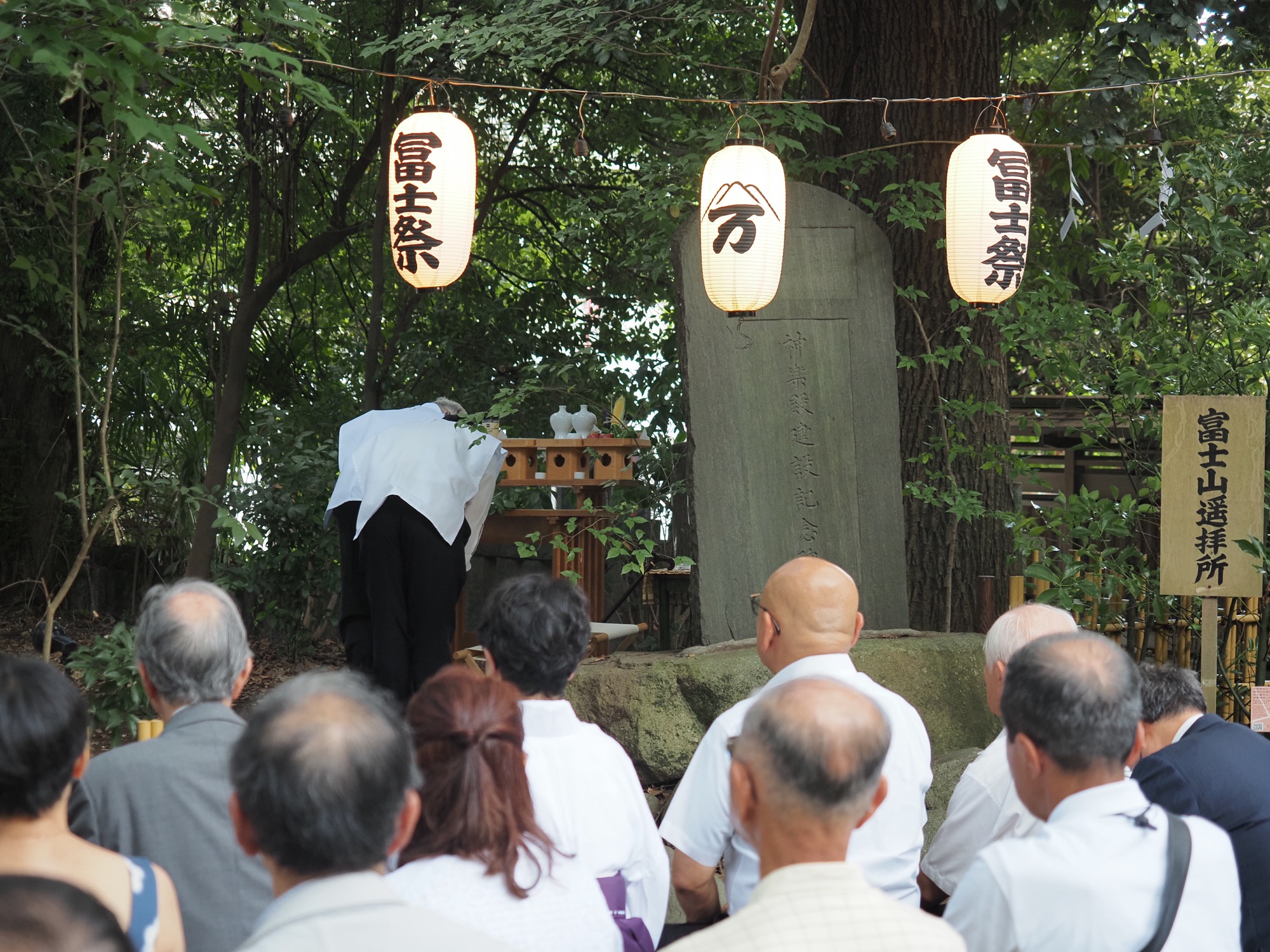
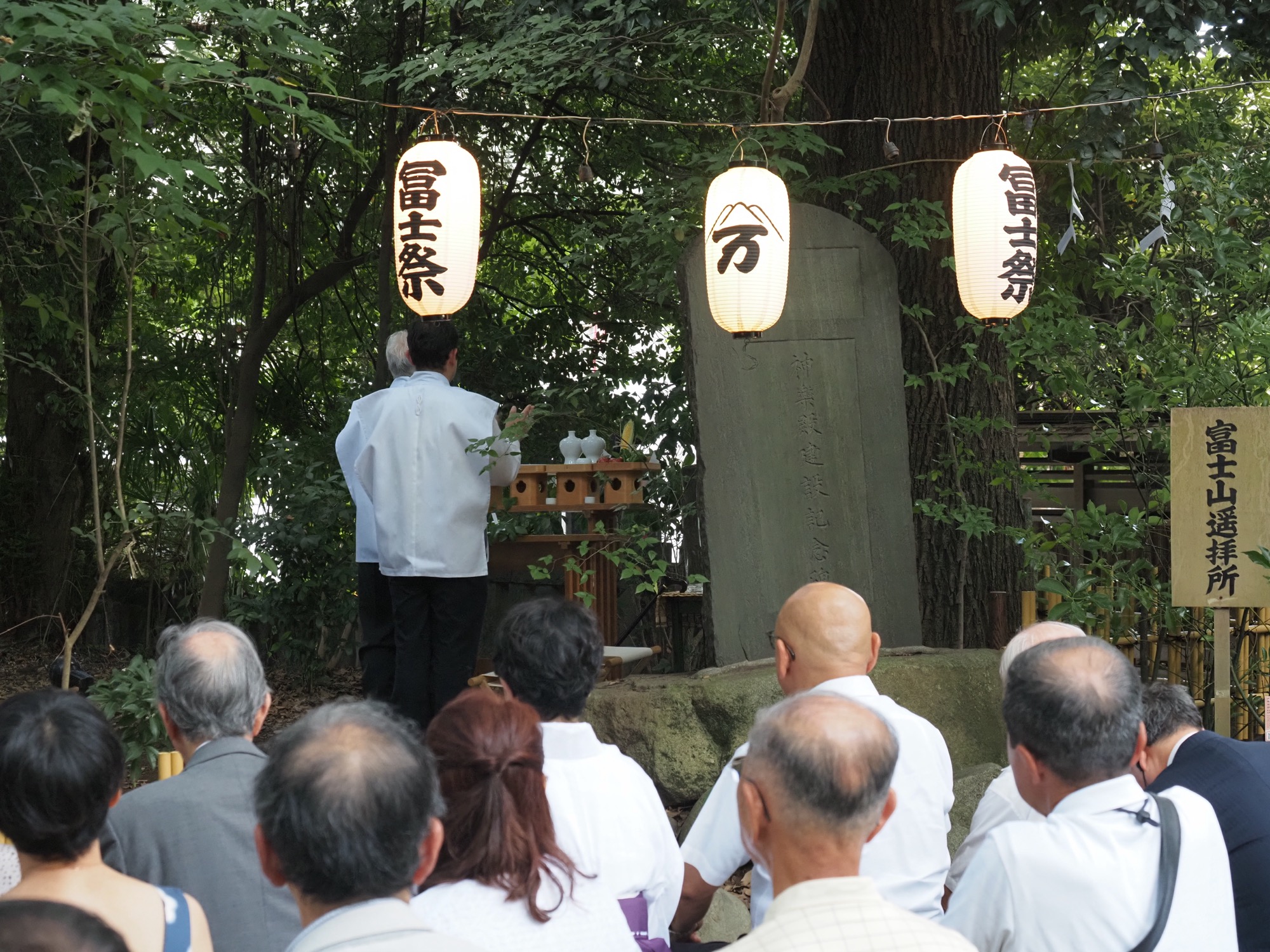
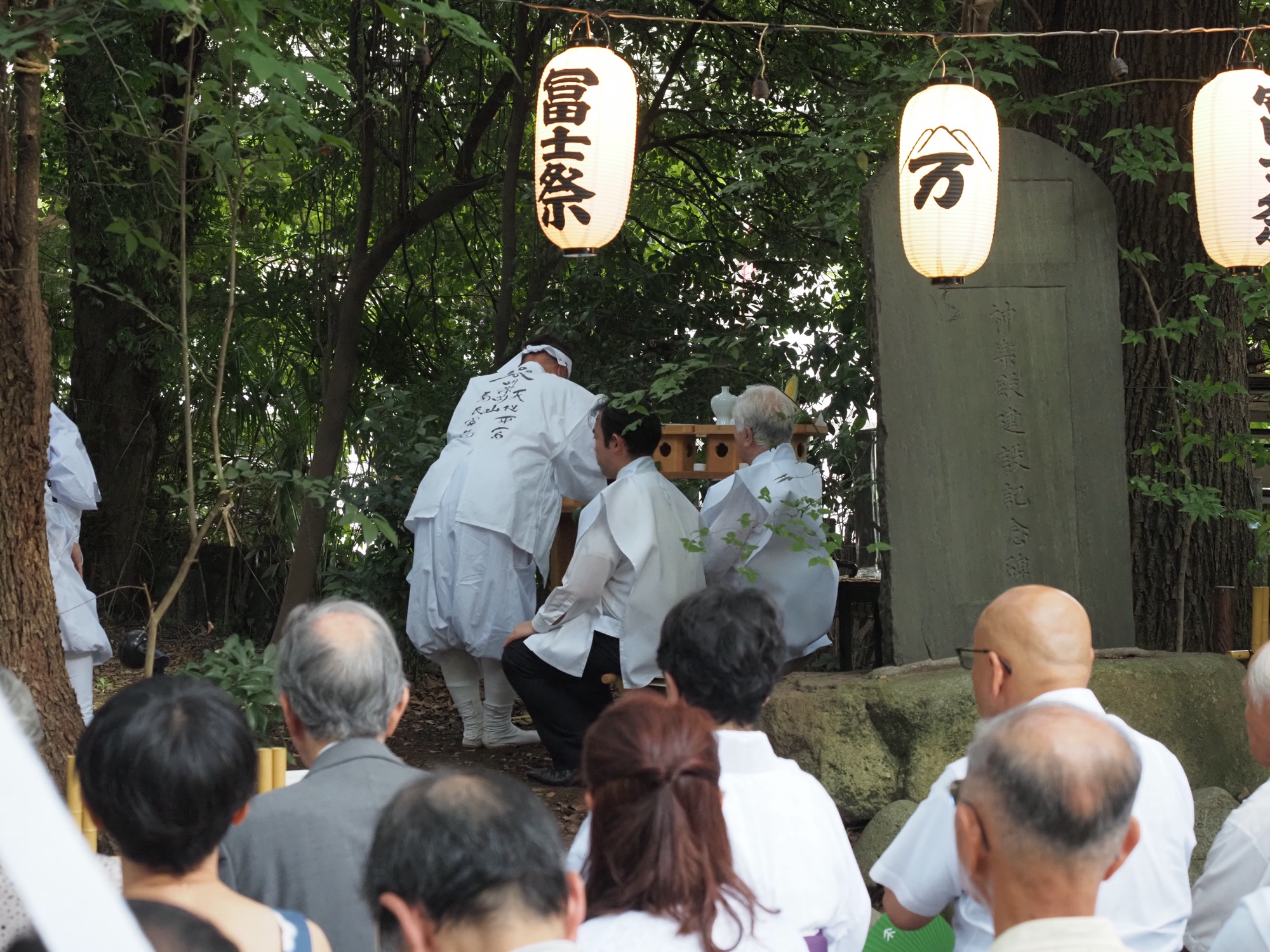
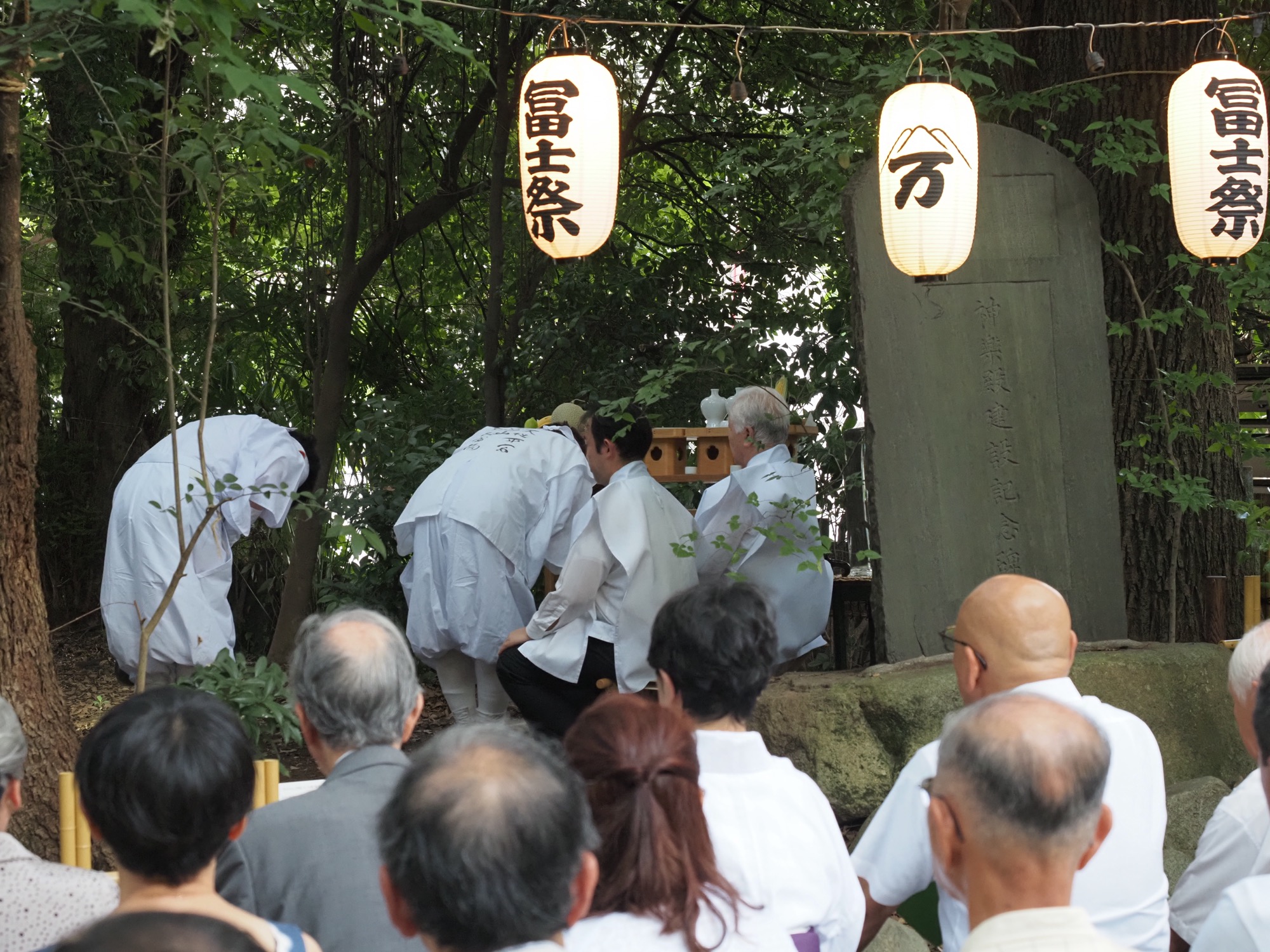
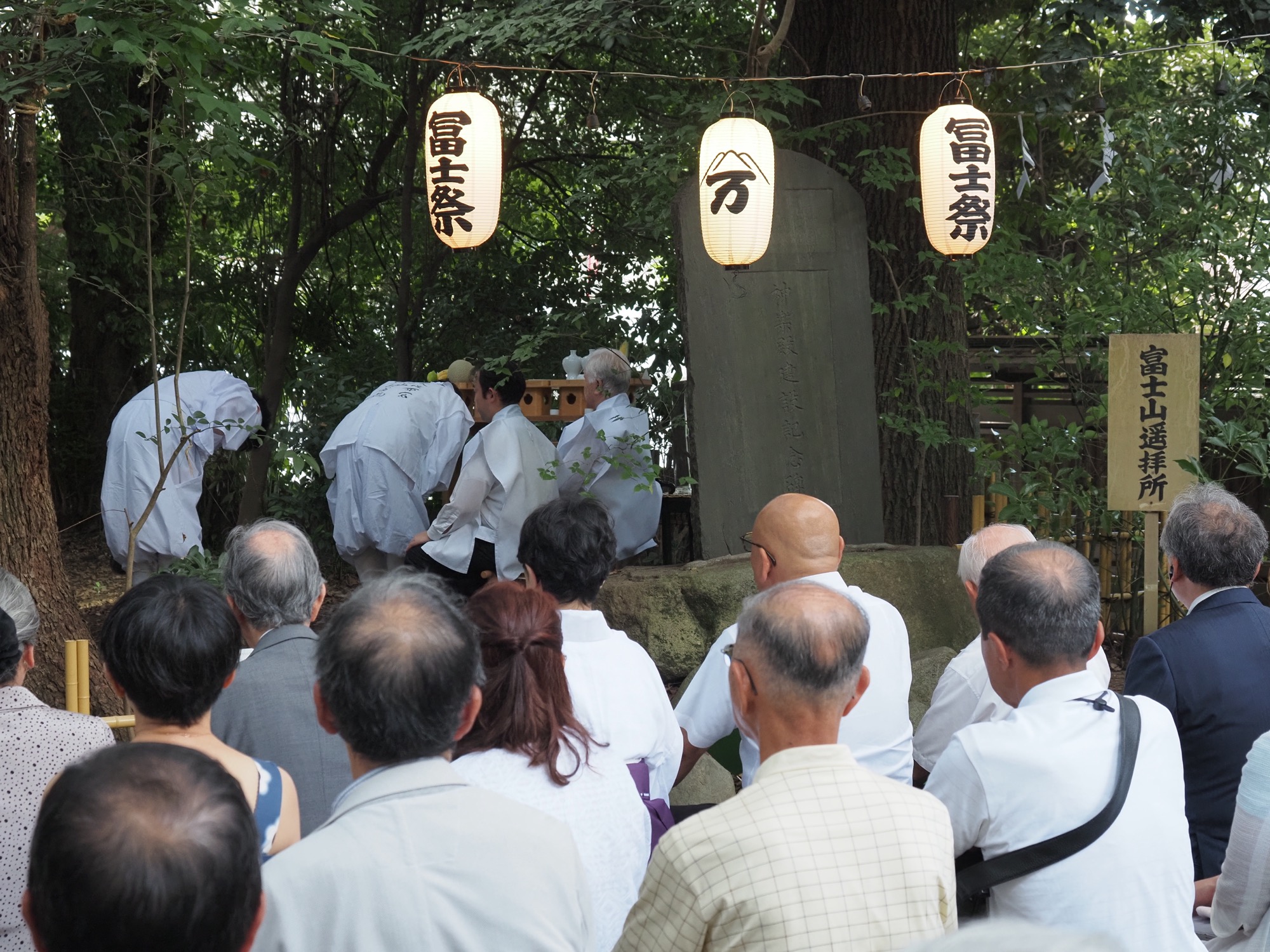
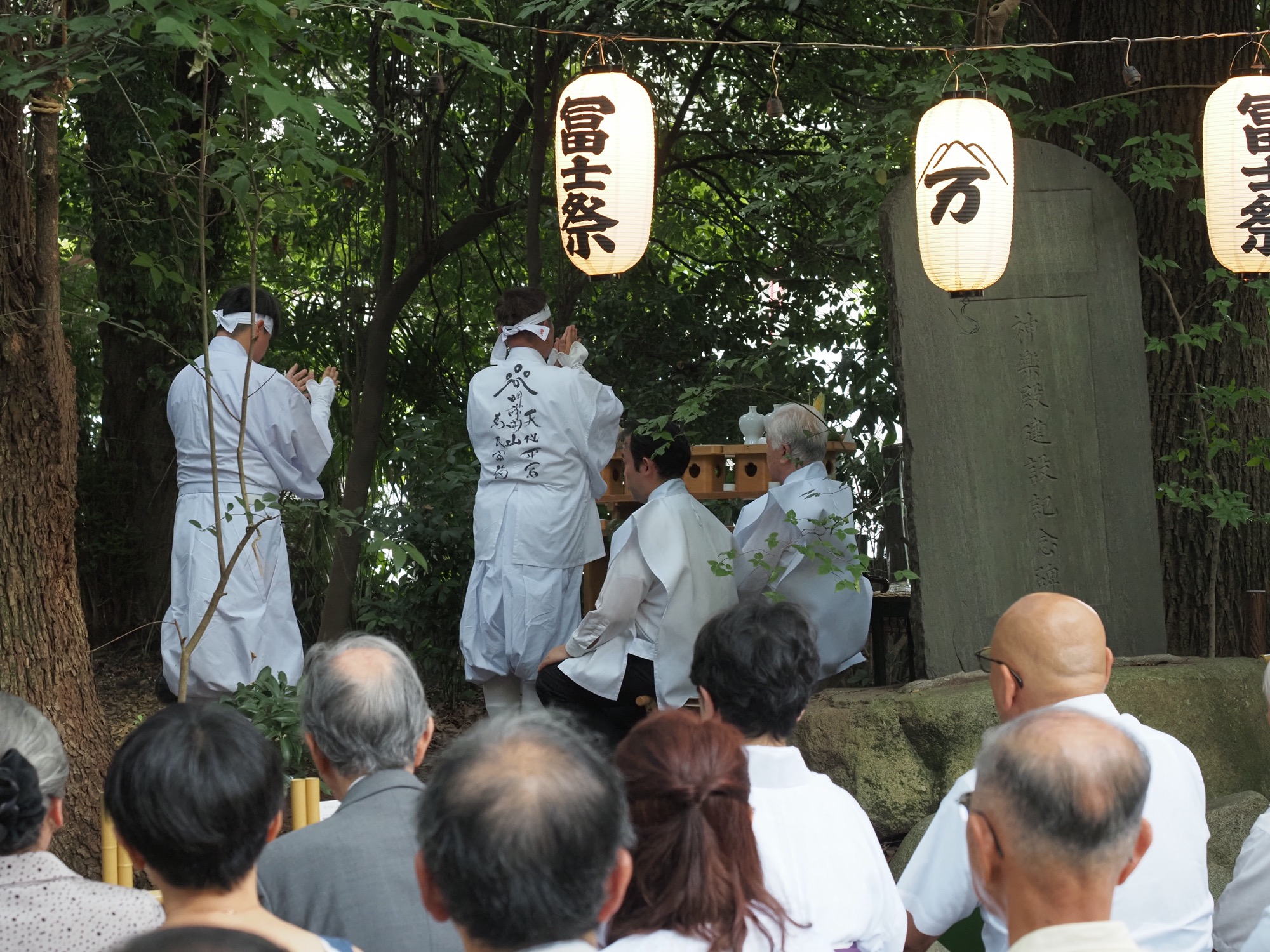
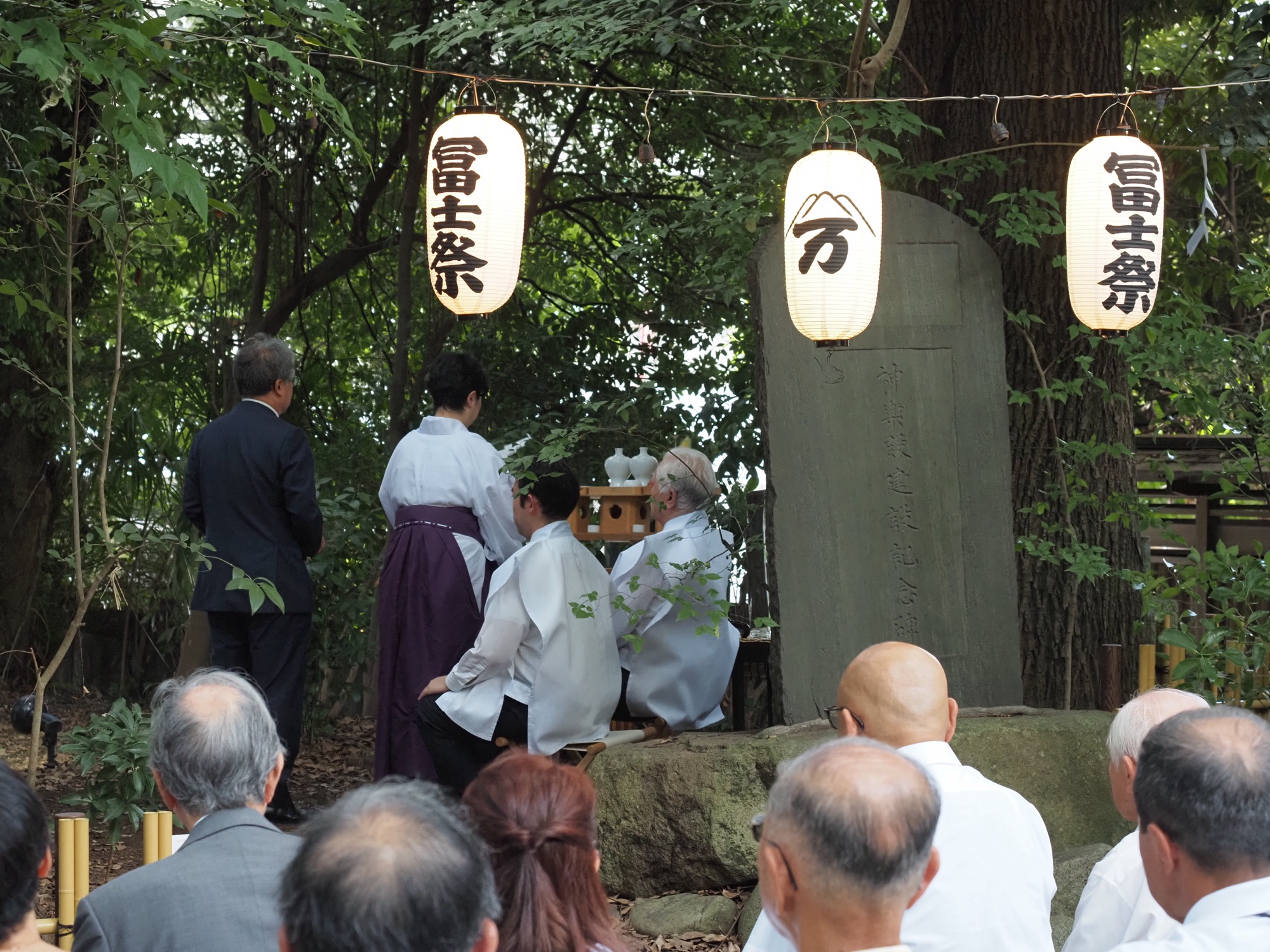
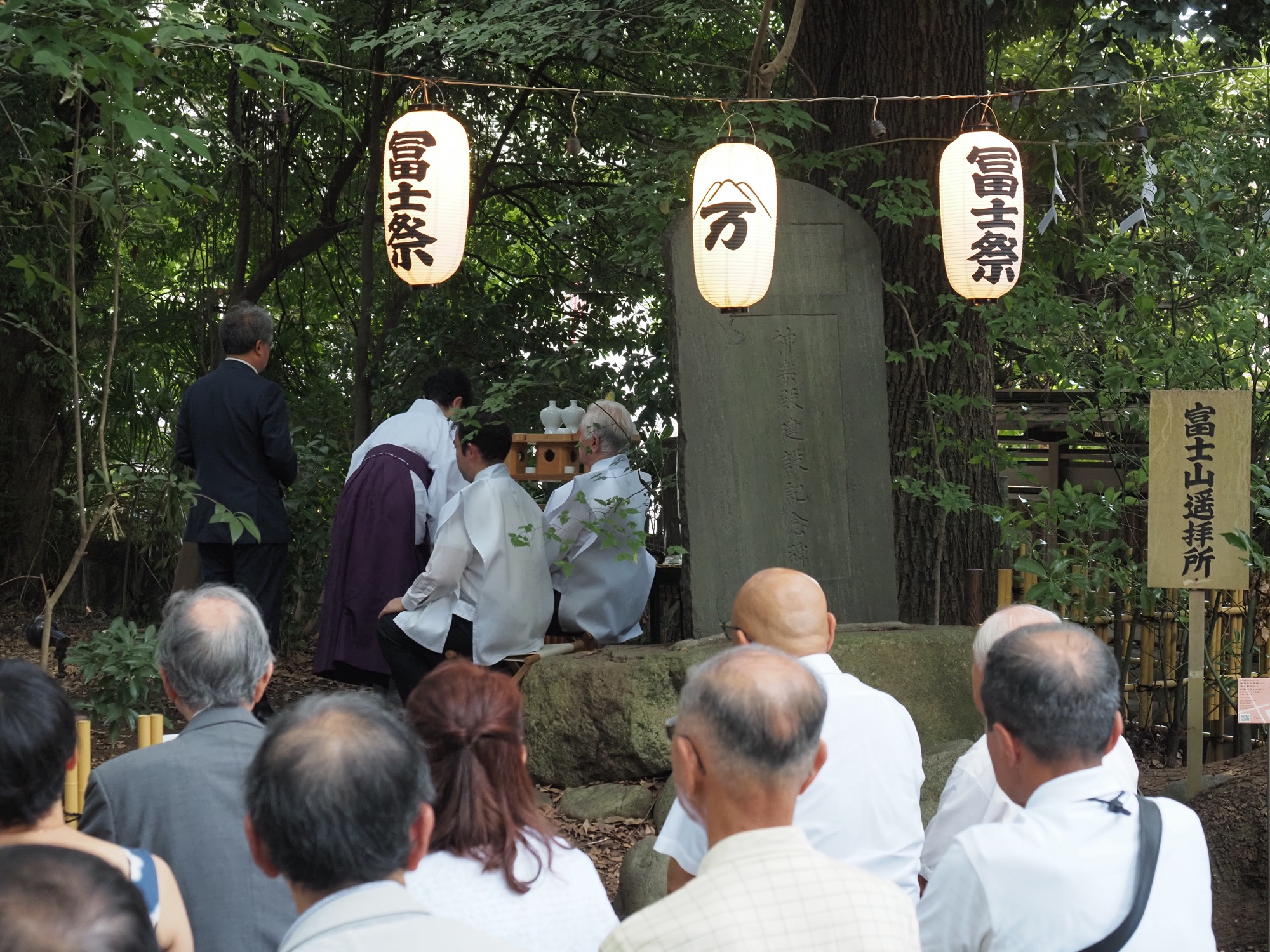
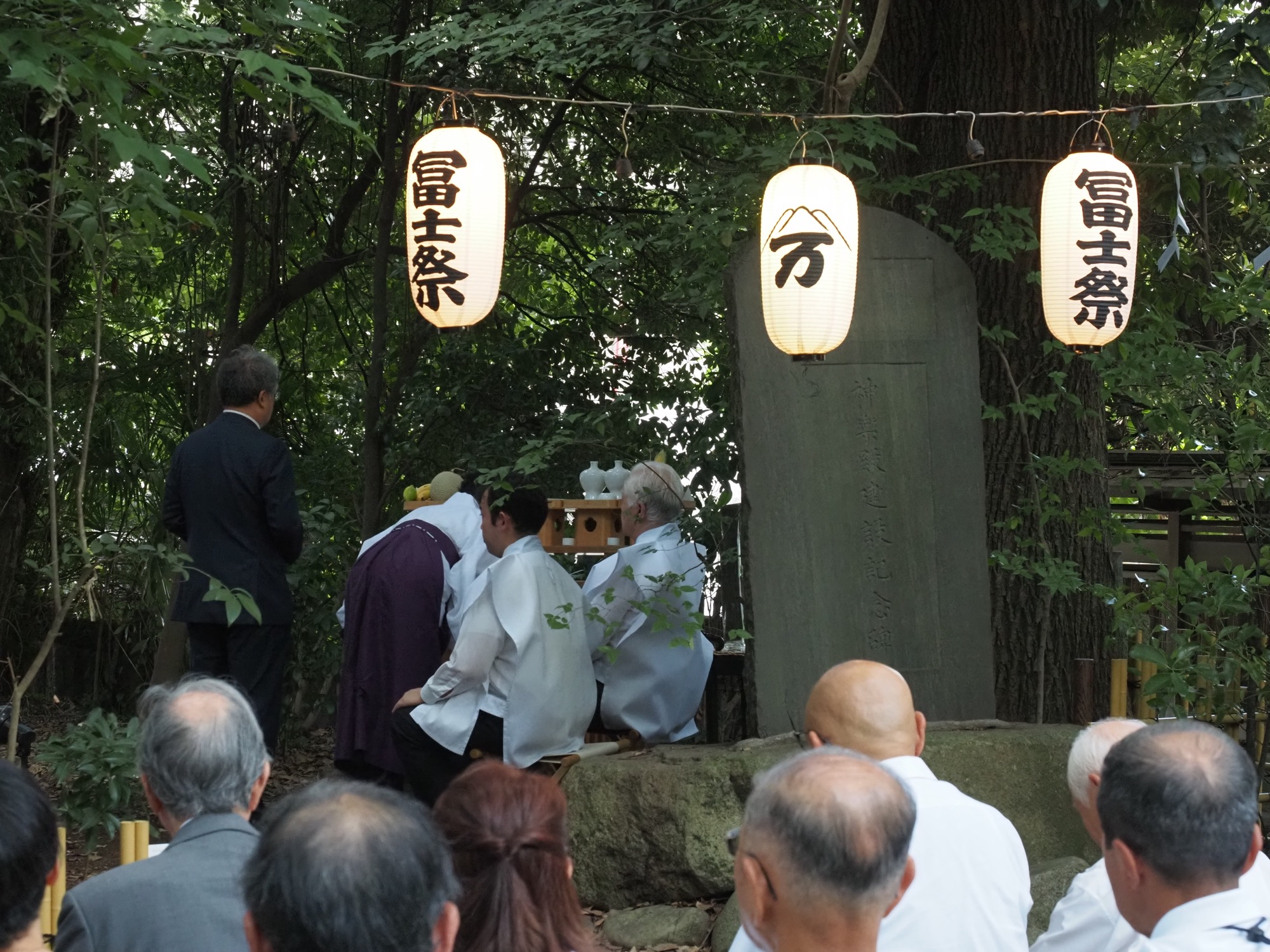
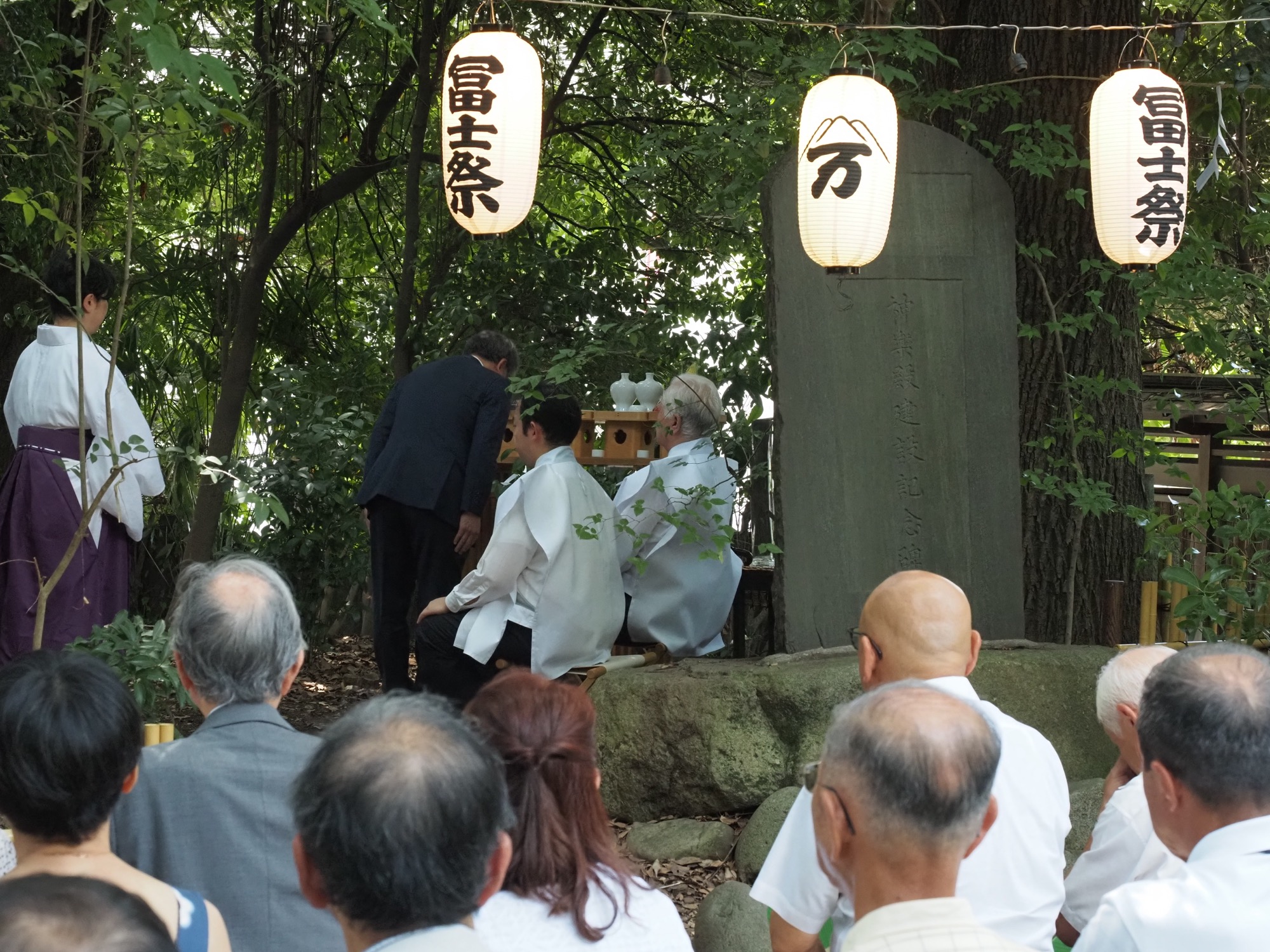
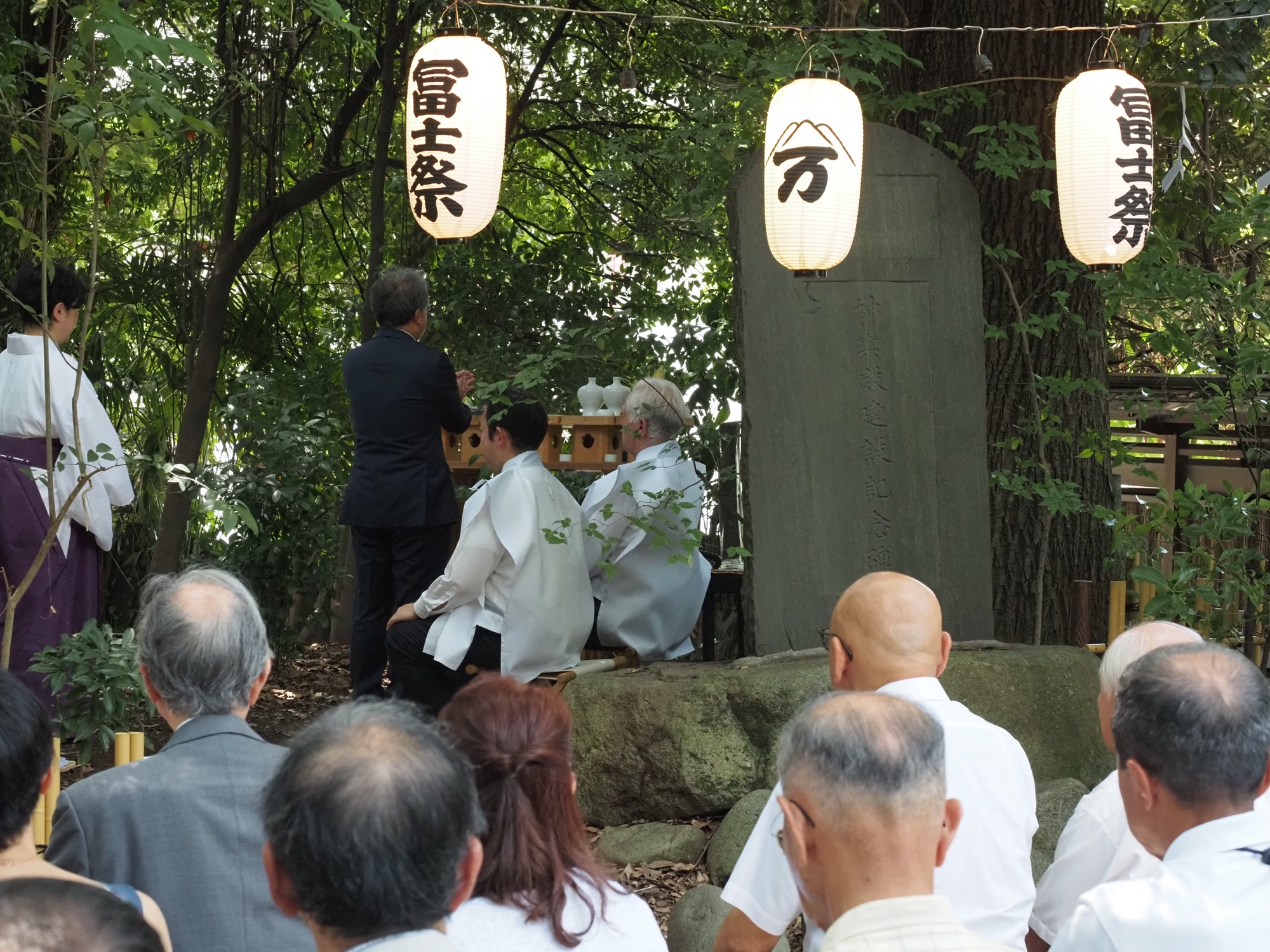
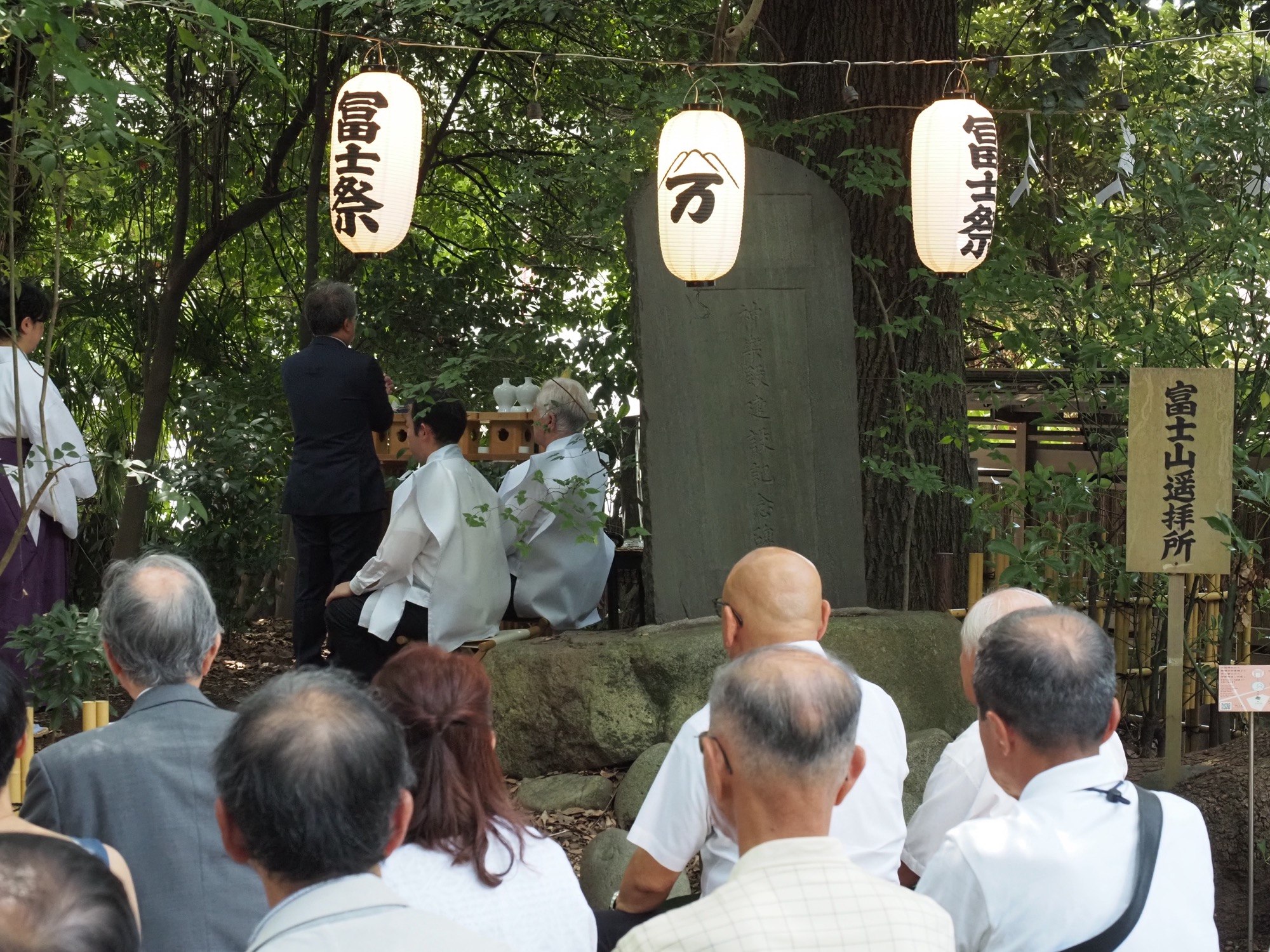
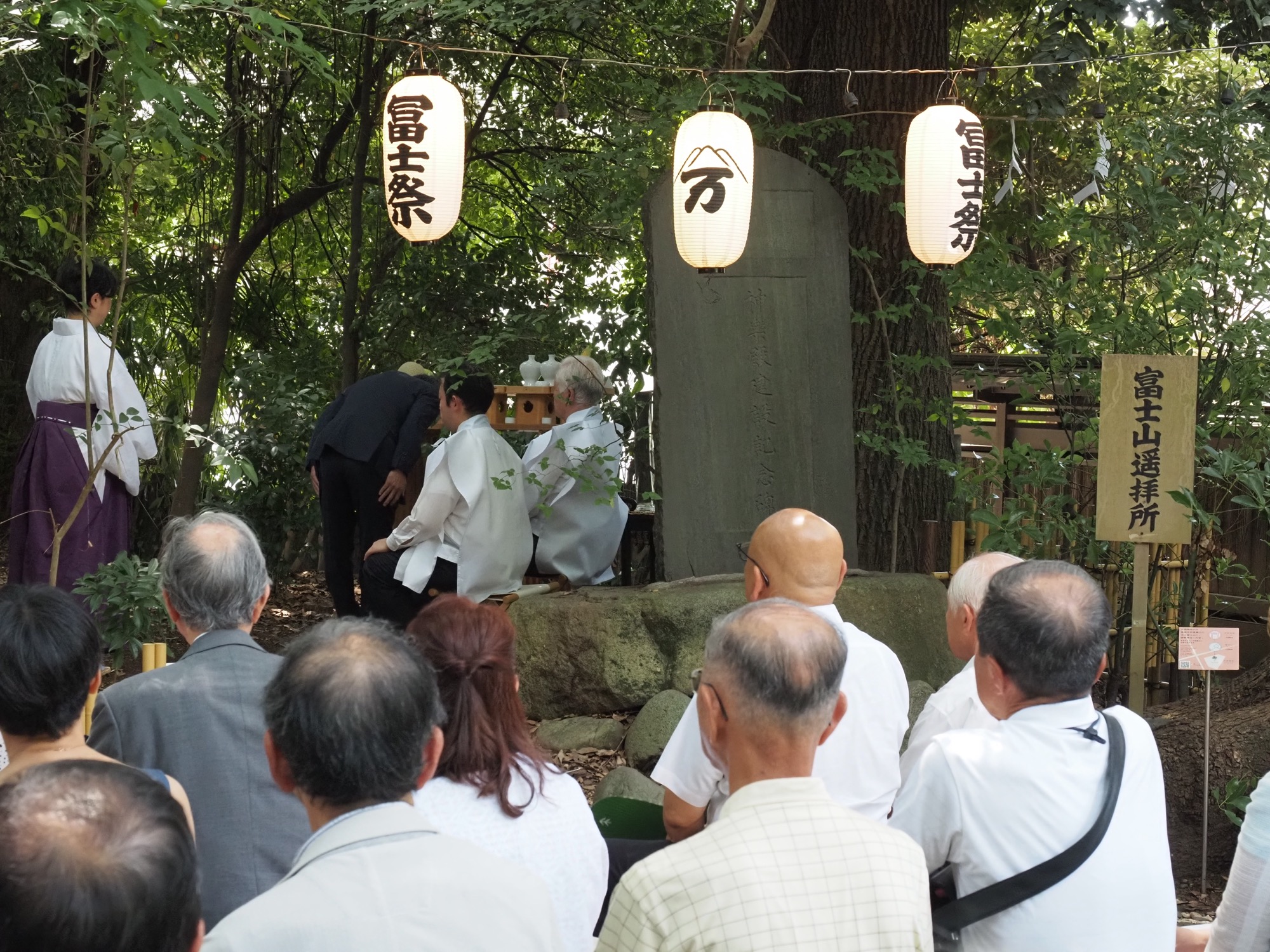
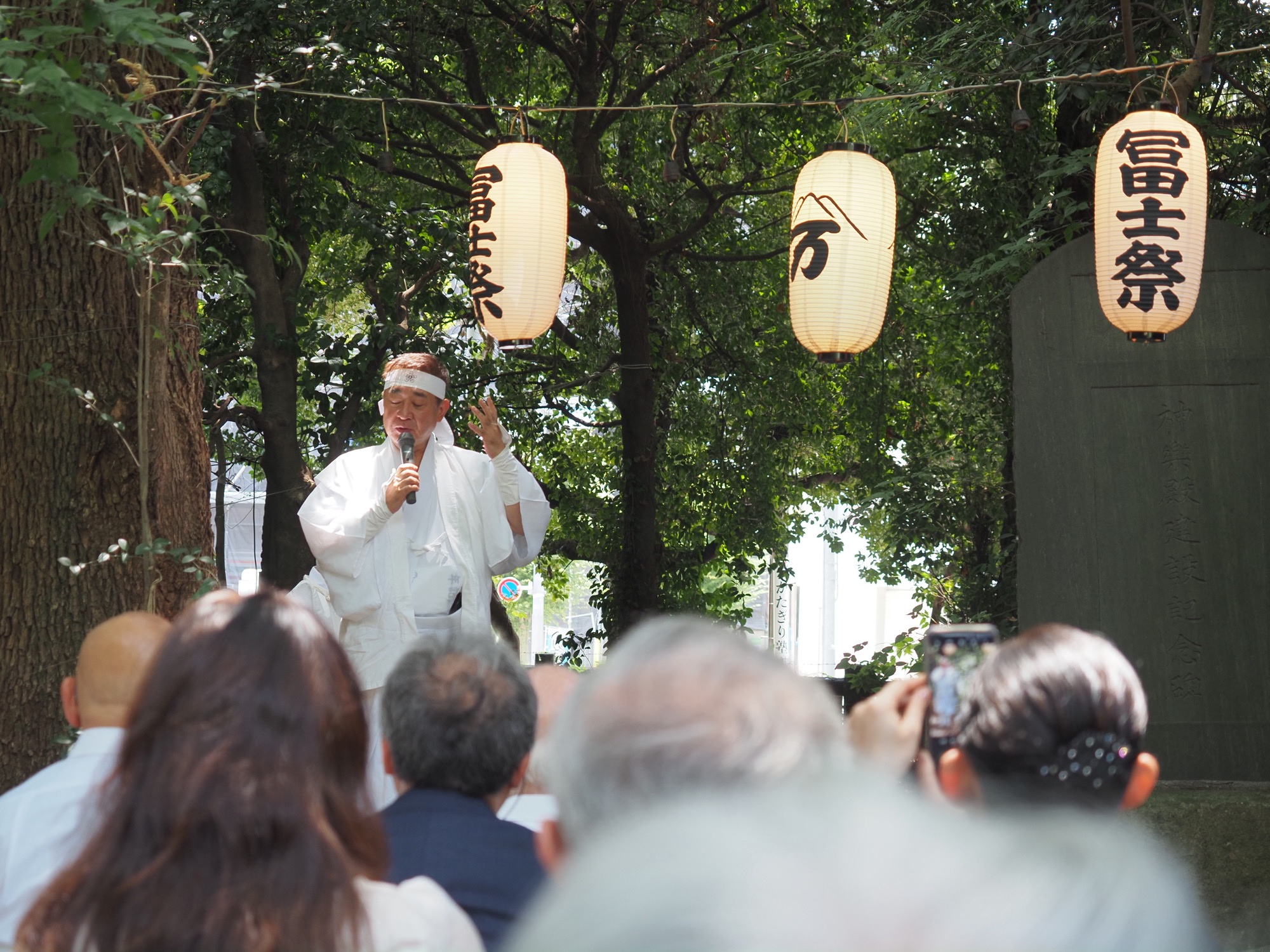
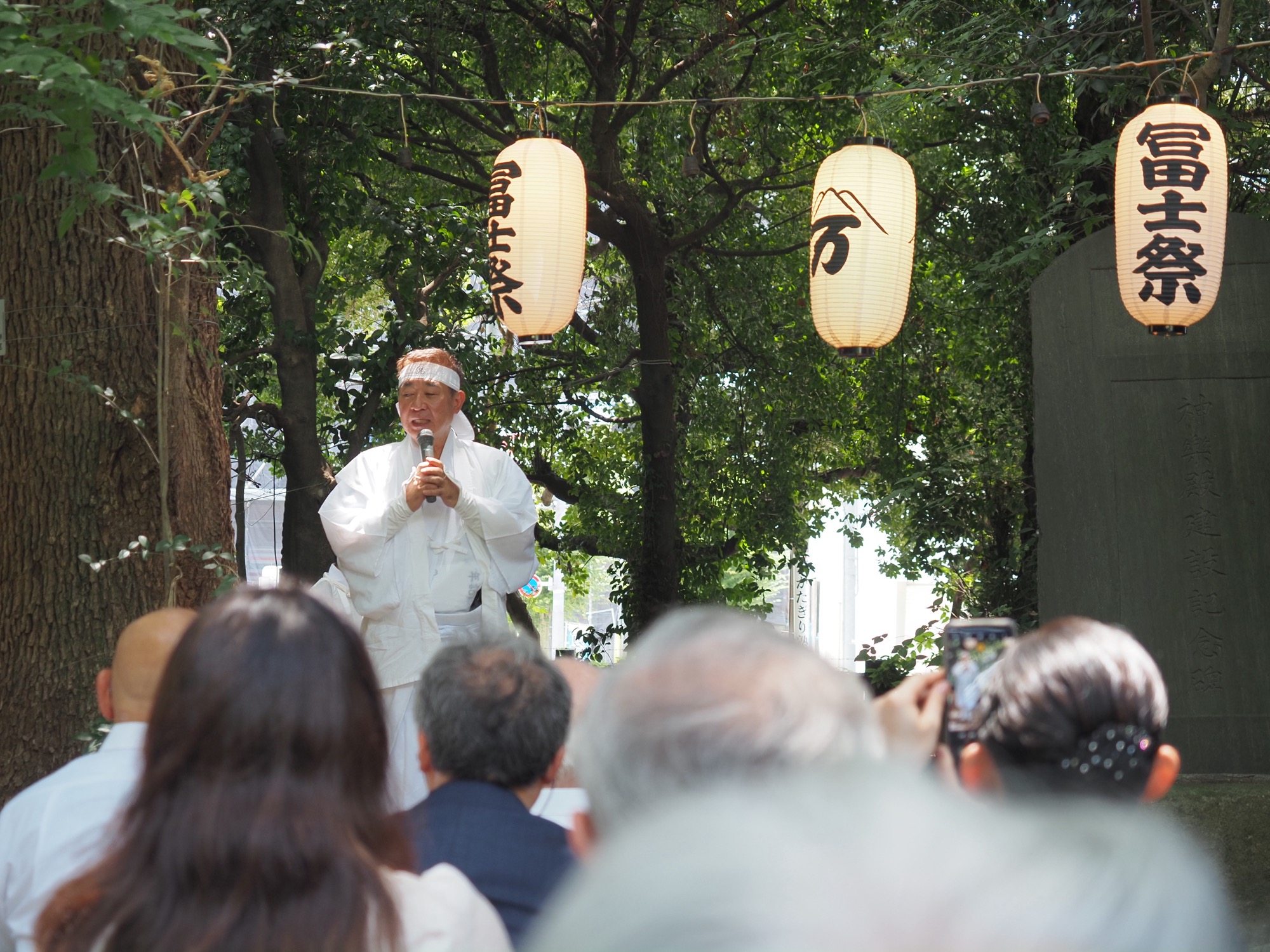
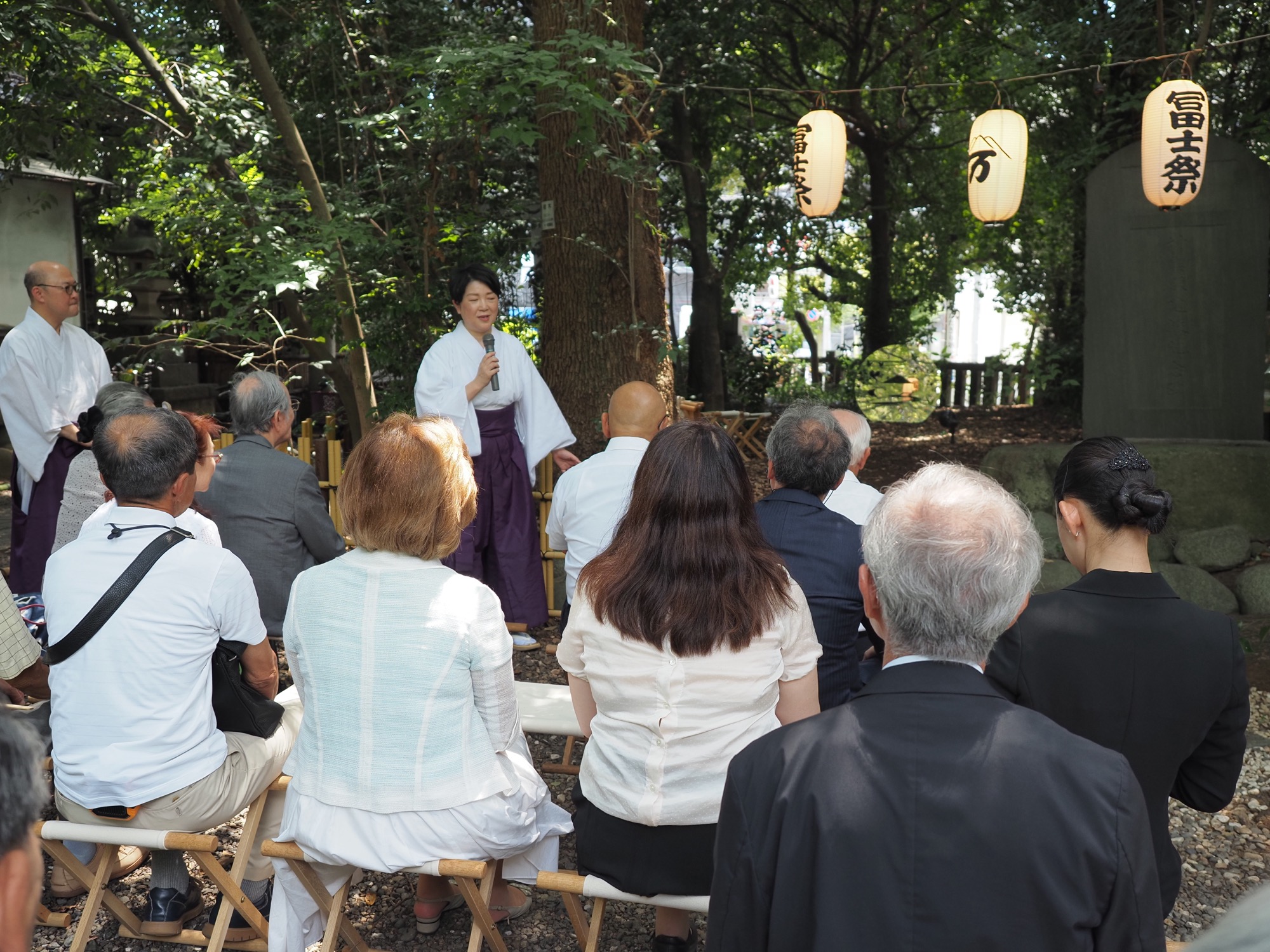
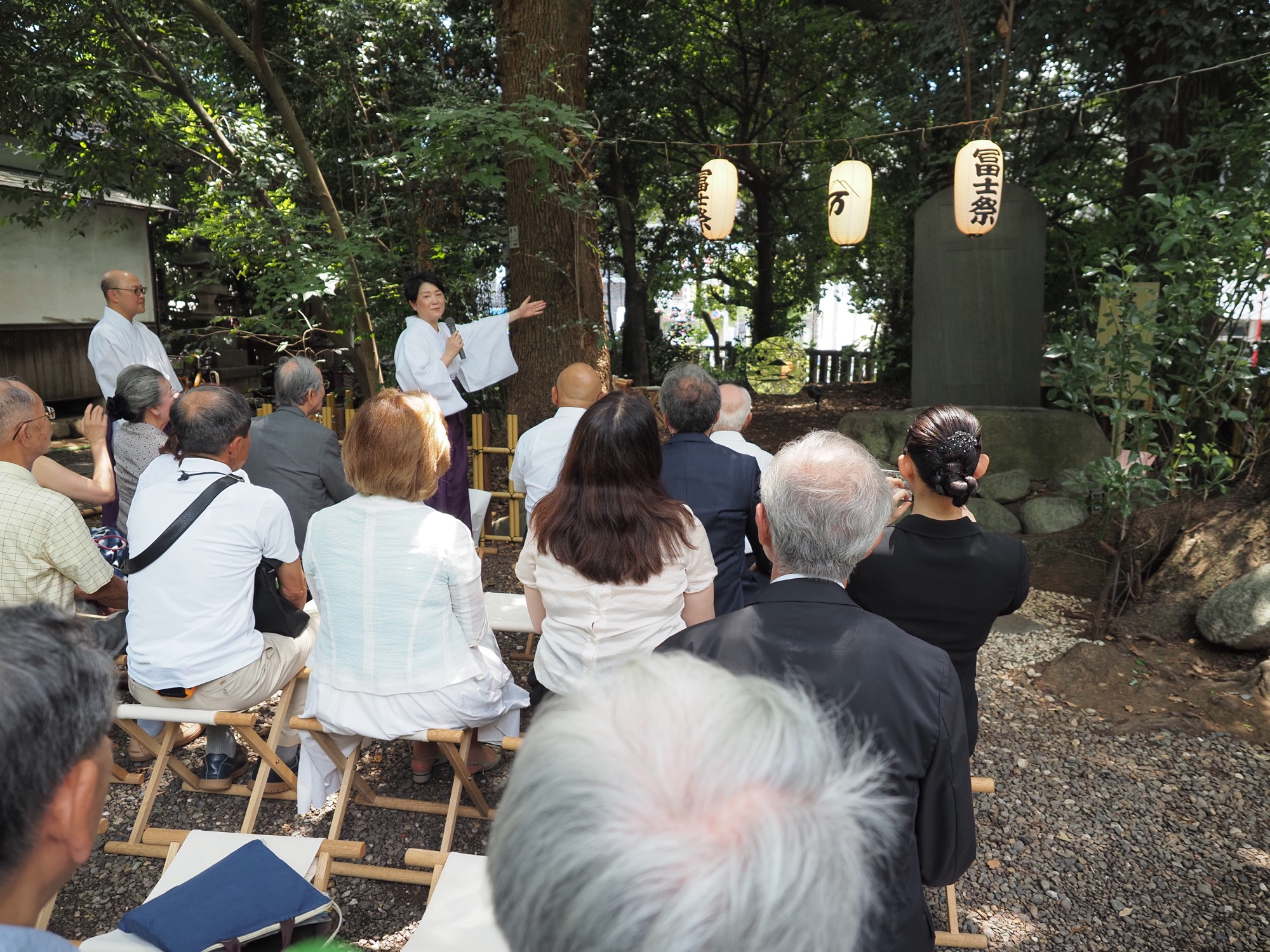
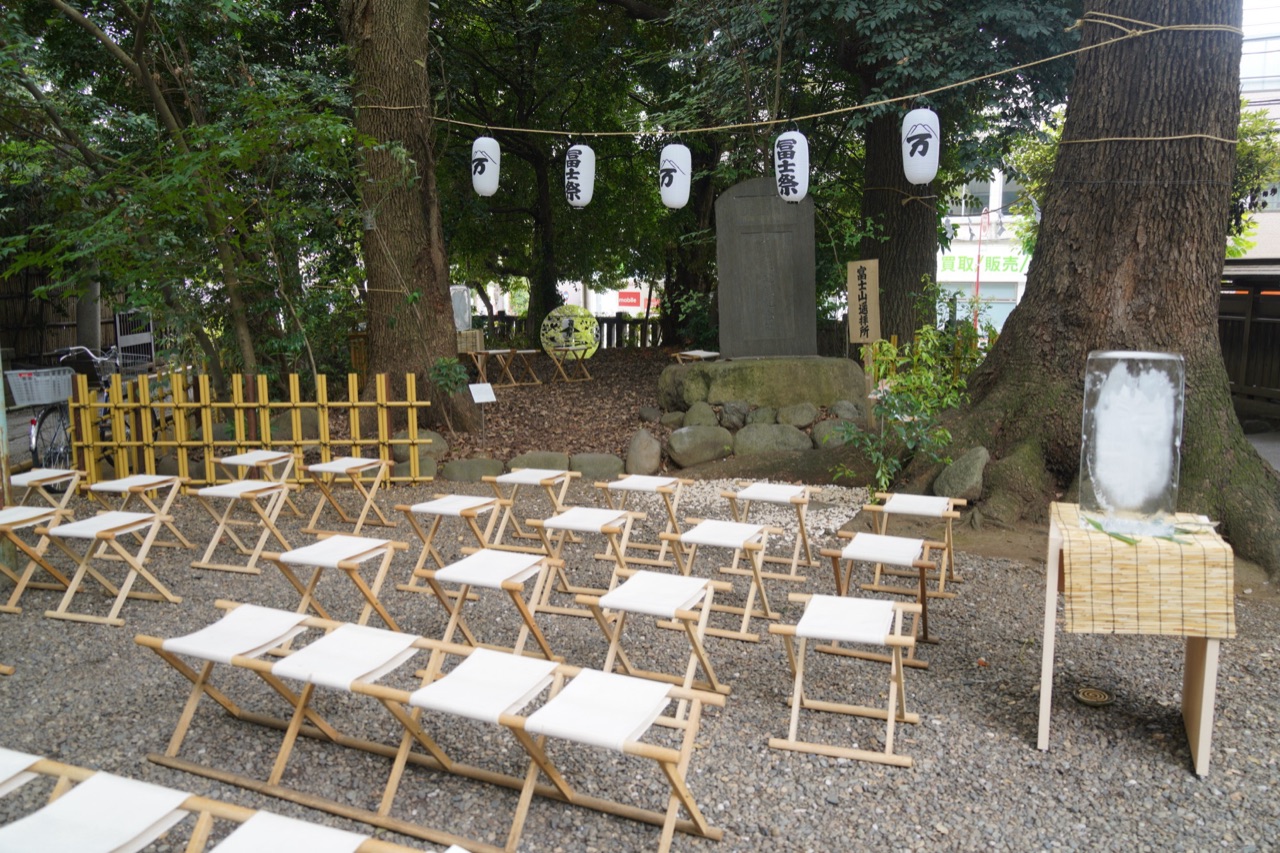
Tenso Shrine stands in Tokiwadai, Itabashi Ward, Tokyo. In a corner of its precinct is a yōhaijo — a place for worshipping Mount Fuji from afar — and every July, timed to the opening of the climbing season, the shrine holds its Fuji Festival. The photographs record this rite: practitioners robed in white conduct the ceremony before the worship place, and local parishioners gather to offer prayers to the spirit of the distant mountain.
In the Edo period, the area of present-day Itabashi and Toshima was among the most active grounds of the Fuji-kō confraternities. Itabashi-shuku, the post town on the Nakasendō highway, was an important dannaba — a territory of the faithful — for the oshi pilgrim-masters of the Yoshida (northern) trail; records survive of the Tanabe family of oshi organising confraternities at Jūjō and Kanaikubo, both within today’s Itabashi Ward. The oshi of Fuji also raised tatefuda, signboards urging the pilgrimage, along the highways in auspicious years such as the sexagenary kōshin years; documents show such boards erected at Itabashi-shuku in 1800 (Kansei 12) and 1859 (Ansei 6). As a post town on the edge of Edo, Itabashi was a base for recruiting pilgrims and setting out for the mountain.
The pilgrims of the Fuji-kō climbed clad entirely in white — white robe, sash, headband, and sedge hat — chanting the mountain invocation rokkon shōjō, “purify the six roots of perception.” The custom was at once an act of faith, cleansing body and mind to commune with the divine, and a practical measure against the summer sun and for visibility should a climber go missing.
While most Fuji confraternities declined after the Meiji era, the faith of this district has been carried on in the form of the Fuji Festival at Tenso Shrine. This gathering of white-robed practitioners and parishioners before the worship place is one of the few living continuations in Tokyo of the devotion the people of Edo once poured toward Fuji.